It is hard to believe that this is only our second full day together as we board the bus at 8:30 in the morning. Our first stop, not far from the hotel, and a very short walk from the Oranienstraße Synagogue, is the Hackescher Markt.
In the words of David Selig, it is something of a cross between Newtown and Paddington: somehow up-market and bohemian, all at once. The art is both arresting and ubiquitous, and there is colourful graffiti everywhere.
Down a short and brightly decorated alley, we come to Otto Weidt’s workshop for the blind. A non-Jewish German with only 20% vision, Weidt ran a sheltered workshop in which people with visual impairment could find regular employment. His first workshop operated from 1936 until 1939, but the second workshop (which ran from 1939 until it was closed down by the Gestapo in 1943) is now a museum.
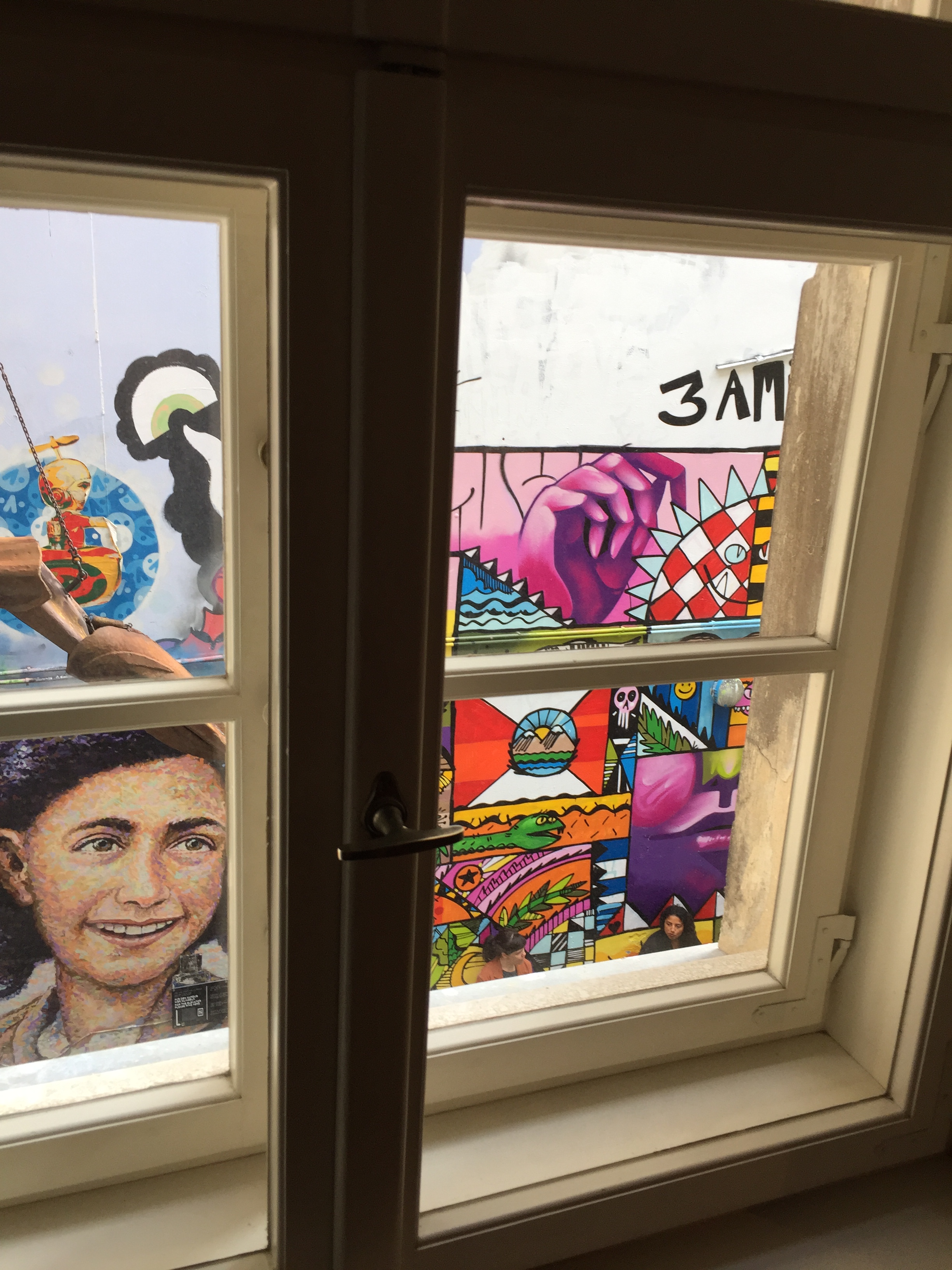
Photograph: Simon Holloway
Our guides were two young Israeli men: Avraham and Amos. In two separate groups, they spoke to us of how Weidt managed to convince the local Gestapo that he had converted “lazy Jews” into good workers and, with bribes and chicanery, protect his Jews from deportation.
This is all the more incredible against the backdrop of the T4 Program, through which tens of thousands of people with disablities were being murdered on an industrial scale.
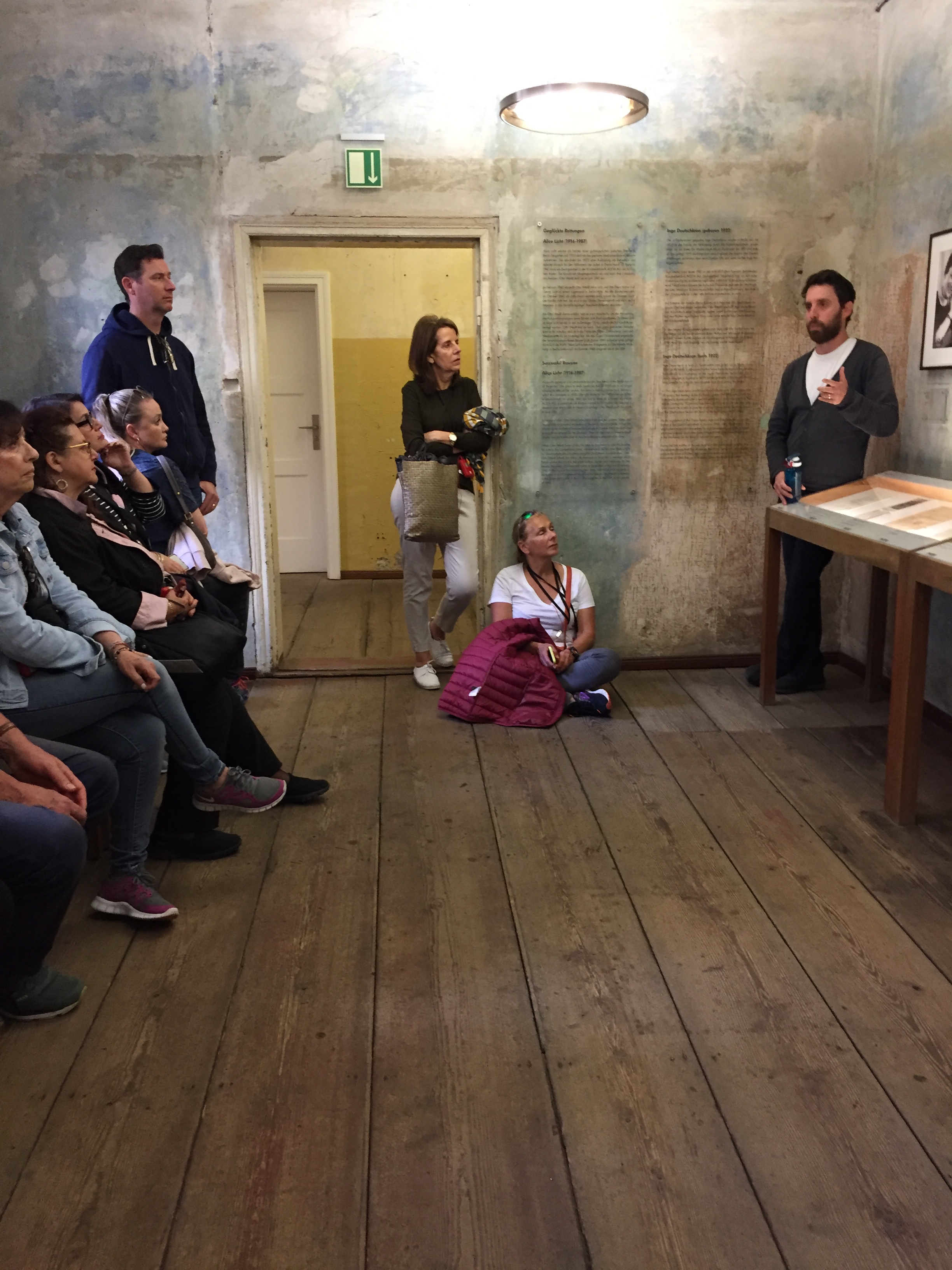
Photograph: Simon Holloway
In 1942, the Gestapo arrested all of Weidt’s Jewish workers and detained them in a pre-deportation camp within the city. Weidt travelled to the camp and presented the guard with an ultimatum: either he has his Jews released, or he tells the Wehrmacht why he has been unable to make his weekly quota of brushes.
This was the last time he was able to buy back his Jews.
In 1943, Weidt managed to hide a family of four in the back of his workshop, where the horse hair was boiled and the air was thick and humid. This was a part of the workshop that the gestapo rarely entered, the stench and heat being so overpowering, and would little suspect the small aperture at the back of a cabinet that led to a hidden room.
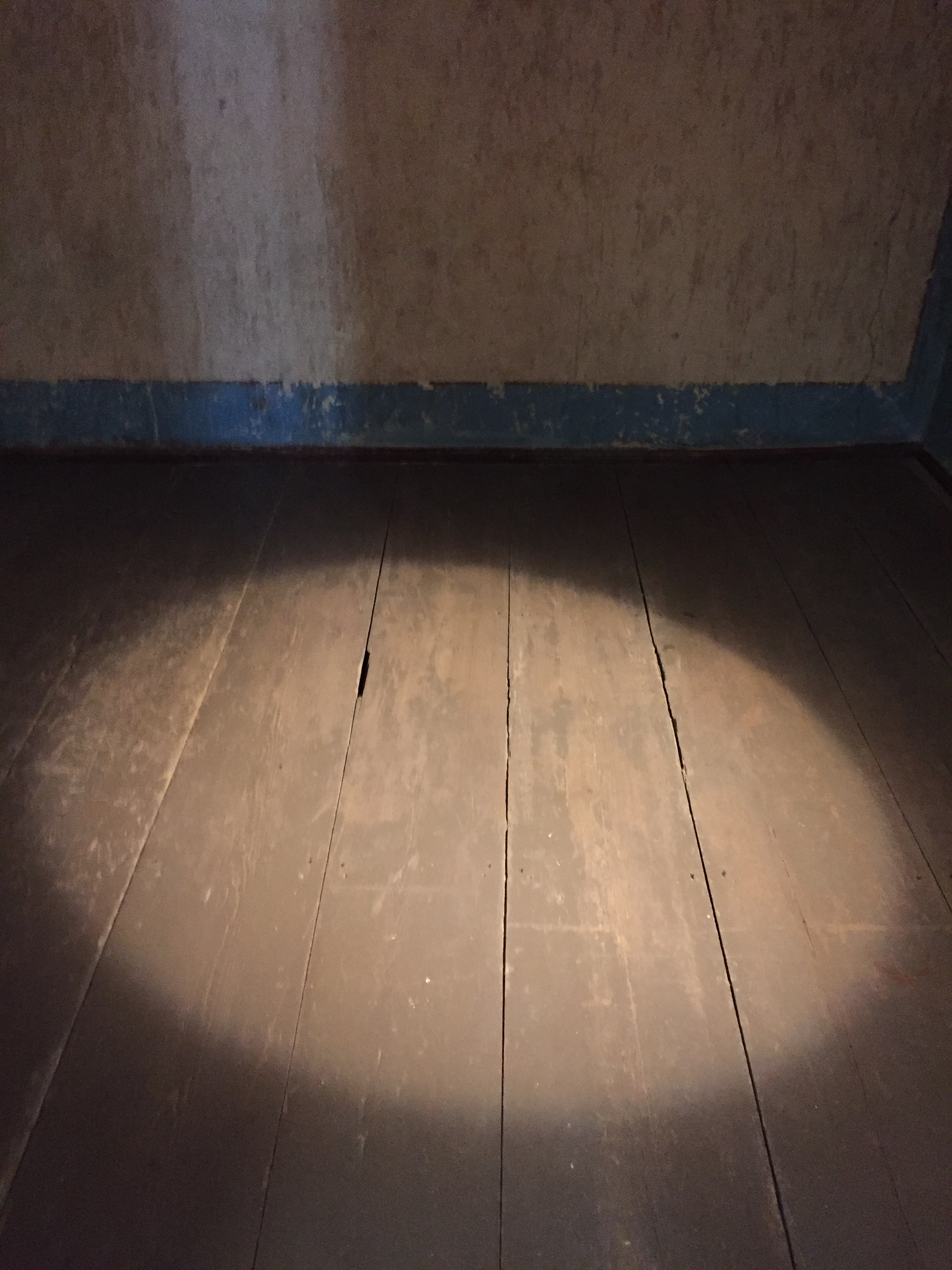
Photograph: Simon Holloway
For nine months, four people hid in that room before being betrayed by none other than Rolf Isaaksohn, the husband of the infamous Stella Goldschlag. Gestapo informants, they sought to stave off deportation by delivering fellow Jews into the hands of the SS, and when Rolf asked Weidt for a place that he might hide, he presented Weidt’s answer to the Gestapo, who raided the workshop for the final time.
The story of Weidt’s subsequent endeavours to save the lives of Jews (both successful and unsuccessful) was both inspiring and profound, and tempered only by the lack of support he received from his family. His descendants today have little interest in his legacy.
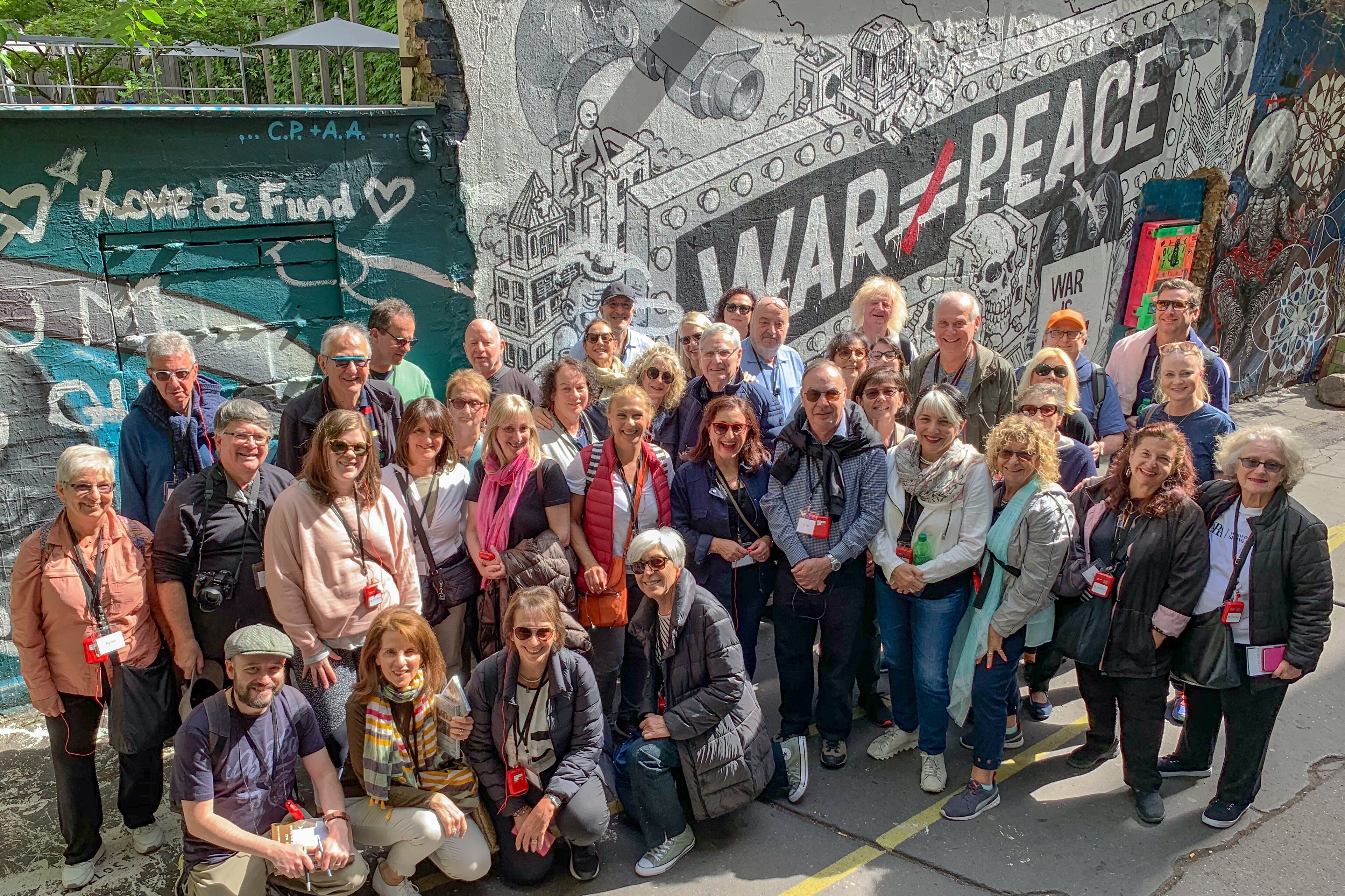
Photograph: our guide, Amos
From Weidt’s workshop, we walked through the Scheunenviertel (an old proletarian Jewish quarter) to what was once Berlin’s largest Jewish cemetery. Sacked and demolished by the Gestapo in 1943, there are now only a handful of tombstones still in existence, which testify to the 200 years, from 1627-1827, that this cemetery had been active.
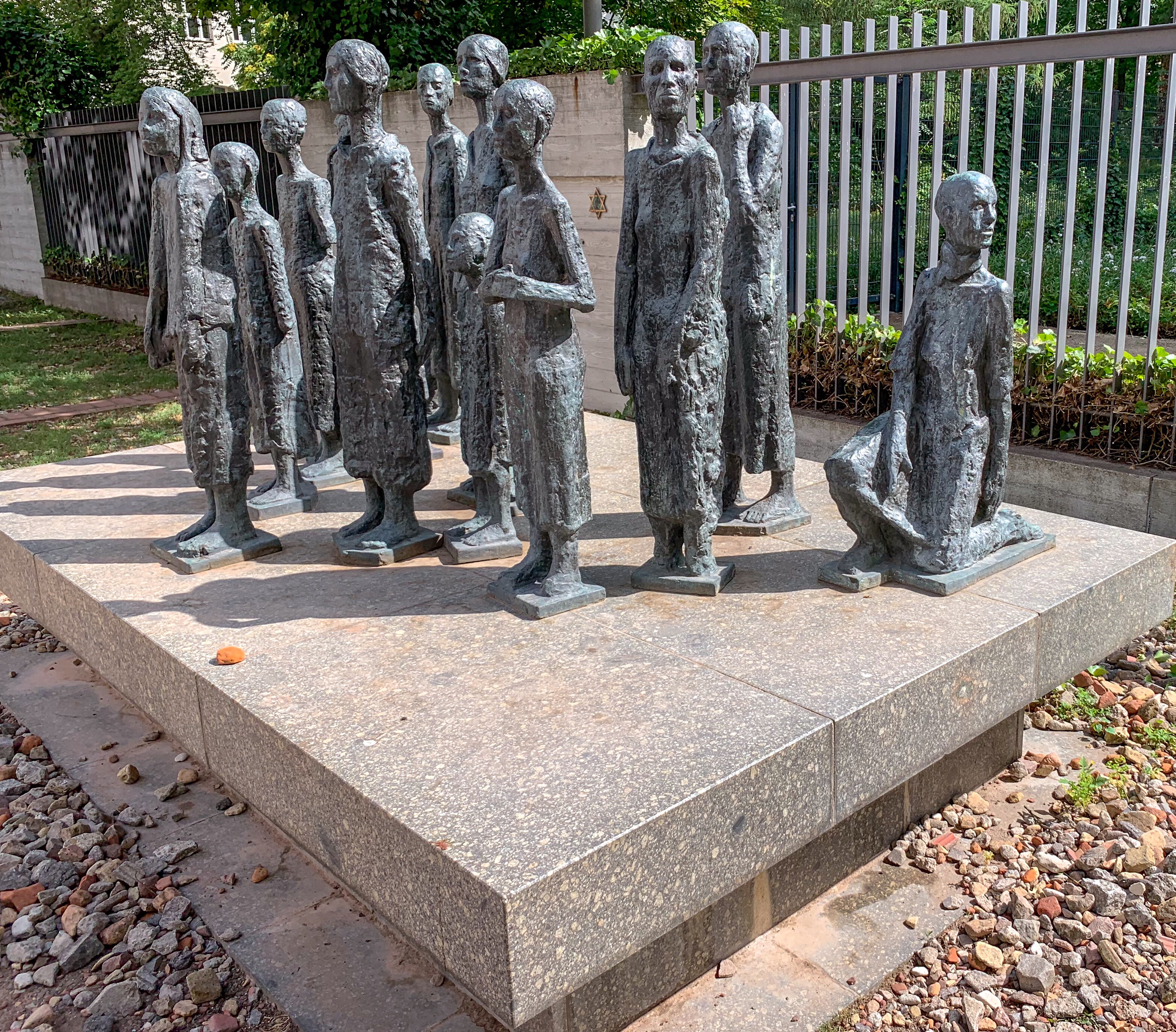
Photograph: Howard Wolfers
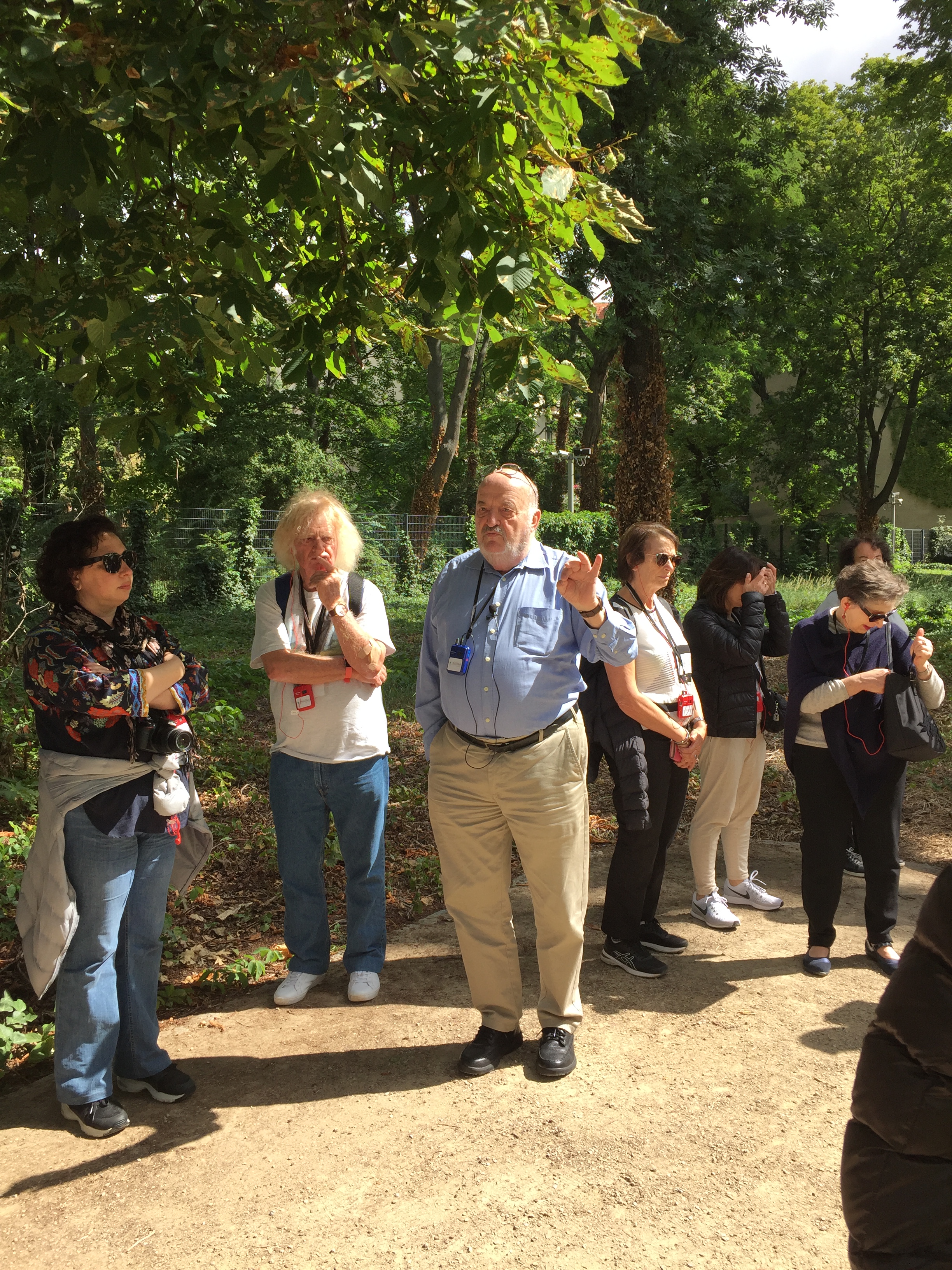
The most famous person to have been buried in this cemetery was the Jewish scholar, philosopher and biblical translator, Moses Mendelssohn. A man of mixed but enduring legacy, we heard from Konrad about his contributions to the haskalah and the disdain in which certain sectors of the Orthodox community came to hold him. Whether or not he was a proto-reformer, his ideas had a profound impact upon subsequent Jewish thought, and the movement of which he was a part continues to reverberate today.
Photograph: Simon Holloway
In addition to a lot of refreshing greenery, the cemetery also sports several very prominent CCTV cameras, and is under constant video surveillance, like everything else in this city that pertains to the history of the Jews.
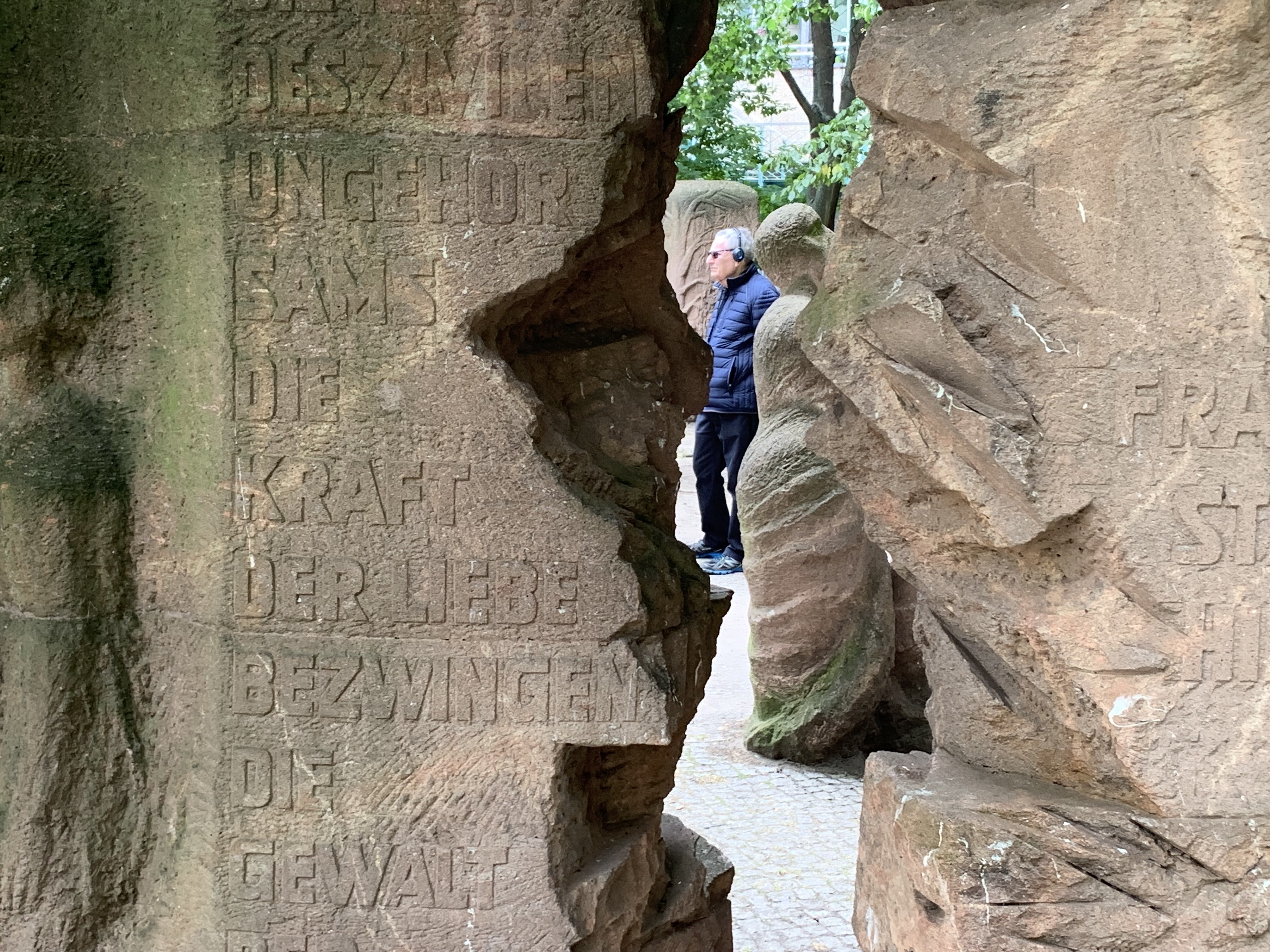
From the cemetery, we walked to the Block of Women: Berlin’s memorial to the Rosenstraße protest.
This was a protest that occurred in early 1943, when Josef Goebbels (the Gauleiter of Berlin) arrested some 1,800 forced labourers as part of what came to be known as the Fabrikaktion. Many of those men had non-Jewish wives, who took to Rosenstraße, where the men had been imprisoned, and demanded their husbands back.
What started as a small crowd gradually grew in number until several hundred were protesting day and night and Goebbels, concerned for international opinion, relented. Every Jewish man with a non-Jewish wife was begrudgingly released, and the remaining Jewish men were sent off to Auschwitz to the sound of no protest whatsoever.
Photograph: Howard Wolfers
The demonstrations that had saved the lives of those men in mixed marriages have, of course, a difficult legacy. Were they protesting the mistreatment of Jews in Nazi Germany, as some have romantically supposed, or were they merely asking for the return of what was theirs? One way or another, this was not only the largest public protest of Nazi antisemitism on the streets of Germany, it was also the last.
This part of our morning over, we again board the buses for a different type of memorialisation: the Berlin Jewish Museum.
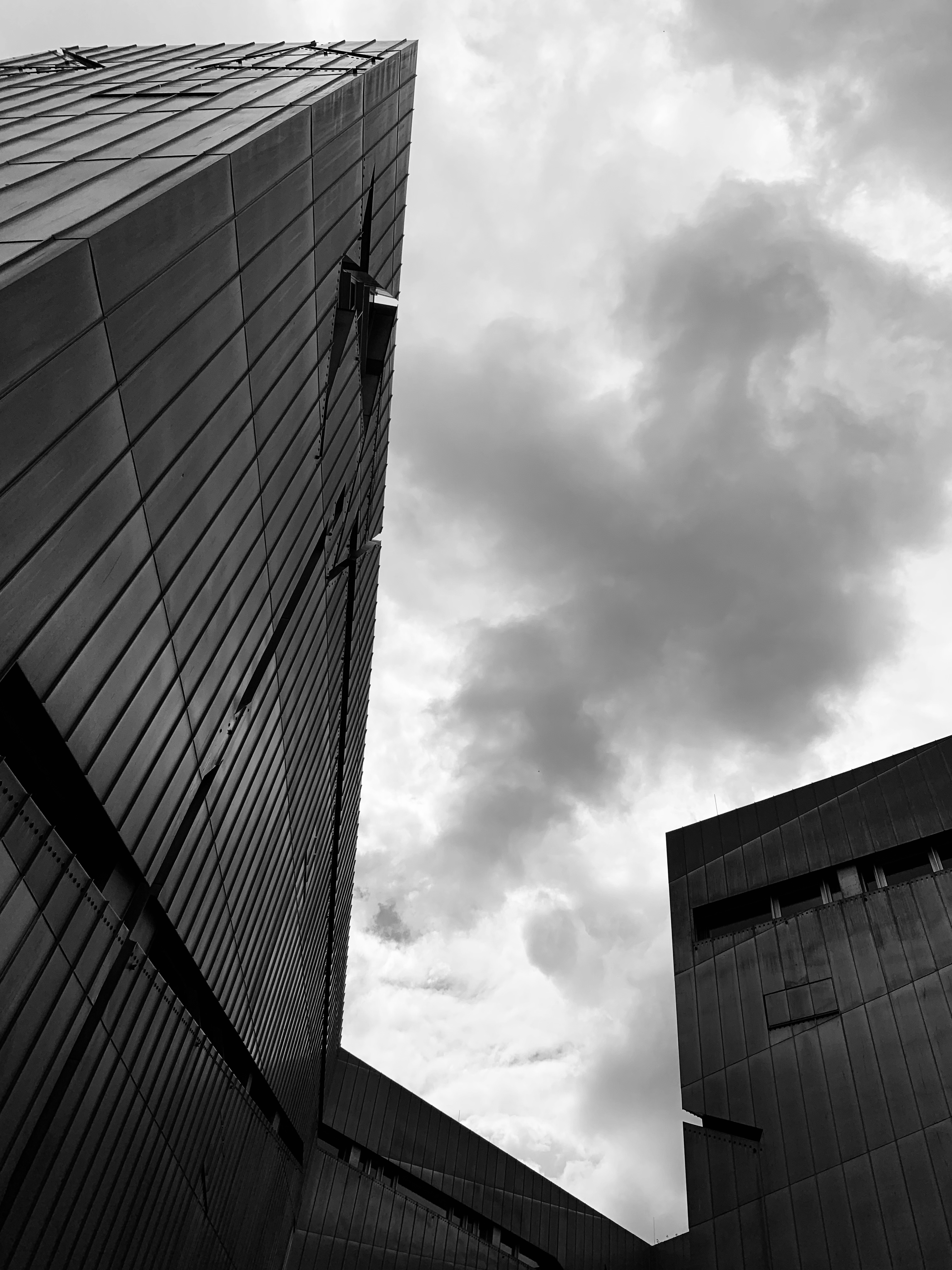
After receiving a brief introduction to the museum, we break into three groups to explore Daniel Libeskind’s celebrated subterranean monument to the Holocaust.
Photograph: Howard Wolfers
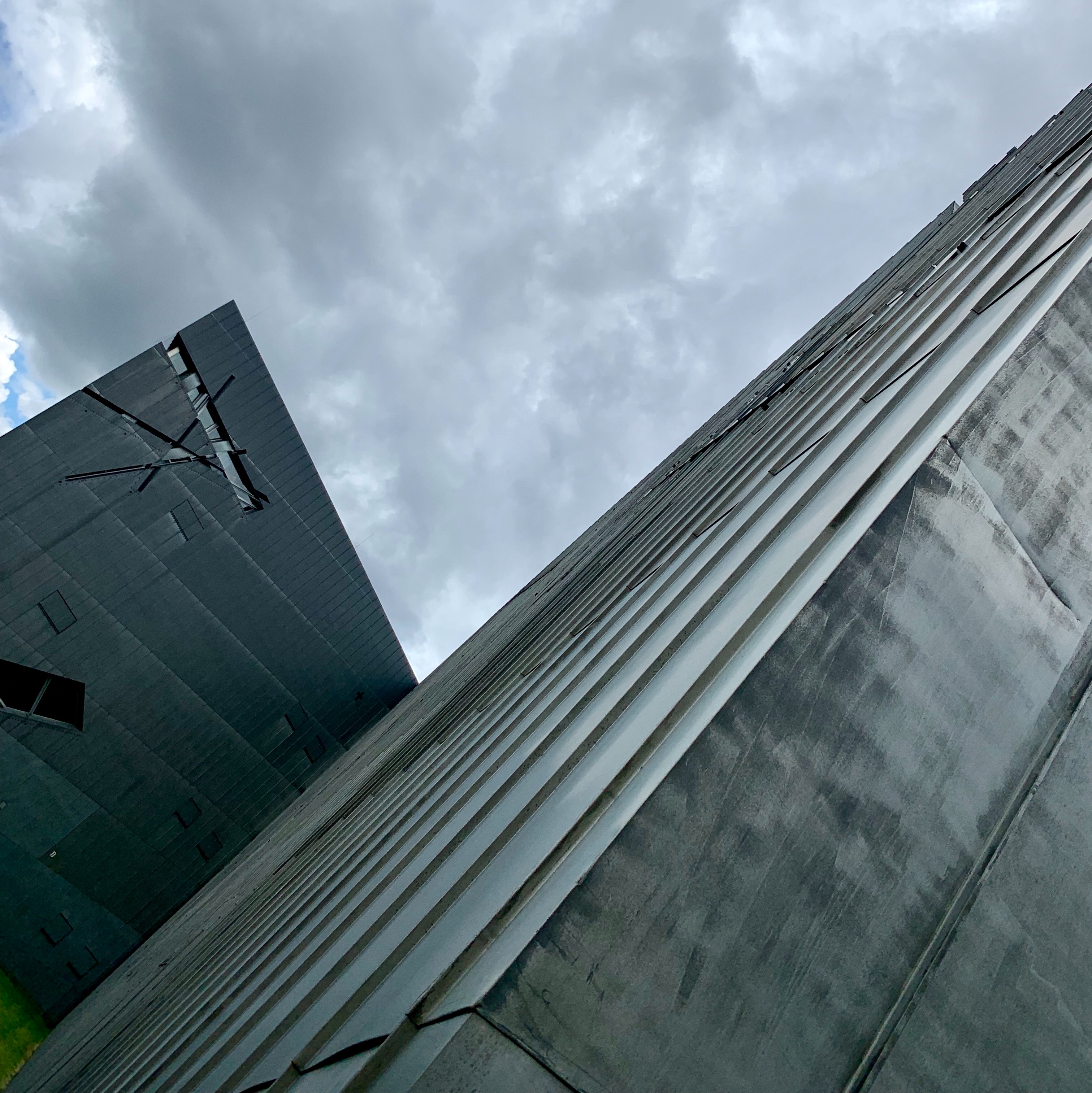
Photograph: Howard Wolfers
Structured as a series of intersecting lines, in corridors that play with perception and comprehension, the monument strikes the newly-arrived visitor as a sort of maze. Flashing lights and rotating mirrors increase the sense of discombobulation, while frequent intersections force us to continually choose and re-choose a path.
Does one continue in a straight line, where the walls are emblazoned with the names of German towns? Does one choose the path of exile, with the names of European and international cities written in their place? Or does one fork off on the axis of destruction, where the names are frighteningly familiar to all students of the Nazi genocide?
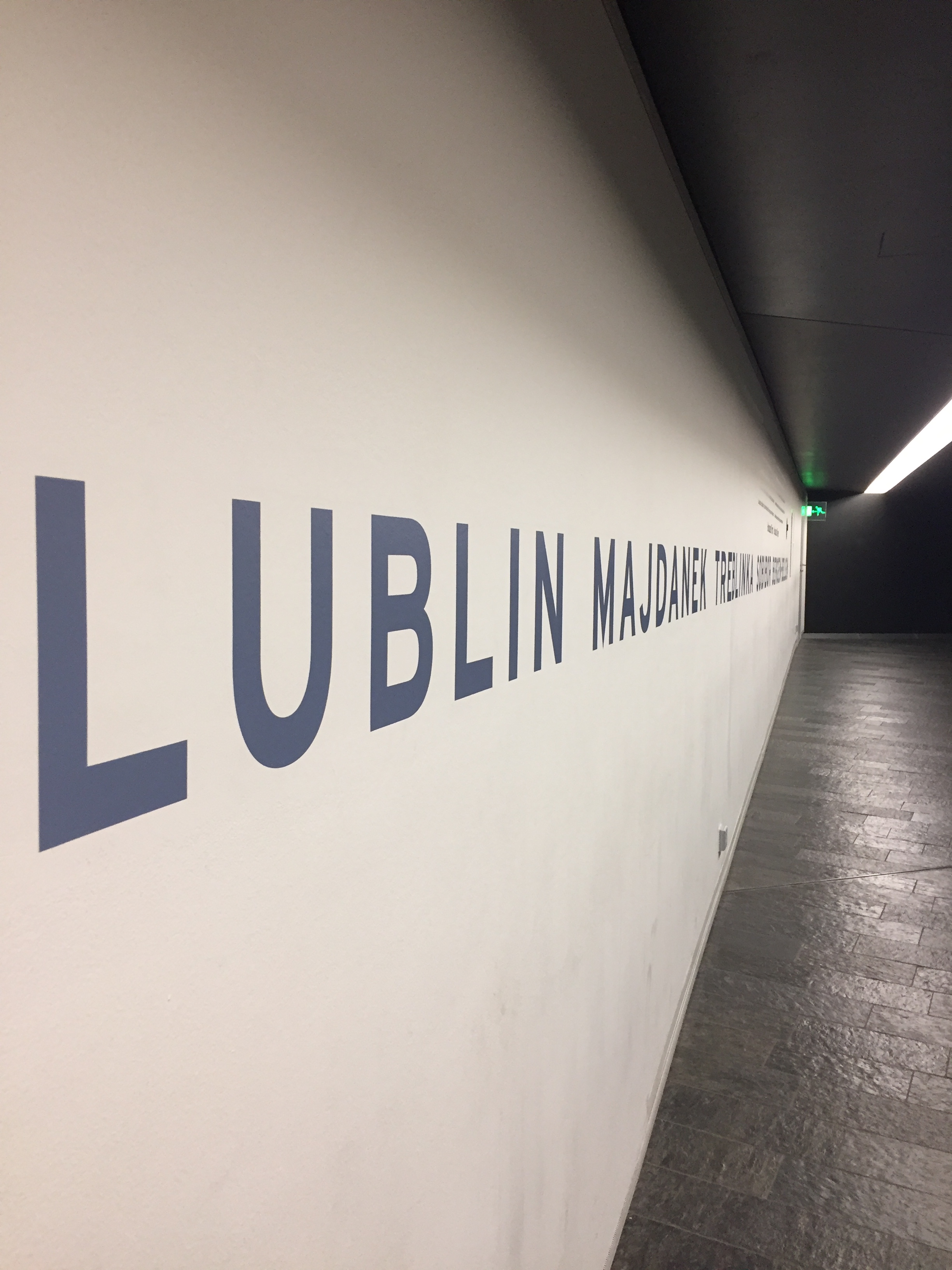
Photograph: Simon Holloway
Curiously, the path that leads to annihilation also bisects with the paths leading to continuity and to exile, presaging the threat of destruction that faced those who were hiding and those who were fleeing at every step they took.
Each of the three paths culminated in a memorial space that was remarkable in so many ways. The path leading to the Holocaust concluded in the Holocaust Tower: a room lit only by natural light that flowed through a thin aperture, with no heating and with nothing to disrupt the smooth and textureless surface of the walls. A triangular cavity, stretching upwards to the roof, this was a dark space and a cold one. An alienating space.
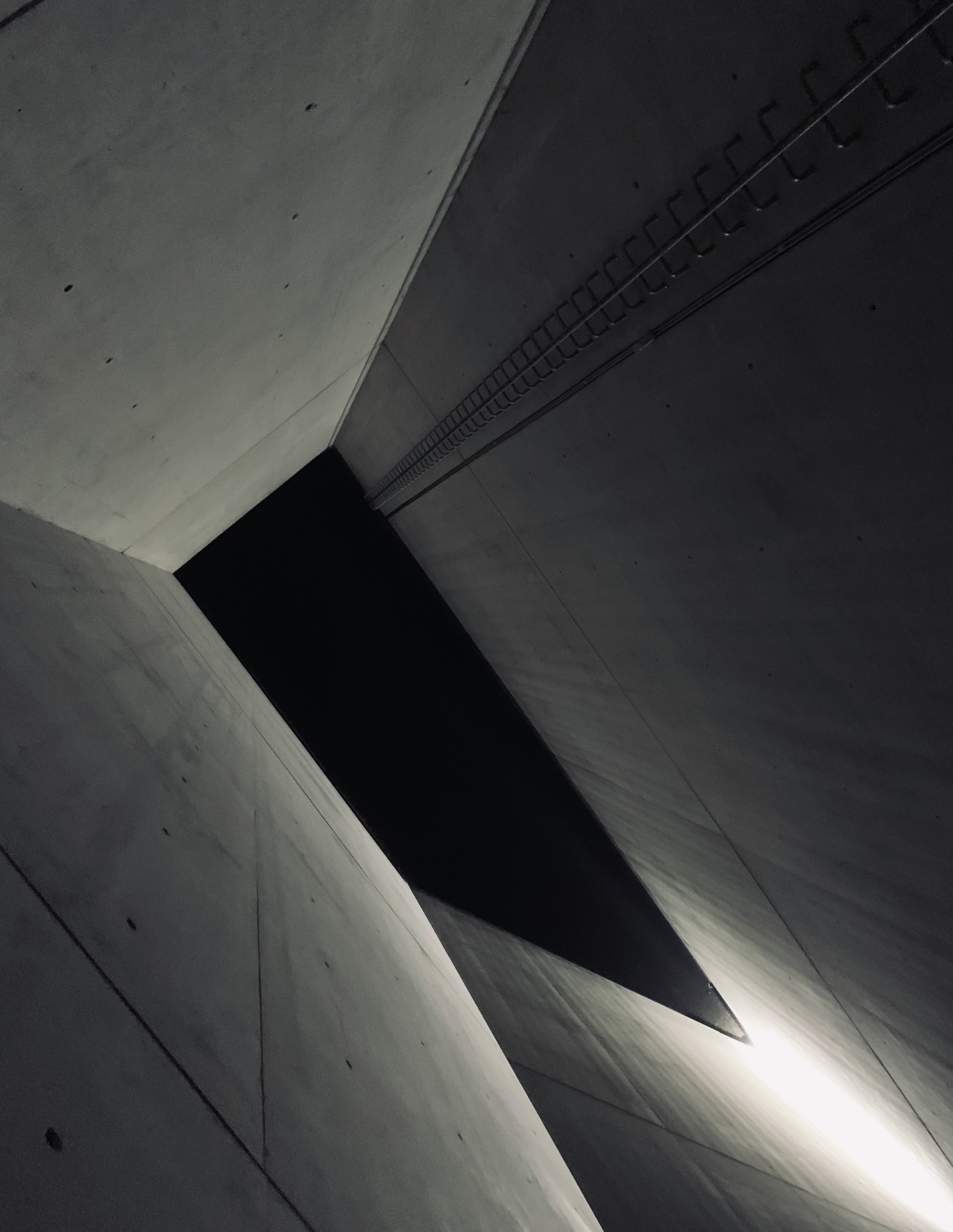
Photograph: Howard Wolfers
The path leading to flight culminated in the Garden of Exiles. No photograph can do justice to this incredible space, in which 49 featureless slabs are arranged in a perfect geometrical square, but in which the ground tilts slightly on both axes, forcing one to stumble over its rocky and uneven surface. As Libeskind remarked, this is the only space in his memorial that is geometrically regular, but it is also the only space that our feet treat as uncertain.
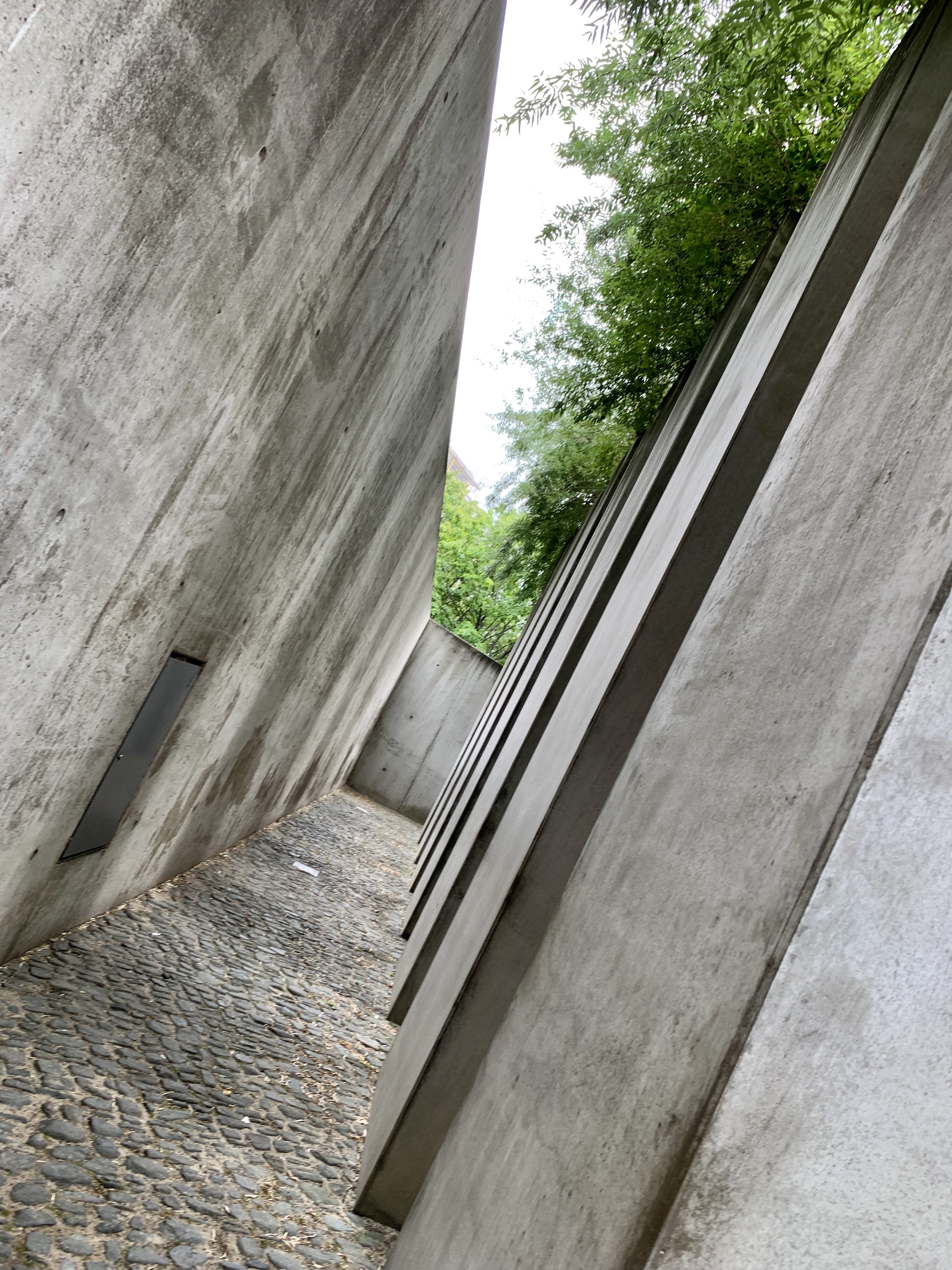
Photograph: Howard Wolfers
Finally, and perhaps most controversially, is the culmination of the axis of constancy. A room, its floor littered with metal disks, each of which is cut crudely in the form of crying and shouting faces, it invites us to walk upon them – or to watch and to listen while others do. What does it mean? What is Libeskind saying? As with every aspect of this incredible memorial, we felt that it permits of so many interpretations.
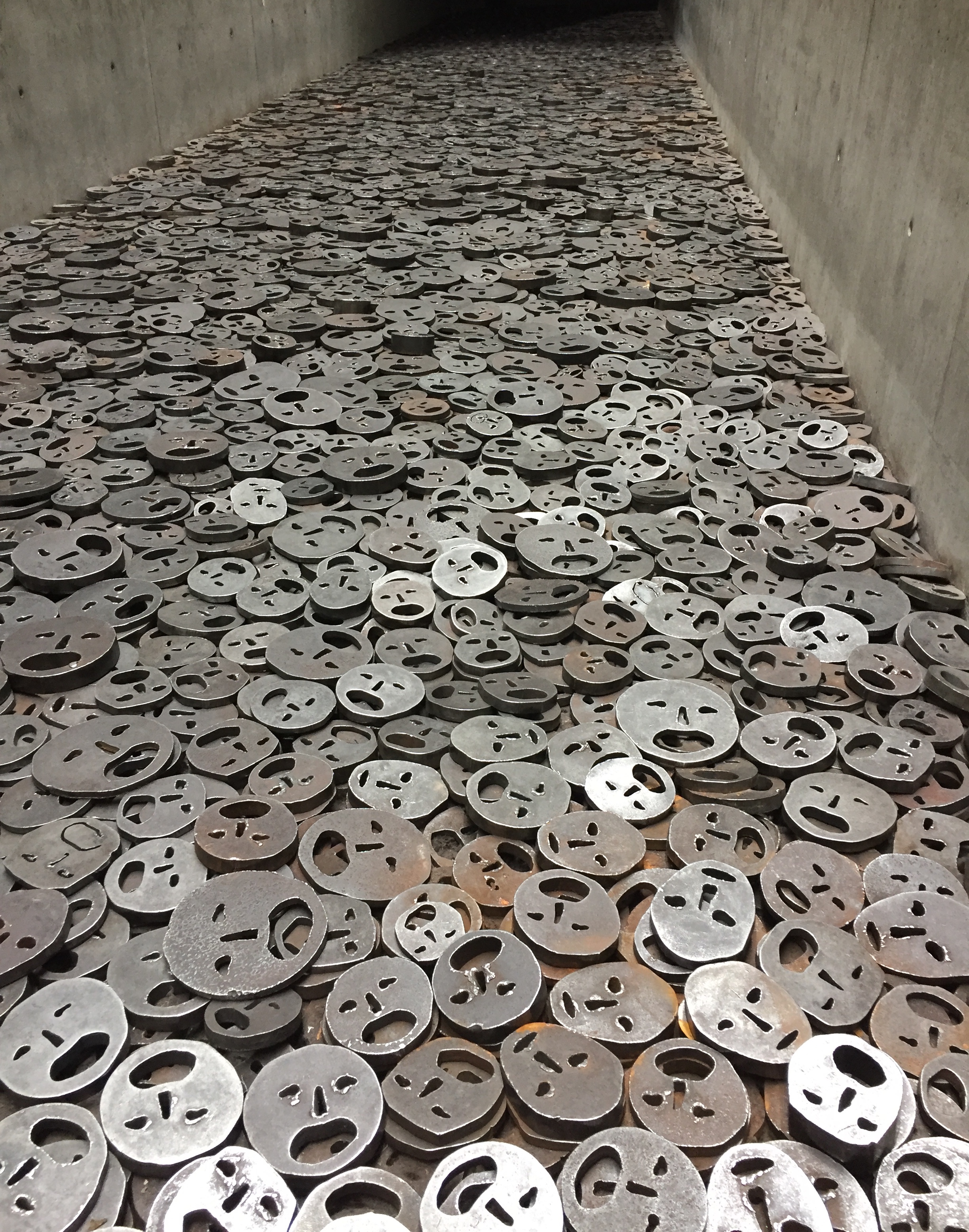
Photograph: Simon Holloway
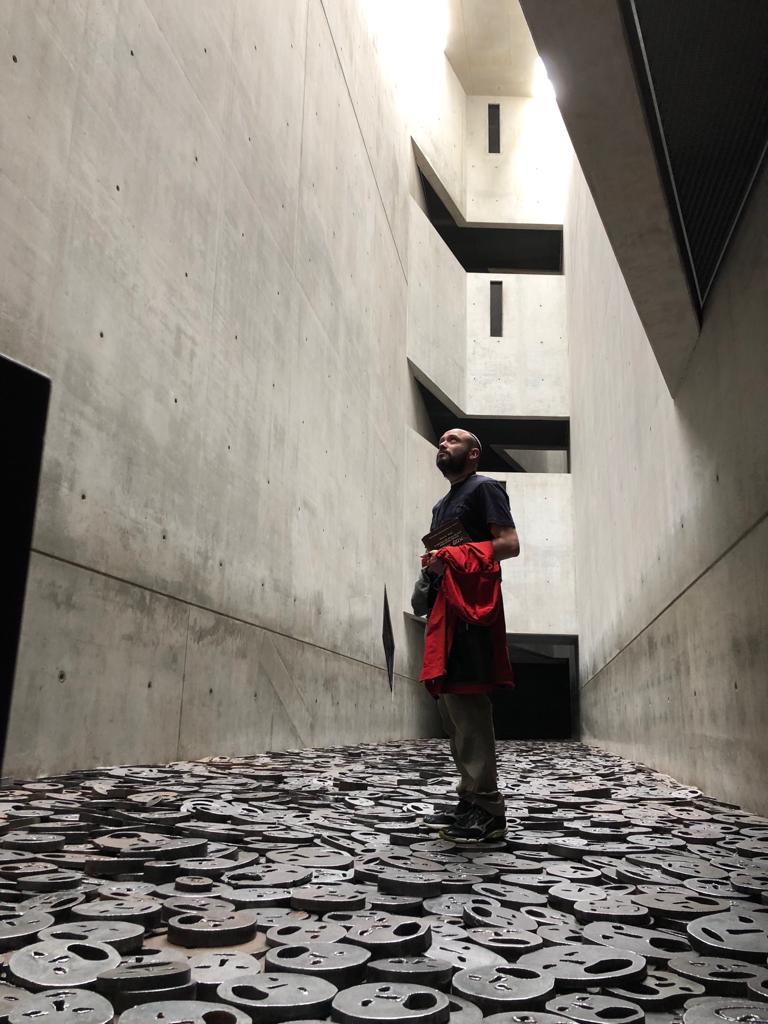
Photograph: Sandra Barrkman
In some ways this was our shortest day so far, but in others it feels perhaps the longest. There are so many empty spaces within this city, and it is fitting that there are so many voids within its most celebrated memorial.
In the afternoon, before going out for dinner as a group, we enjoyed a boat cruise of Berlin’s waterway. Observing the other people on the boat, and considering the sights on either side of the canal, we really got a sense of just how many different ways there are to experience this city. The site of Germany’s persecution of its Jews is but one of a number of intersecting histories that cut across the tapestry that is Berlin.
 Berlin and Poland Tour 2019