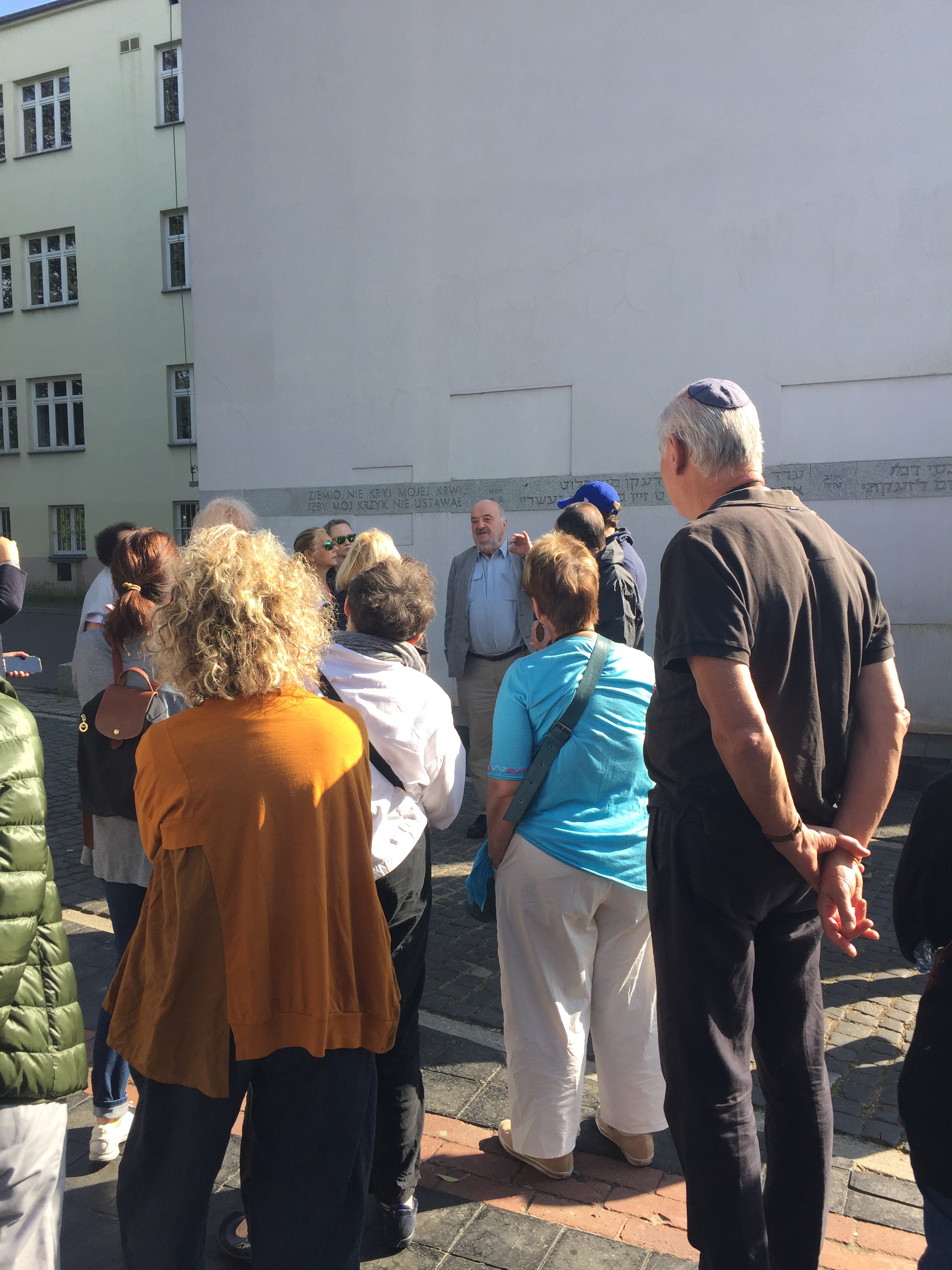
The morning begins bright and early as we file into the bus at 8:00am, well-rested from our day off. Our first stop is the umschlagplatz, which we had previously seen only from the bus window.
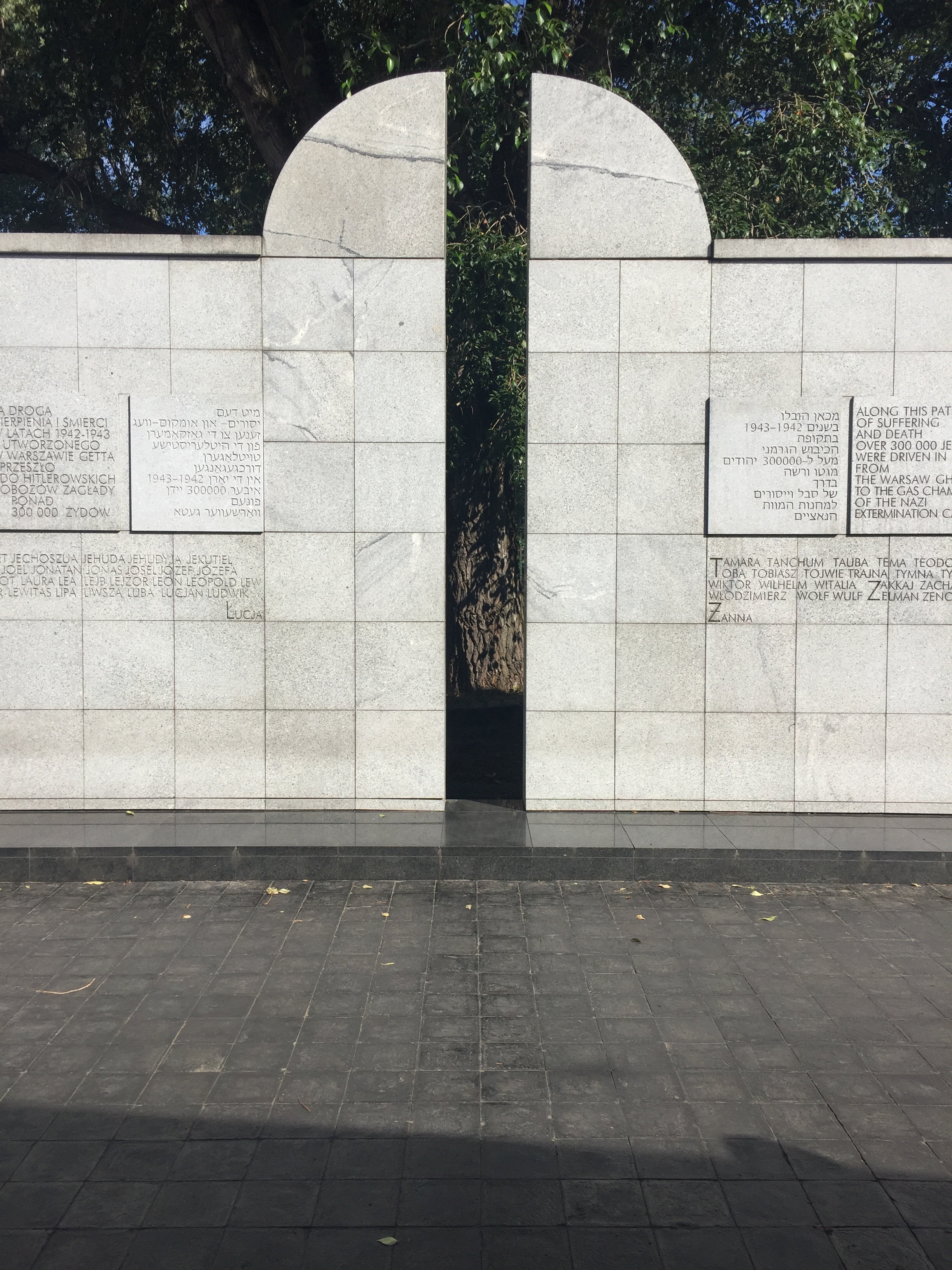
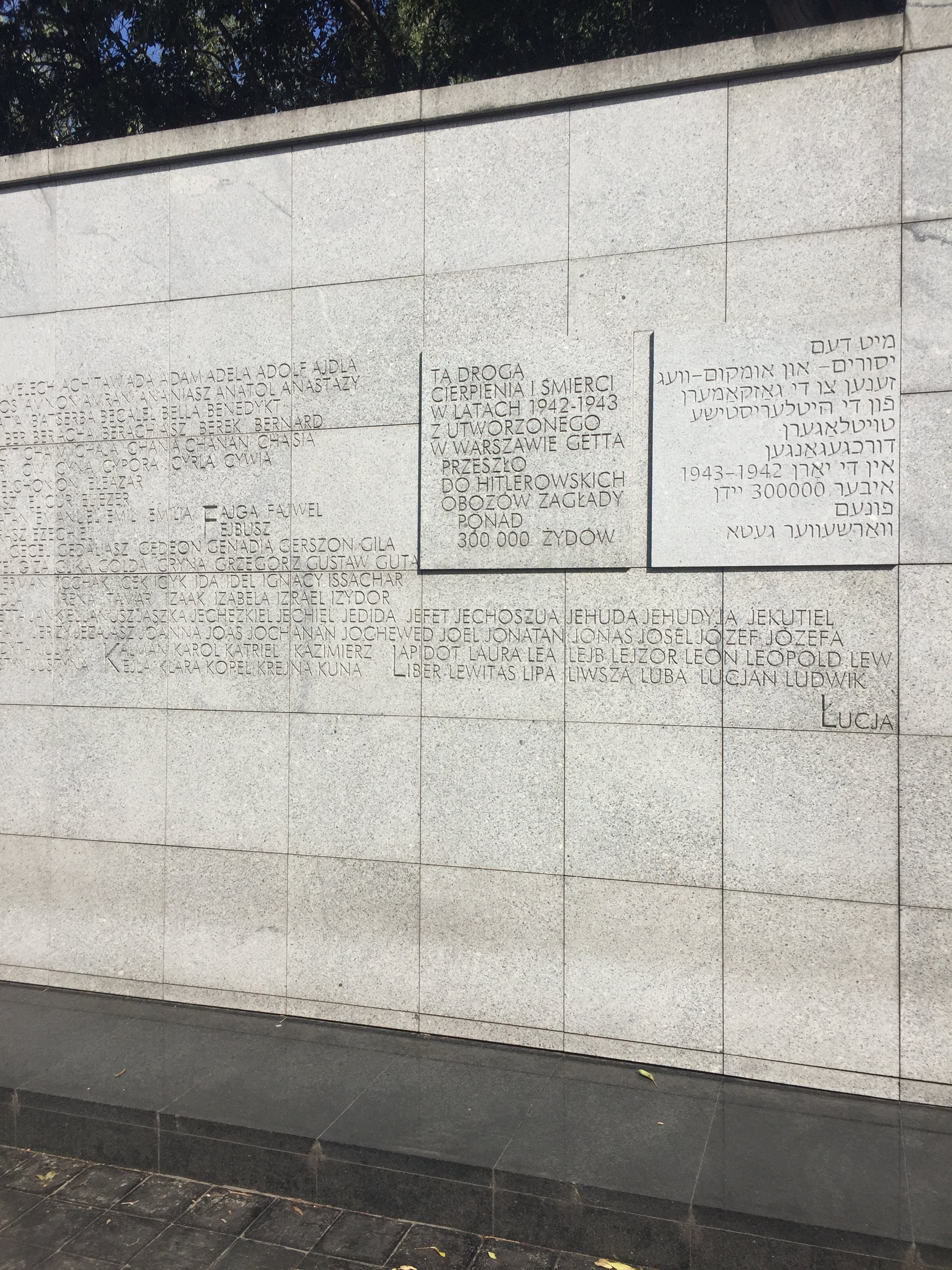
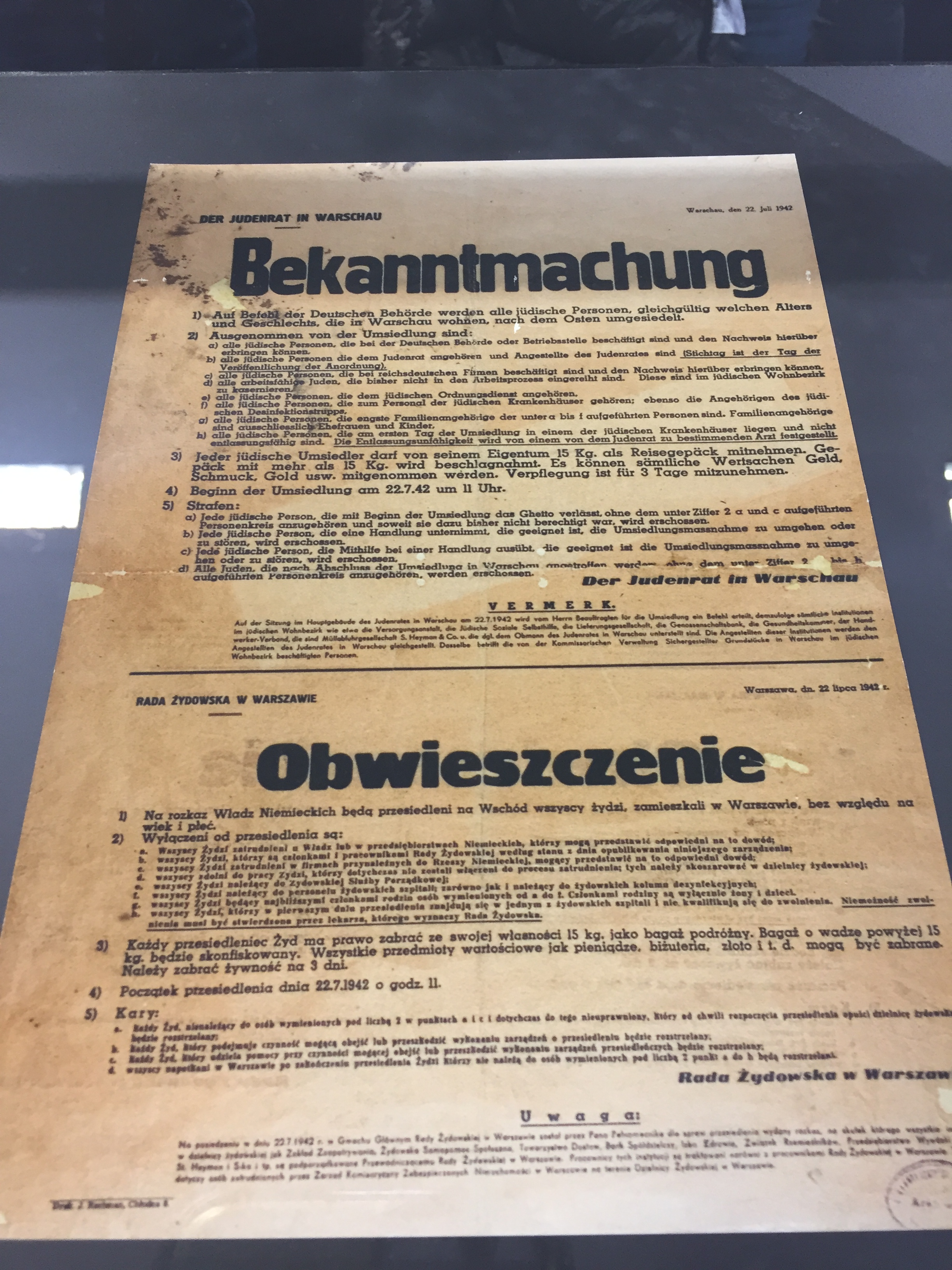
It is difficult, standing here in this neat, clean memorial to imagine the sweat and the filth of the umschlagplatz in use. Hearing from Fil and from Konrad about how the deportations proceeded invokes horror, and the blue skies above our heads make it feel longer ago than it was. A description, written in Polish, English, Yiddish and Hebrew informs visitors what happened here, and a quote from the book of Job makes clear the purpose of the memorial:
O earth, do not cover my blood;
let my outcry find no resting place.– Job 16:18
Photograph: Simon Holloway
Photograph: Simon Holloway
Photograph: Simon Holloway
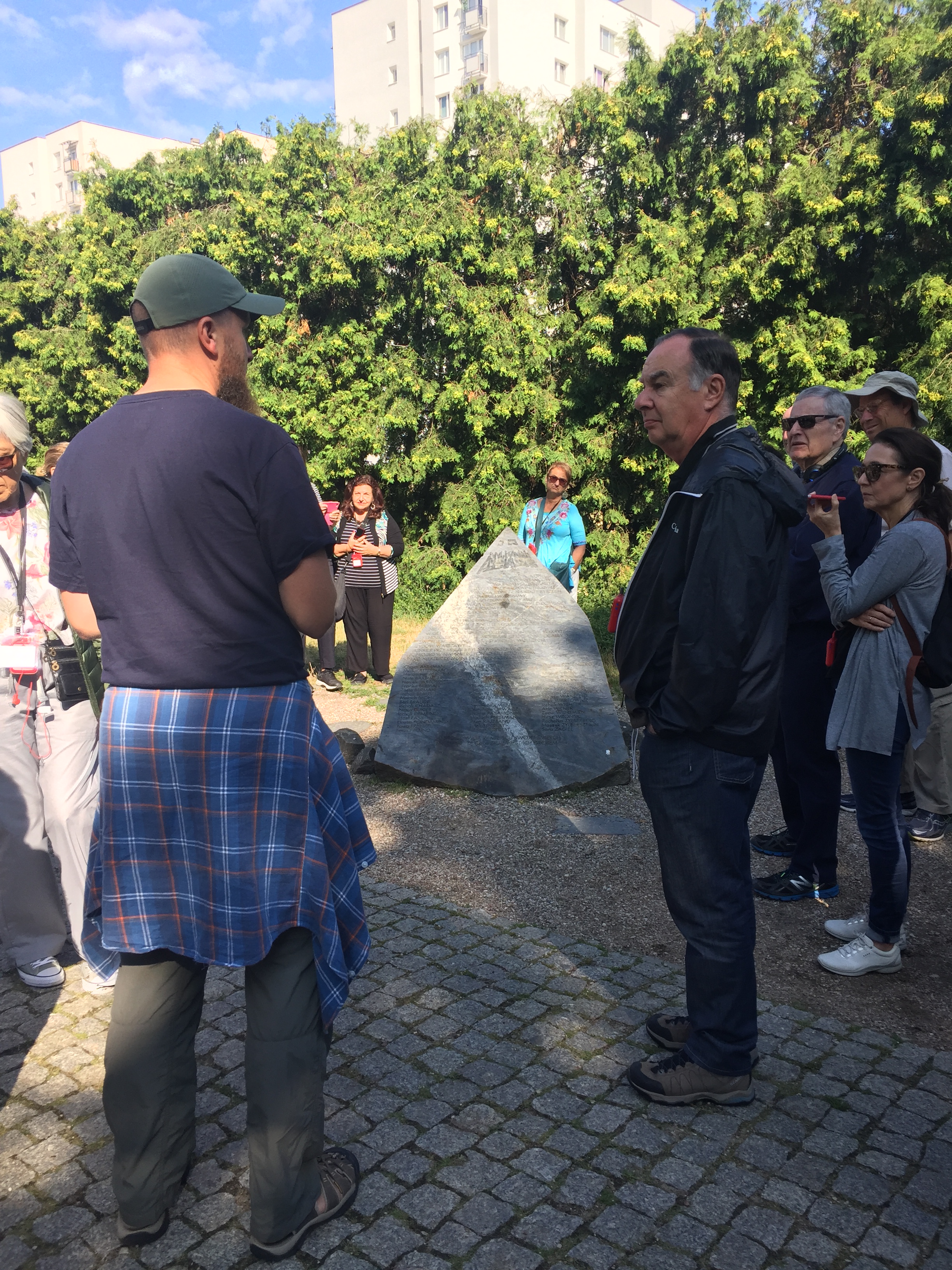
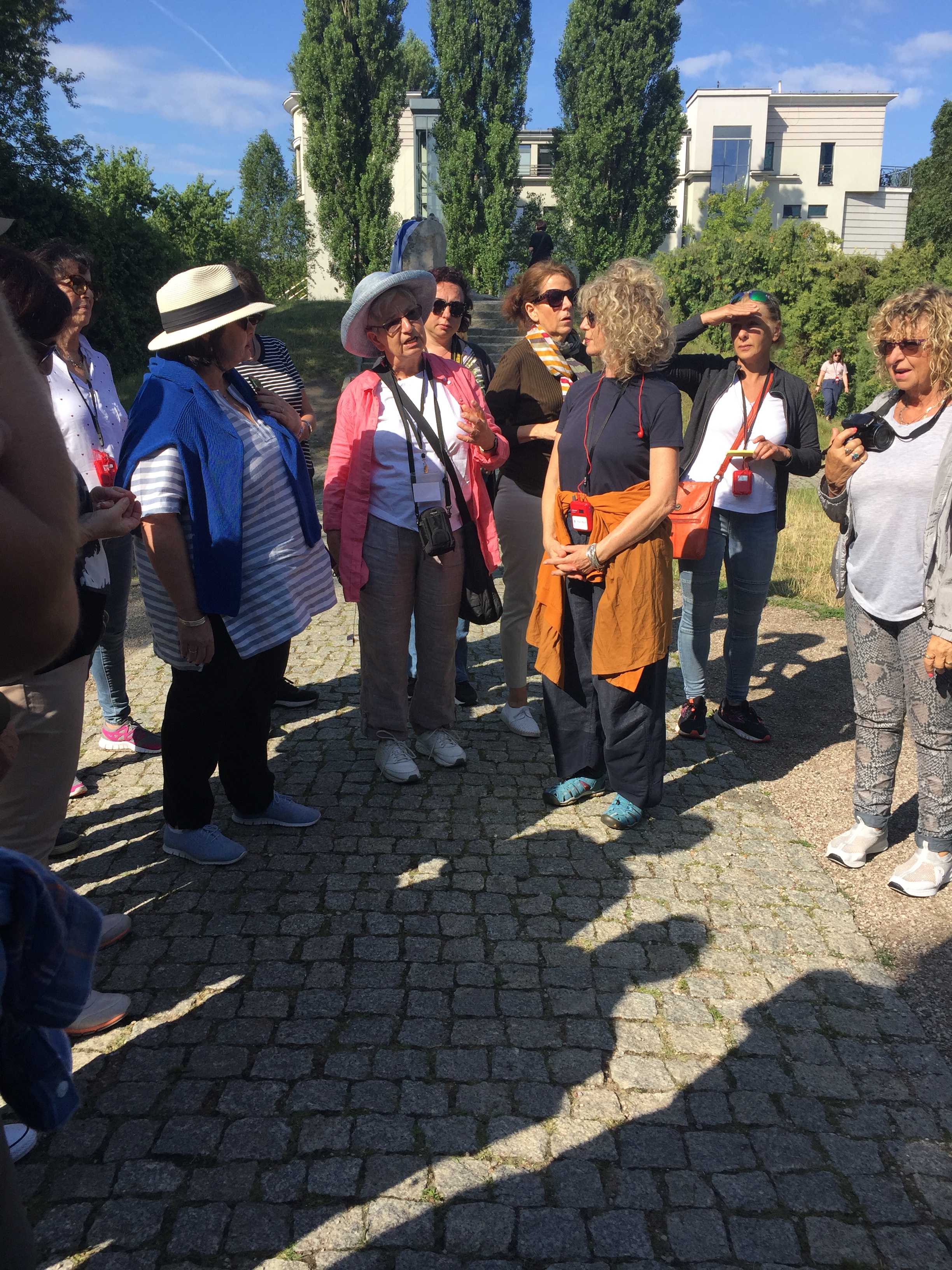
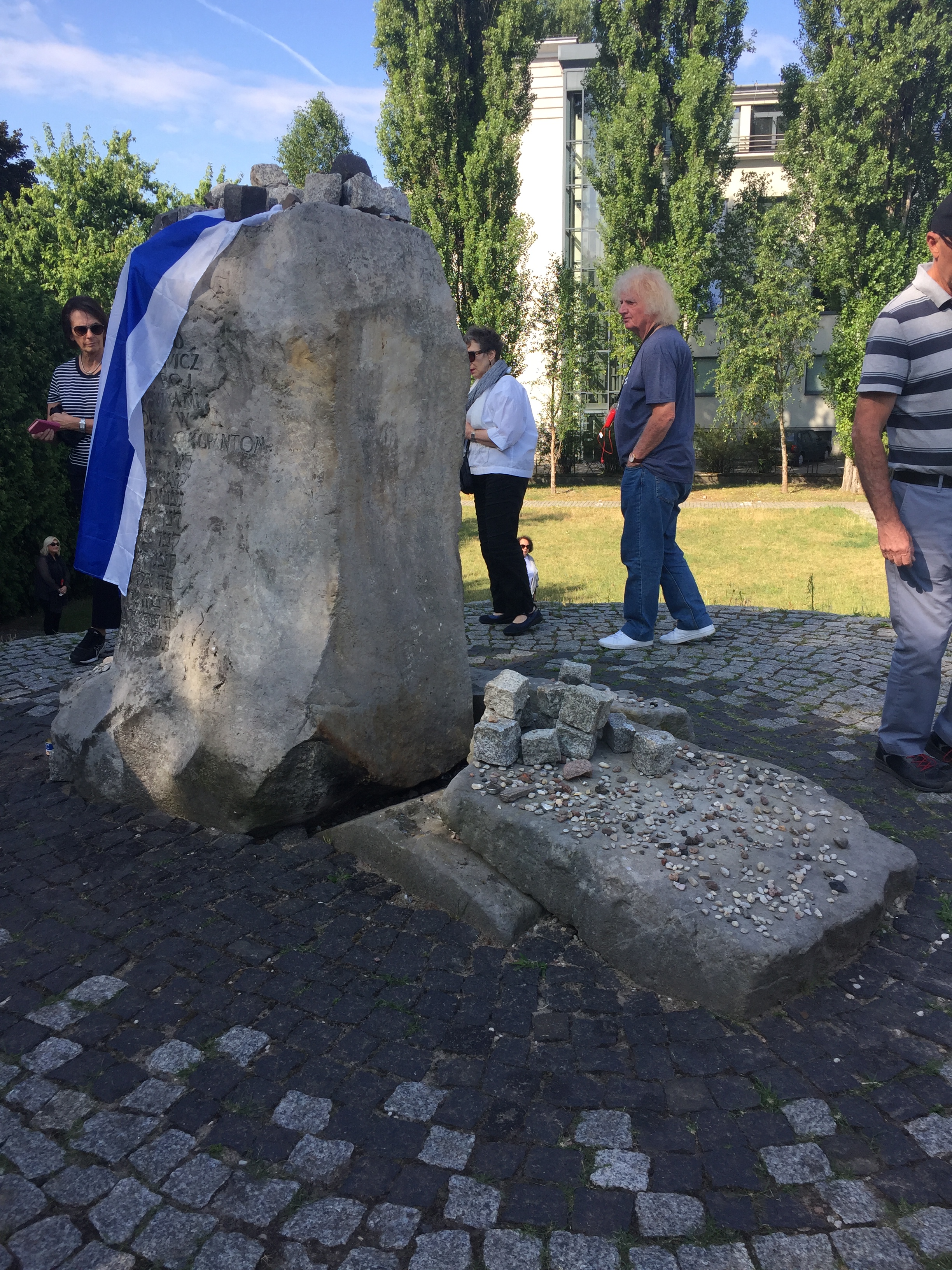
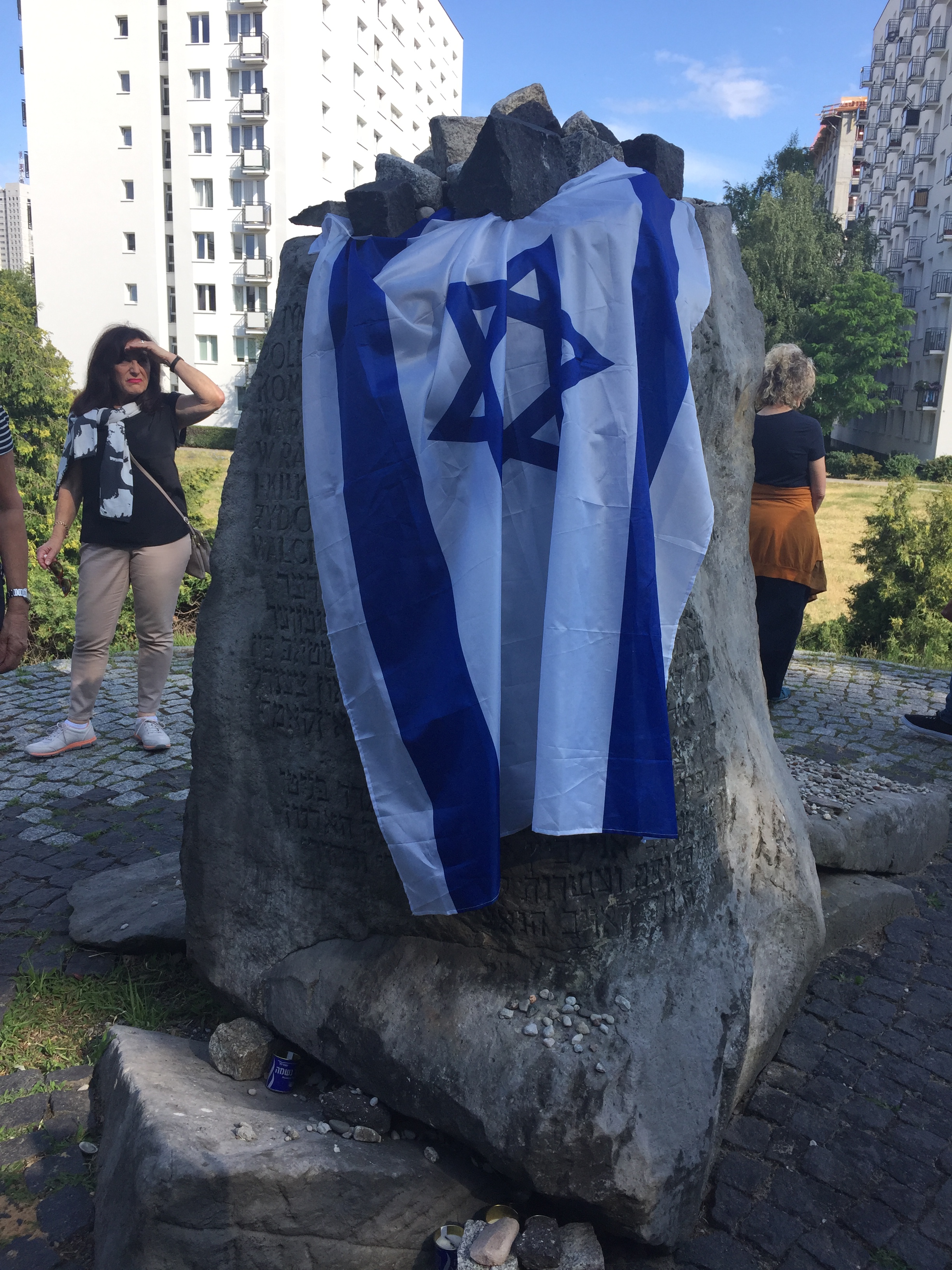
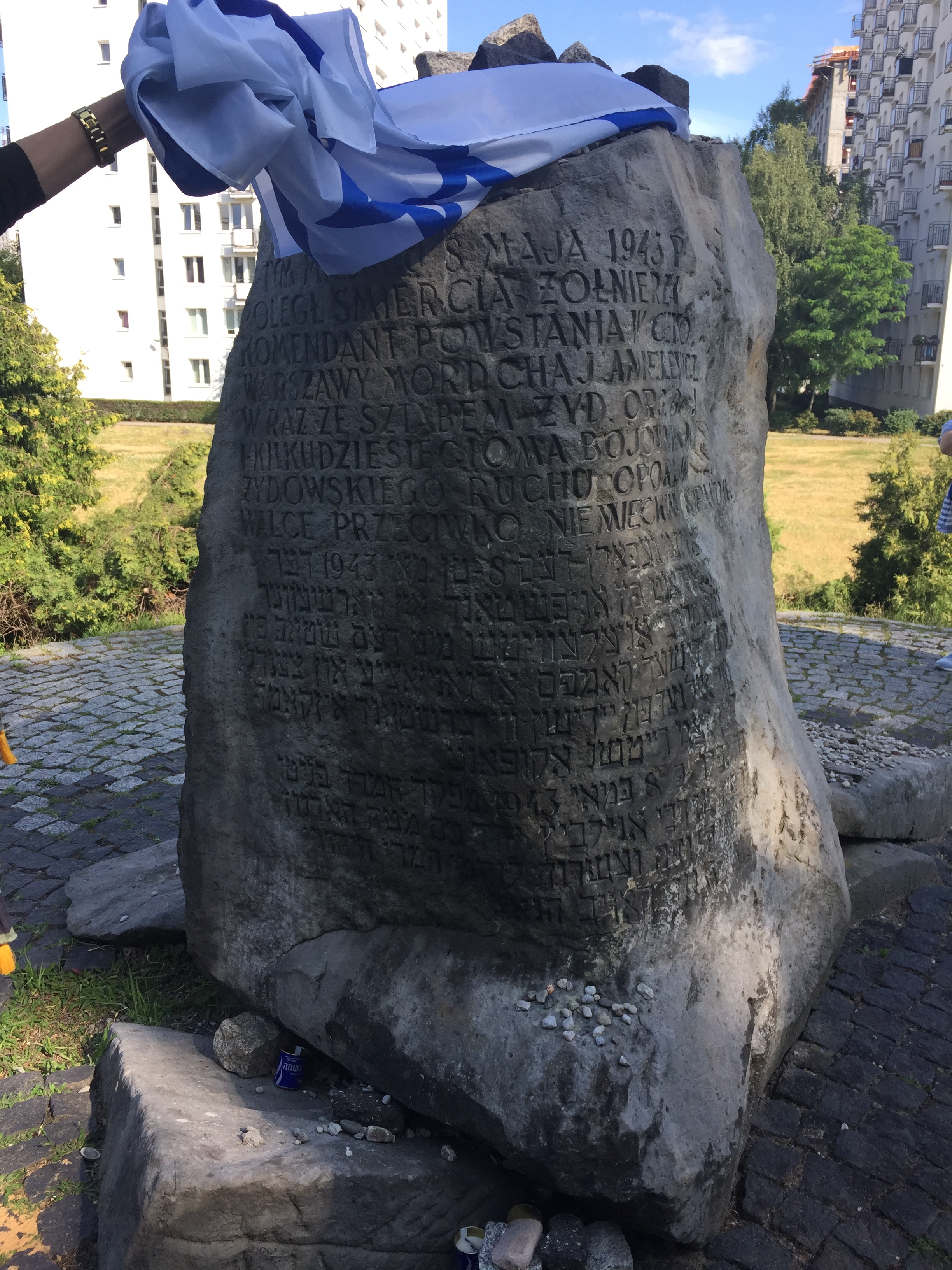
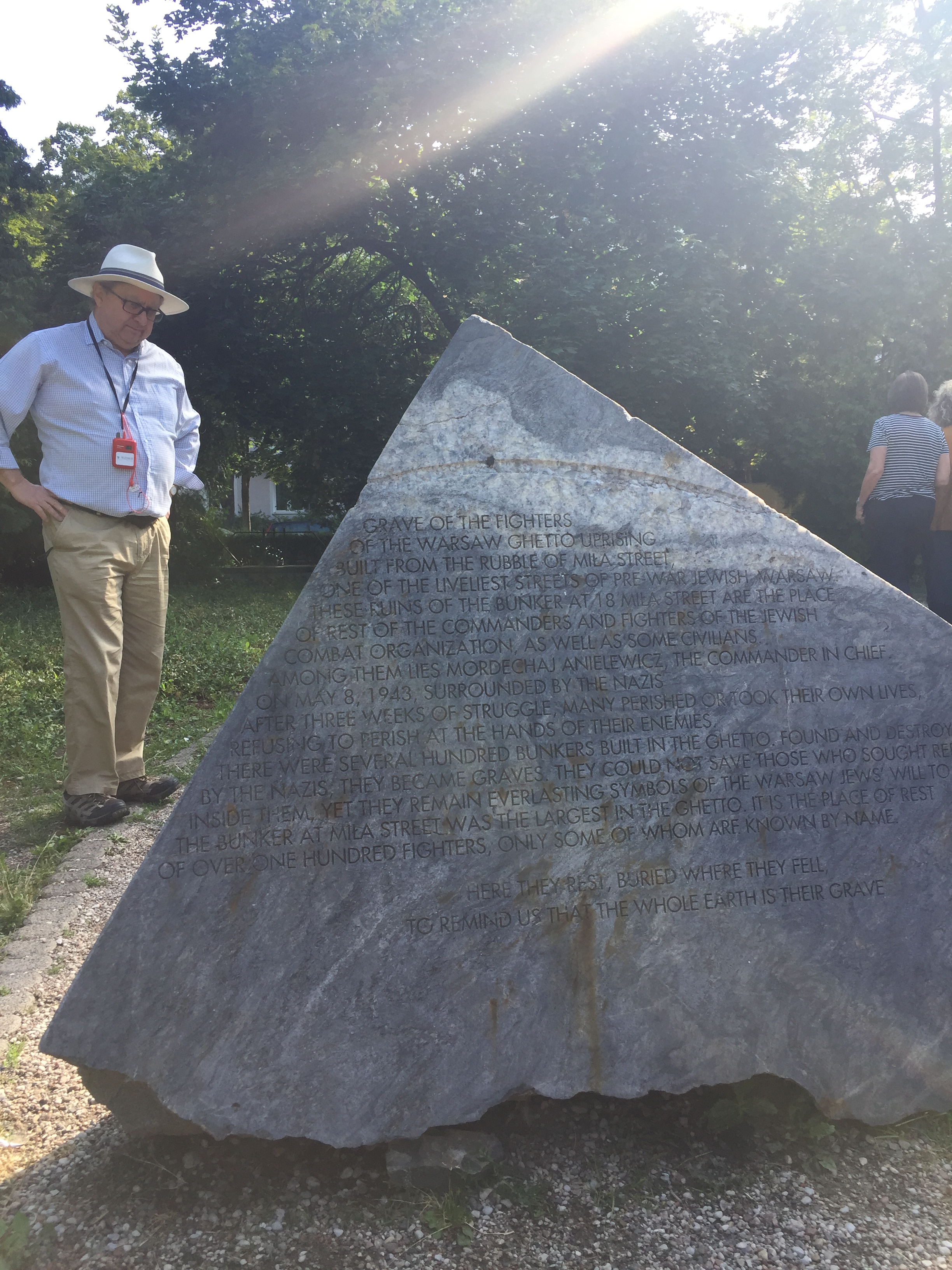
From here, we walk down the street and around the corner, past a series of memorials to ghetto writers and fighters, poets and heroes, to a monument at the site of Mila 18. The scene of the last stand between the resistance and the Germans takes the form of a hill, both at the top and bottom of which we see engraved stones, the one atop the hill having been draped in an Israeli flag.
We will be seeing a lot of Israeli flags today. These sites are common destinations for Israeli military groups.
We learn of a local tradition, started by a survivor of the uprising named Mark Edelman, that takes place every year, on April 17th. Polish people hand out daffodil pins, which can be seen on the breasts of many civilians in Warsaw, seeking to commemorate the outbreak of the uprising, and the tremendous of courage of all who participated in it.
Photograph: Simon Holloway
Photograph: Simon Holloway
Photograph: Simon Holloway
Photograph: Simon Holloway
Photograph: Simon Holloway
Photograph: Simon Holloway
Boarding the bus again, we depart for a longer journey, following the same path taken by those Jews who left the umschlagplatz by rail; the same path that the ghetto fighters had sought to avoid.
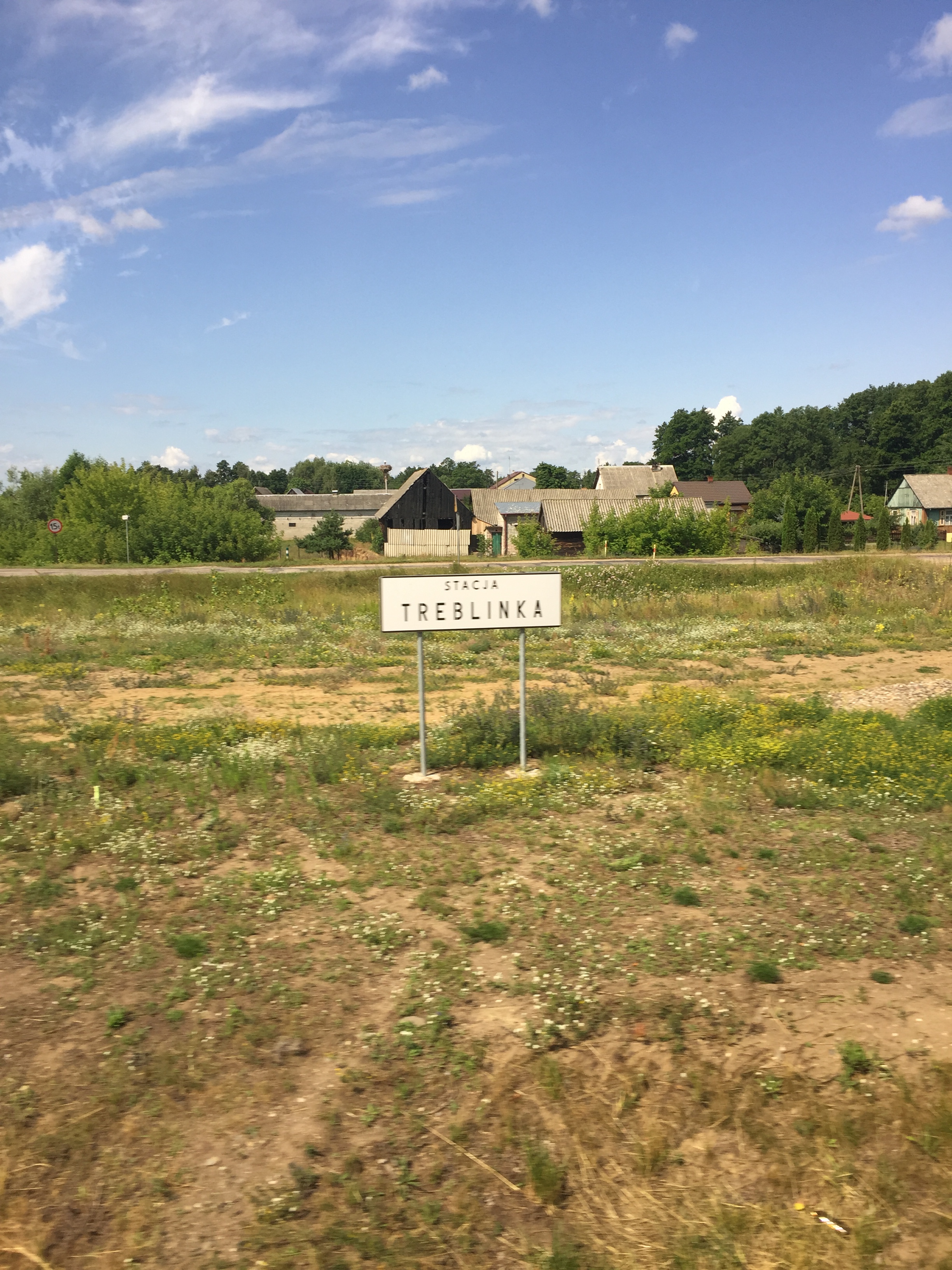
Approximately 120km out of Warsaw lies our destination. There, not far from a pretty little town called Małkinia, is the Polish village of Treblinka. Małkinia was known to many Jews in Poland at the time; Treblinka, of course, was not.
Photograph: Simon Holloway
The isolation of Treblinka from cities, its proximity to the railway of Małkinia and its centralised position relative to other centres of Jewish living made it an ideal destination for an extermination camp. The fact that there was already a labour camp nearby (that which we now term Treblinka I) made it all the more advantageous.
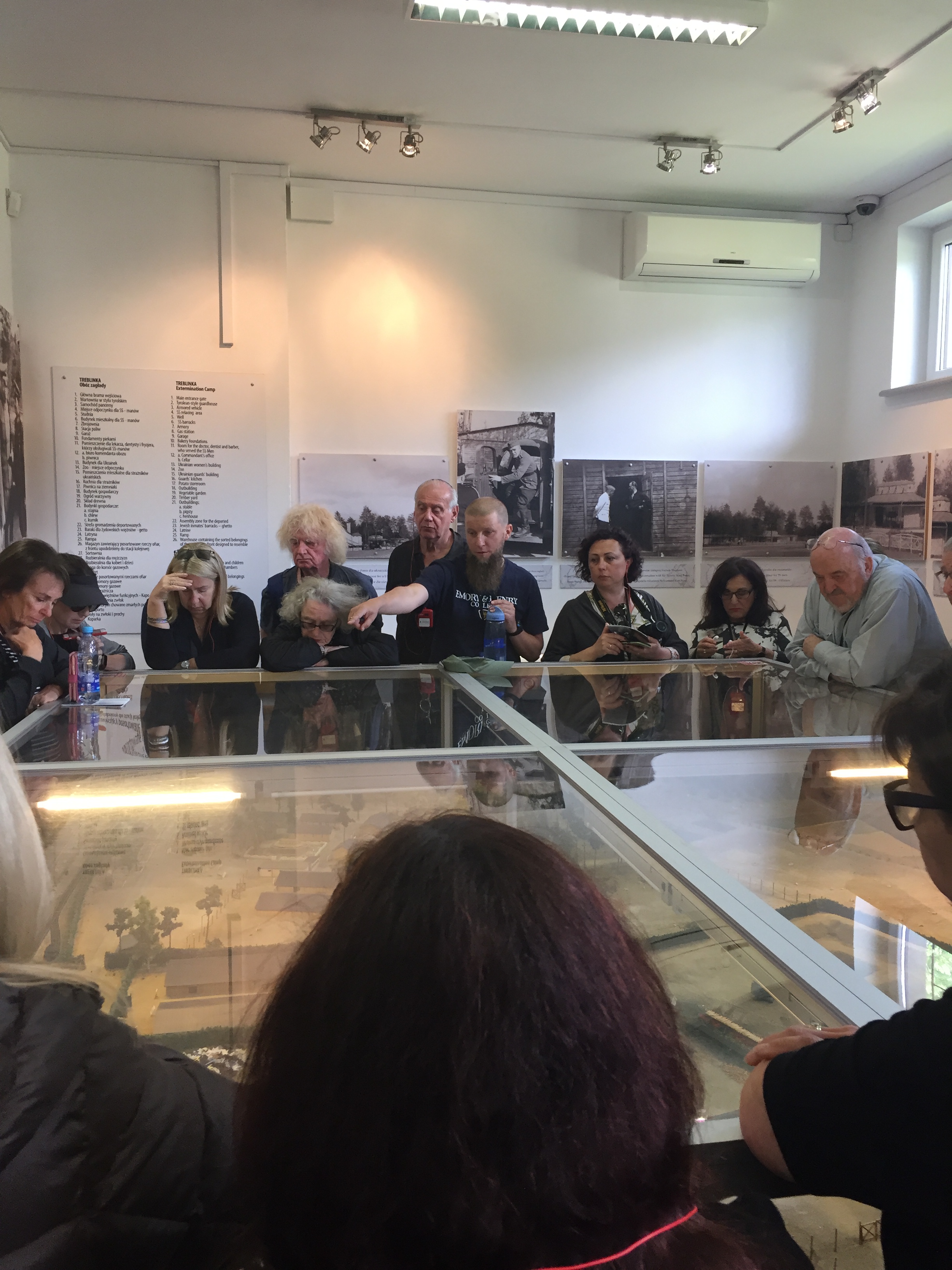
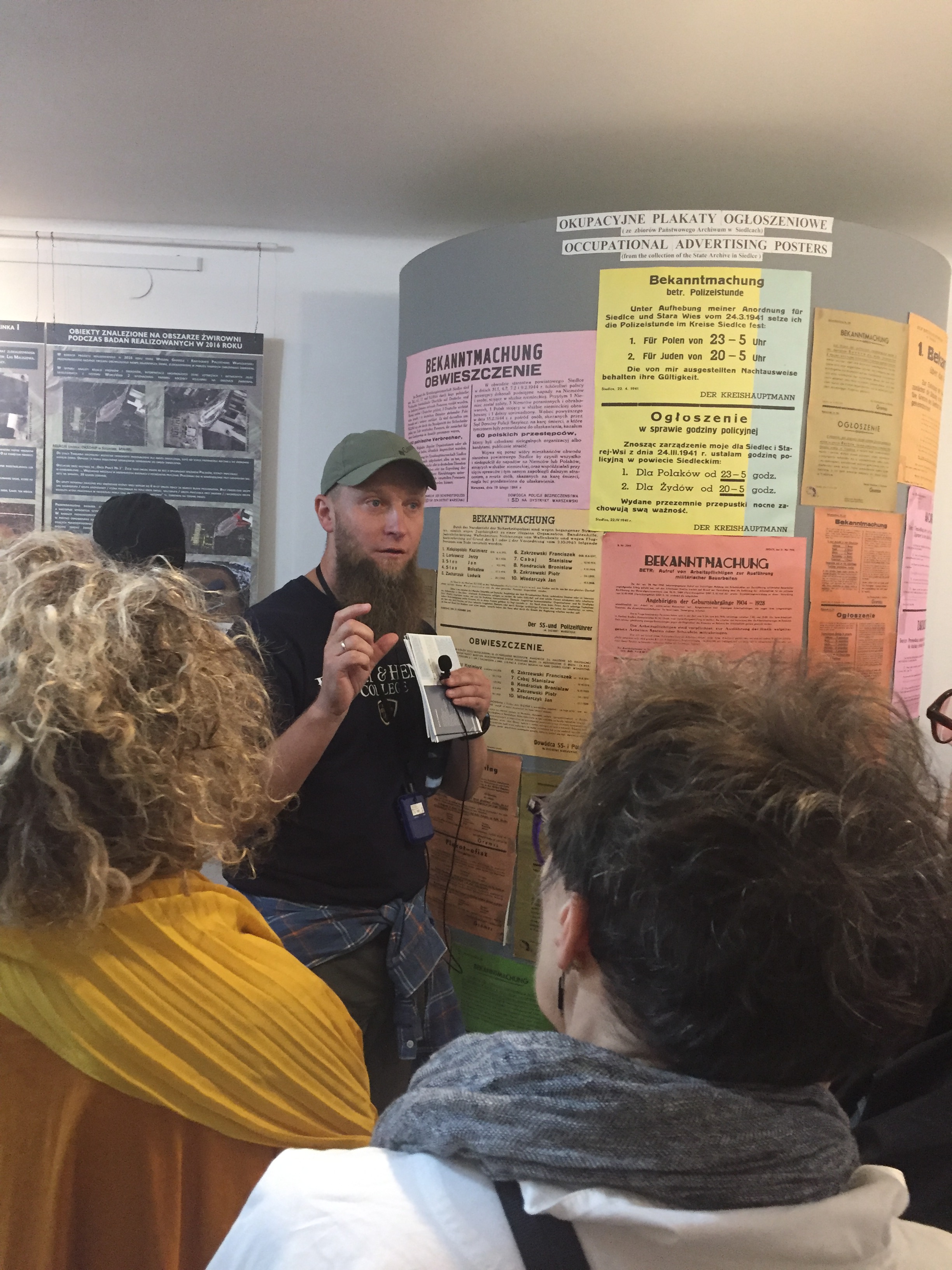
Here, after alighting from the bus, we looked at a scale model of Treblinka, based upon the testimonies of its survivors and of those who had worked within the camp as guards. There were some twenty members of the SS stationed at Treblinka, as well as approximately 120 Ukrainian guards, trained at Trawniki.
Photograph: Simon Holloway
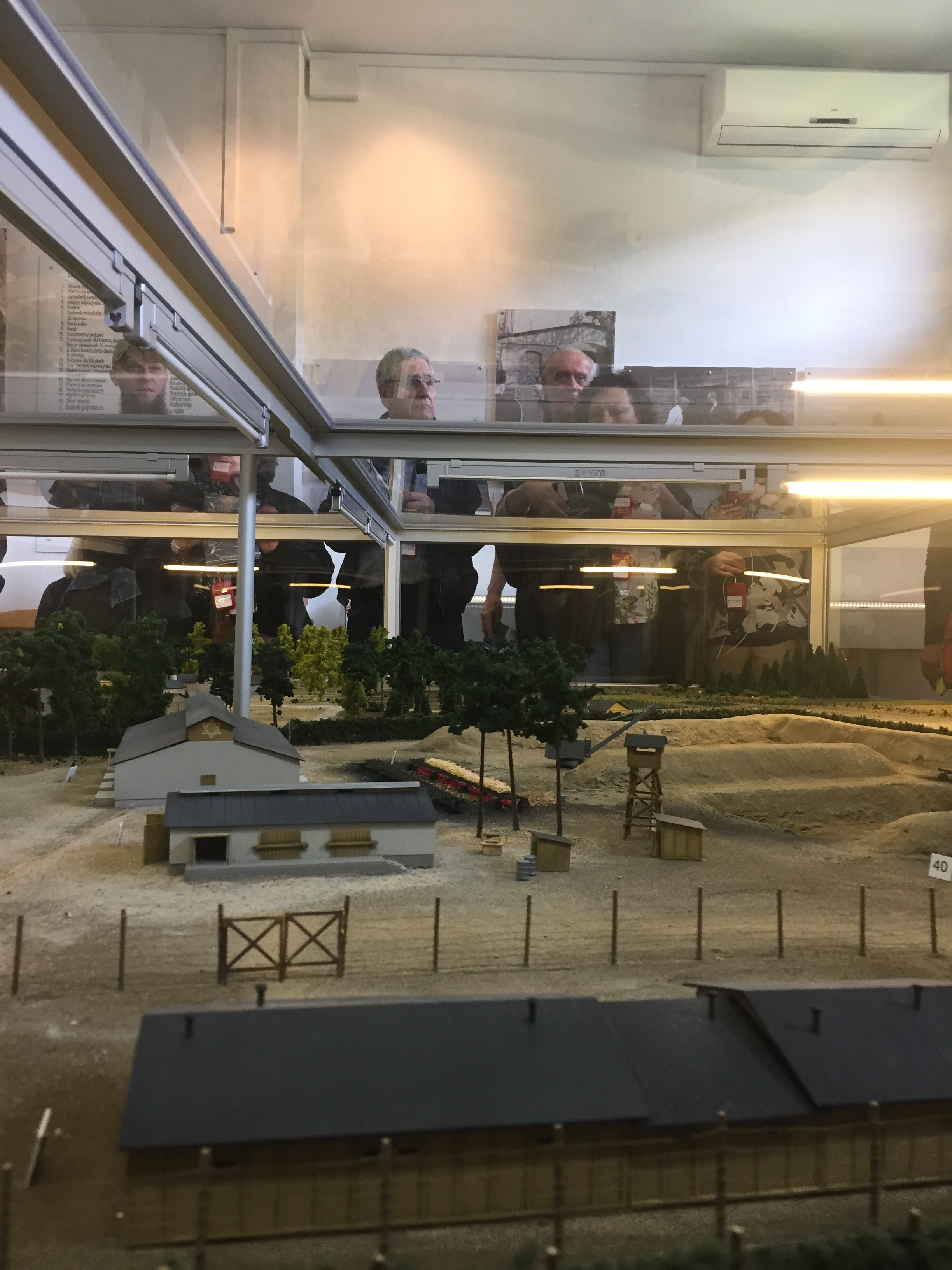
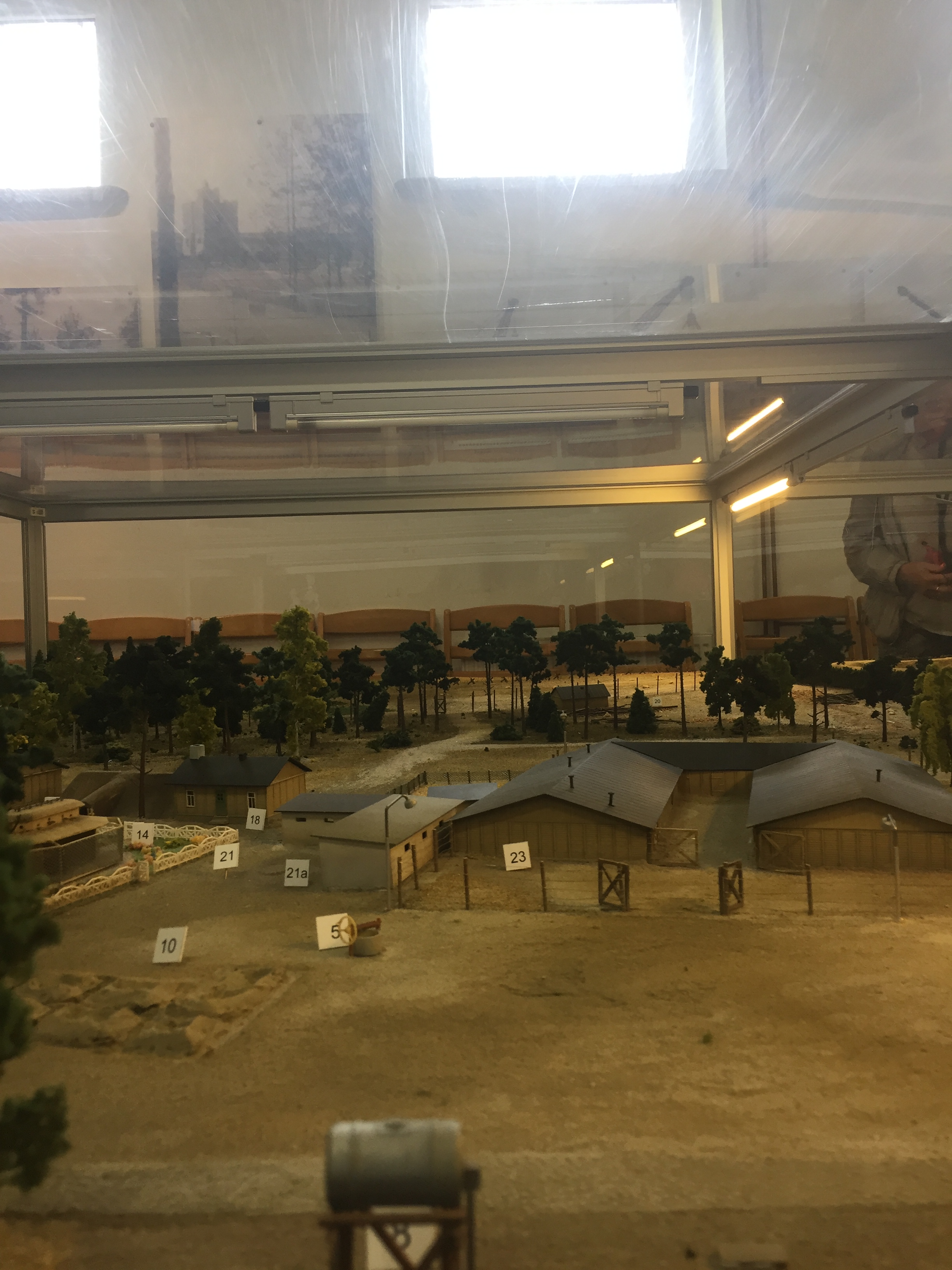
A small site, being only 20 hectares in size (approximately 400x400m), Treblinka claimed the lives of some 800-900,000 Jews in the space of a single year. As we heard from Konrad and from Fil, this was largely thanks to the work of Treblinka’s second commandant: Franz Stangl.
Stangl, who was brought in to replace the incompetent Irmfried Eberl, significantly restructured Treblinka, allowing it to become ever more efficiently a factory of death. He increased the number of gas chambers to ten, streamlined the process by which victims would only alight the trains one carriage at a time, and redesigned the station platform so as to diminish resistance.
He added a painted clock, the façade of a ticket office, a sign directing arrivals to a fictitious restroom and a schedule of imaginary trains. Thinking that they had arrived at a regular station, the victims would not be given any premonition as to the fate that awaited them until their heads were being shaved in a special room, the only exit to which (“the tunnel”) led directly to their deaths.
Photograph: Simon Holloway
Photograph: Simon Holloway
Photograph: Simon Holloway
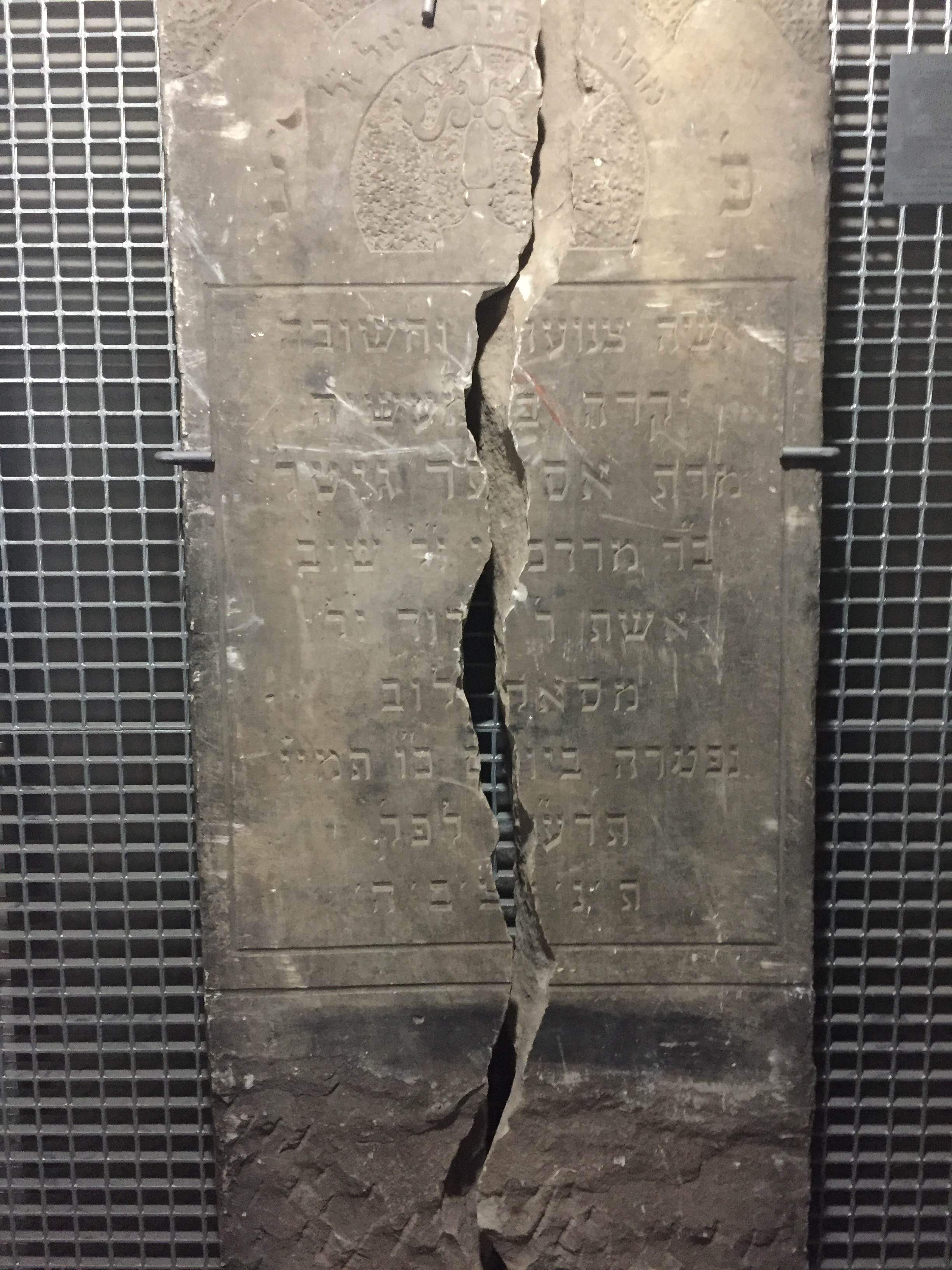
It is difficult to take this all in. There is no horror movie that can compare with this. It is truly terrifying, and we take the time to pause and observe the broken tombstones from the nearby site of Kosów Lacki, which the Germans had used in construction.
Photograph: Simon Holloway
Photograph: Simon Holloway
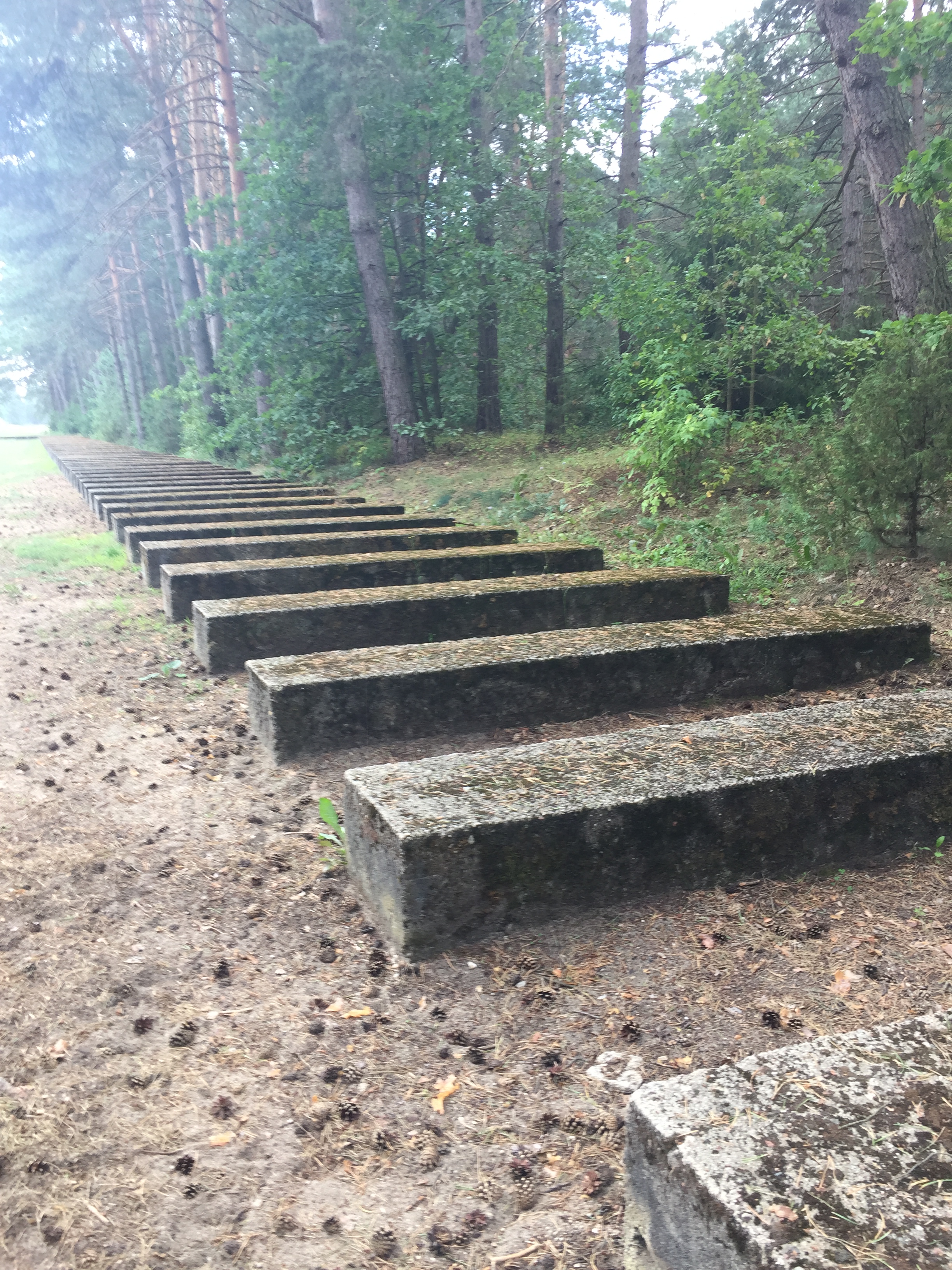
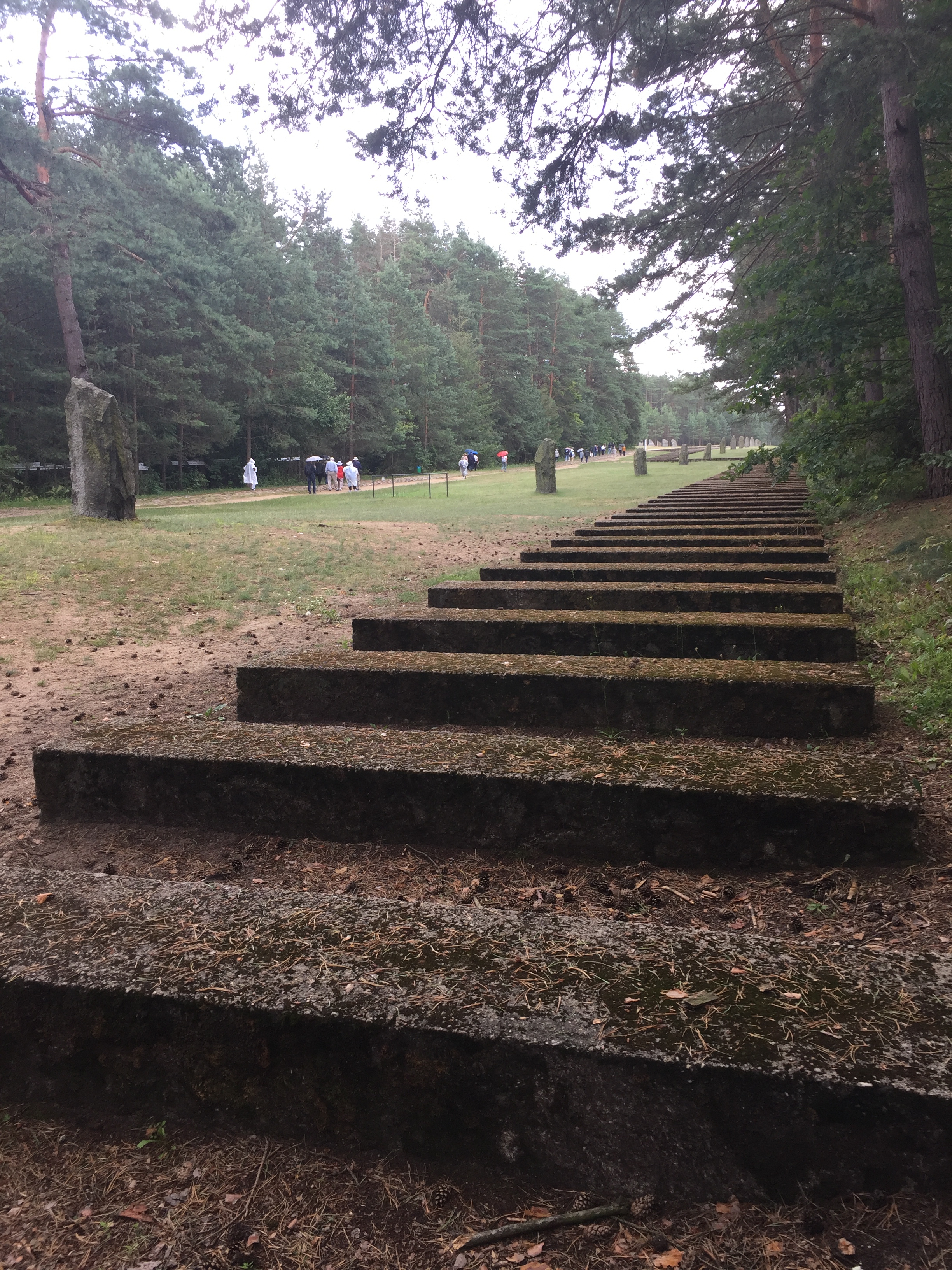
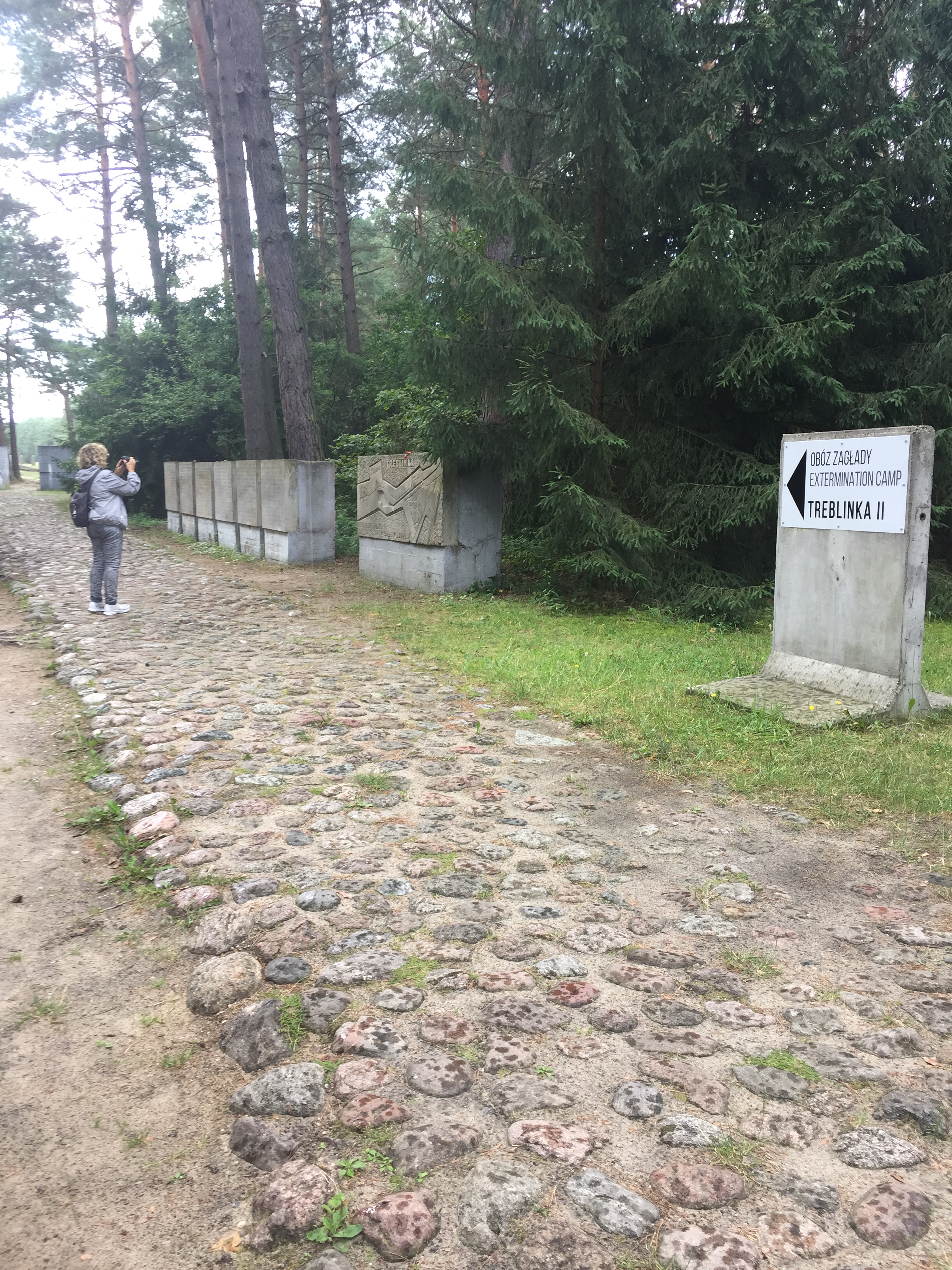
This information still ringing in our ears, we walk back out into the sunshine and into the forest. Here, we encounter a memorial in the form of a long railway track, and a succession of carefully placed obelisks. The wooded area to our left is cordoned off with a white tape, on which is written names of some of Treblinka’s victims, and the very skies open up above our heads and weep upon us.
The choice to include names is an important one, even though it cannot ever hope to be exhaustive. At the very least, having some names, however few, serves to remind us that the murder of 900,000 people is not a thing that happened: it is 900,000 different things that happened. But how can one possibly internalise something of such enormity?
Photograph: Simon Holloway
Photograph: Simon Holloway
Photograph: Simon Holloway
Photograph: Simon Holloway
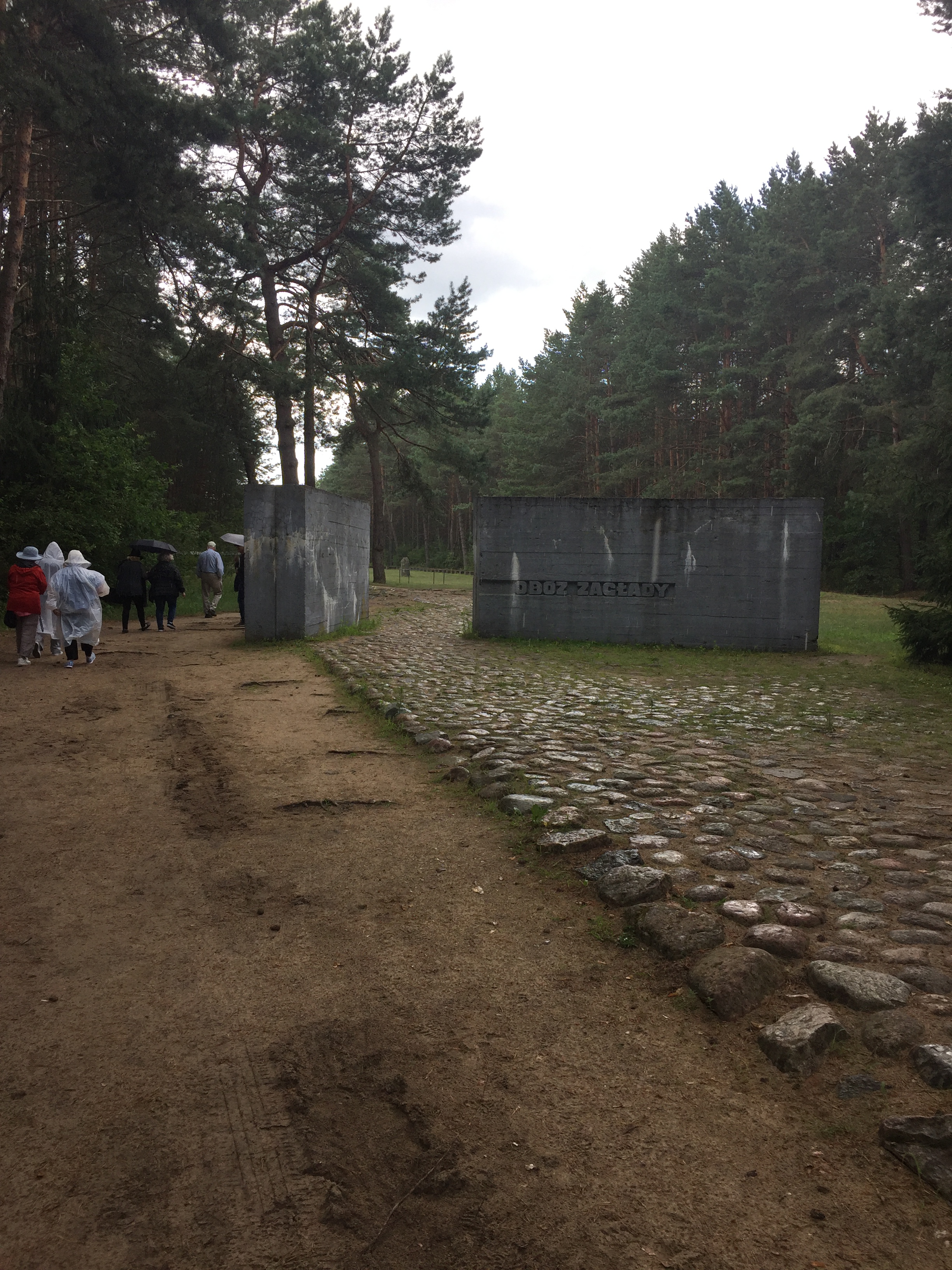
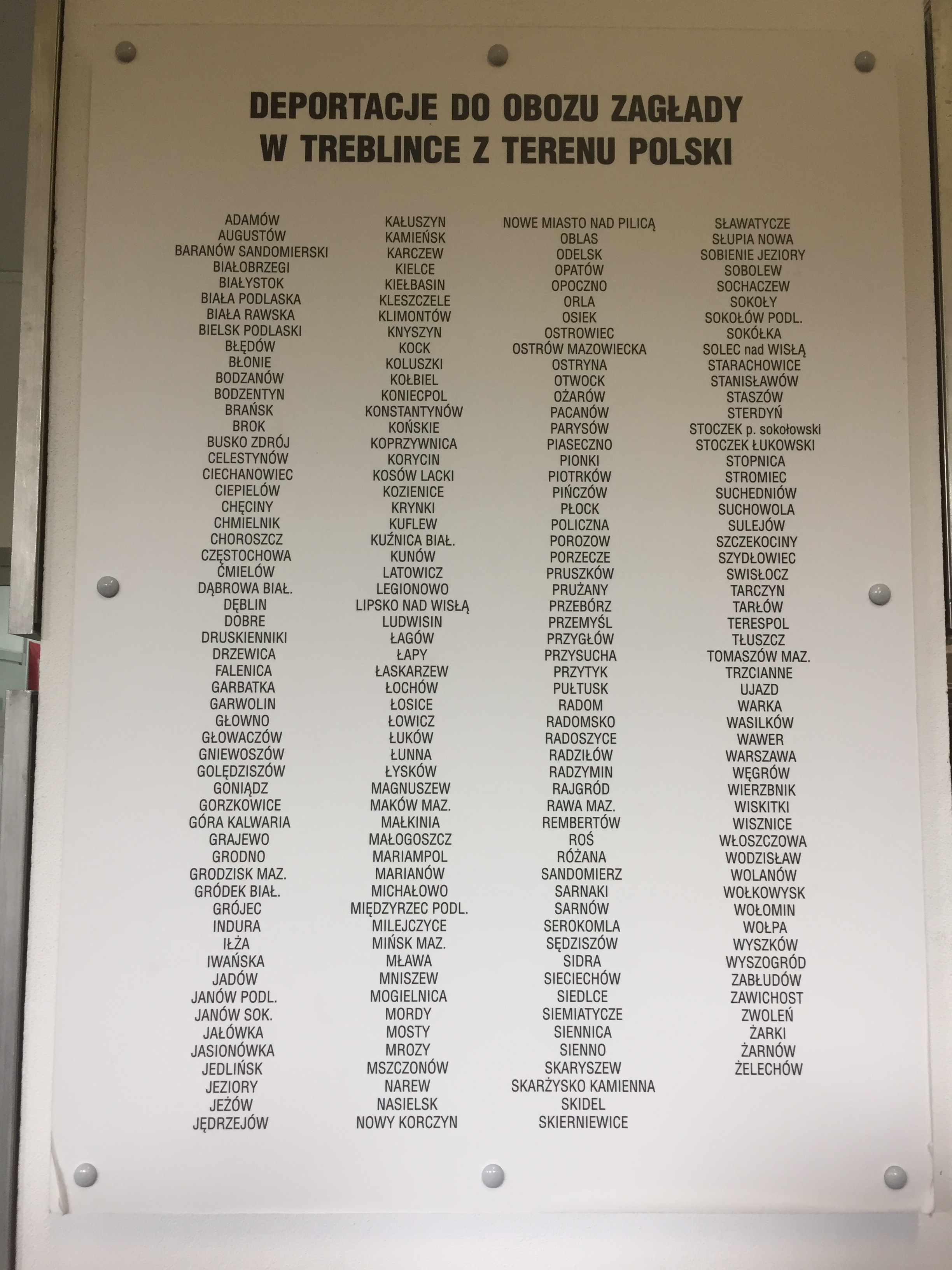
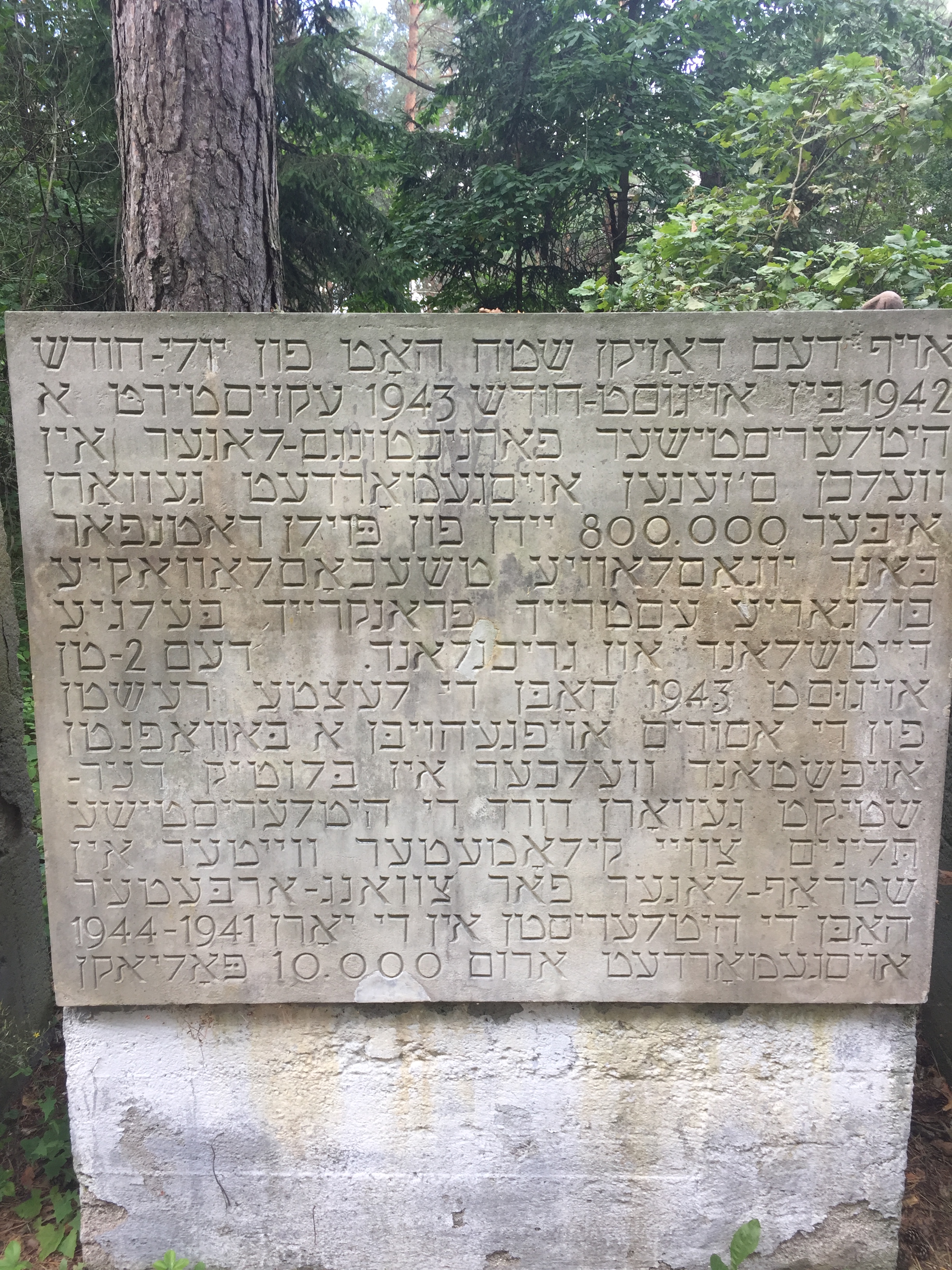
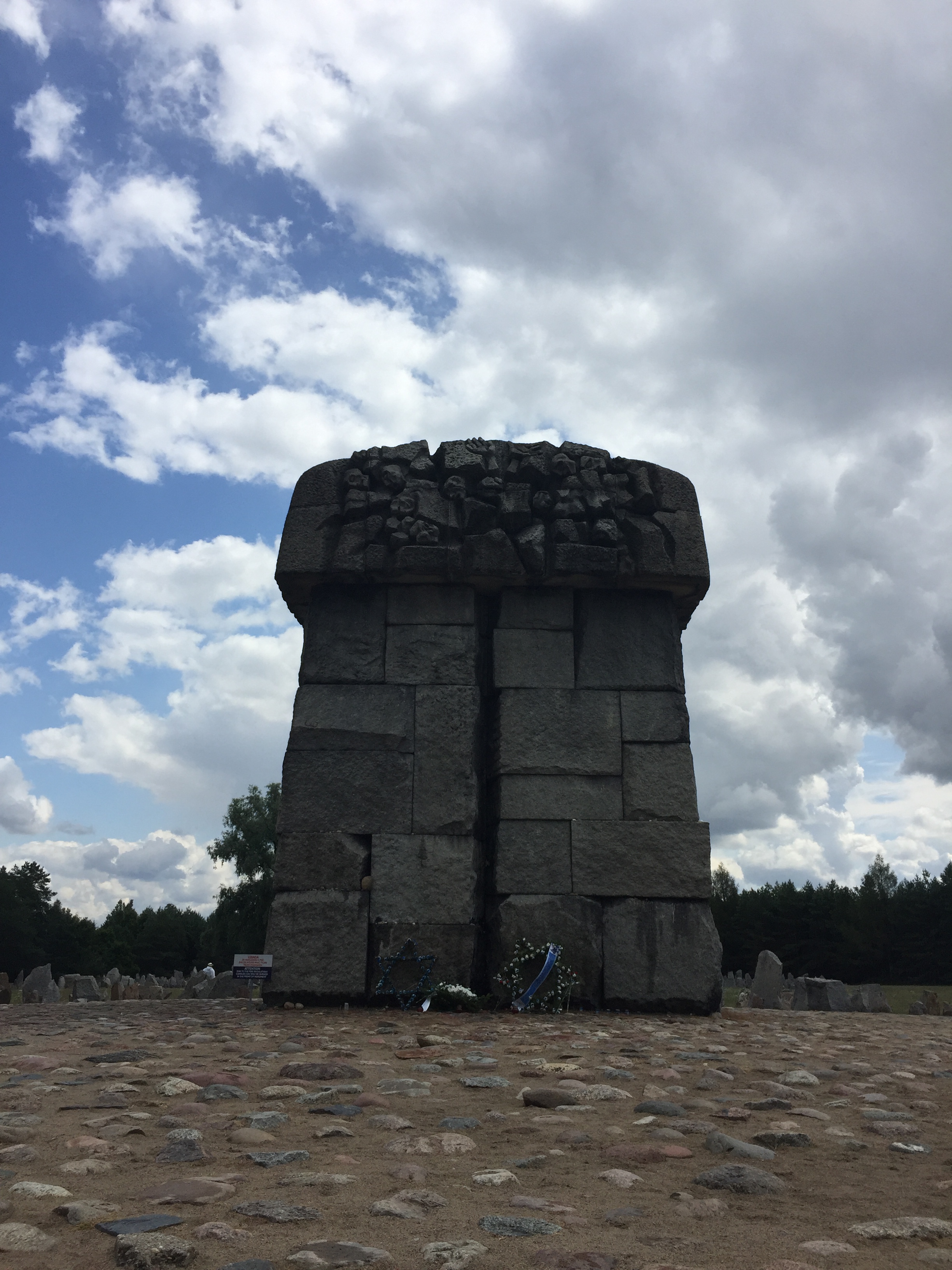
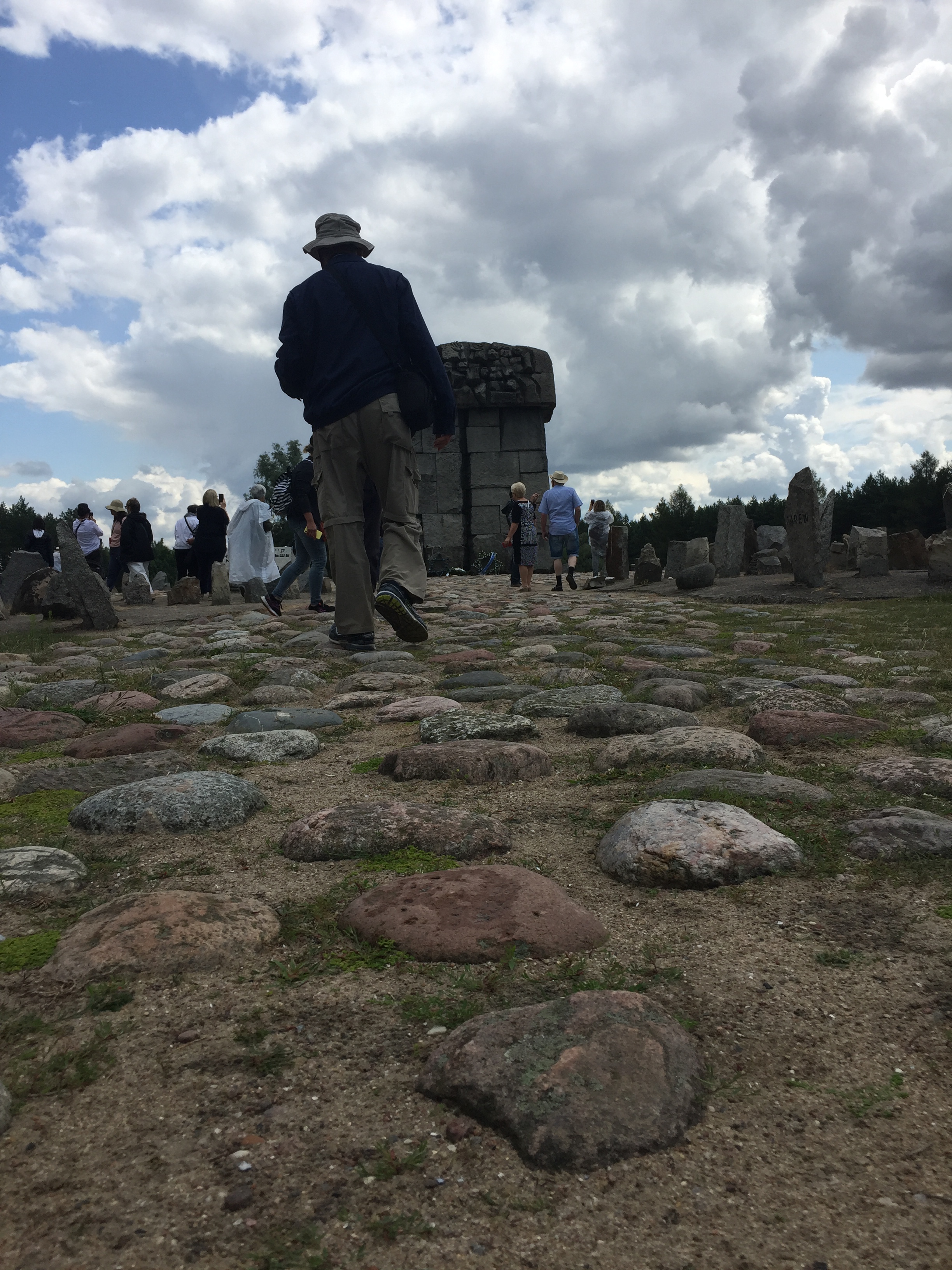
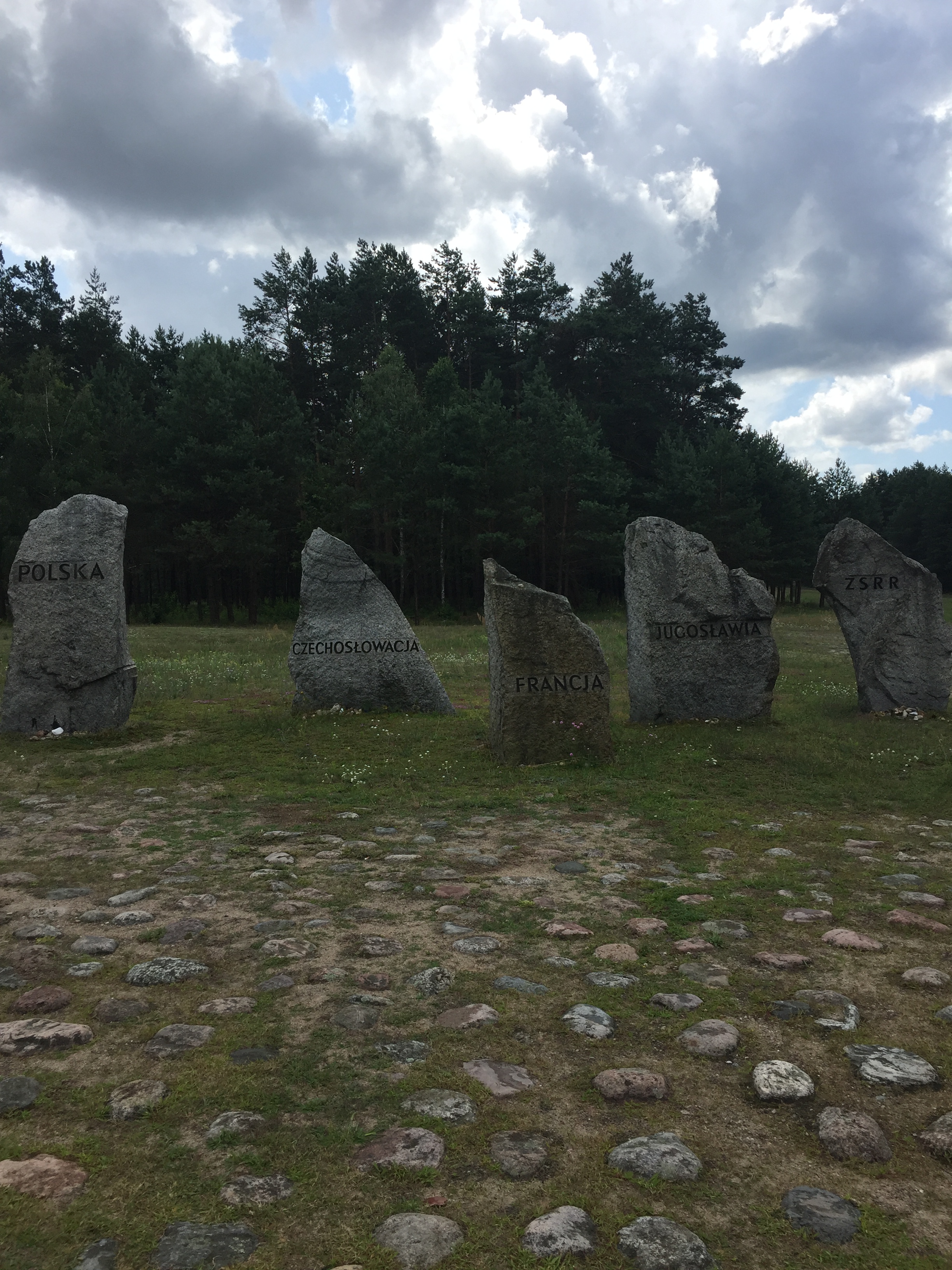
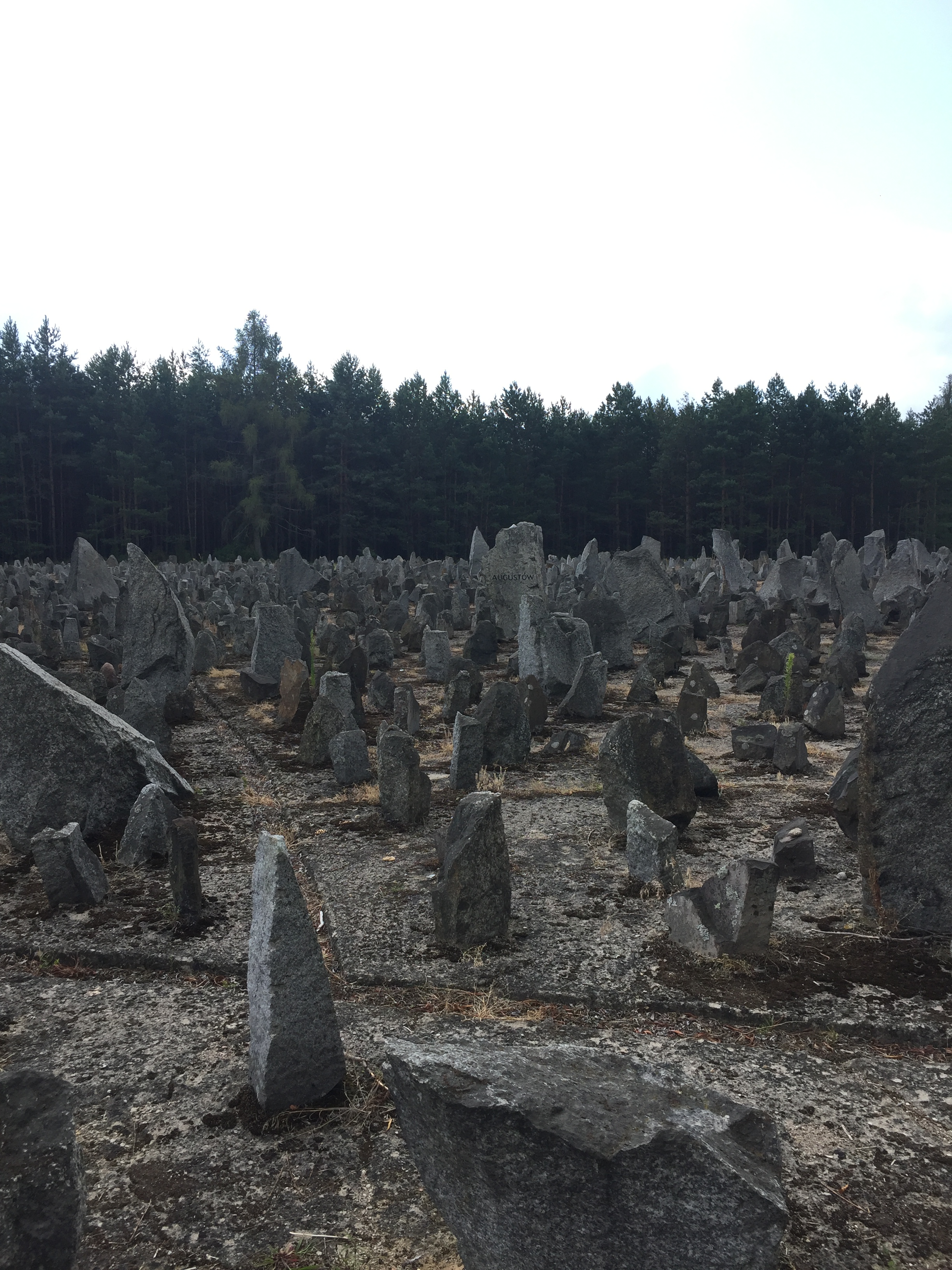
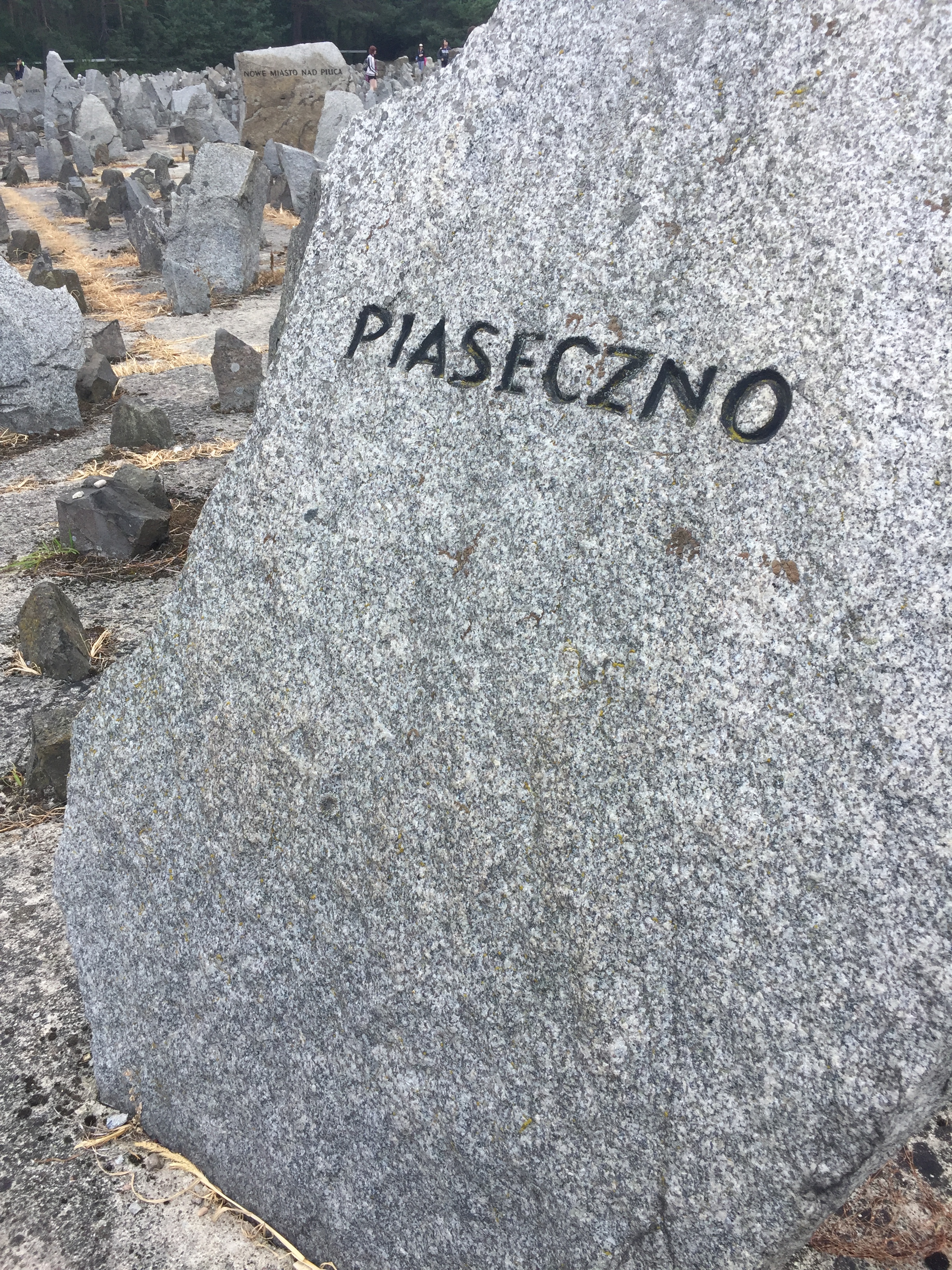
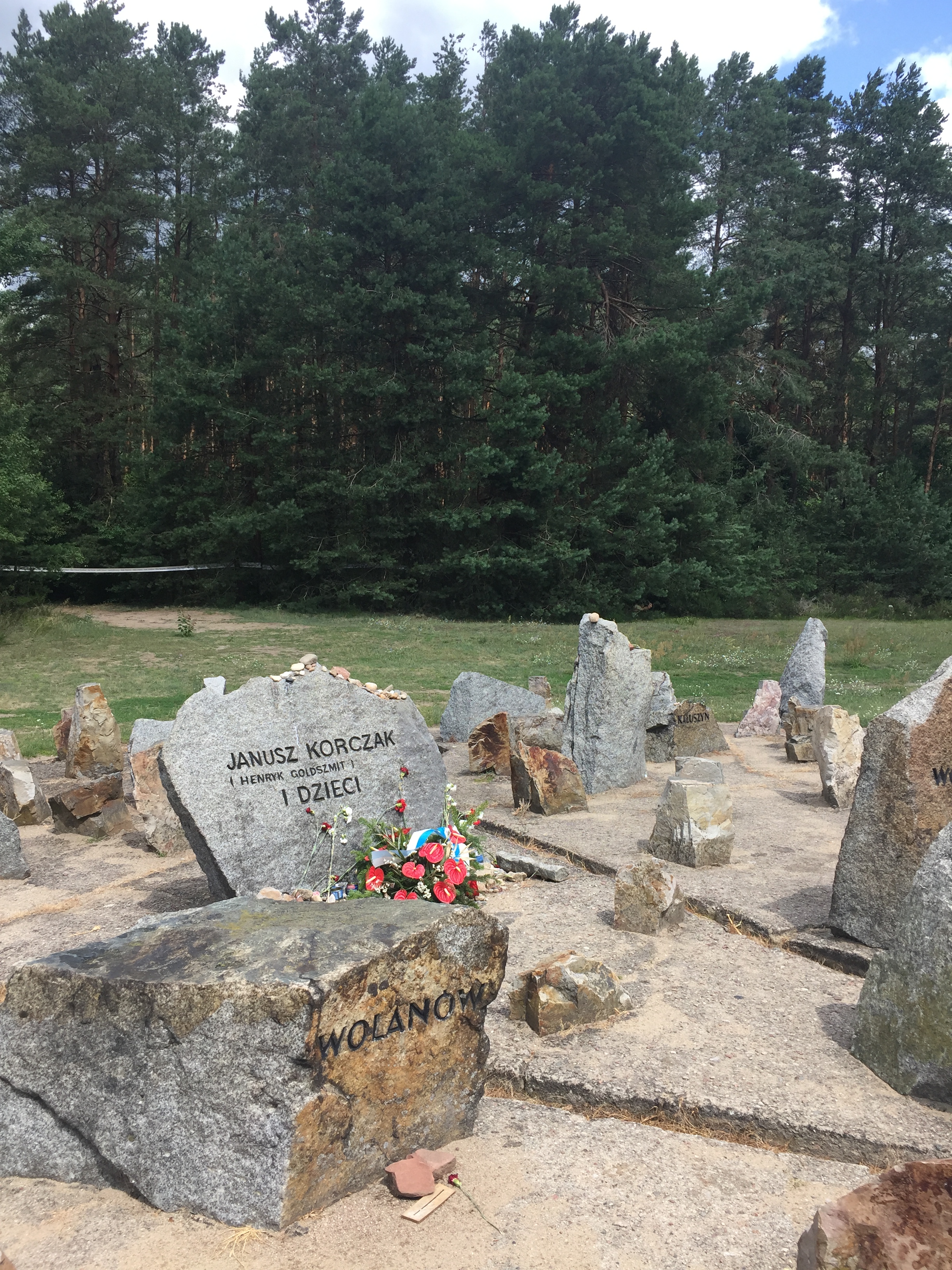
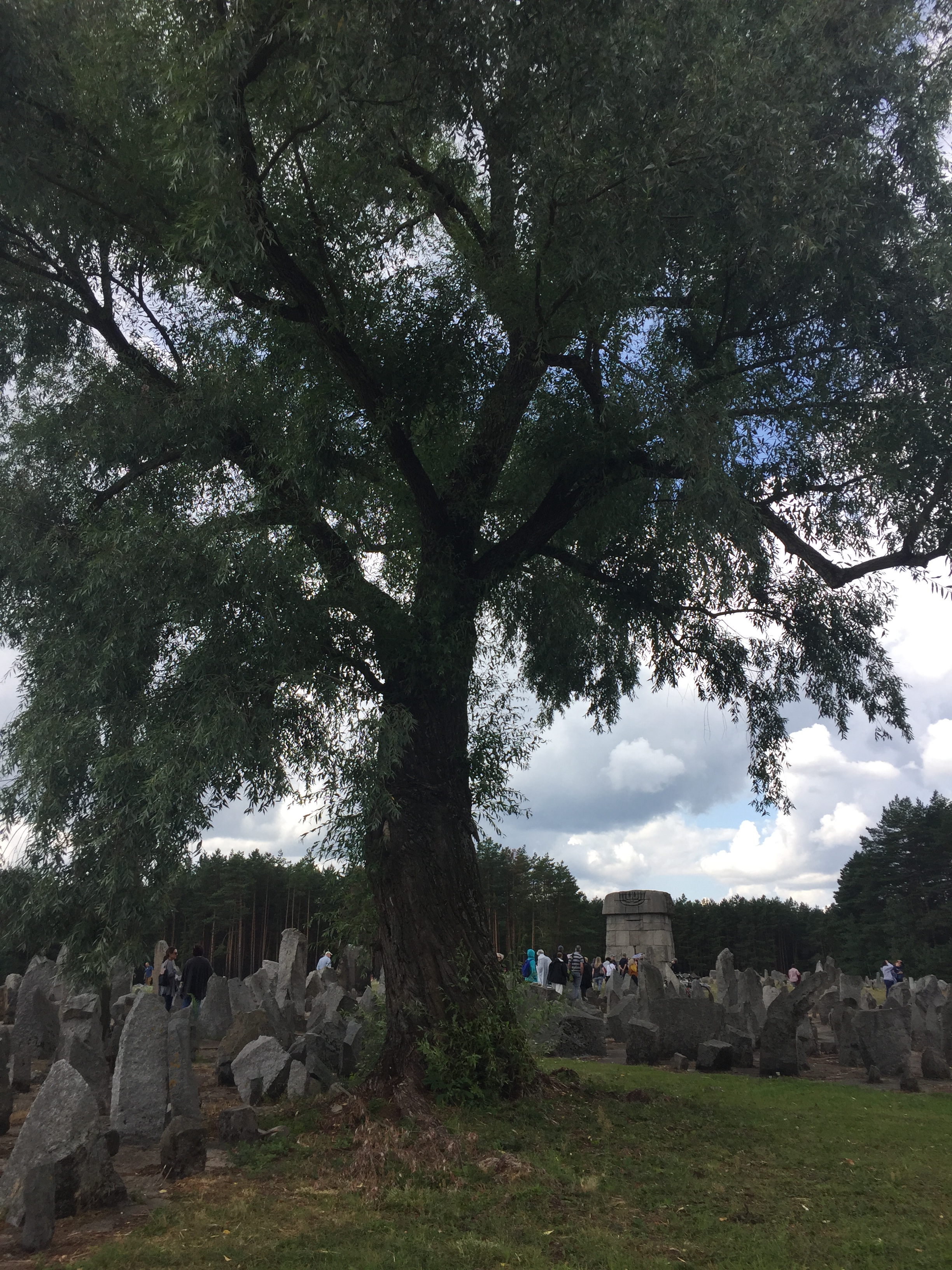
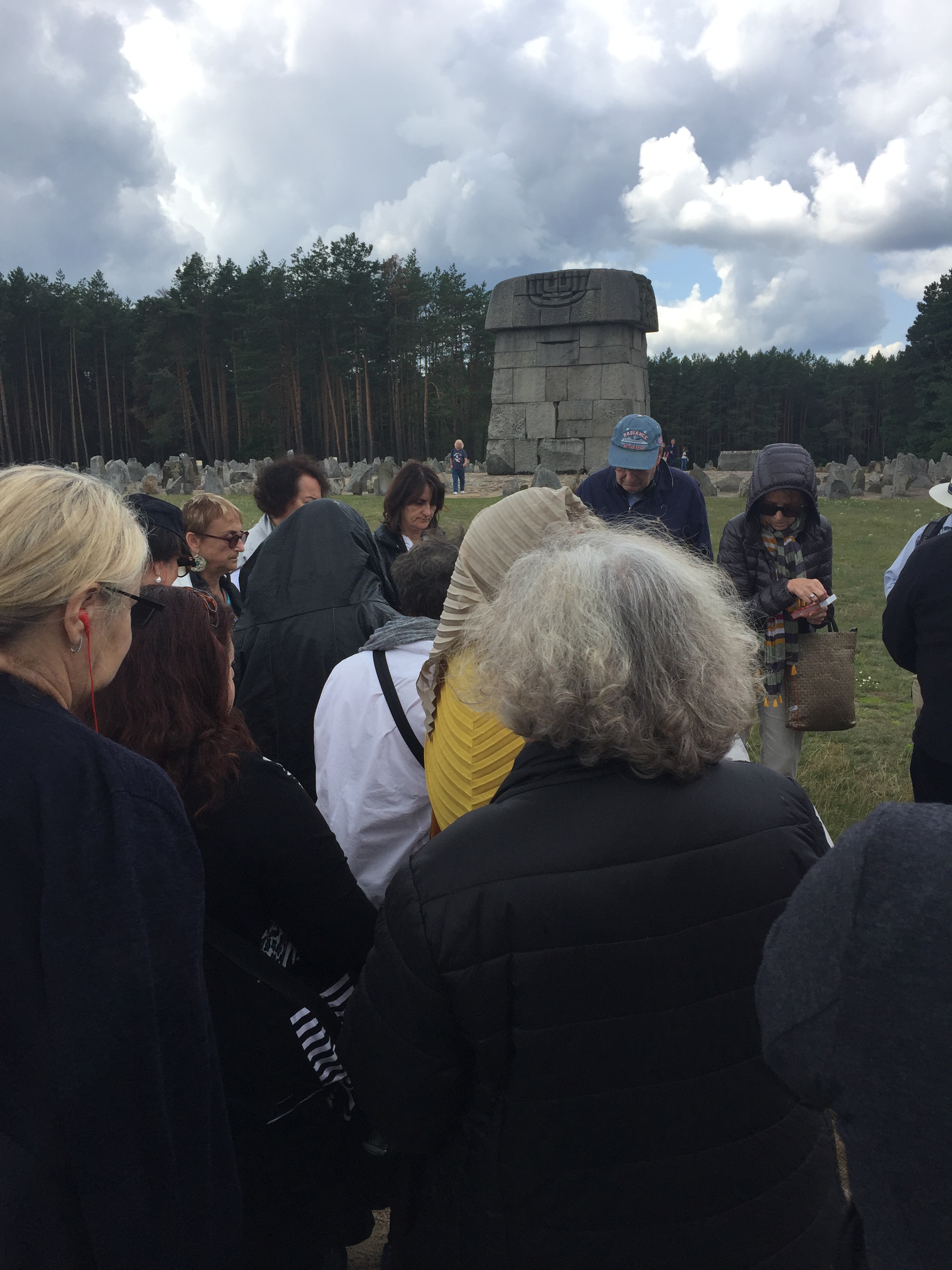
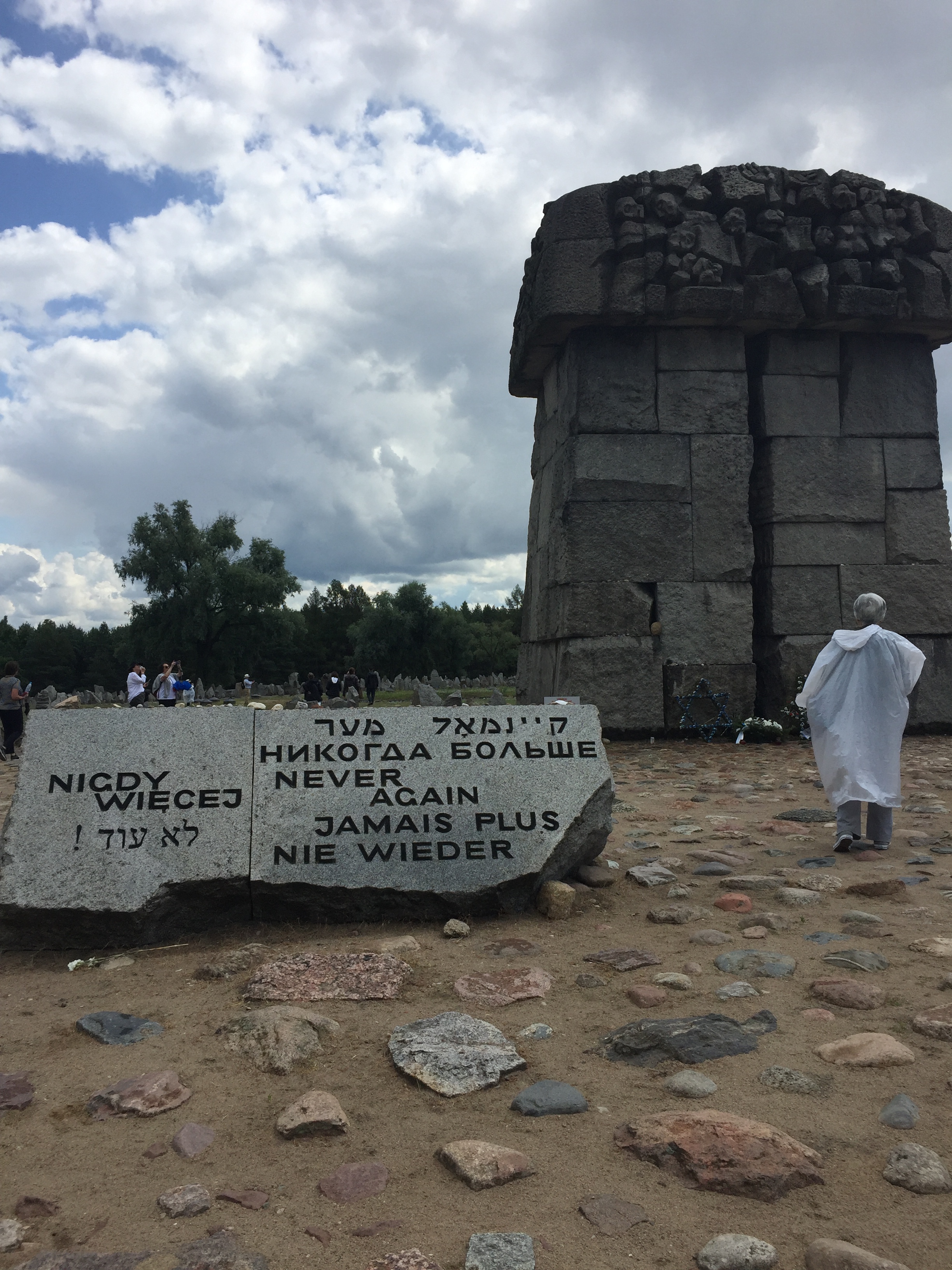
Beyond the stone entrance lies the Treblinka memorial itself. A curious feature of this memorial is that, with only one exception (the very important exception of Janusz Korczak), it doesn’t feature the names of people. It features the names of communities instead. That’s important, for it triggers contemplation of the individuals who lived within these communities, while at the same time drawing attention to the fact that what was lost was somehow larger than the sum of its parts.
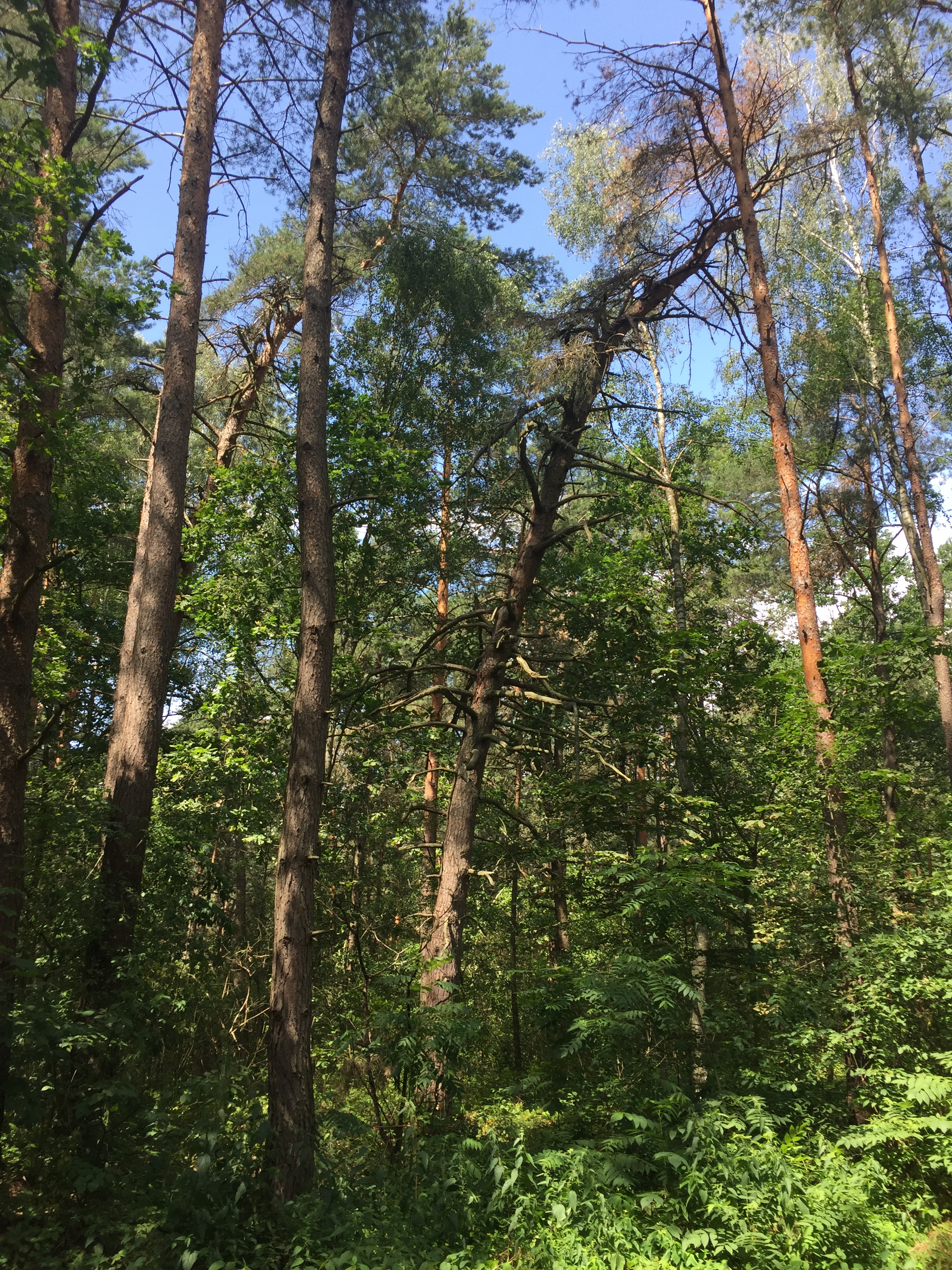
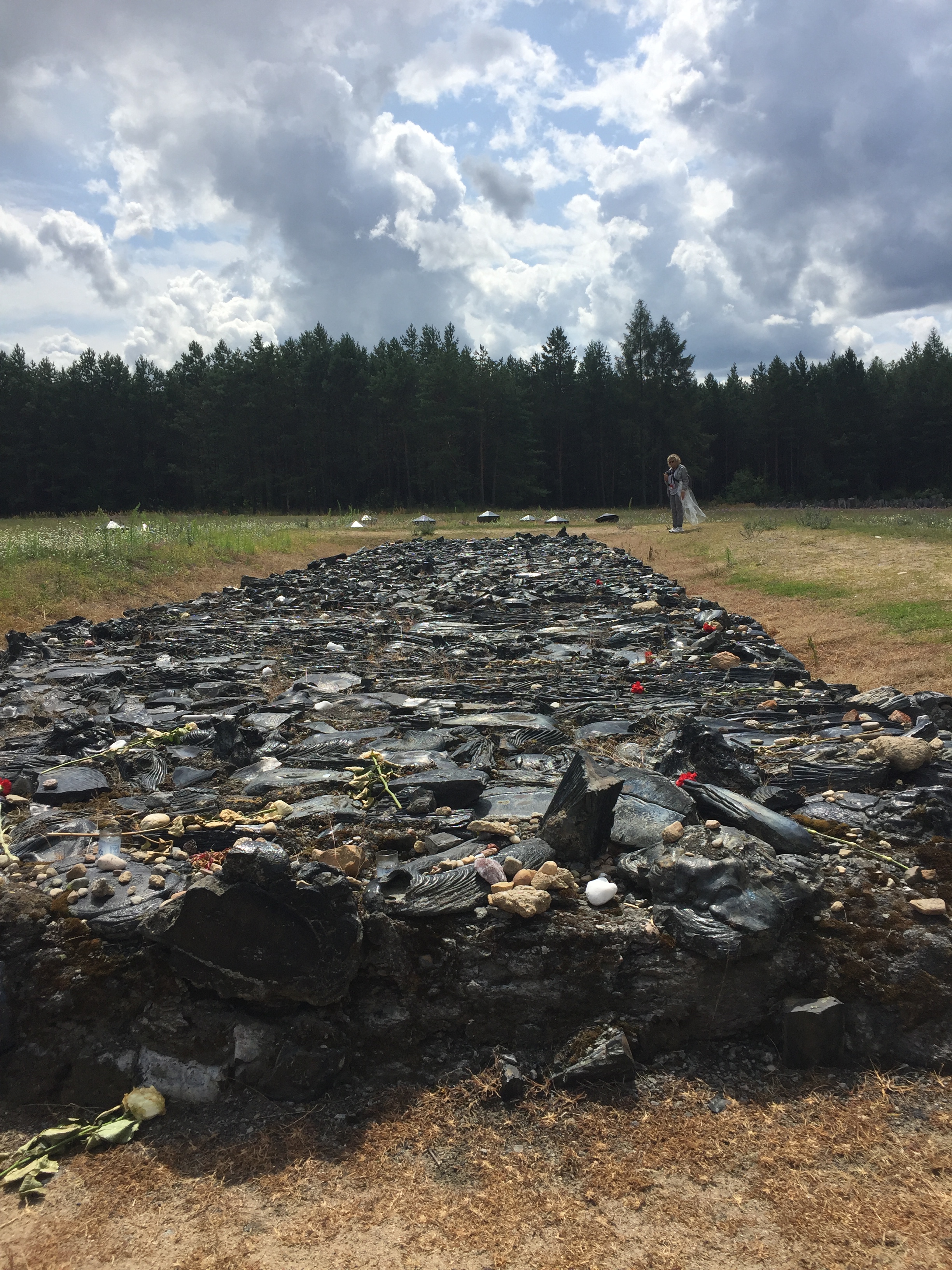
We take the time, separately and in groups, to wander through these jagged stones, before coming together and reciting kaddish at a curious memorial space: a long, low and gnarled space, rectangular and black, that signifies the seething pits in which the exhumed corpses were cremated. Fearful of the publicisation of their crimes, now that failure on the battlefield was more certain, the SS thought that they might simply erase them. The task of making them public again is one of which the post-Soviet authorities have acquitted themselves magnificently.
Photograph: Simon Holloway
Photograph: Simon Holloway
Photograph: Simon Holloway
Photograph: Simon Holloway
Photograph: Simon Holloway
Photograph: Simon Holloway
Photograph: Simon Holloway
Photograph: Simon Holloway
Photograph: Simon Holloway
Photograph: Simon Holloway
Photograph: Simon Holloway
Photograph: Simon Holloway
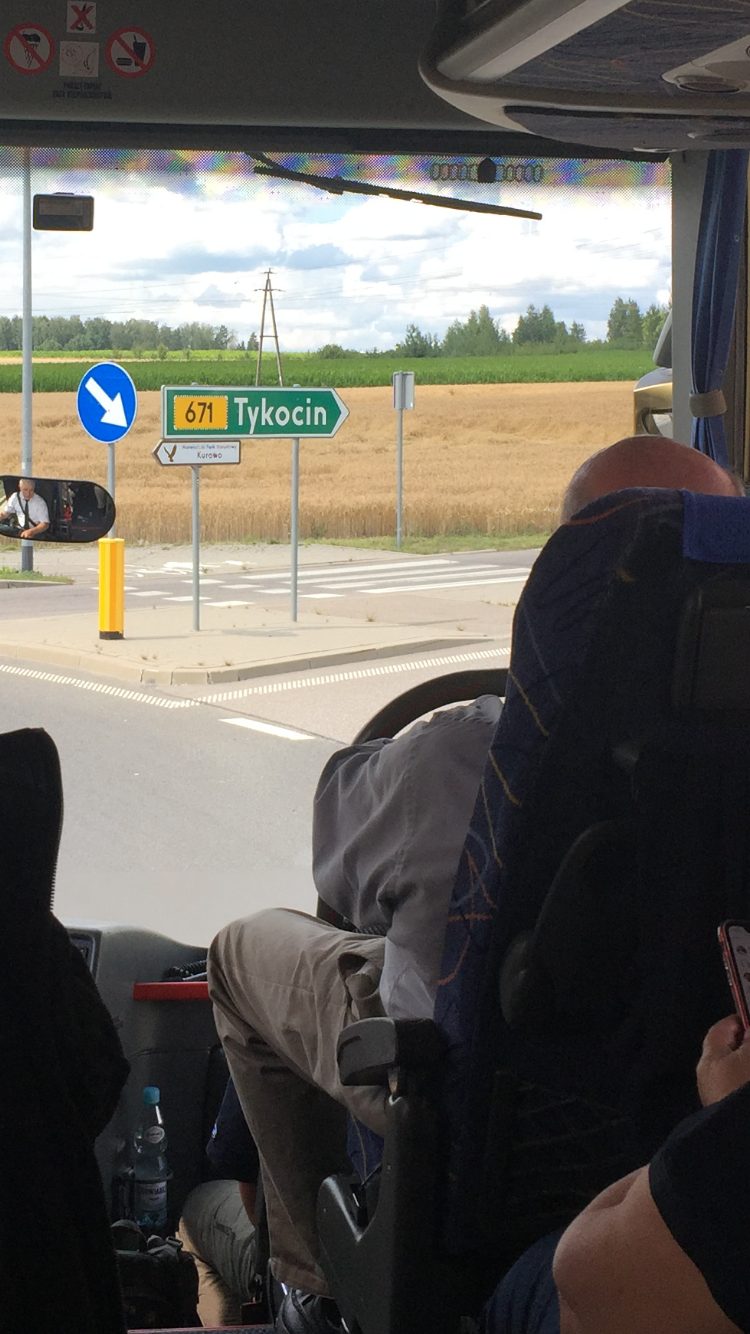
We make our way back to the bus and begin the drive to Tiktin (Tykocin in Polish). As we pass farmsteads and fields, I cannot help but think of how intensely populated with Jews these shtetlach once were. These empty fields remind us of the absence of their former inhabitants, but this emptiness is nothing so stark as what we were to see next.
Photograph: Simon Holloway
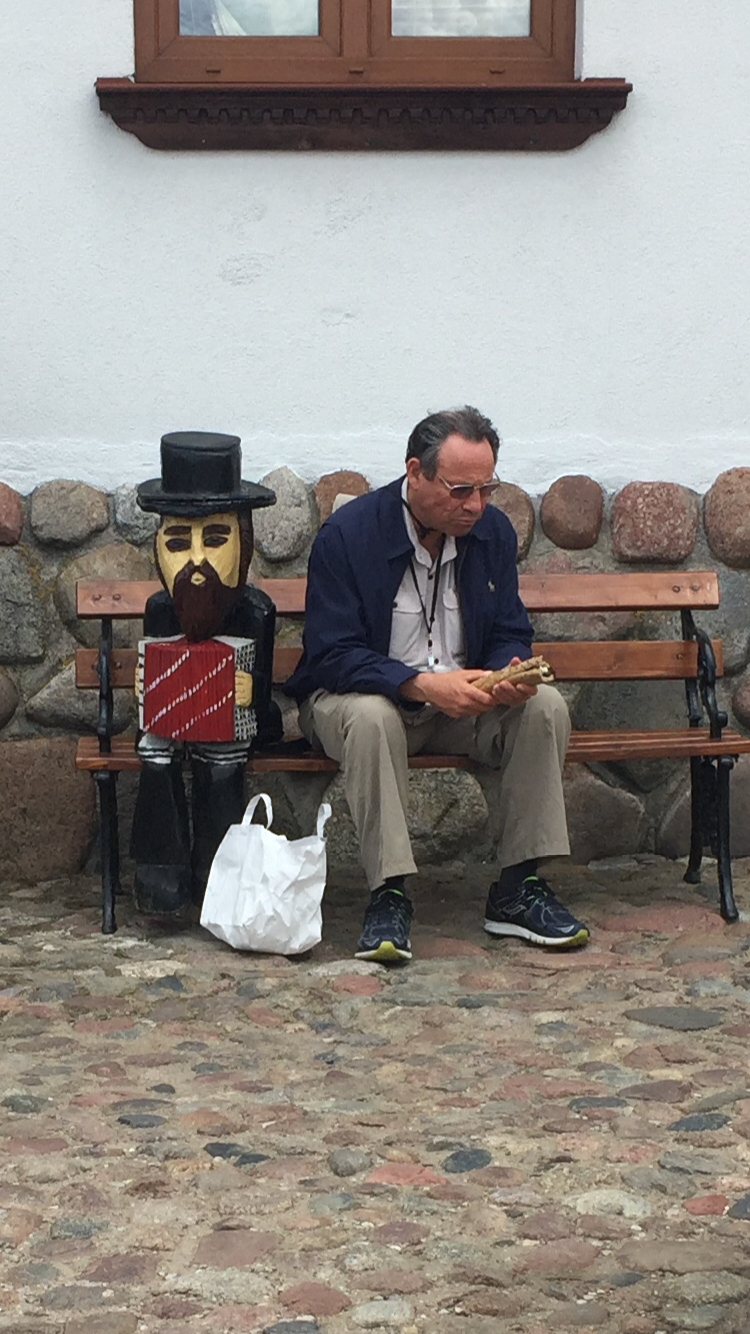
Here in Tiktin we encounter not an absence of Judaism but its poor imitation. To the sound of tinny Klezmer music, patrons can dine at a restaurant (“Villa Regent”), whose name is written in Yiddish, which sports a model of a hasid on a bench outside, is replete with magen davids, menorahs, information about the murdered community and all manner of ritual objects that one can only presume had Jewish owners, once upon a not-so-distant time.
Photograph: Simon Holloway
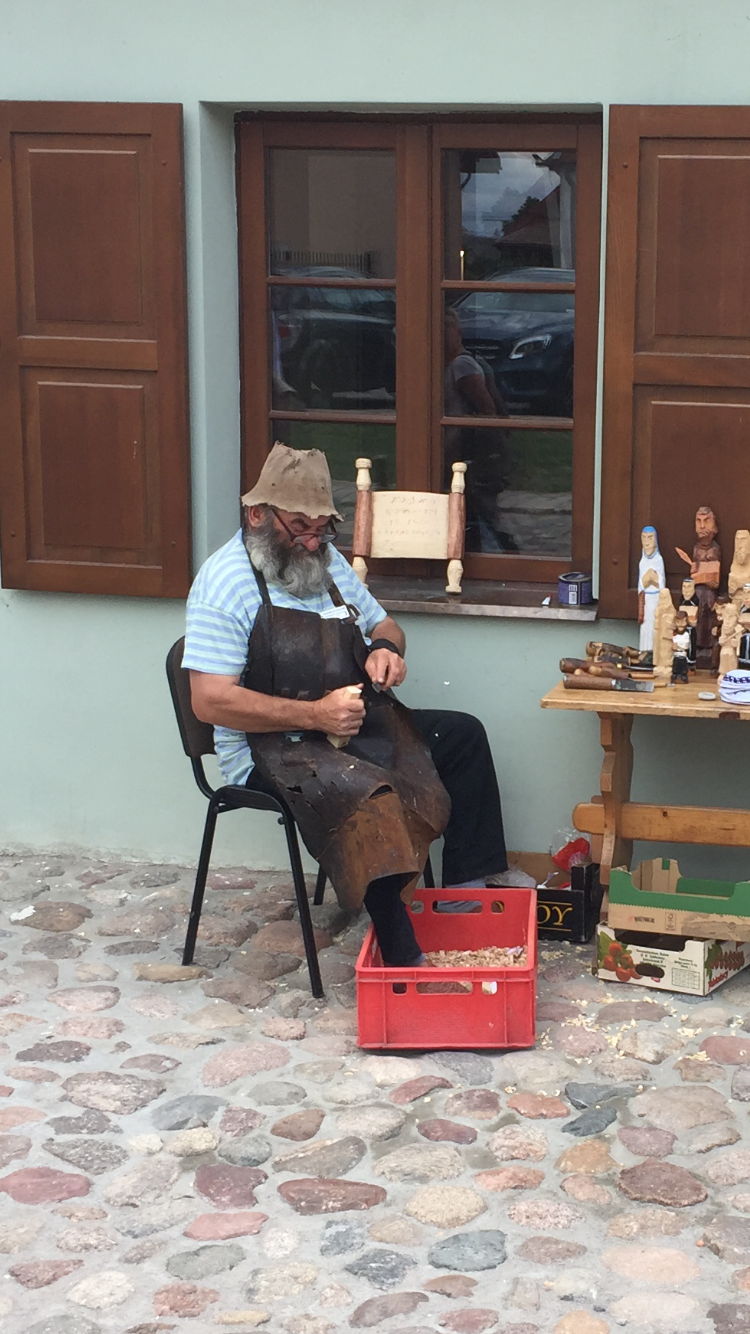
Outside the synagogue, a hatted, bearded man sits chiselling in silence, crafting small and tasteful replicas of religiously conservative Jews. A photograph near him advertises an association with a high school in Ramat Gan, and I presume him to be Israeli. With interest, I ask him (in Hebrew) if he is from Ramat Gan. He casts a nervous look at a nearby guide, whose name is Boroslav and who leaps in to save him.
Turns out that our craftsman is a local Pole, who found himself out of work when the factory in which he was working closed down. In Tiktin, there is always employment in the tourism industry, and Jewish kitsch is profitable indeed.
Photograph: Simon Holloway
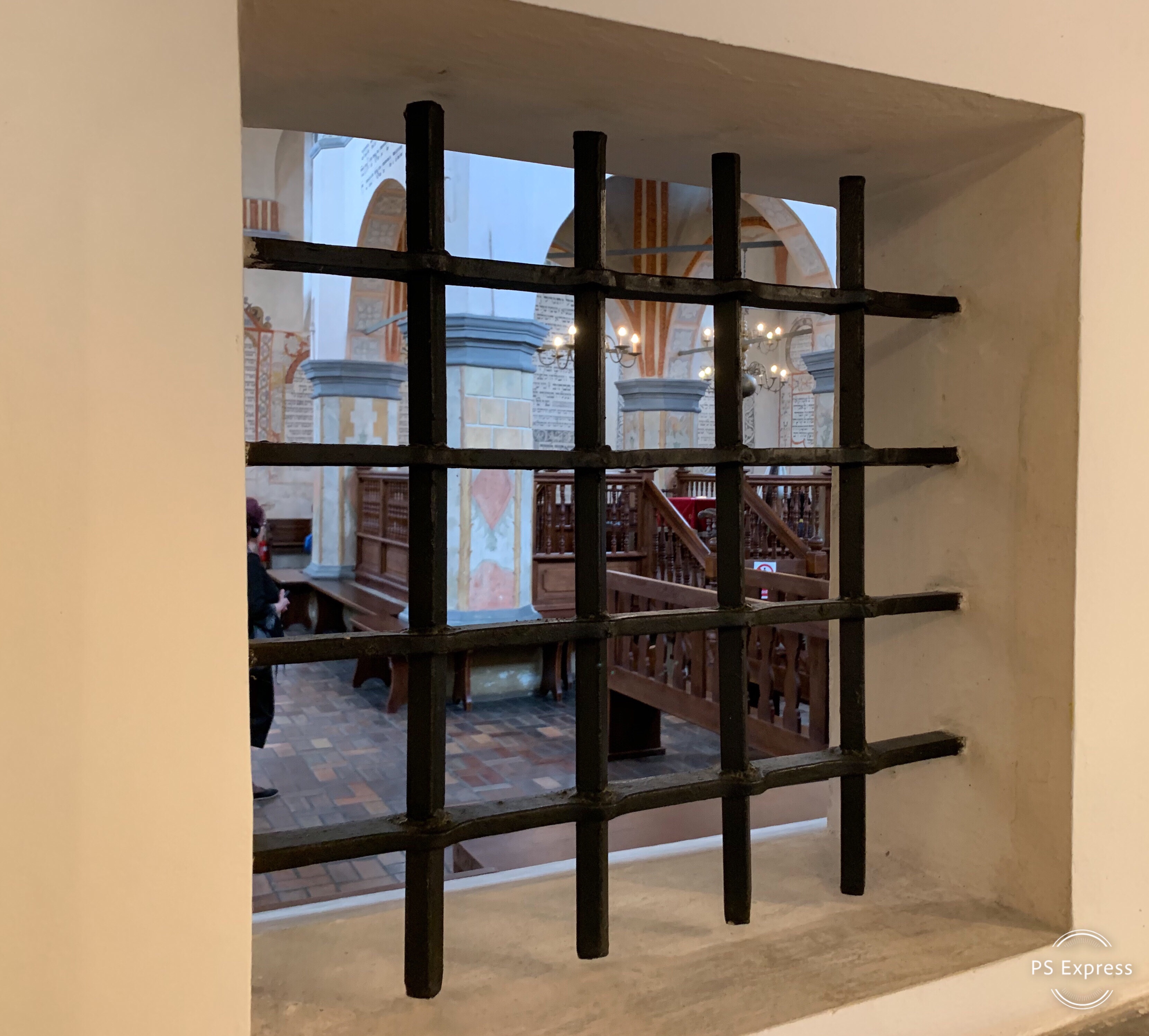
It is easy to be critical of the manner in which the local community has capitalised on those people who no longer exist, but my sorrow at seeing myself and my community so commercialised temporarily dissipates the moment that I walk into the shul. It’s beautiful.
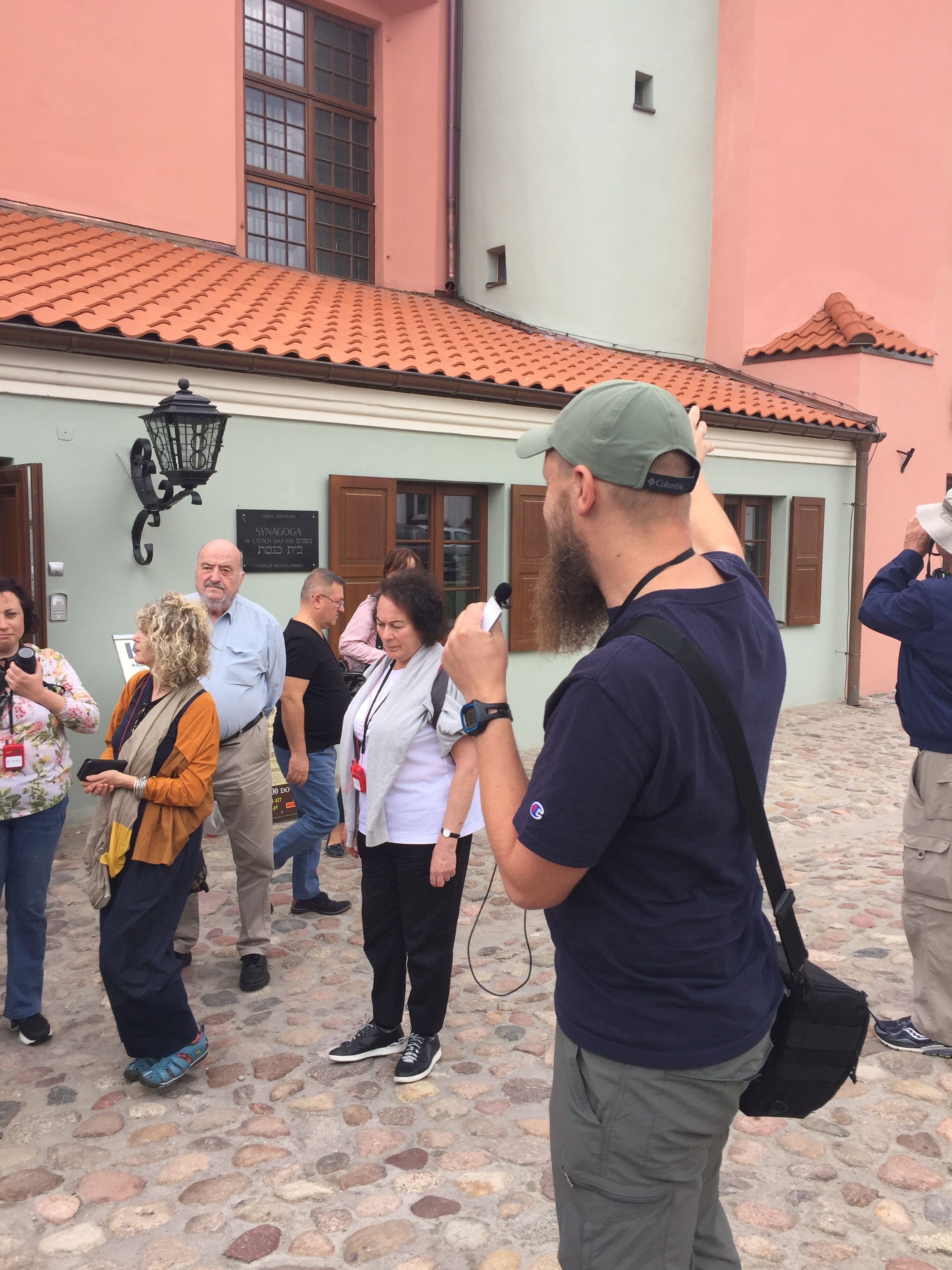
Established in the 17th century, this was a fortress synagogue. Run by the Tiktiner beys din, Jews who had committed crimes that merited incarceration were imprisoned in one of the shul’s towers. Today, visitors can only enter the main synagogue space, which had been converted by the Germans into a storage house for artificial manure, and which remained a storage house after the war, when the surviving few had gathered their remaining things and left.
In 1965, the synagogue caught fire, and those books and artefacts that survived the conflagration were thrown by Tiktin’s delightful community into the local river. Perhaps they’d not yet realised how lucrative a Jewish history is?
Today, they fastidiously maintain the synagogue’s façade and its gorgeous interior, much of which has been reconstructed, and they even house a small museum in what had once been the shul’s beys midrash.
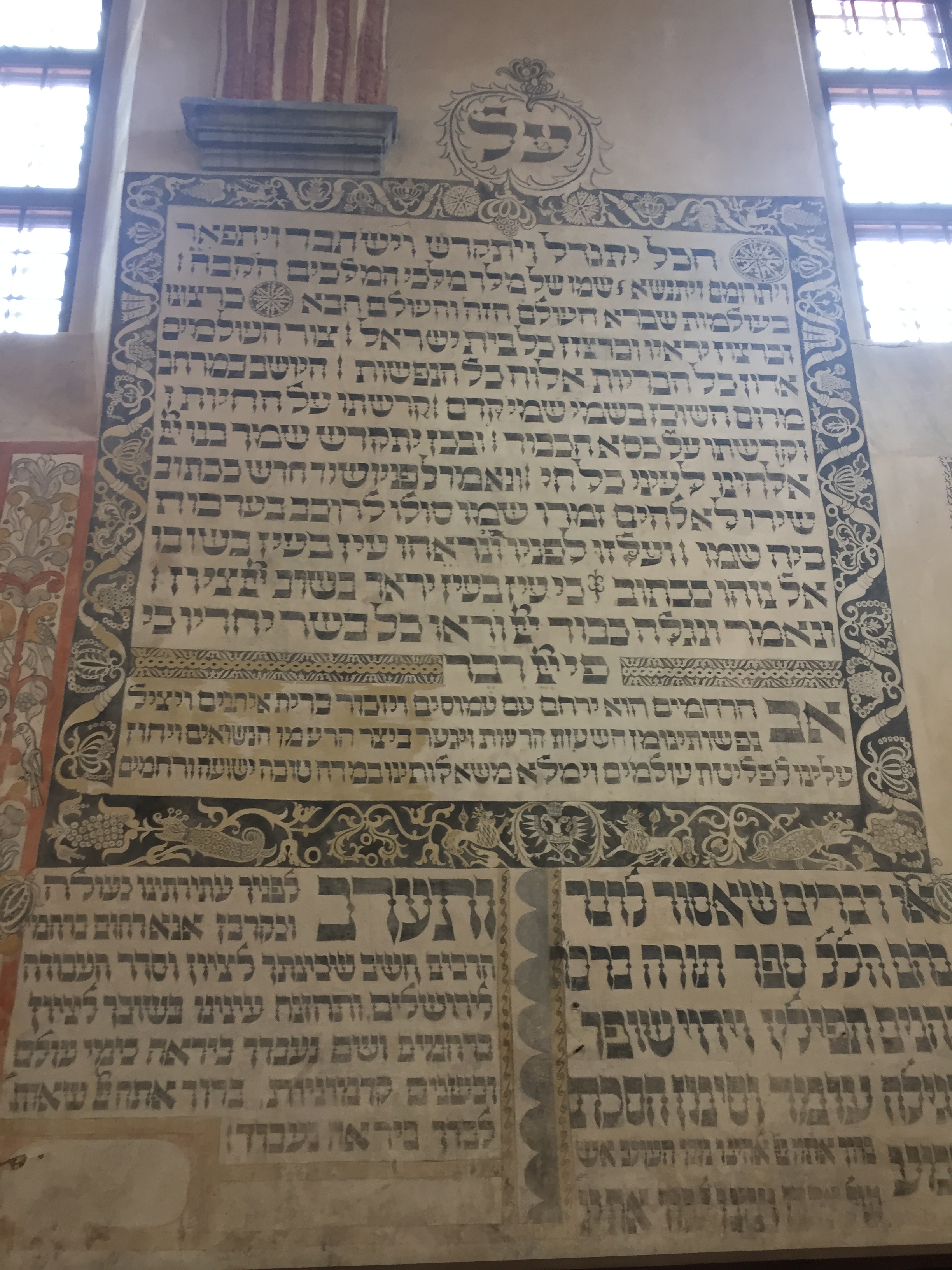
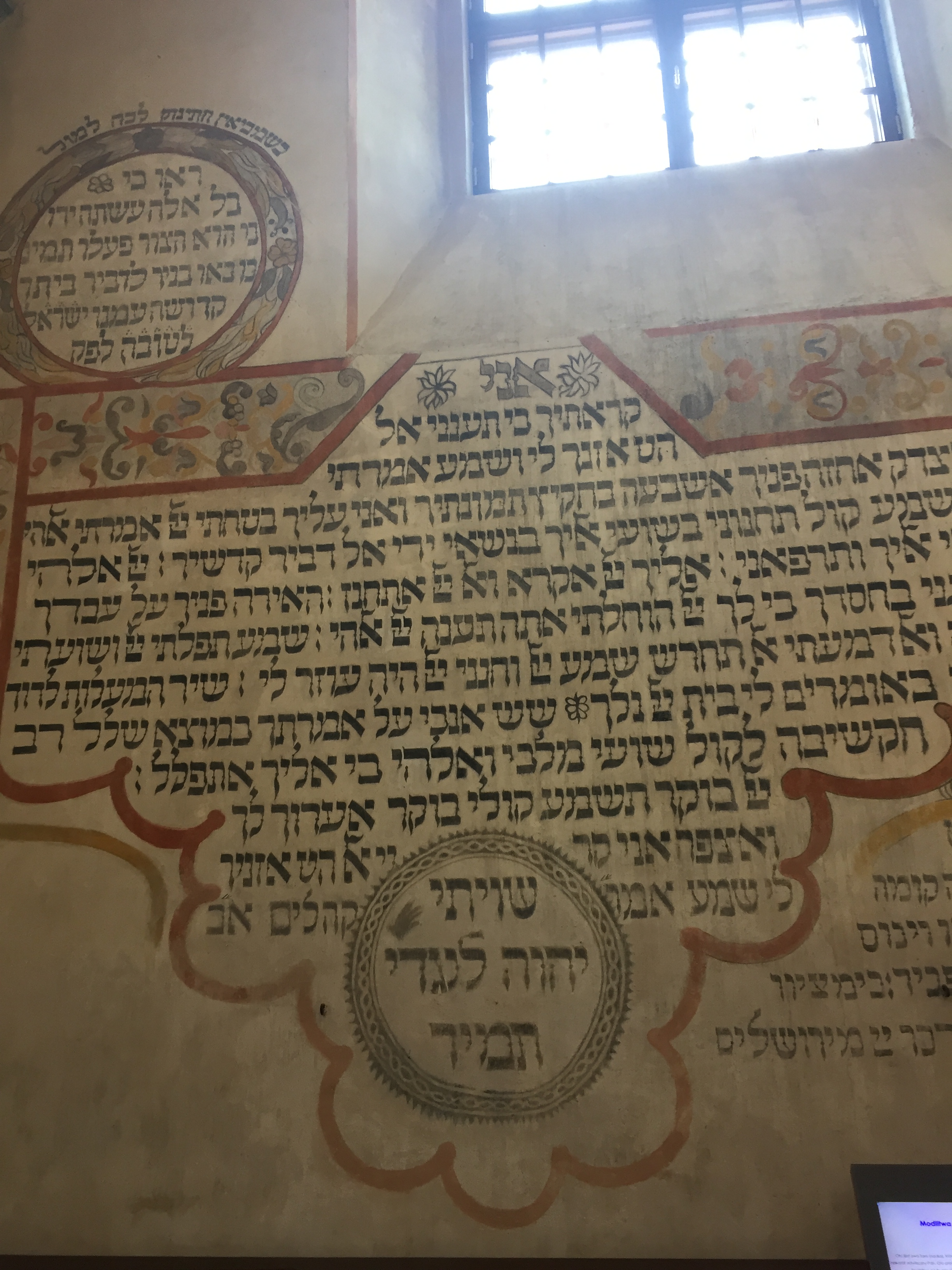
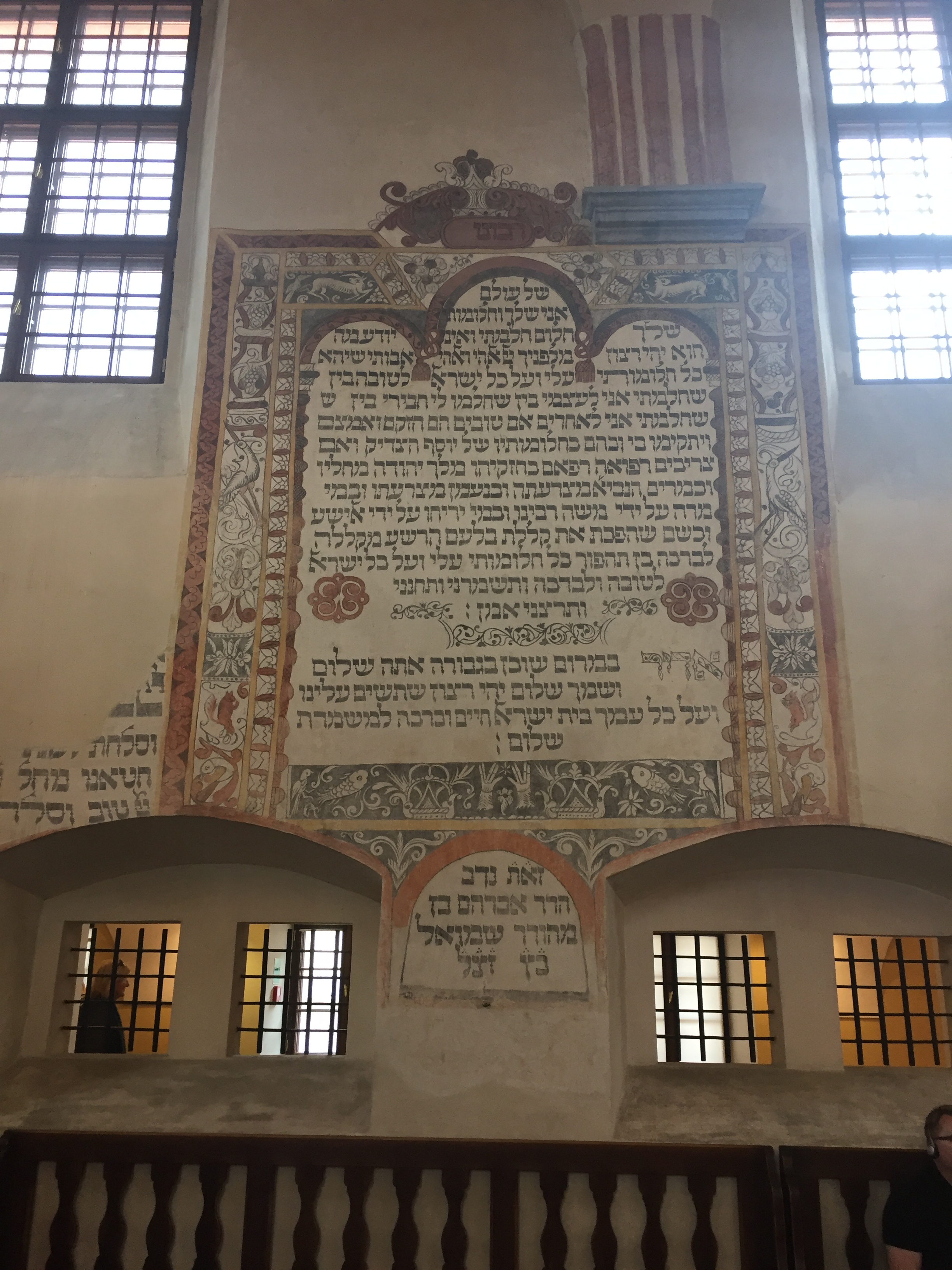
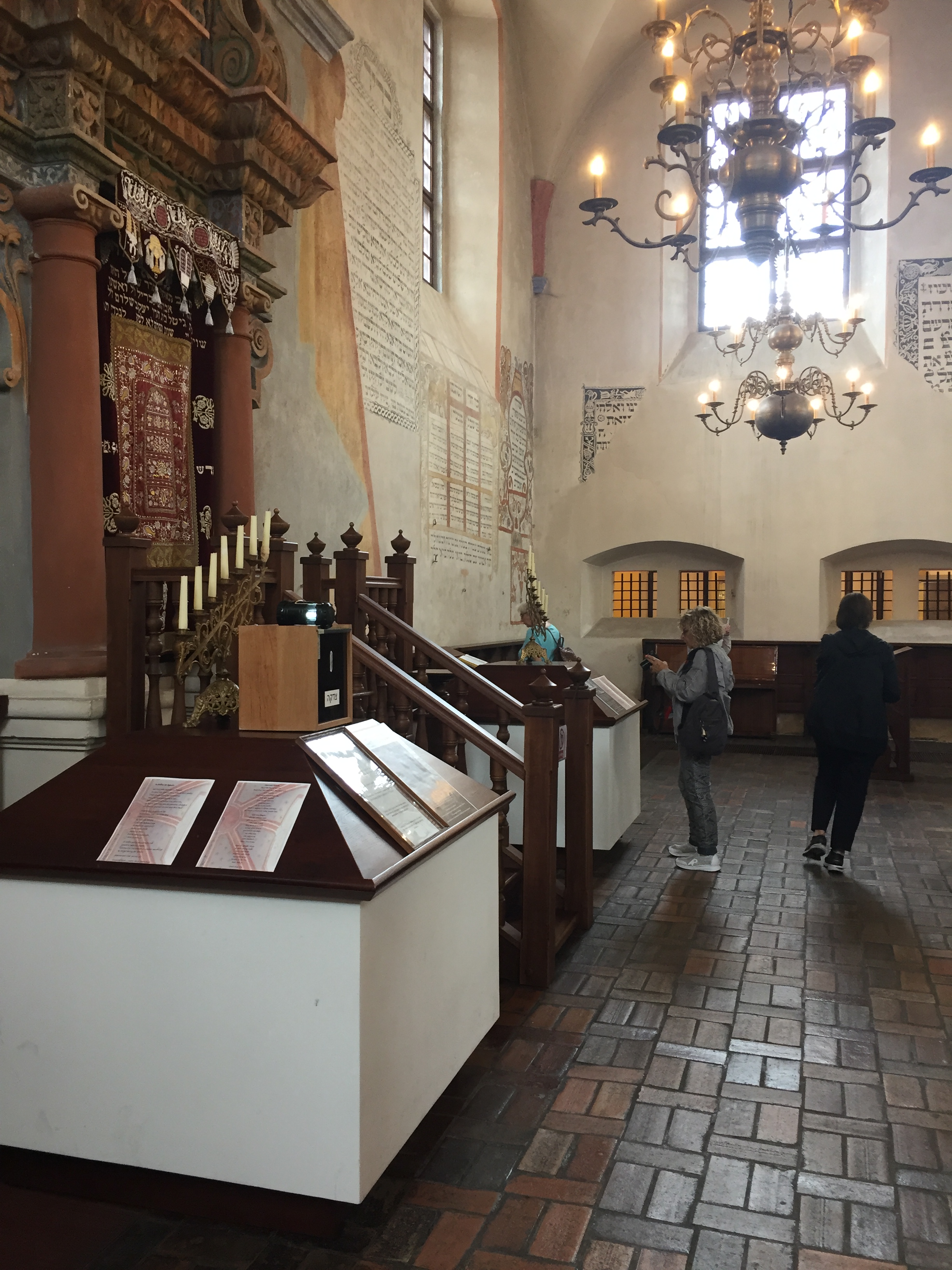
Before we move into the beys midrash, we take the time to mark the beautiful inscriptions on the walls: sections from Tehillim, passages from the davening, liturgical piyutim. But it’s the little things that remind you once again that there are no Jews living in Tiktin and that this Claytons synagogue is something of a charade. The siddur, added to the front of the room to complete the illusion, boasts a Sefardi nusach, despite the liturgy on the walls being (as one would expect) Ashkenazi. Like I say, it’s the little things.
Photograph: Simon Holloway
Photograph: Howard Wolfers
Photograph: Simon Holloway
Photograph: Simon Holloway
Photograph: Simon Holloway
Photograph: Simon Holloway
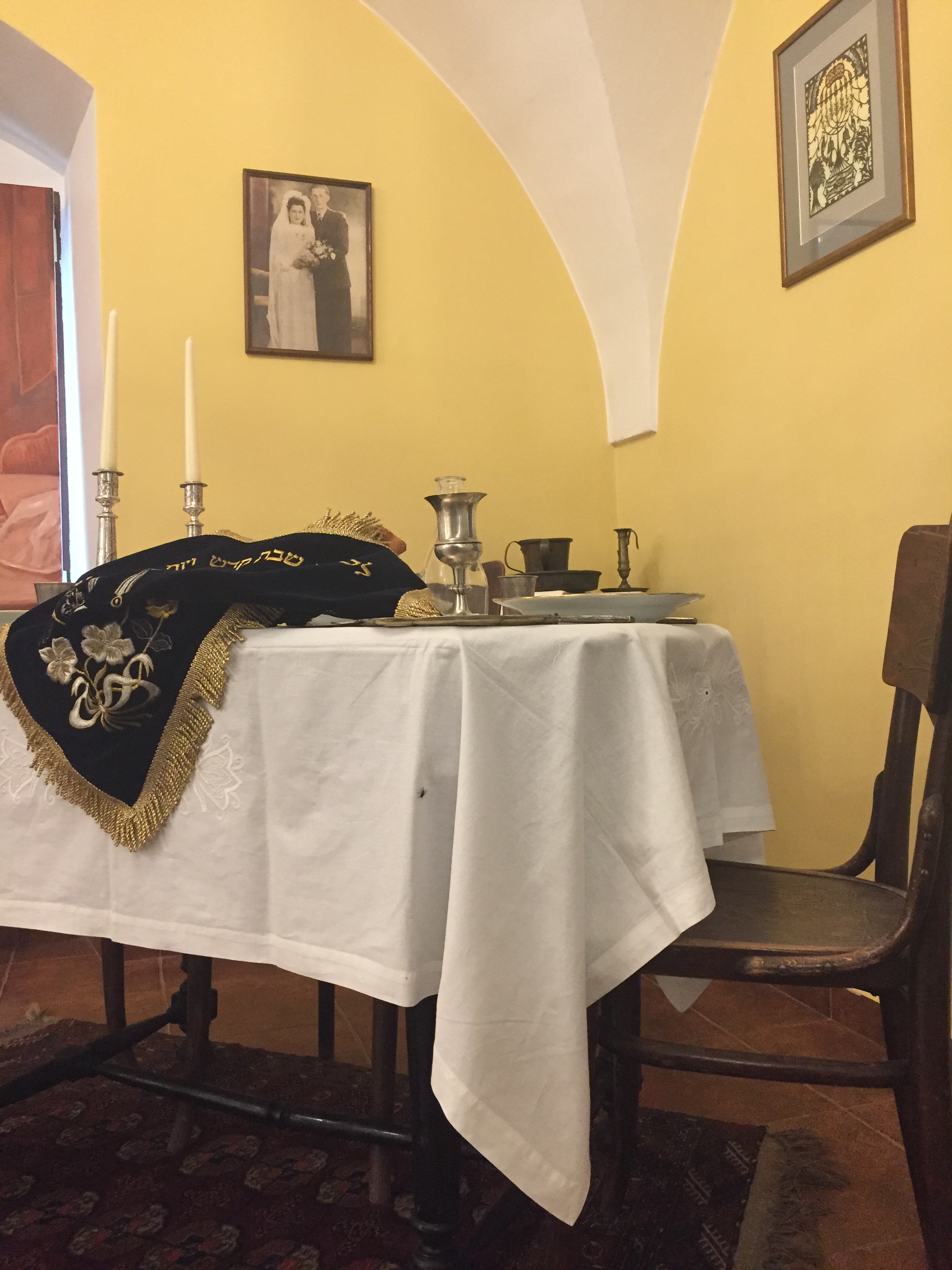
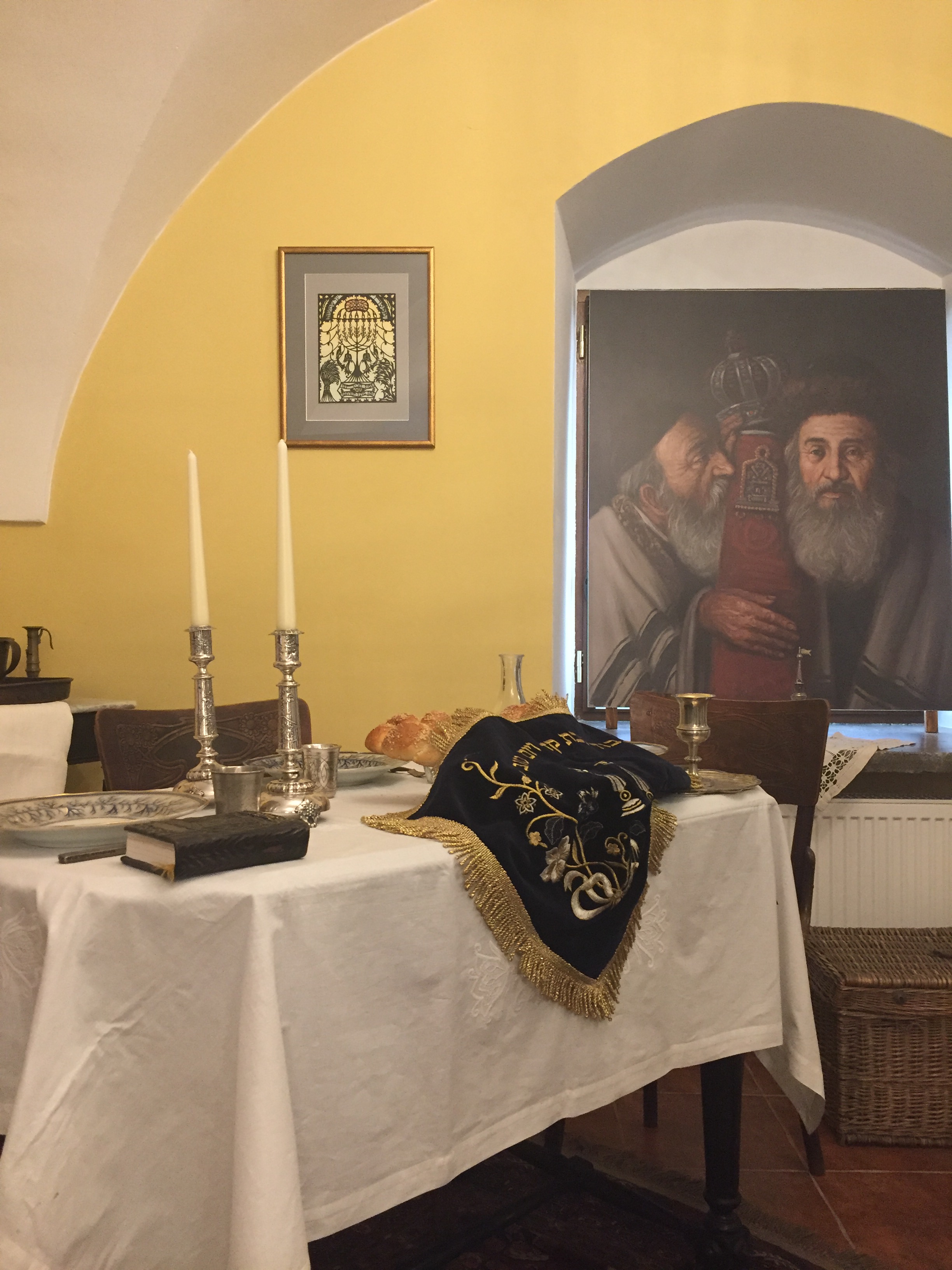
It is the museum, however, that most gives us pause. There is information at the front of the synagogue about how the Nazis were planning the construction of a museum in Prague to memorialise the vanished Jewish race. This museum was a myth; there were never any such plans. But inasmuch as there ever could be a museum of the vanished Jewish race, I feel like I am standing in it.
Photograph: Simon Holloway
Photograph: Simon Holloway
These objects are so… mundane. It has like somebody walked into my home, or into the home of one of my friends, and turned it into an exhibit for curious strangers. Is this what Jewish museums would look like if the Nazis had won? But of course: the Nazis did win, and this is precisely what Tiktin’s Jewish museum looks like as a result. In many ways, I preferred the empty fields.
We leave this painted synagogue in sadness, and I think this might be the first time that I have ever very deliberately not kissed a mezuzah. Truly, I doubt that there is anything at all within the little plastic box situated on the doorpost, and I wonder if the Russian and Polish tourists to this site know how plastic this whole enterprise is.
The story of Tiktin’s Jews is a very sad one, but it’s one that we spend the rest of our afternoon exploring. Located in the eastern part of Poland, about 10-15km from Bialystok, Tiktin came under the occupation of the Soviet Union in 1939. Its Jewish population was slightly in excess of 2,000 people, comprising about 40% of the total population, and was famous for the manufacture of talleisim/tallitot.
At the end of June in 1941, when the Wehrmacht invaded, the population was forced to wear badges that would help identify them as Jewish, and were ghettoised. Local Poles were encouraged to rob their Jewish neighbours with impunity, and many of them did so. It must have come as some surprise in August of that same year when the SS announced that people who had robbed Jews must now reimburse them.
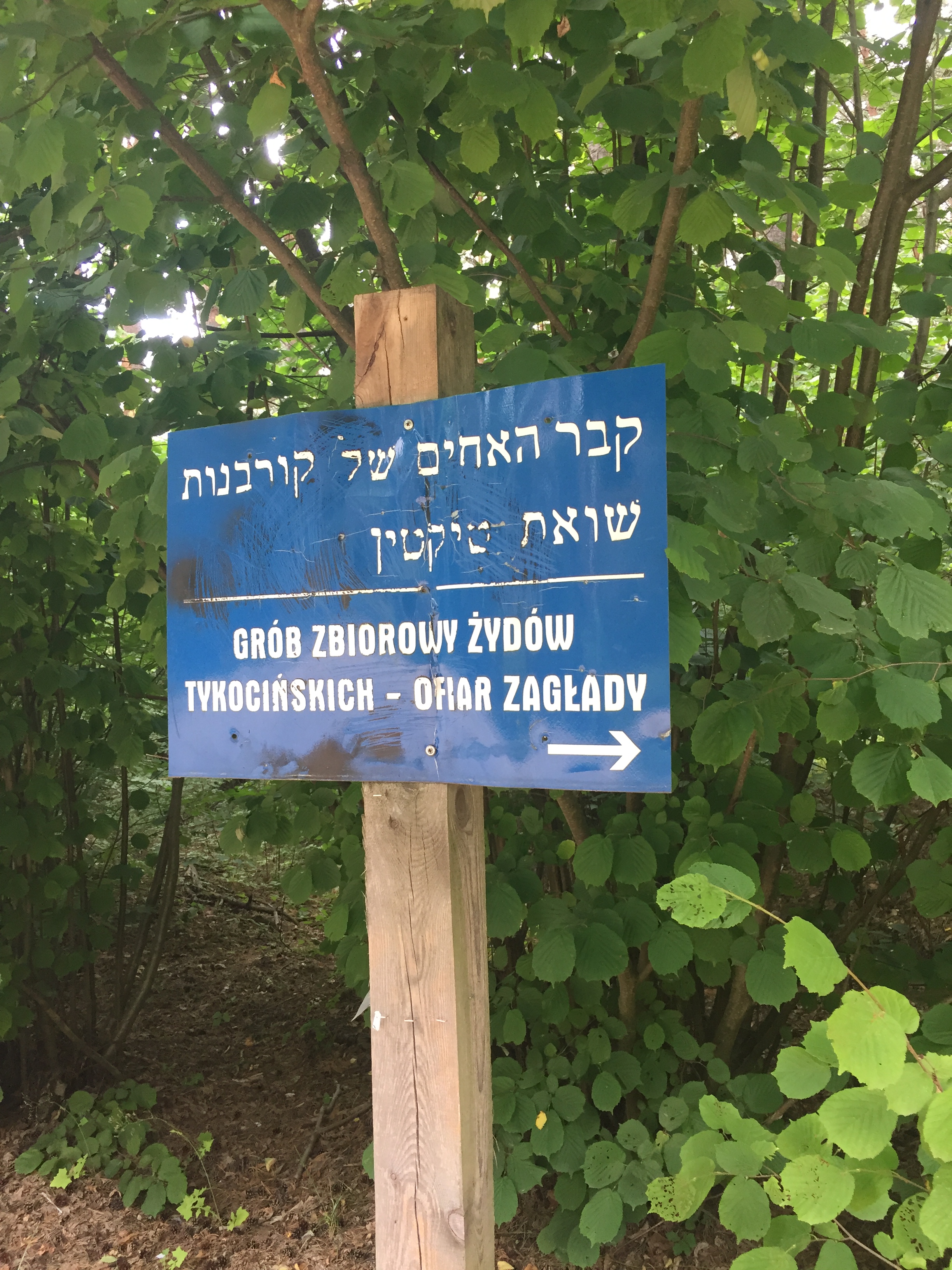
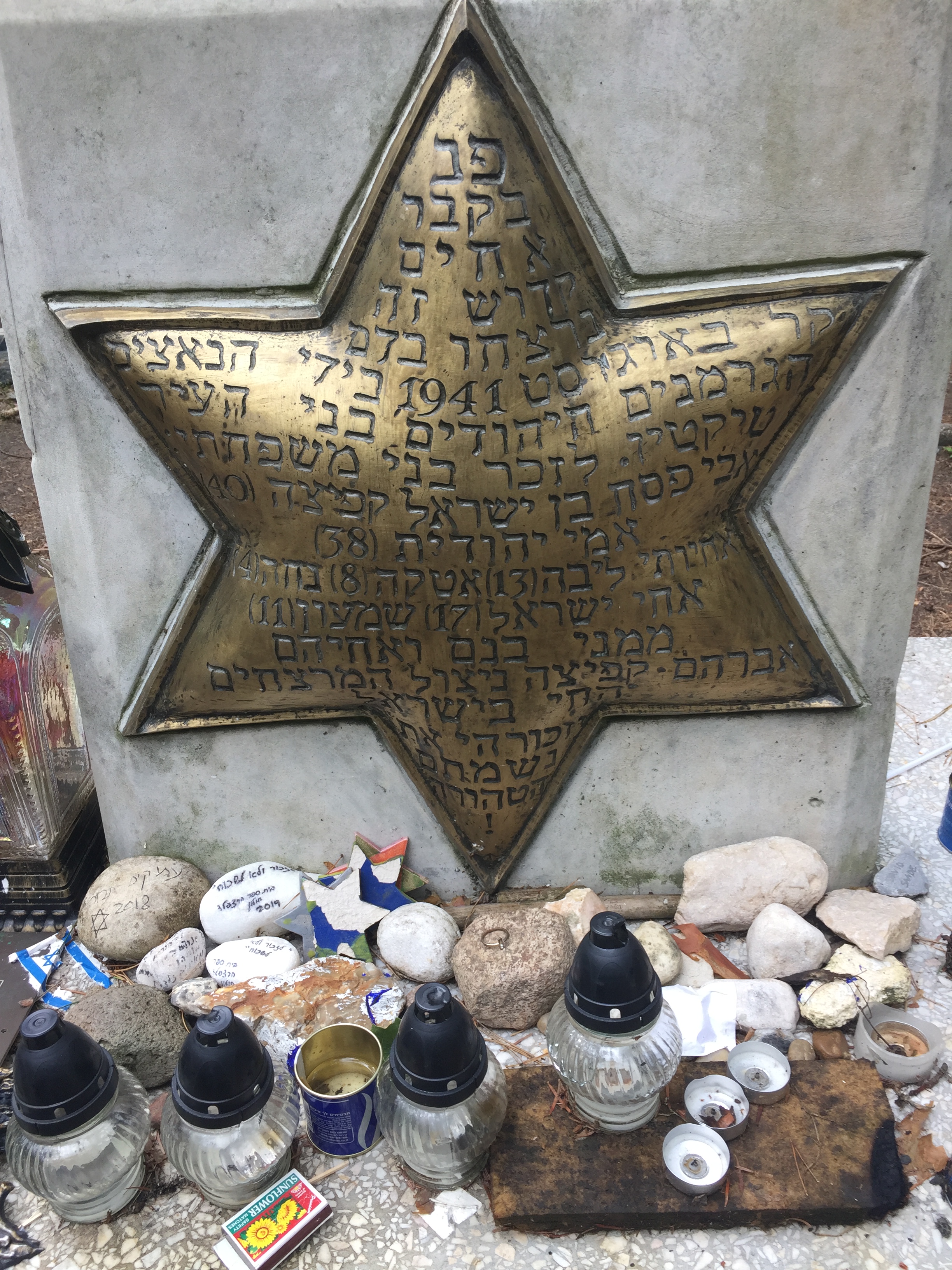
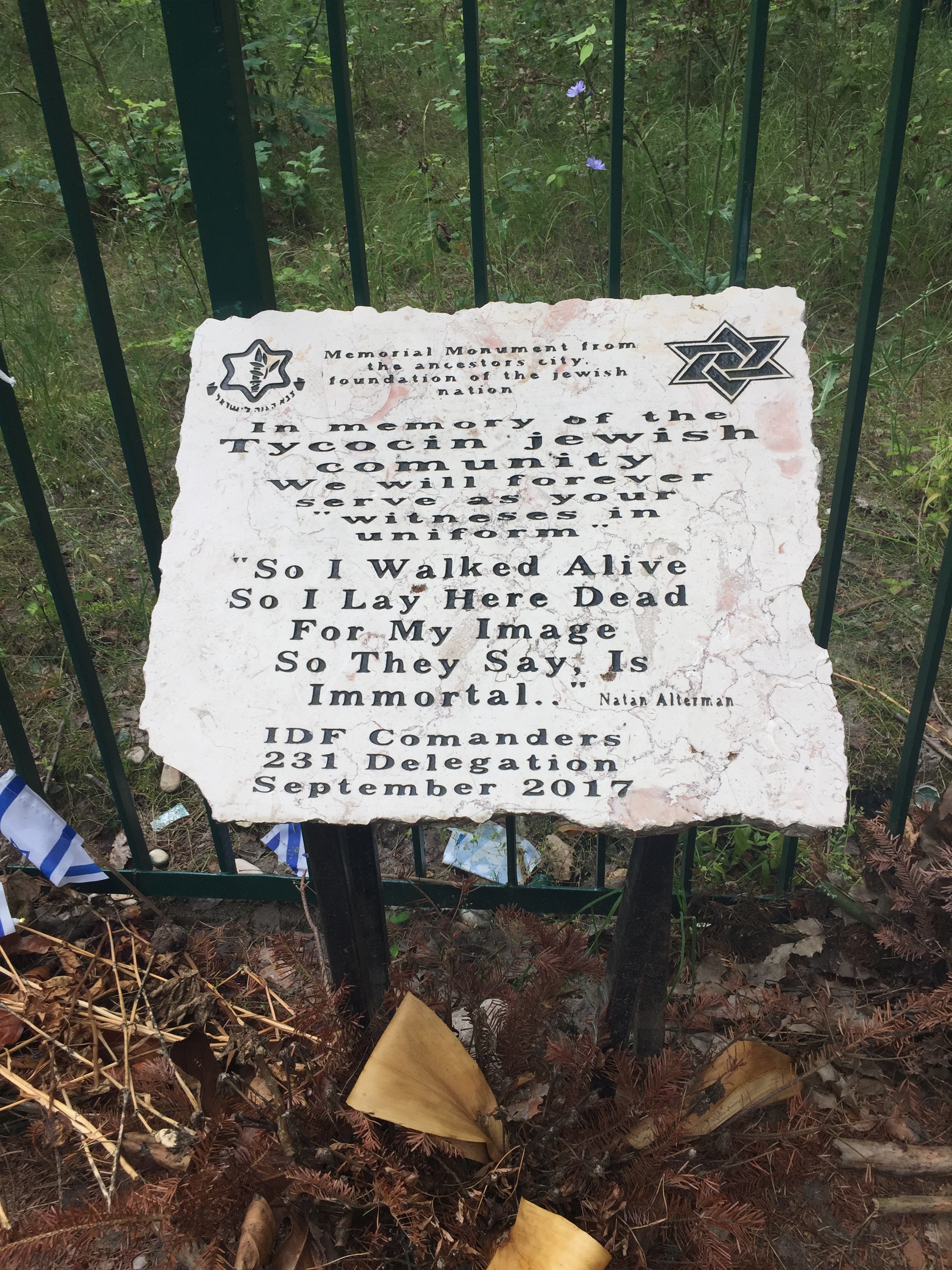
Whatever expectation people had for an amelioration of their plight was short-lived, for the end came on the 25th of August when they were ordered to gather in the square and commence the 5km march into the woods of Łopuchów. Turns out that the reimbursed goods were to be the property of the SS now, and their former owners were to be dispatched. There, in the forest, at a site chosen by local foresters, and within a pit dug by forced labourers on the previous day, every one of those Jews was lain down and shot.
On the 26th of August, those who were too young to have made the walk, too old or too sick to have made the walk, or who had avoided having to make the walk by hiding within their houses, were rousted out by the SS, loaded into trucks and transported to the pit directly. Two days. That was all it took to render Tiktin’s Jewish community nothing more than an object of idle curiosity for a future generation, and a source of revenue to enterprising Poles.
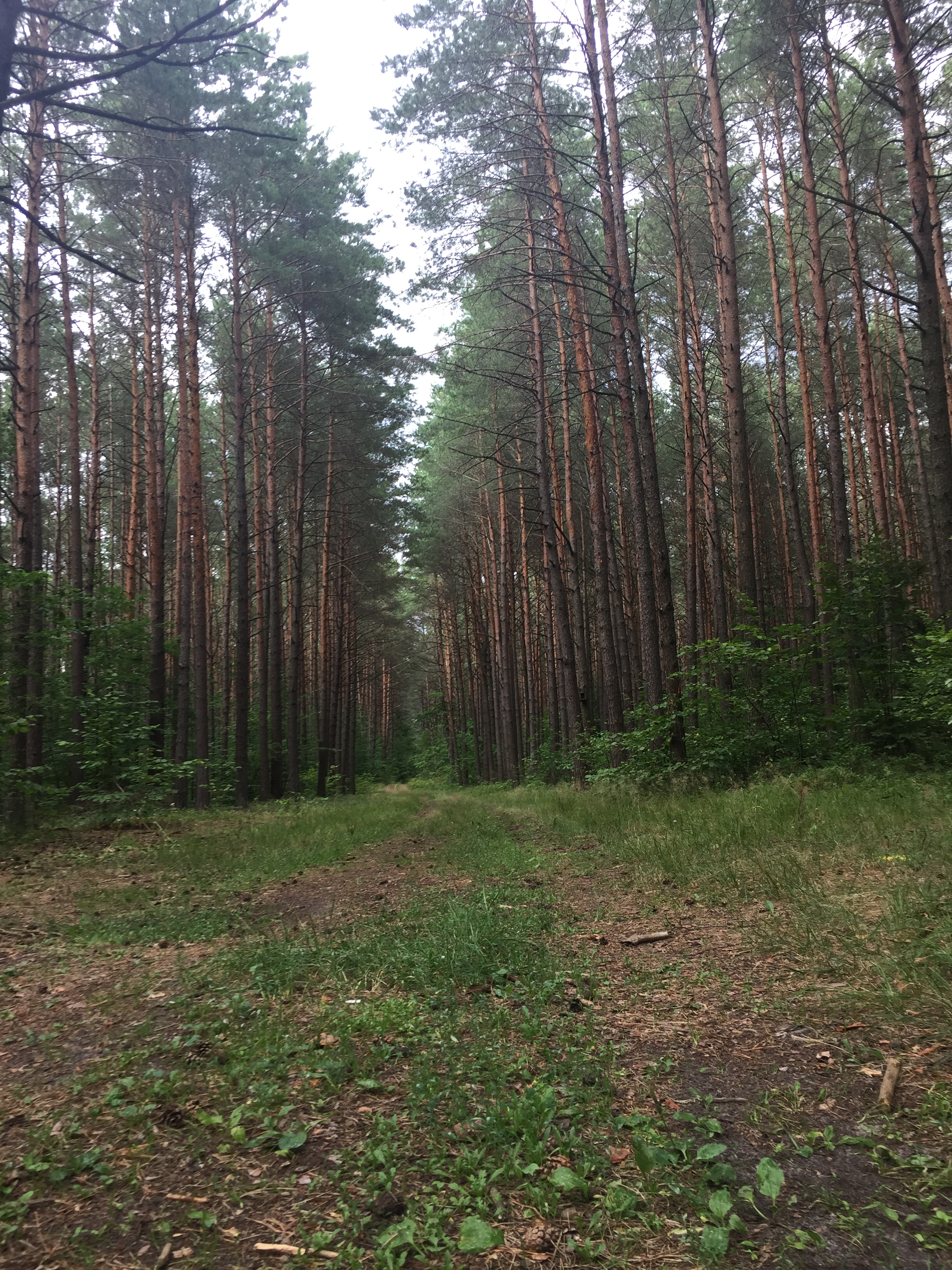
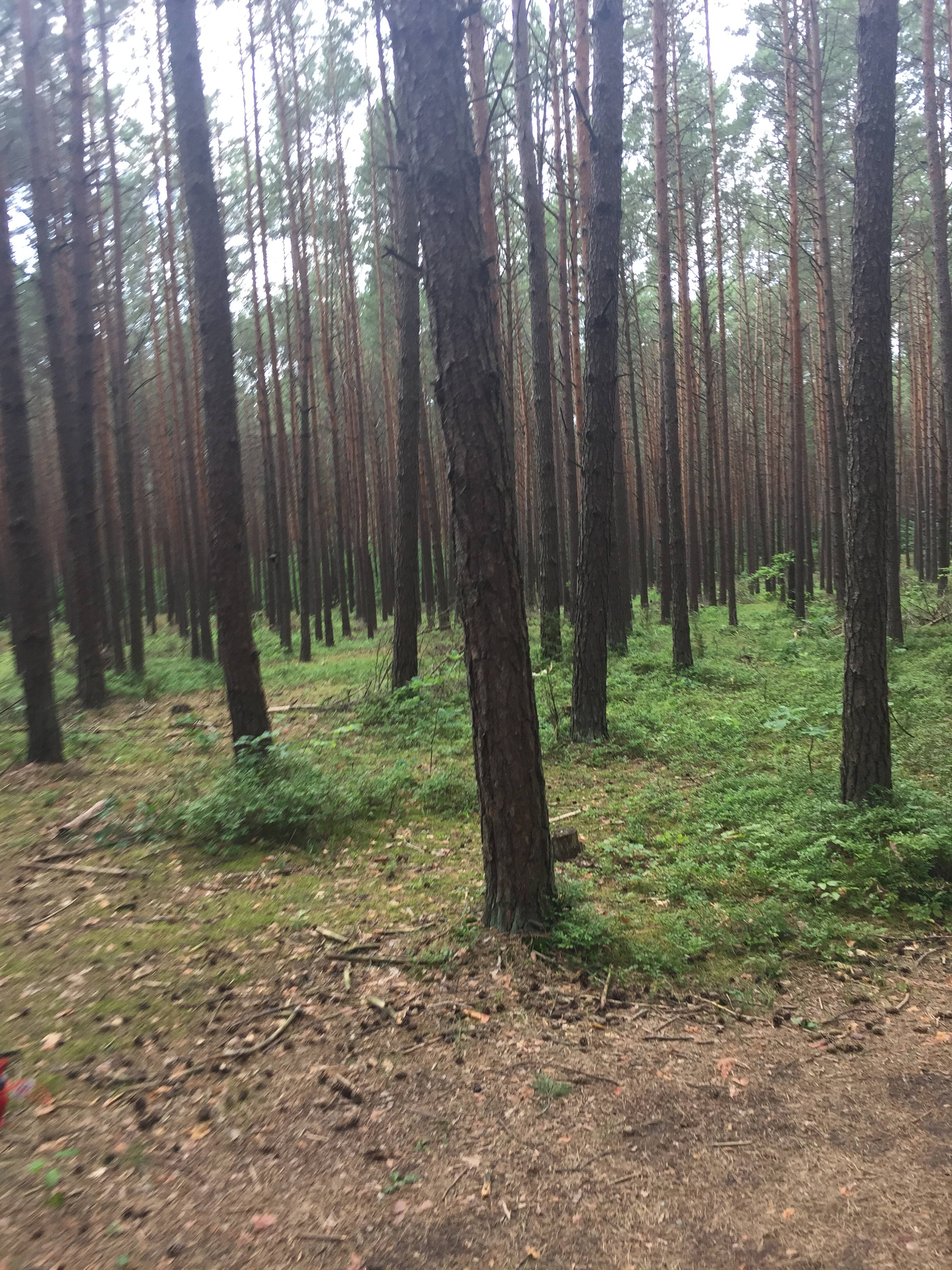
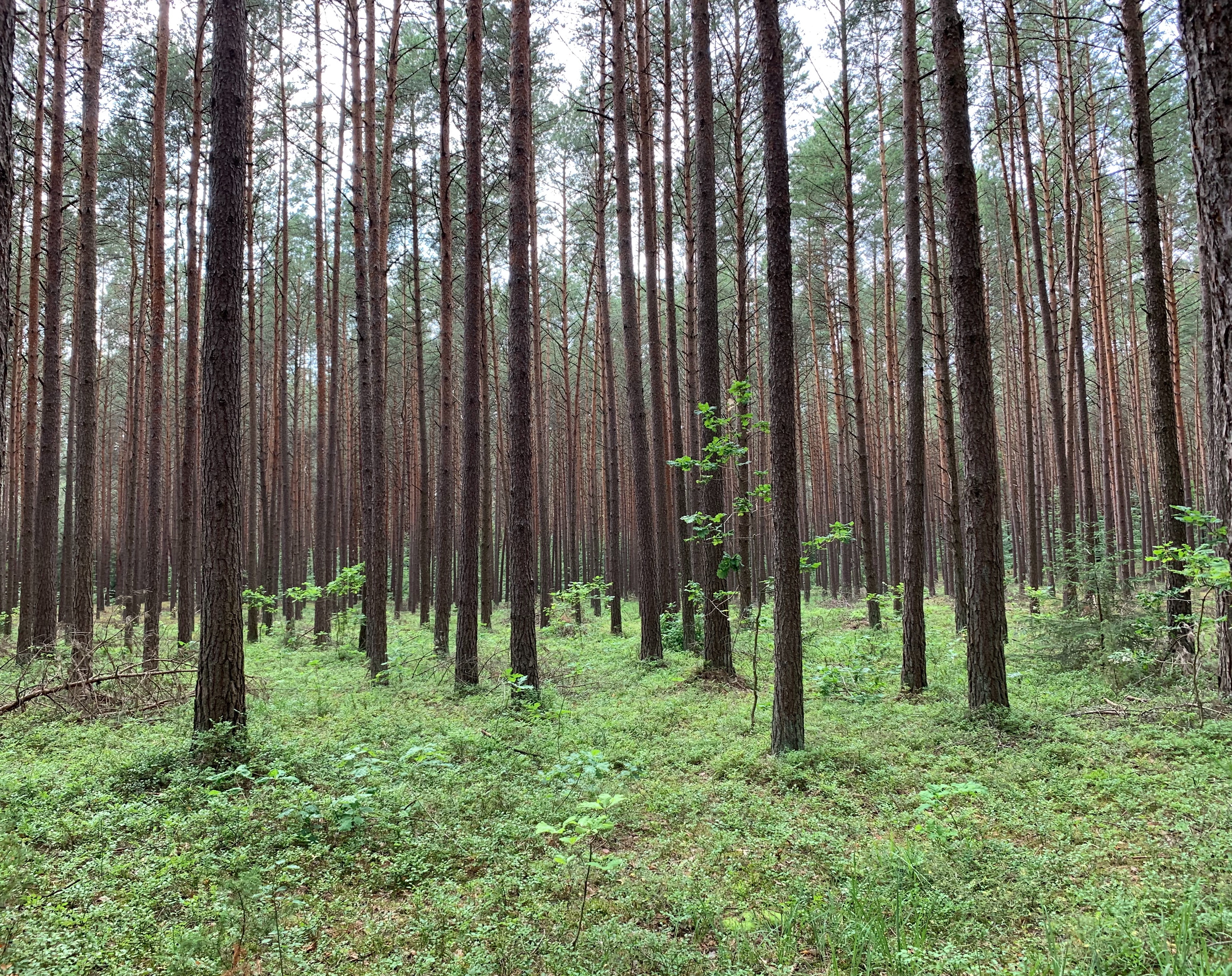
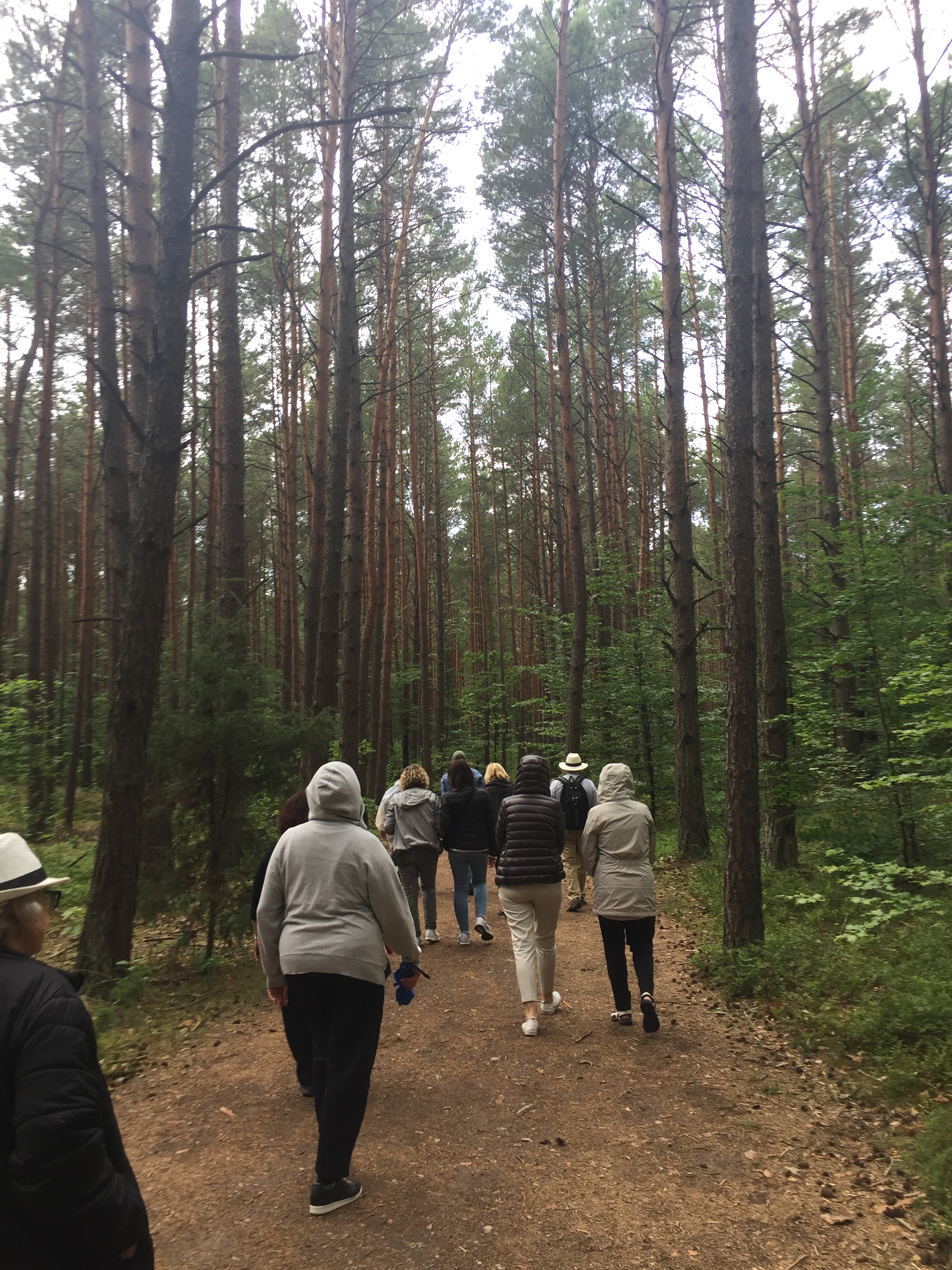
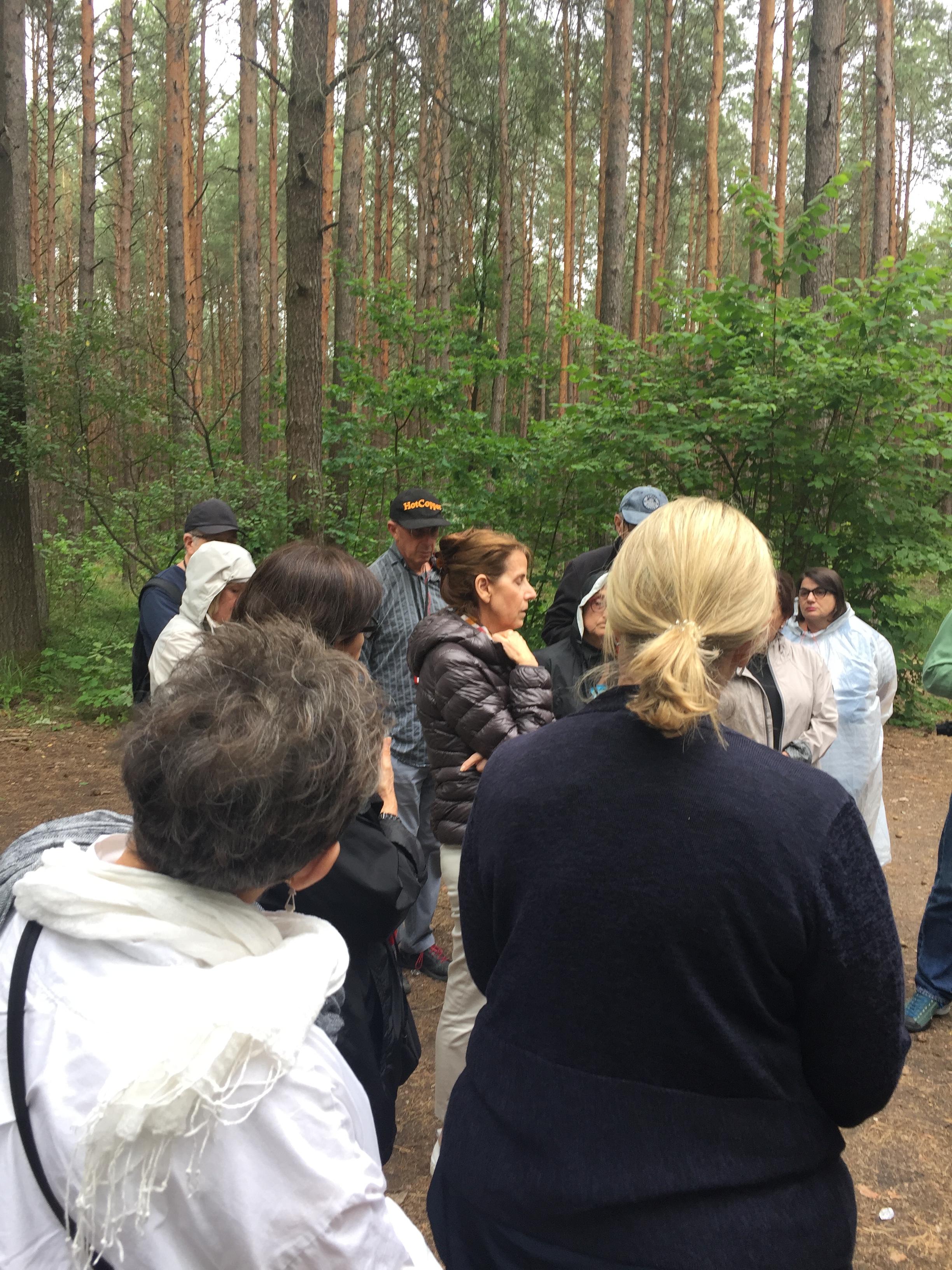
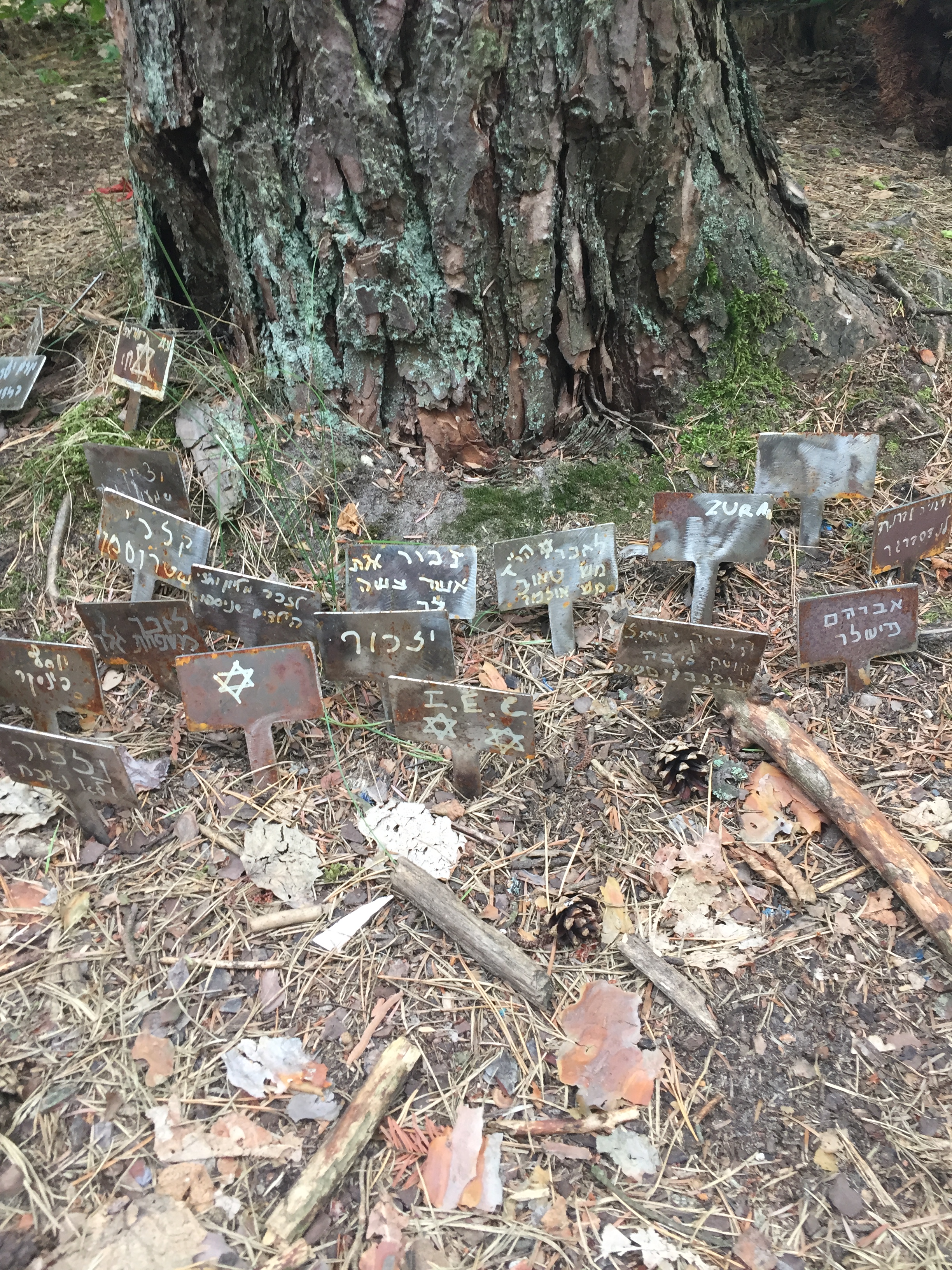
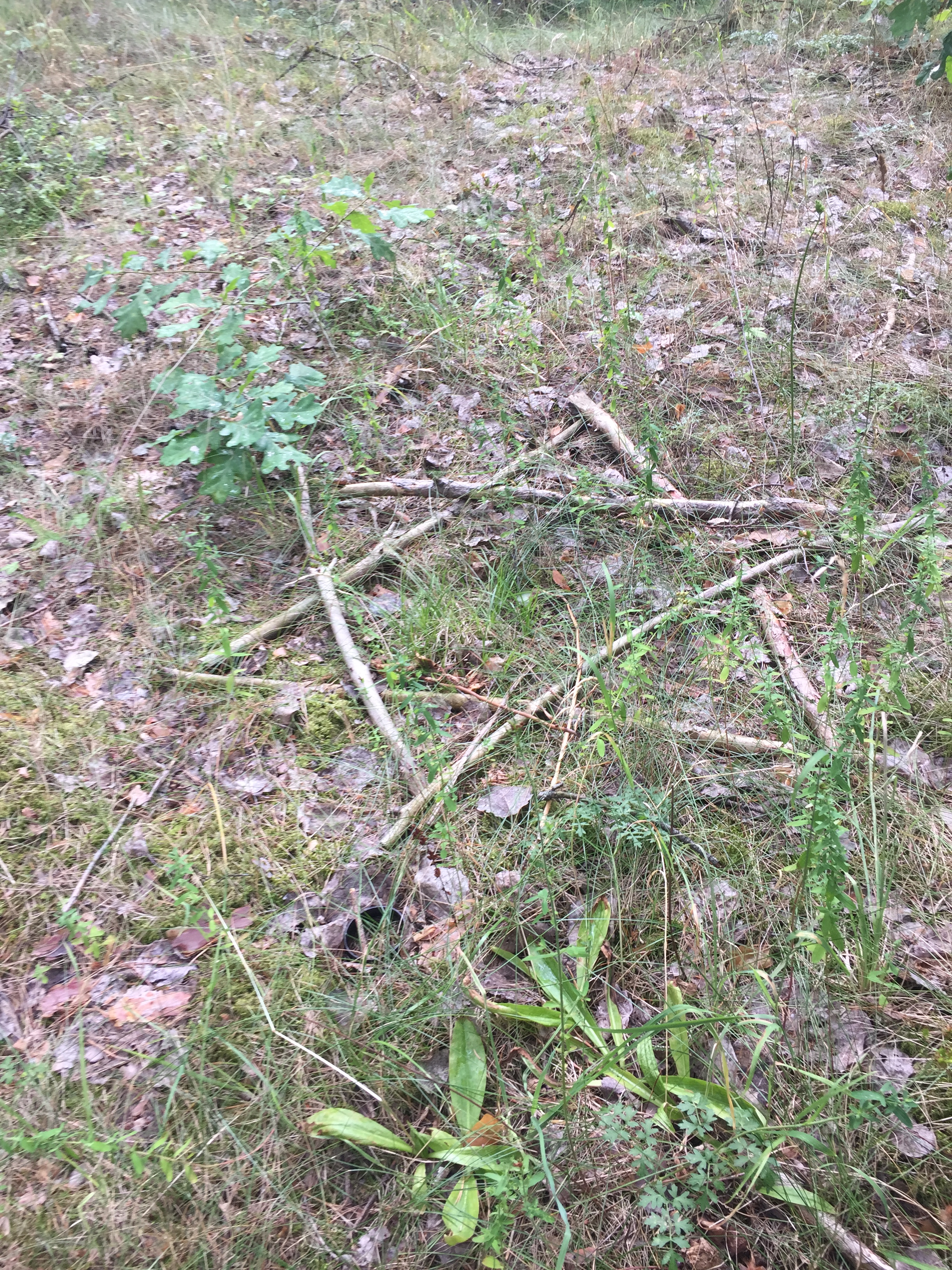
It was to the site of this pit that we now went, in a densely-wooded forest, where the birds chirped above our heads and small insects buzzed at our feet. In the silence and the stillness, we paid our respects to the mounds of overgrown foliage that mark the site where slightly more than 2,000 Jews were made to lie on top of one another before taking a bullet.
Photograph: Simon Holloway
Photograph: Simon Holloway
Photograph: Simon Holloway
Photograph: Howard Wolfers
Photograph: Simon Holloway
Photograph: Simon Holloway
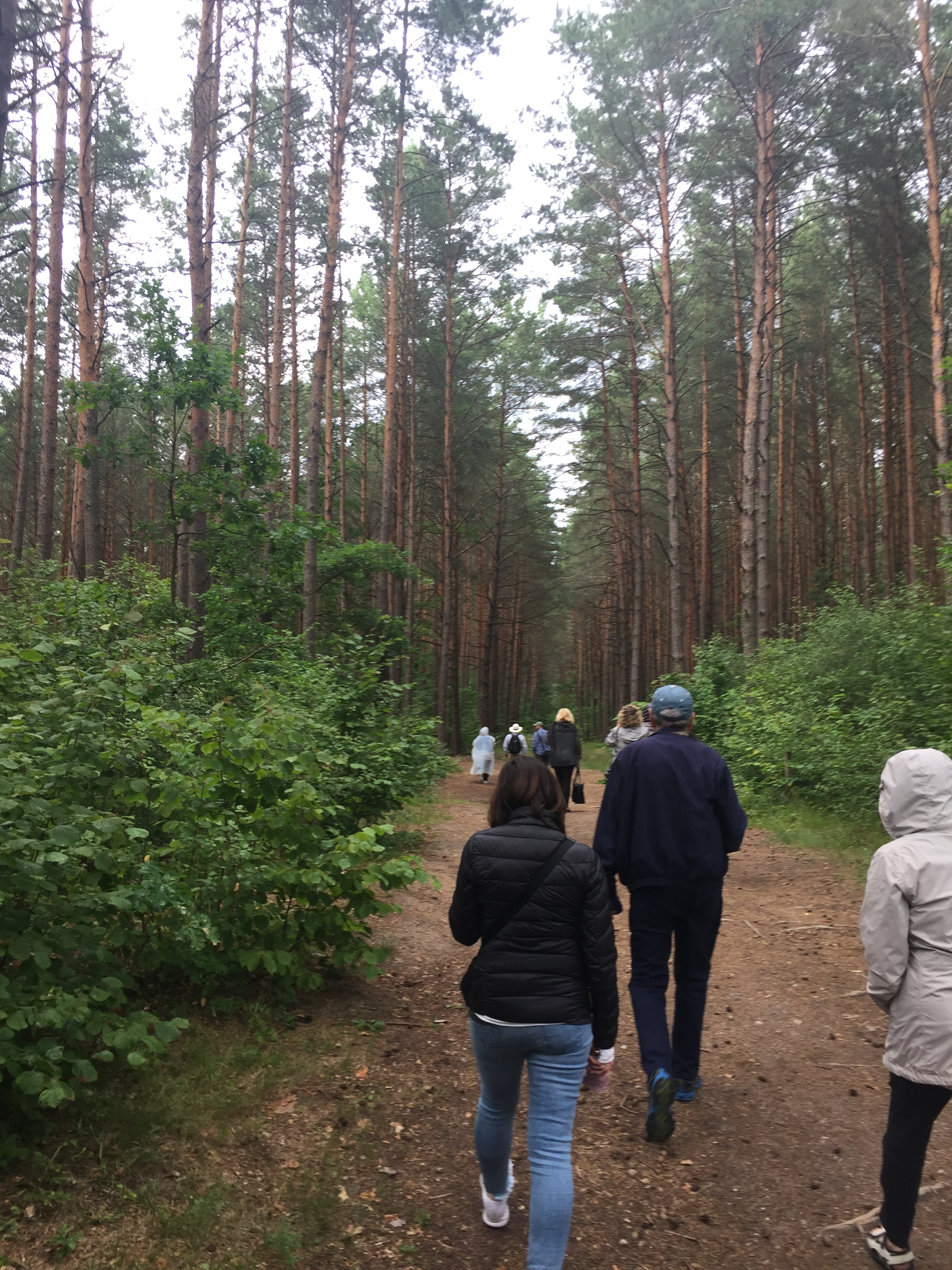
Photograph: Simon Holloway
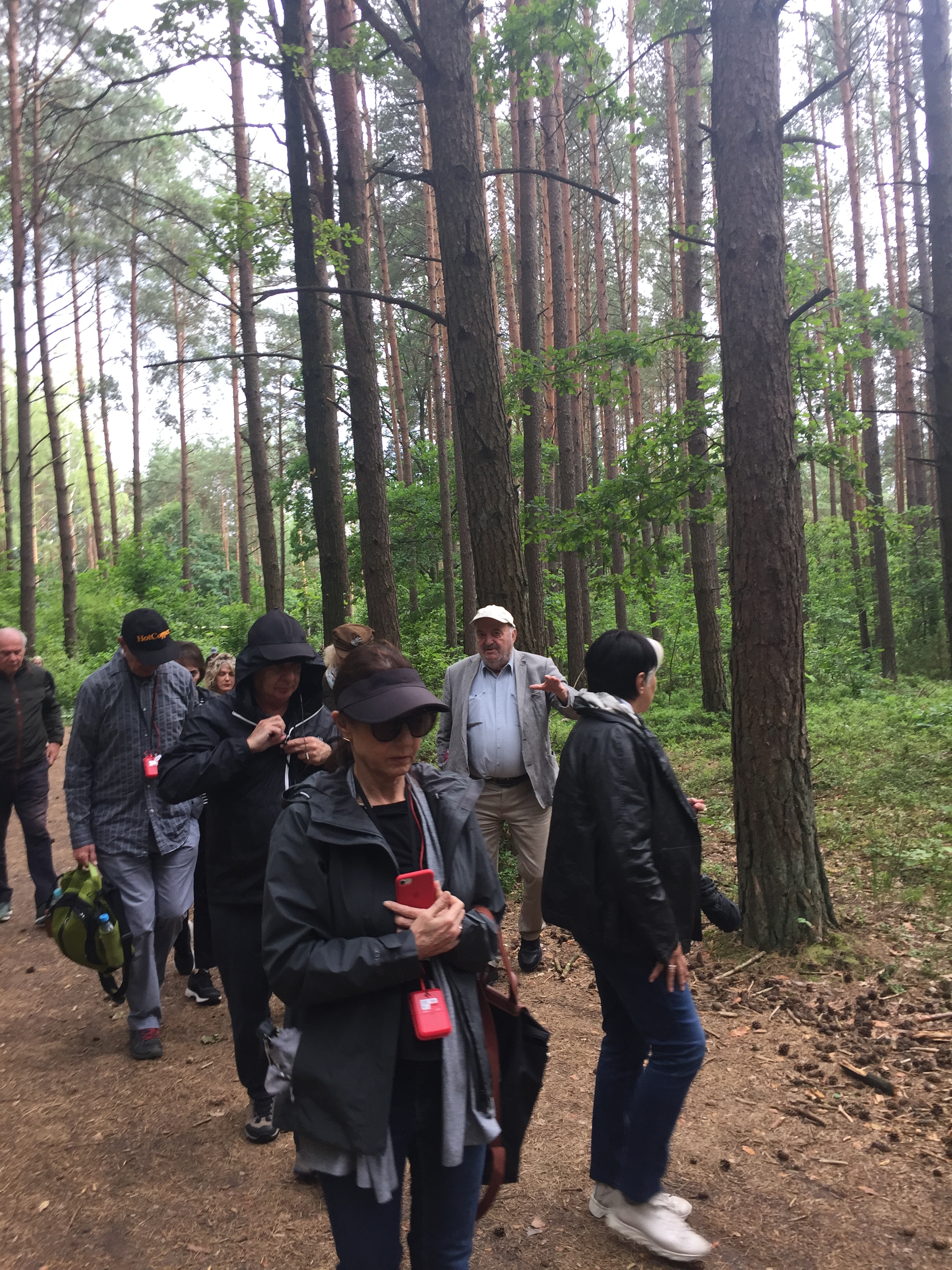
Photograph: Simon Holloway
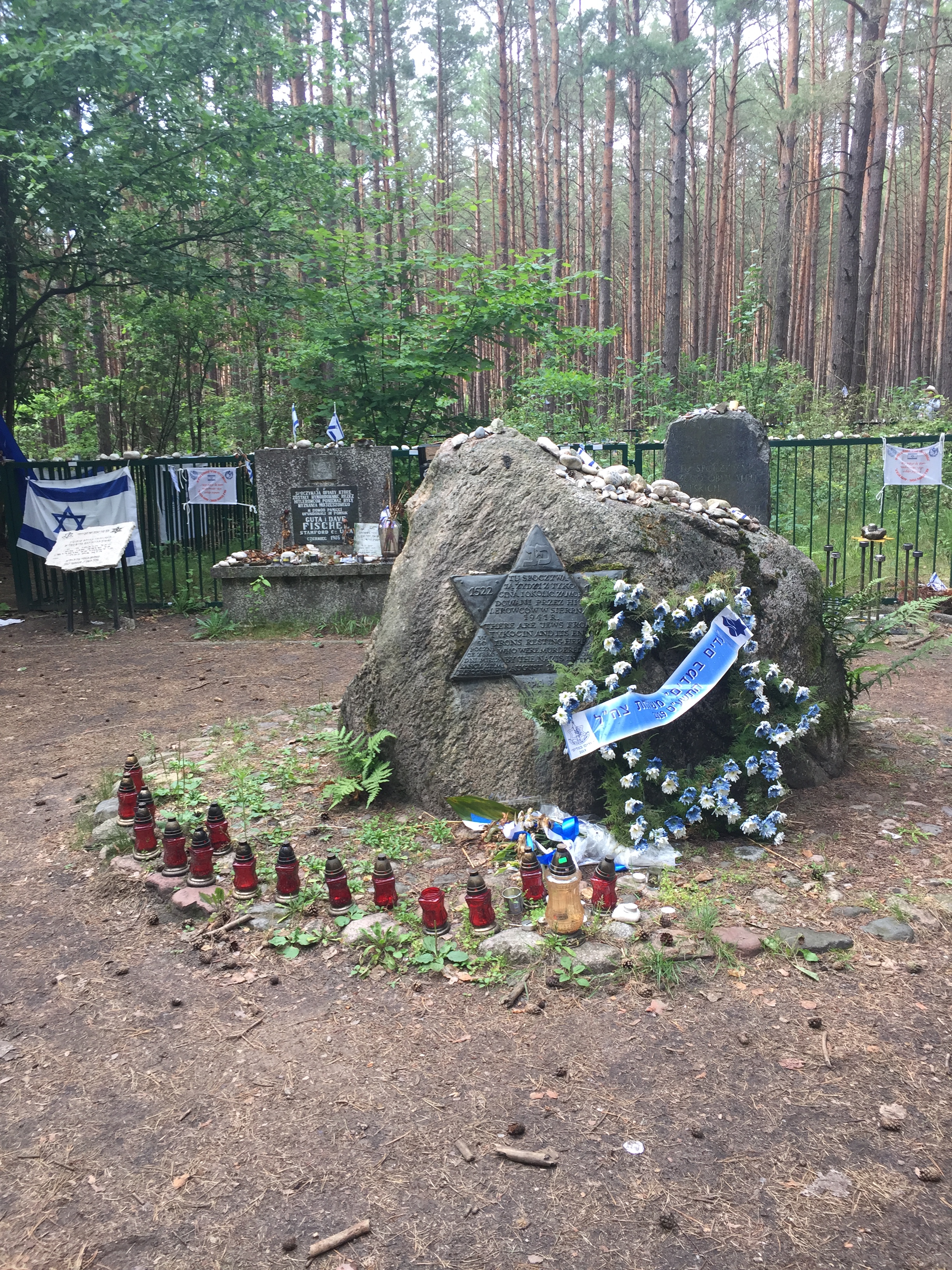
Photograph: Simon Holloway
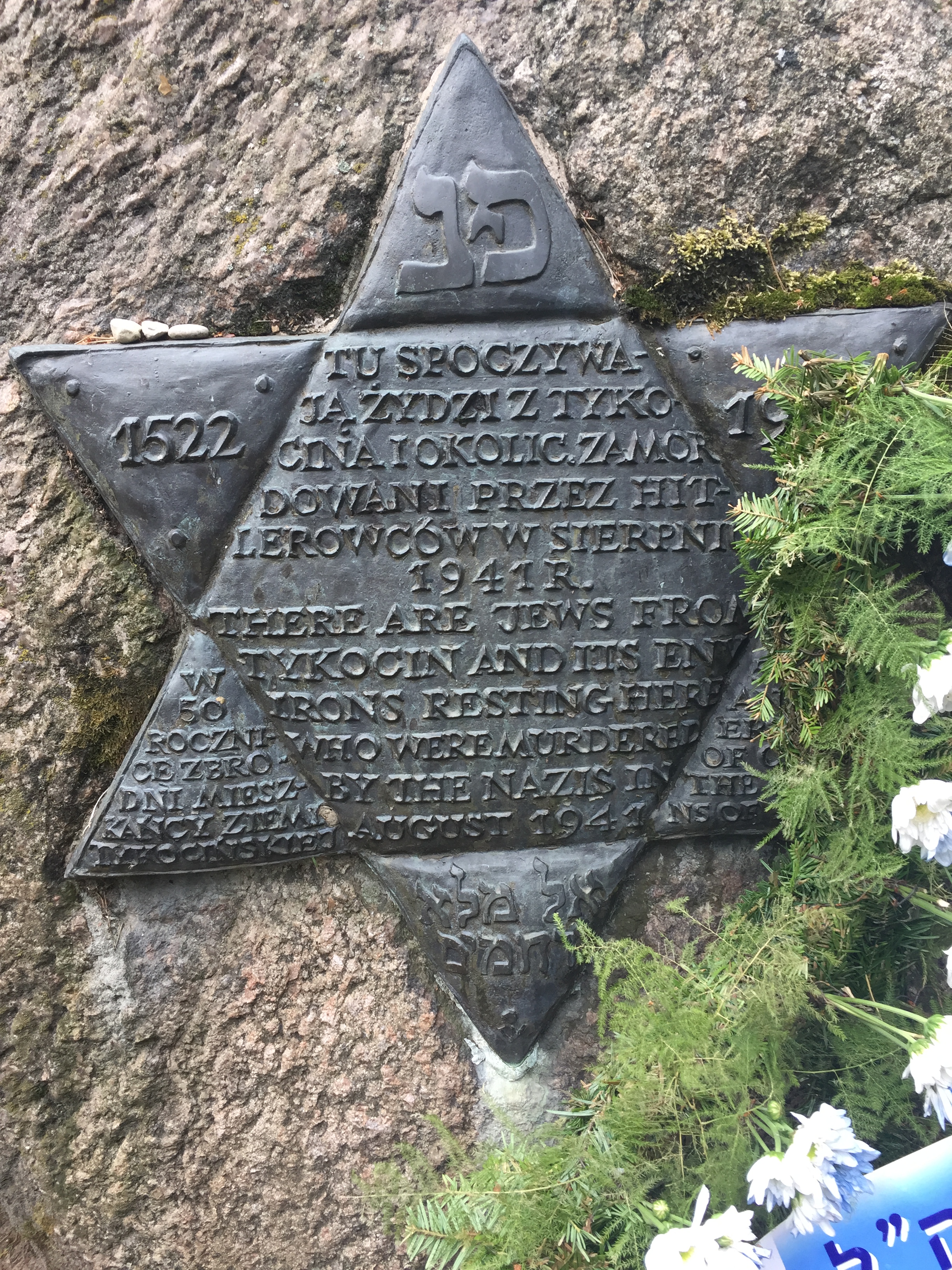
Photograph: Simon Holloway
Photograph: Simon Holloway
Photograph: Simon Holloway
Photograph: Simon Holloway
Photograph: Simon Holloway
We all react to seeing atrocities of this nature in different ways, and it’s in different ways that we each make meaning from this history. Our experience, travelling through this part of the world and encountering the tragedy of the Jewish people and their annihilation from these towns and cities, is at times a traumatising one. And yet, the mood over dinner at Dom Polski would belie the idea that we are caught up in our grief.
While we each feel a sense of loss, I think that many also feel a sense of transcendence: an understanding that these events, as repulsive and as consuming as they are, may have forever changed the nature of Jewishness and Judaism, but that they have not terminated them. However we identify, and however peripherally we may be related to those people whose suffering we are seeking to understand, we are too strong to be diminished by this.
As Agnes declared, in the forest of Łopuchów, so loud that the sound still reverberates in my ears: the people of Israel lives on.
Photograph: Simon Holloway
 Berlin and Poland Tour 2019