This morning, after packing our bags and piling into our bus, we set off in the direction of the Lublin district. Before the war, this part of south-east Poland housed close to 280,000 Jews, all but 7,000 of whom were murdered between 1939 and the end of the war.
Along the highway, I catch a glimpse of a sign to Józefów: the site of the first massacre perpetrated by Reserve Police Battalion 101 in July of 1942. The roughly 1,500 Jews that they murdered at 2:00 in the morning were the first of some 83,000 Jews murdered by that one police battalion, staffed with volunteers from Hamburg. I ask Fil and he tells me that there’s a dozen towns called Józefów. The one that we have passed is not the one of which I was thinking.
Really, must every sign in this country be so triggering?
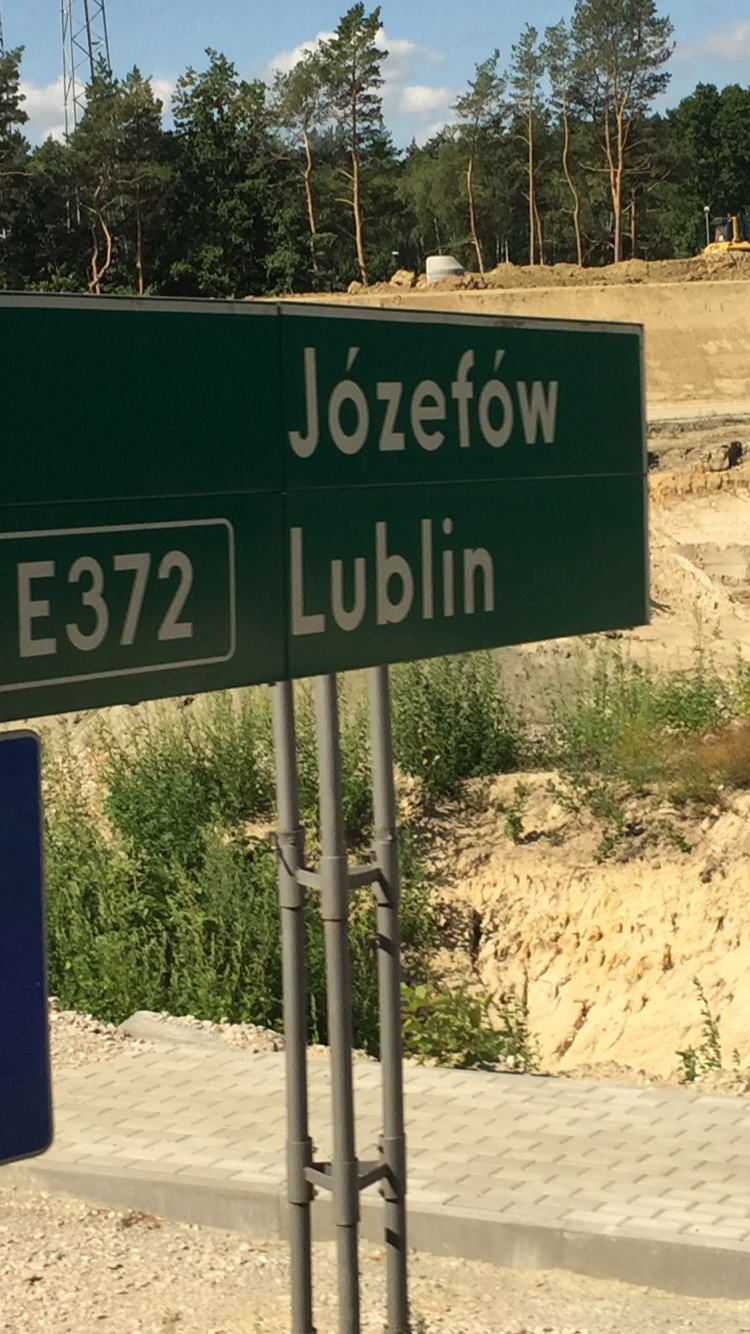
Photograph: Simon Holloway
Our first stop for the morning is the pretty little riverside town of Kuzmir (Kazimierz Dolny, in Polish), on the banks of the Vistula. We are told that this is not only the longest river in Poland, being over 1000km in length, but that it is the last truly wild river in the country as well. Major towns that abut the river include Krakow (where it originates), Warsaw and Gdansk (where it flows into the Baltic Sea).
Some parts of the Vistula are obscured by forest, and one could be forgiven for not even knowing that there is a river nearby. Nobody would make such a mistake in Kuzmir, where the river itself is a major tourist attraction. Antique Polish trading vessels are available to take tourists for a river cruise, and a beach on the far side looks inviting. In the town itself, which was named for the Polish prince, Casimir the Just, visitors have the option of being transported by an old-style horse and carriage, and are warned about the “Gypsies” and their light fingers.
Before the war, some 50% of the population (about 1000 people) were Jews, many of whom were hasidim of the local rebbe. Their community was an old one, with roots stretching back into the 16th century, but their synagogue was devastated during the war and the community themselves was eradicated. A local cemetery, from which gravestones were taken to form a path to Gestapo headquarters, became an execution site for Jews and Poles, the former of whom were then eradicated in Belzec.
Some of us pay a visit to the local synagogue, which is today (in Fil’s words) “a two-star hotel”. Out the back and around the corner, visitors can enter and, for a 6 złoty fee, see photographs and information about the former inhabitants. Unlike what we saw yesterday in Tiktin, this is quite tastefully done, and I appreciate the manner in which they seek to educate visiting tourists as regards the difference between Hebrew and Yiddish script.
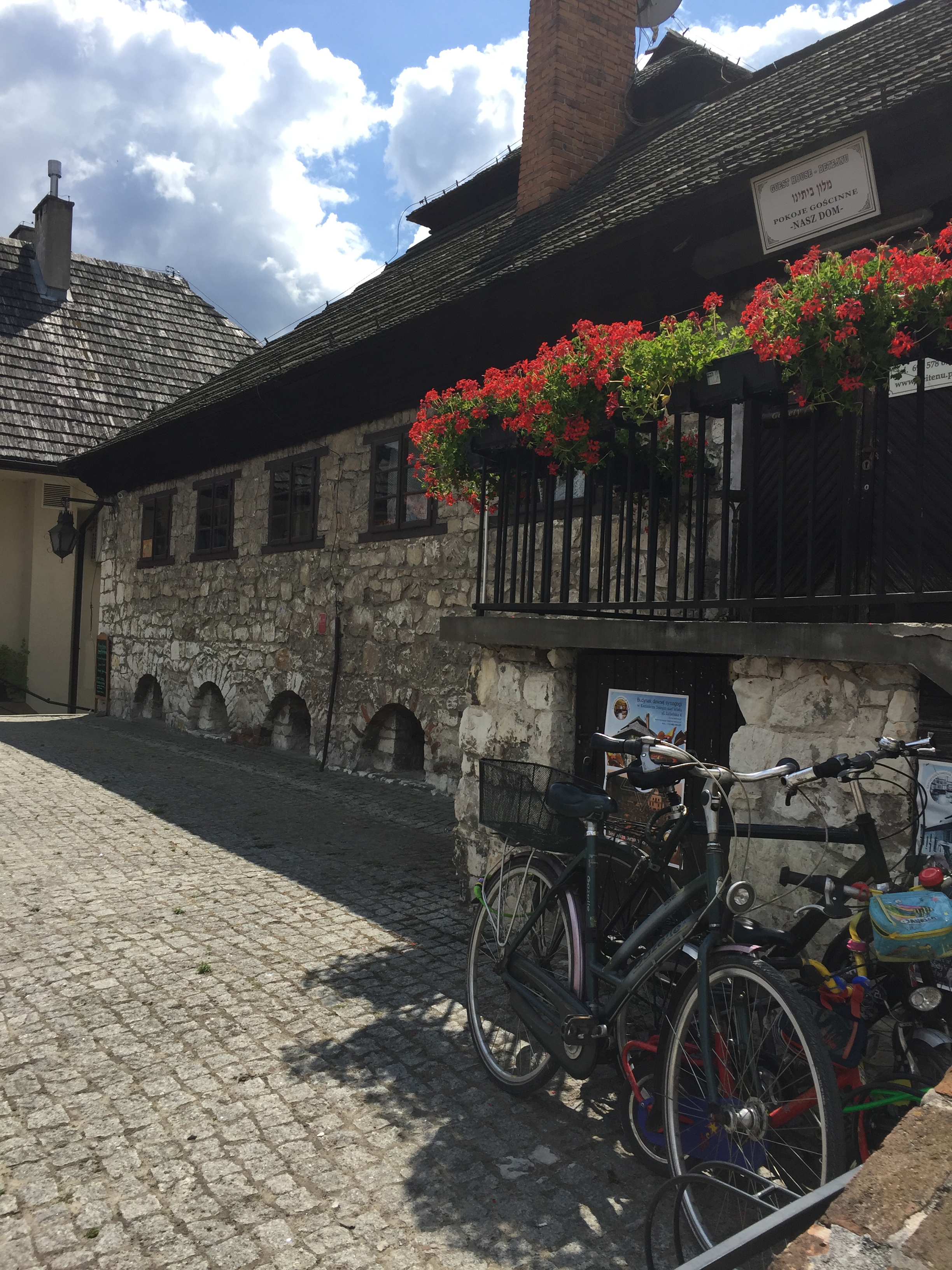
Photograph: Simon Holloway
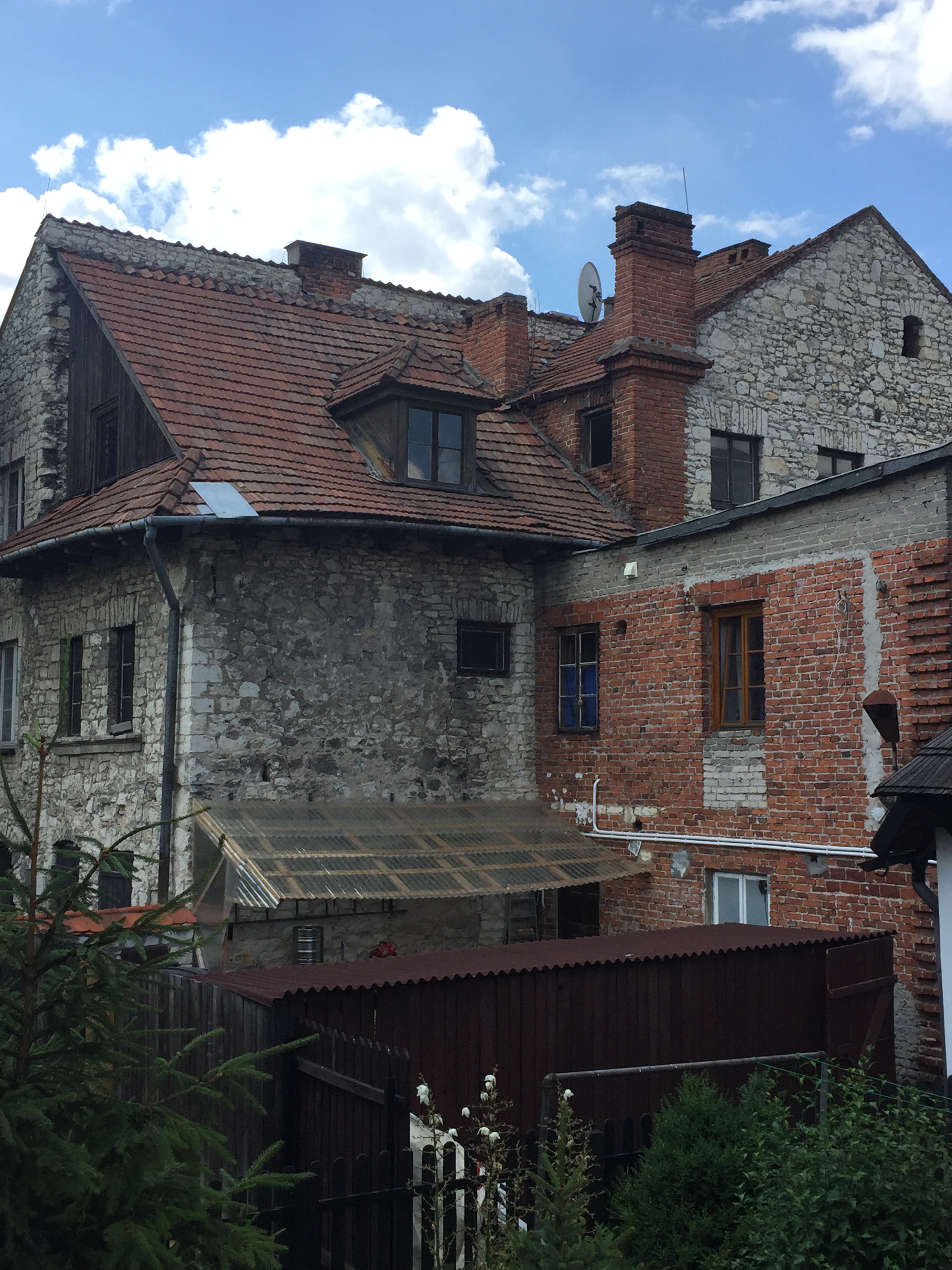
Photograph: Simon Holloway
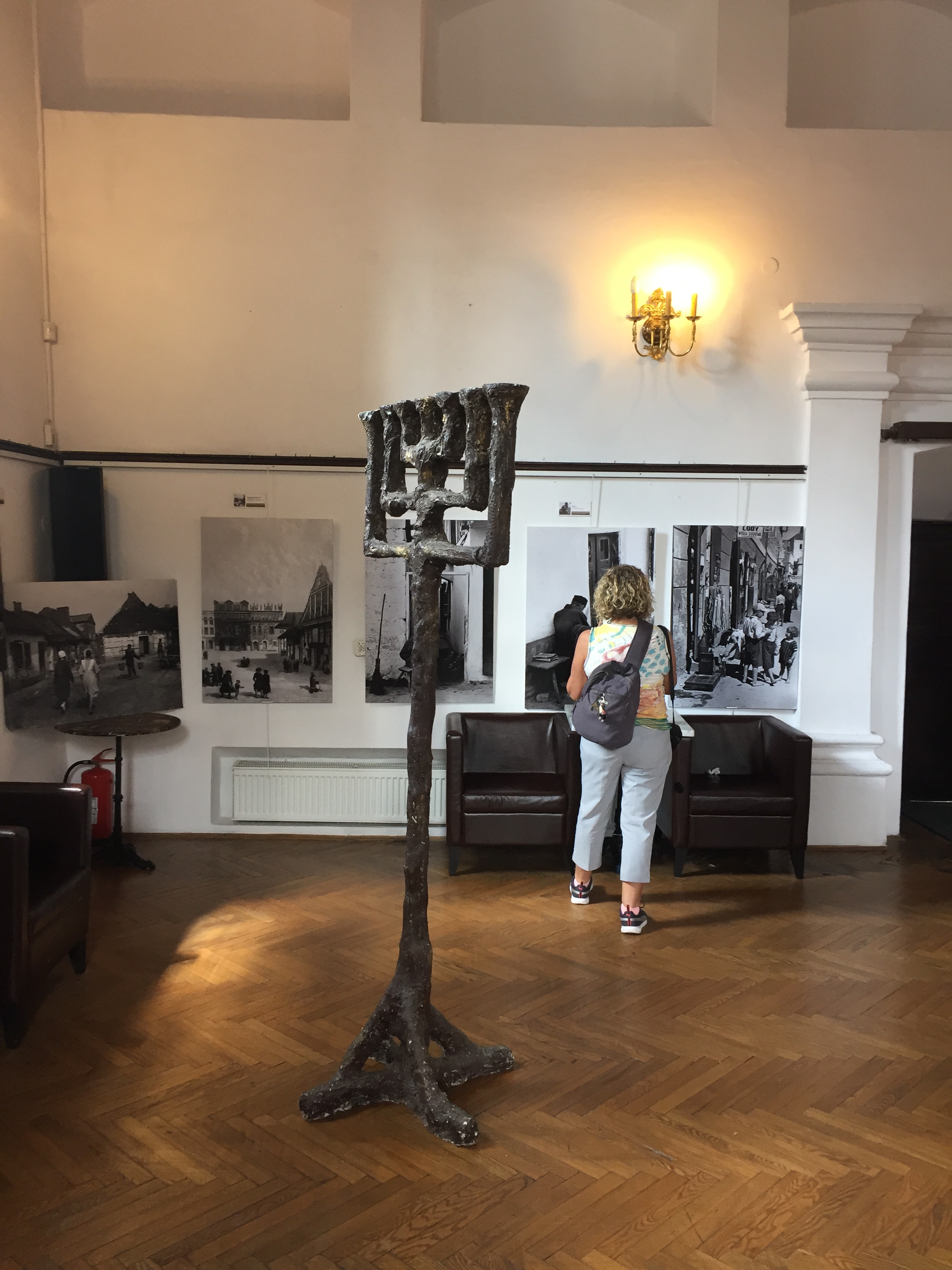
Photograph: Simon Holloway
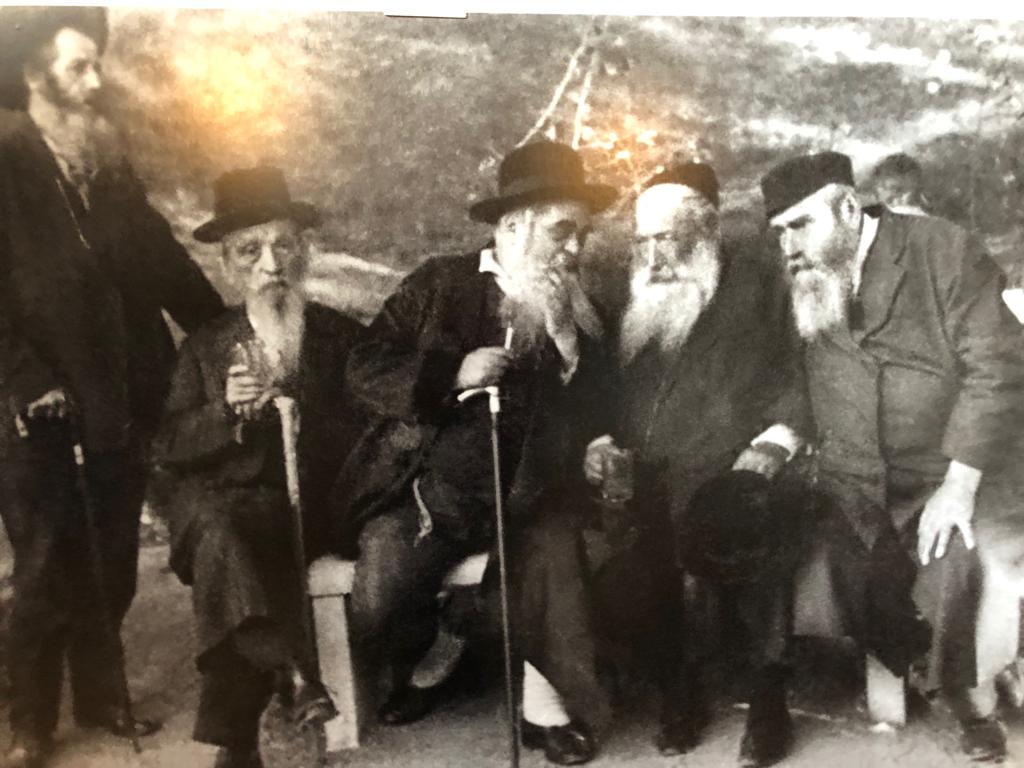
Photograph: Kathy Miller
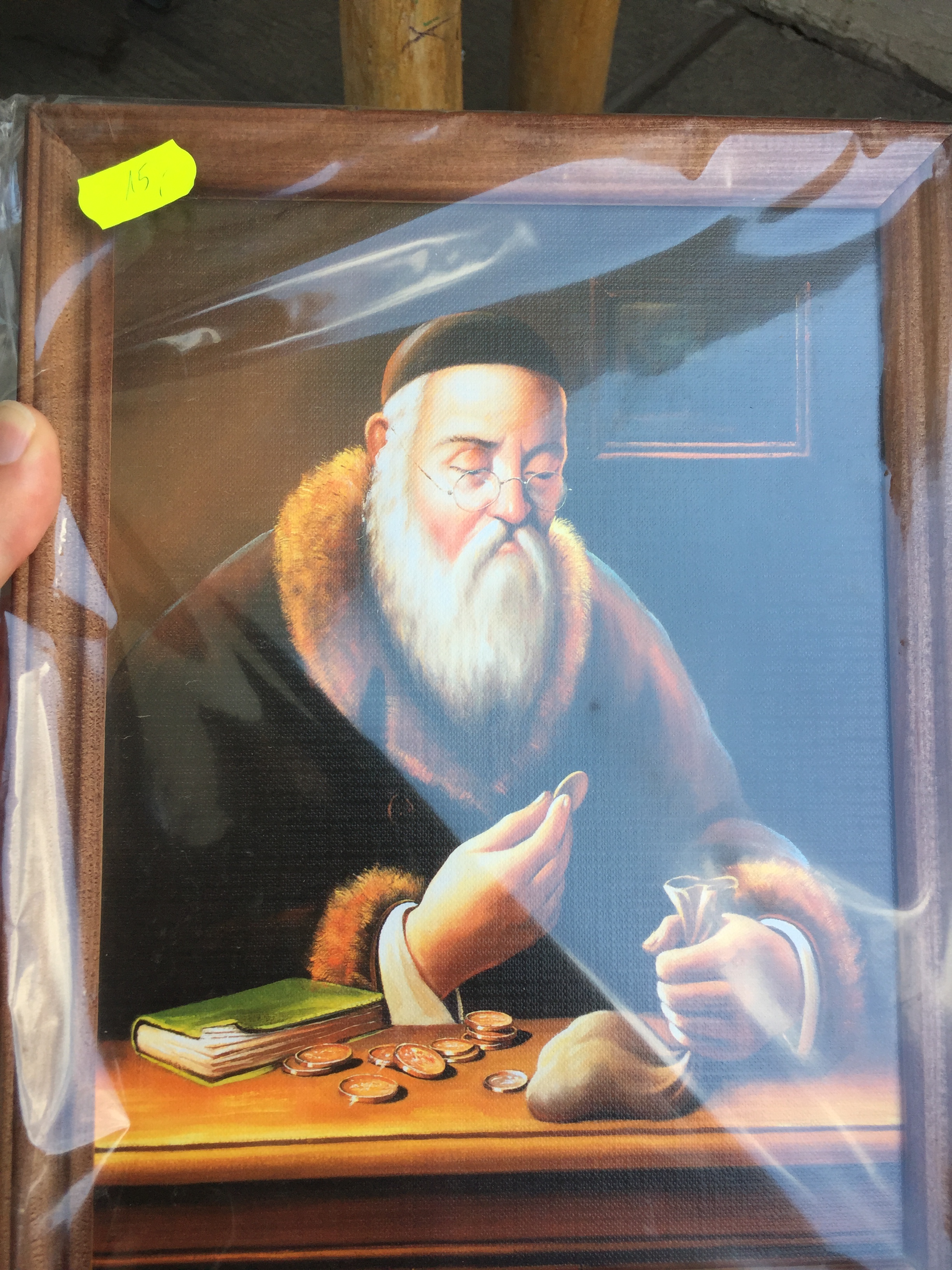
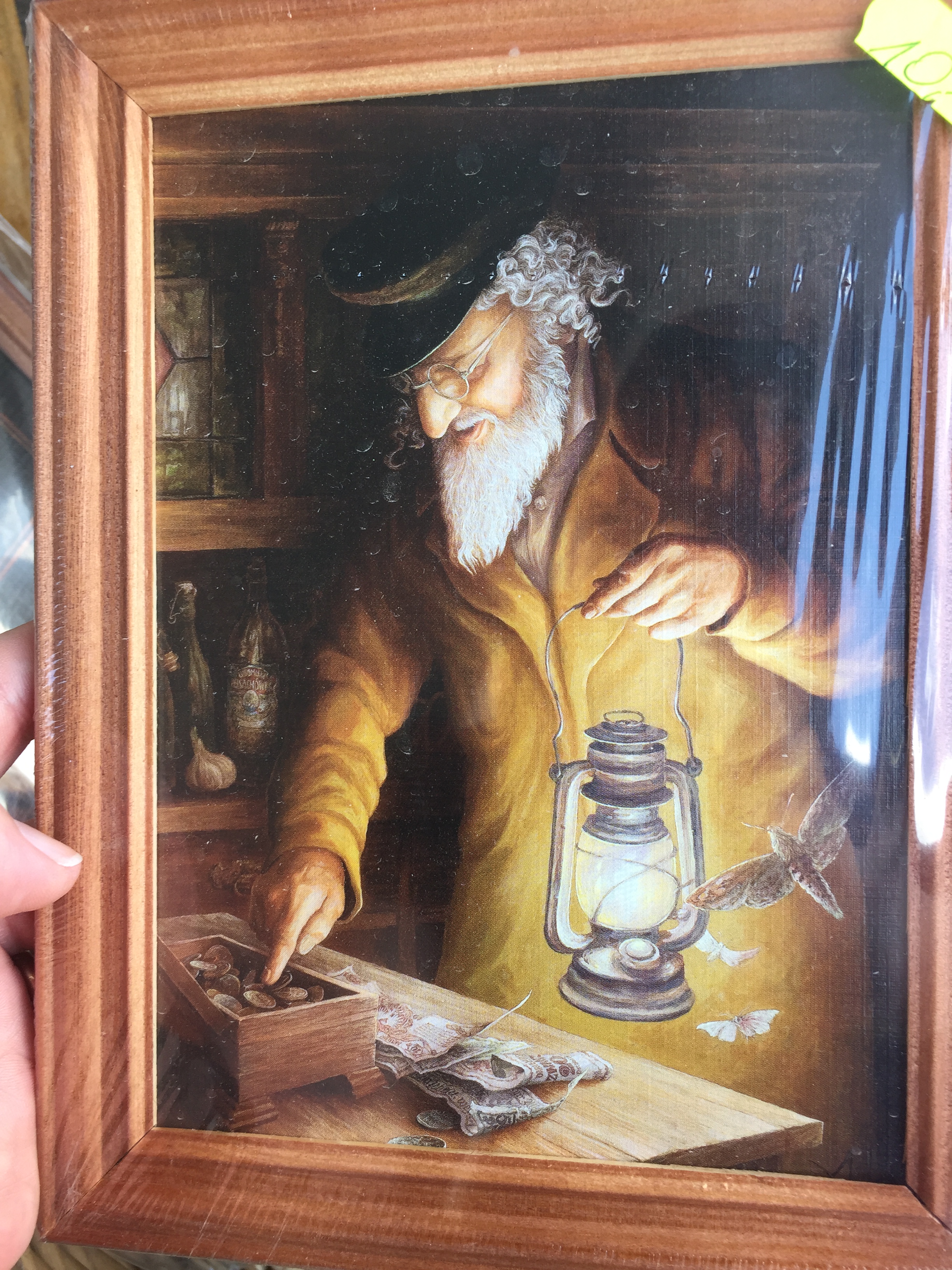
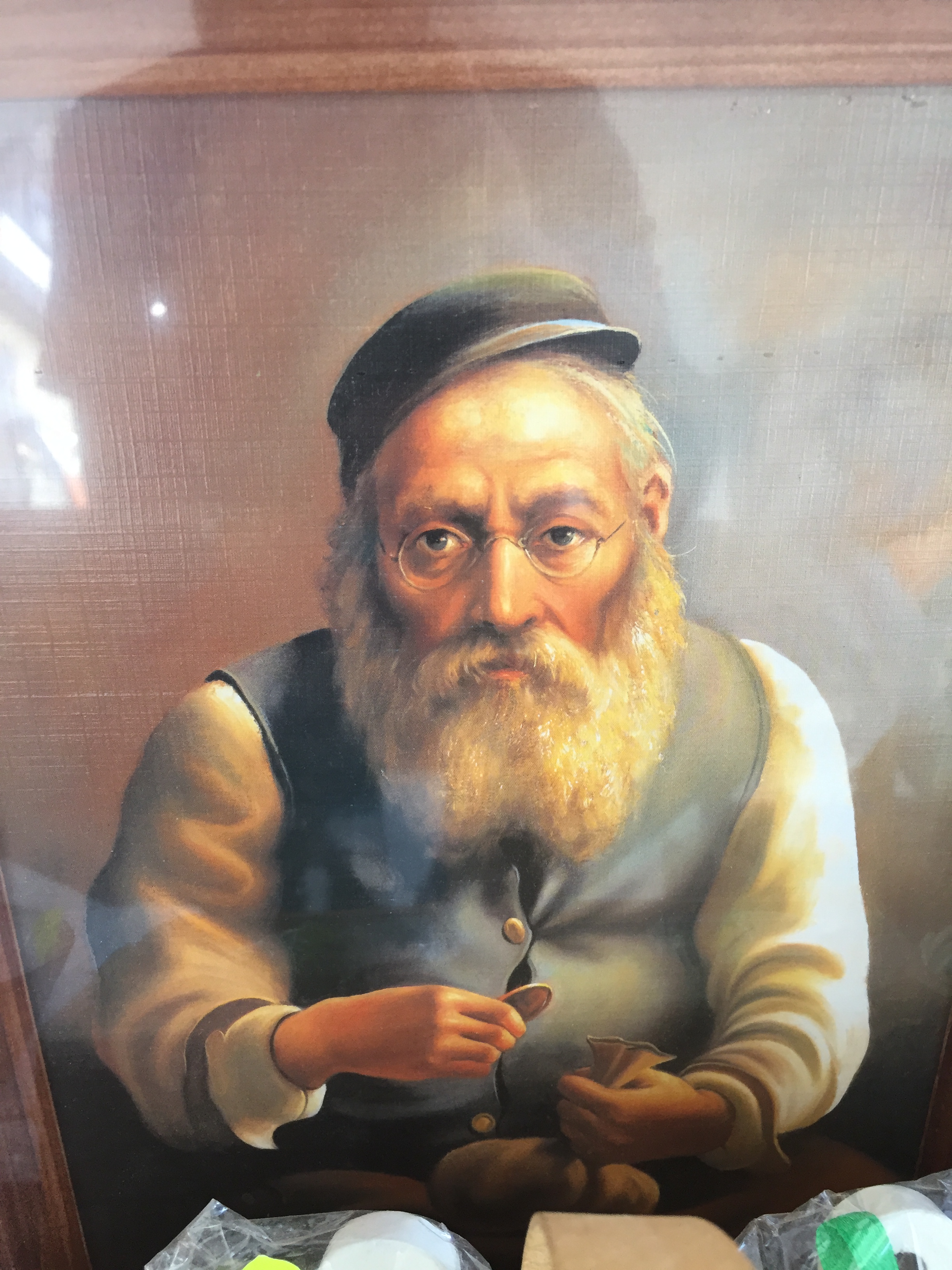
Outside the former synagogue, however, the situation is different. Here, in various shops, vendors sell miniature representations of Jews with money, each of whom is holding a coin of some description. Paintings of Jewish men are ubiquitous, and they are beautifully done, but again: not one of them lacks money. What is this obsession with Jews and money? As one participant pointed out, it is you who are making money out of us.
Photograph: Simon Holloway
Photograph: Simon Holloway
Photograph: Simon Holloway
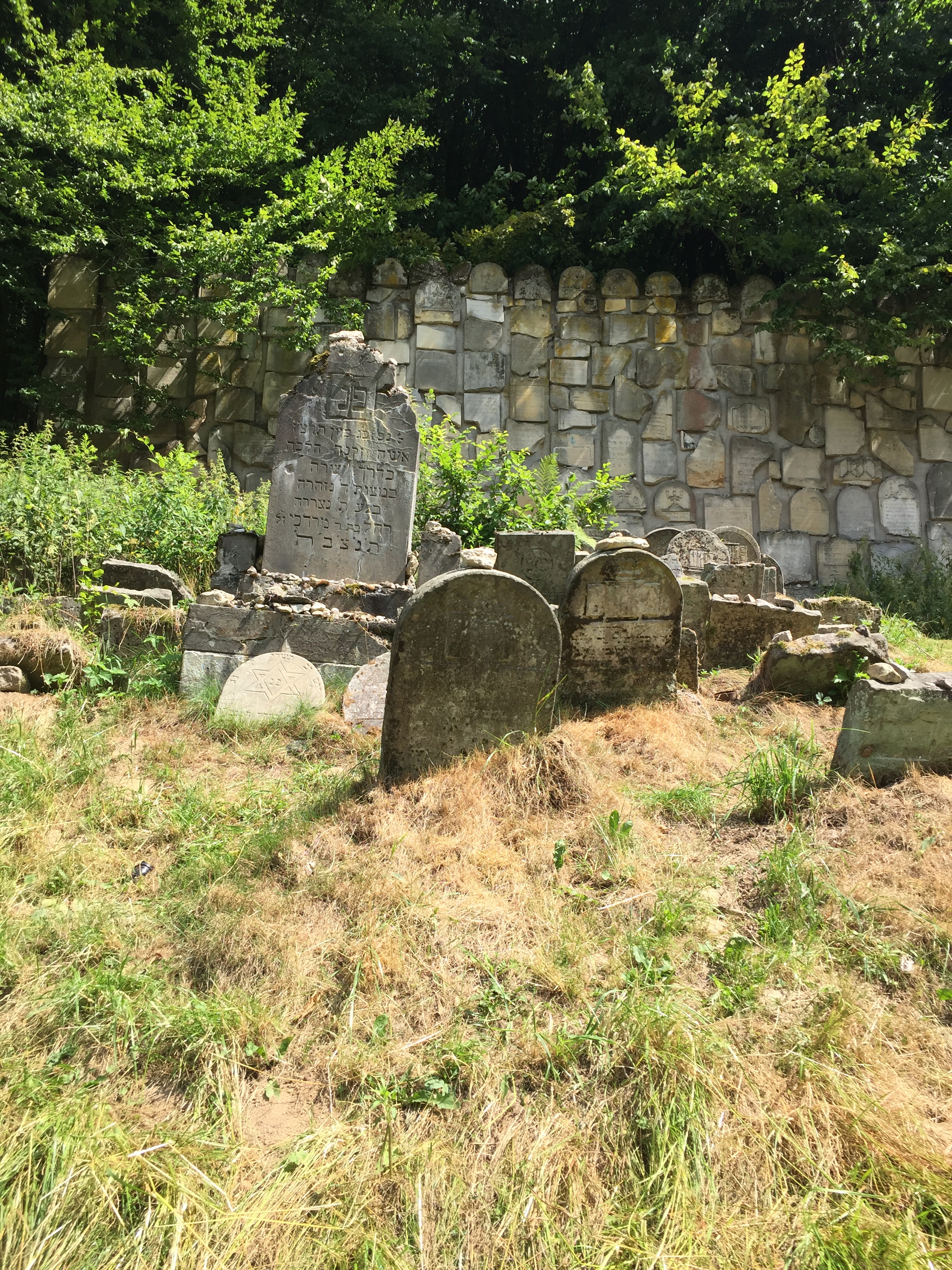
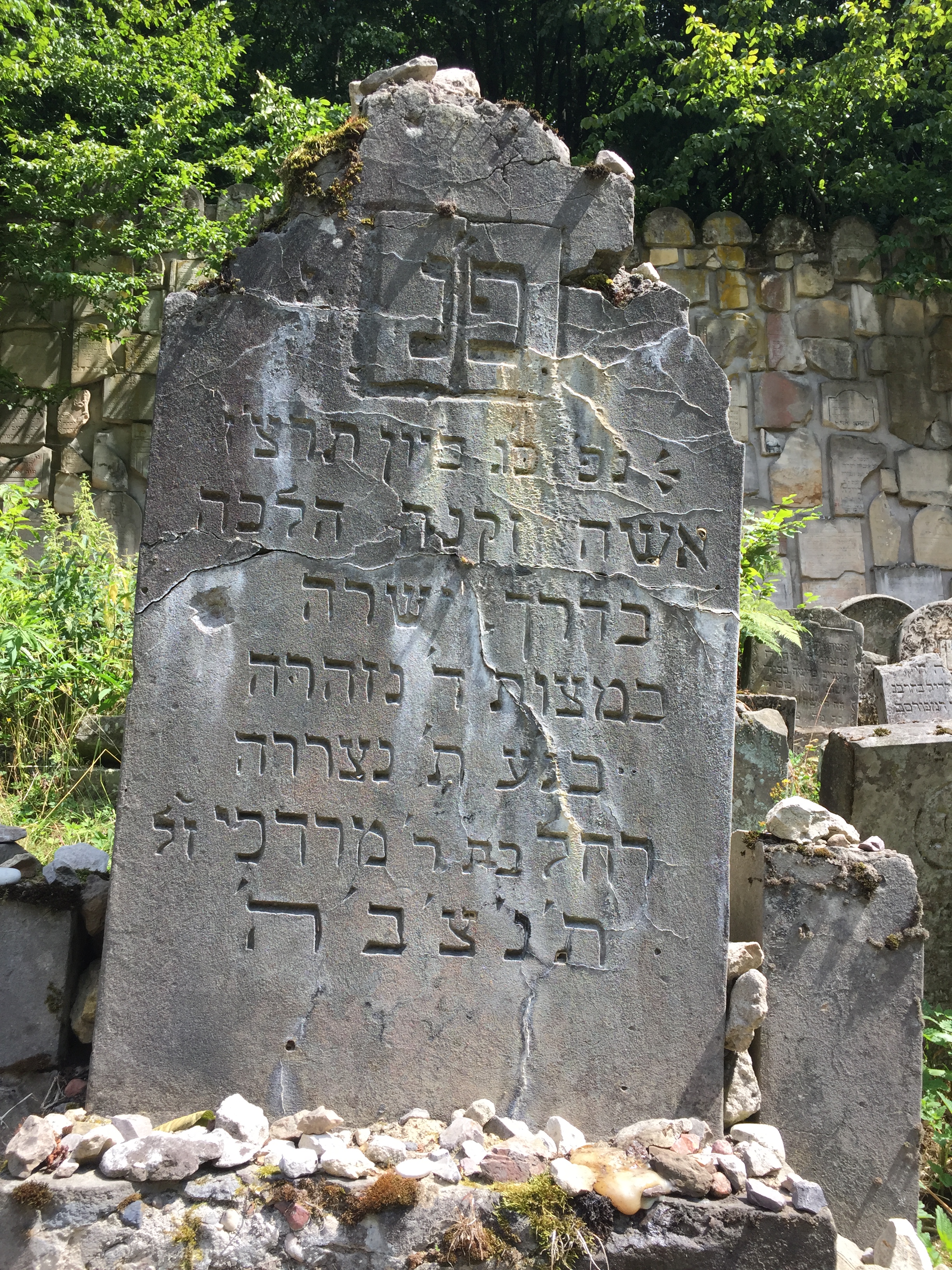
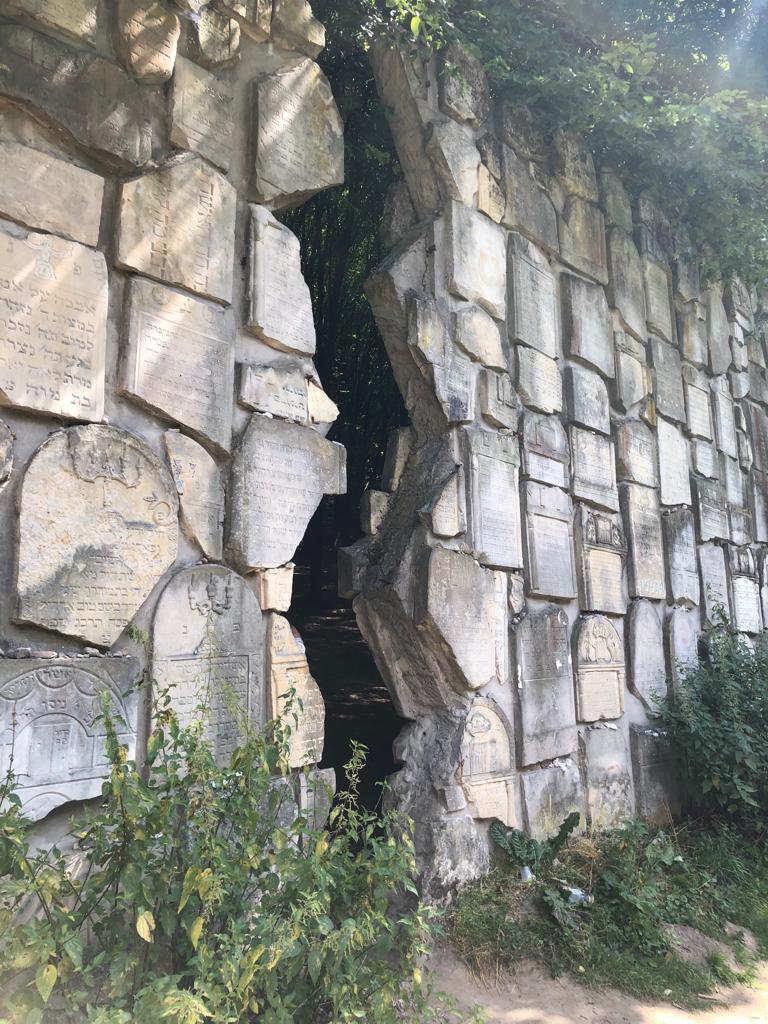
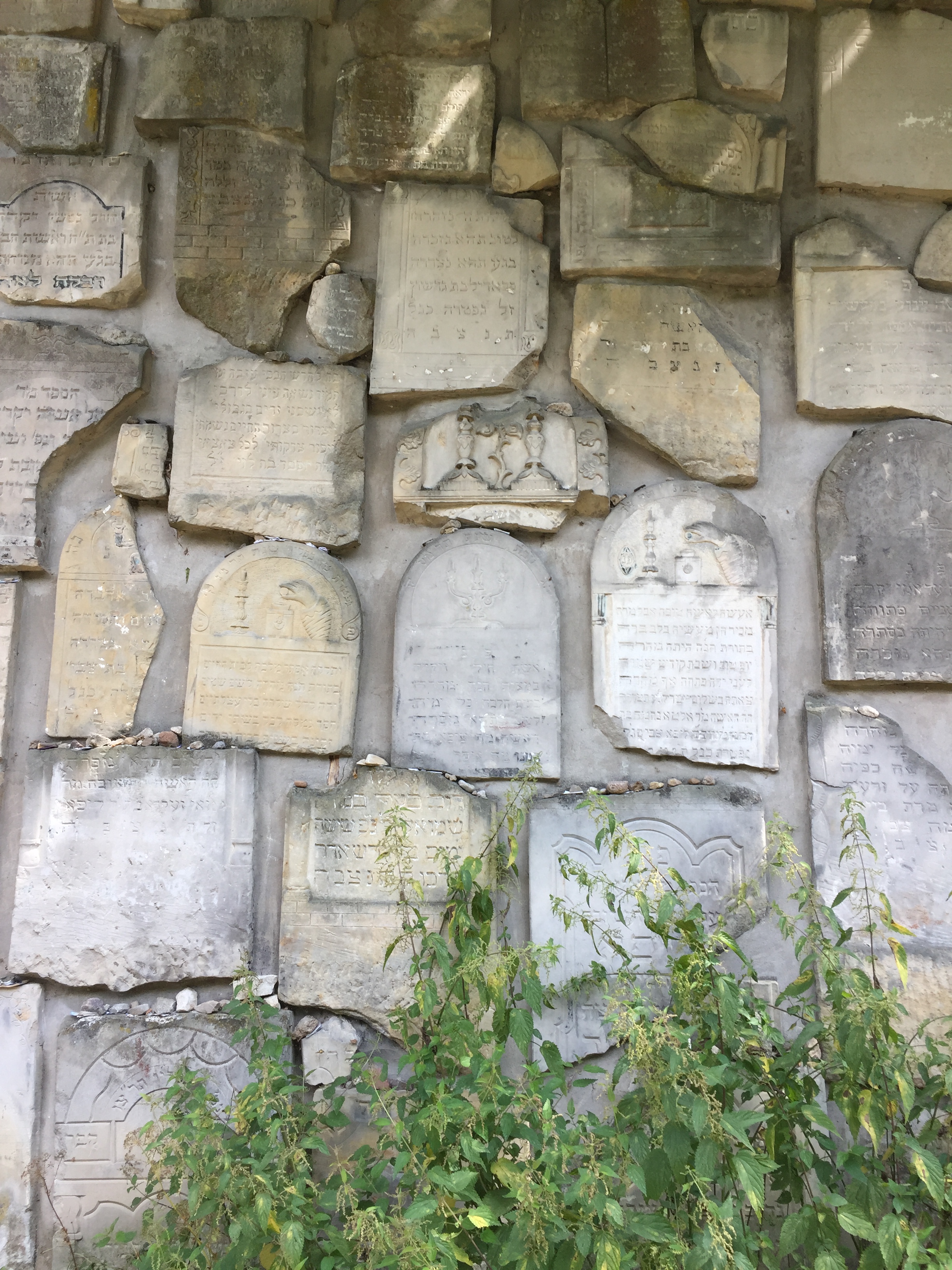
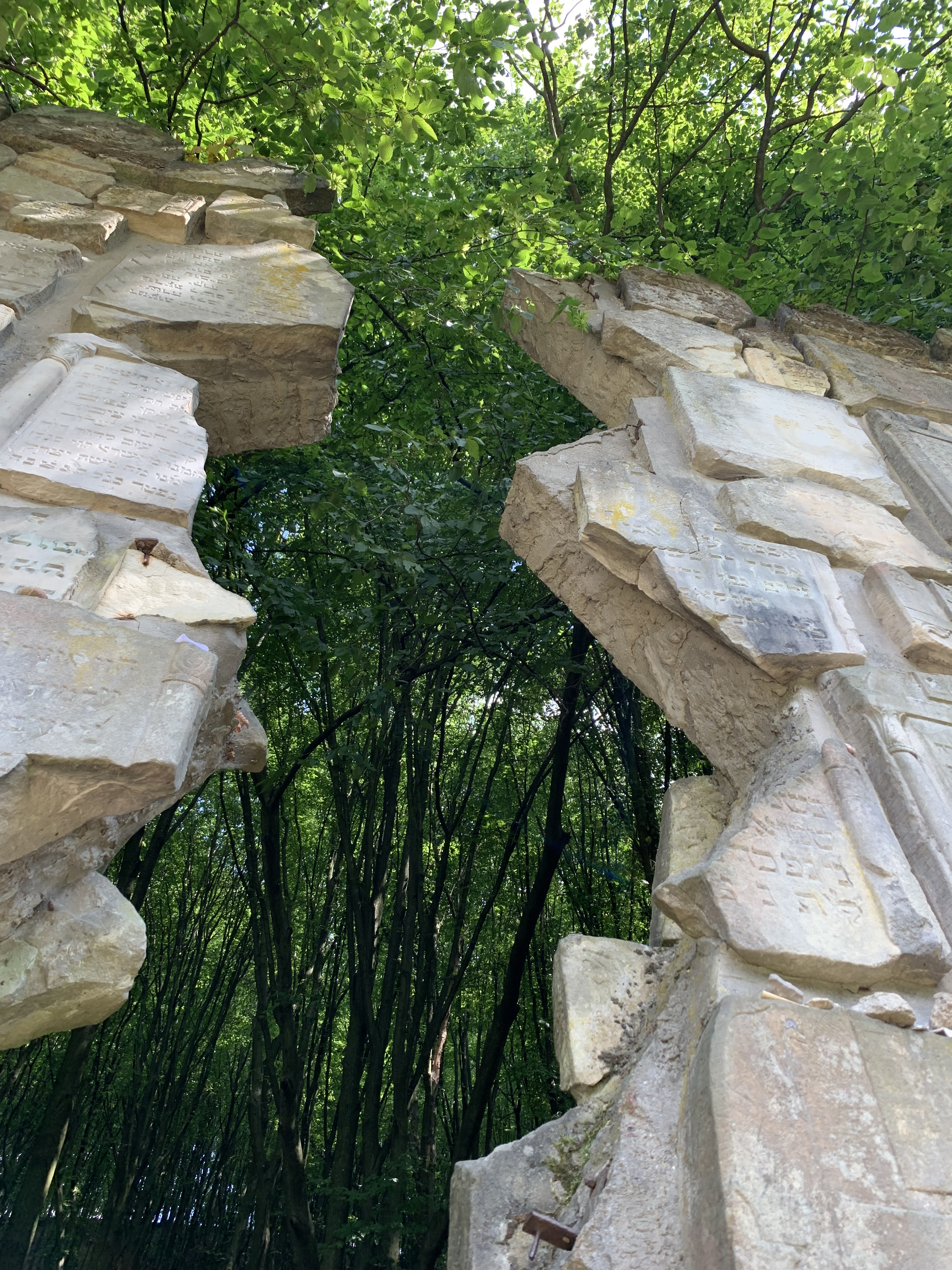
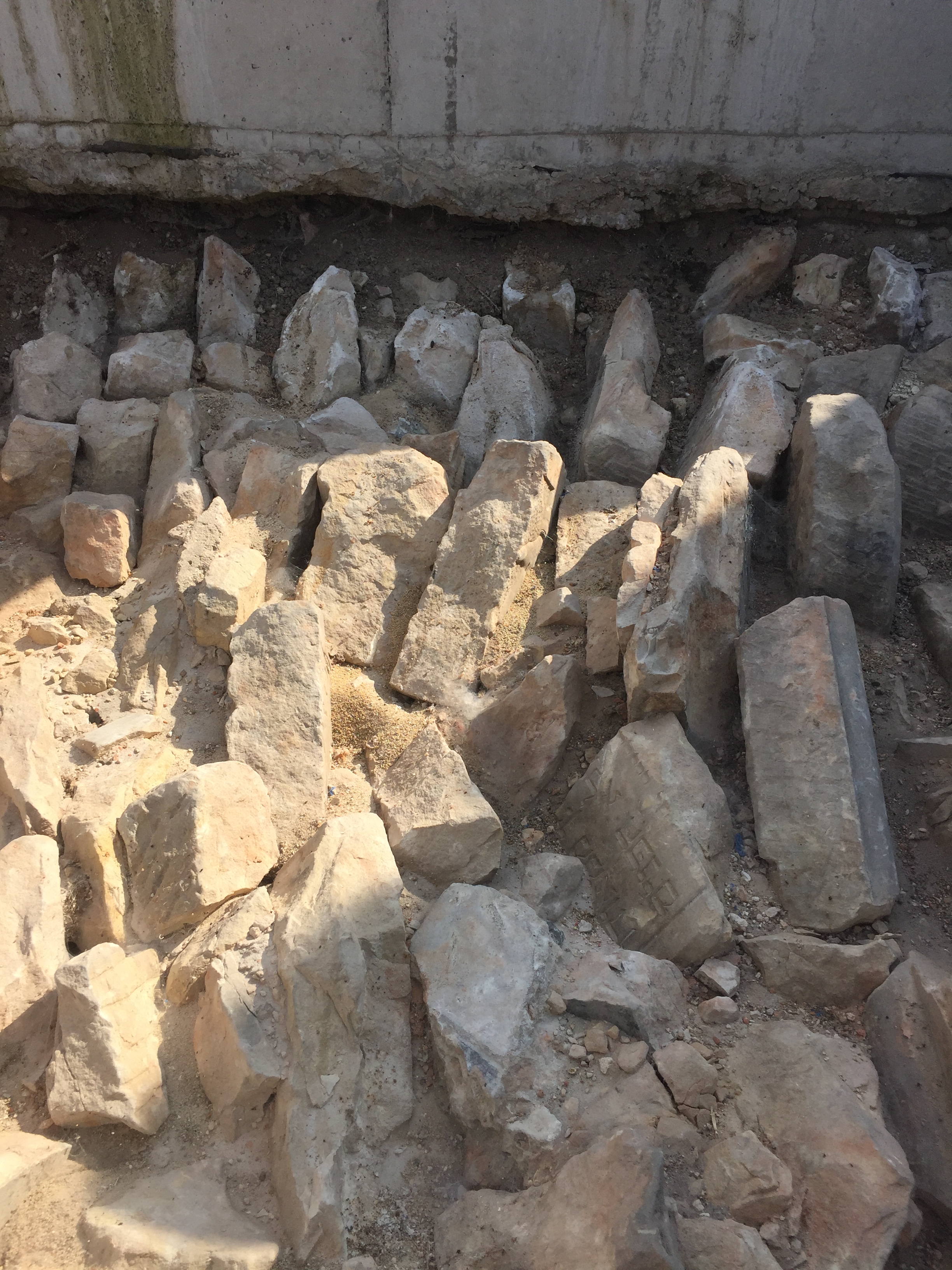
Before leaving Kuzmir, we stop by the local cemetery, which had been so defiled by the Germans. There, we encounter the most remarkable sight. A Polish architect by the name of Tadeusz Augustynek had salvaged the tombstones and had fashioned from them what he terms “The Wailing Wall of Kazimierz Dolny”. With a jagged split through the middle, visitors are invited to approach the wall and walk between its two broken halves.
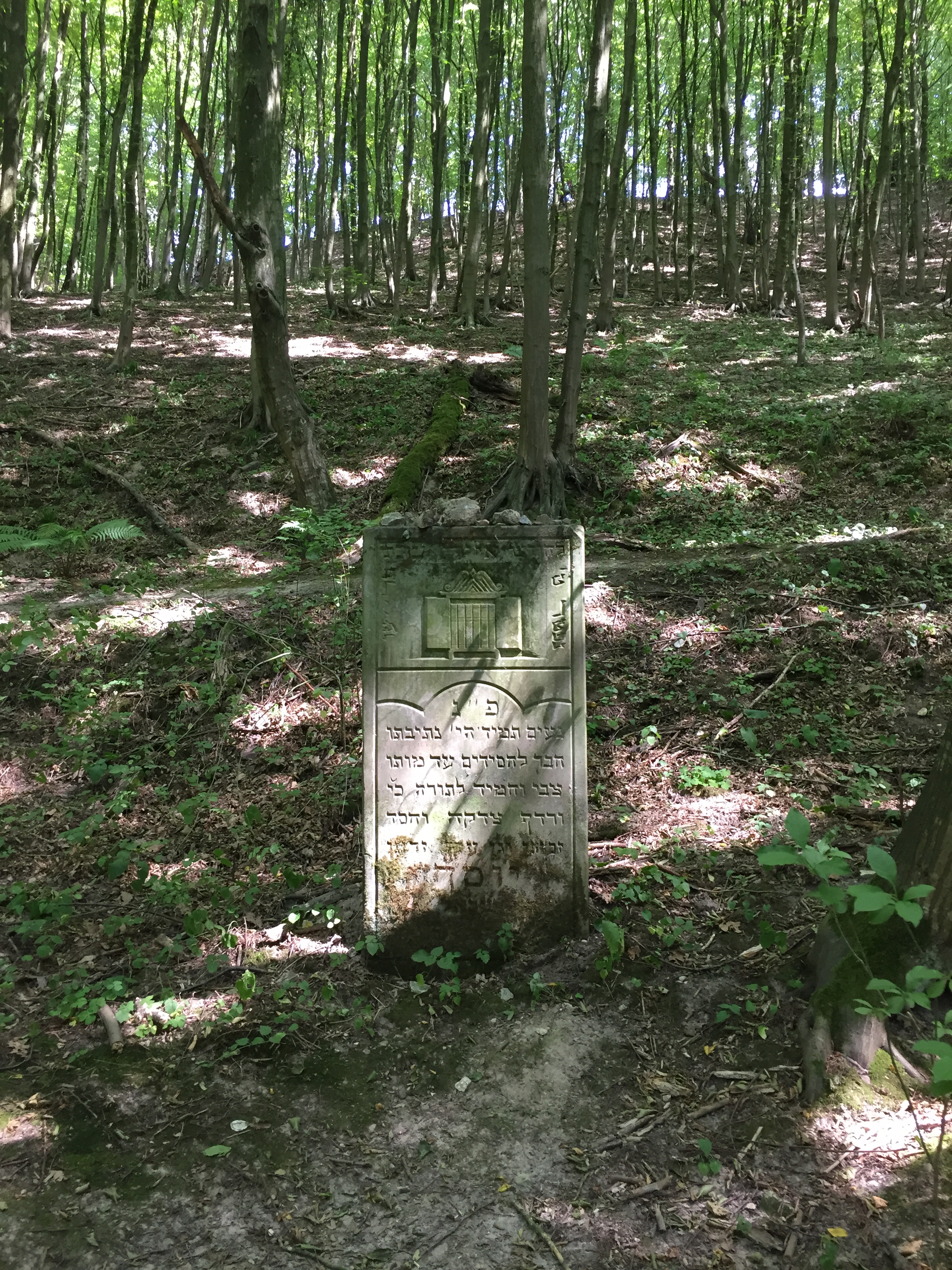
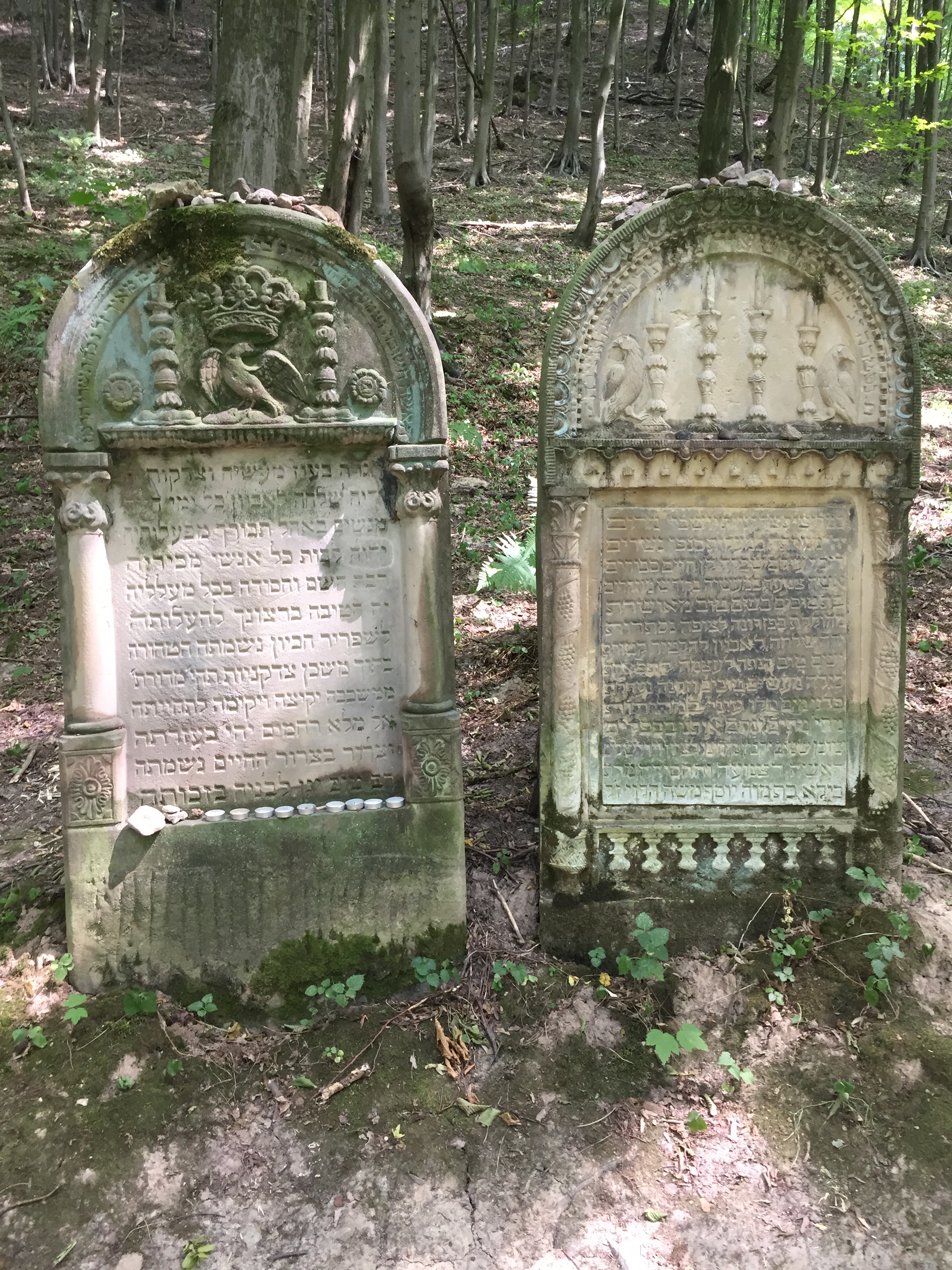
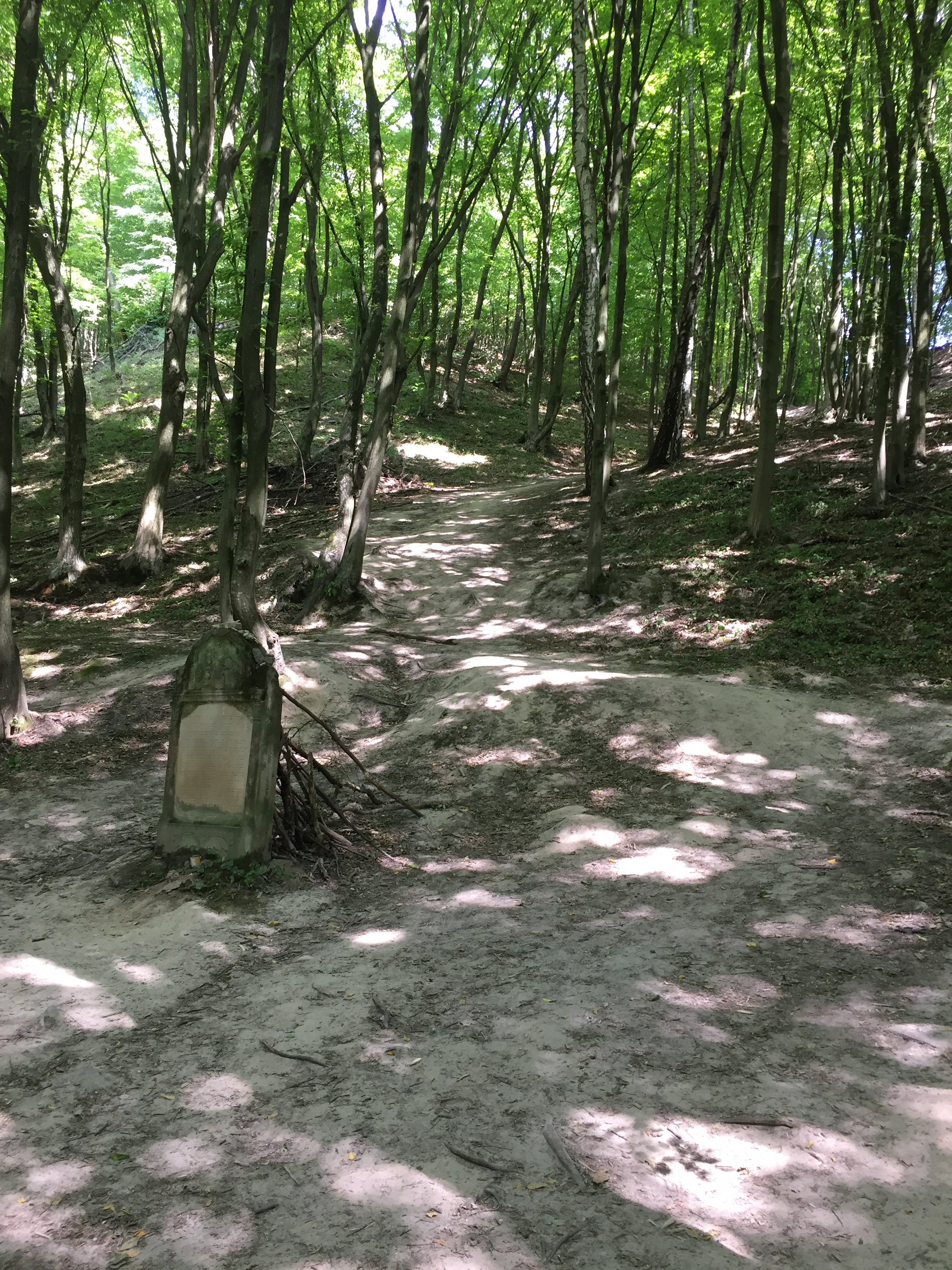
As we did so, the most remarkable transformation occurred. Since the forest on the other side of the wall was blocked from the sunlight by the jagged barrier of stones and by the dense foliage overhead, it took an instant for our eyes to adjust. As they did, one had the distinct impression of stepping backwards in time. Here, in this dark glade, the air seemed sweeter and the wind more still. A row of remaining tombstones, propped up by broken branches, lined the clearing in which we stood, and we took the time to read the few things they had to say about those who had died so long before this age of terror.
Photograph: Simon Holloway
Photograph: Simon Holloway
Photograph: Shirley Leader
Photograph: Simon Holloway
Photograph: Howard Wolfers
Photograph: Simon Holloway
Photograph: Simon Holloway
Photograph: Simon Holloway
It was with a heavy heart that we left this place of gentle contemplation to walk back between the crack and into the modern world again, where the bus was ready to take us to Majdanek.
Majdan Tatarski (the Tatar Square) has lent its name to this sprawling and repulsive camp, which the Nazis simply labelled KL Lublin. In operation from 1941-1944, it originally lay just outside of the town, but in the years since its “liberation” the town has encroached upon the 500 hectare camp, meaning that the present site of memorial is only a third of the size of the original structure.
As we drive towards this abomination, Fil and Konrad take turns in presenting us with an overview of its history. In the first few years of the camp’s operation, it swallowed no fewer than 78,000 people, some 60,000 of whom were Jews. Over the 3rd and 4th of November, 1943, being fearful that the Warsaw Ghetto uprising might presage more Jewish uprisings in the Nazi sphere of control, the perpetrators embarked on Aktion Erntefest (Operation Harvest Festival), murdering some 42,000 Jews in the space of 48 hours. Of those Jews, approximately 18,000 were in Majdanek and its environs.
It is not for nothing that Konrad describes Lublin as the epicentre of the Holocaust, but the stark reality of that expression is about to become even clearer.
Photograph: Simon Holloway
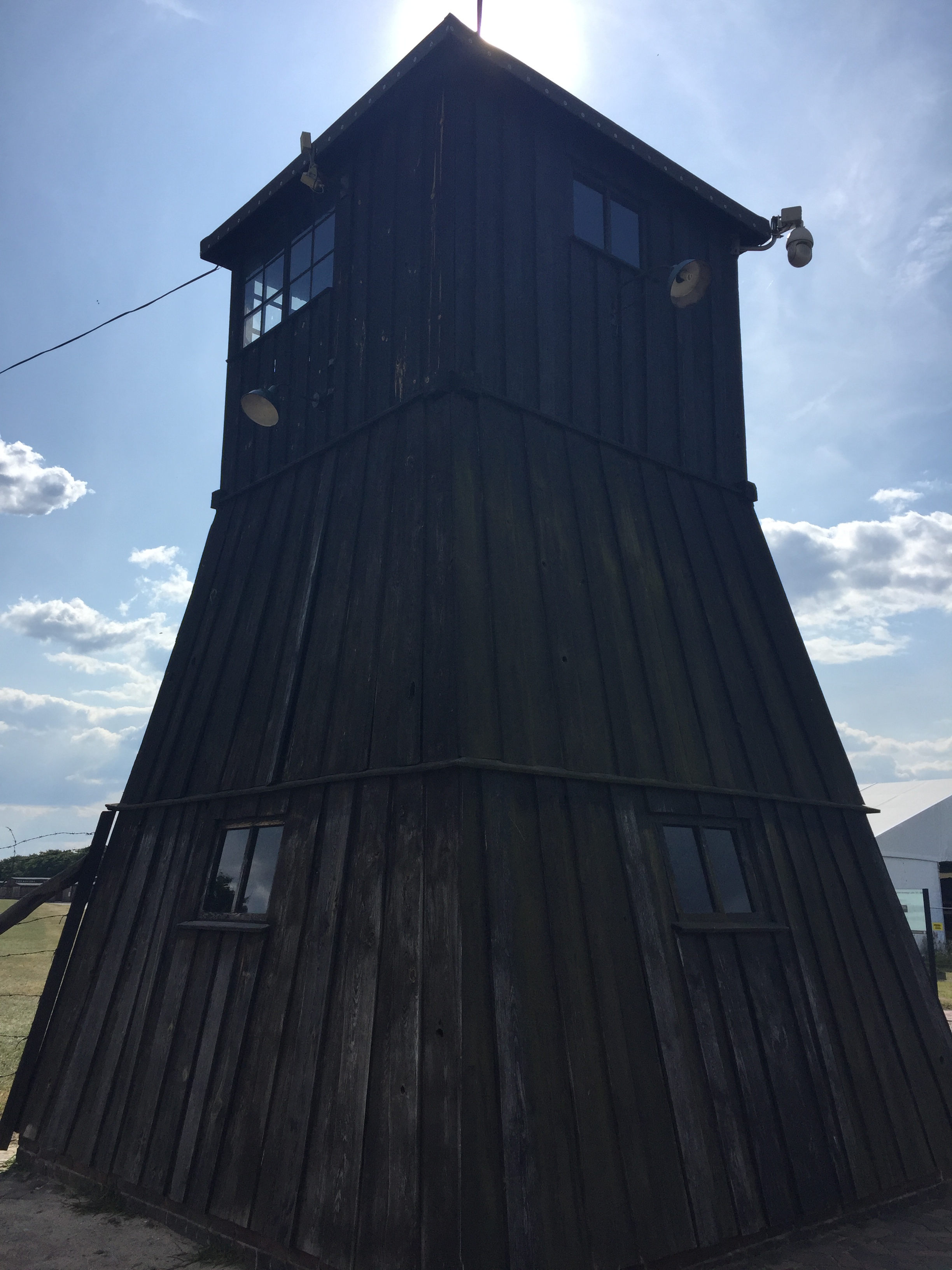
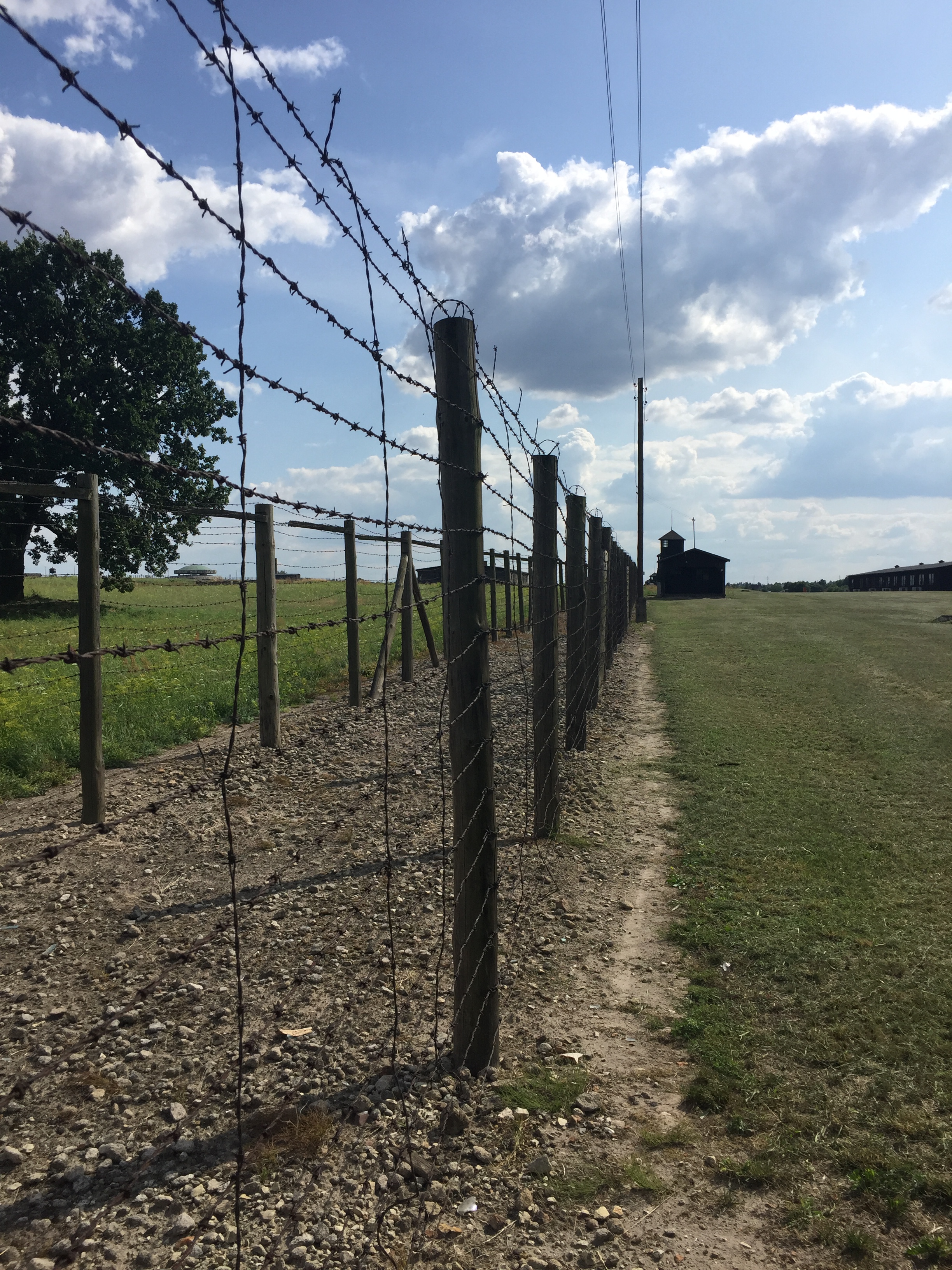
Disembarking from the bus, we meet our two guides: Mark and Lucas. I join Lucas’ group as he takes us through the former camp and discourses on its evolving history. Established in October of 1941, Lucas tells us of how the camp’s original role had been to house some 2,200 Soviet POWs, who were made to lie on the bare earth in the freezing winter. Lublin’s SS made the decision to continue augmenting the prisoners, and as they did so the camp gained ever wider functions.
Photograph: Simon Holloway
Photograph: Simon Holloway
In November of 1941, it received its first shipment of Jews. Although Majdanek was to take shipments of Jews from elsewhere in the General Government, as well as from outside Poland (the furthest they would travel would be from Drancy, near Paris), these first arrivals were all from Lublin itself. Unlike the Polish prisoners, for whom Majdanek would be a concentration camp, Majdanek’s purpose for its Jewish prisoners would be to enact the Final Solution.
Arriving at the camp by foot, the Jewish prisoners would be presented with a selection. In the space of a few seconds, SS doctors would determine (largely on the basis of superficial characteristics) whether or not an arrival was fit for work. Those who were deemed suitable, having already been separated by sex, were taken into a below-ground chamber for the purpose of having their heads and bodies shaved. The hair collected was to be used in the manufacture of various items, like socks, and in the lining of jackets. Some 730kg of human hair was sold to one particular factory alone.
Photograph: Simon Holloway
Having been shaved, the prisoners were showered. In the shower block, they were alternately doused in freezing and boiling water, the better to increase their disorientation, and then immersed in Lysol – the purpose of which was to eradicate germs, but which was practically useless in so filthy an environment as Majdanek. Naked and stinging from the chemicals, they came back up to the surface to await their clothing. Perhaps for amusement, perhaps for titillation, the guards kept women waiting an extended period of time, naked and shivering, in a space that they ironically referred to as the rose garden, given how deeply the women would blush.
As cruel as these guards were, we had the displeasure of learning of the cruelty of the female guards in particular, trained at Ravensbrück. Here in Majdanek, they were given their own barracks and complete jurisdiction over women and children. Today, their barracks is one of only two guard blocks that remains, the other having housed the archives of the camp Gestapo, whose job was to police on-site resistance. Regrettably, the Soviets used the camp as their own base of operations in 1945, and much damage to the other barracks was done.
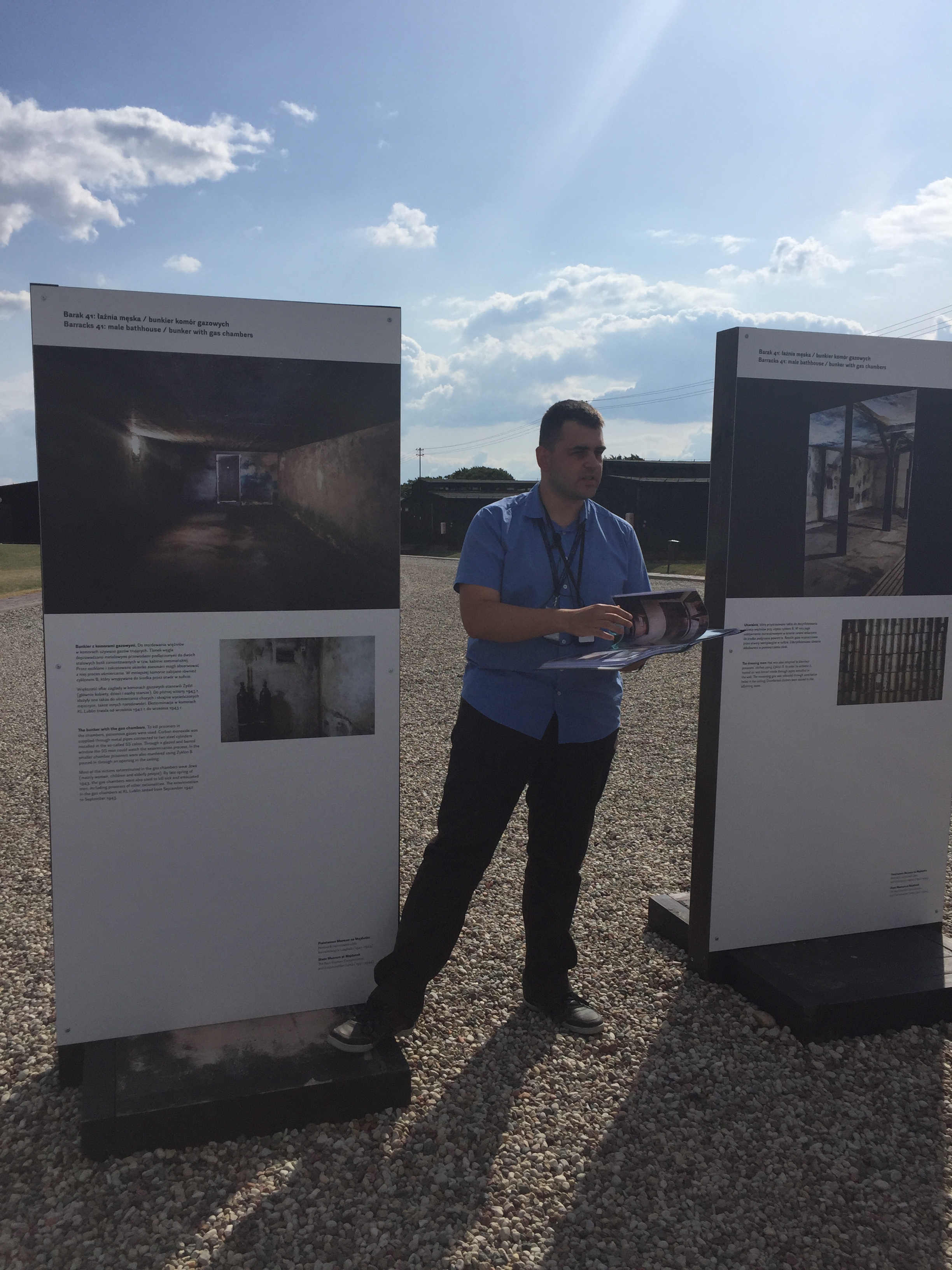
Those Jews who failed the cursory examination and who were deemed unfit for labour were taken below ground, men and women together, and directly to a shower block. There, in one of three chambers, they were gassed, their bodies shaved by Jewish sonderkommando only afterwards.
We are disappointed by the fact that the gas chambers are currently under maintenance, the better to preserve them, and that we will not be able to enter. I find myself thinking a great deal about the nature of this disappointment. Why, exactly, am I let down? Truly, why do I feel the absurd need to enter so revolting a place? What do I hope to gain in understanding by seeing something so disgusting? There is much as regards these sites that caters to the spirit of voyeurism, but there are some things – like the last moments of victims – that should perhaps be left alone.
Lucas does discourse a little on these chambers, and perhaps in more detail than we would like. He tells us that they were three in number, but that the third is something of a mystery. The first has pipes, through which the carbon monoxide travelled. The second, for such was the nature of Majdanek’s evolution, has no pipes but instead sports blue staining on the walls: a sign of the effects of hydrogen cyanide – specifically, Zyklon B. But the third? The third has neither pipes nor stains, and is the kind of enigma that excites researchers and revisionists alike. Me, I’m happy to move on.
From this temporarily off-limits section of the camp, we proceeded to a rather confronting space. Here, in a stiflingly hot barracks, where the air was stale and still, we compared photographs of the camp in 1944 and 2015, and learned of the various subcamps that Majdanek supplied with labour, as well as the various towns and cities that fed this camp with Jews.
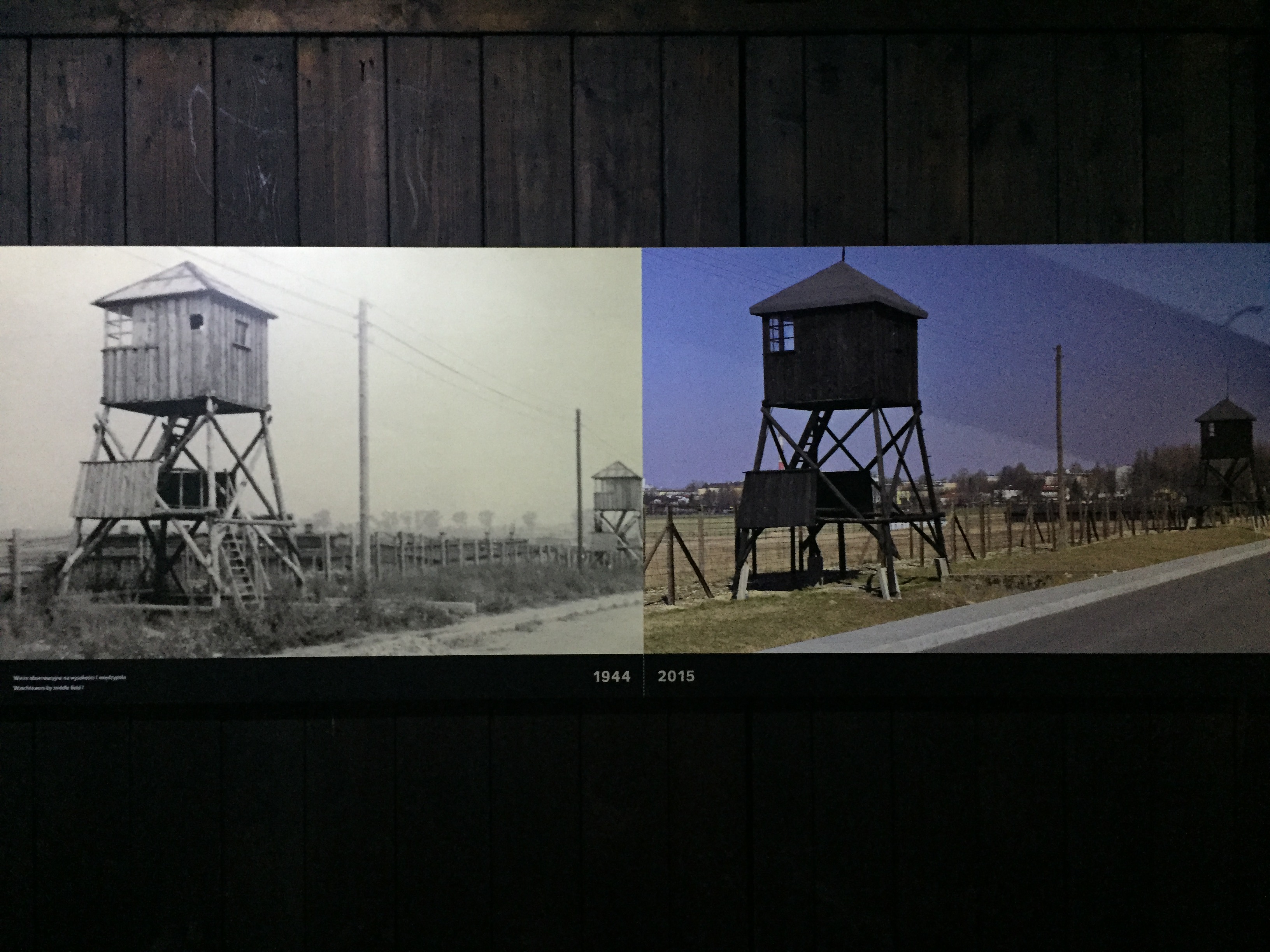
Photograph: Simon Holloway
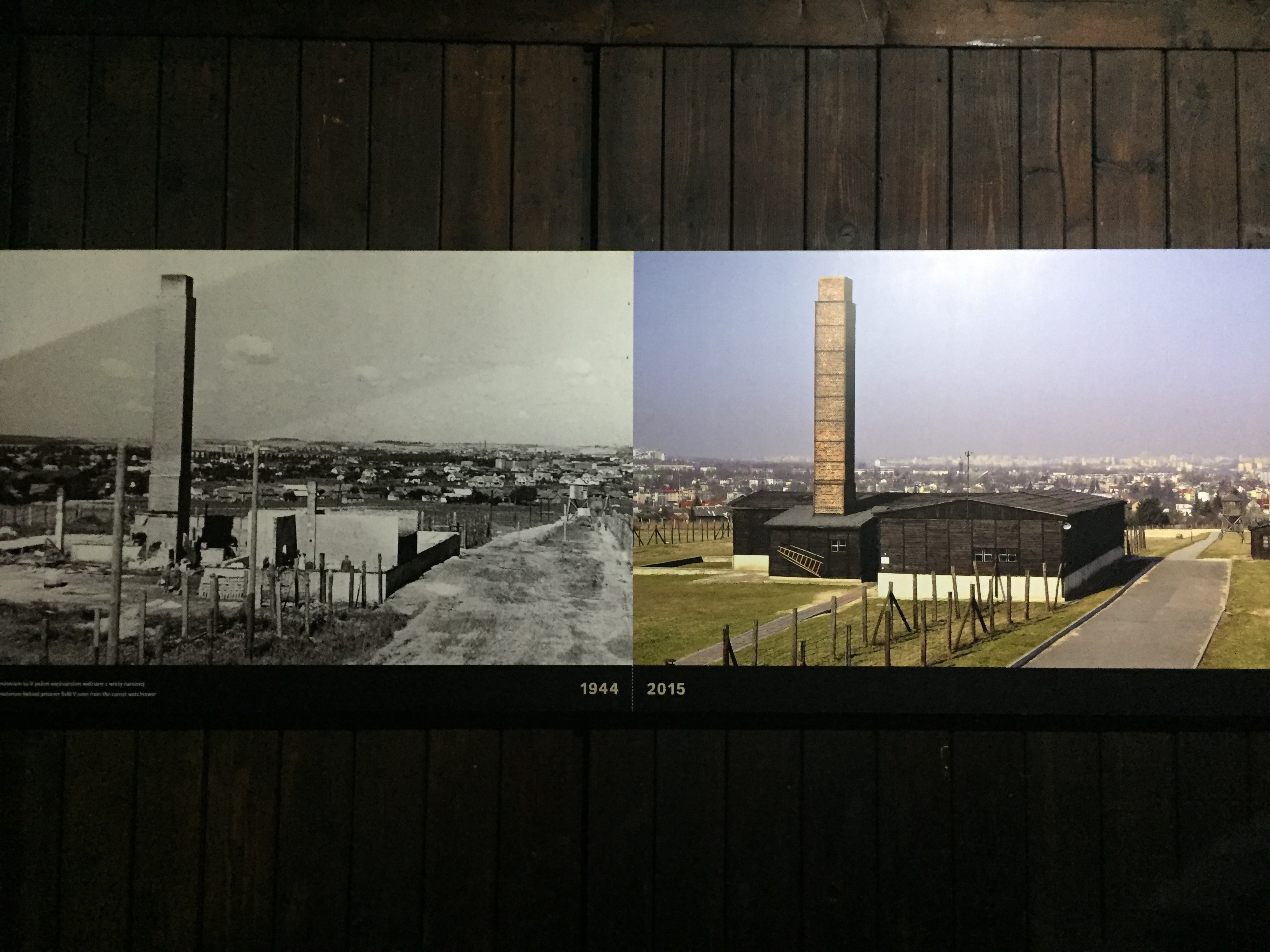
Photograph: Simon Holloway
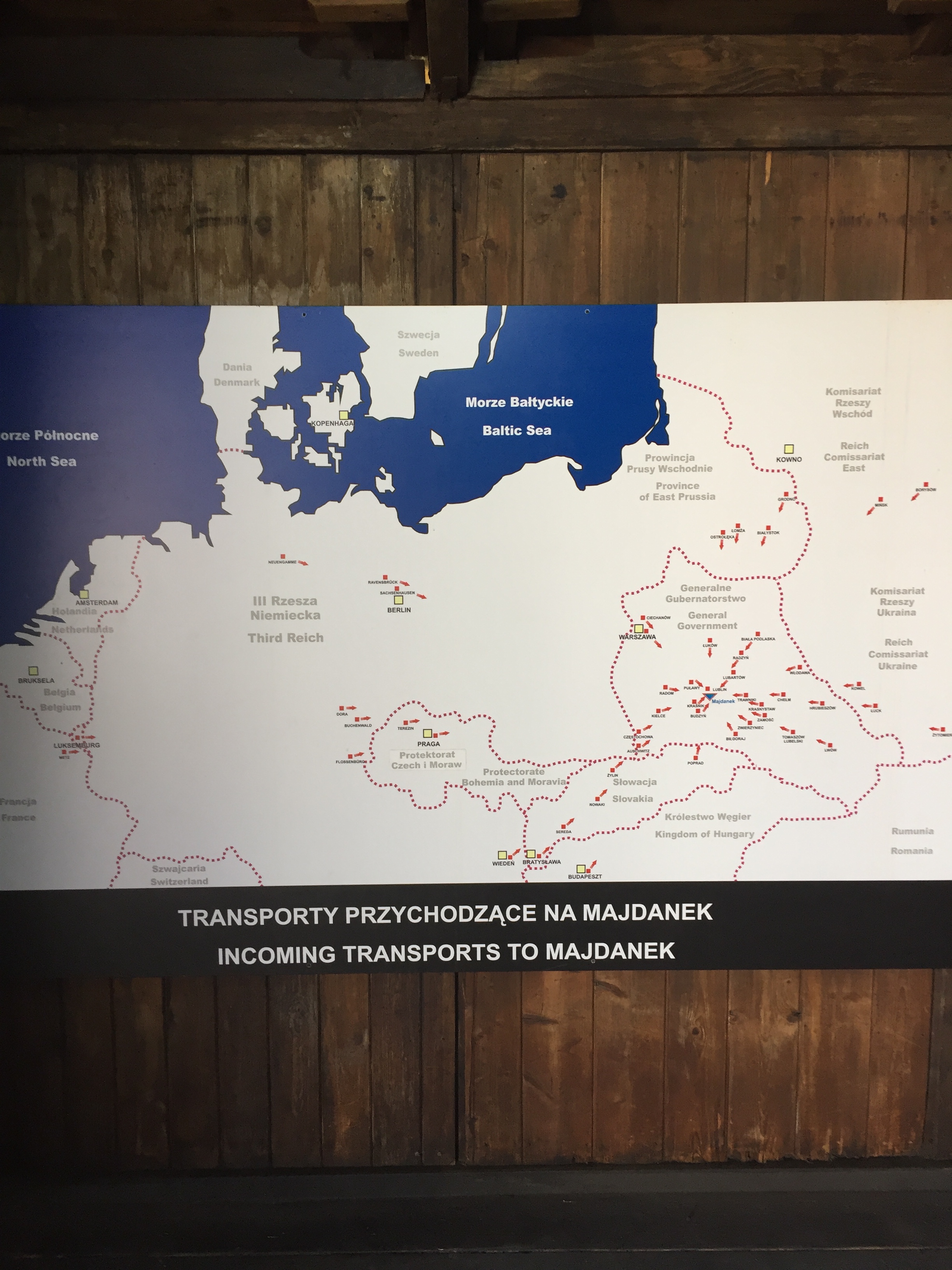
Photograph: Simon Holloway
I cannot help it. Looking at map of the Lublin district, brightly decorated with insignia marking camps, ghettos and Gestapo prisons, my eye is always drawn to the same place. Chelm: the city whose legendary ‘wise men’ provided me with so many hours of amusement as a young boy. I remember reading of the great importance in which they held themselves, and of laughing hysterically about the tremendous wisdom of which they – and only they – considered themselves possessed. On this map, they are roughly equidistant from Majdanek and from Sobibor, and not so far to the north of Belzec. Maybe that’s the punchline.
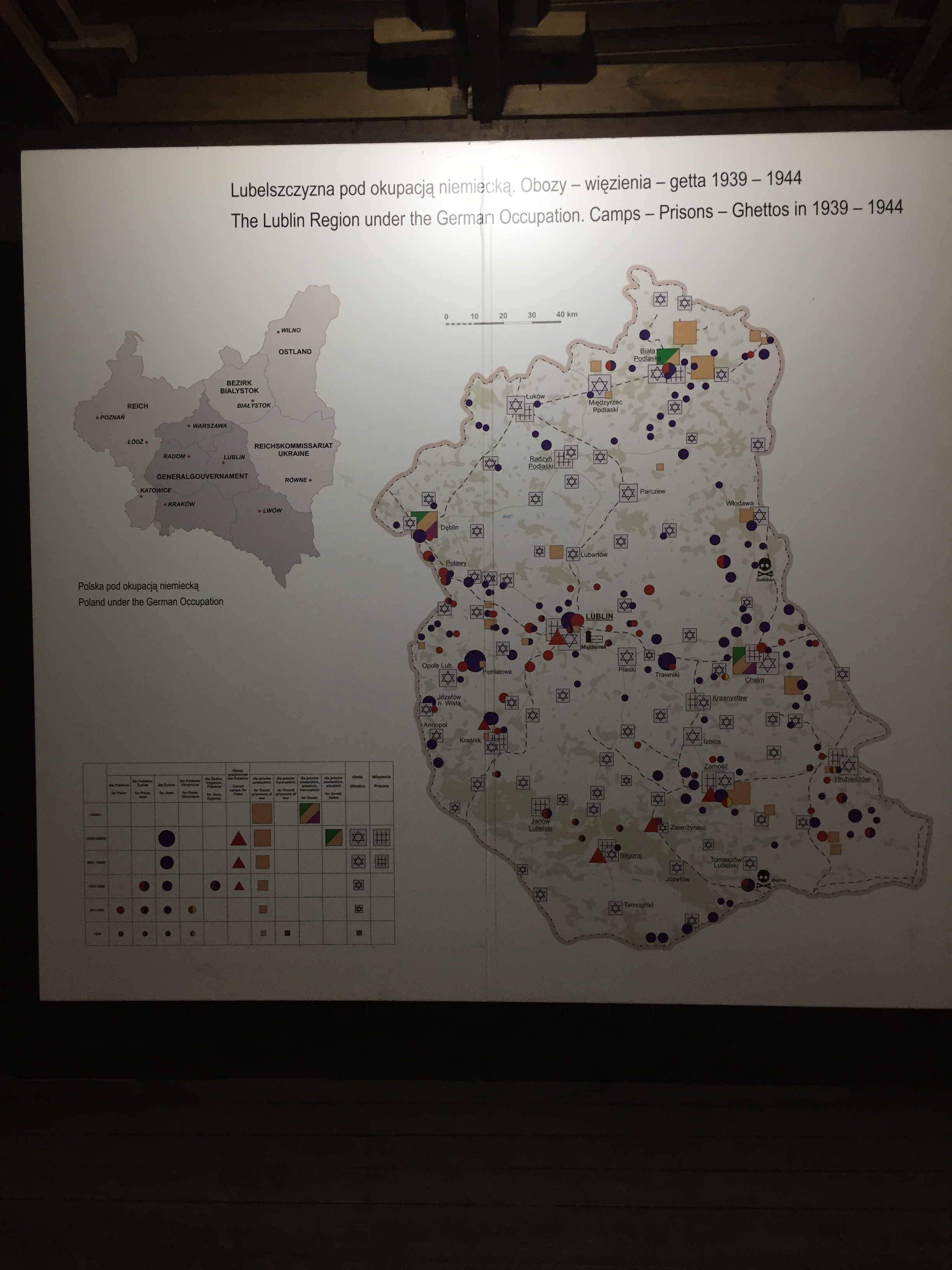
Photograph: Simon Holloway
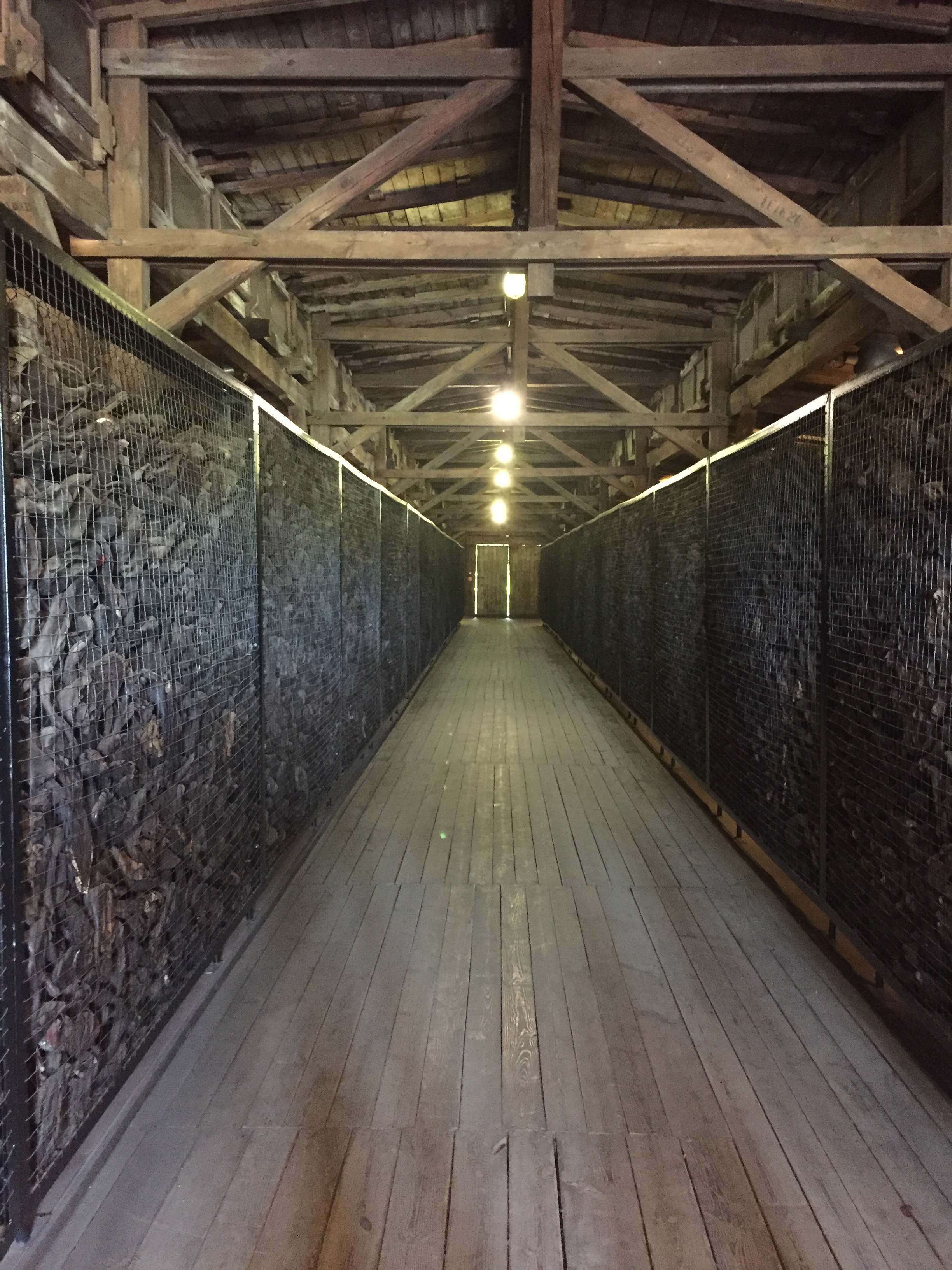
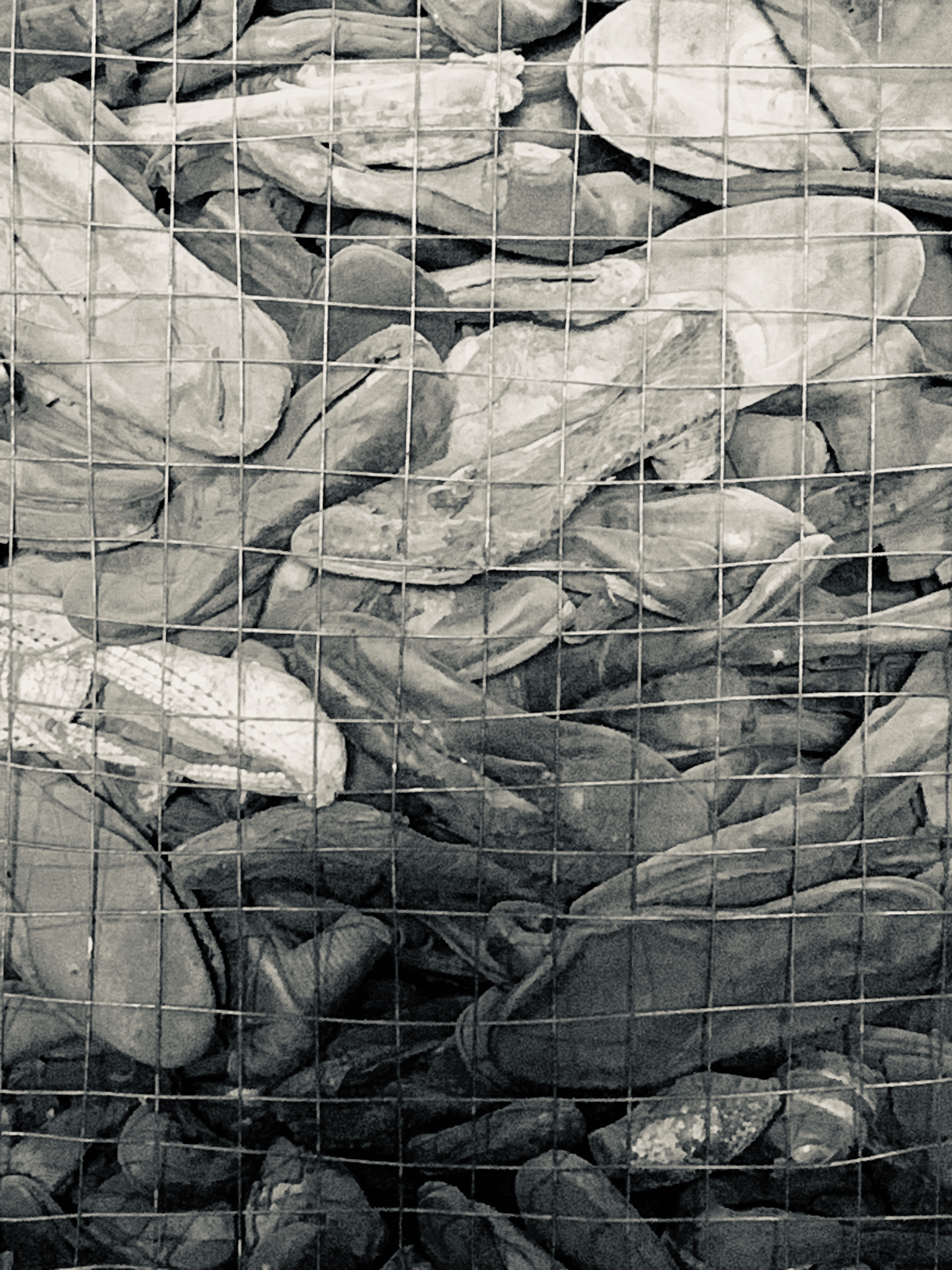
When the Soviets entered Majdanek on the 22nd of July, 1944, there were roughly 700,000 pairs of shoes. Many of these, it turned out, were from other death camps (an unawareness of that fact leading to a not untypical Soviet exaggeration of the death toll), and there is something truly repulsive about piles of shoes whose former owners are no more. We gaze upon the mounds of decaying footwear, but can only do so for so long.
Photograph: Simon Holloway
Photograph: Howard Wolfers
Prior to the German invasion of Poland, Jews had made up roughly one third of Lublin’s population, although the local inhabitants would be hard pressed to say anything meaningful about them today. Despite having comprised over 40,000 individuals, residents today deal only with stereotypes, and when we press our guide on the constant association raised between Jews and money, he too seems not to understand the problem. It’s a depressing conversation, and we don’t pursue the point.
Photograph: Simon Holloway
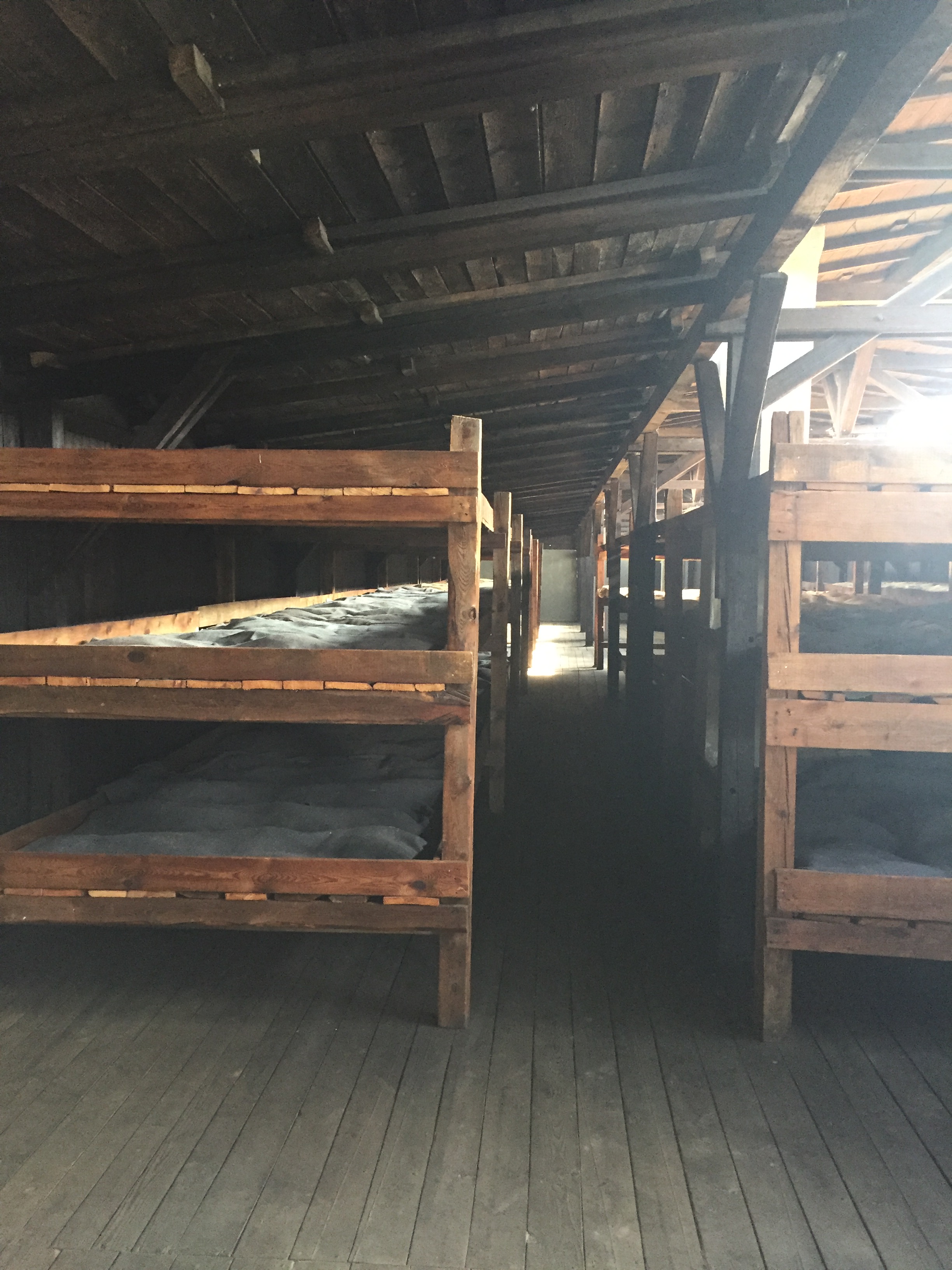
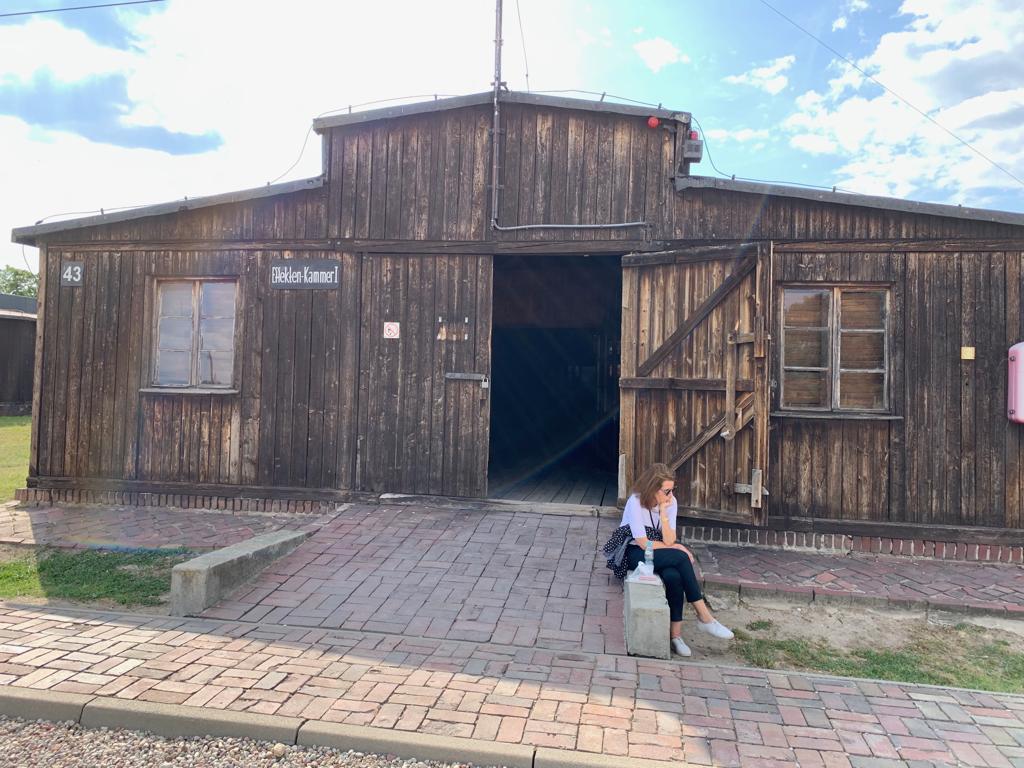
As for the Jews who resided in Majdanek (those dead and dying Jews, who are the only species of Jew our guides ever seem to understand), their sleeping quarters are terrifying indeed. Many of their bunks had been shipped off to Birkenau as the population was culled at the end of 1943, and so the bunks that we are looking at have been brought from Birkenau back to Majdanek. In this dilapidated space, over 500 (sometimes over 1,000, and sometimes even nearly 1,500) people slept in an awkward heap. The top bunks, despite being hotter, were better: you needed strength to climb up to the third level, which meant that they were considerably less crowded than the two beneath.
Photograph: Simon Holloway
Photograph: Simon Holloway
When the Red Army arrived, there was nobody left for them to save. The bulk of what had once been Majdanek’s Jewish population were already being used as fertiliser, and the last shipment of prisoners marched off to other camps occurred but hours before the Soviets walked through the gate. Between the damage that they caused to the barracks and that which was subsequently caused by hungry and desperate Poles, who pillaged the environs for building materials with which they might fix their houses, all was in disarray by the end of the war.
Today, since there is a desperate and important need to showcase these crimes and to remember them, the Polish government has presided over a major enterprise of rebuilding and conservation: all from original materials, and all to the original specifications. This project is important, and they are to be commended for the work that they do, but one cannot help but wonder as to the impact on regular Polish people, who look out the windows of their apartments upon this blight that is Majdanek.
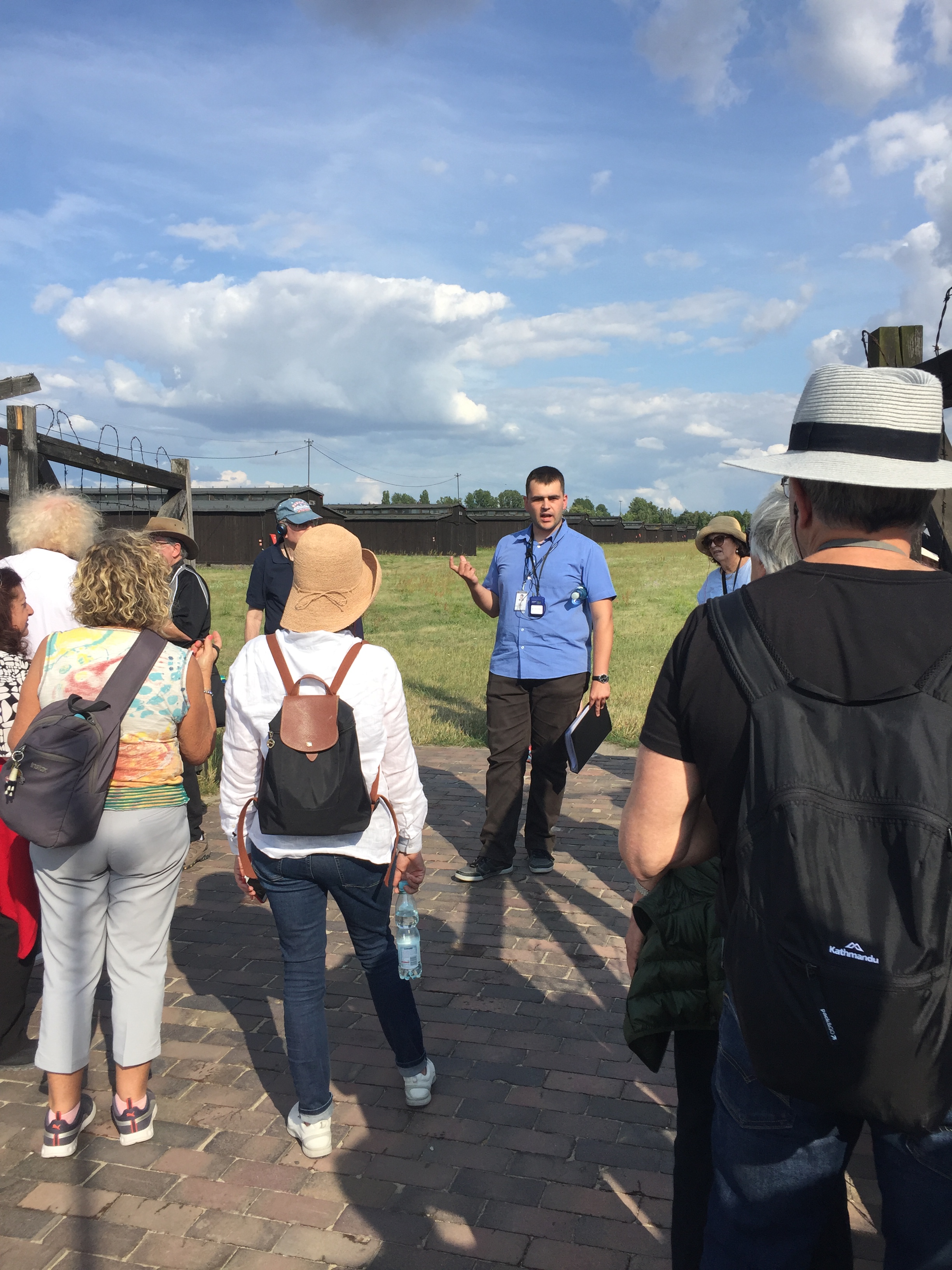
It is of the Polish people that our guide spends approximately half of his tour. His description of these shaved and emaciated Poles, and of their desperate and heroic acts of resistance, are inspiring indeed. Perhaps most inspiring is his description of their works of sculpture, constructed on site in what were to be the very first examples of memorialisation within the camp system of Nazi-occupied Europe.
Photograph: Simon Holloway
The SS, who believed (in a perverted Nazi fashion) in the integrity of beauty, made sure that the camp be prettified in the ways that appealed to their deranged sense of order. They maintained a casino and a swimming pool for their staff, and they had their Polish inmates engage in acts of artistic creativity. One such creation is the sculpture of a turtle, which the guards placed before one of the factories in which the Polish slaves were toiling. Had they known that the purpose of the turtle was to inspire prisoners to work more slowly (a purpose, our guide tells us, that the prisoners unanimously understood), they clearly would not have done so.
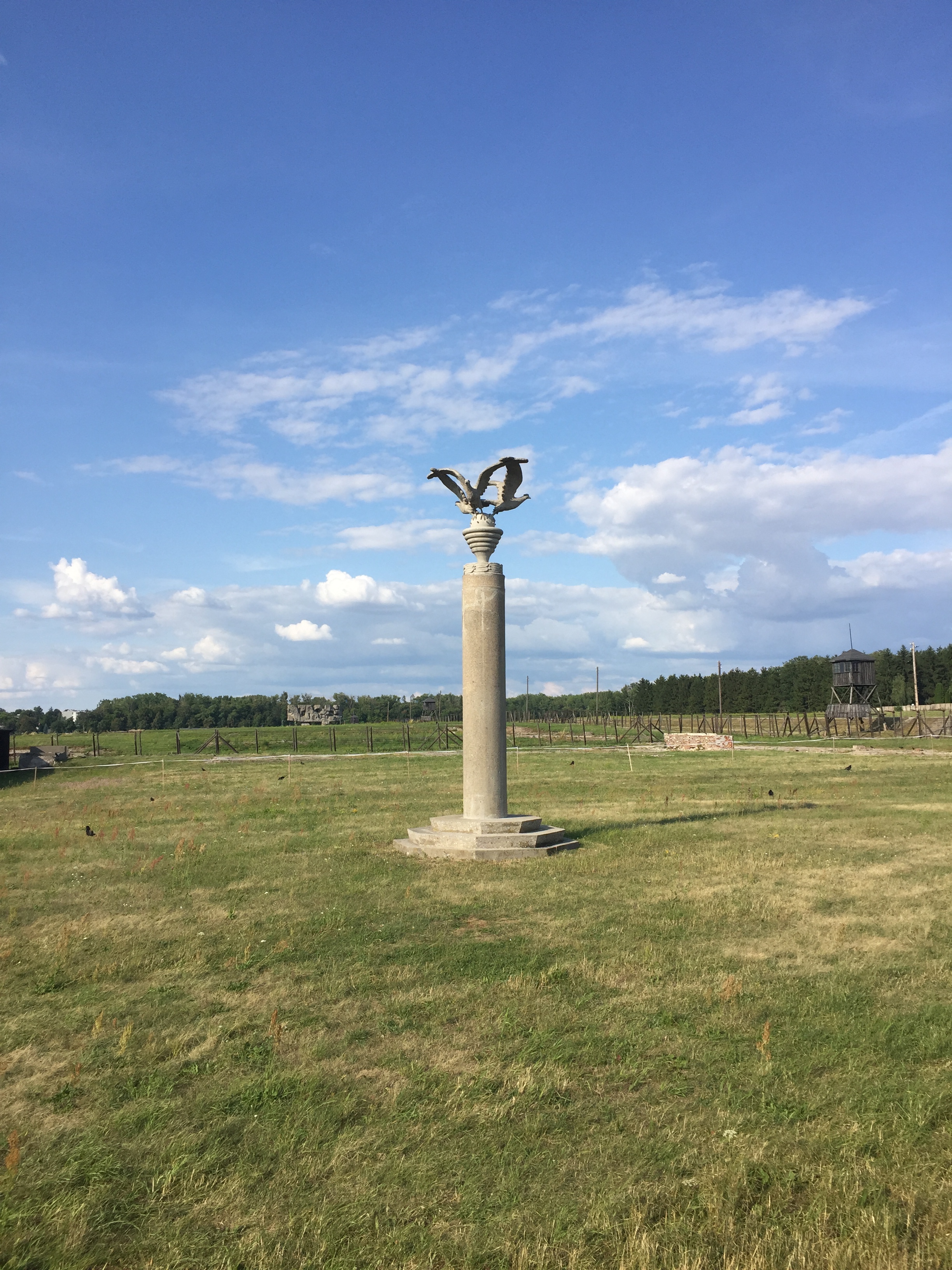
Perhaps most inspiring is a column topped with three birds, wings spread and ready to take flight. Interpreting these birds to be representations of the Nazi eagle, their number symbolic of the Third Reich, the guards held a grand unveiling ceremony at which they saluted this column before placing it in a prominent position not far from the kitchen.
Photograph: Simon Holloway
In actual fact, we are delighted to learn that while the birds held different (and inspiring) meanings to prisoners, the sculptors had also surreptitiously stolen ashes from the crematorium, which they had placed within a hollow space inside the column. It is a small act of defiance, but a pleasing one: when the guards saluted the sculpture, they unwittingly saluted the remains of those very people they had cruelly murdered.
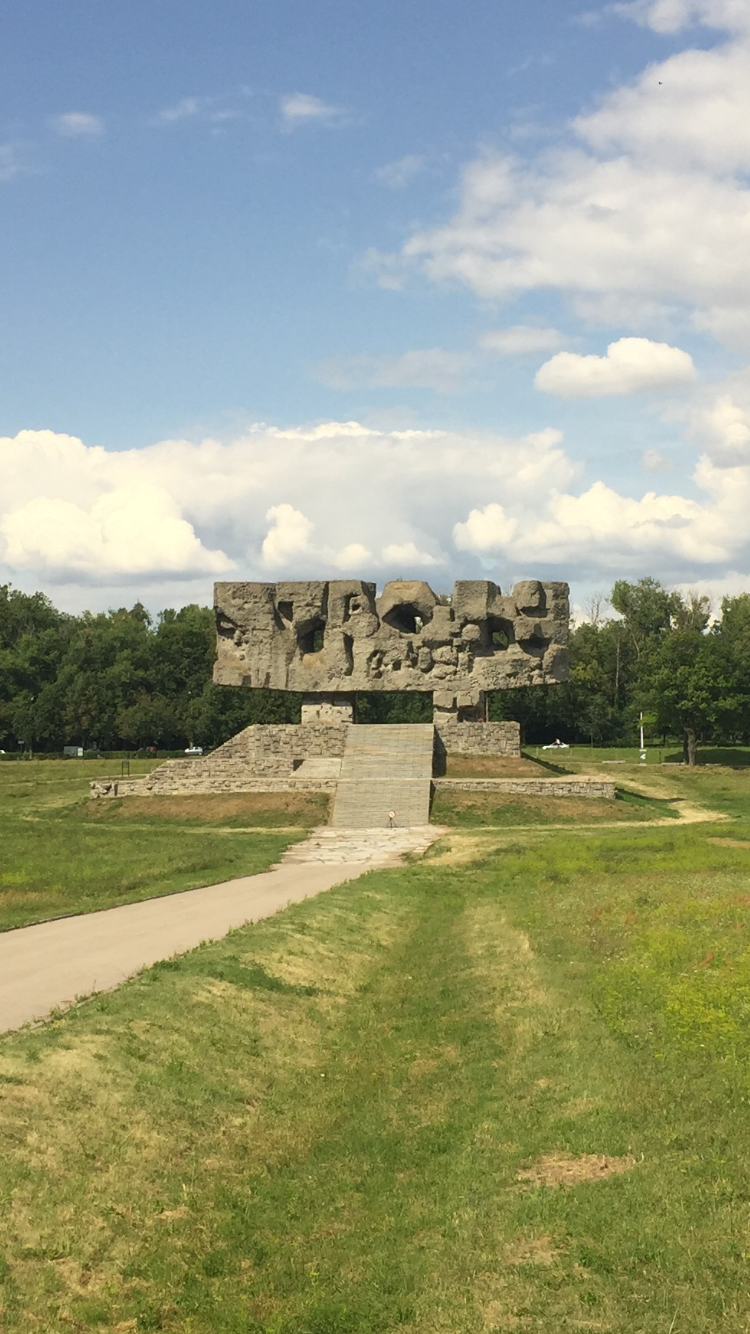
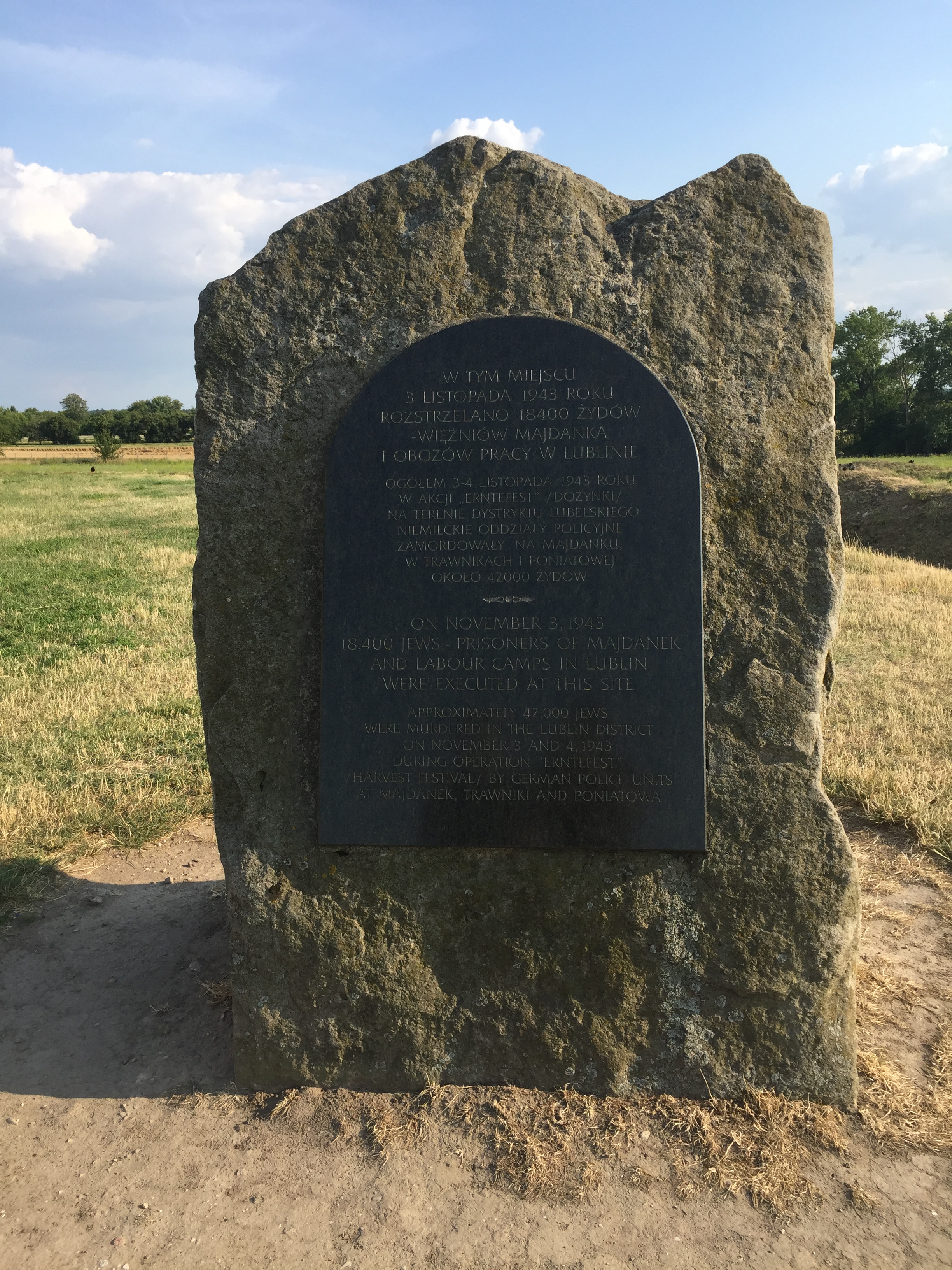
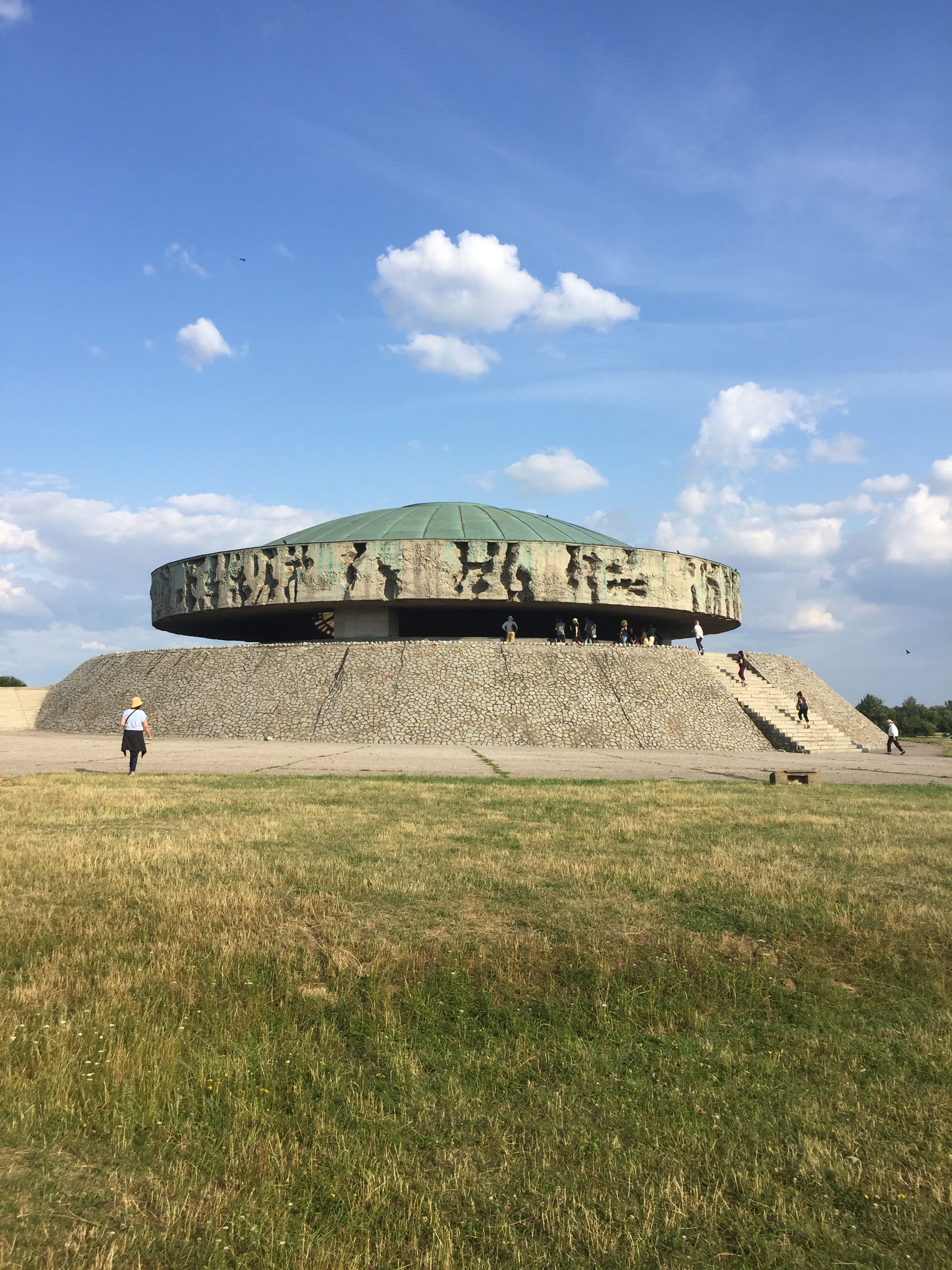
It is the cruelty that one finds most distressing, and in that regard the worst is yet to come. In a group, we walk in silence down the long road that leads to a large and somewhat crass sculpture, which one participant found reminiscent of Albert Speer. Before ascending the steps to its summit, we first approach the site at which 18,000 Jews were murdered during Aktion Erntefest: shot into the ground while loudspeakers mounted on trucks blasted music. The harvest festival for Germans has long been a time of great rejoicing, but the sheer volume was designed to conceal from victims the sound of the machine guns.
Again, I find myself thinking of the Piaseczno Rebbe, Rabbi Kalonymus Kalmish Shapira, whose collected discourses in the Warsaw Ghetto provided my first encounter with hasidic Judaism. He too was murdered during Aktion Erntefest, but not here. In addition to Majdanek, the Harvest Festival claimed victims in Poniatowa and Trawniki, and it was in the latter of those camps that the Piaseczno Rebbe was erased.
Photograph: Simon Holloway
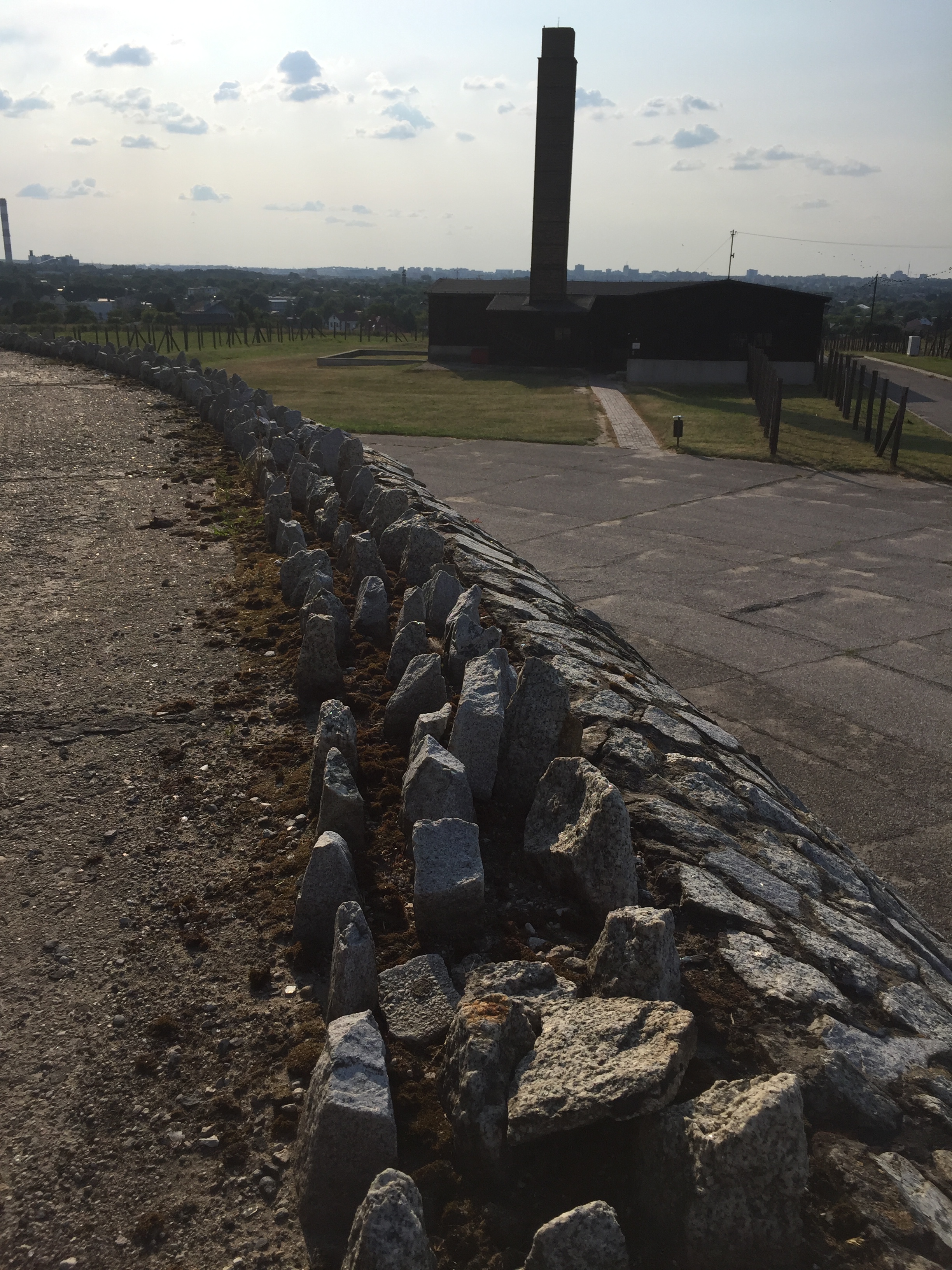
From here, we draw breath and enter the crematorium building, which is comprised of various rooms. In the first, SS doctors would take the time to remove any gold or silver fillings, as well as search body cavities for objects of value. A task usually performed by Jewish sonderkommando, the fact that it was uniformed members of the SS performing this revolting task is peculiar, and says much about the venality of those who so blithely blamed Jews for being obsessed with money.
The next room, with its cold stone walls, was an execution chamber. Here, Polish partisans met their deaths, as did Jews who had succeeded in hiding prior to Erntefest but whose whereabouts had since been discovered. Standing in this room made clear to me precisely why I did not need to enter the gas chamber after all. Being in a place of murder is neither edifying nor informative.
Finally, we walk into the third room, which sported the ovens. Here, we learned of the SS guard who so loved working in crematoria that he not only situated his office within this building, but who subsequently moved into it. His bathroom was the space immediately to the left as we walked through the door, and were gratified to learn of his execution in 1946.
Unfortunately, as is so often the case, less than 10% of those responsible had been brought to trial, and not all of them received sentencing. Most of the perpetrators were Austrians by birth, although about a third of them were Ukrainians, and the camp hosted an entire Lithuanian police battalion as well.
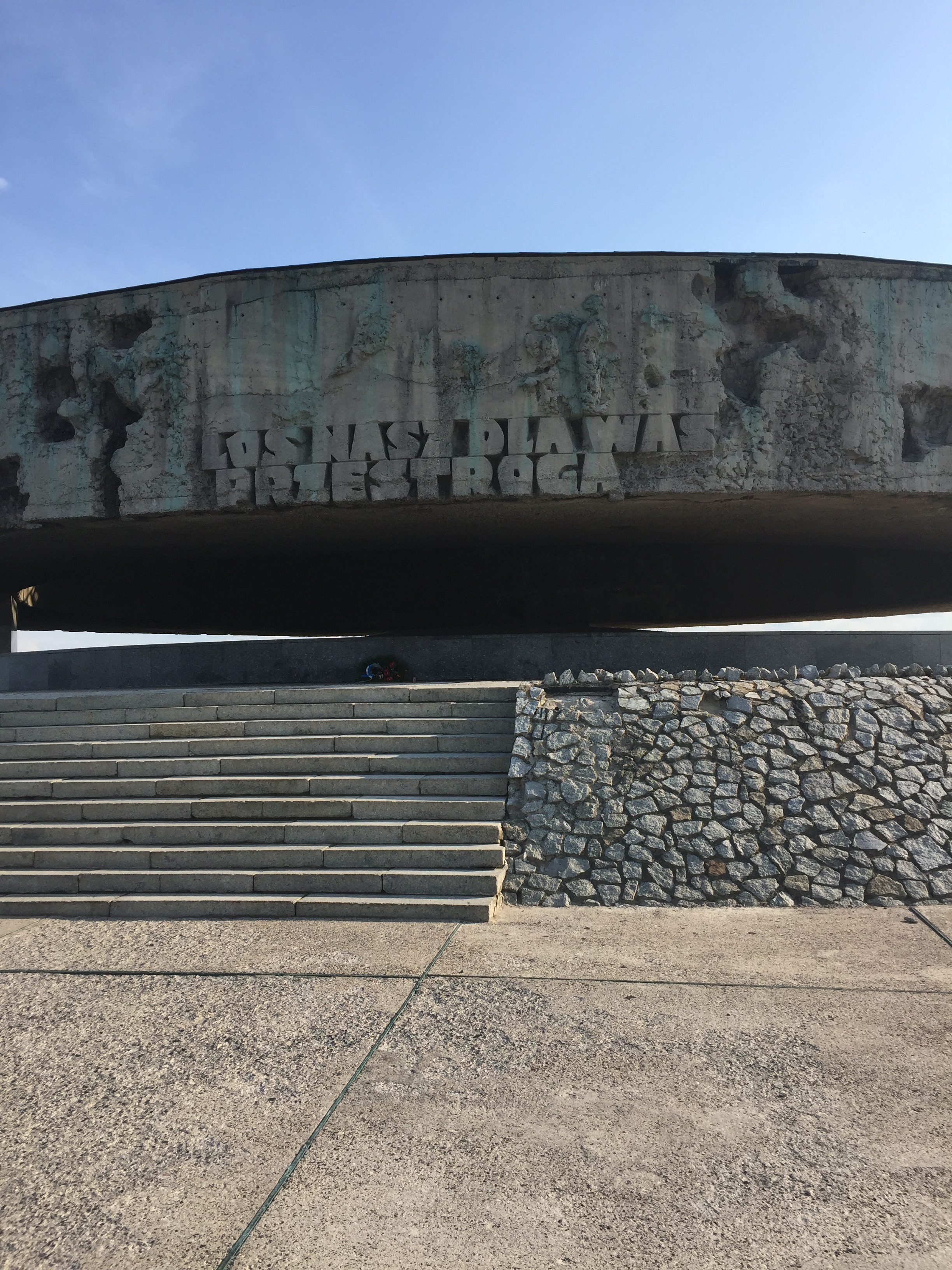
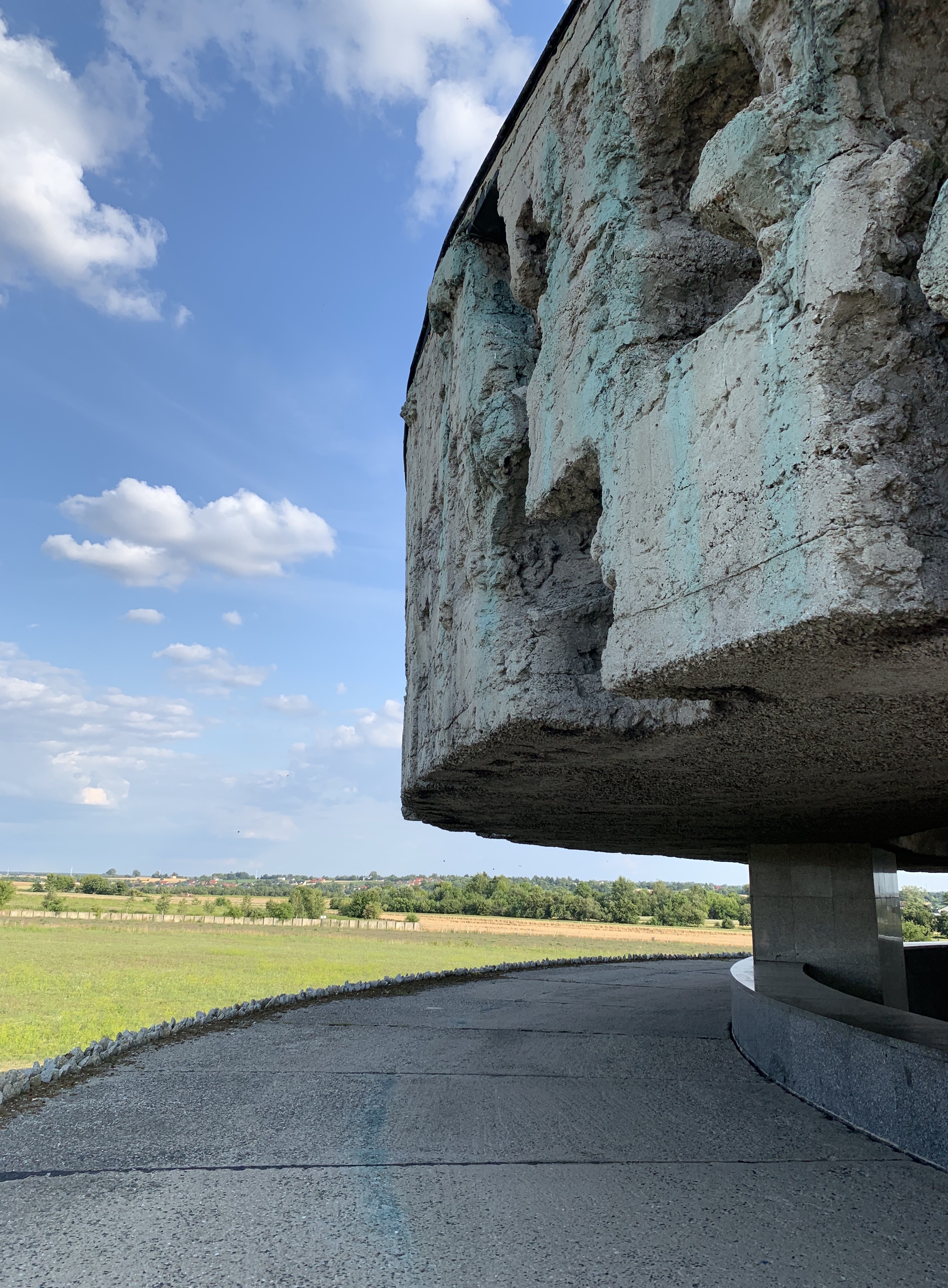
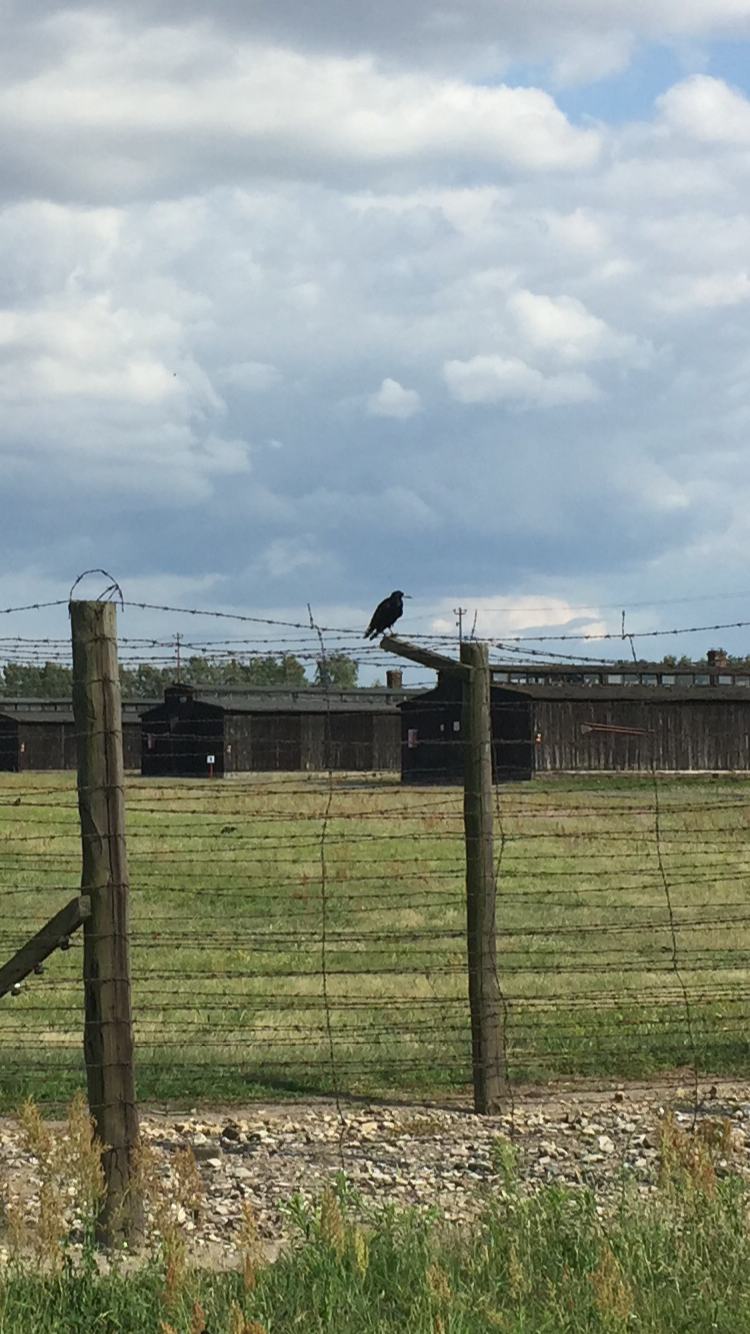
As for the memorial space that we approached at the end, like a large space station hovering over the far end of the camp: this was a Soviet construction. Here, in a bowl that locals have crudely nicknamed “the ashtray”, over 1300 cubic metres of ash mixed with fertiliser are on permanent display. We recited kaddish (although I was uneasy reciting kaddish in the presence of ash and feces), as birds took flight around us. This repulsive camp has truly become a haunt of crows.
Photograph: Simon Holloway
Photograph: Simon Holloway
Photograph: Howard Wolfers
Photograph: Simon Holloway
Photograph: Simon Holloway
How would Majdanek’s victims feel, knowing that their cremated remains are to forever lie unburied? This memorial strikes me as profoundly wrong. This is a Soviet monstrosity, but the victims were possessed of very different attitudes towards respect for the dead. Showcasing remains like this is something more easily done when they are not those of your own family.
I get the feeling from other participants that they too are most discomfited by what we have seen: not only the camp, but the heavy-handed nature of the camp’s memorialisation. A more satisfying way of remembering these victims might be to say something about them. Who were they, these 40,000 Jews? What sorts of professions did they have, and for what were they known?
Such thoughts consume me as we drive into Lublin. Here we are staying at Hotel Ilan (whose tagline, somewhat clumsily, is “Feel the Tradition”). Originally a yeshiva, established by Rabbi Meir Shapiro in 1930, its library was burned in a public square in 1939 and its community, save those few who survived, were amongst those we gazed upon in that large bowl, beneath the crows.
Downstairs, I encounter two hasidim. A man and his wife, I take them to be Satmar: her head scarf is flat against her head, which suggests that she has also shaved her hair off, his peyos are thick and curly, and his tzitzis are worn above his shirt and beneath his vest. I want to ask him who he is and what he is doing here in this godforsaken place, but I demur. This building is a tourist attraction. He isn’t. I decide to leave him and his wife alone, but am pleased that his presence helps remind locals of those whom they only know from photographs.
We have a debriefing session in the old synagogue, which still serves tourists as a place of worship, and I find it most interesting to hear feedback from the group. I feel that we are all united in our confusion: however much we learn, so much less do we understand. But then, did we really come here to understand? Or did we come here to explore the enigma that lies at the heart of that which is unambiguously and incontrovertibly irrational?
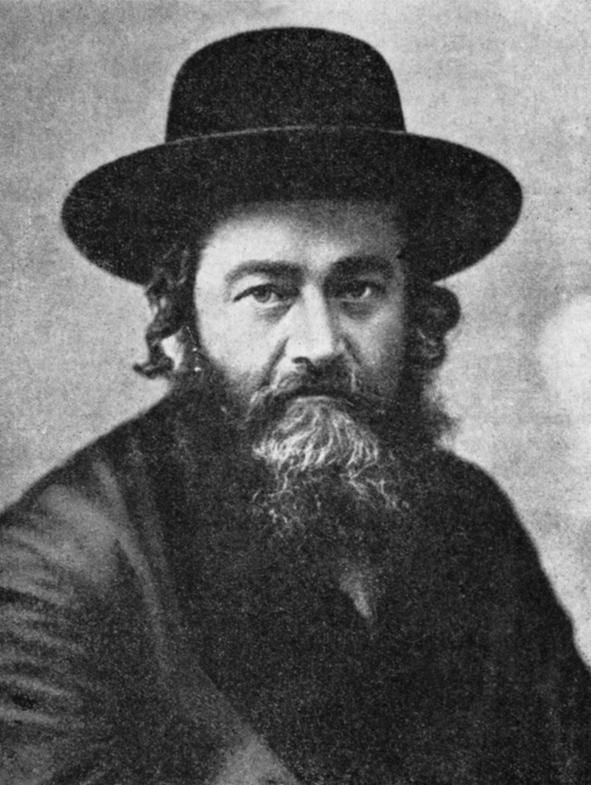
Rabbi Meir Shapiro, who established this yeshiva, would have had much to say on the subject. A scion of a hasidic family, the yeshiva that he established was designed to train a new generation of distinctly hasidic rabbonim. Their philosophy, akin to that of the Baal Shem Tov, centred on the notion of God’s majesty and supreme control, together with that of the seeming chaos that infuses the world that He created. Our task, Rabbi Shapiro would have said, is to bring the divine into our daily lives, such that we might rectify those shattered vessels and repair the very fabric of reality.
He may have had even more to say on this subject, of course, but his book, Imrei Daas, was burned.
Photograph: Wikipedia

 Berlin and Poland Tour 2019
Simon, once again I am thanking you from the bottom of my heart for your daily report. Confused, angry, heartbroken mixed together, this is how I am and keep asking WHY, WHY, WHY?
LikeLiked by 1 person