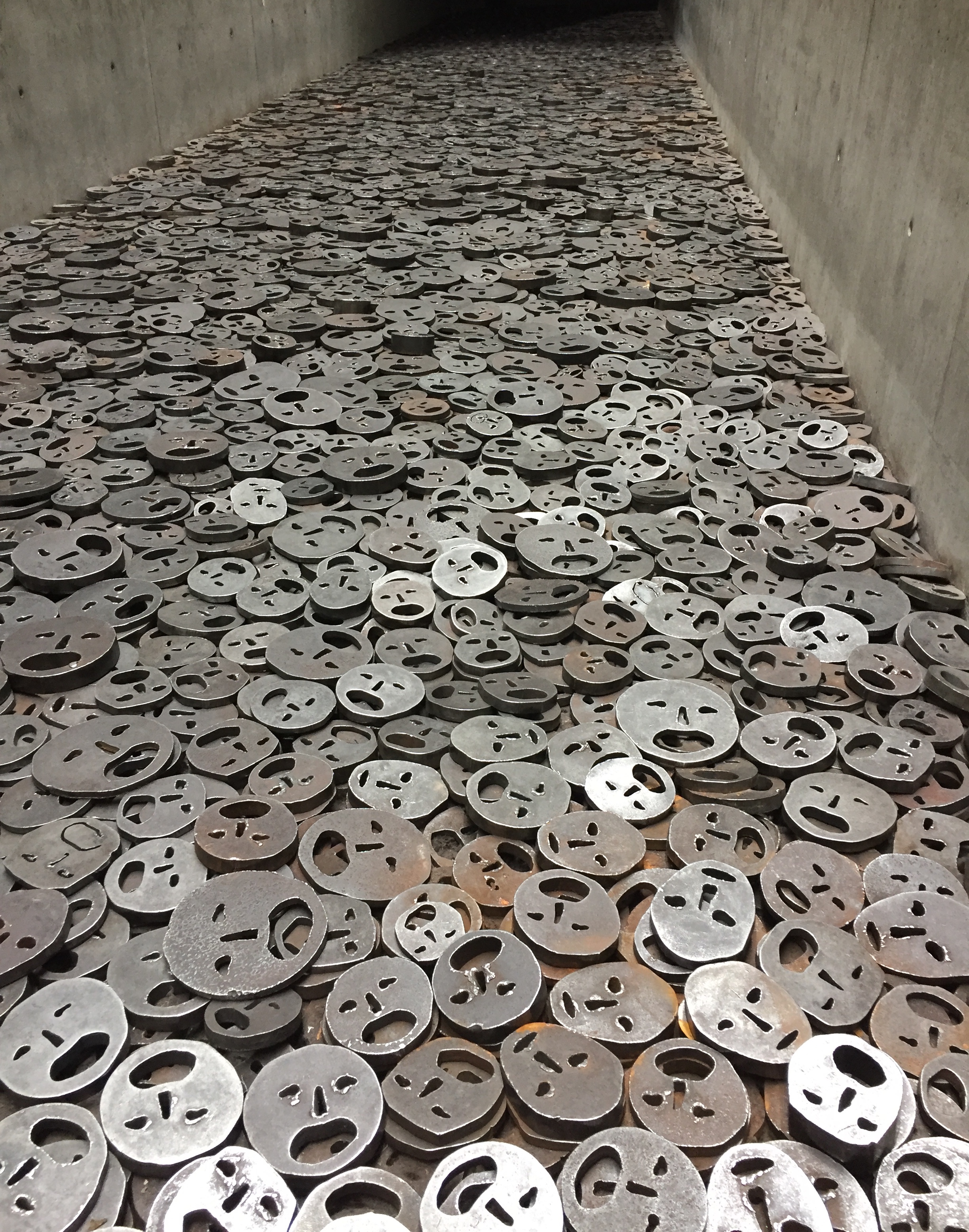
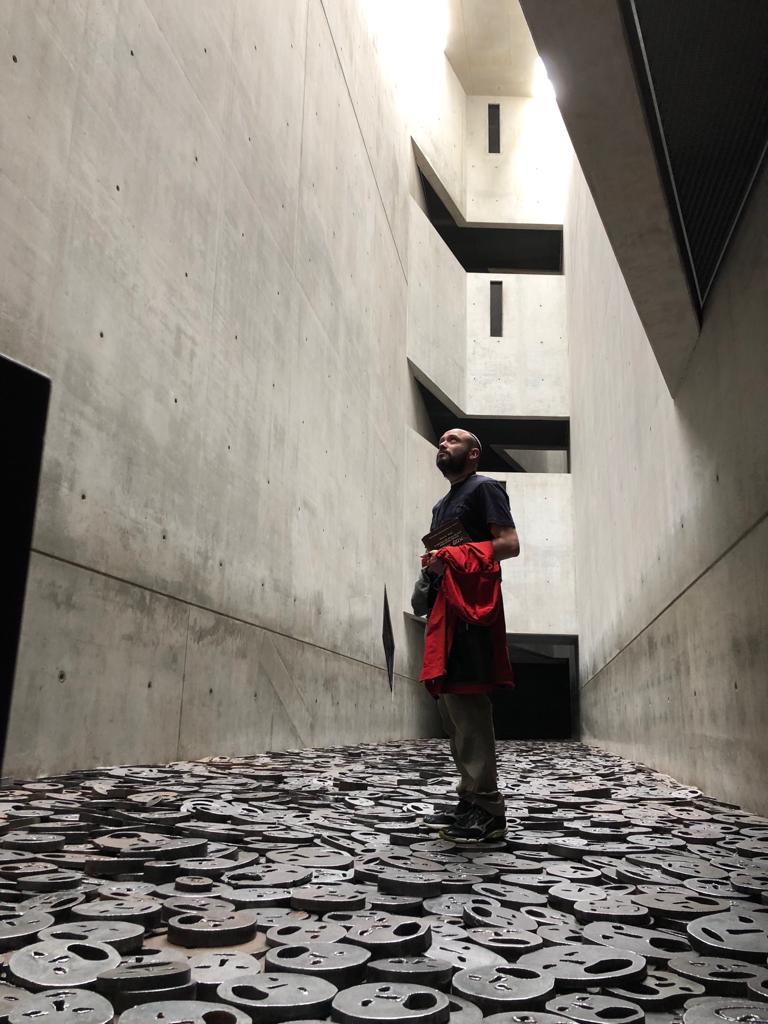
July 19: All Good Things

Since the beginning of the 14th century, Krakow, it turns out, was surrounded by a high wall, into which were set no fewer than forty-seven towers and just inside of which was a moat. Since the wall became a slum and the moat filled with sewage, the former has been removed (it still exists in at least one place, where it partly forms the wall of a convent) and the latter has become a beautiful public park.

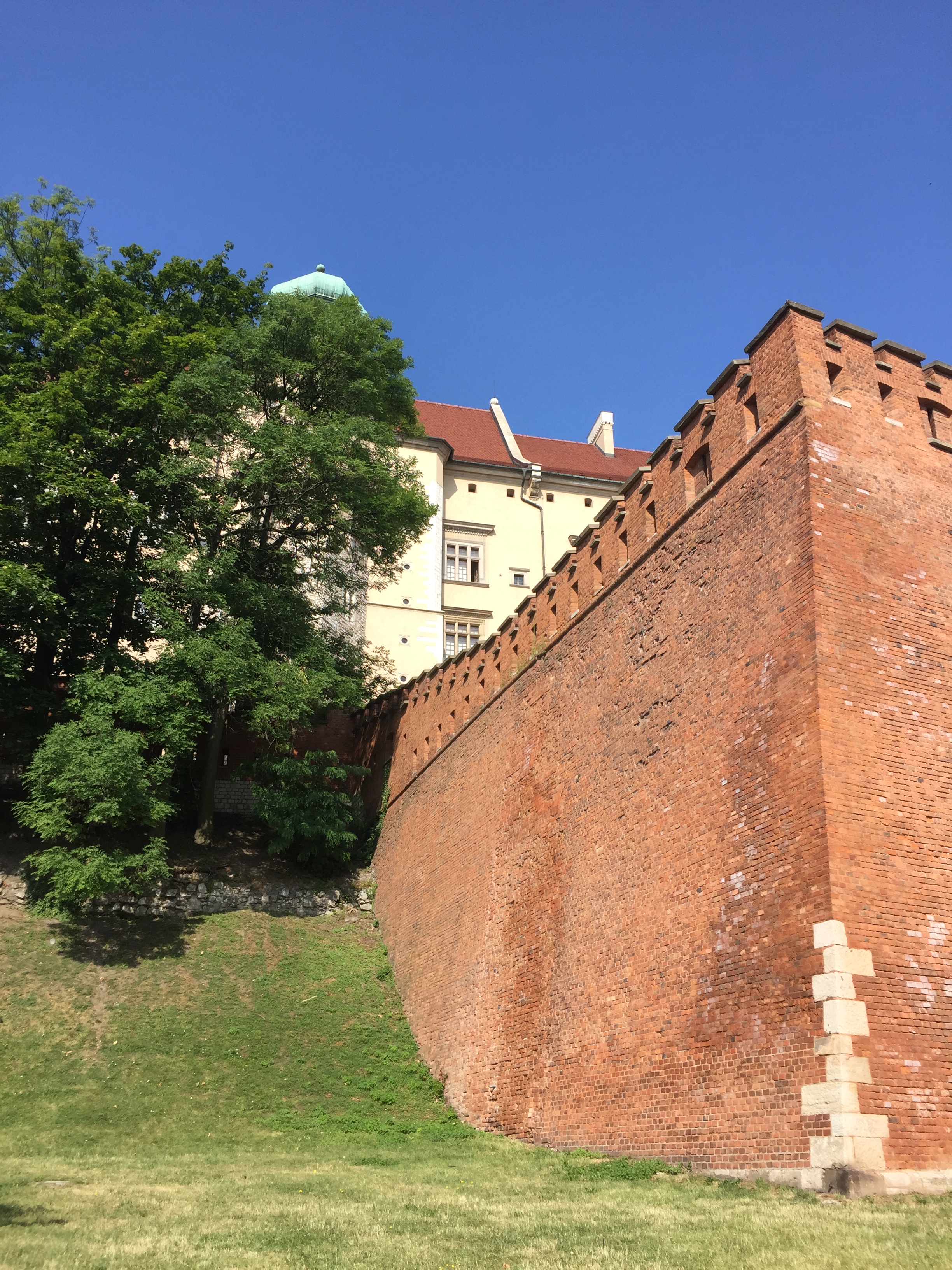
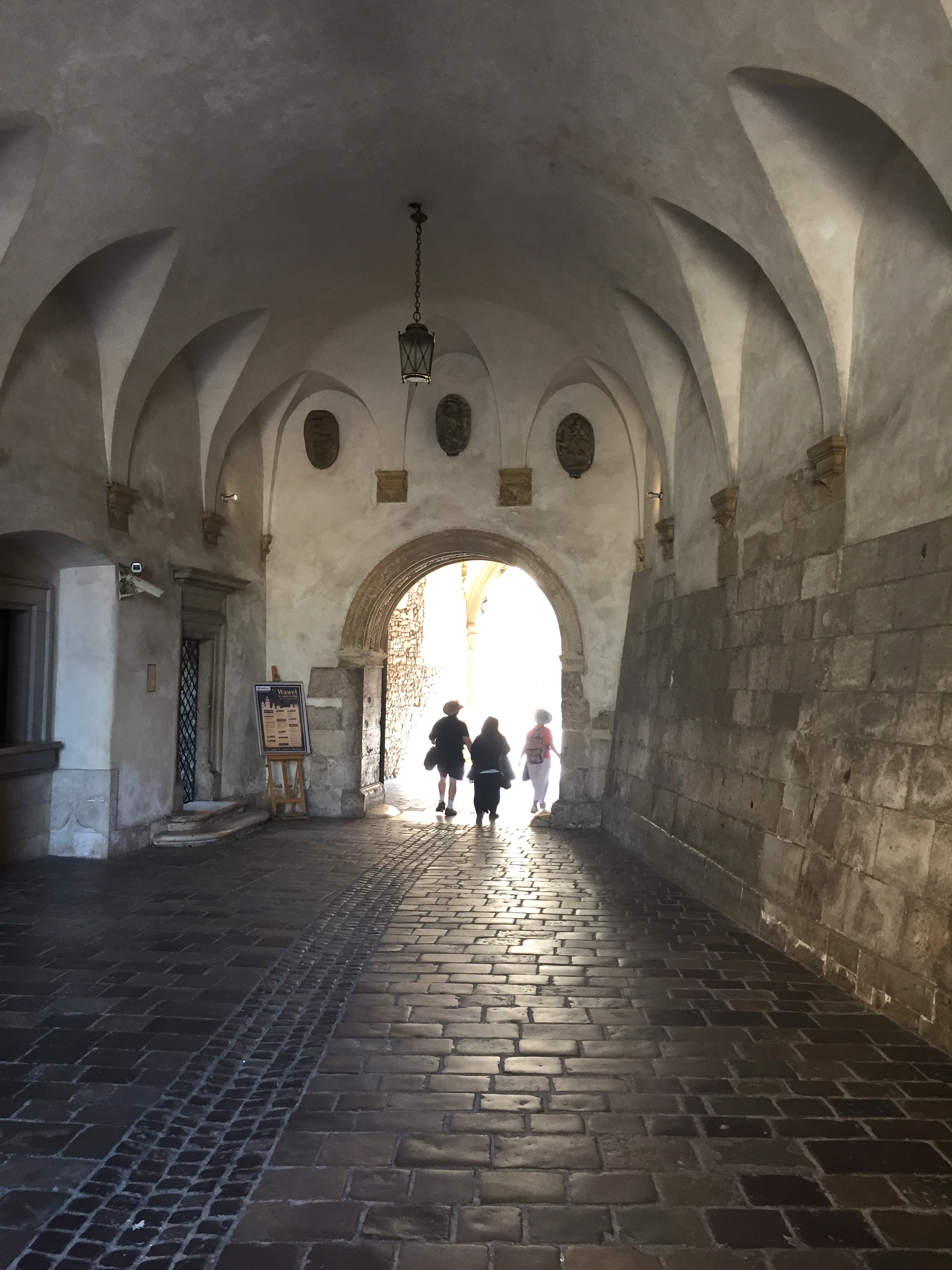
We started our morning with a walk through this park, from which we made our way in the direction of the Wawel: the spectacular castle on the hill, surrounded by its own walls, with its pastiche of architectural styles and its magnificent opulence.
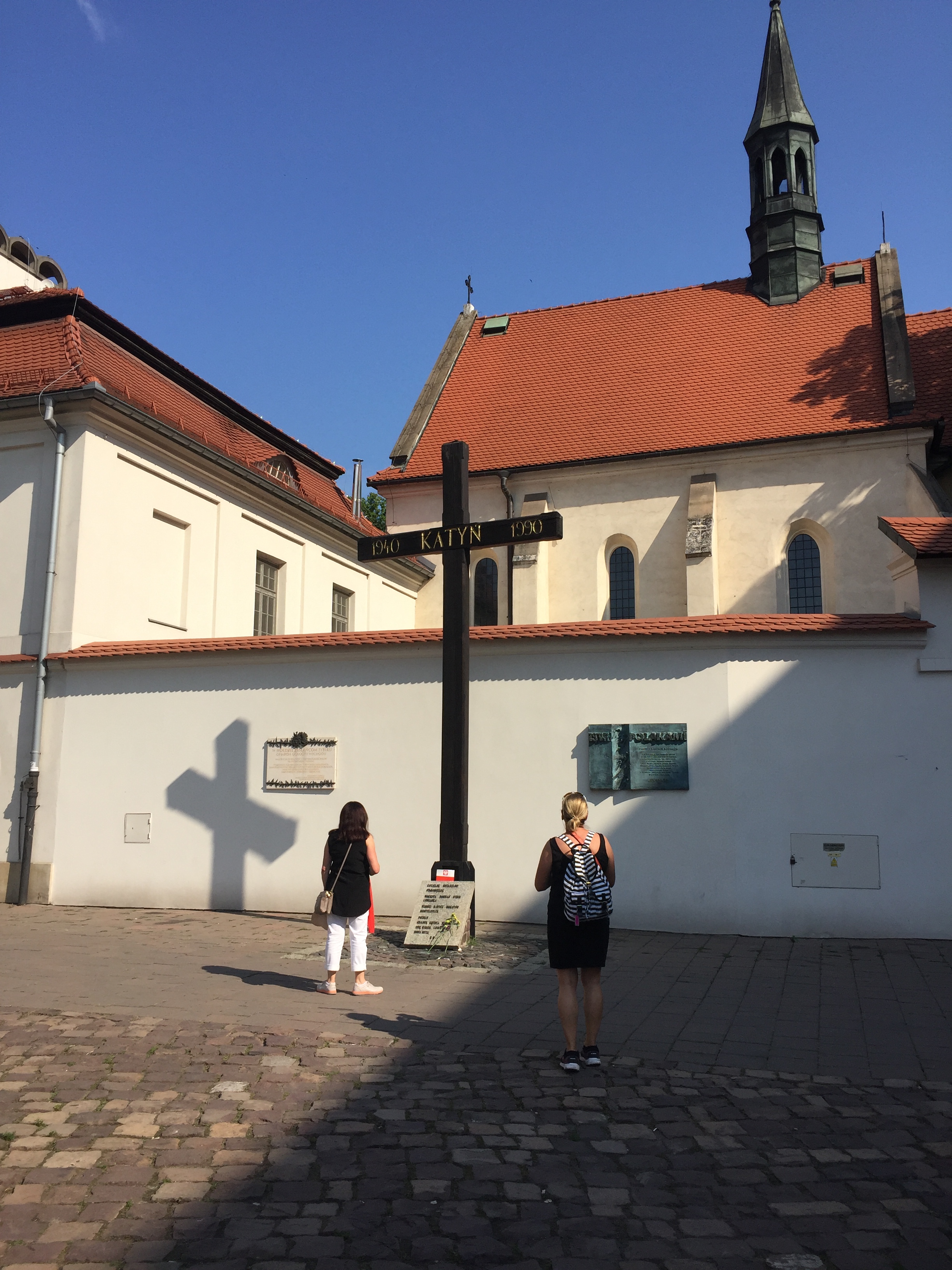
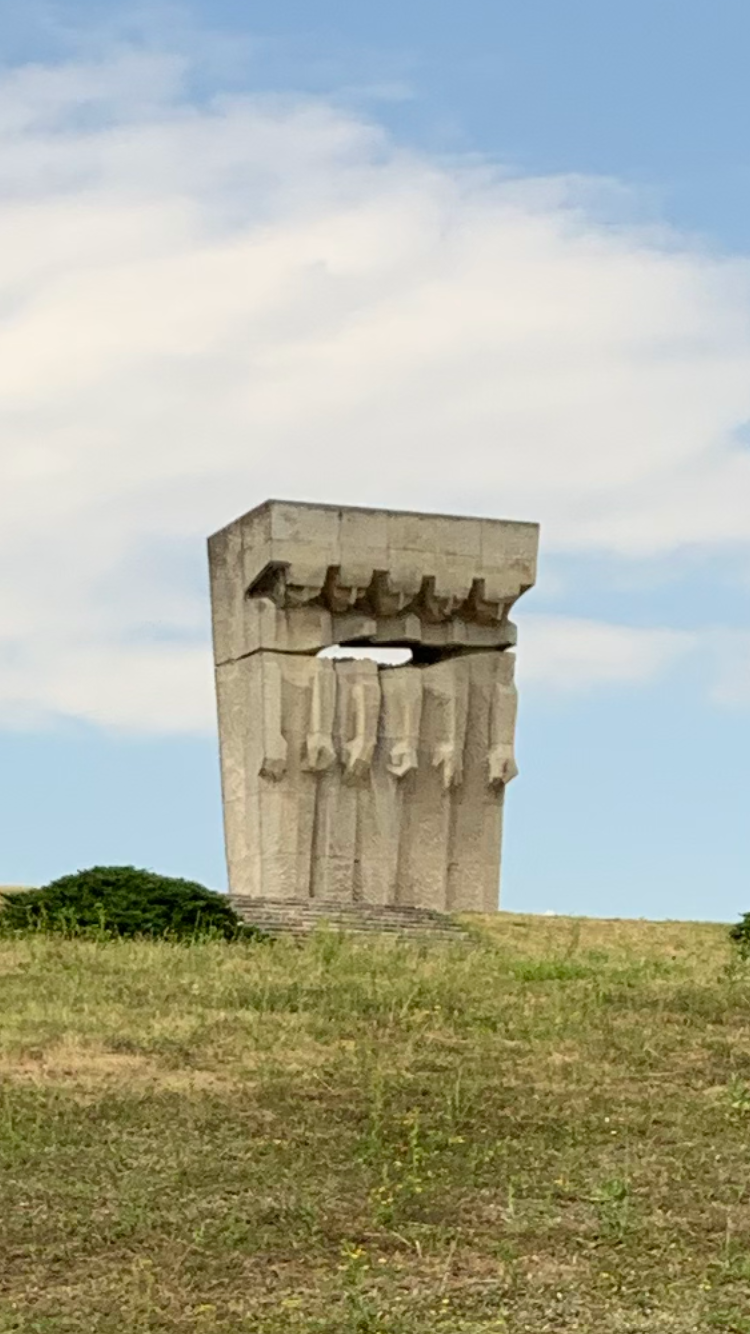
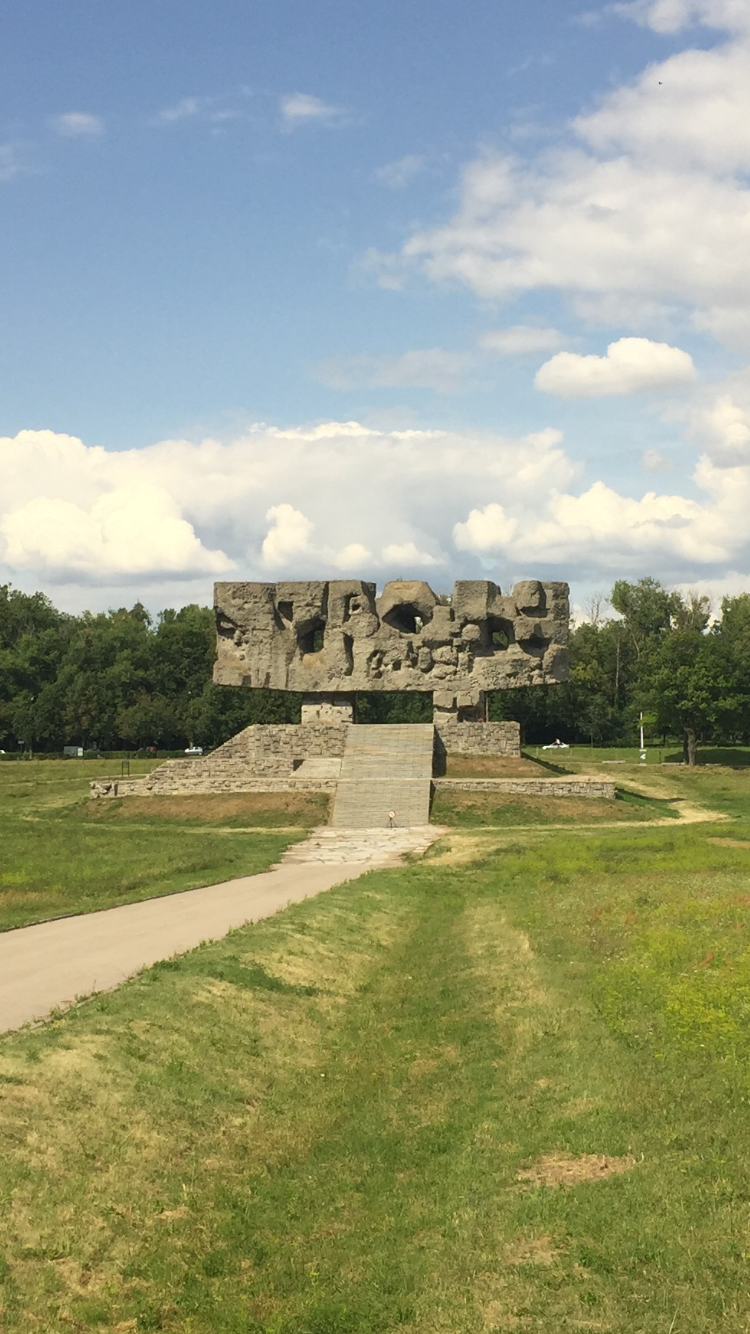
A memorial to the murdered Poles of the Katyn massacre
Photograph: Simon Holloway
A Sense of Scale: The Outer Wall Around the Wawel
Photograph: Simon Holloway
Ascending the Stairs to the Wawel
Photograph: Simon Holloway
A Pastiche of Architectural Styles
Photograph: Simon Holloway
From Darkness into Light
Photograph: Simon Holloway

Until the 18th century, when Poland’s king moved to Warsaw, the monarchy had always resided in this castle, which was occupied in turn by Swedes, by Austrians and by Nazi Germans. For a brief period in the middle of the 20th century, it was the personal residence of Dr Hans Frank: Hitler’s personal lawyer, and the supreme ruler of the General Government.

Fancying himself something of a king, Frank resided in luxury here, taking visits from dignitaries in lavish halls. One can only imagine the contempt in which he held the city that sprawled beneath him like a festering slum, or the fear and revulsion in which he was held by its perishing inhabitants. Today, over three hundred objects that were stolen during his brief reign are still missing, their whereabouts unknown.

For a large castle, it is interesting just how small so many of the rooms are. Frank’s personal residence (and the residence of his wife and children) was on the first level, but we spent most of our time on the second. Our guide, who was exceedingly knowledgeable, spoke to us about some of the features that we might not have noted or, having noted, taken for granted – such as the existence of toilets (a rare feature of a mediaeval castle), or the fact that the castle’s cellar had its own well.

The art here is stunning: works by Botticelli and by Rubens line the walls, although we are told that they are technically by the workshop of Rubens. Rubens, being something of a businessman, had his own apprentices do most of the painting, to which he would only contribute enough to be able to affix his name to it and sell it for a fee.

Much of the art here was especially commissioned, but there’s a great deal that was also donated. Astonishingly, there are some 1600 artworks within the castle, including a large number of priceless tapestries, and one can only imagine the speculated overall value. In 1994, for example, over eighty renaissance paintings were donated in what was the last large artistic bequest. Since for so much of this castle’s history, poverty was endemic to this part of Europe, there is something disconcerting about the sums invested in prettifying the dwellings of the ludicrously rich.

Indeed, even at a time when Poland was reestablishing itself after Communism, an enormous amount of money was being invested into the restoration of the damaged art and architecture of the Wawel. It is truly a national treasure, and one can picture the frustration of the curators at how much of it remains in the hands of thieves and their descendants.

We walk into the Throne Room, in which 30 of an original 194 heads gaze down at us from the ceiling, and are told that this was Frank’s private office. It is a large and expansive room, previously used for royal weddings, and his choice of this room for his personal workspace says a great deal about the esteem in which he held himself.

We wander from here through more tapestry-lined enclosures, some of which have leather wallpaper in a style first imported from Cordoba. One room sports a painting of Polish nobility, prominently hung, in which the walled city of Krakow is visible in the distance. Somewhere close by that city, but not represented in the painting, is the enclosed island of Kazimierz, with its Jewish quarter.

The painting was produced in the second half of the 17th century, so it is interesting to imagine the strange confluence of histories. While this very representation of Krakow was being sketched, in a part of its environs not painted, Jews were receiving refugees from the Ukraine, fleeing the uprising of Bogdan Khmelnytsky and his band of Cossacks, and many were embracing a belief in the messianic status of Shabbetai Tzvi. This was a tumultous time for the Jews of Europe, although I suppose that few times weren’t.

We walked from here to the so-called Eagle Room, which served as Wawel’s royal court of justice. Here, Himmler met with Frank on a number of occasions, and while the ambitious general continued to invite the Führer, Hitler never favoured “Krakauenberg” with his presence.

The biggest room of all was the senatorial hall, and it was here that we finished our tour. This room, which had once hosted weddings, concerts and meetings of the Polish Sejm, was used by the nazis as a private cinema, within which they enjoyed propaganda films of their own construction.

Standing in this room, our guide described for us the circuitous route taken by the tapestries within the castle, which had been sold in the 17th century to nobility in Gdansk, purchased back, whisked off to Canada in the 20th century, fought over, hidden in part, stolen by some or sold to others, only to finally make their way back to the Wawel, where they are now viewable for an entrance fee. All bar around eighteen of them, that is.

One remains in Warsaw, having been “gifted” by Brezhnev, another in the Rijksmuseum (a “gift”, likewise, from the Russians), and there are several whose whereabouts remain unknown. They are priceless, so it is hard to imagine their turning up any time soon, and one wonders whether their location is truly a mystery, or a diplomatically guarded secret.

Something of a theme with these tapestries (although, regrettably, tourists are not allowed to take photographs) is the biblical story of Noah’s ark. This final room presents his family’s departure from the ark and, in Latin, a description of his giving a burnt offering (holocaust) up to God. This tapestry provided a few of us with an opportunity to discuss the controversial use of this word for the genocide of Europe’s Jews, the legacy of which is far more present on the streets of Krakow than is anything commemorated in this museum.

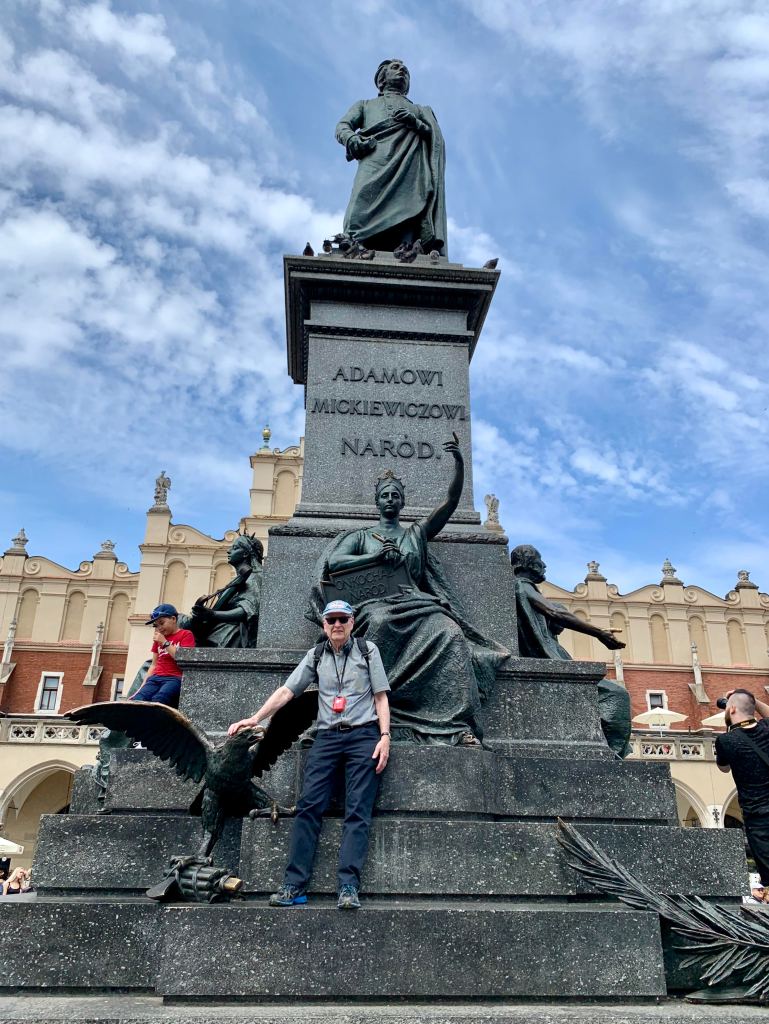
So far as legacies are concerned, we had an opportunity while walking to Krakow’s main square to consider the impact of two other men on Polish society: Tadeusz Kościuszko and Karol Józef Wojtyła (also known as Pope John Paul II).

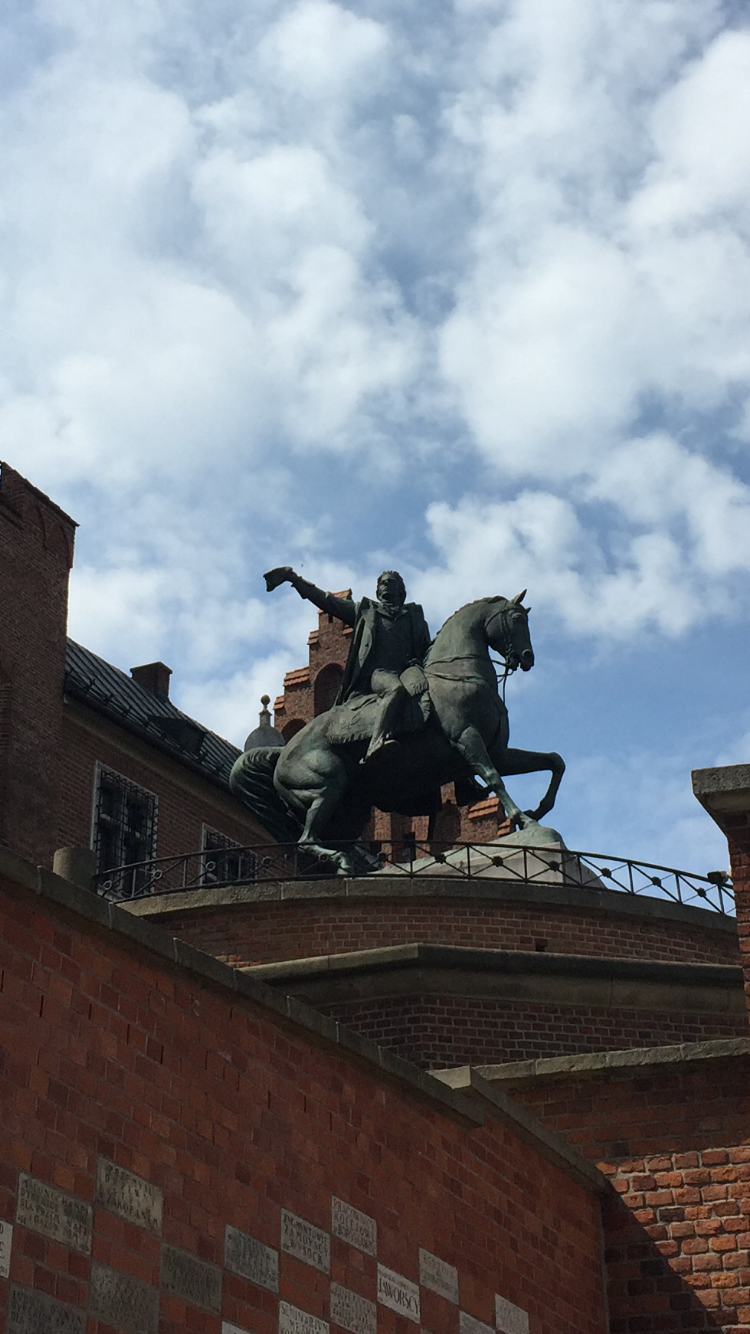
Tadeusz Kościuszko, beneath whom are plaques to those who donated towards the Wawel’s restoration.
Photograph: Simon Holloway

Kościuszko is a national hero in a number of countries: in Poland, Lithuania and Belarus because he fought against the Russians, and in the United States because he fought in the Revolutionary War. As to how his name graced Australia’s tallest mountain, the story is a little more prosaic. The first person to have ever climbed Mt Kosciuszko was a Polish explorer and geologist named Paweł Strzelecki, who had the distinguished honour of getting to name it after his hero.

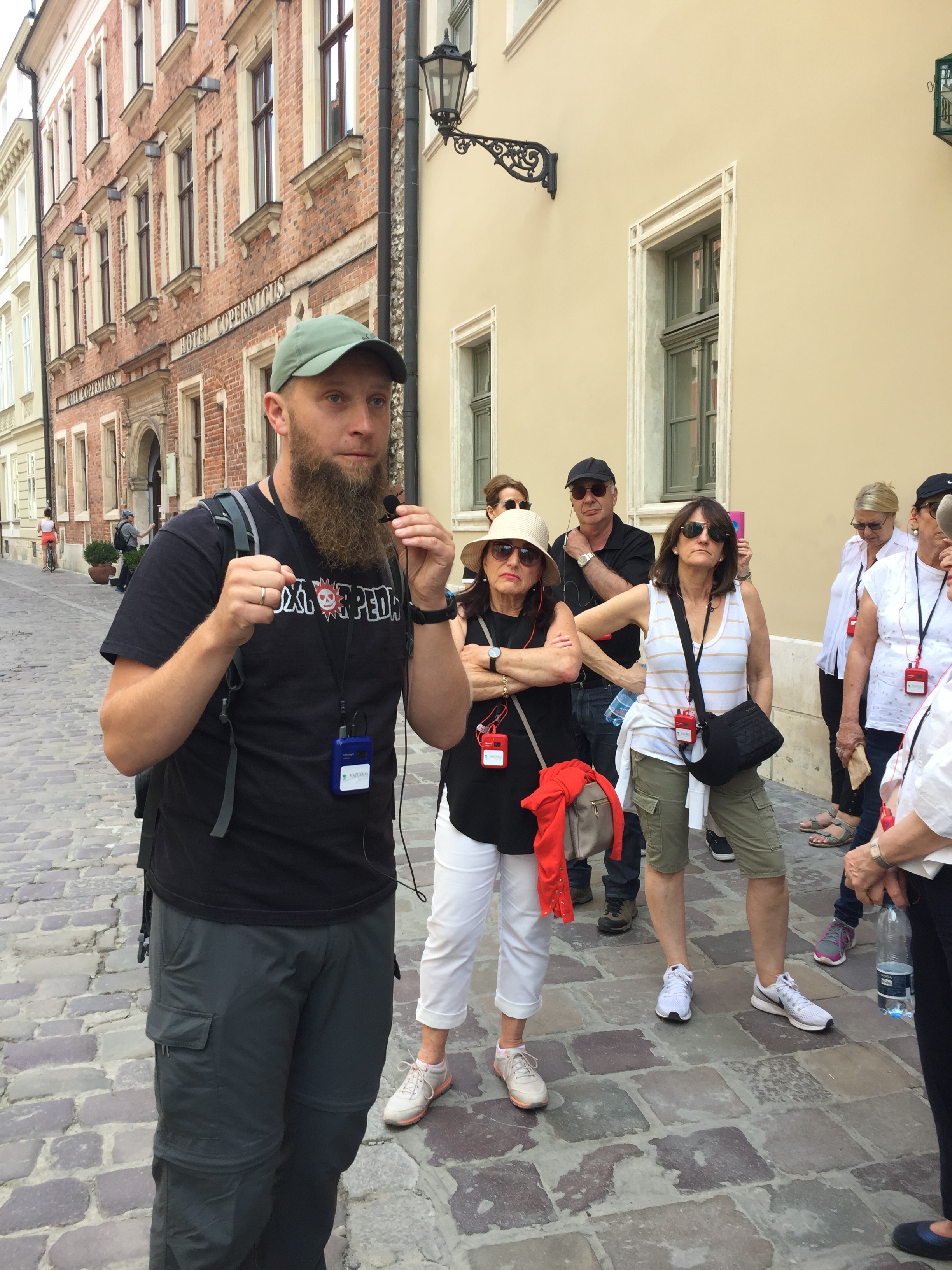
Pope John Paul II, while beloved of many Catholics around the world, is especially admired in the city of his birth, and is justly celebrated for having helped to bring an end to Communism in Poland. The second-longest serving Pope (the third-longest, if you count – as Catholics do – St Peter), many feel that he helped to put Krakow on the map. Known for his role in fostering warm and positive relationships with Jews around the world, Pope John Paul II was also the first Pope to visit the synagogue in Rome, and is a big reason (we were told back in Warsaw) for the amicable co-existence of Jews and Poles today.

Fil speaks to us about Pope John Paul II
Photograph: Simon Holloway
The Norman Conquest
Photograph: Howard Wolfers

Gil jokes about the time that he saw the Pope visiting the Western Wall in 2000. “There’s Pope John Paul II,” Gil tells us, “together with Netanyahu and two other Israelis. And guess which one is wearing the yarmulke.”

This has been a magnificent tour, and it is so fitting that we should conclude it with an opportunity to more broadly appreciate Polish society. You cannot understand the Holocaust, we’re always insisting, without appreciating the broader history of which it is a part, but you are doing that history a disservice if you allow it to end in 1945. To really situate the genocide in its rightful historical context (at least, that part of the genocide that occurred in Poland), you need to appreciate both Polish and Jewish history in the years following the Second World War, and it is to the synthesis of those histories that we devoted our final afternoon.

From Krakow’s square (at 200m², it is the largest mediaeval square in Europe), we made our independent ways back to the hotel, and reconvened at 1:30 in the afternoon. By bus, we weaved through Krakow’s streets until we found ourselves back at where we had finished up yesterday, just around the corner from the JCC. Walking in the opposite direction this time, we soon came to the Galicia Museum, which was to be our final museum visit for this tour, and one of the most memorable.

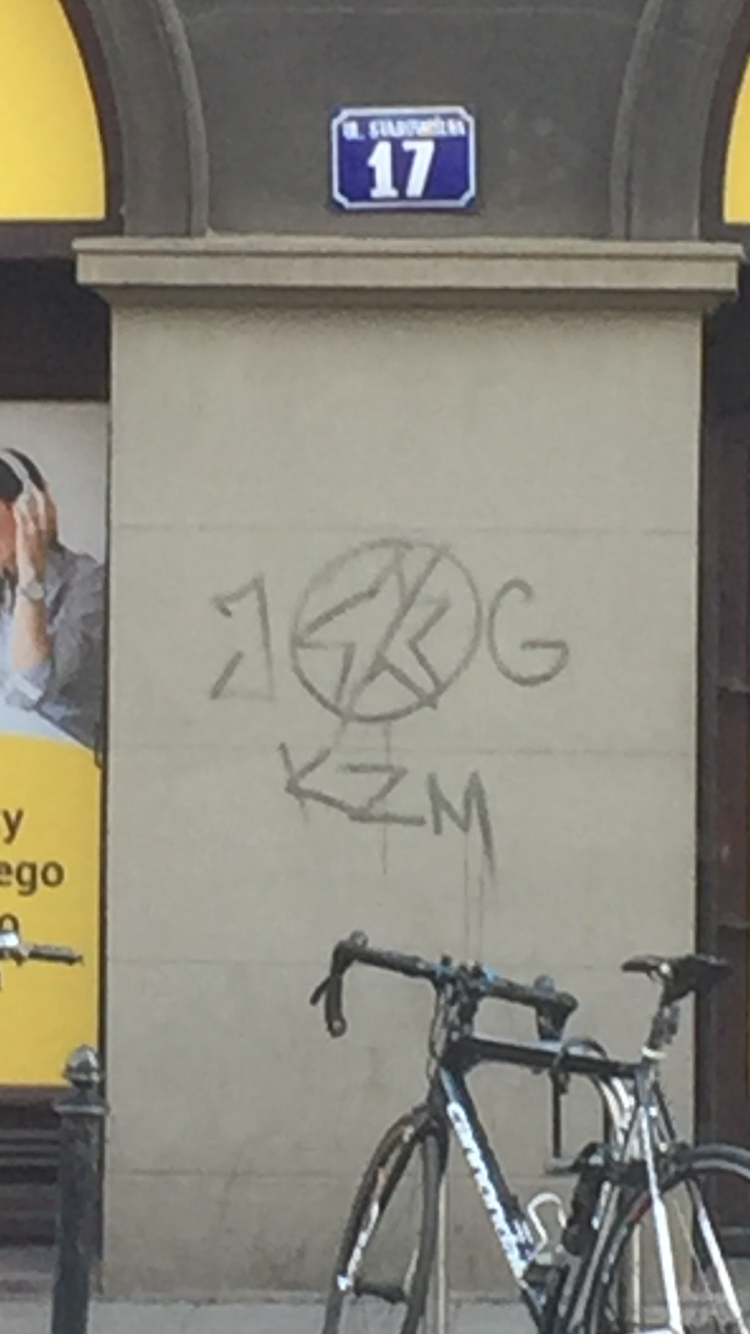
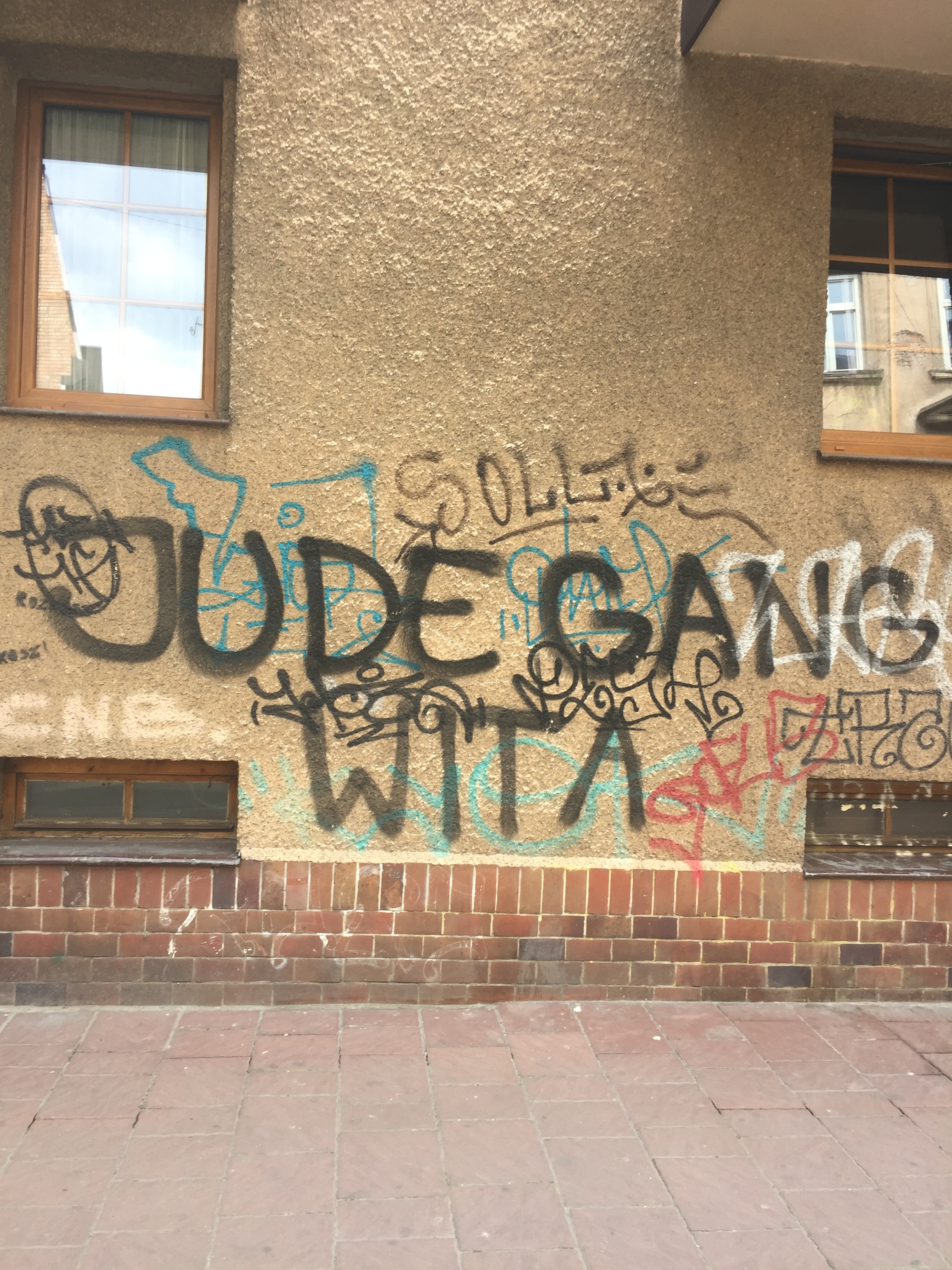
Along the way to this museum, I took some photos of graffiti. I have only been in this city for a few days, but I am pleased that I now understand what some of these symbols mean. The letters J.G. and KZM stand for Jude Gang (the “Jewish team”) of Kazimierz: a football club, whose rivals, Wisla (“Vistula”), have a white star emblem. Rivalry between supporters of these teams has at times been violent, but graffiti denigrating one or the other is the most ubiquitous expression of support.

A lot of pro-Jude Gang graffiti has a white star in the middle with a line through it
Photograph: Simon Holloway

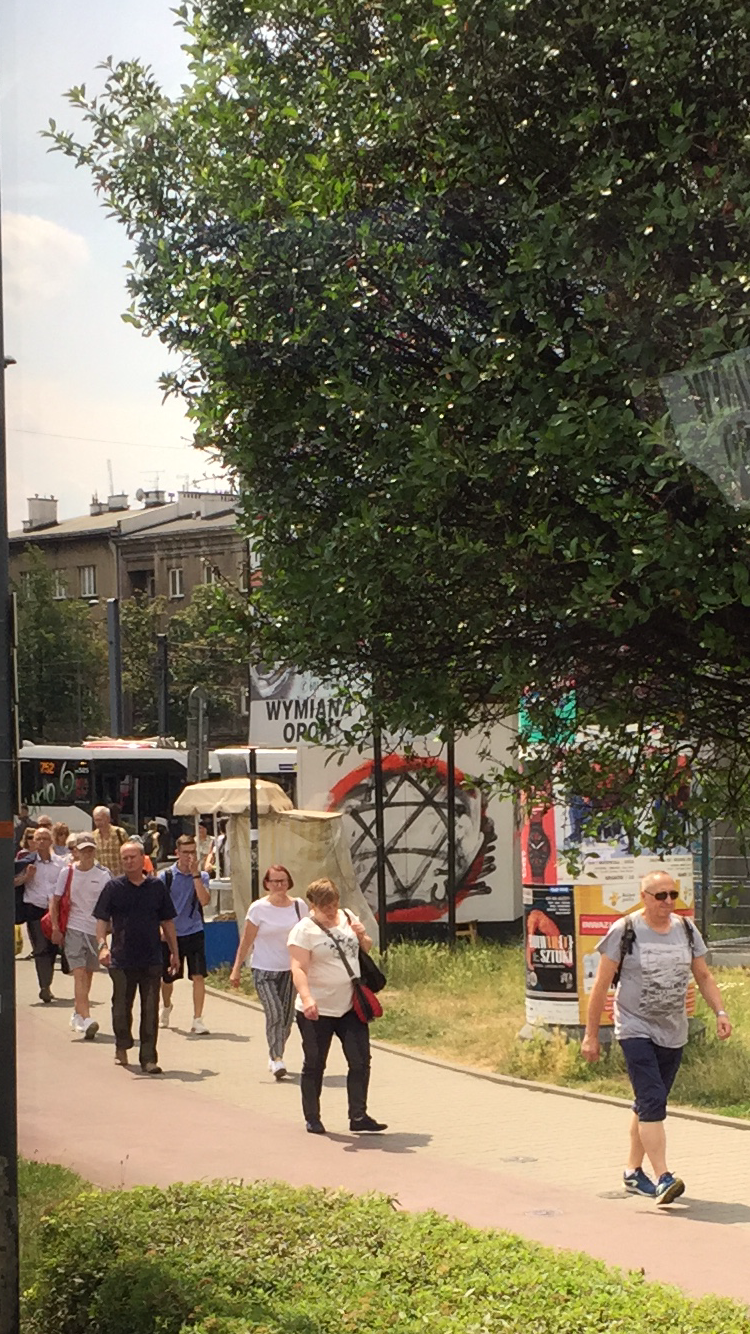
This of course helps me understand the commonly-seen response of Wisla supporters – some of which I had seen from the bus on the way into Krakow, but been unable to photograph: a six-pointed star (representative of “the Jewish team”), with a line through it.

Not actually antisemitic after all: just an awkward byproduct of having a football team known as “the Jews”. This was daubed by supporters of the rival team, Wisla.
Photograph: Simon Holloway
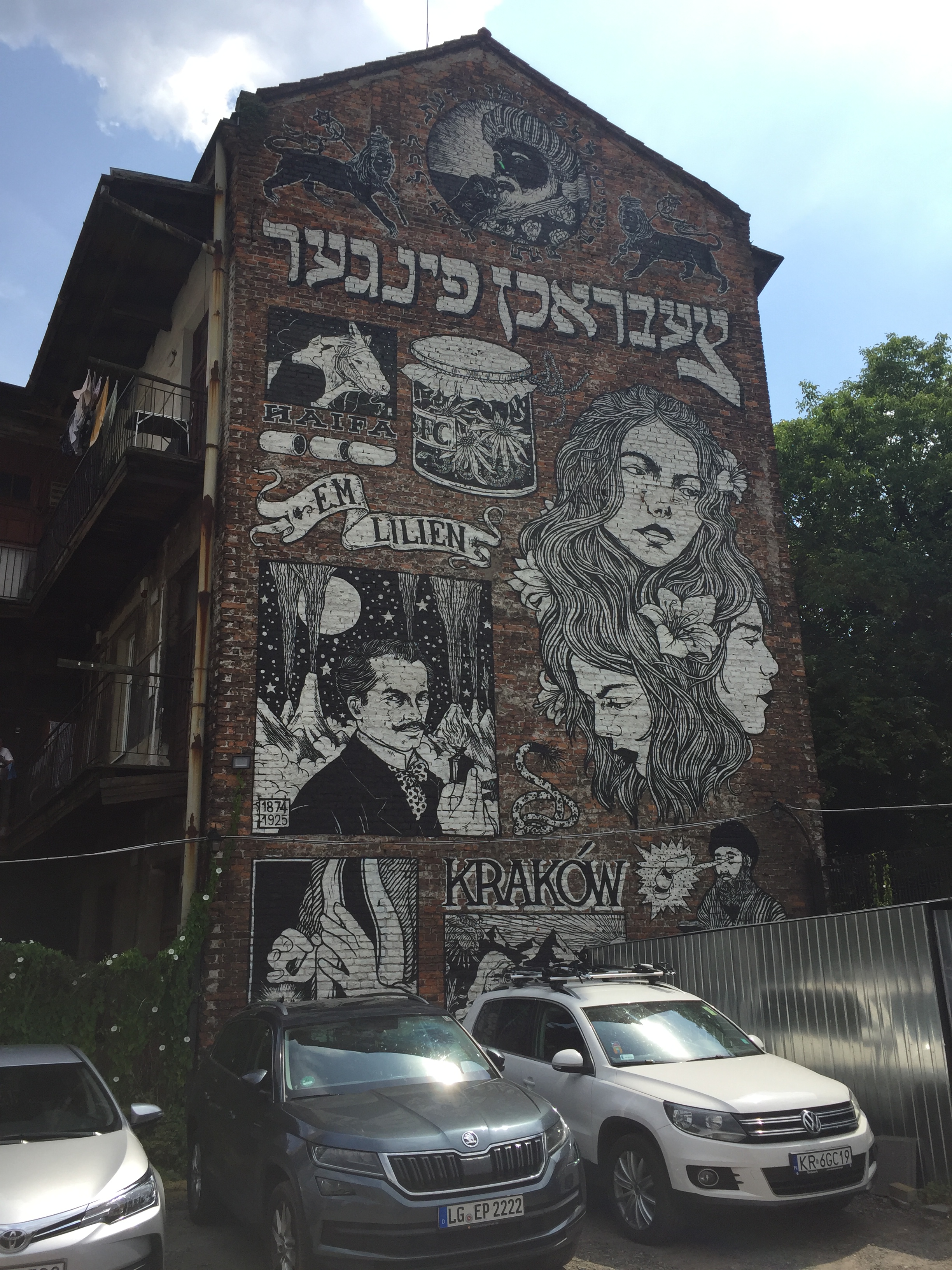
“Broken Fingers”: A Tribute to the Art of Ephraim Moses Lilien
Photograph: Simon Holloway

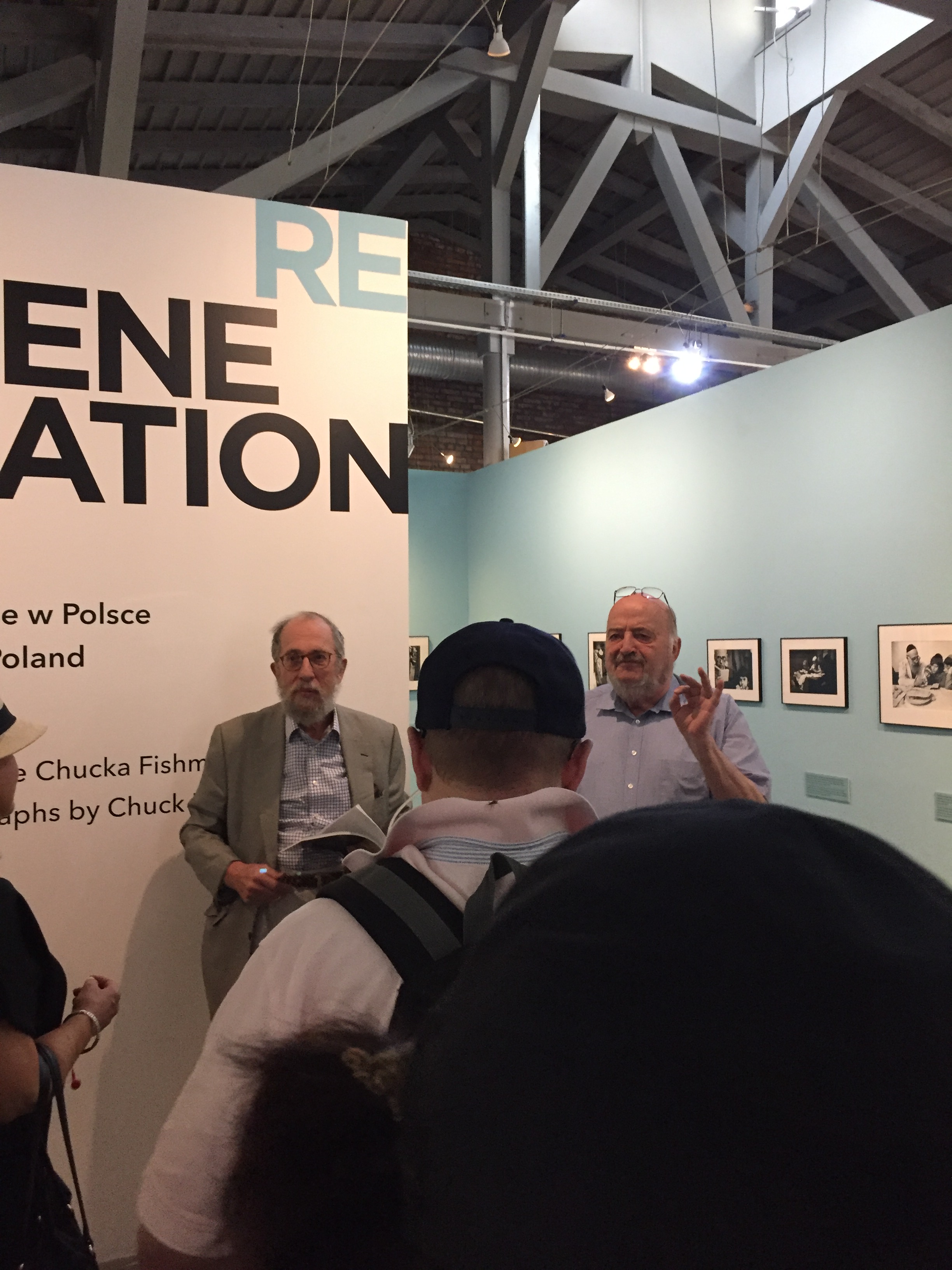
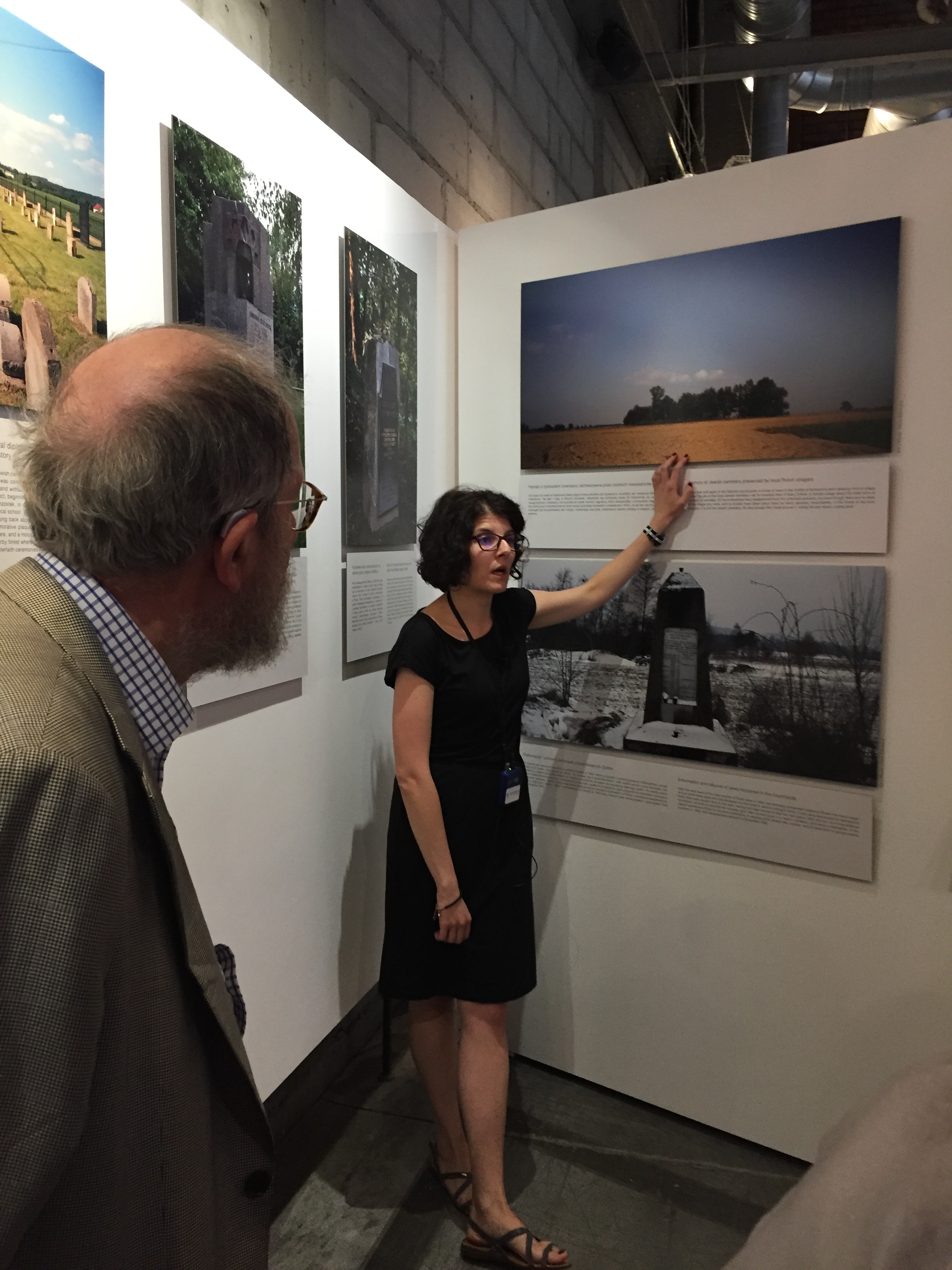
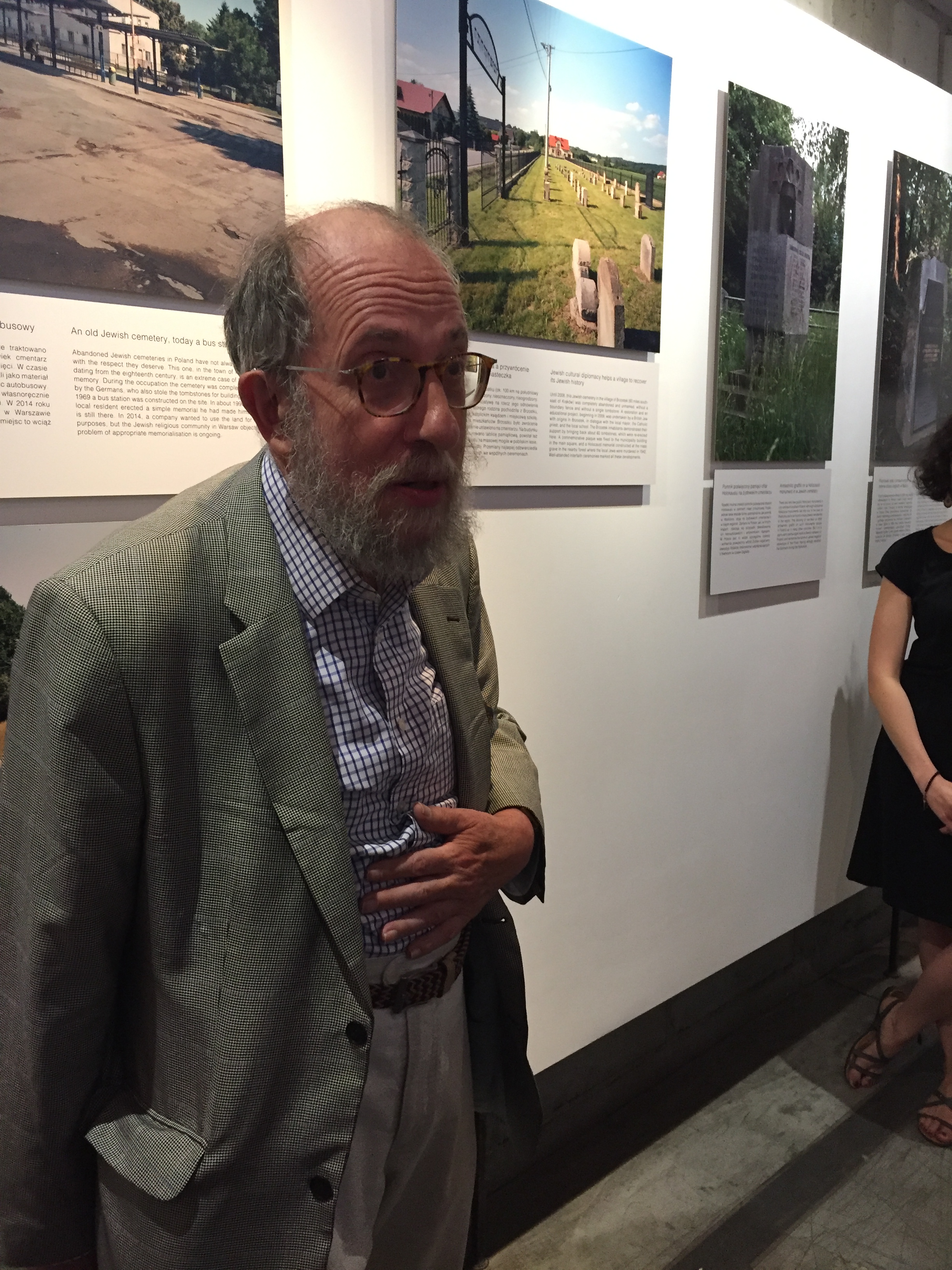
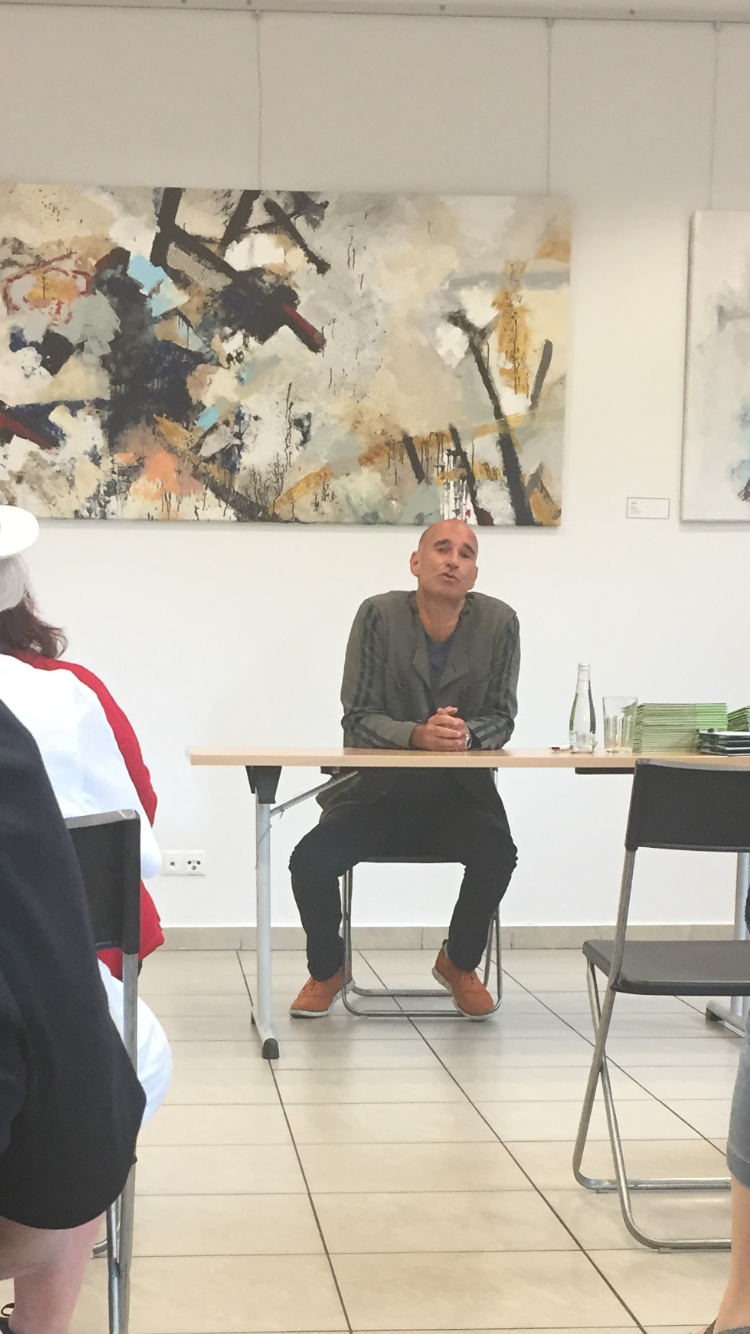
At the Galicia Museum, we were introduced to Professor Jonathan Webber, a social anthropologist whose photographic exhibit, “Traces of Memory”, receives some 50,000 visitors a year. Run exclusively by non-Jewish Poles, his mission is to highlight the Jewish experience in Poland, and to raise questions as regards how one might begin to make sense of it today.

Konrad introduces Prof. Jonathan Webber
Photograph: Simon Holloway

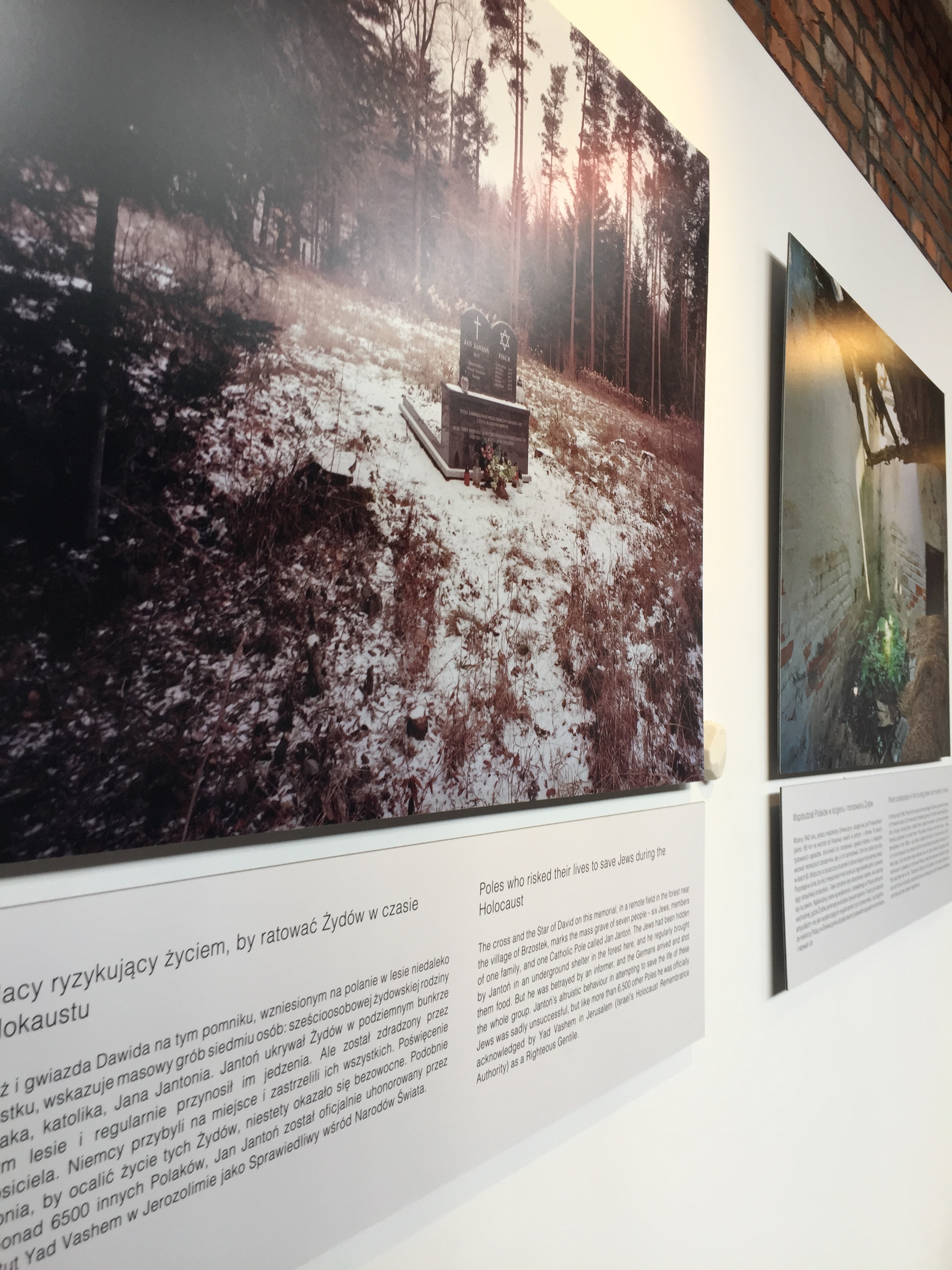
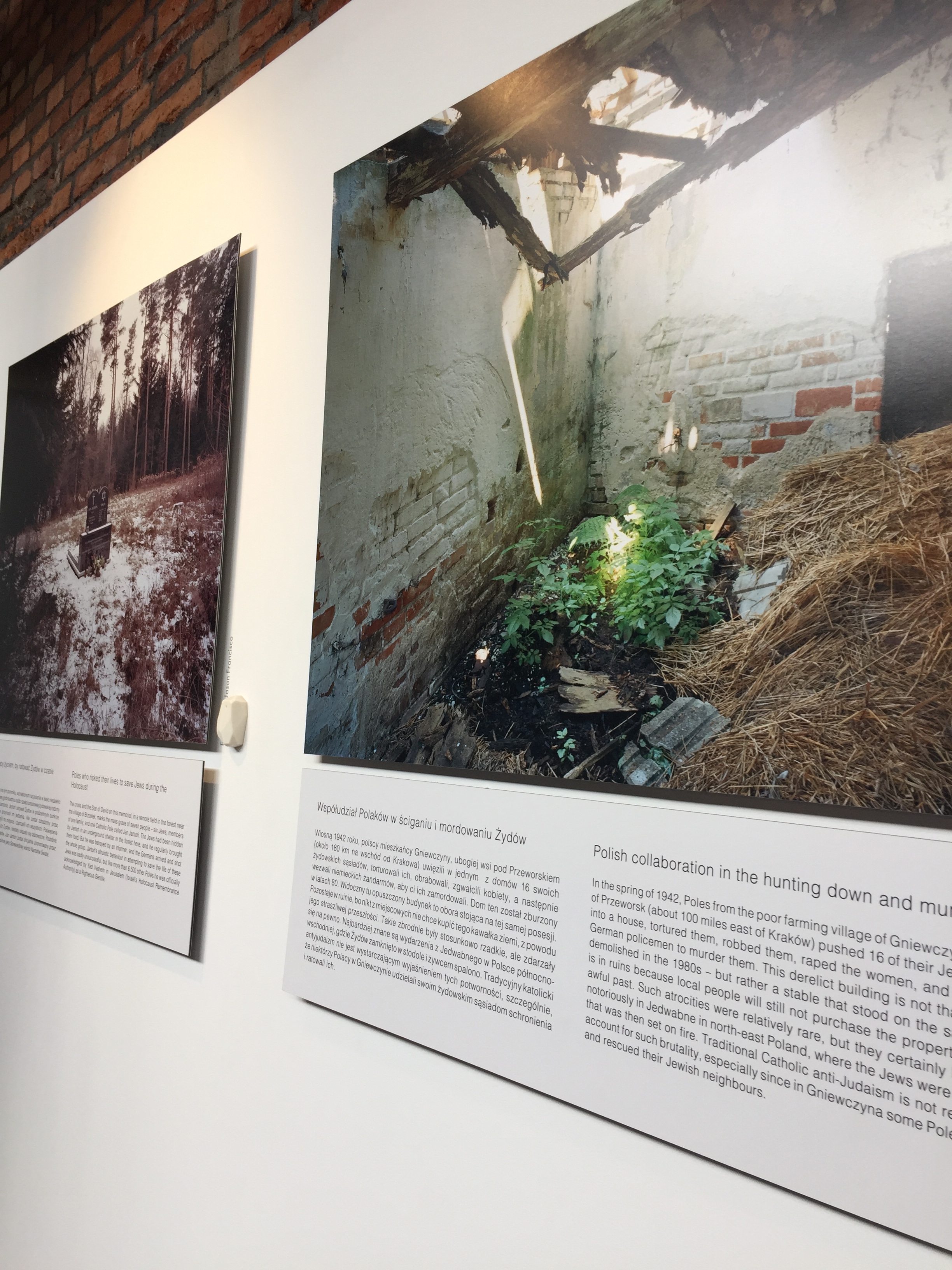
A “museum of ideas”, these photographs are not designed to provide information but to challenge and provoke discussion. As such, they focus on contradictions and on paradoxes: the juxtaposition, for example, of a joint grave where a Jew lies buried next to the Pole who was murdered for having sought to save his life, together the photograph of a barn in which Poles had robbed and raped Jews before handing them over to the Germans to be murdered.

There are no easily navigable ways through this history, which so defies stereotypes and glib summaries. This exhibit, rather than offering any answers or explanations, is merely something of a tour through the various realities that exist in Poland today. To that end, it is comprised of five parts.

This first part, and the beginning of the exhibit, is the ruin. Jewish life in Poland has been destroyed: our synagogues are in ruins, our cemeteries are in a state of upheaval and abandonment, our literature has been burned, our people murdered and the past… forgotten. That this is where the exhibit begins is certainly unconventional.

The second part, and in the spirit of contradictions, shows us that that Jewish life has not been destroyed. Glimpses are available of that which had existed before the war: the wooded grove in the middle of an otherwise treeless field, where the local Polish farmers seek to remember the former synagogue; a restored cemetery in Brzostek, where the local community has found ways to connect to their town’s Jewish past; a new grave, in the old style, for Maurycy Gottlieb.

The third part of the exhibit takes us back to the Holocaust with a look at the various landscapes of destruction. The artificial landscapes of the camp and the box car are the only ones left unexplored in this exhibit, which focuses on landscapes in which Jews had formerly lived. The city, the village, the forest, the field. We see familiar sites at unfamiliar seasons; snow blankets the very landscapes that we have been exploring in what had once been termed the Warsaw and Lublin districts.

From here, we move to the fourth station, in which we think upon how these sites are remembered today. We have memorials, and we have graffiti on memorials. We have restoration, and we have vandalism. After every act of aggression, a new gesture of solidarity. One gets the impression that the good people are winning.

Finally and, in many respects, most importantly: a focus on people expressing their Jewishness publicly. Here we see a photograph of Jonathan Ornstein’s wedding, and are reminded of the excellent work that he does at the JCC. This is the only section of the exhibit in which we see photos of people, and it provides us an opportunity to discuss more broadly the place of Jews in Polish society today.

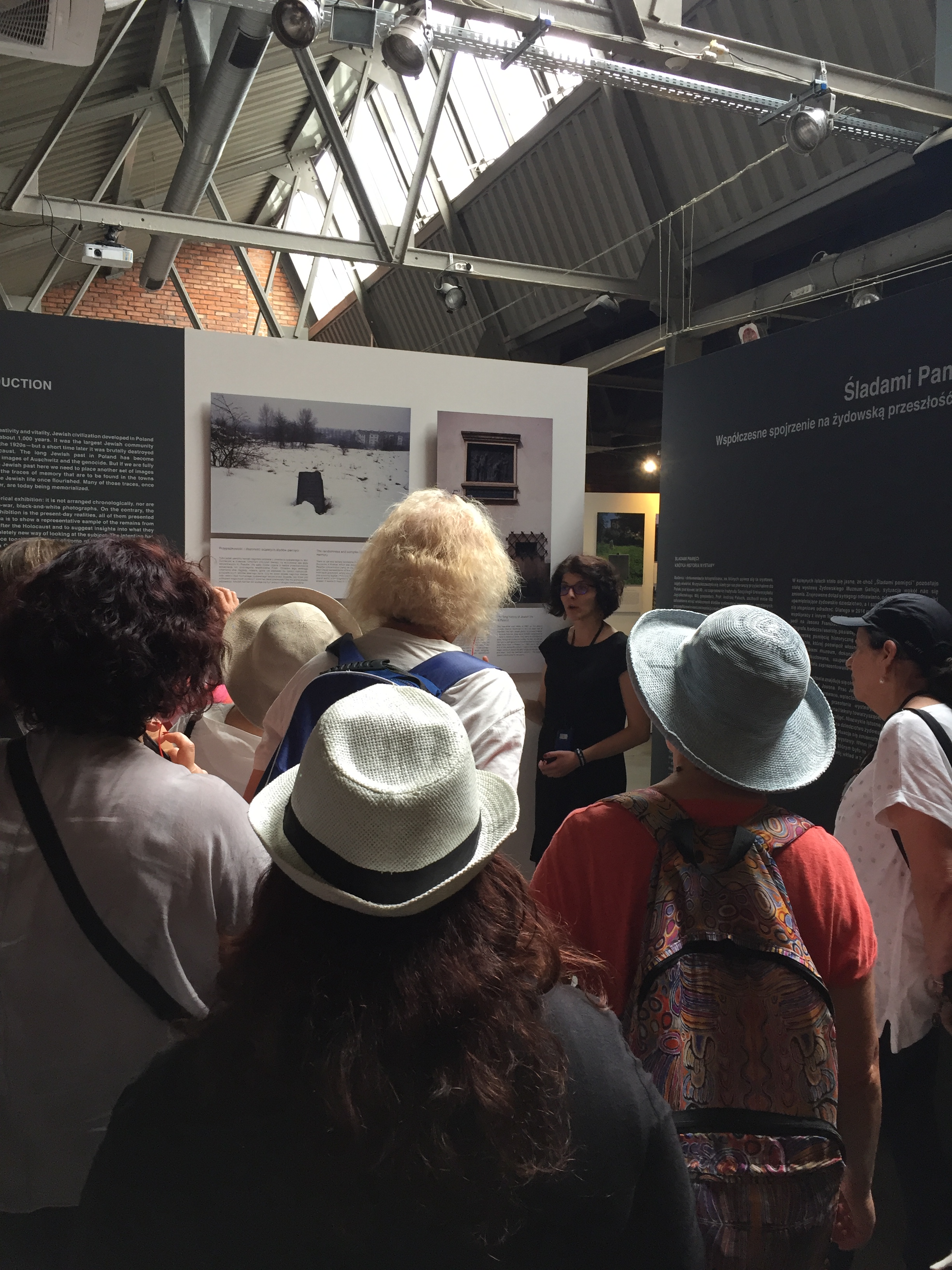
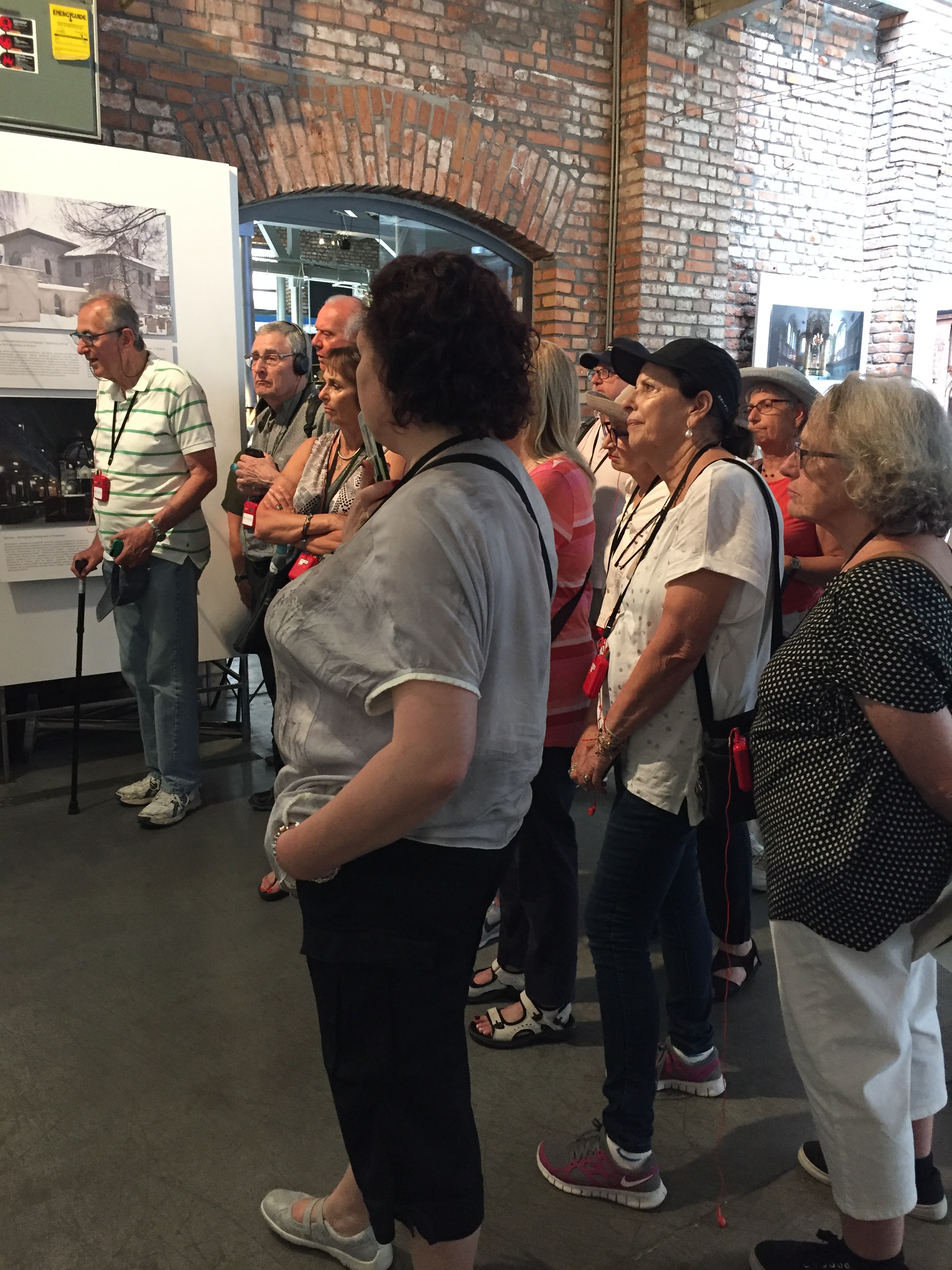
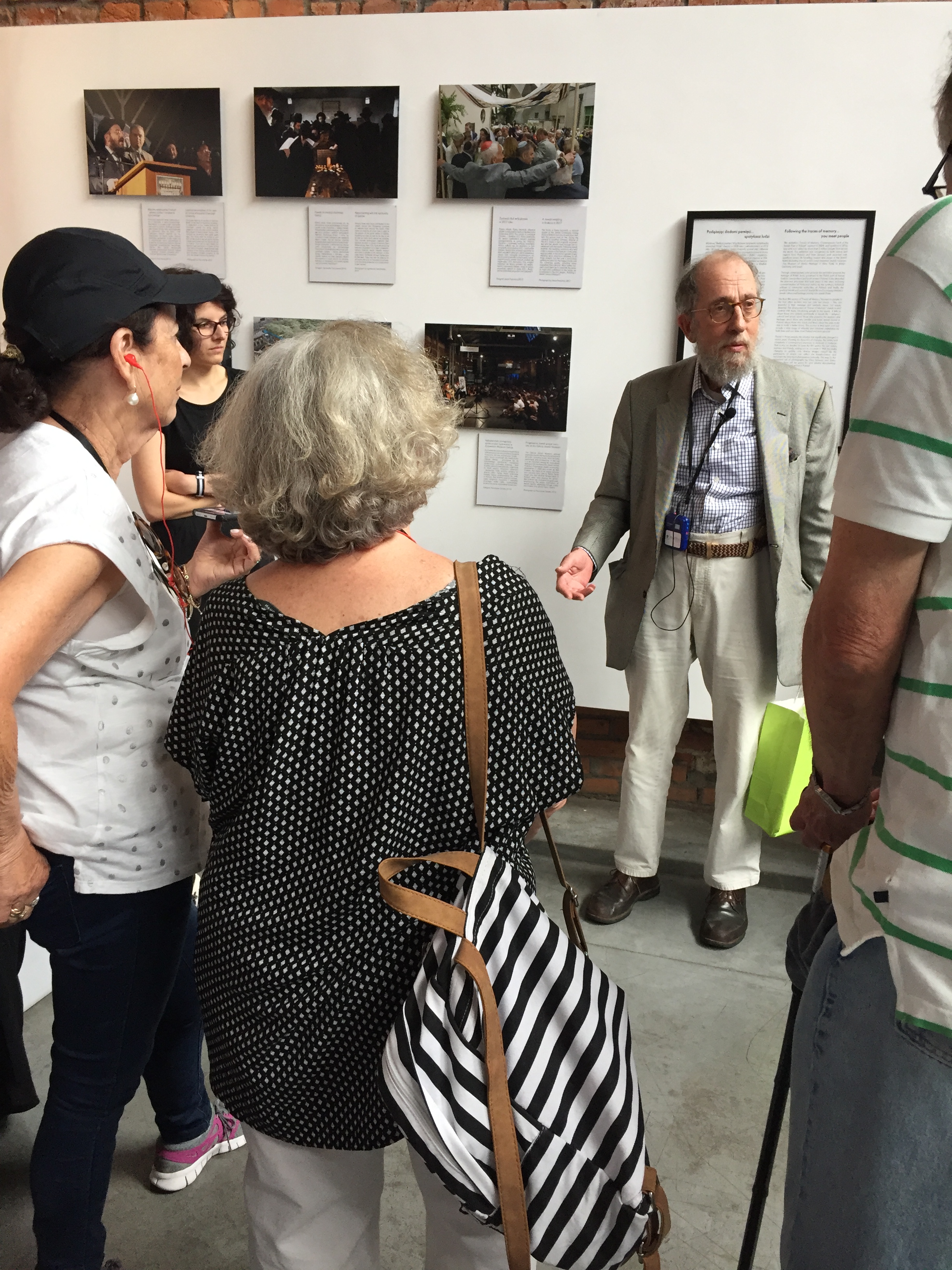
Our guide is Larissa, and she is outstanding. She tells us that, according to a recent national survey, there are some 8,000 people in Poland who identify as Jews, but notes that the true number is impossible to estimate. There is, in addition, a very large number of Polish non-Jewish people (like herself) who are very interested in the history of Jews in Poland, and the Galicia Museum runs special workshops and conferences for school teachers who wish to learn more.

Larissa, on Polish Judaism as a Ruin
Photograph: Simon Holloway
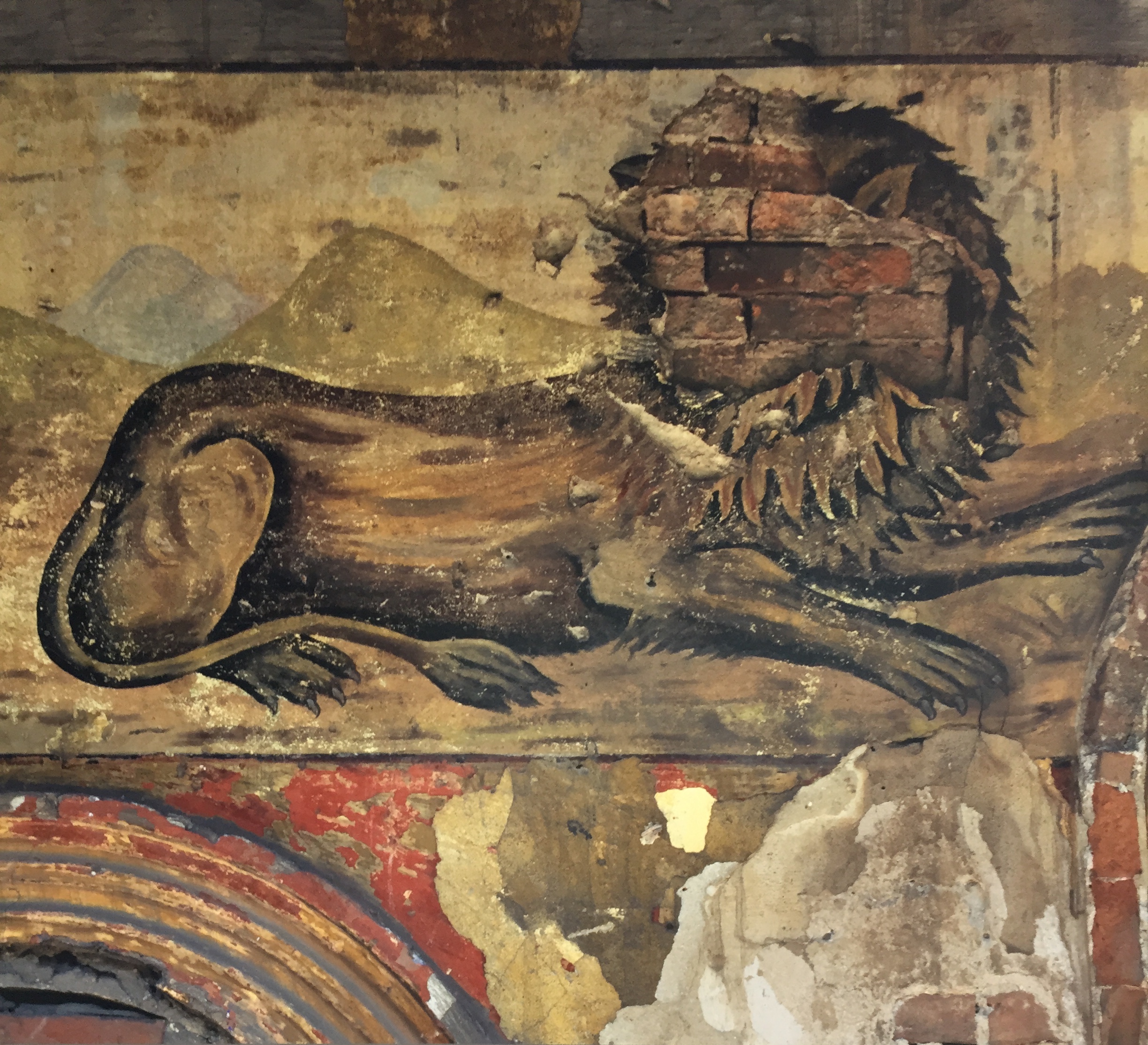
A Metaphor? The headless lion from the ruined synagogue of Dąbrowa Tarnowska
Photograph from exhibit
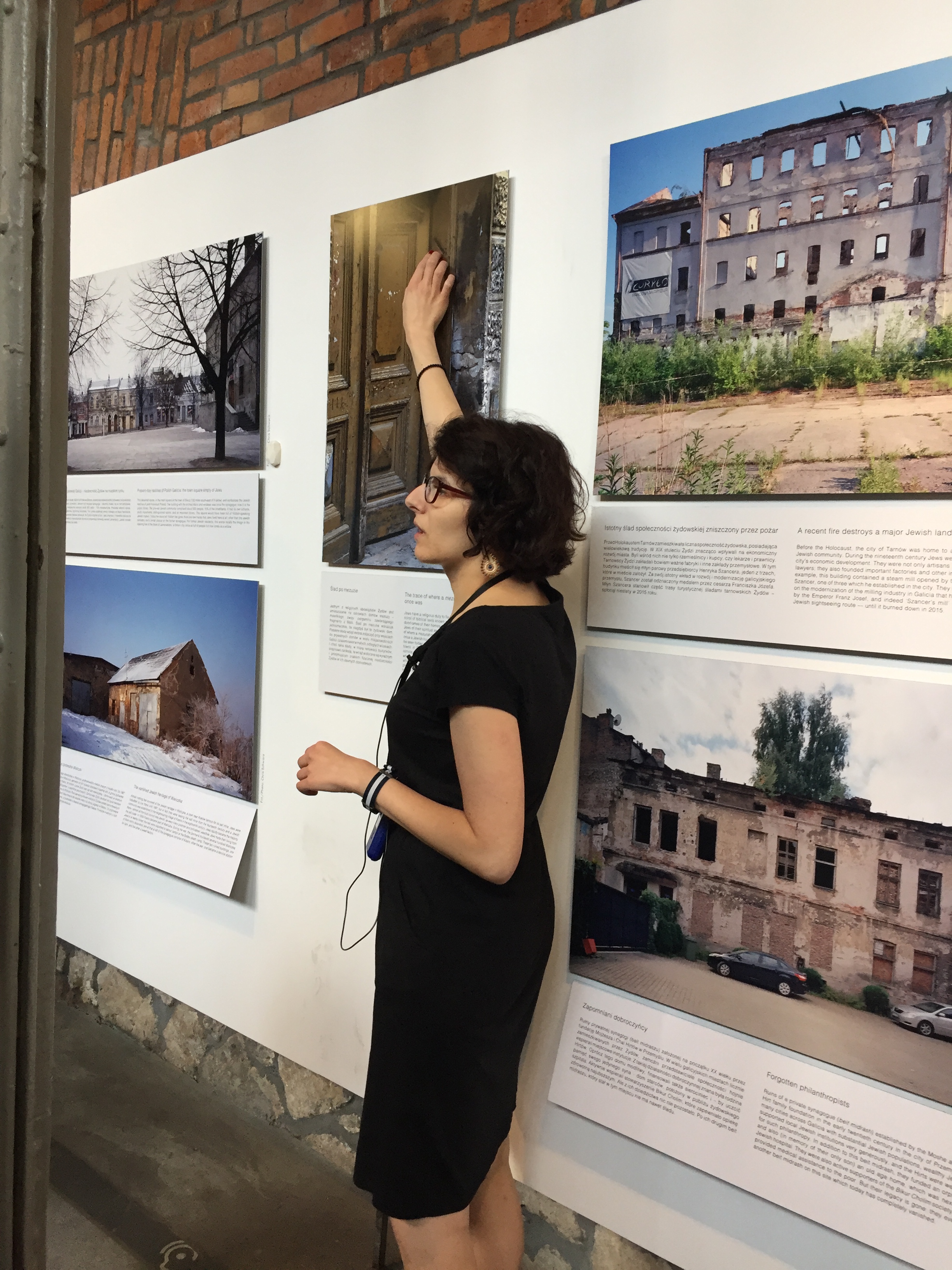
Larissa shows us the space where a mezuzah once was
Photograph: Simon Holloway
The Copse of Trees Where a Synagogue Once Stood
Photograph: Simon Holloway
We listen, as Larissa explains the complex nature of memorialisation in Poland
Photograph: Simon Holloway
Side by Side: The Pole who sought to save a Jew, and the Jew he sought to save
Photograph: Simon Holloway
And in the following image: a barn in which unspeakable things occurred
Photograph: Simon Holloway

As Larissa guides us through these stations, she speaks openly and candidly with us. She resents the use of the phrase, “Righteous among the Nations”, for Poles who risked their lives to save Jews were not “righteous”, just as Poles who handed Jews over to the Germans weren’t “collaborators”. The latter were “perpetrators”, plain and simple, while the first were merely “human”. I appreciate very much her sentiment, which says much as regards her own emotional investment in the subject, but the extent to which I disagree is staggering.

Yes, Polish people who handed Jews over to the Nazis were perpetrators (although, to my mind, the ‘collaborator’ is a species of perpetrator anyway), but that Poles who risked their lives to save Jews were merely human? To this, I cannot consent.

The most human response to tragedies of this nature is to do absolutely nothing. However despicable that fact might be, it remains a fact all the same, and too frequently repeated throughout history to possibly be denied. That somebody might risk their own lives and the lives of their families in order to save other people is an act of heroism that I still cannot wrap my mind around. Were the Ulmas, whose memorial we visited on the drive down from Lublin, merely behaving like regular human beings? I do not think so.

Where I do agree, and powerfully, is with this museum’s emphasis on diplomacy. Professor Webber takes us through the means by which he encouraged the local residents of Brzostek to take ownership over their formerly Jewish cemetery. He printed out brochures, written in Polish, about the history of the cemetery and he went from door to door and made sure that everybody got one. He had installed a gate to the cemetery with a Hebrew inscription from the Book of Job, and he had the cemetery cleaned out and restored, and not at the expense of the local population.

The result? Some sixty-five tombstones that people had in their possession (whether stolen, whether they had been encouraged to steal them, whether discovered or whether gifted to them) were all returned to the grounds of the cemetery by local Polish farmers, and the last time that the professor visited the site he tearfully discovered the inclusion of an additional three.

Today, when Polish students from Brzostek visit the Galicia Museum, they are thrilled to see a photograph of their Jewish cemetery on the wall. Their Jewish cemetery: because that’s the way that people should feel about their town’s heritage, whether they themselves belong to the Jewish community or not.

Professor Jonathan Webber on the restoration of the synagogue in Brzostek
Photograph: Simon Holloway

Perhaps our most emotional moment is when Rony encourages Professor Webber to speak about his role in restoring the synagogue of Oświęcim, which is today a Jewish museum. Quite amazingly, he had heard that this building (which in the 1970s was a carpet warehouse) might be a synagogue, but in Communist Poland such issues were not discussed. When he approached the Polish labourers who were carrying the carpets, he instead told them that he had heard this building had once been an Armenia Church, and they told him that indeed it was.

“How do you know?”, he asked them, to which they replied that there is Armenian writing.

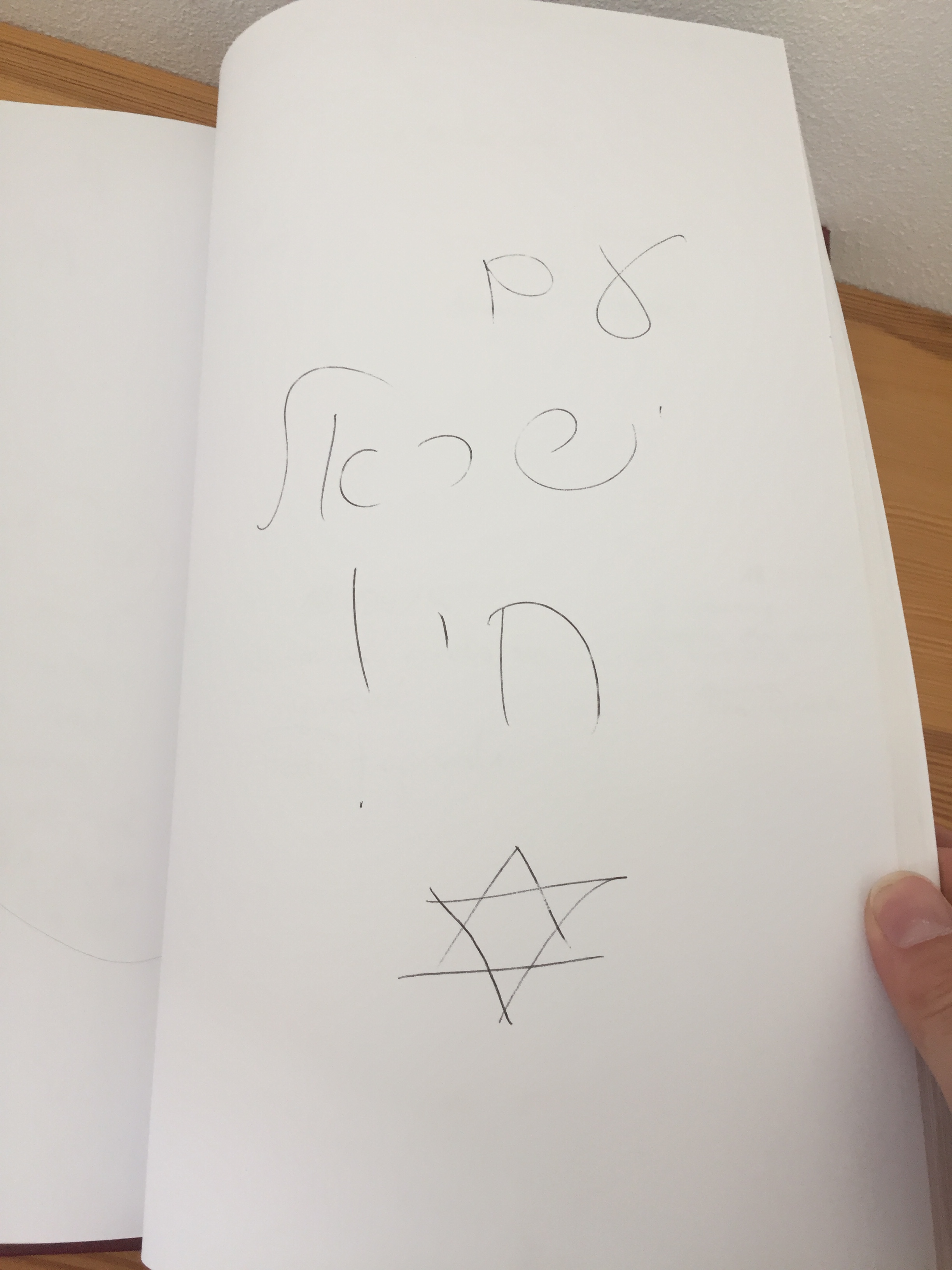
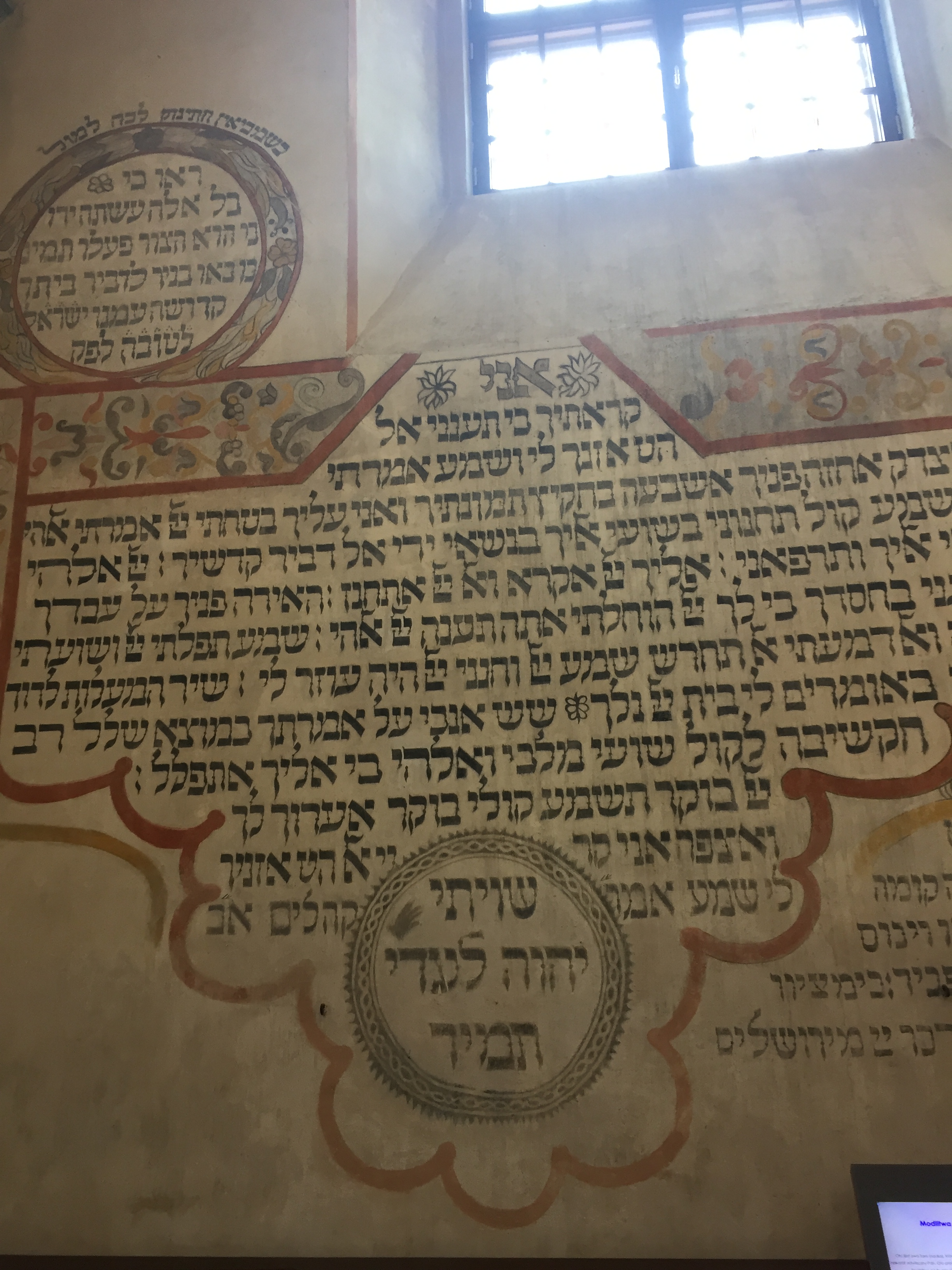
For the cost of $5 (which in those days bought three bottles of vodka), Professor Webber had these men remove the carpets that were against a wall while he waited outside. Going back in, he saw what they had supposed to be Armenian writing: the Hebrew phrase, שויתי יי לנגדי תמיד (“I have set God before me always”, Psalms 16:8).

Quite amazingly, when the synagogue was restored and refurbished (at the expense of a New York-based Jewish institution), the crown prince of Jordan came to the official opening ceremony to express his solidarity and to offer up a prayer. Such careful diplomacy, while taxing and slow, is clearly the most important way of going about restorative work of this nature, and one shudders to think of the heavy-handed way that some Jewish institutions have sought to enforce the process of memorialisation.

Professor Jonathan Webber, on the restoration of the synagogue in Oświęcim
Photograph: Simon Holloway

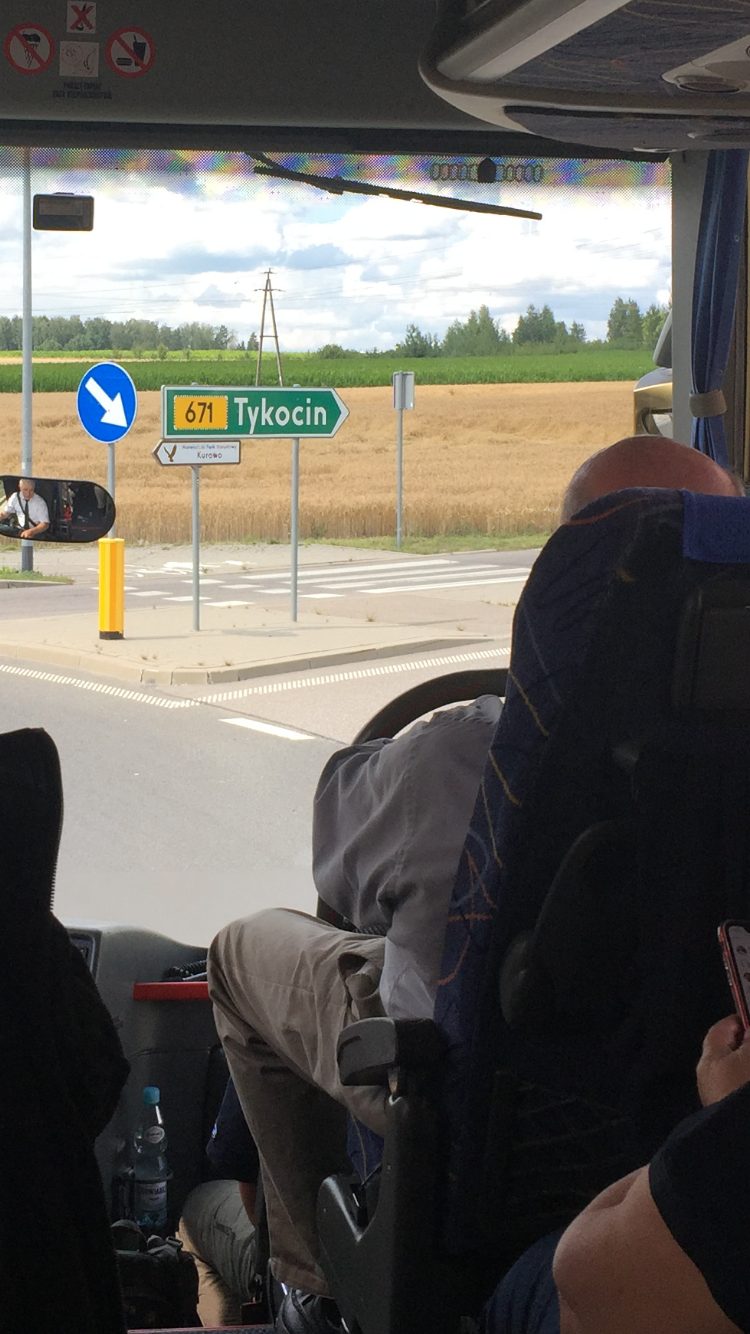
At this point, I cannot help but think how much the synagogue at Tykocin might be improved if their local residents were more gently encouraged to take pride in their town’s Jewish history (rather than merely using it as a source of revenue), and how many other former synagogues and cemeteries might become healthy places of pilgrimage as a result.

I am very thankful for the opportunity to have met Professor Webber and to have heard from Larissa, whose passion and enthusiasm for the subject was contagious. I think that I am beginning to appreciate the powerful way in which many Polish people earnestly want to connect to their country’s Jewish history, and am excited for the prospect of a renewed Jewish life in this part of Europe.

All told, this has been a spectacular way to bring our tour to its conclusion, for while each one of us came here to explore the past, we are all of us now thinking about the future.

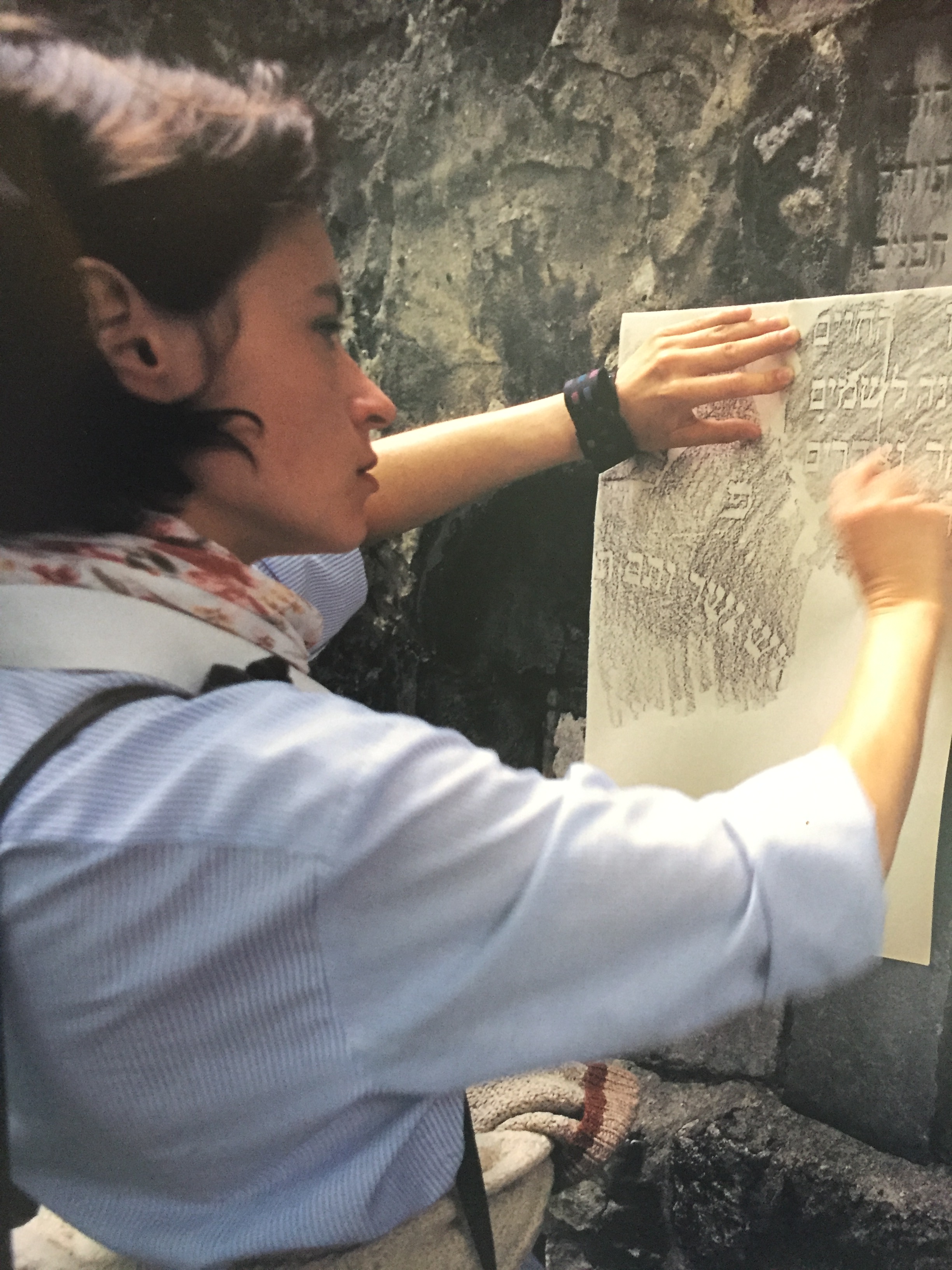
Rubbing Off? This photo was taken during a week-long festival of Jewish life in Krakow, at which thousands of young Poles explore the Jewish past in Poland
Photograph from exhibit

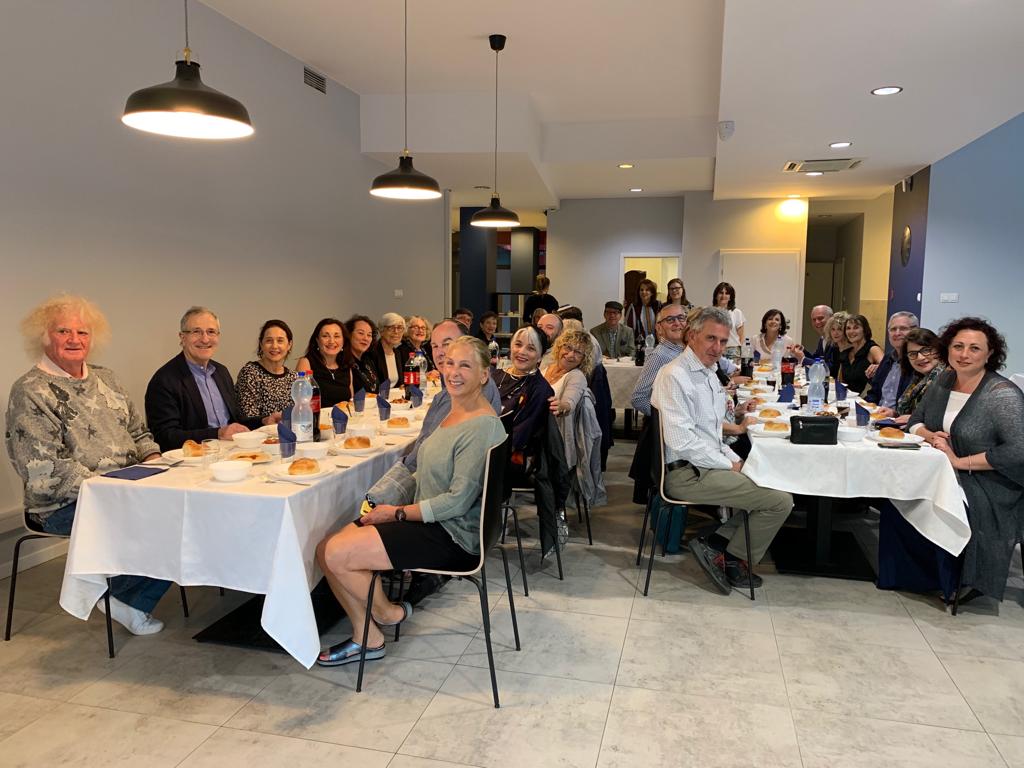
On Friday evening, and just before heading out for our last dinner together, we had a reflections session at which everybody shared their thoughts and their feelings about the tour. It was so lovely to hear from everybody, and so interesting to see those points of commonality in each person’s experience.

So many participants noted what I think we are all feeling: that with increased exposure to this information there is so much less that we understand, and the more questions that are answered the more new questions that are generated. This trip has been at times emotional and at others liberating; at some points traumatic, but at others cathartic. I look forward very much to being in touch with all of you once we get back to Sydney, and am so pleased that people got as much out of this tour as they did.


If I might be permitted a brief post-script, this Sunday will be the 17th of Tammuz. This is the day on which Jews traditionally remember the commencement of Nebuchadnezzar’s siege of the city of Jerusalem. This siege, we are told, lasted a total of three weeks. For three weeks, the occupants of the city fought for their lives, knowing that defeat was inevitable. During those three weeks of each year, we remember their struggle and we seek to empathise with their distress.

The culmination of these three weeks is the 9th day of the month of Av. A full-day fast, from sundown on the 8th to sundown on the 9th, it is an opportunity to do that which we usually avoid: to wallow in inexpressible grief. To explore it by experiencing it, and to mourn for the destruction of the temple – both at the hands of the Babylonians, and some six hundred years later at the hands of the Romans.

Traditional rabbinic thought has it that all of the catastrophes of Jewish history have been a product of the exile that was initiated by this seminal act of destruction. Today, living in the wake of what (in Yiddish) is sometimes termed “the third destruction” (דער דריטע חורבן), we appreciate that with which those earliest generations dealt.

Desirous to ensure that their children would keep alive a knowledge of all that had been lost, they instituted days of fasting and remembrance. As time passes, so the connection to the earlier pre-destruction Judaism becomes less and less tangible, and all that remains is the forced grief that we seek to arouse in ourselves on specific dates, year after year after year.

For us, the wounds created by the Holocaust are still fresh and at the slightest prodding, still do bleed. We live today in that generation in which we need to find ways of maintaining a connection, for our children and for future generations, to the Europe that is no more. As we approach the three weeks leading to the 9th of Av, I wish everybody a meaningful time of grief, and a meaningful catharsis. I say this both to those of our participants who identify with Judaism and to those of our participants who do not.

As was pointed out on Friday evening, no one people holds a monopoly on suffering, nor does one need to belong to a persecuted minority to understand and to share in their pain. I appreciate the tremendous honesty of our participants in sharing with us that anguish, and look forward to sharing with you also in the healing.

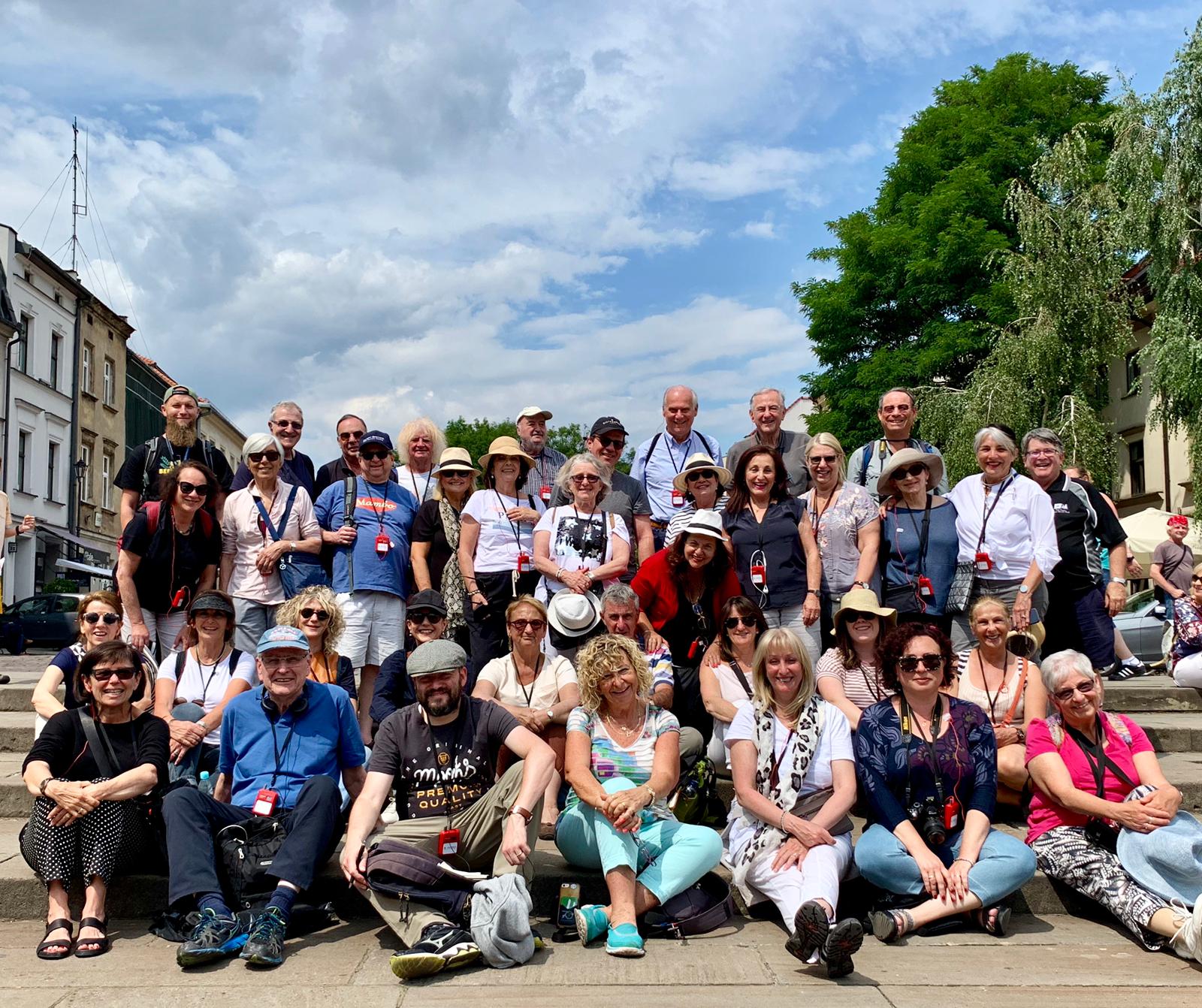
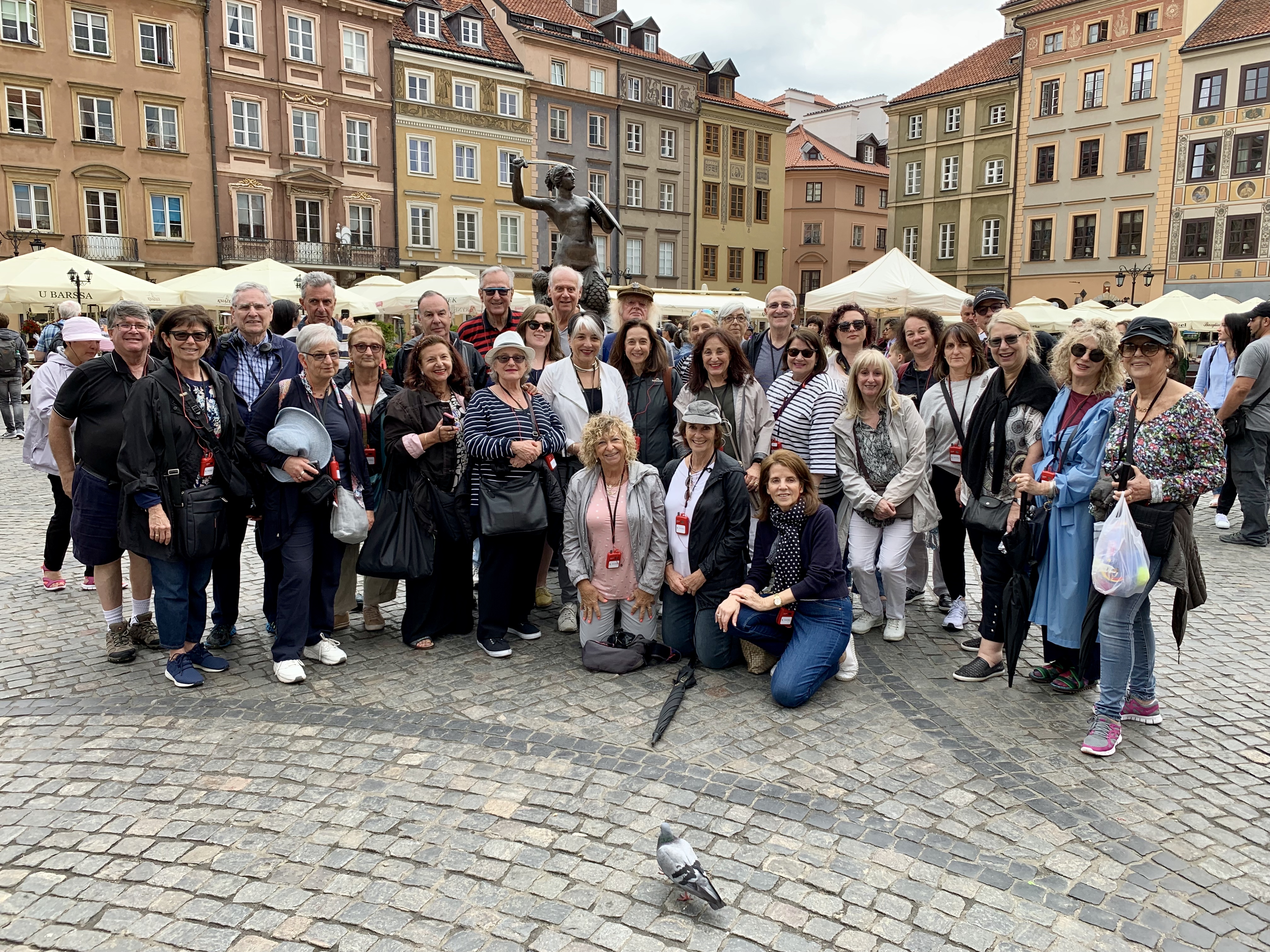
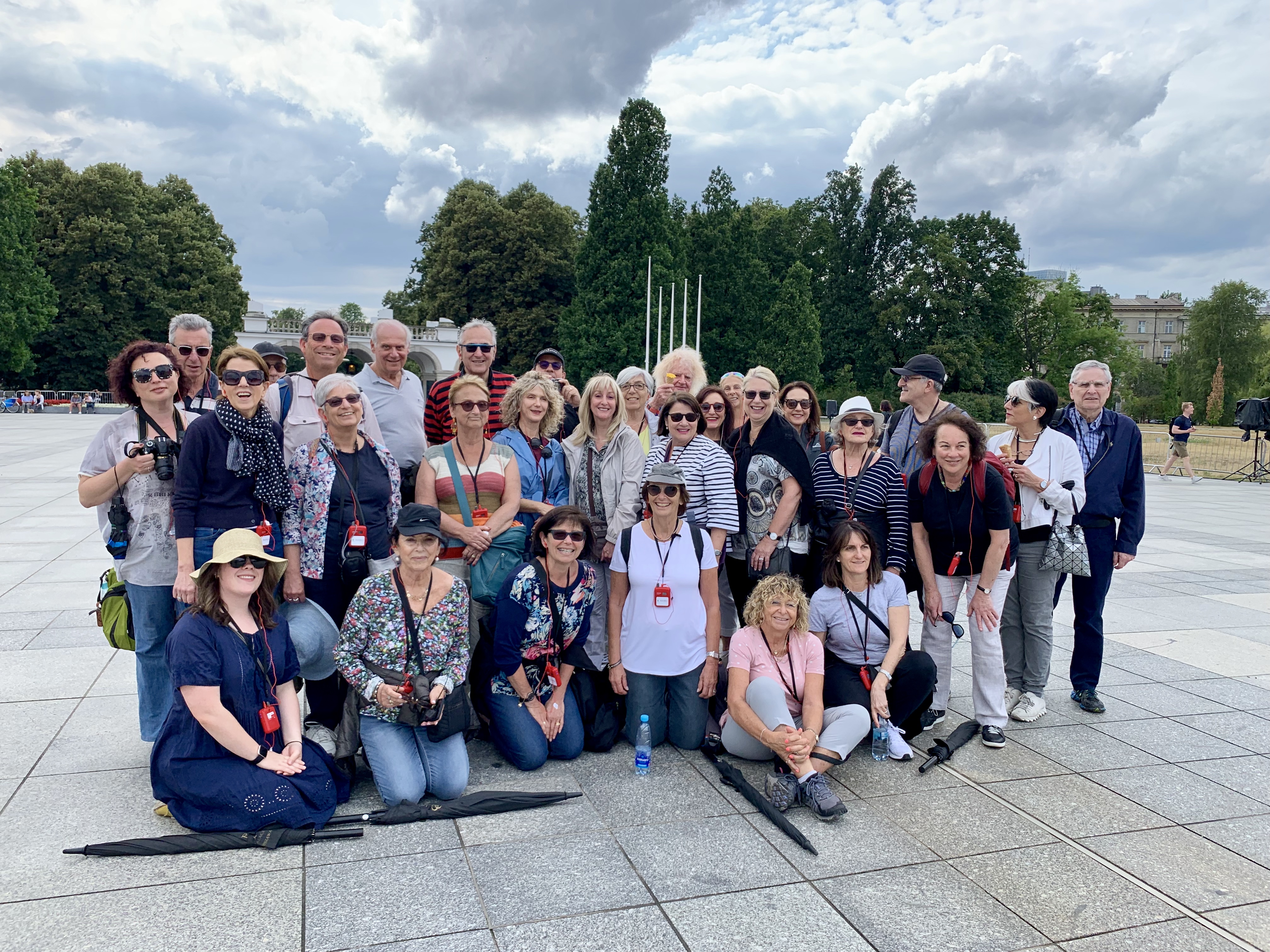
Here’s to maintaining a connection with the past and with one another: survivors of the 2019 Sydney Jewish Museum tour of Berlin and Poland.

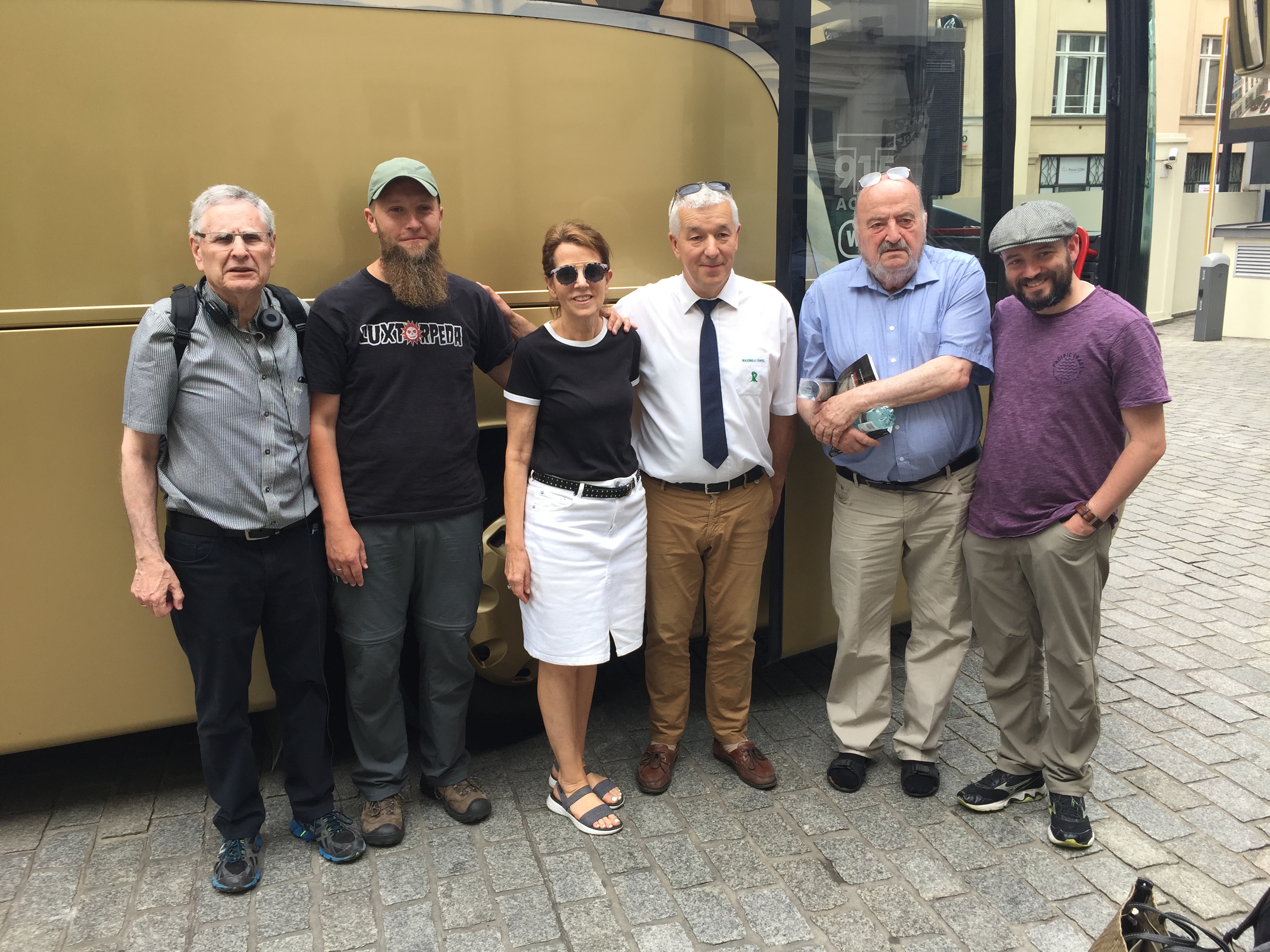
The 2019 Sydney Jewish Museum Berlin-Poland Team
Norman, Filip, Rony, Czes, Konrad and Simon

July 18: A City Unconquered

It is strange. Tonight will be our third night in the city of Krakow, but today was the first time that we really got to explore it. I must say: I regret that there is so little time left to continue doing so.

Krakow is an old city, and its architecture highly reminiscent of pre-war video footage that I have seen. The reason for that became powerfully clear this morning when Fil told us that the Nazis never fought within this city: neither against the Polish army at the beginning of the war, nor (curiously) against the Soviet army at the end.

In both instances, defeat was assured. The Poles, not wanting to have the city that was certainly going to fall into German hands destroyed, removed their army from its environs and cabled to the Germans that the city was theirs to take. At the war’s end, knowing that there was no way to hold off the Soviets any longer, the Germans merely contented themselves with burning the bridges and retreating, allowing the Soviets to walk in without a fight.

As a result, this beautiful and incredibly ornate city is much as it was before the war broke out, and its being heritage listed means that it’s likely to stay this way for some time.

The Jewish roots of Krakow are interesting. The city is first mentioned in the year 966, by a Jewish merchant named Ibrahim ibn Yaqub, who holds the curious distinction of also being the first person in history to ever mention, in writing, the city of Prague. At this time, Krakow was only a small city, and did not yet have a Jewish community.

Casimir the Great, who reigned over Poland in the 14th century, is tied (at least in the popular imagination) to the country’s rise in status. As an old expression goes, Casimir found Poland made of wood, but left it made of stone. This hey-day of Polish civilization lasted roughly from the 14th to the beginning of the 17th century, during which time it went from being the Kingdom of Poland to being part of the Polish-Lithuanian Commonwealth, and the largest country in continental Europe.

Today, Krakow is the second largest city in Poland with a population of roughly 800,000. Since it was voted the European capital of culture in 2000, tourism has increased dramatically and it is now the third-most visited city in Europe, after Prague and Budapest. Some 13,000,000 people alone visited Krakow last year, making the permanent population truly pale in comparison to the transient population.

So far as that permanent population is concerned, we are told that some 20% of them are students, which allows for the tremendously liberal character of this city. 45,000 of those students study at Jagiellonian University, which is the oldest university in Poland, while over 100,000 study at a variety of other institutions of learning. And while my head was still spinning from statistics, Fil hit me with another: before the war, when Krakow’s population was only a quarter of a million, Jews made up a very visible 28% of the whole.

All of this is to say that local Poles, residing in Krakow, are very interested in their Jewish past, very interested in exploring their own personal connection to that Jewish past, and very keen on finding ways to adequately keep alive the memory of those people who are no more.

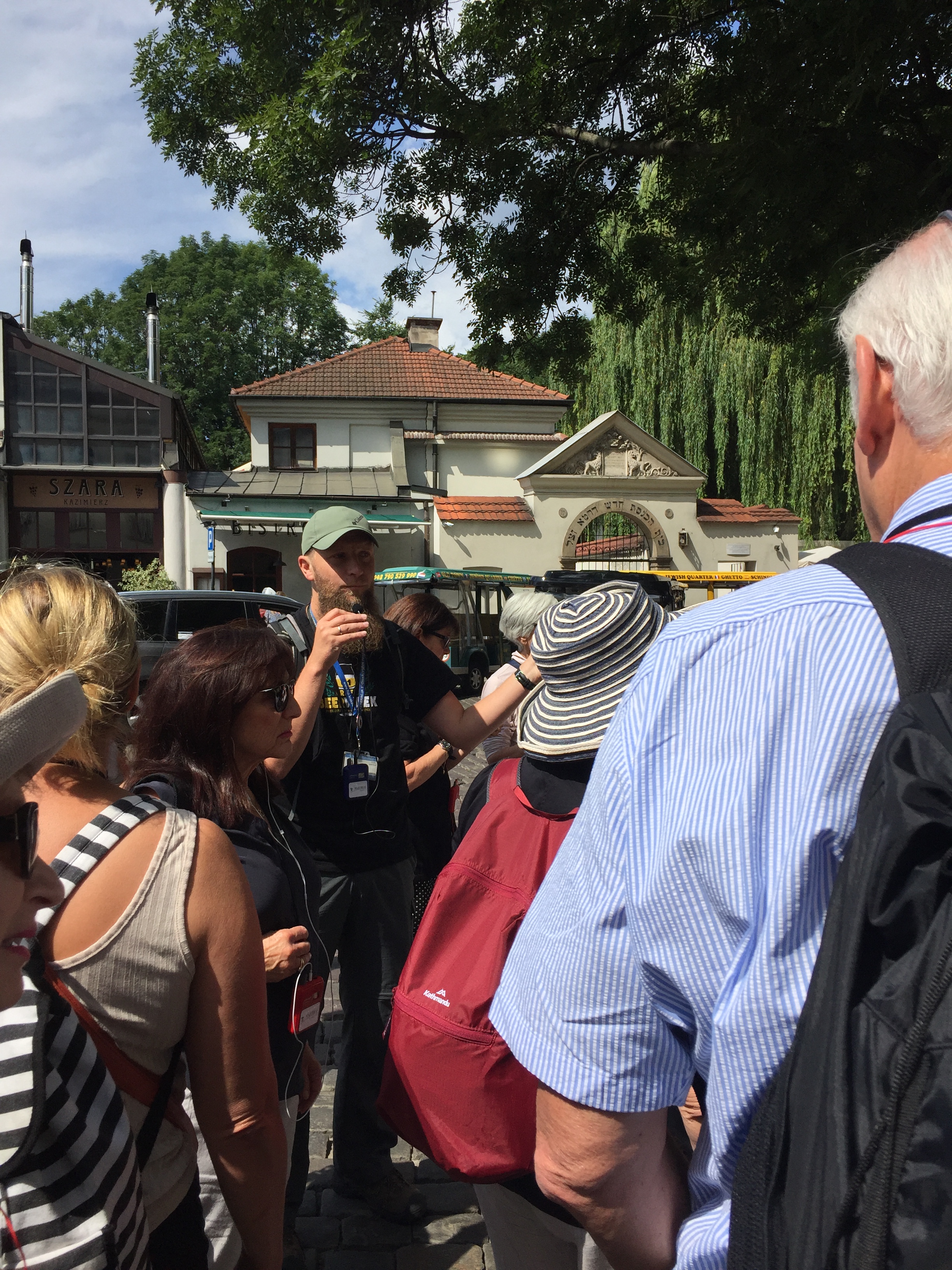
Those people, ever since the 15th century, had been living on an island just outside of Krakow, surrounded by the Vistula, but which is today a part of the city. Named for Casimir the Great, Kuzmir (Kazimierz in Polish) was thought of by many as a piece of the Middle East. Here, Jews would dress in their traditional clothing, would speak Yiddish as their primary language, and were free to pursue their own business and study.

Fil, on Kuzmir as a Jewish centre. Note the Rema Synagogue in the background
Photograph: Simon Holloway
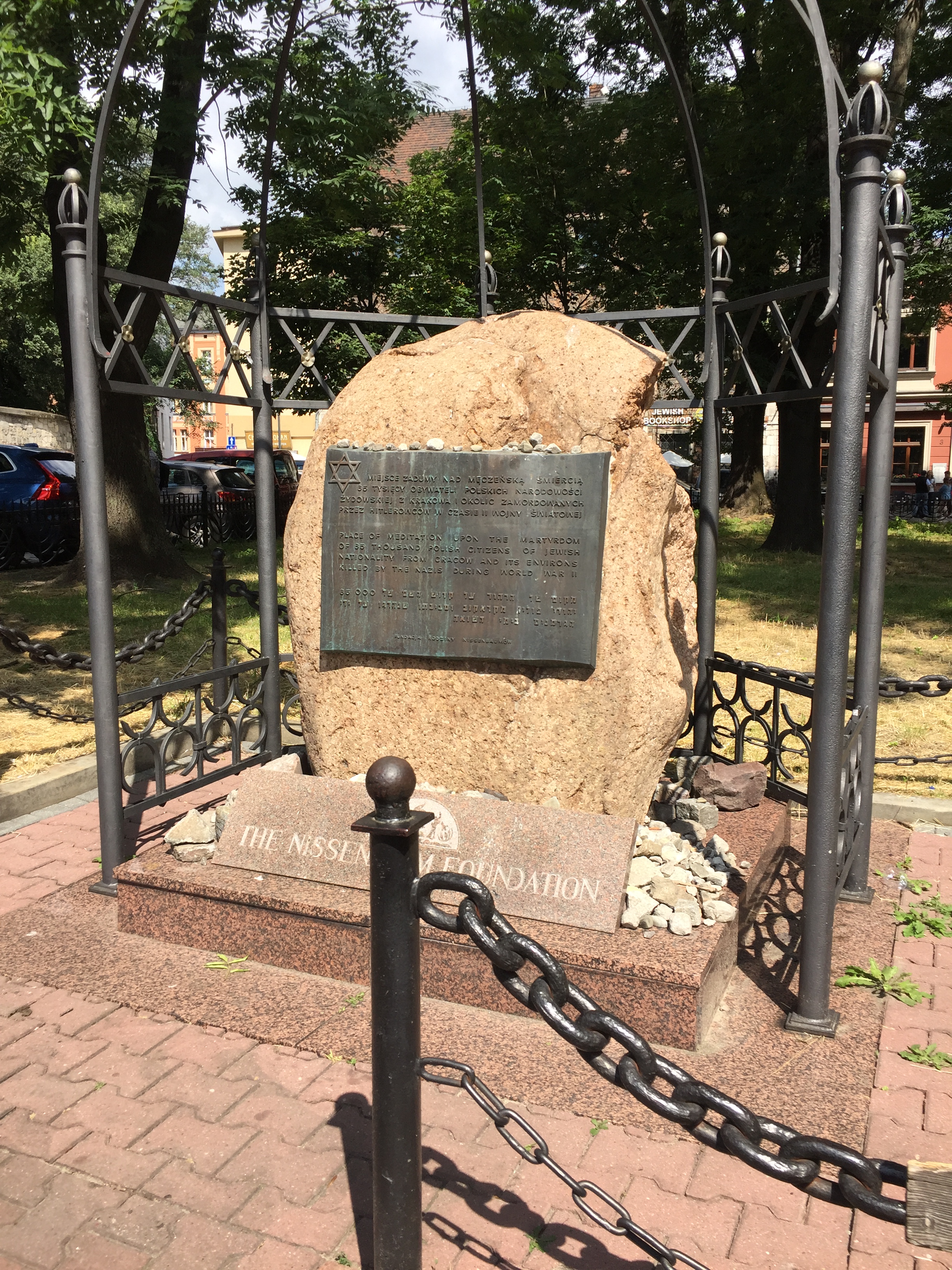
A memorial to the murdered Jews of Krakow. Memorials are ubiquitous here
Photograph: Simon Holloway
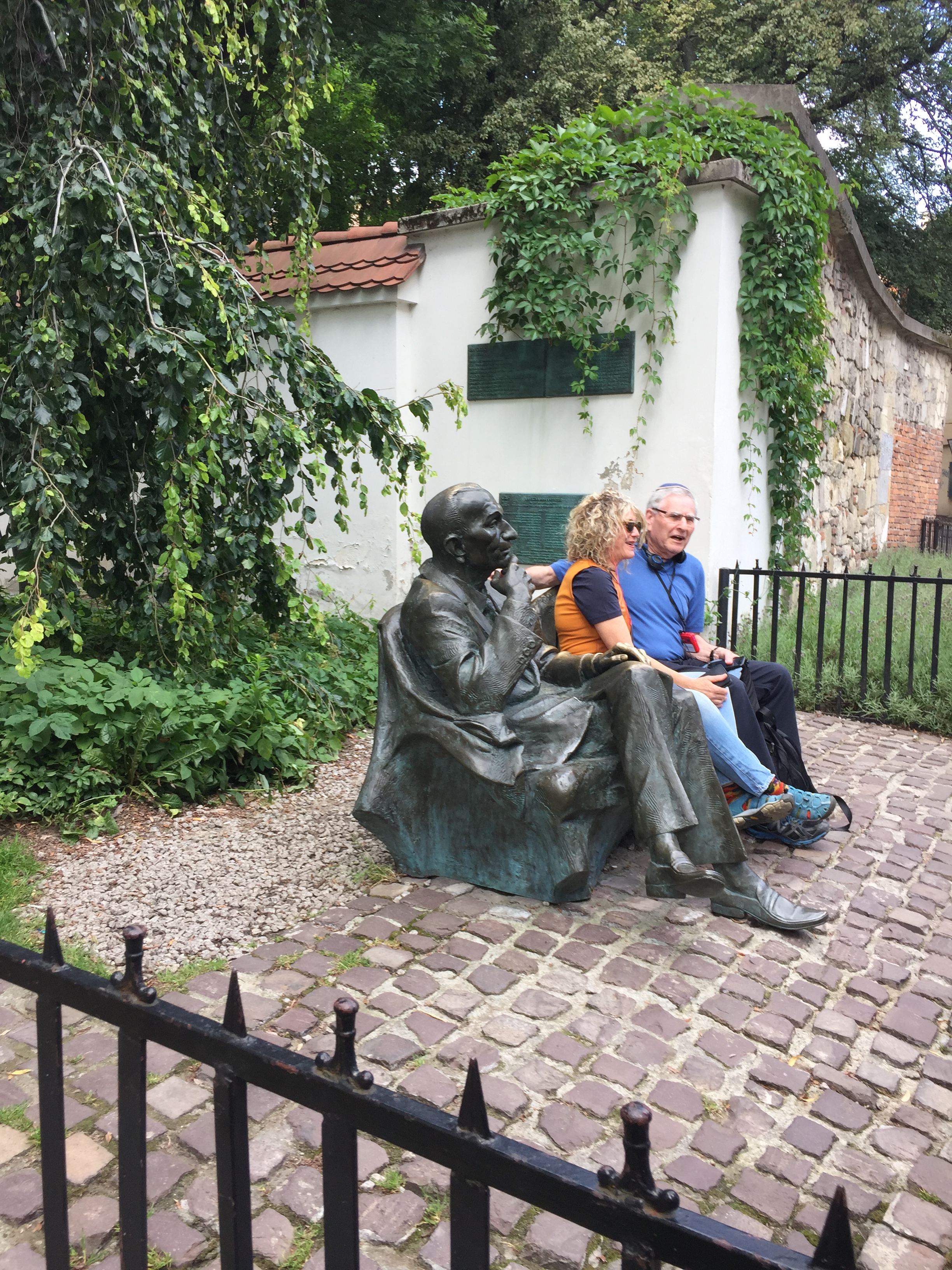
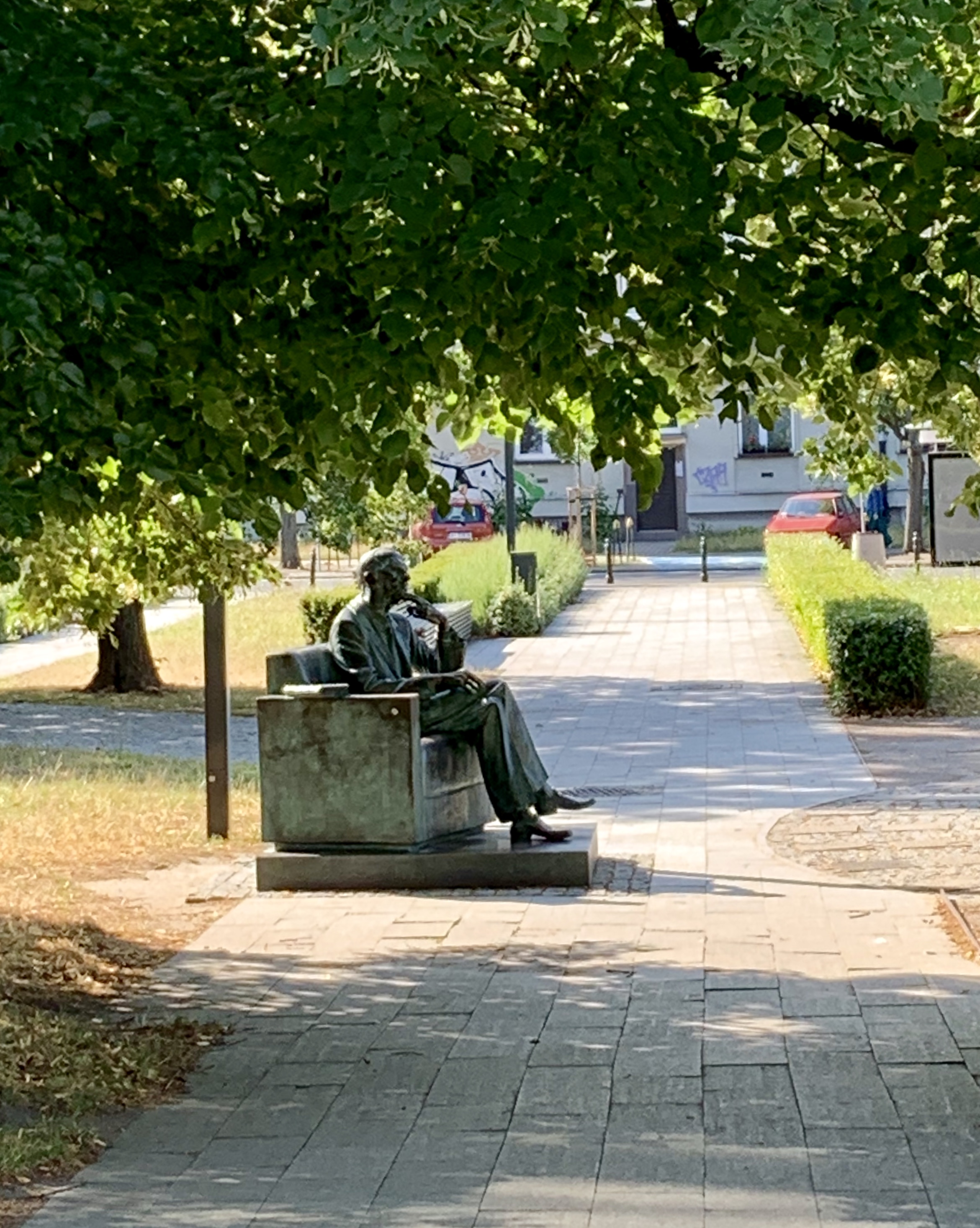
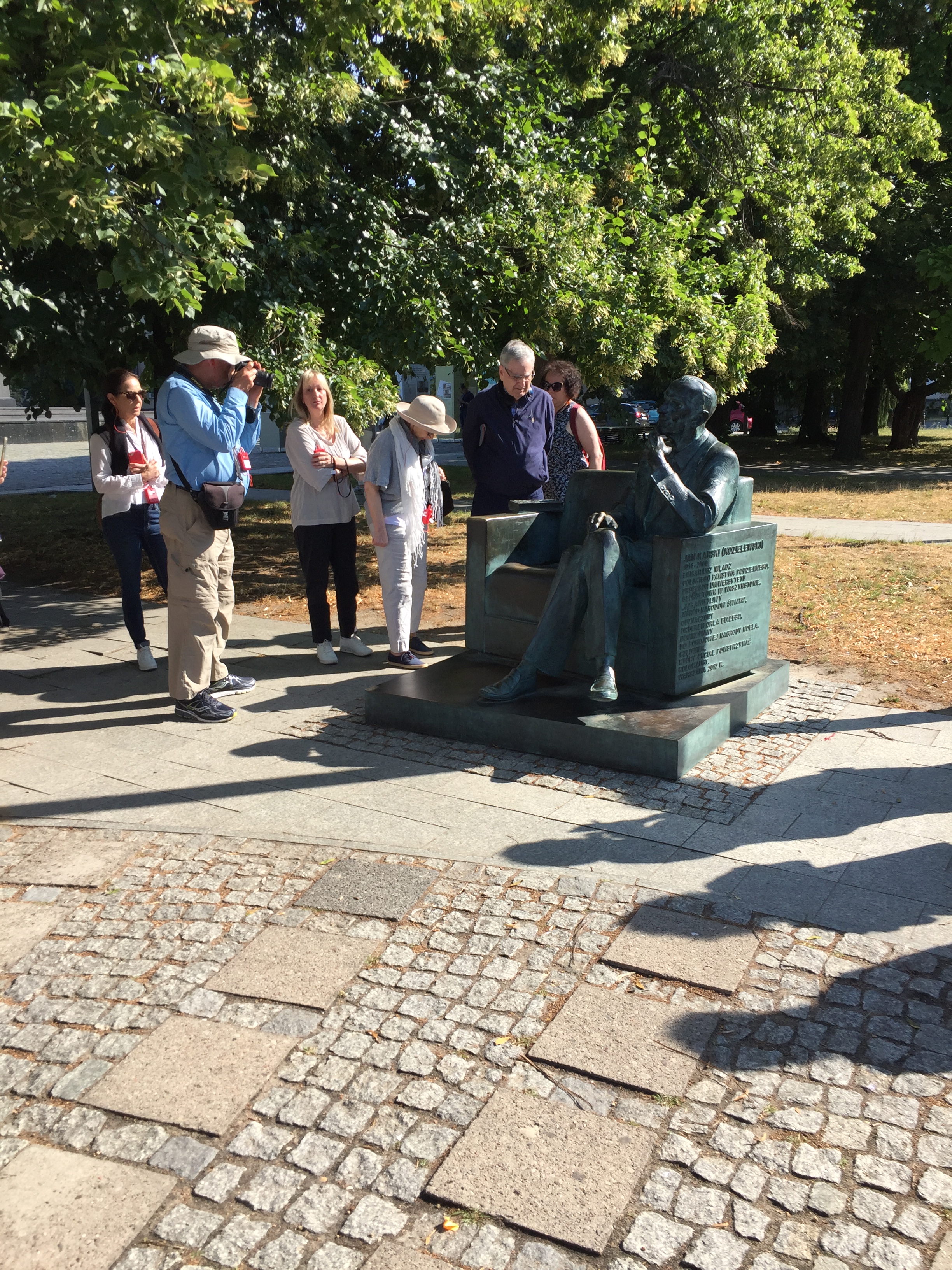
A Meeting with Karski in Kuzmir…
Photograph: Simon Holloway
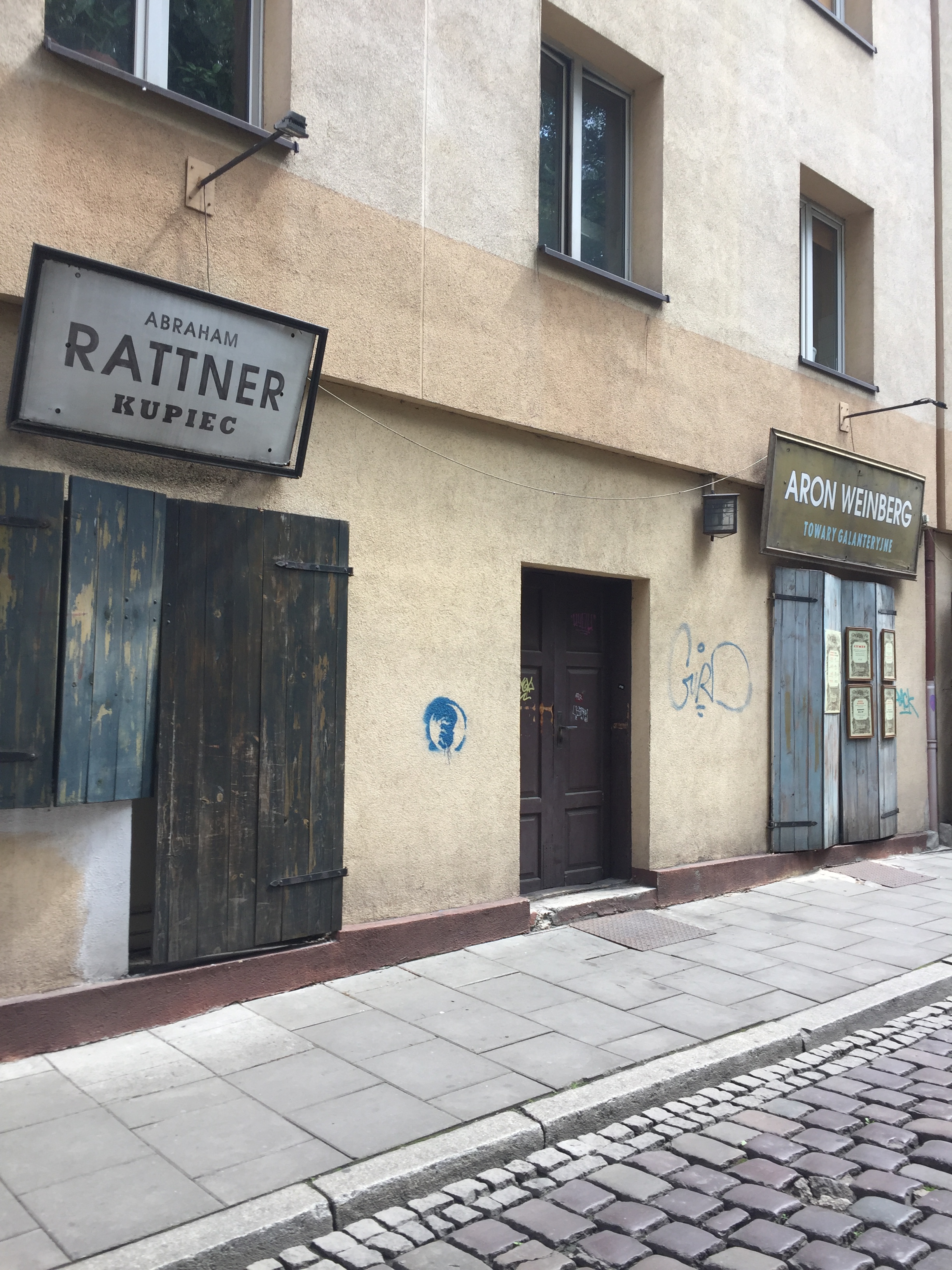
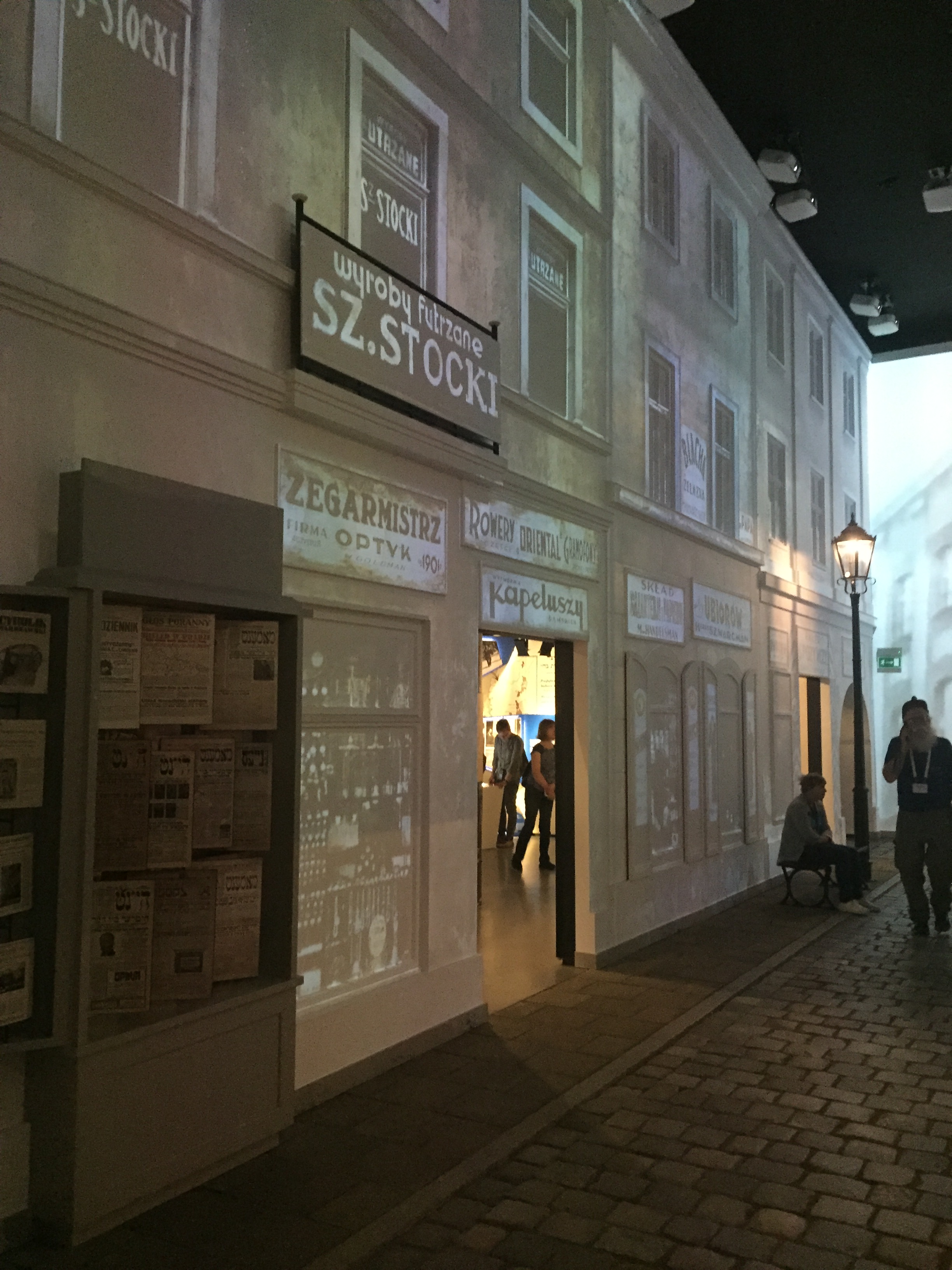
Old signs, advertising shops that no longer exist, run by people no longer alive
Photograph: Simon Holloway
A popular sports team (“Wita”) is known as “the Jewish team”. Why? Because they’re based in Kazimierz
Photograph: Simon Holloway
Let’s play a game of Spot the Verb
Photograph: Simon Holloway

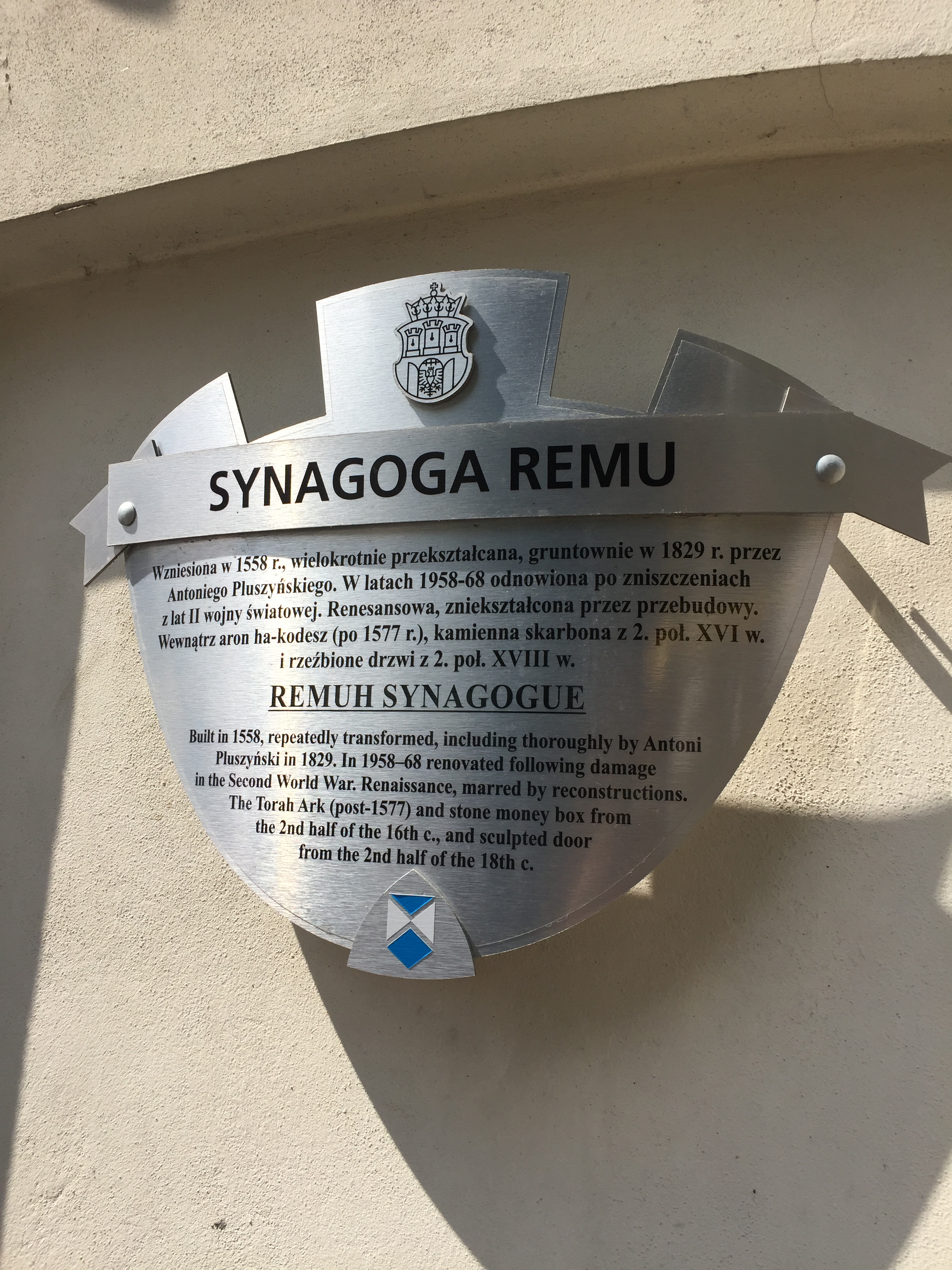
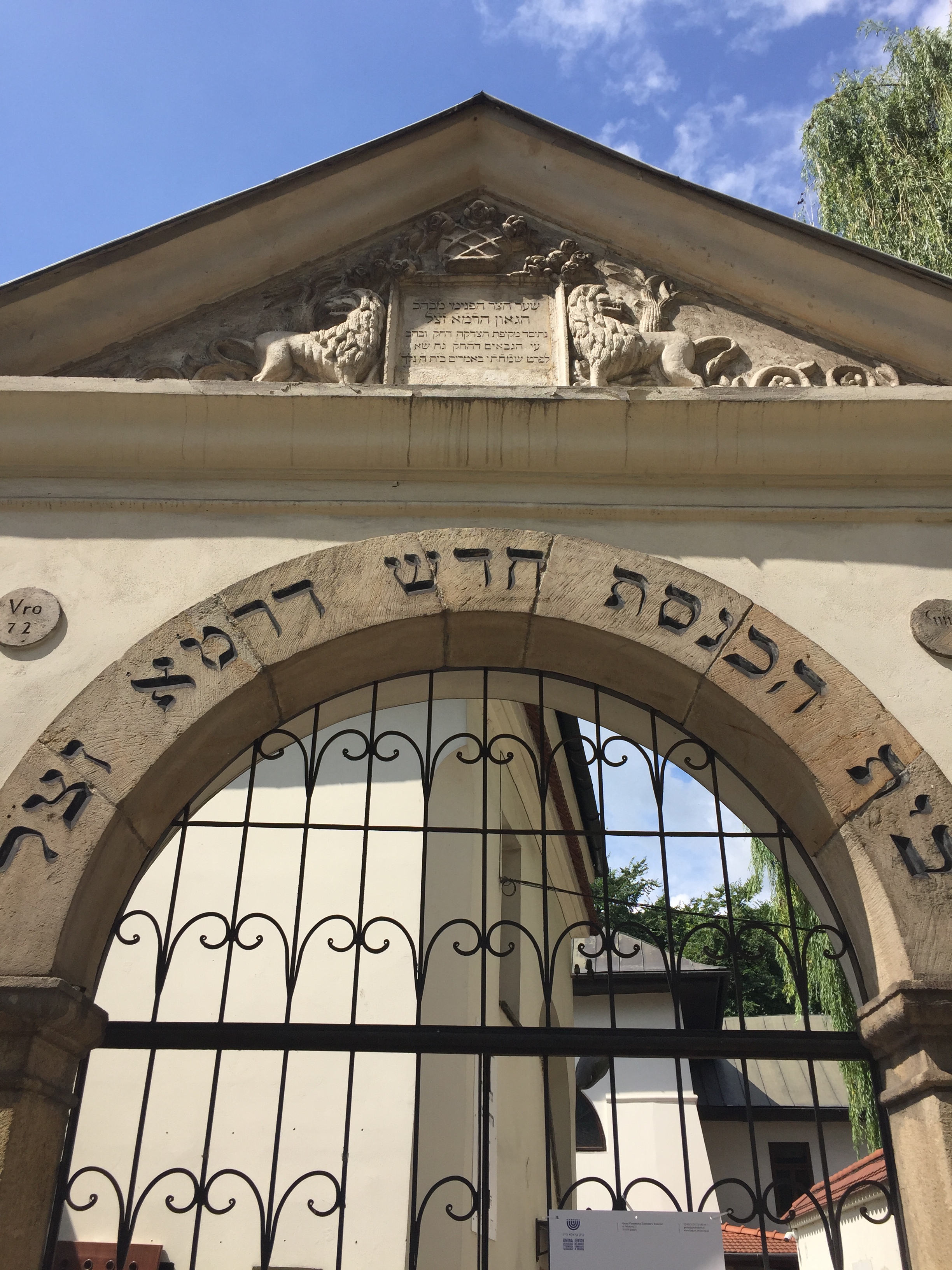
The flowering of religious Jewish life in Krakow is often tied to the person of the Rema: Rabbi Moshe Isserles. A Polish scholar of the 17th century, his annotations on Rabbi Yosef Caro’s Shulchan Arukh allowed for this multi-volume corpus of halakhic literature to be relevant to Jews in Ashkenazi lands. His synagogue, and the one that abuts the cemetery in which he is himself buried, is the first place that we visited this morning.

A plaque adorns the front of the synagogue
Photograph: Simon Holloway
The Gateway to the Shul
Photograph: Simon Holloway

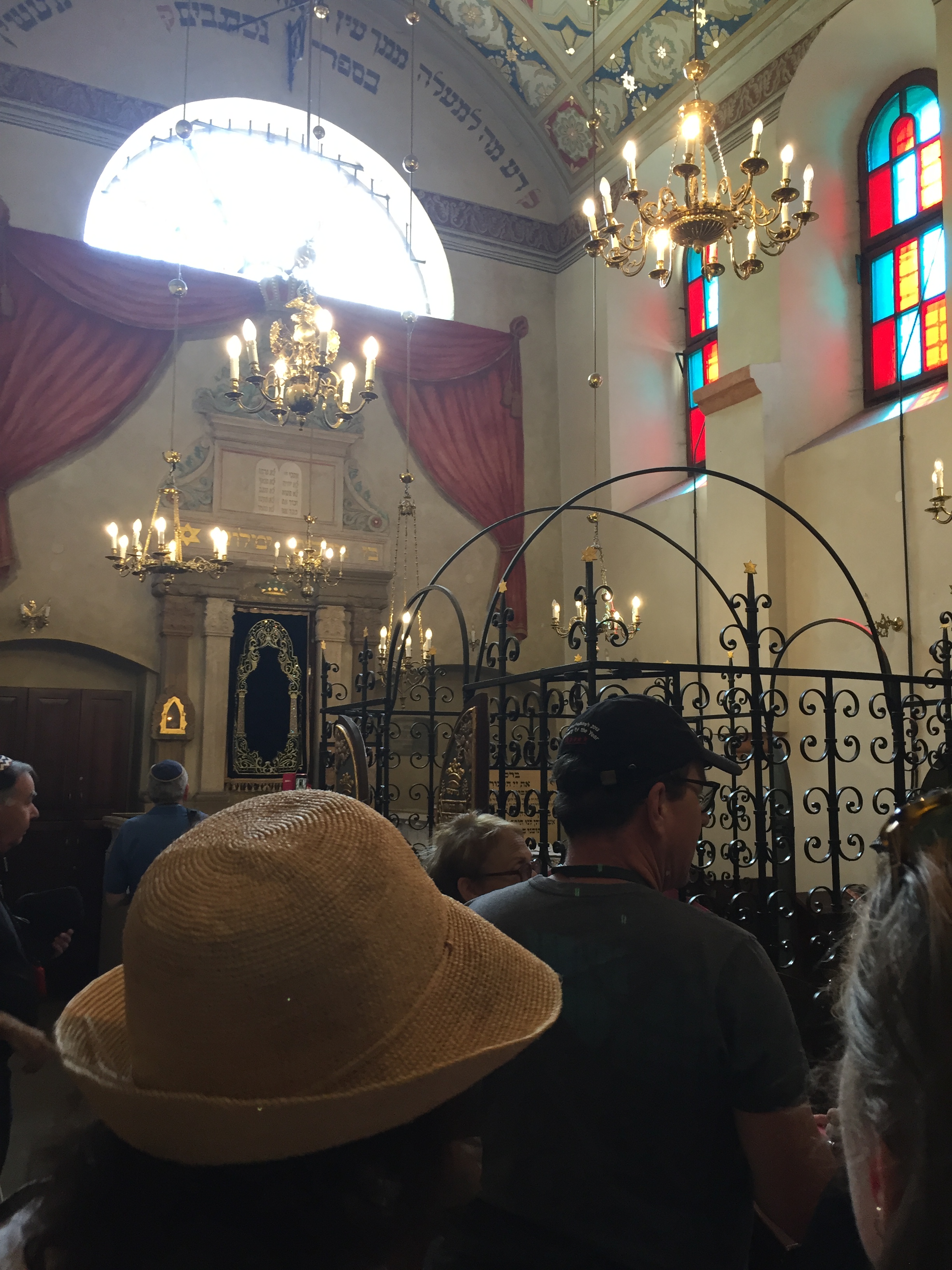
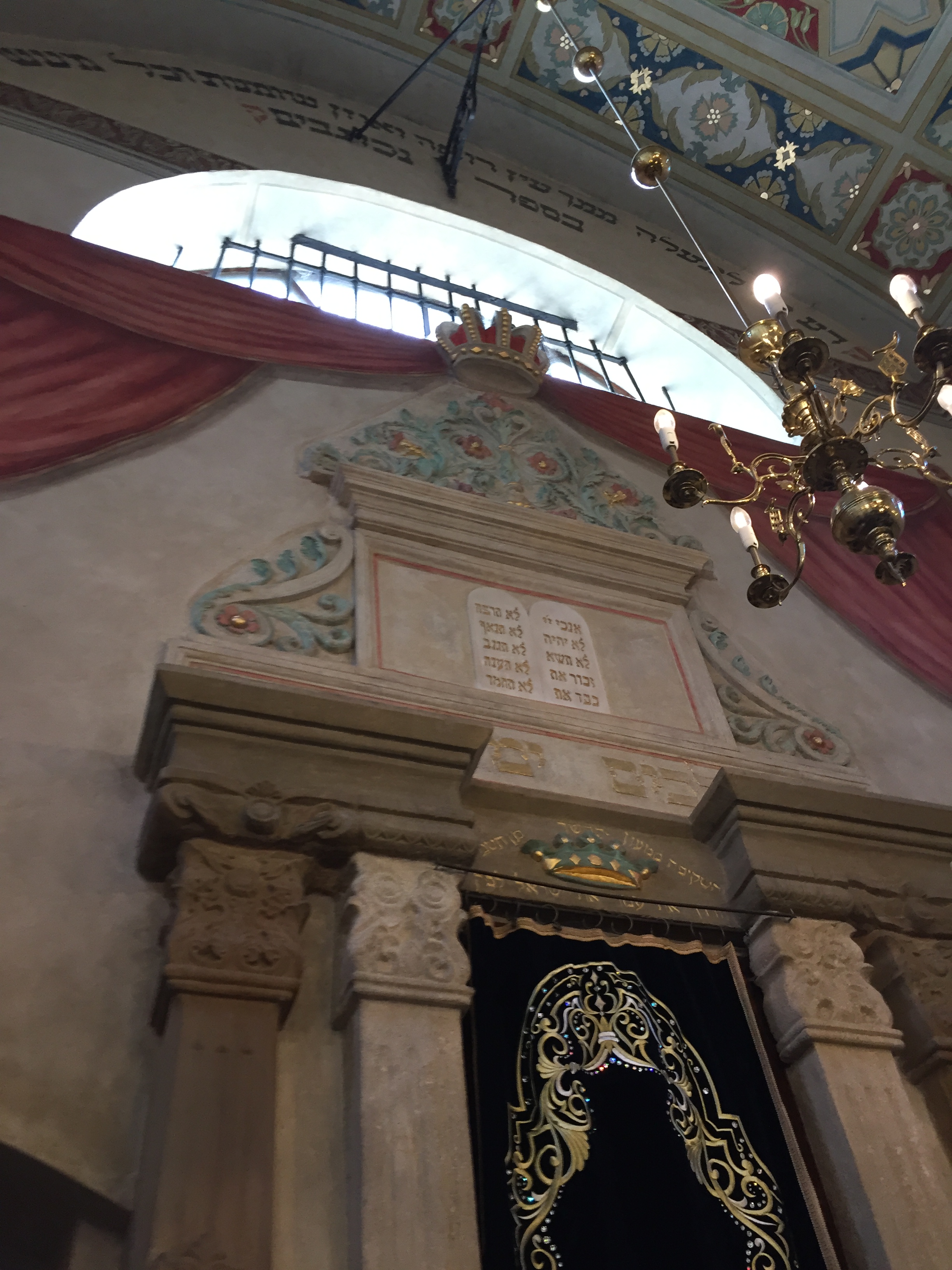
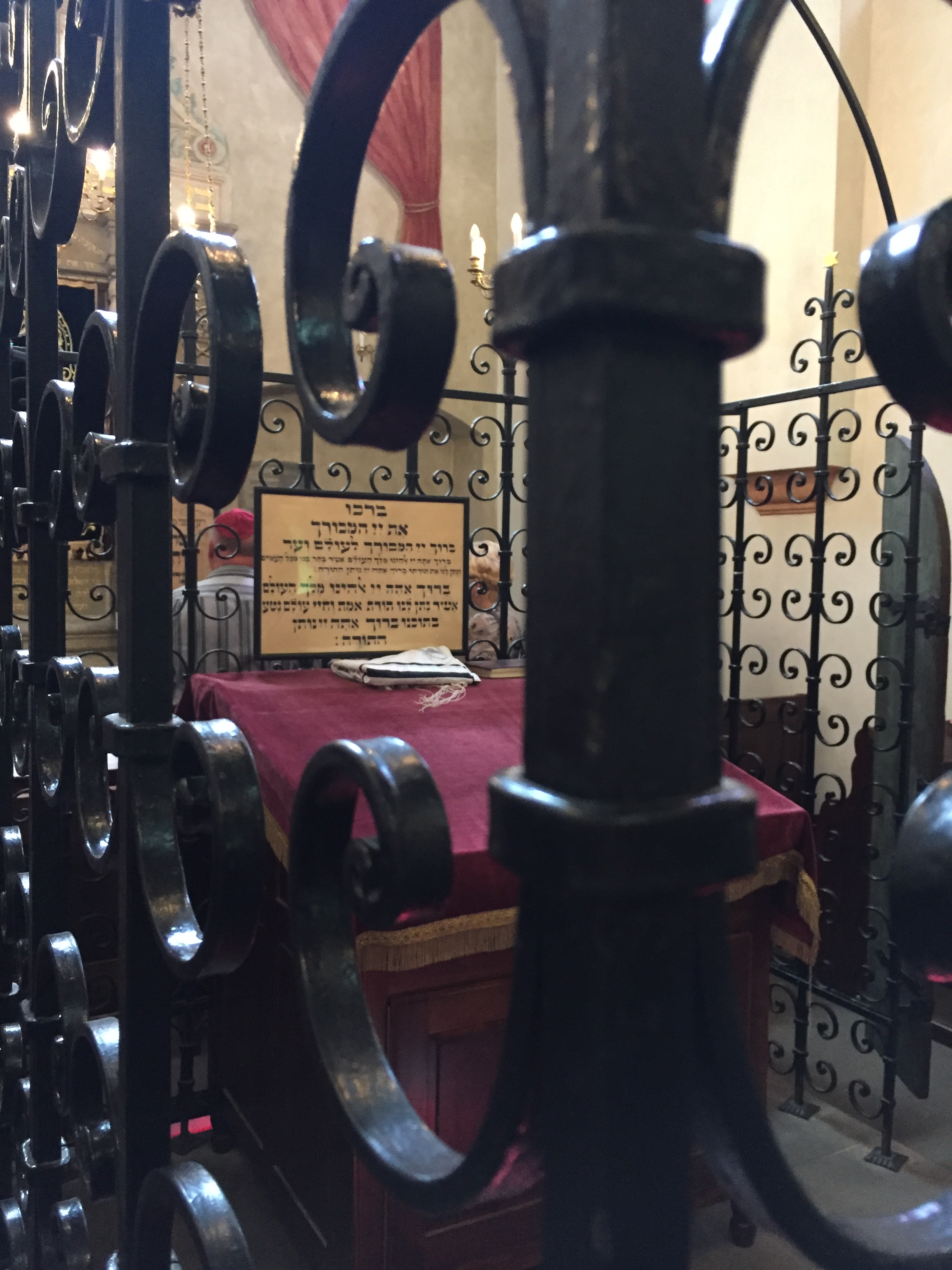
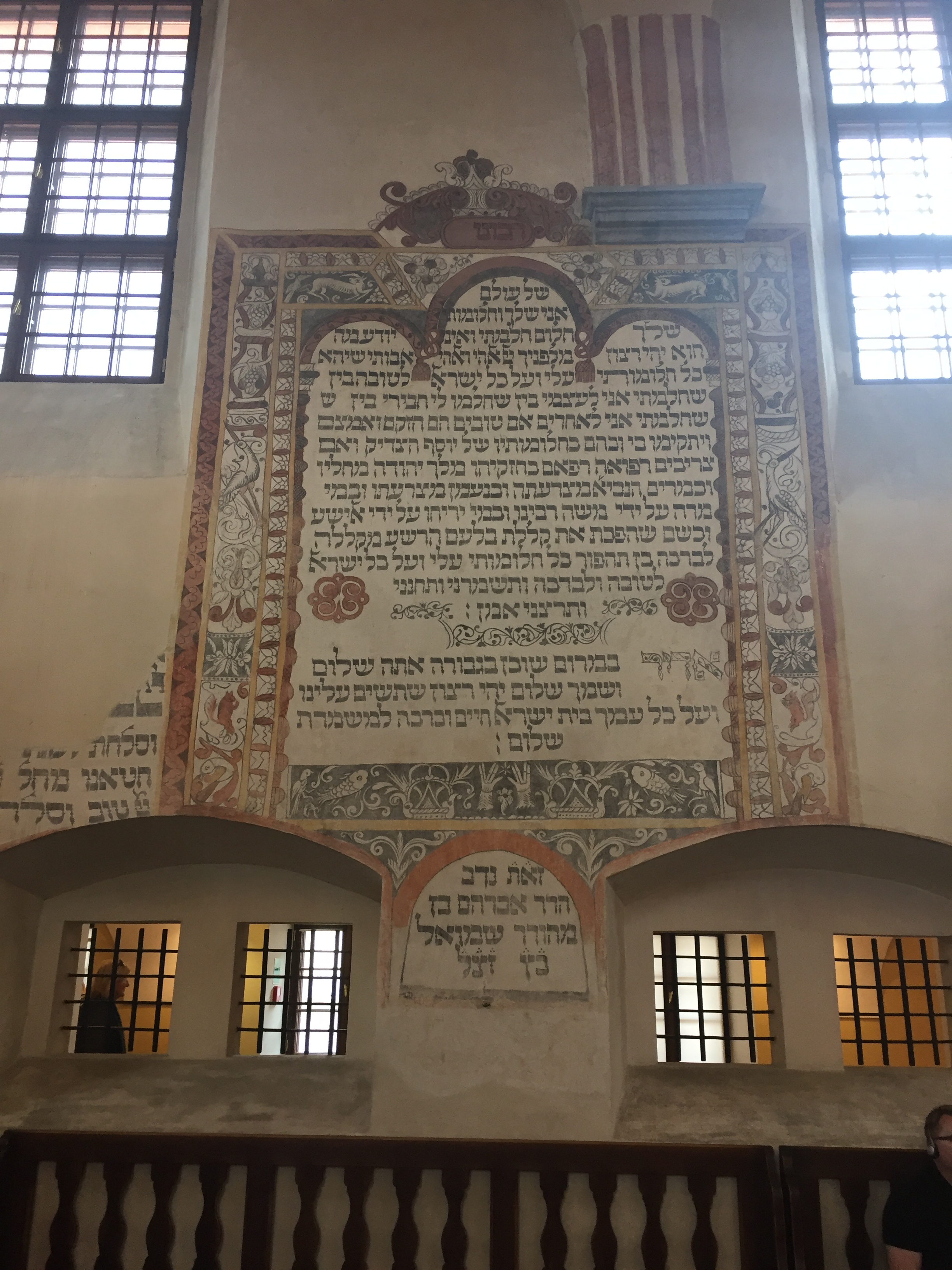
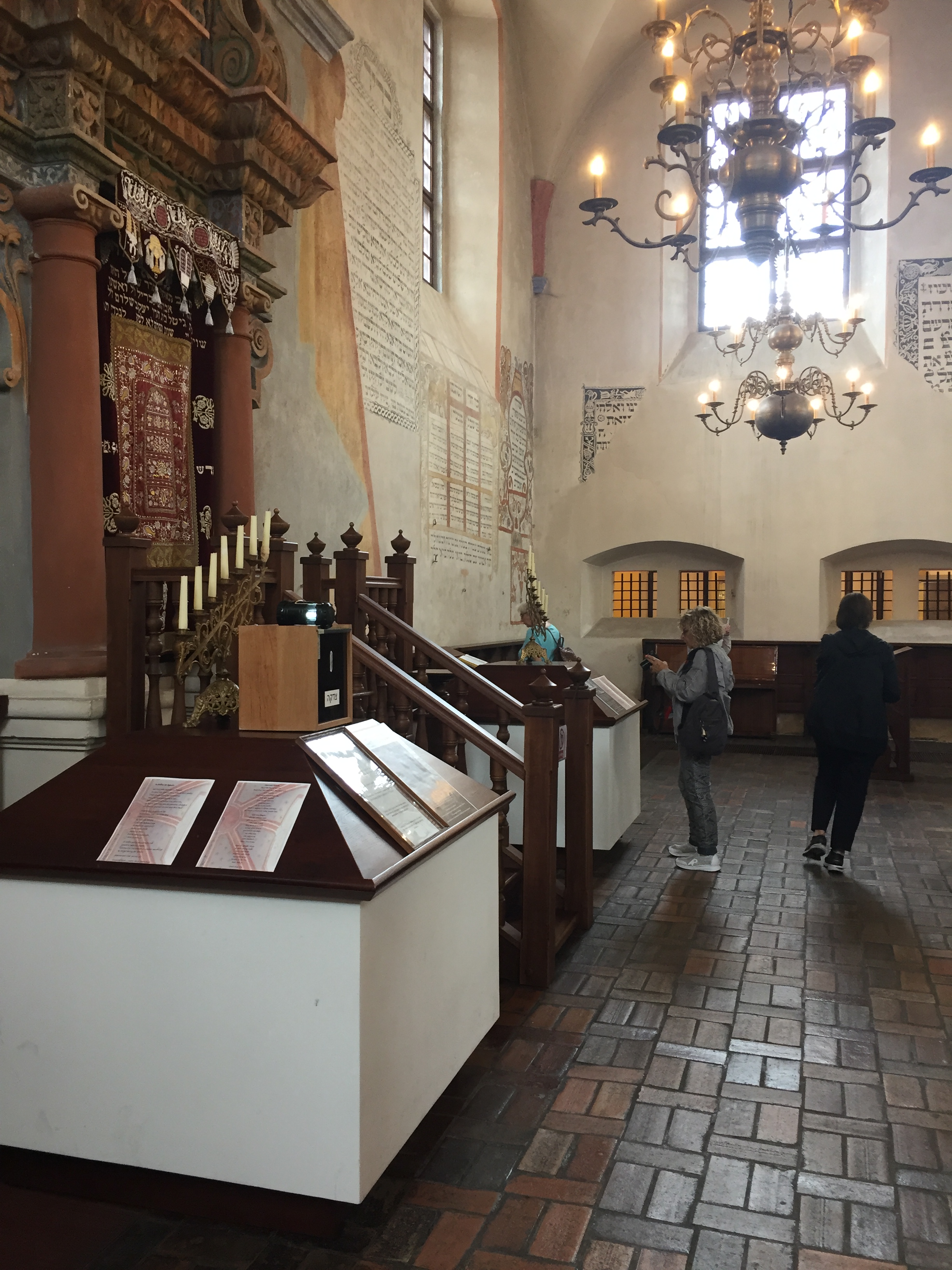
This synagogue is the smallest of the seven synagogues that still exist in Krakow, and still has an active (Orthodox) congregation. The interior is most ornate, and while it feels strange to crowd inside a functioning shul and take photographs of it, I found the decorations quite intriguing. Above the ark is a quote from the Mishna (Avos 2:1), while the back of the shul sports a quote with which I was previously unfamiliar:

 אדם דואג על איבוד דמיו ואינו דואג על איבוד ימיו
דמיו אינם עוזרים וימיו אינם חוזרים

A man worries about wasting his money, but does not worry about wasting his days; his money does not help him, and his days do not return.

– my own literal translation

I had to look online for this, but it seems that many shuls had aphorisms of this nature, the purpose of which was to provide moral instruction to worshipers, and for which scholars are unable to source the exact provenance. The message (that a worthy occupation is of greater value than one’s income) is a message consonant with the literature of the great Polish rabbonim, who emphasised the importance of spending one’s days in the study of Torah.

We crowd into the tiny shul…
Photograph: Simon Holloway
High above the bimah is the message: “Know that which is above you! An eye that sees, an ear that hears, and all your deeds transcribed within a book” (Avos 2:1)
Photograph: Simon Holloway
A New Plaque, For a Functioning Shul
Photograph: Simon Holloway

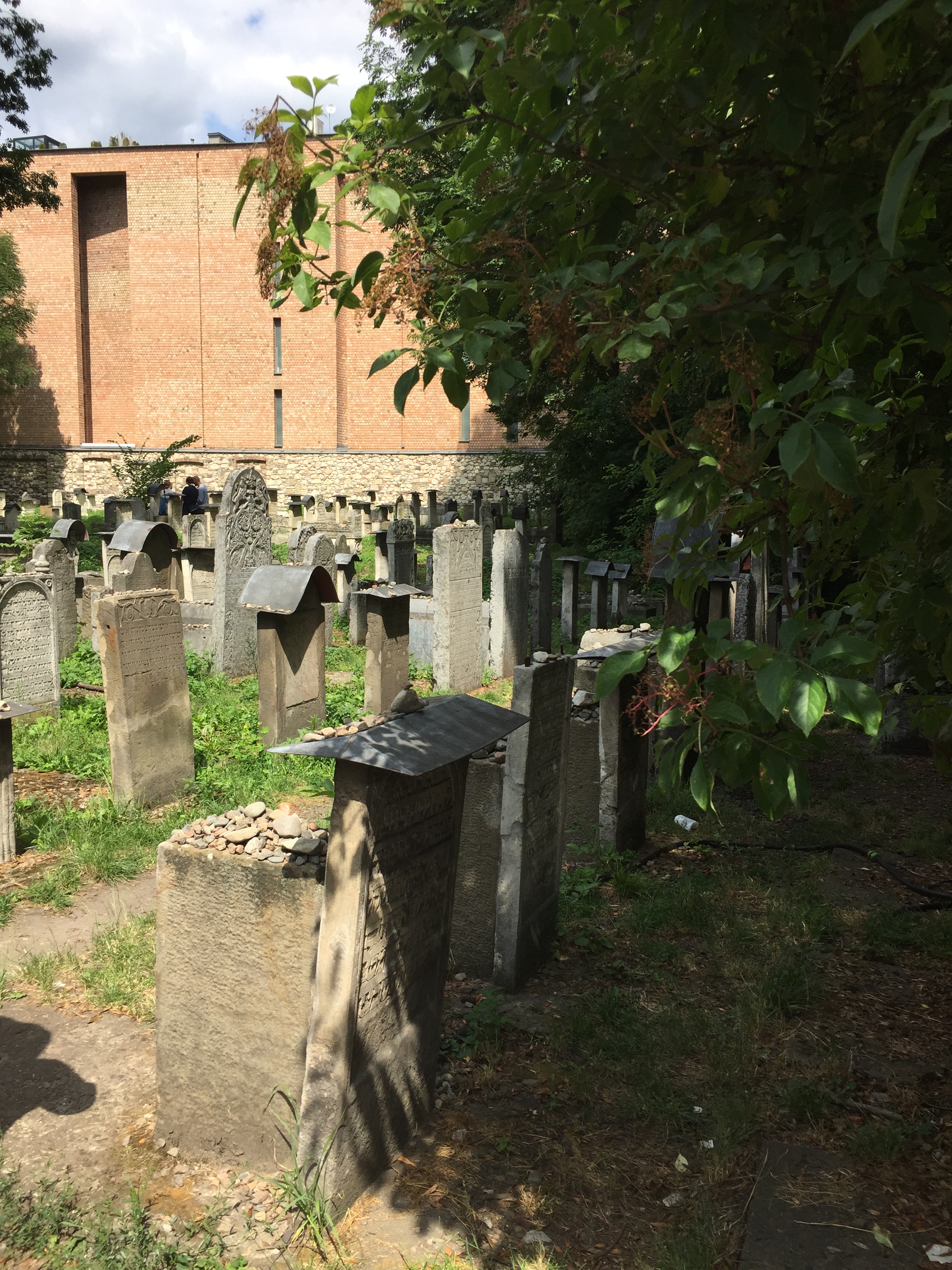
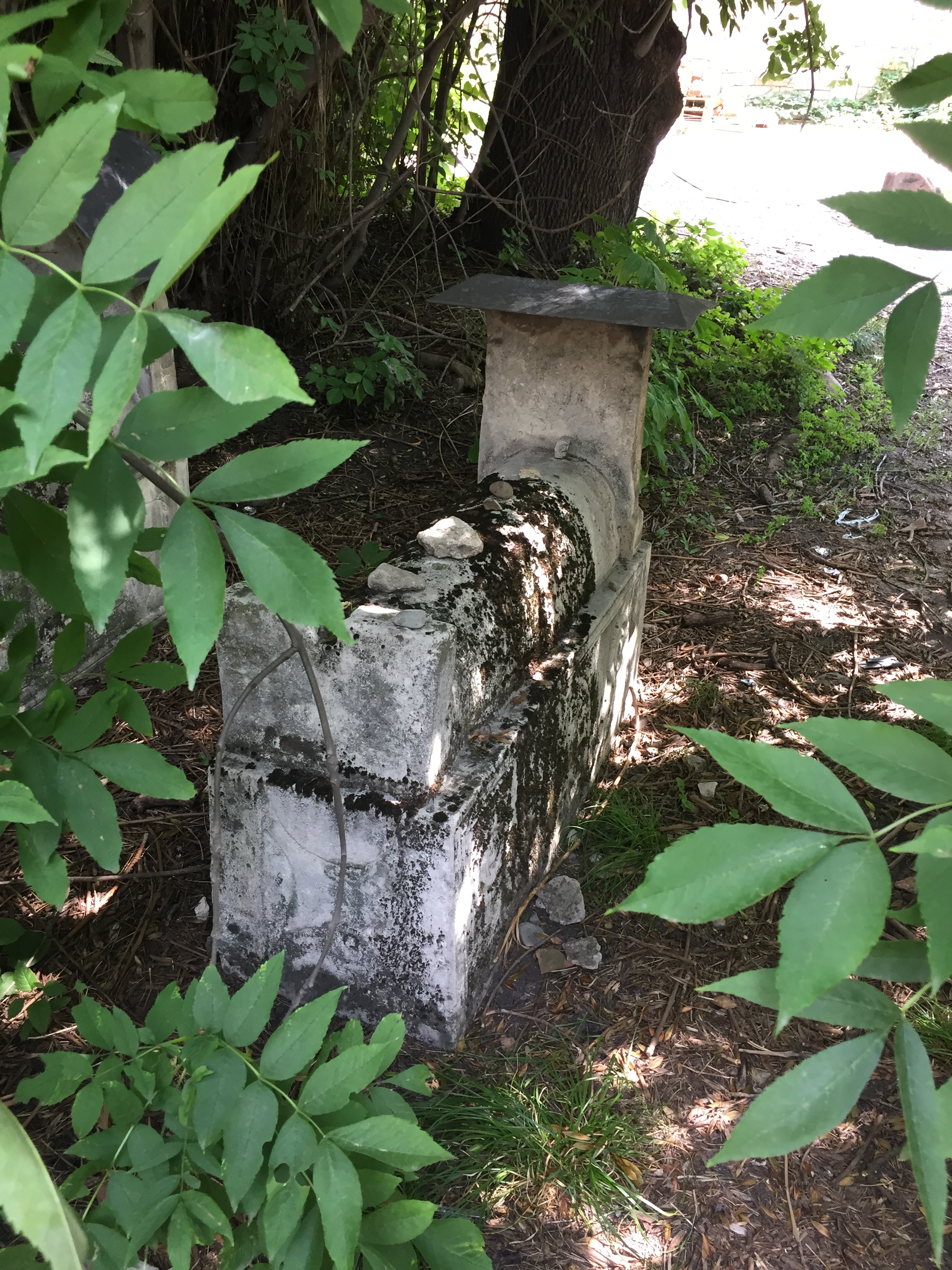
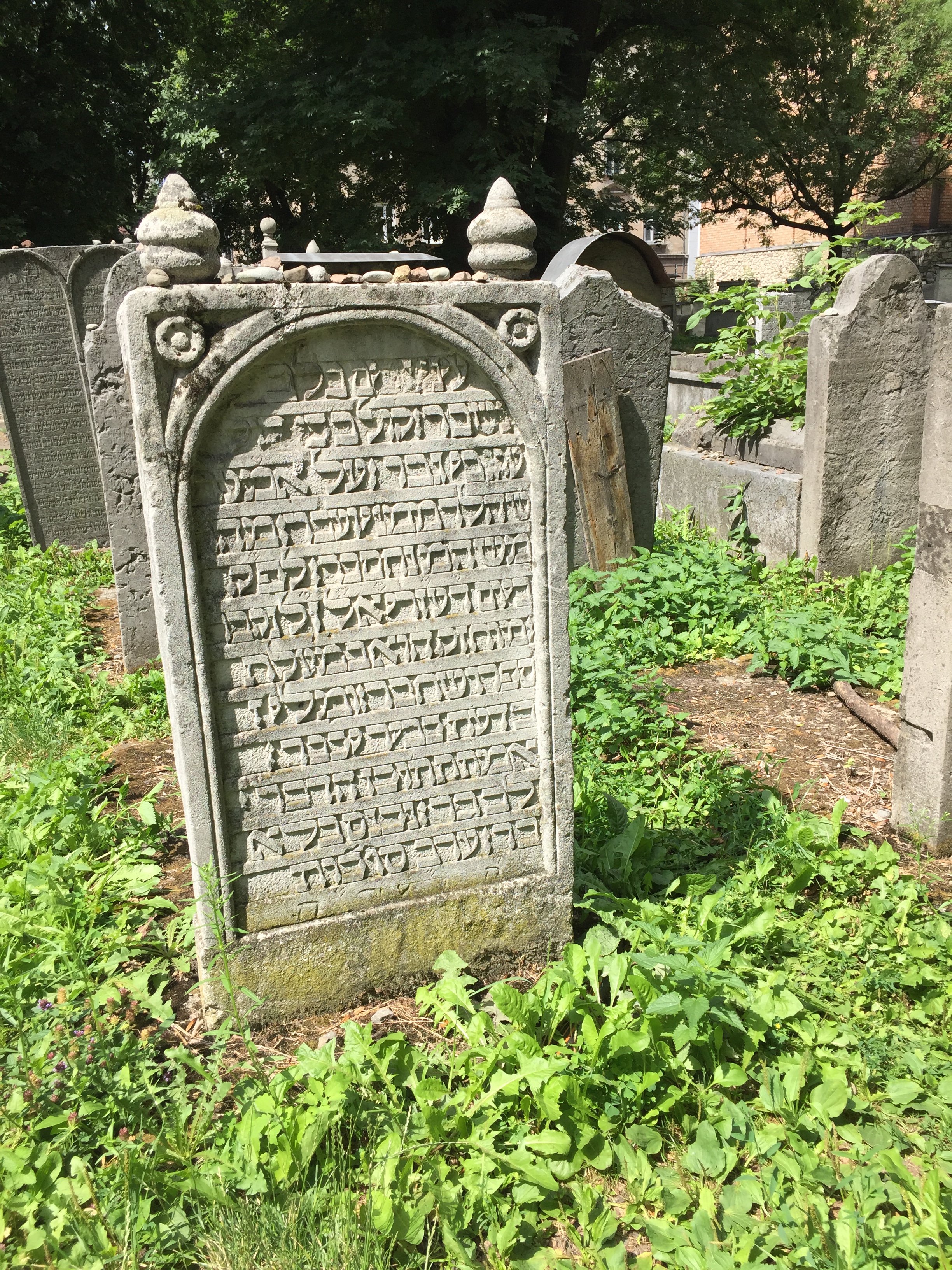
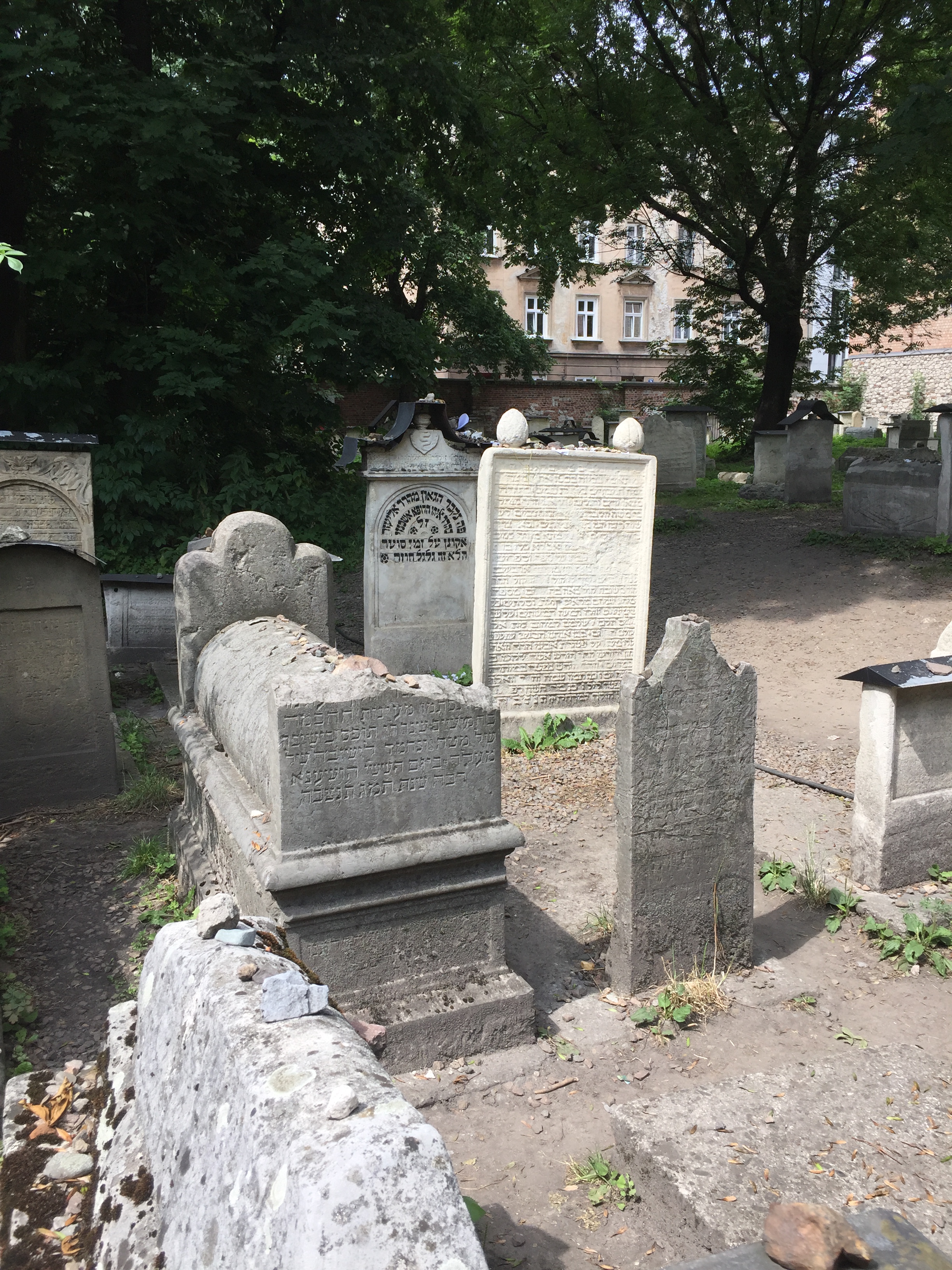
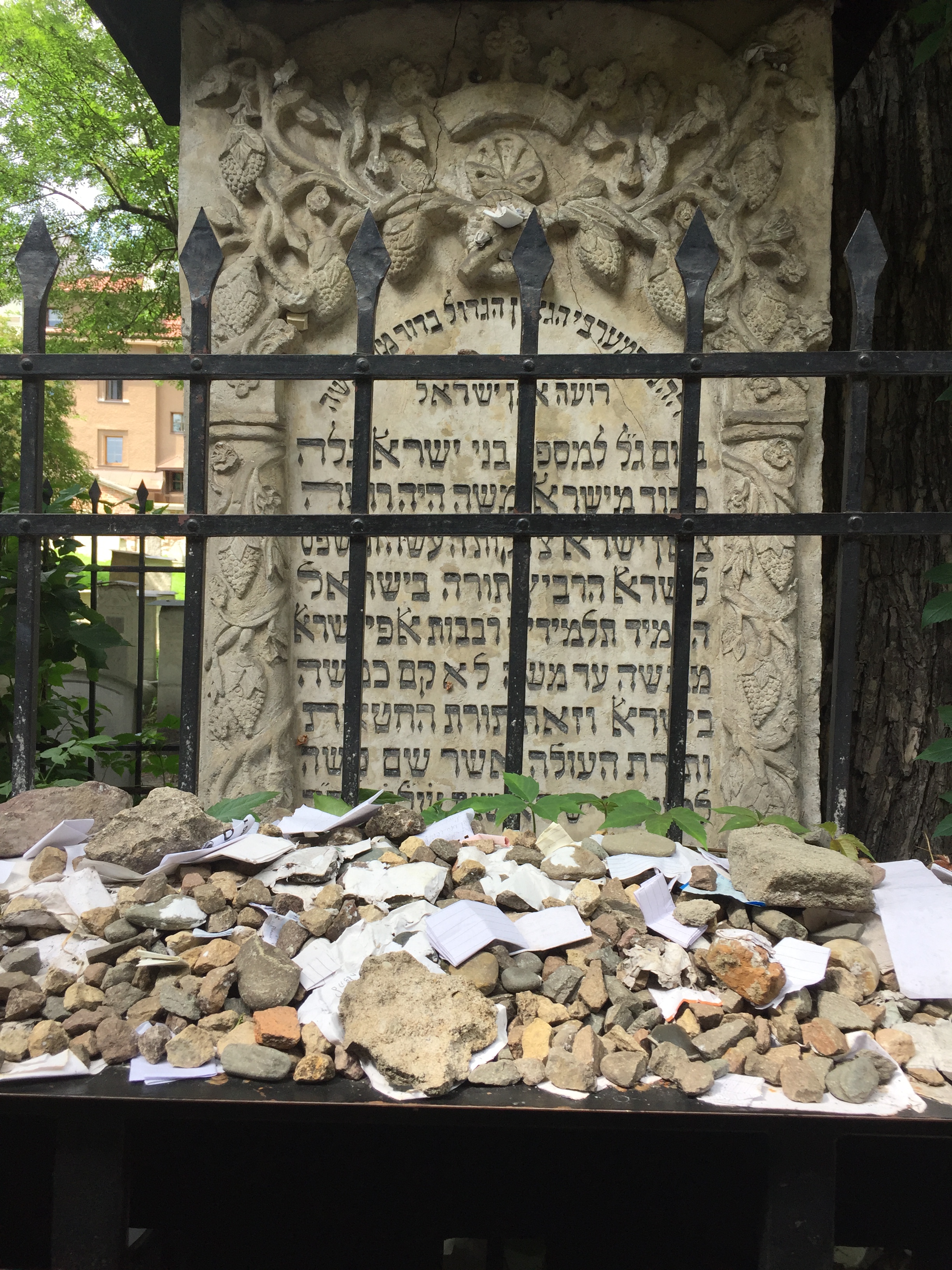
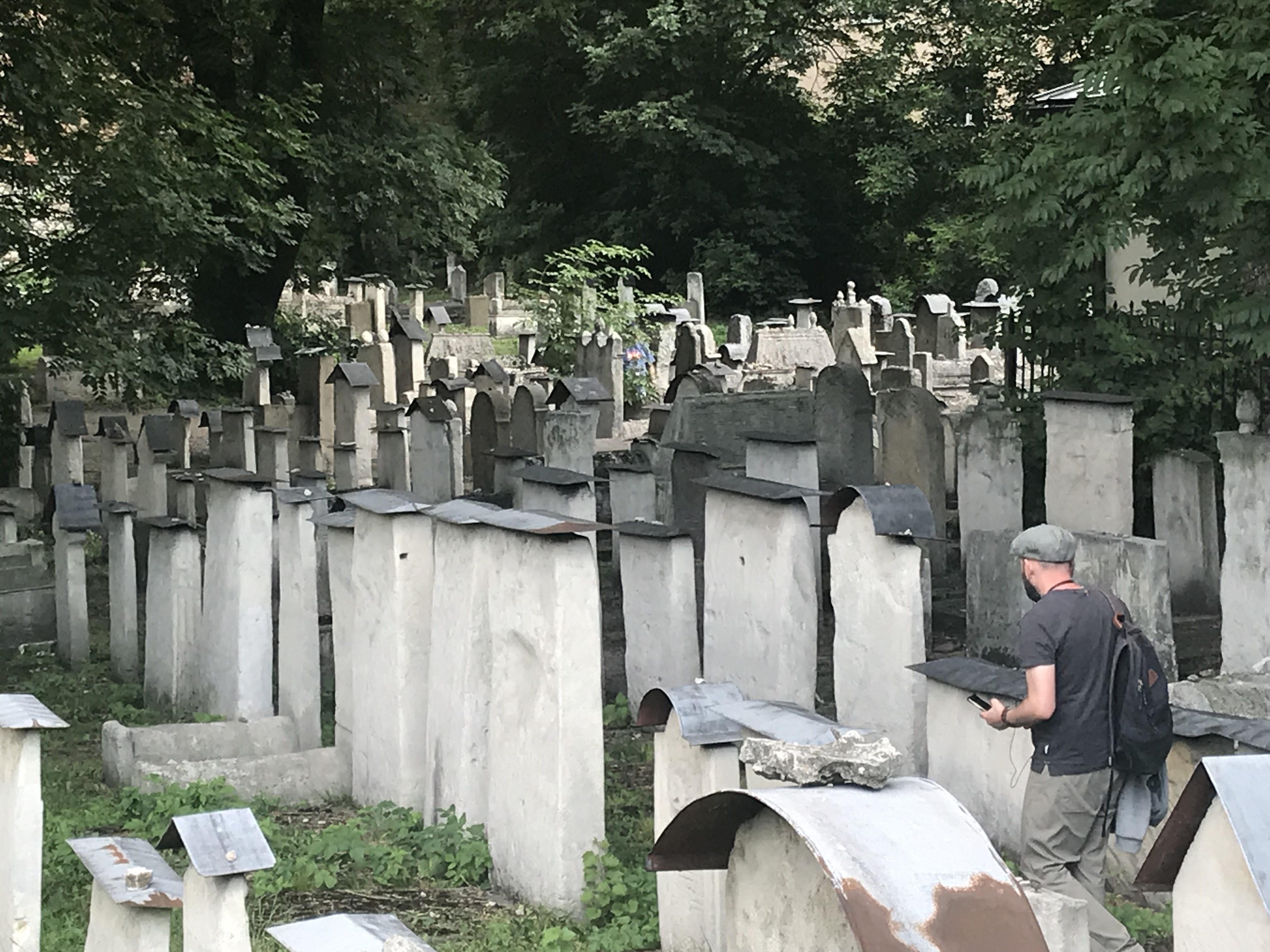
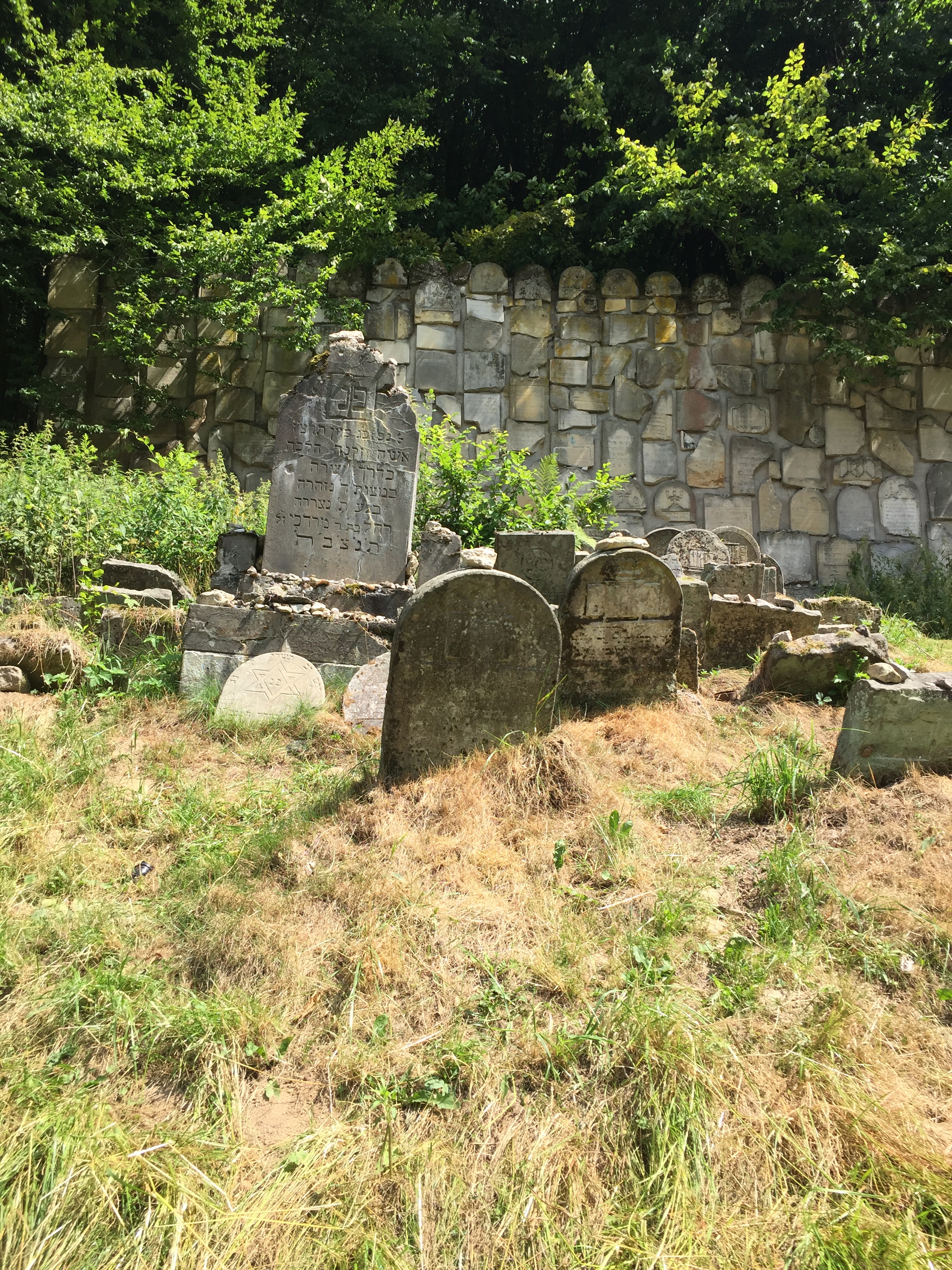
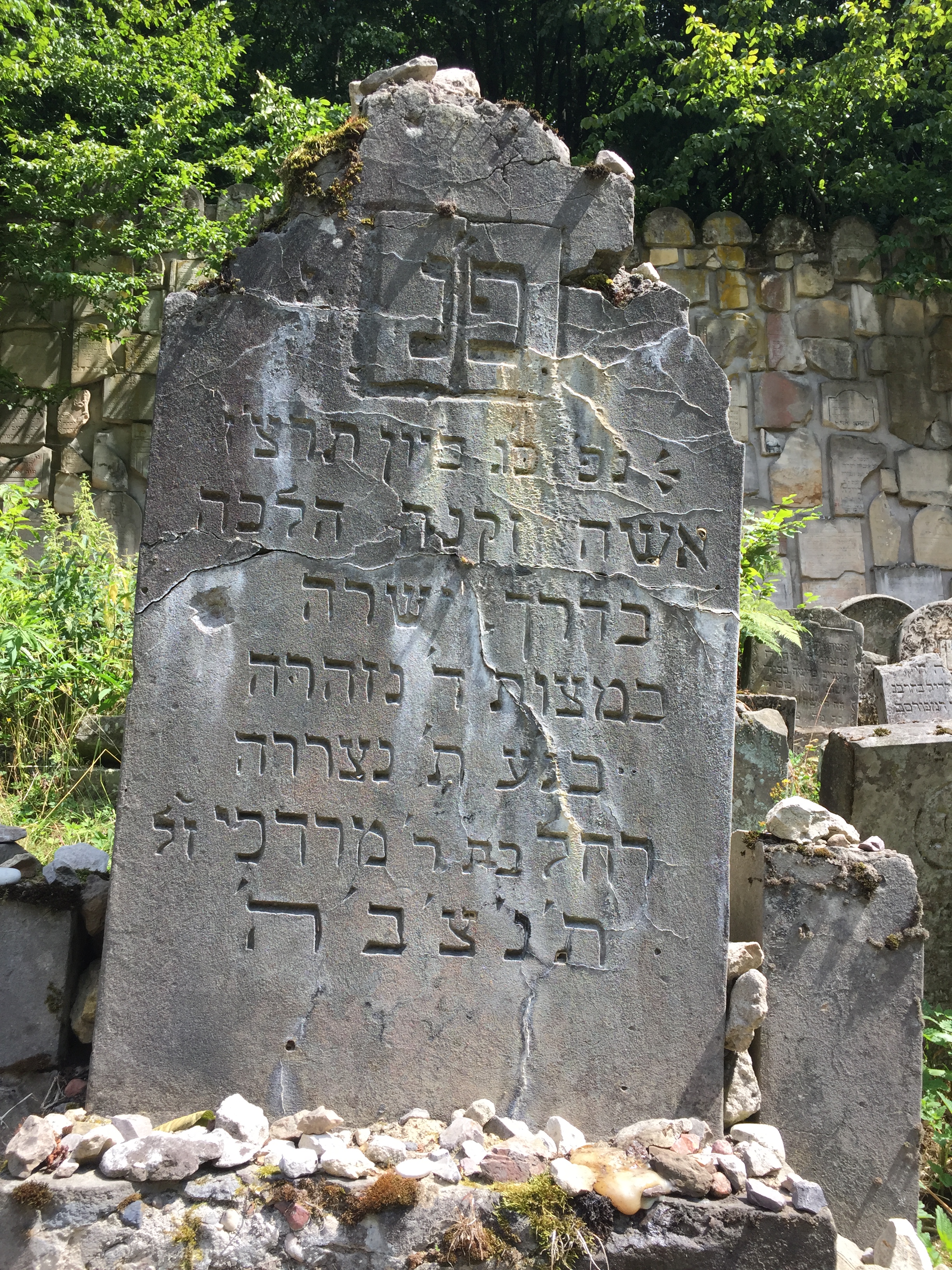
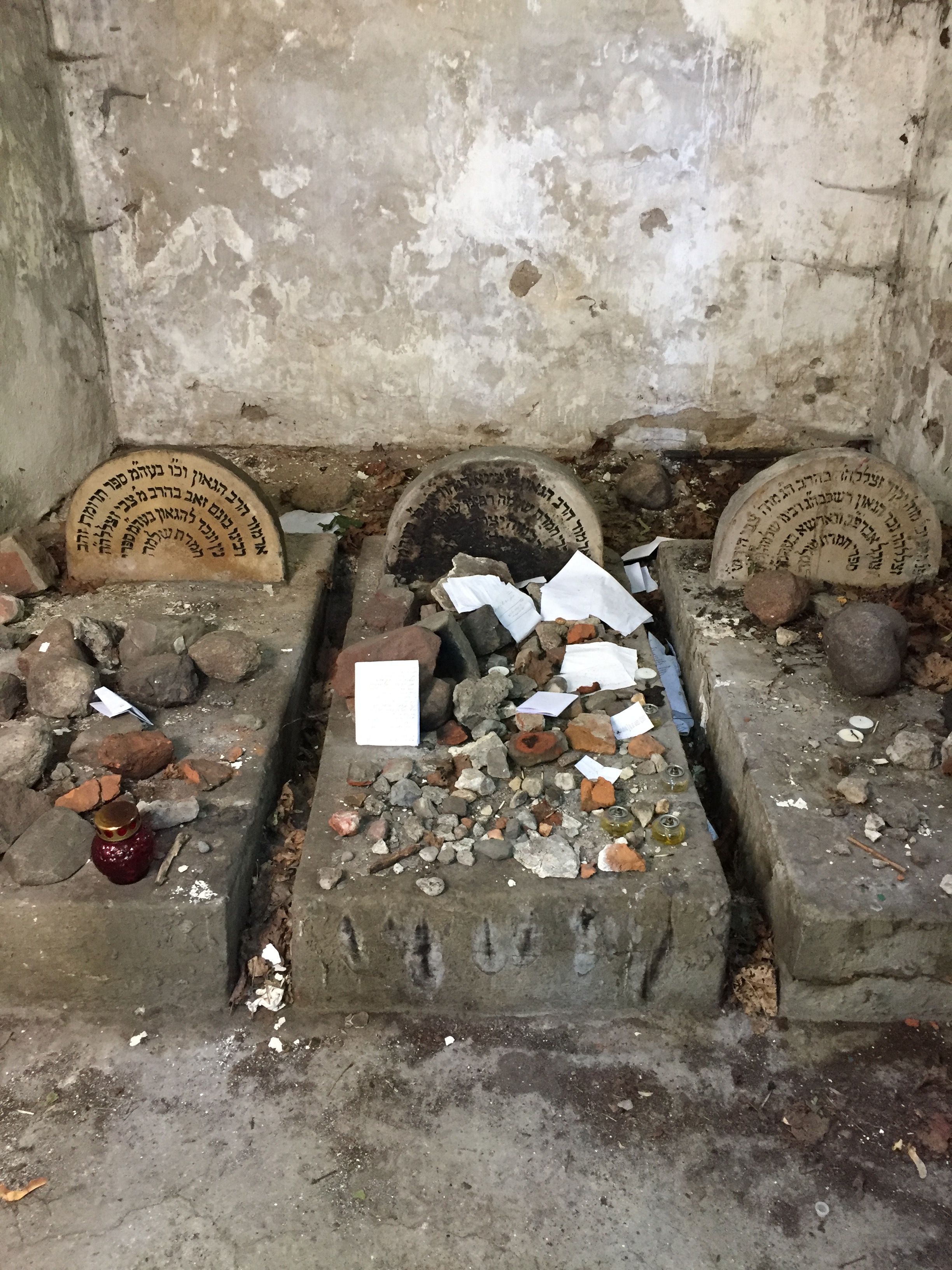
I wonder how many of those rabbonim are interred in the earth next to the synagogue? We wandered among the gravestones, but their writing is tremendously difficult to read. To compound the problem, the Germans had used this cemetery for storage, and had broken a number of the stones for use in construction. Many have been returned, but have not necessarily been returned to the correct grave, and the damage they have suffered has contributed to their illegibility.

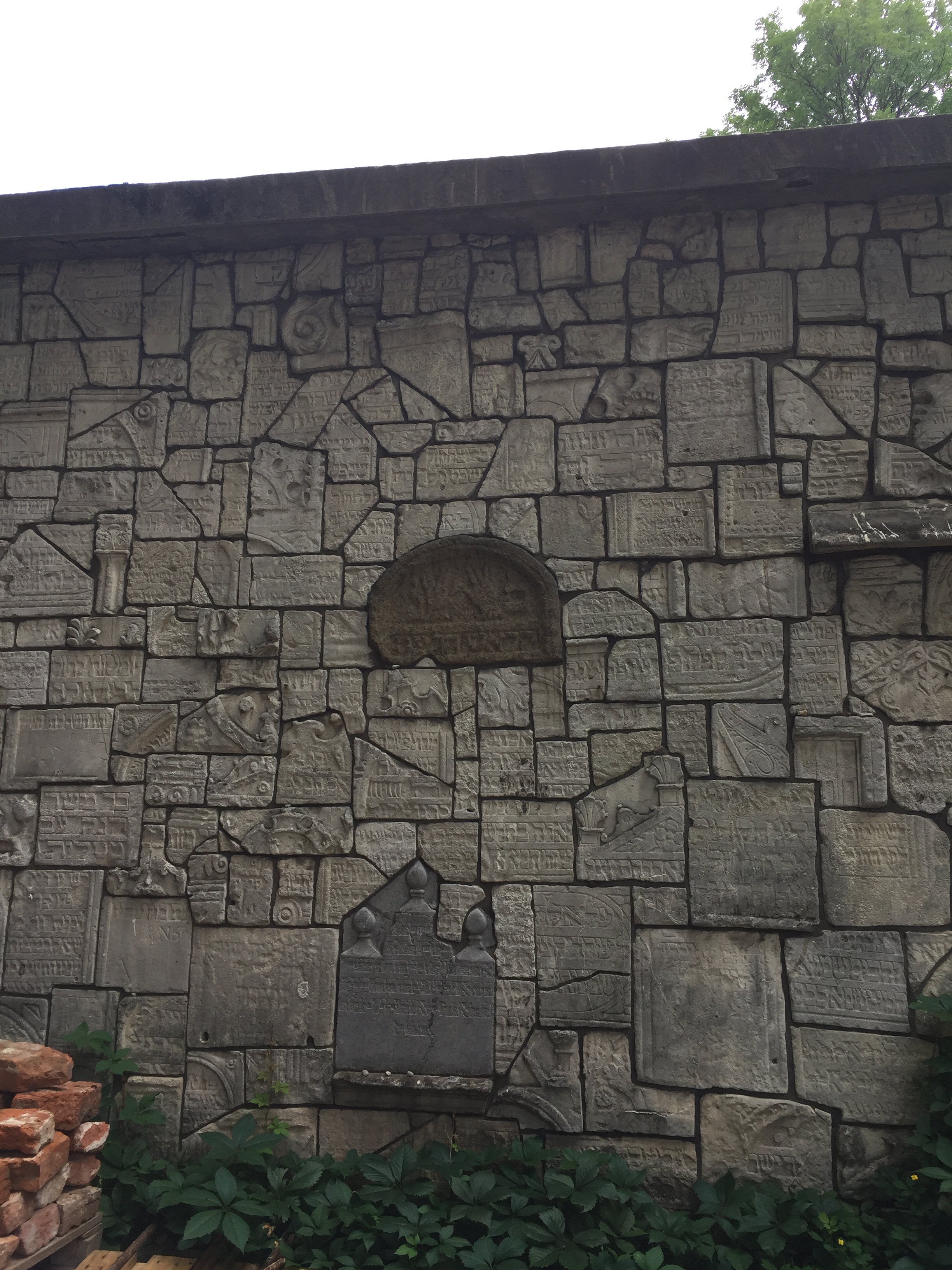
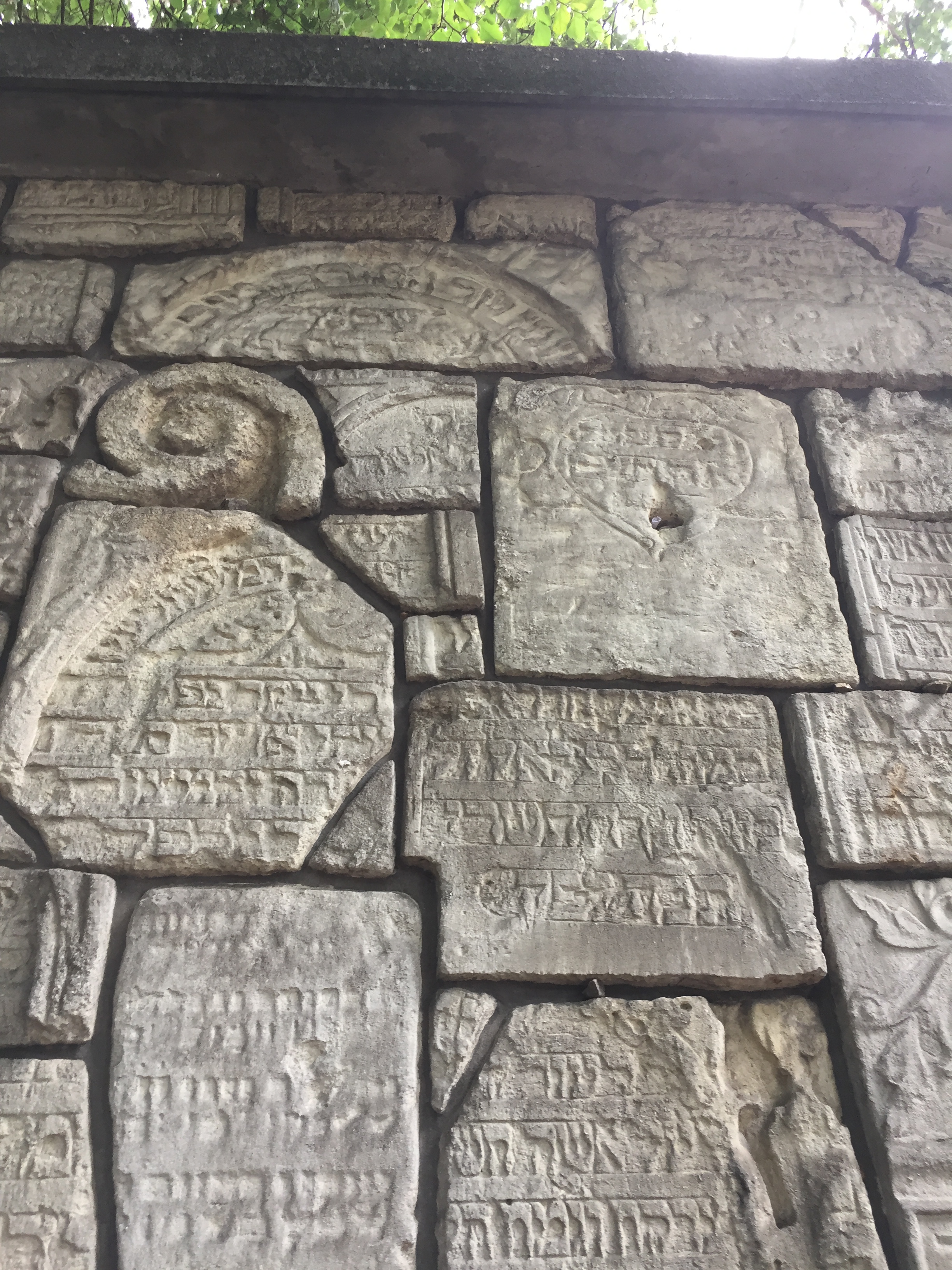
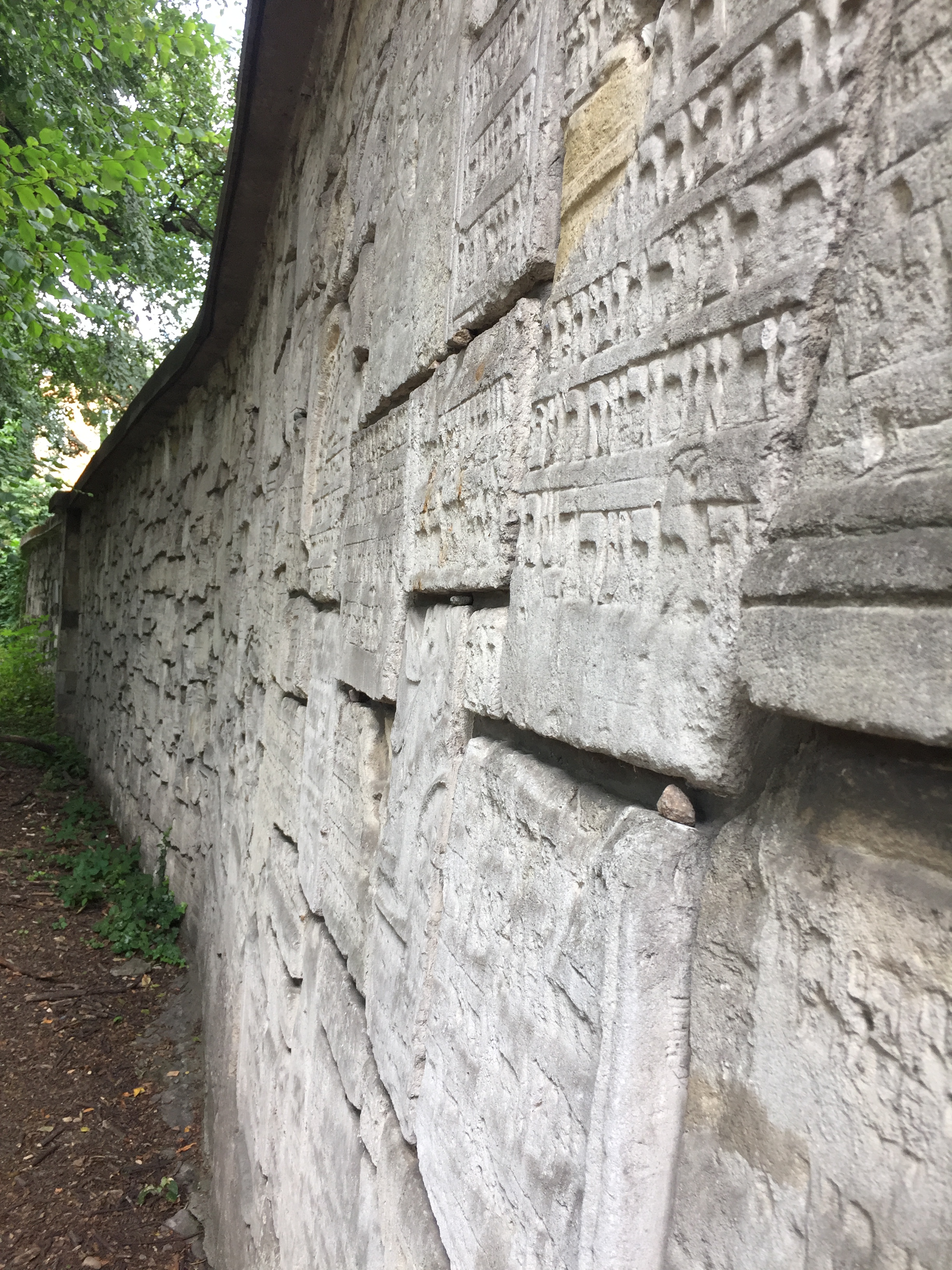
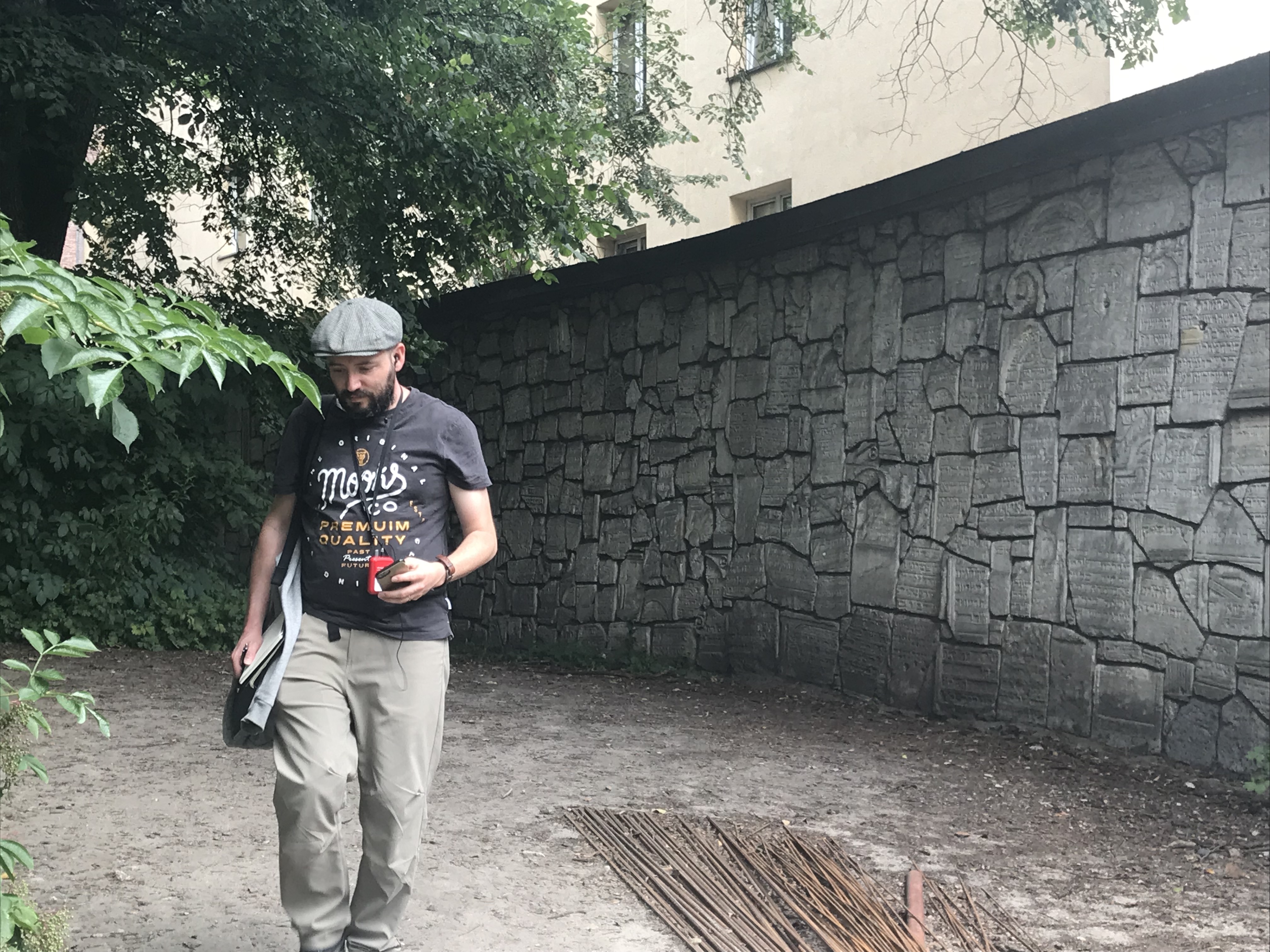
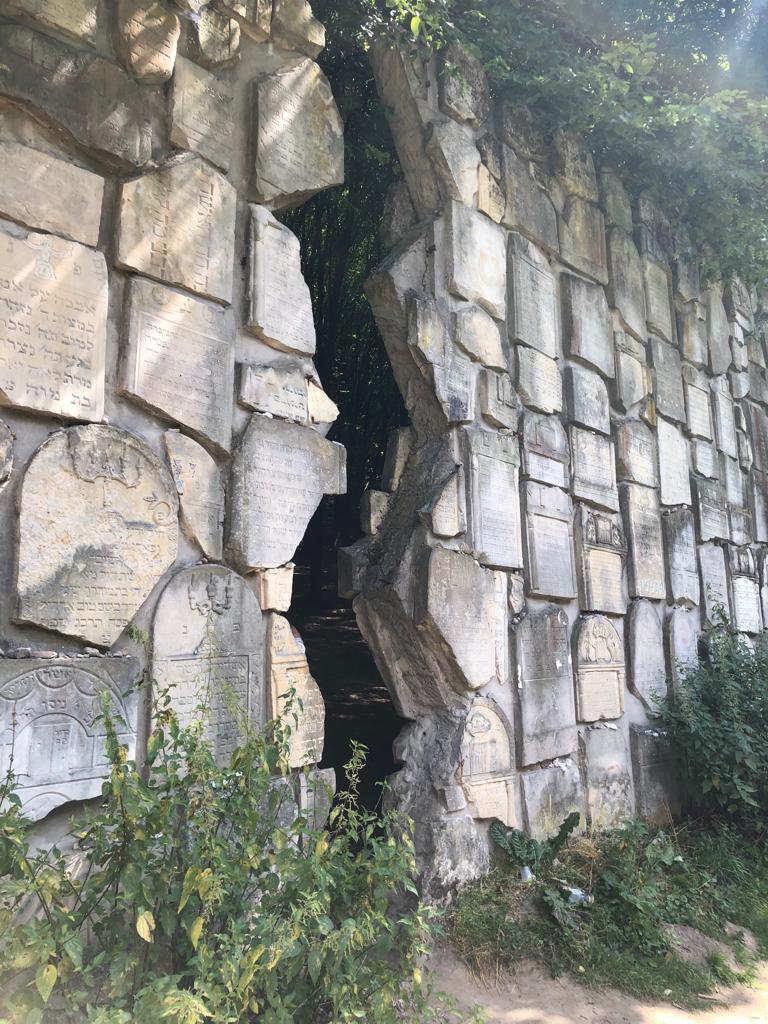
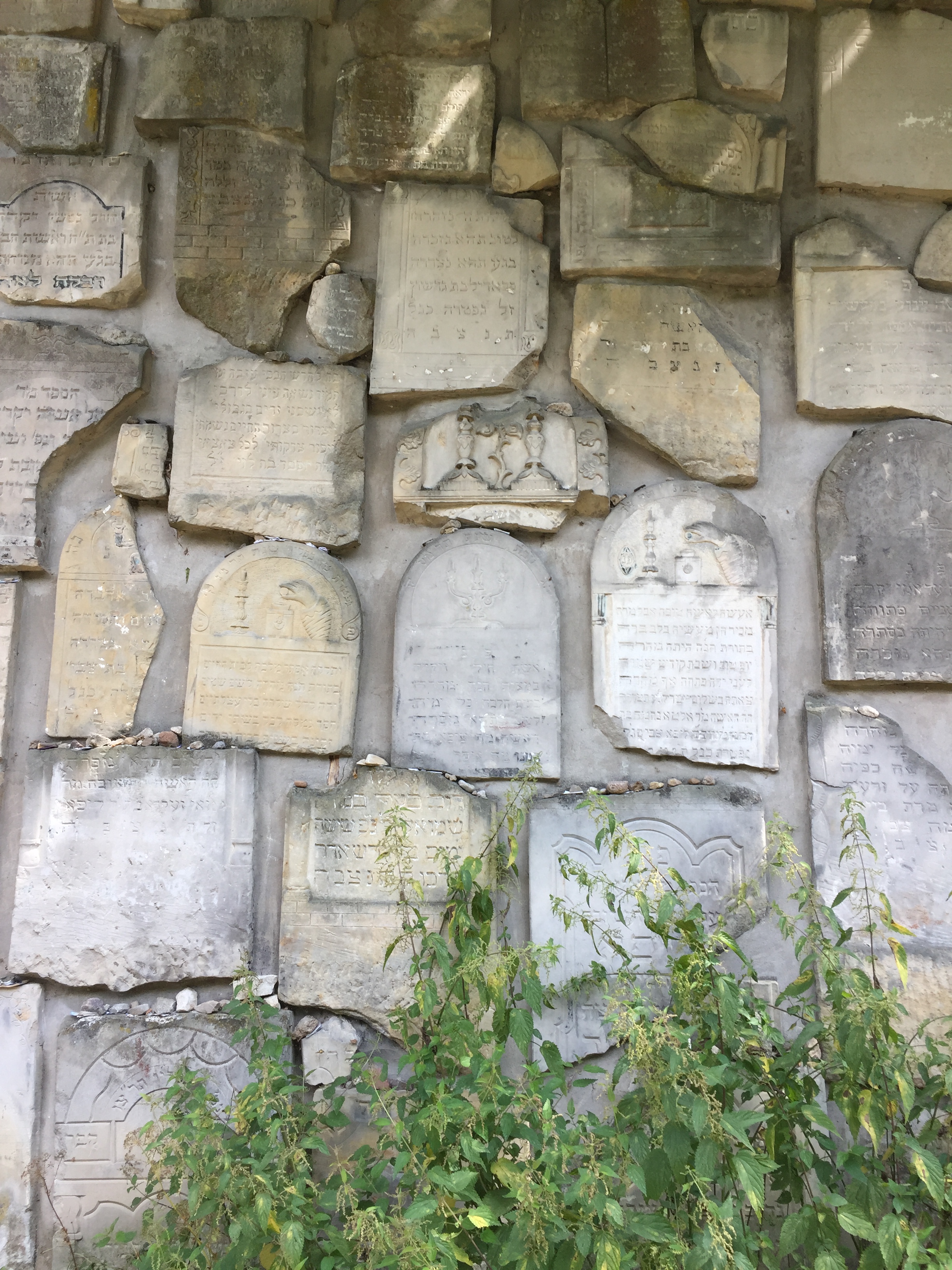
We spent much time gathering around the grave of the Rema himself, and of musing on the fact that it is still intact. Afterwards, some of us took the opportunity to walk through the tall grass to some other gravestones that are also enclosed in a protective metal fence. Before we left, we paid our respects to Kazimierz’s Wailing Wall: a wall of broken gravestones, like the one that we had seen in Kazimierz Dolny a lifetime ago.

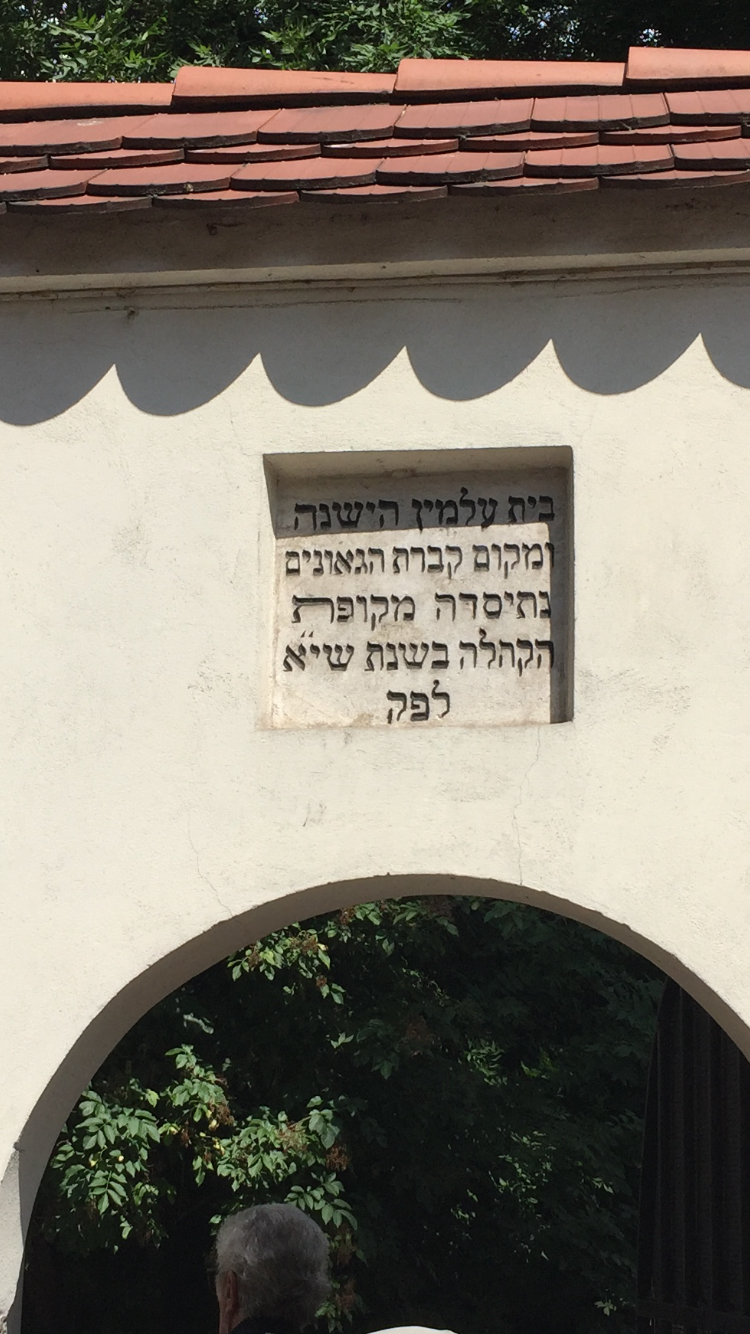
“The Old Cemetery, and the place of the graves of the illustrious ones, was established from the community’s funds in the year 1551”
Photograph: Simon Holloway
Neatly, in rows
Photograph: Simon Holloway
Some of these graves include an above-ground sepulchral structure
Photograph: Simon Holloway
Clearly engraved, but without word dividers it is very difficult to read
Photograph: Simon Holloway
Of all different shapes and sizes…
Photograph: Simon Holloway
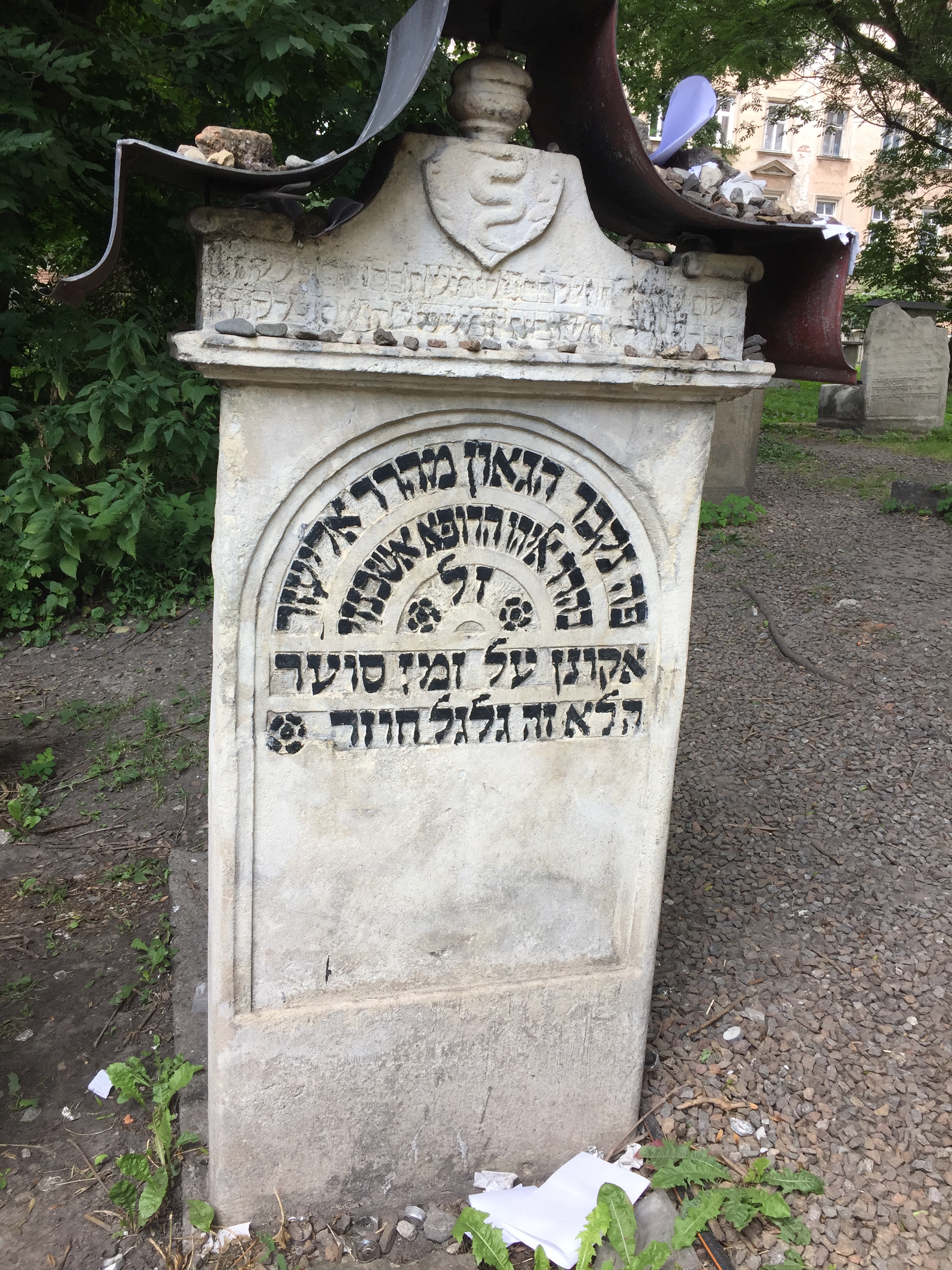
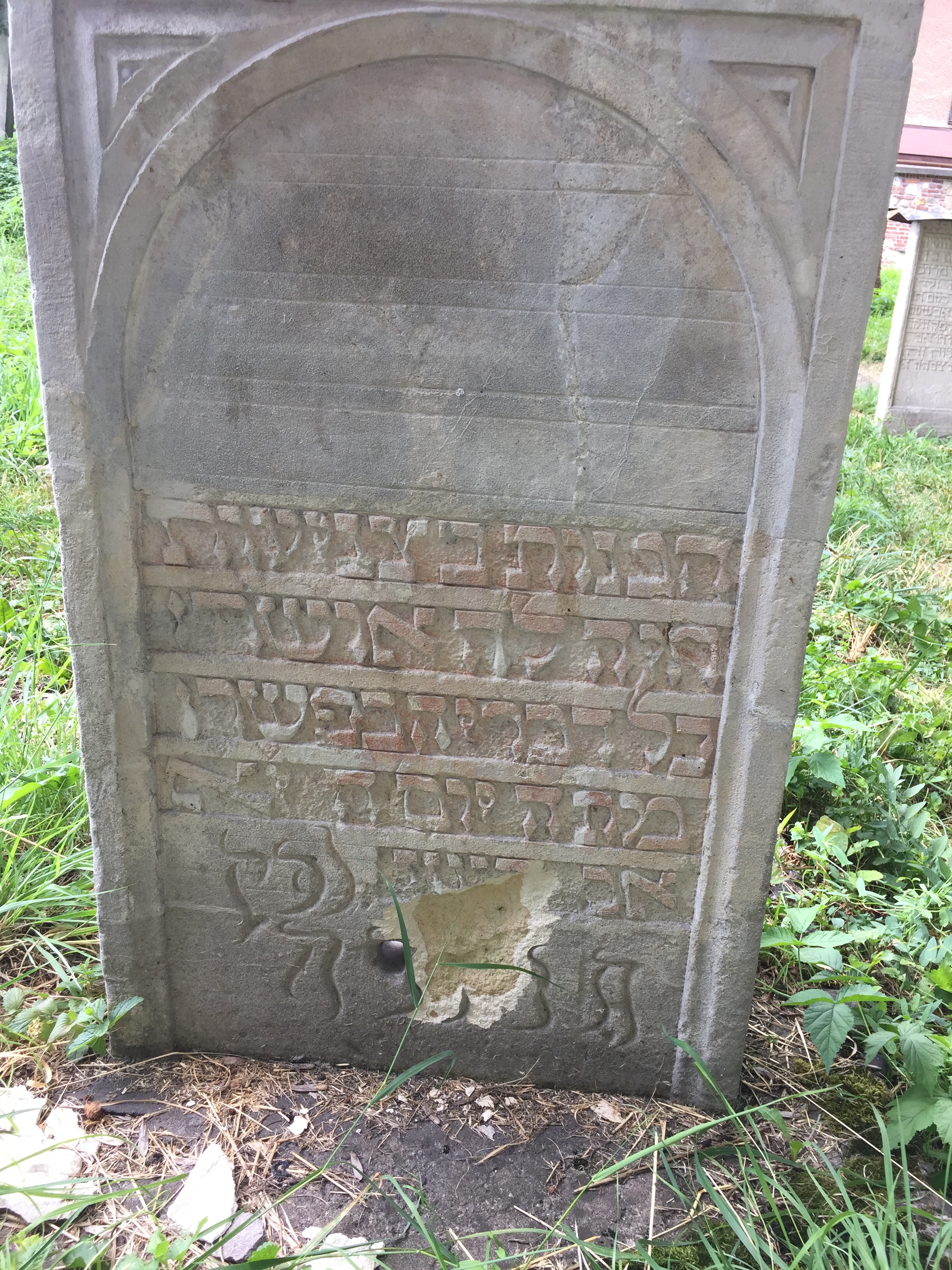
“Here lies the majestic Rav Eliezer, son of Rav Eliyahu “the Doctor” Ashkenazi, of blessed memory. I will lament this stormy time. Lo, this is a recurring theme.”
Photograph: Simon Holloway
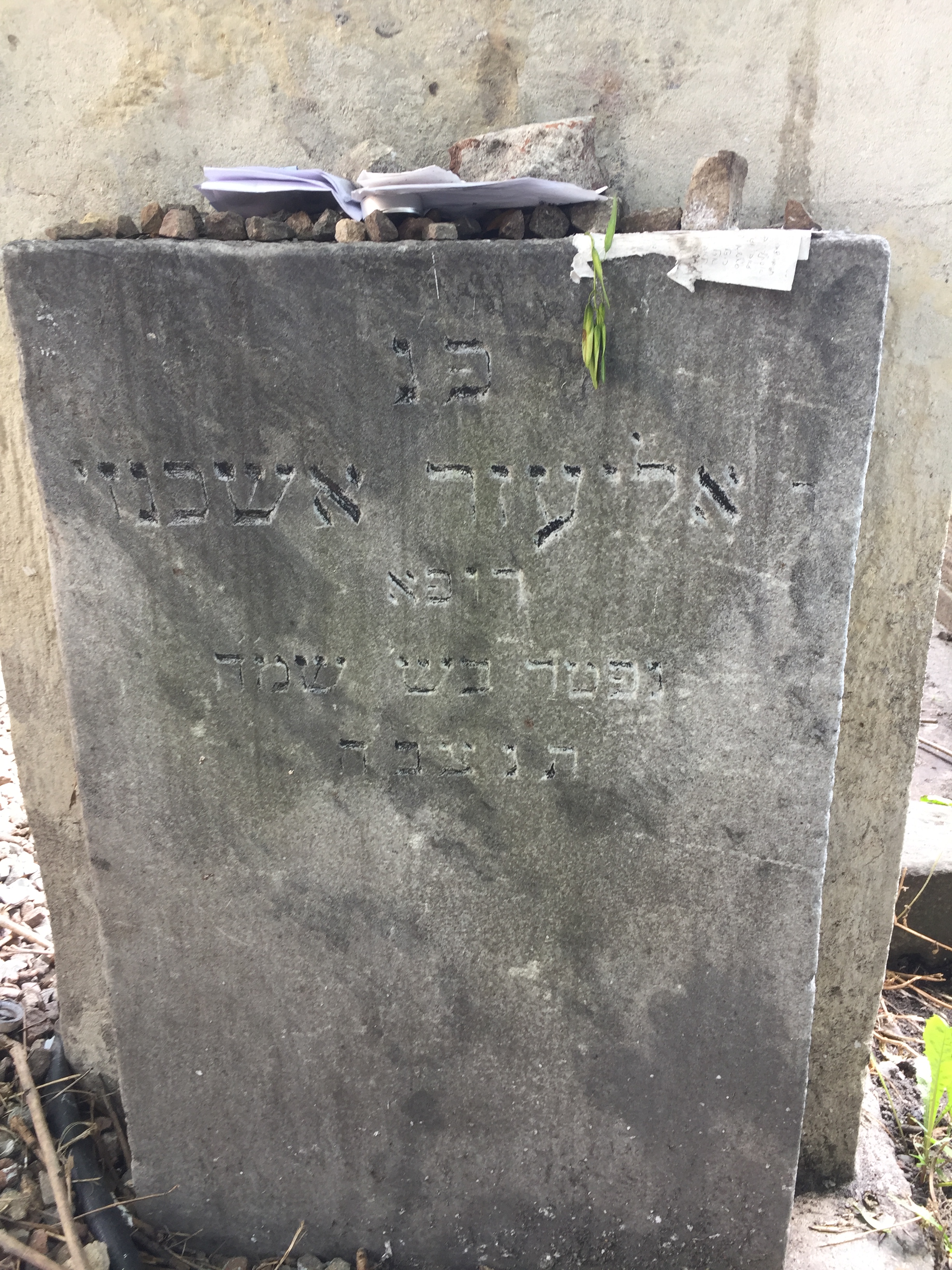
… and on the inverse: “Here lies Eliezer Ashkenazi, “the doctor”. Died in the year 5345 (= 1585). May his soul be bound up in the bonds of life”
Photograph: Simon Holloway
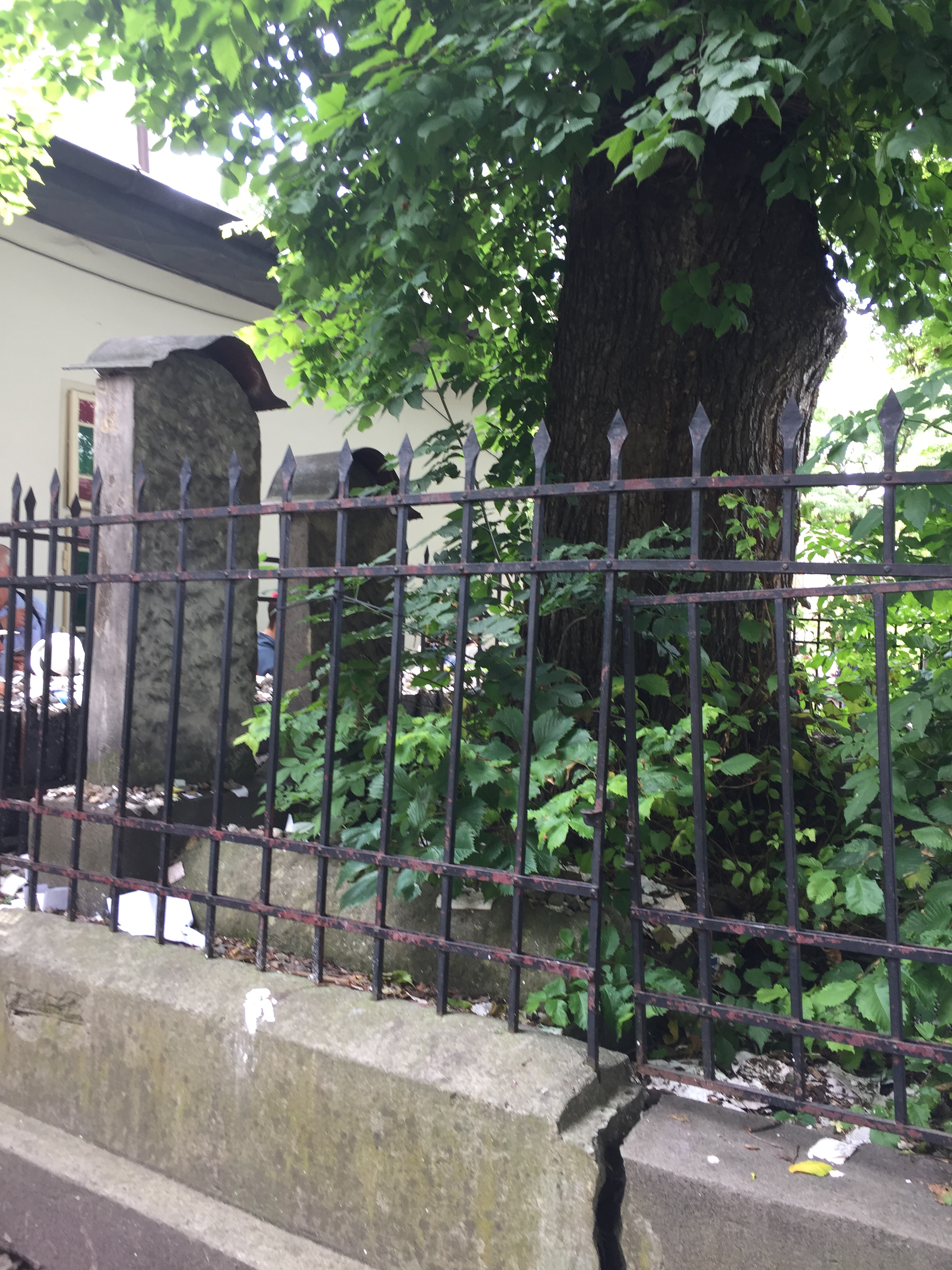
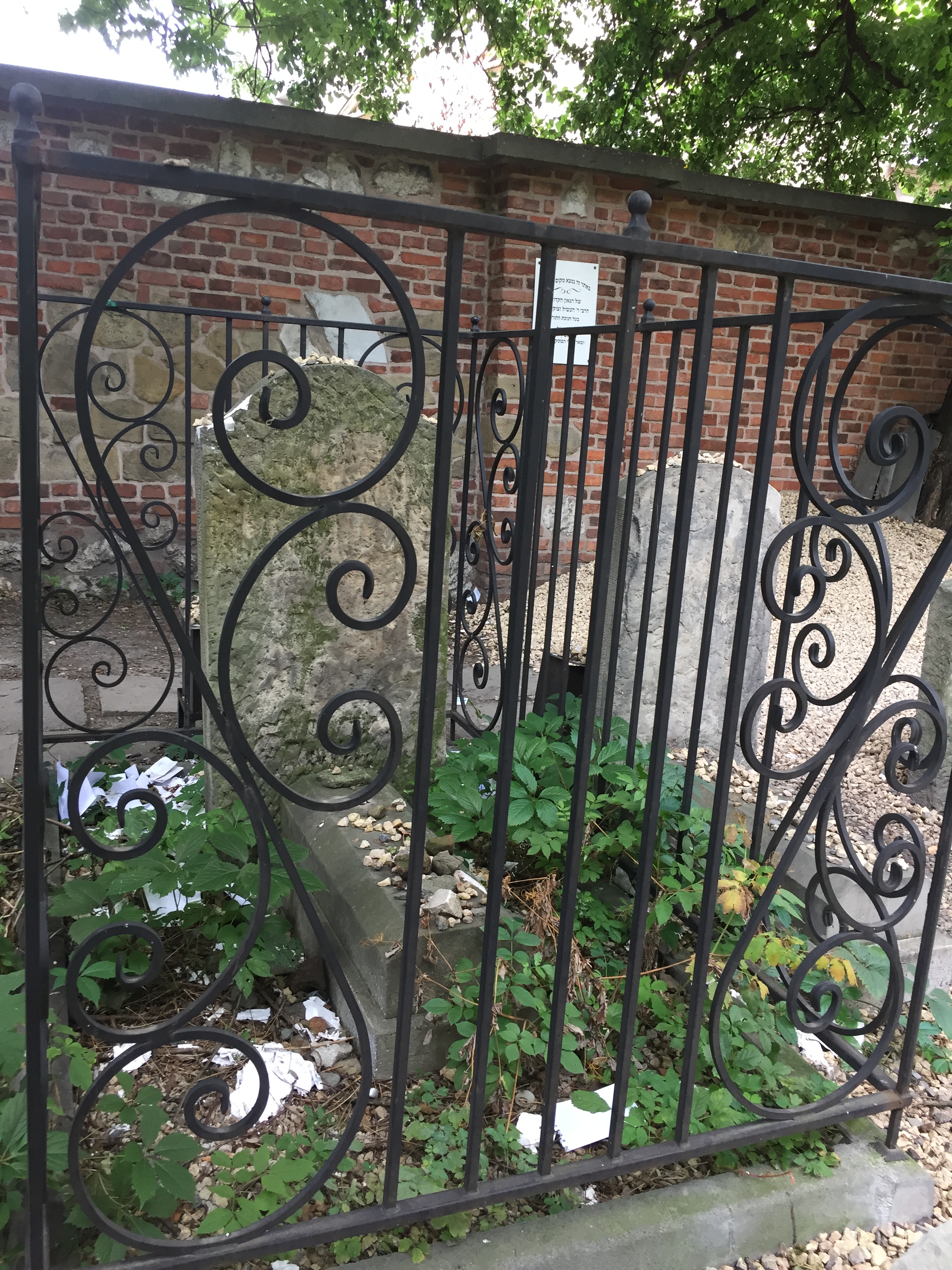
The enclosure containing the Rema’s grave, together with those of two others, and a tree
Photograph: Simon Holloway
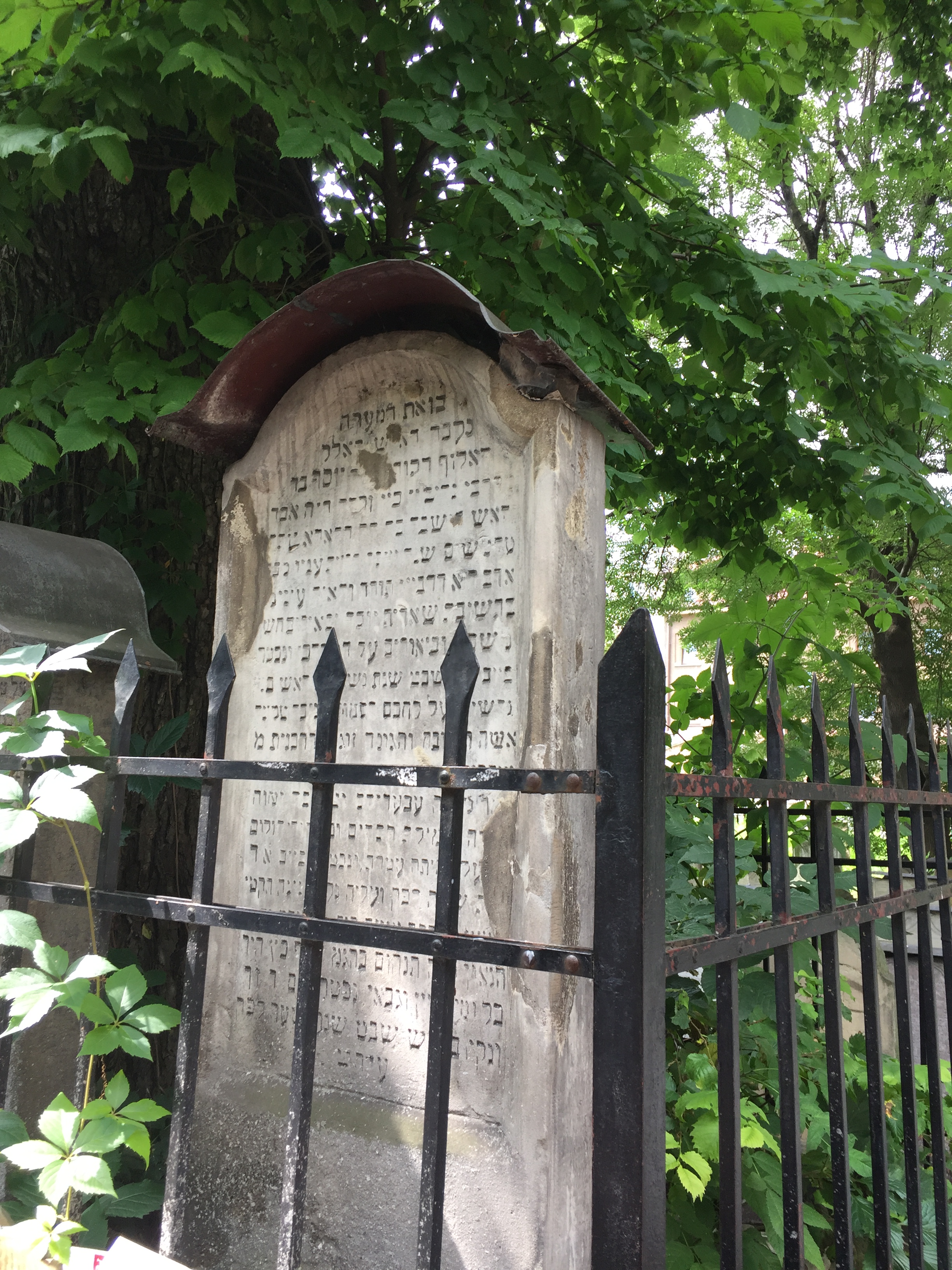
The grave to the right of the Rema’s: that of Rabbi Yosef Katz, head of the academy after the Rema
Photograph: Simon Holloway
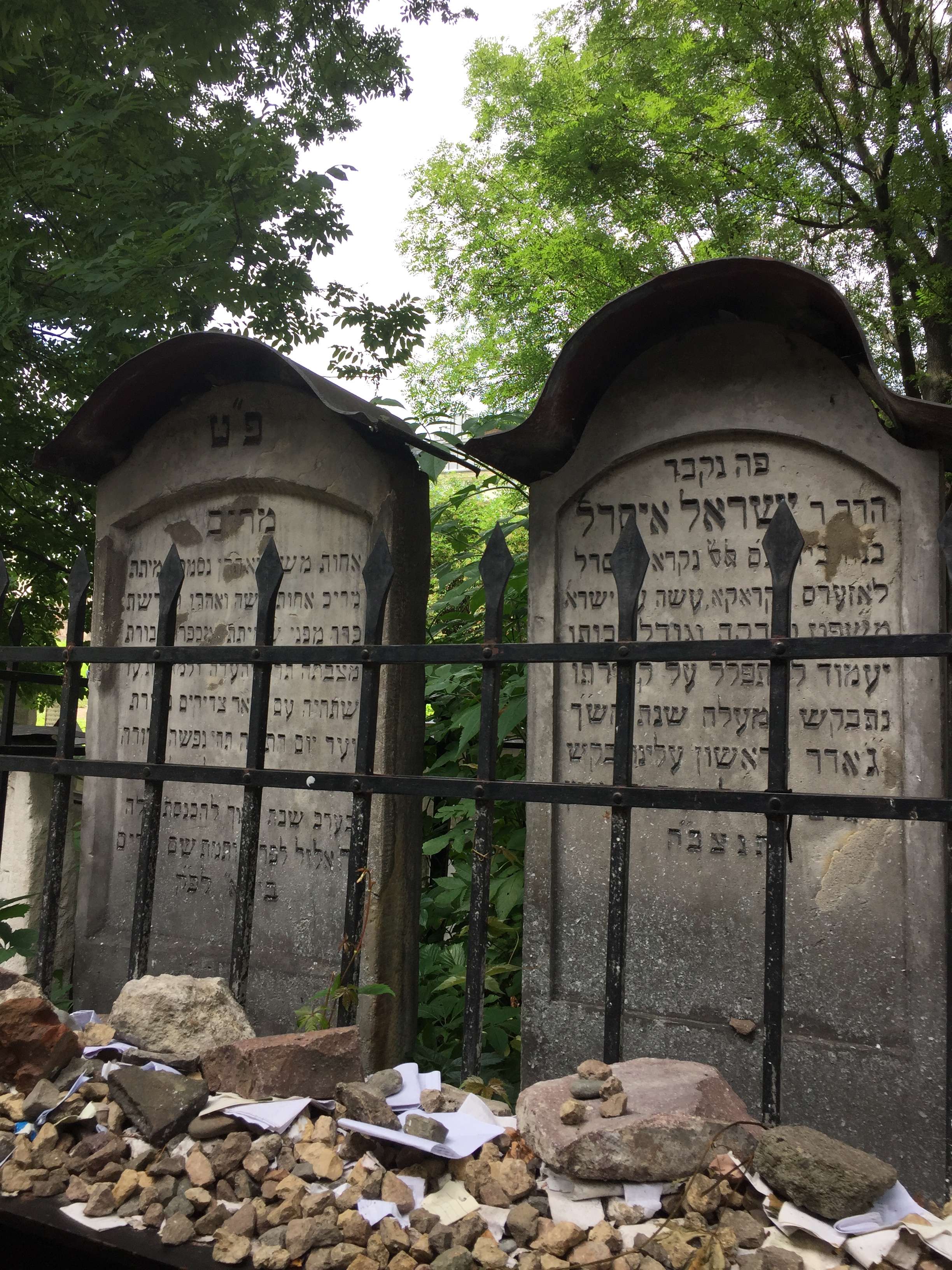
The graves to the left of the Rema’s: that of Rav Yisroel Isserles, and the Rema’s sister, Miriam
Photograph: Simon Holloway
The grave of the Rema
Photograph: Simon Holloway
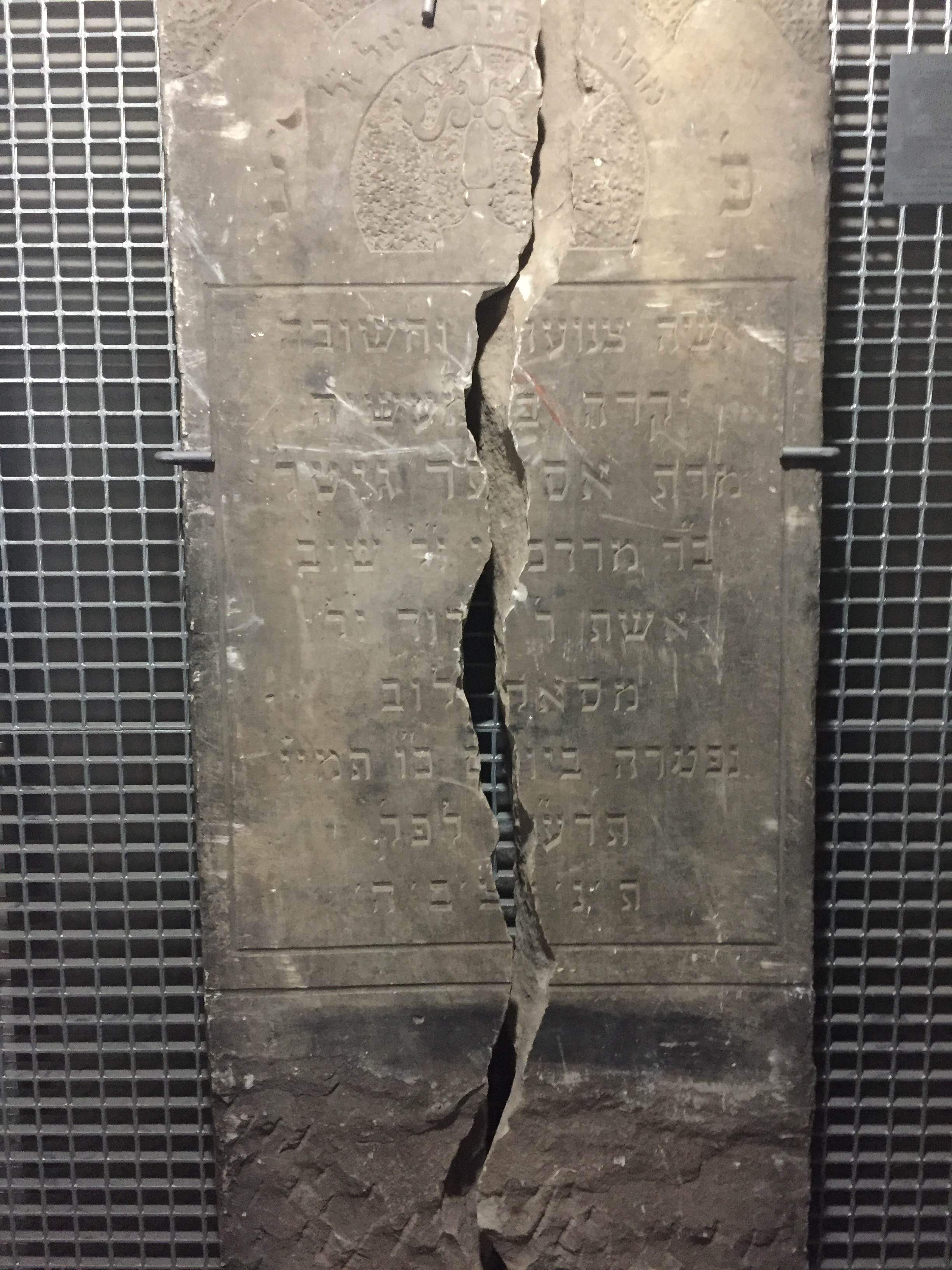
A mystery: three blank lines where the name would presumably have gone, followed by generic information on the deceased’s righteousness, neatly chiselled, followed by the date of her death. That date is then qualified with the addition of standard information on the numbering system used (לפק), together with the traditional concluding abbreviation (תנצבה), but with more sophisticated engraving tools, producing a wavy effect. Whose grave was this? When was it written?
Photograph: Simon Holloway
Another fenced-off grave, its writing totally illegible
Photograph: Simon Holloway
The Kazimierz Wailing Wall
Photograph: Simon Holloway
Up Close and Impersonal
Photograph: Simon Holloway
Impressive: a long wall of broken tombstones, used in German construction
Photograph: Simon Holloway
Wandering the Graves of the Rema’s Cemetery
Photograph: Vivienne Goldschmidt
Lost in Thought in a Place of Silence
Photograph: Vivienne Goldschmidt

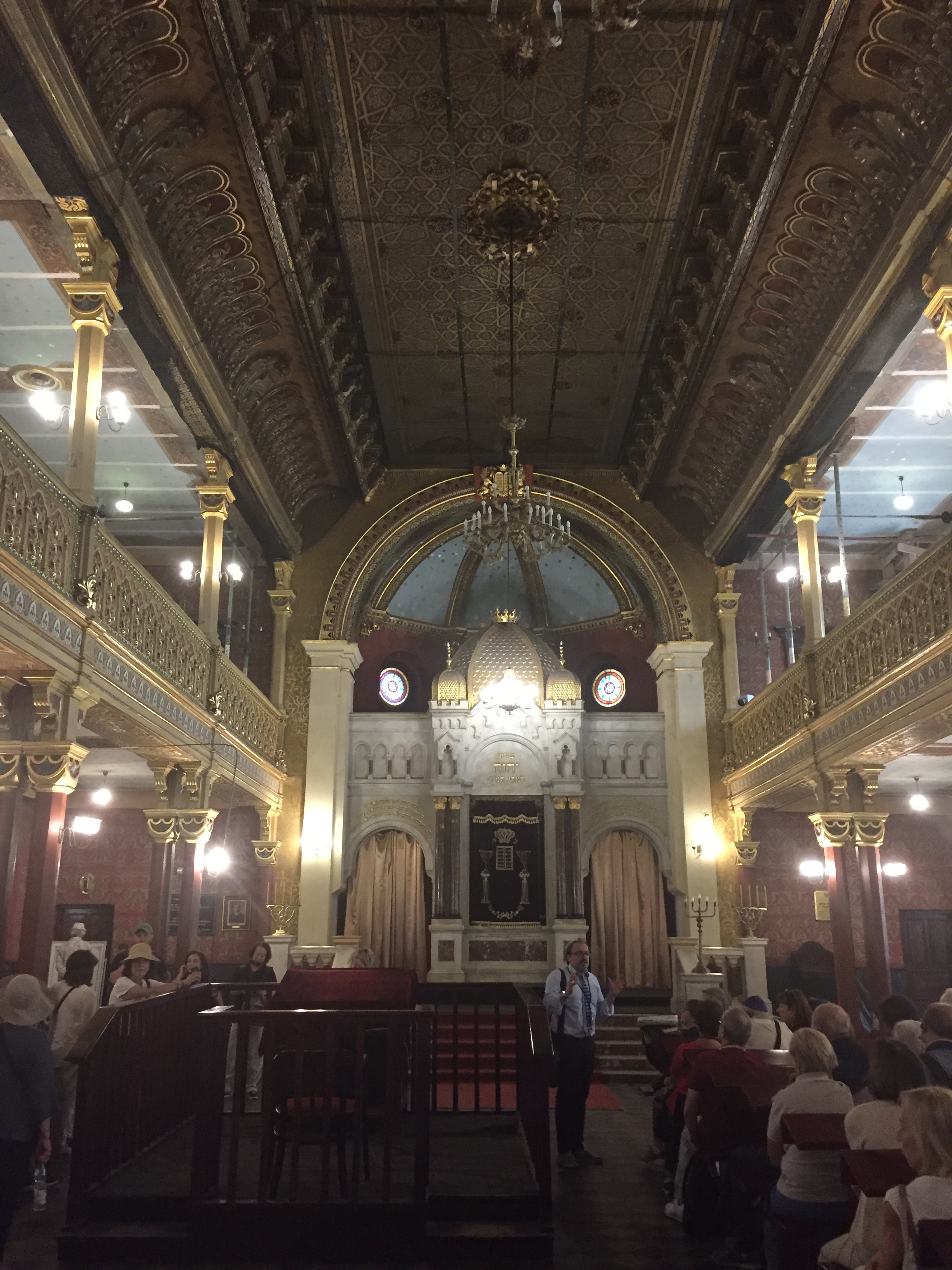
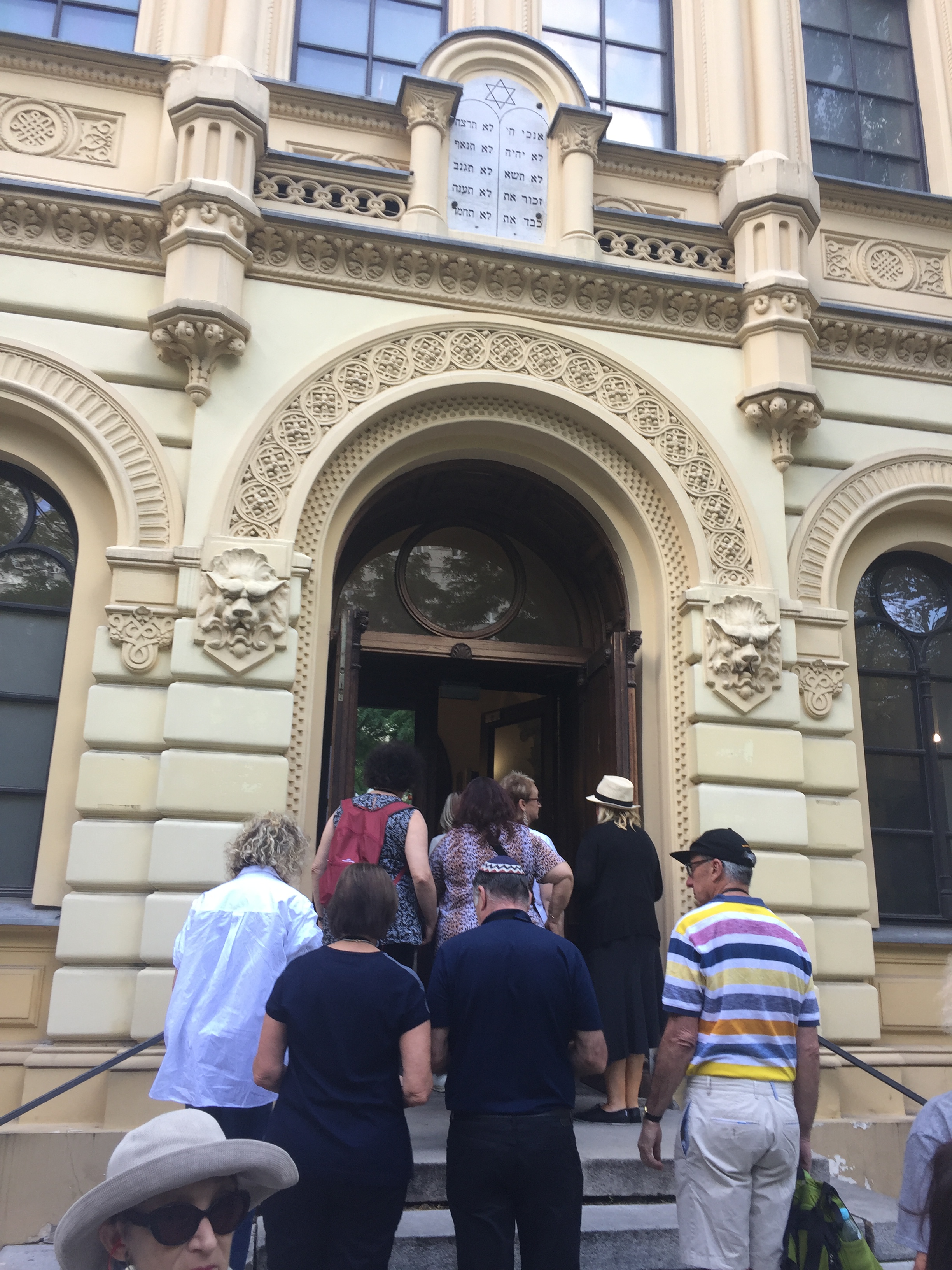
From here, we walked past another Orthodox synagogue, and then to Krakow’s beautiful Reform shul, which was used as a stable during the war but which has since reverted to a praying Jewish community. The difference between this shul and the previous one is striking, for the number of seats is very large and the cavernous interior is well-lit and highly decorative. Services today are led in Polish, but were led in German and in Polish before the war. I wonder how many of these seats get filled on a regular basis?

Jewish Heritage Tours of Krakow
Photograph: Simon Holloway
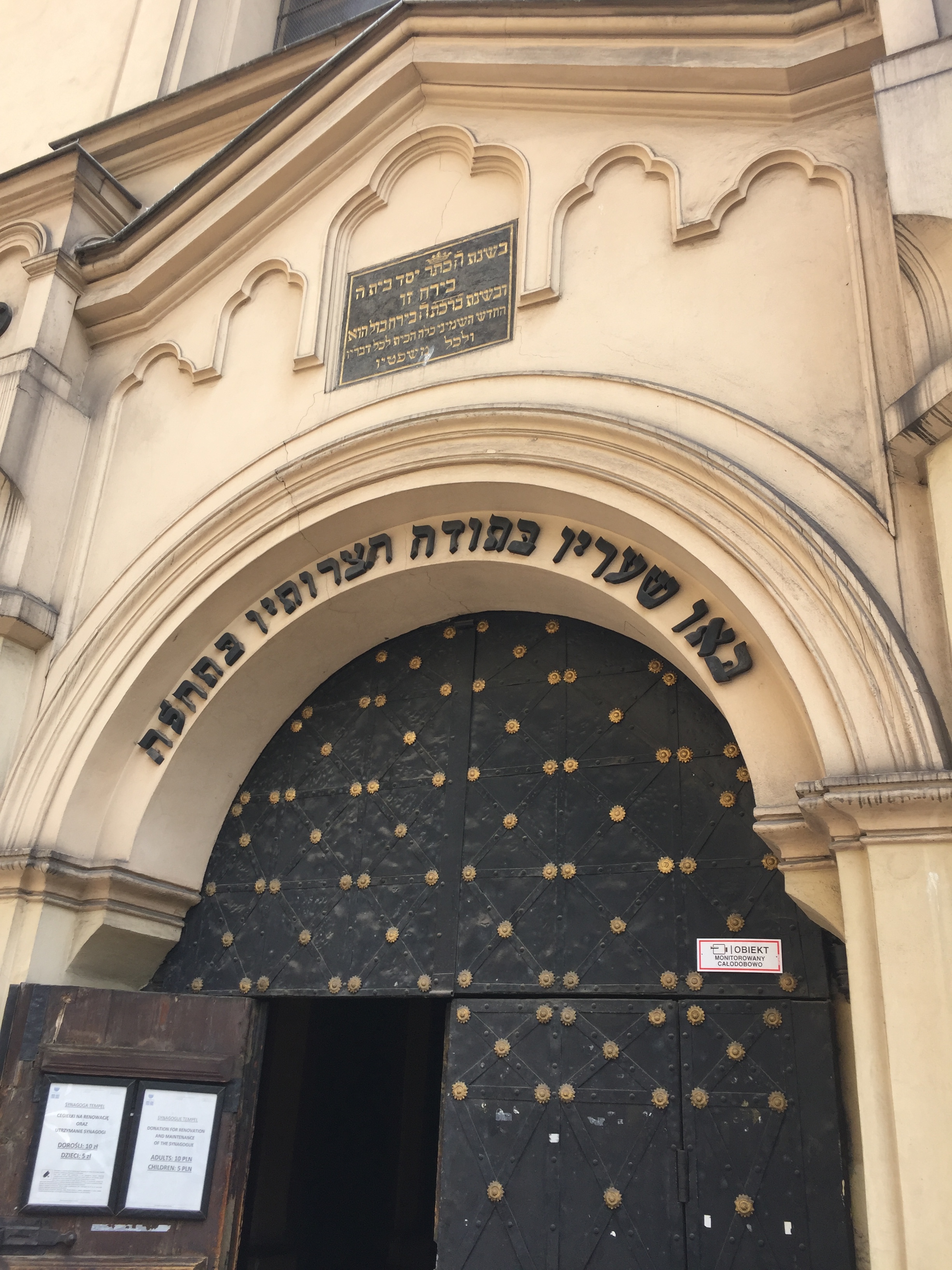
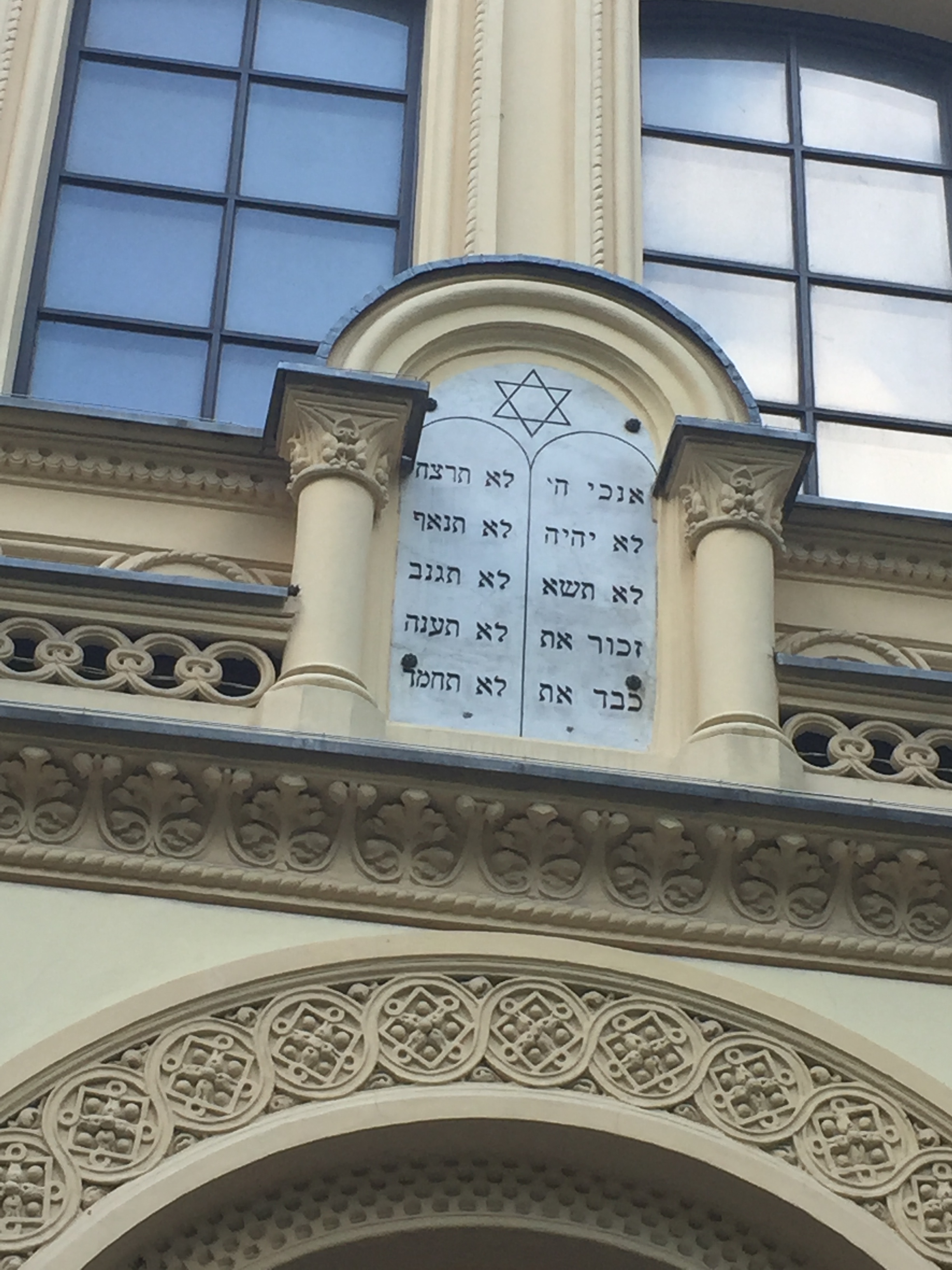
The Entrance to the Reform Synagogue, adorned with a quote from Psalm 100:4
Photograph: Simon Holloway
The lavish interior. Our group is on the left-hand side
Photograph: Simon Holloway
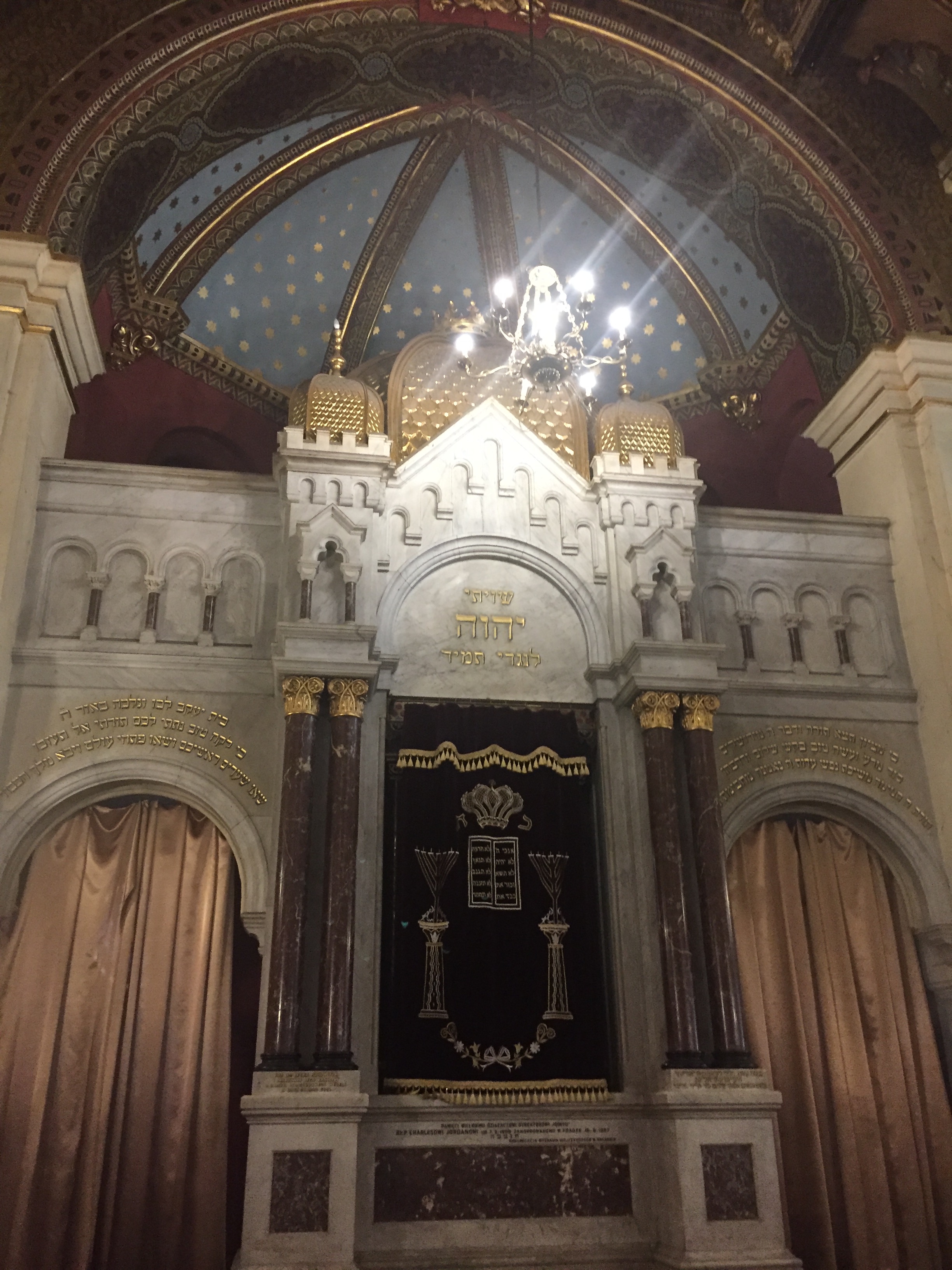
The Aron HaQodesh, decorated with scripture
Photograph: Simon Holloway
Two of the many stained glass windows, celebrating donors
Photograph: Simon Holloway

I am most overawed by the splendour of this building, and also disappointed by the large amount of graffiti. Israeli children, when visiting this synagogue, evidently think it appropriate that they scratch their names and their messages into the pews. It is sad to think that these buildings can endure so much, only to be treated with such disrespect.

Disgraceful
Photograph: Simon Holloway
One comes to a synagogue in Krakow to do this?
Photograph: Simon Holloway

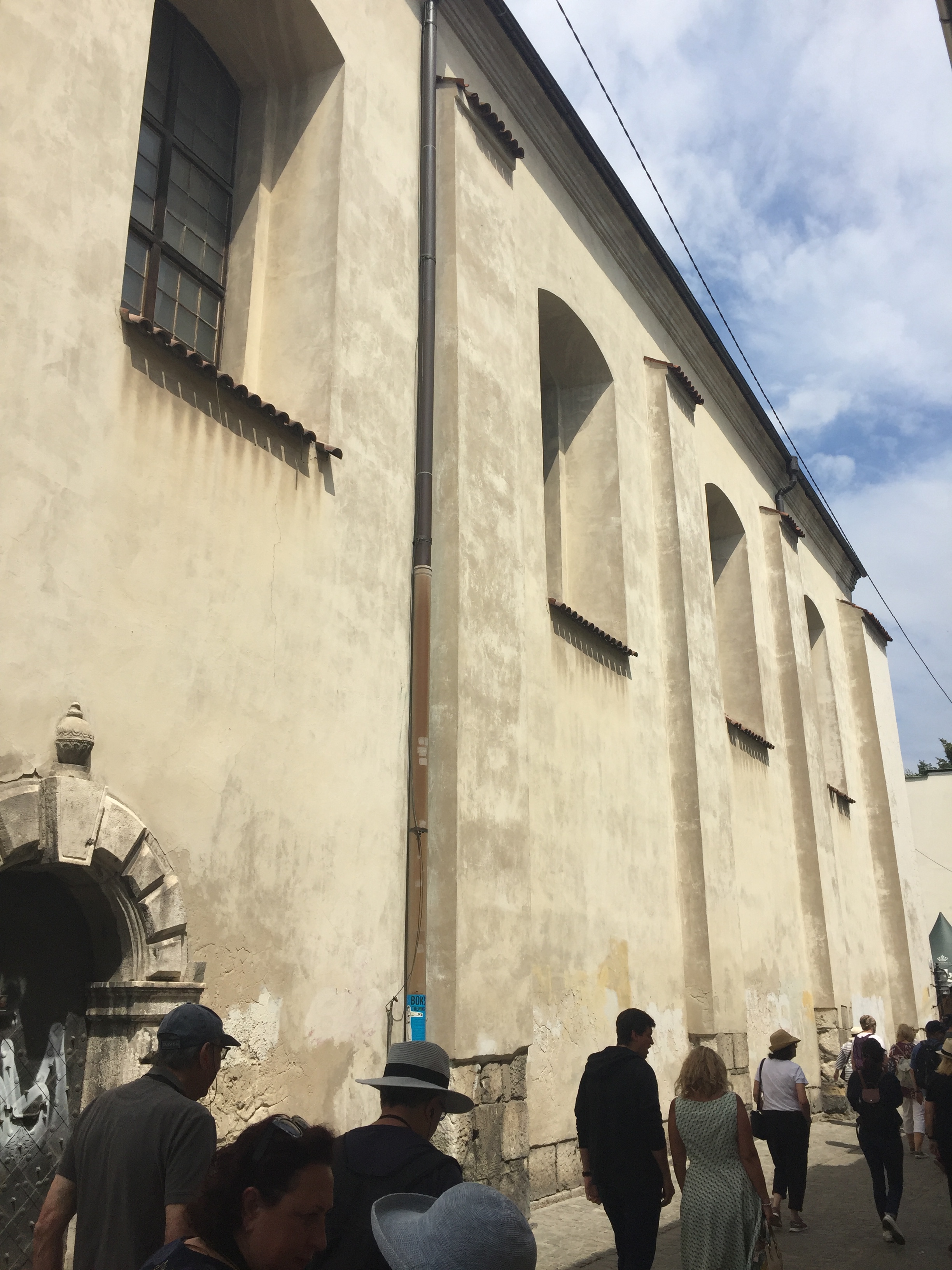
The market square in the old Jewish quarter is the one in which we spend most of our time. The red brick building in the centre was a kosher butcher before the war, and remnants of the functions of other buildings are still visible in faded paint. Today, many of the vendors want to cash in on this past, but while it is easy to find items of a Jewish (or a Nazi) character amongst their wares, booksellers at the market have not a single title in Hebrew or in Yiddish.

The objects are fake, but the offense taken is genuine
Photograph: Simon Holloway
Note the stamp on the left: it is meant to say “Jewish Police”, but instead says “Police Jewish”
Photograph: Simon Holloway

We sing happy birthday to Nikki and eat some chocolate cake, before we each disappear for a good hour-or-so to find lunch, and to explore the immediate environs. I run off to buy myself a new kippah from next door to the Rema shul, and to be disappointed by the range of products at a shop advertising Jewish books. If Jewish history started in September of 1939, the name of their shop would have been more apt.

Happy Birthday!
Photograph: Simon Holloway
Wandering past yet another of Kuzmir’s impressive synagogues – this one undergoing conservation
Photograph: Simon Holloway
There is always time for another group photo – this time with Fil!
Photograph: A friendly stranger

The curious thing about Krakow’s Jewish community, and something that makes it so different to the communities of Warsaw and Lublin, is that they lived with Nazi occupation for well over a year before moving into a ghetto. They faced a slew of decrees, requiring them to wear an armband, prohibiting them from taking public transport, but rather than being placed into a ghetto, it was the decision of the governor in 1940 that they be driven out of Krakow instead.

Many Jews left, and those with family in outlying regions were particularly fortunate in having somewhere to go to, but they were brought back in 1941 when the decision was taken to concentrate them instead. Within two weeks, 17,000 Jews in those outlying areas needed to move into the district of Podgórze, 3,000 non-Jewish inhabitants of which needed to leave.

That’s 3,000 out, for 17,000 in. All ghettos are crowded, and the Krakow Ghetto was absolutely no exception.

Life within the ghetto was brutal and fraught with terror, but it came to an abrupt and repulsive end over two days in 1943, when SS-Hauptsturmführer Amon Göth liquidated the ghetto on March 13-14. Those who were able to work were taken to Płaszów for labour, while those unable to work were deported to Belzec, or murdered in the streets.

It is gratifying to learn that when Göth was hanged at the end of the war, he was hanged three times in succession, since the rope was too long and his feet kept landing on the ground. To make this mistake once, Fil observes, it can be an accident. To make it twice suggests that they were tormenting the man. I can think of few people who deserve such torment more.

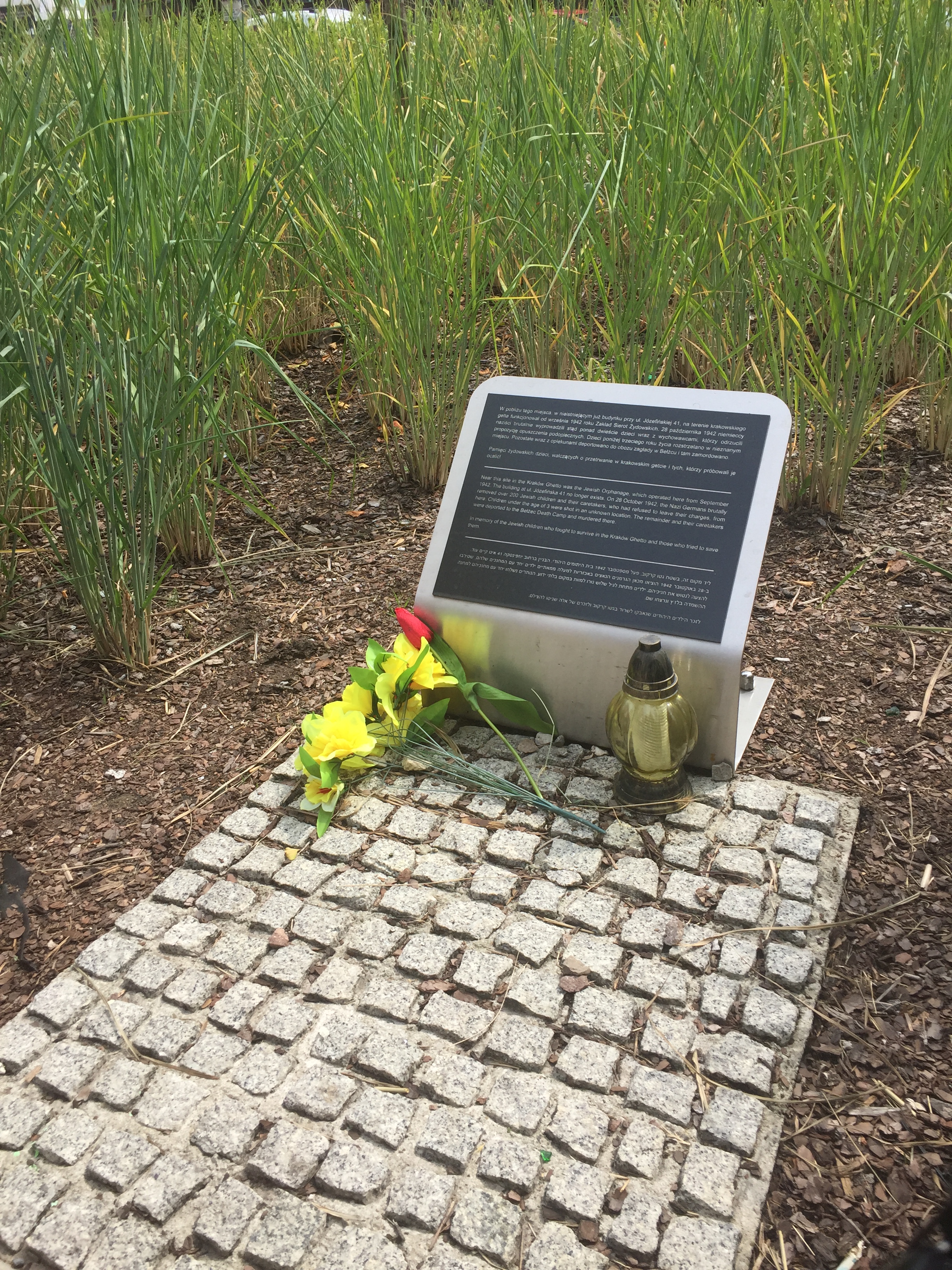
While wandering, we encountered more crimes of the SS. Alighting upon a memorial to the children and carers of the ghetto orphanage, we learned of how they were murdered before the liquidation of the ghetto, at the end of 1942. On October 28th of that year, all 200 children, together with those teachers who refused to leave them, were removed from the premises. Children under the age of 3 were shot in an unknown location, while the rest were taken to Belzec.

There are no words to describe a person’s capacity for such viciousness.

Memorial to the Murdered Children and Staff of the Krakow Ghetto Orphanage
Photograph: Simon Holloway

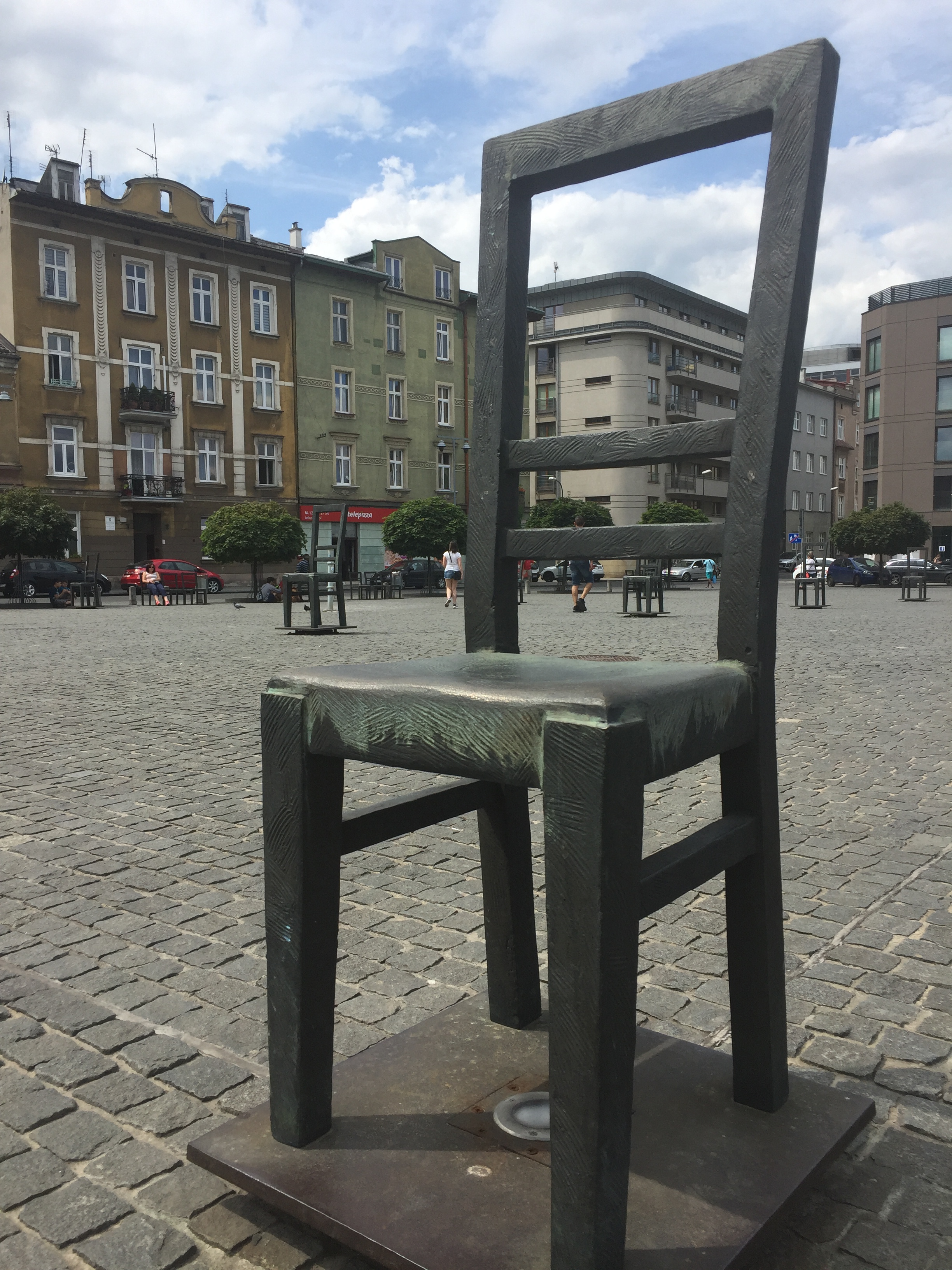
In the square, a monument exists to “the heroes” of the ghetto. Taking the form of sixty-five chairs, to remember the 65,000 Jews who had lived here before the war, it is an interactive space. Visitors and residents are encouraged to sit in the chairs, and some are even placed at bus and tram stops for that purpose.

Empty Chairs
Photograph: Simon Holloway

I look at them and I feel giddy. If you could somehow put a thousand people on each one of these chairs, that incomprehensible throng would represent the totality of what we lost in this one city alone.

The motivation for this stirring memorial space, which was erected only a little more than ten years ago, was a line near the end of a book called “Krakow Ghetto Pharmacy”. Written by a non-Jewish pharmacist who was allowed to operate his business within the ghetto – a man named Tadeusz Pankiewicz – it describes the look of the ghetto after the liquidation. In terms reminiscent of Roman Polanski’s depiction of the Warsaw Ghetto, post-deportation, in The Pianist, Pankiewicz describes the empty furniture strewn about the street.

So far as Polanski is concerned, he was of course a native of Krakow and a survivor of the Krakow Ghetto. A little later in the day, when we pause by a remaining segment of the Krakow Ghetto wall, we take some time to consider the impact on Polanski’s work of the trauma that he had endured as a young man. It is curious, Fil muses, just how many of his productions feature the theme of claustrophobia, given his experiences hiding between roundups in the ghetto, or in the countryside after his escape.

Fil, on the films of Roman Polanski
Photograph: Simon Holloway

Before we leave this part of the former ghetto, to make our way by foot to the factory of Oskar Schindler, we pause in a thoroughly compelling museum, erected to honour the memory of that pharmacist, Tadeusz Pankiewicz. Honoured with the title of Righteous Among the Nations, Pankiewicz (who died in the early 1990s) did much to assist those Jews amongst whom he lived, and much to help salvage objects of Jewish significance.

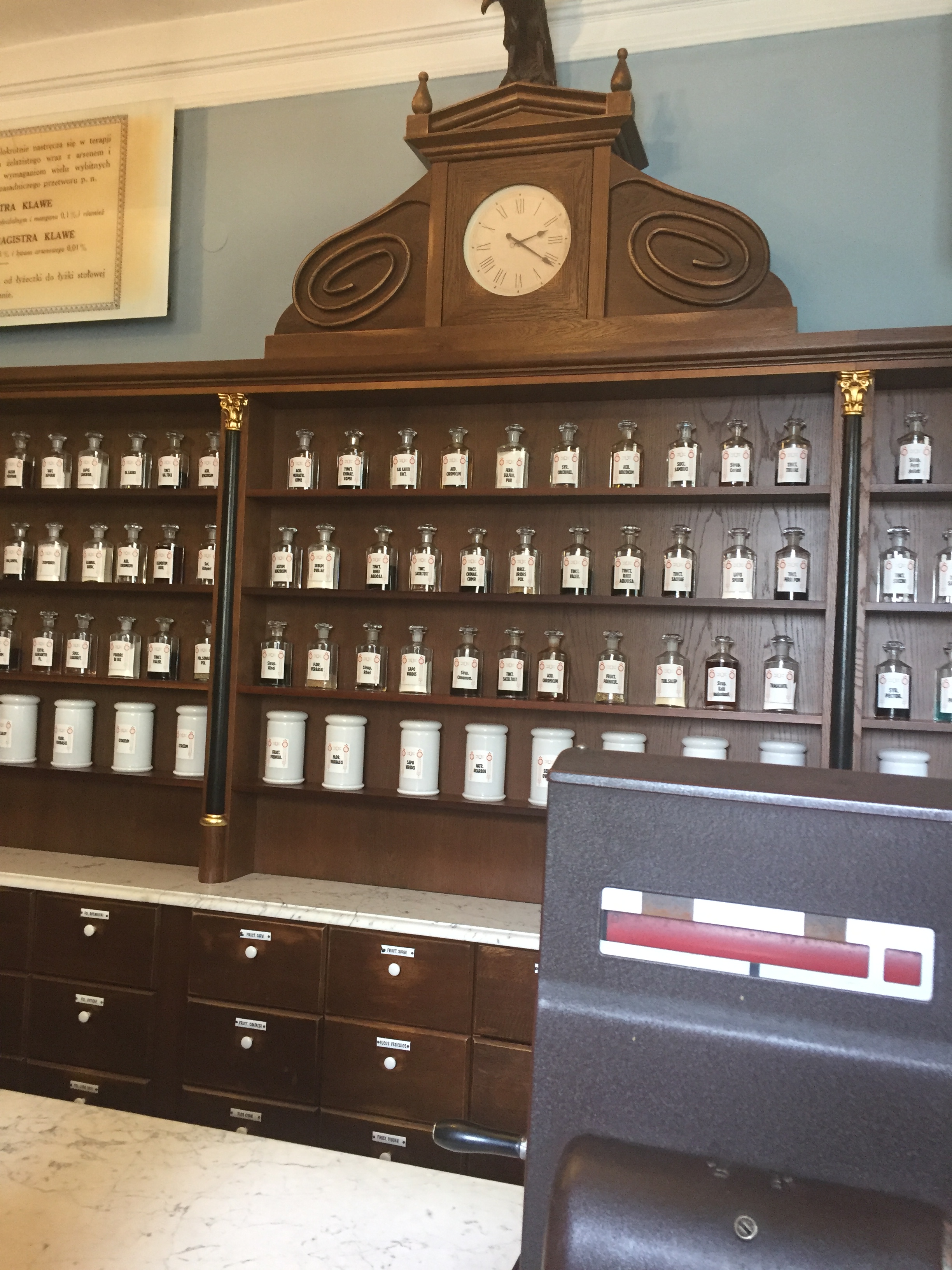
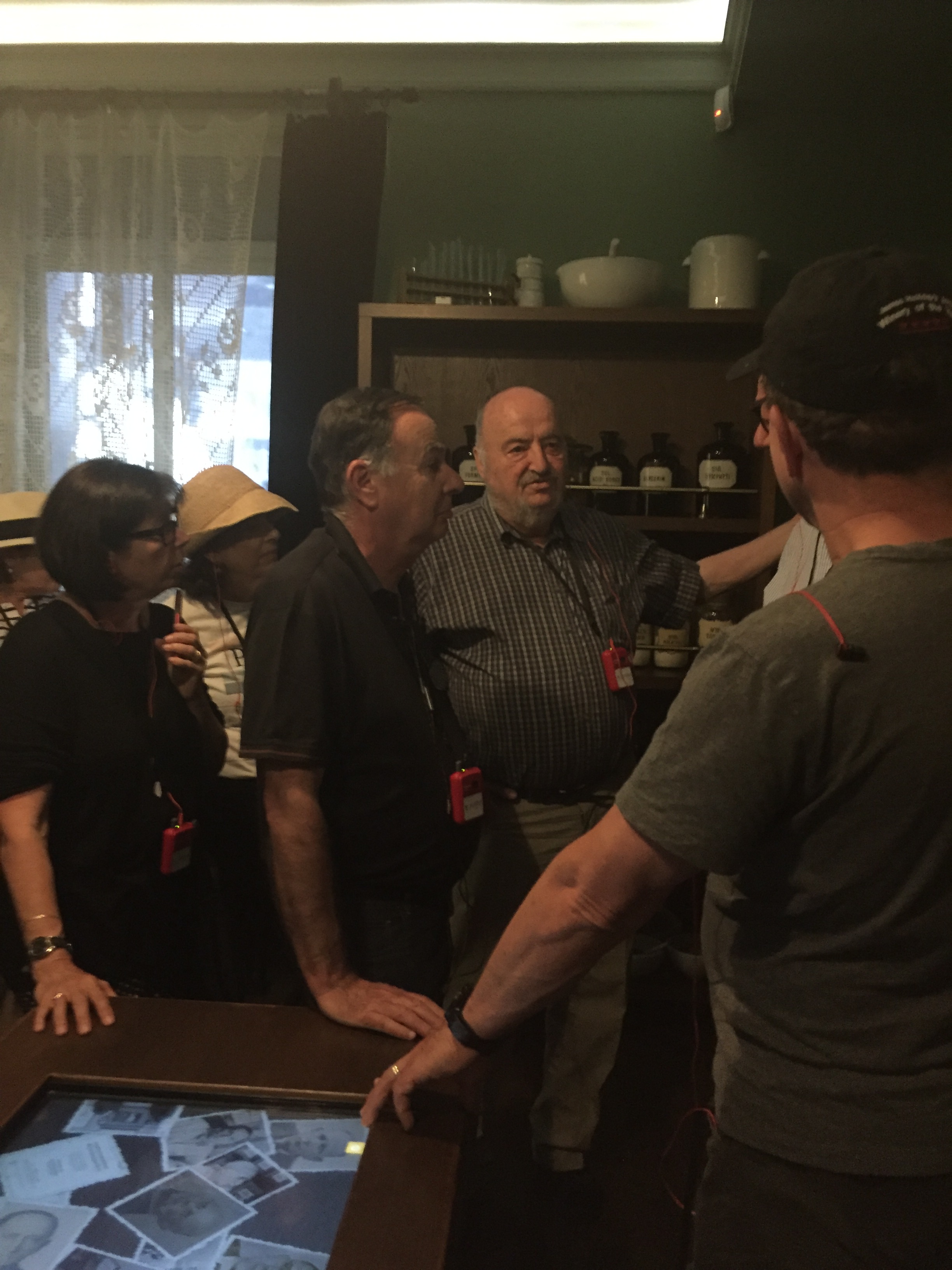
Within the Pharmacy Museum: The View to Behind the Counter
Photograph: Simon Holloway
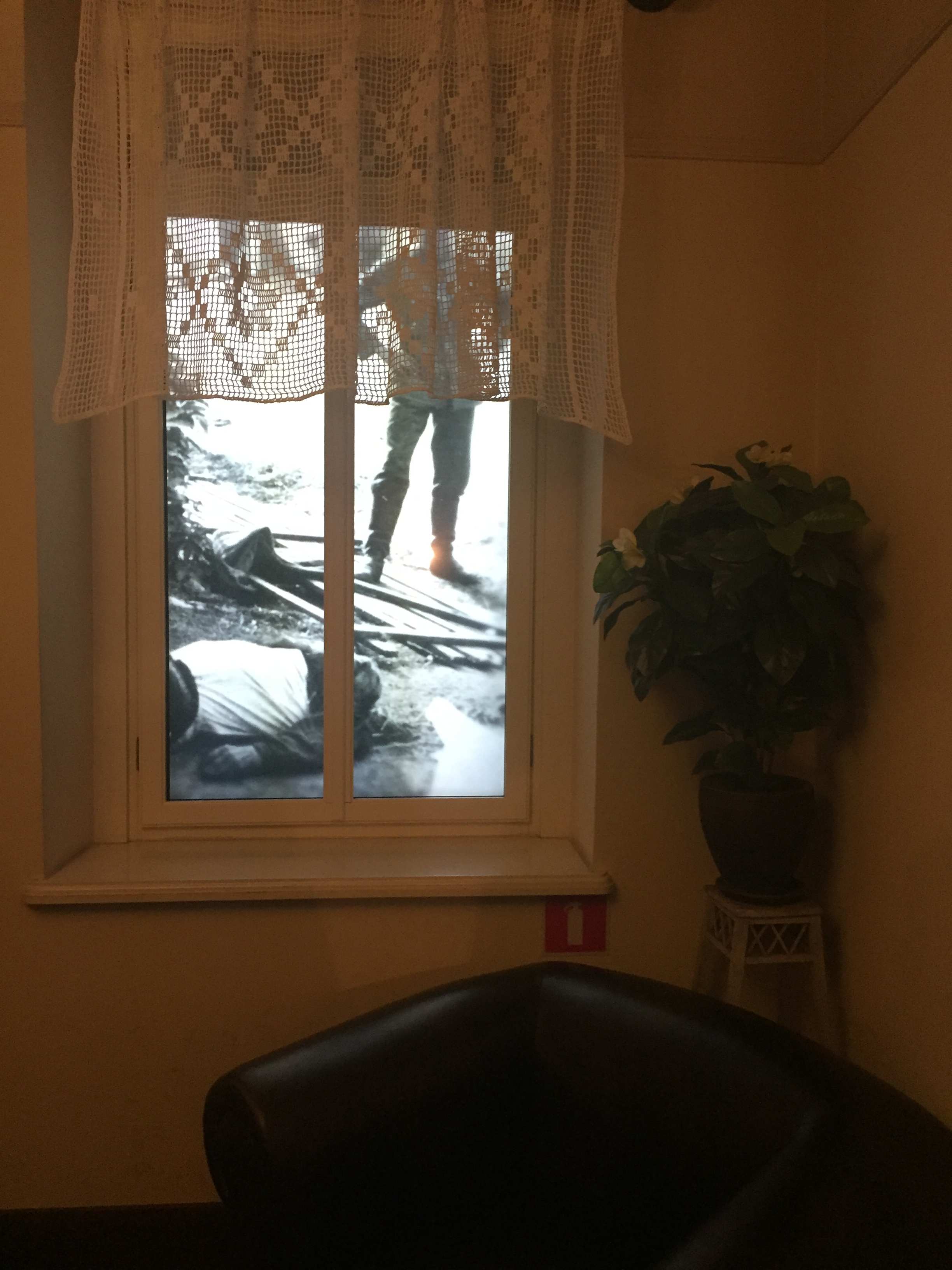
The View from Tadeusz’s Window: A Moving Display
Photograph: Simon Holloway
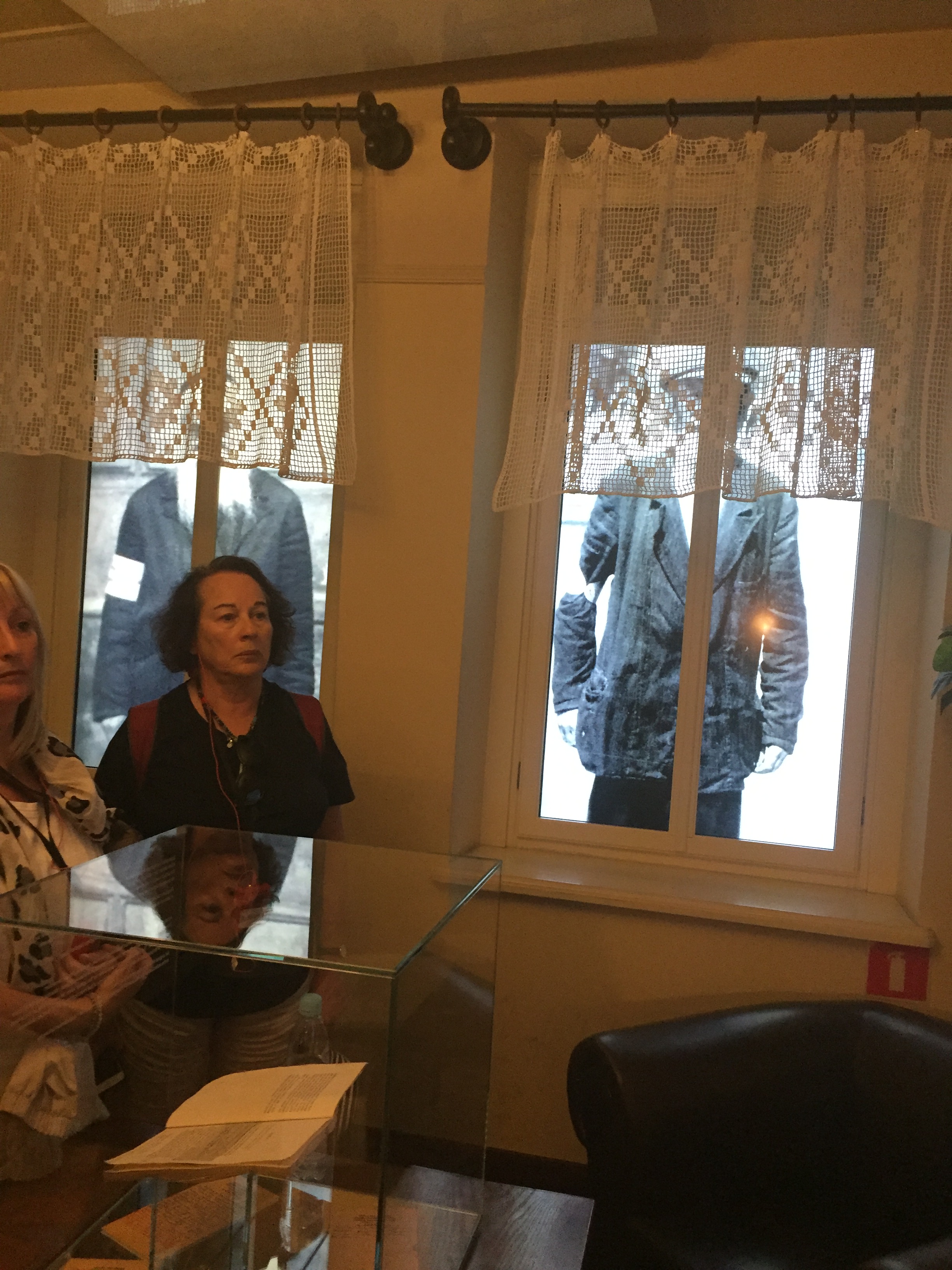
Watching the Footage
Photograph: Simon Holloway
Konrad, on the fate of the deportees
Photograph: Simon Holloway

The work of people who risked their lives to help Jews has been something of a theme in this tour, and it’s an important one. It is fitting that we should take the time to also honour one of the more controversial of those figures, if only because the production of the film that was responsible for popularising him also resulted in such an enormous increase in tourism to this city.

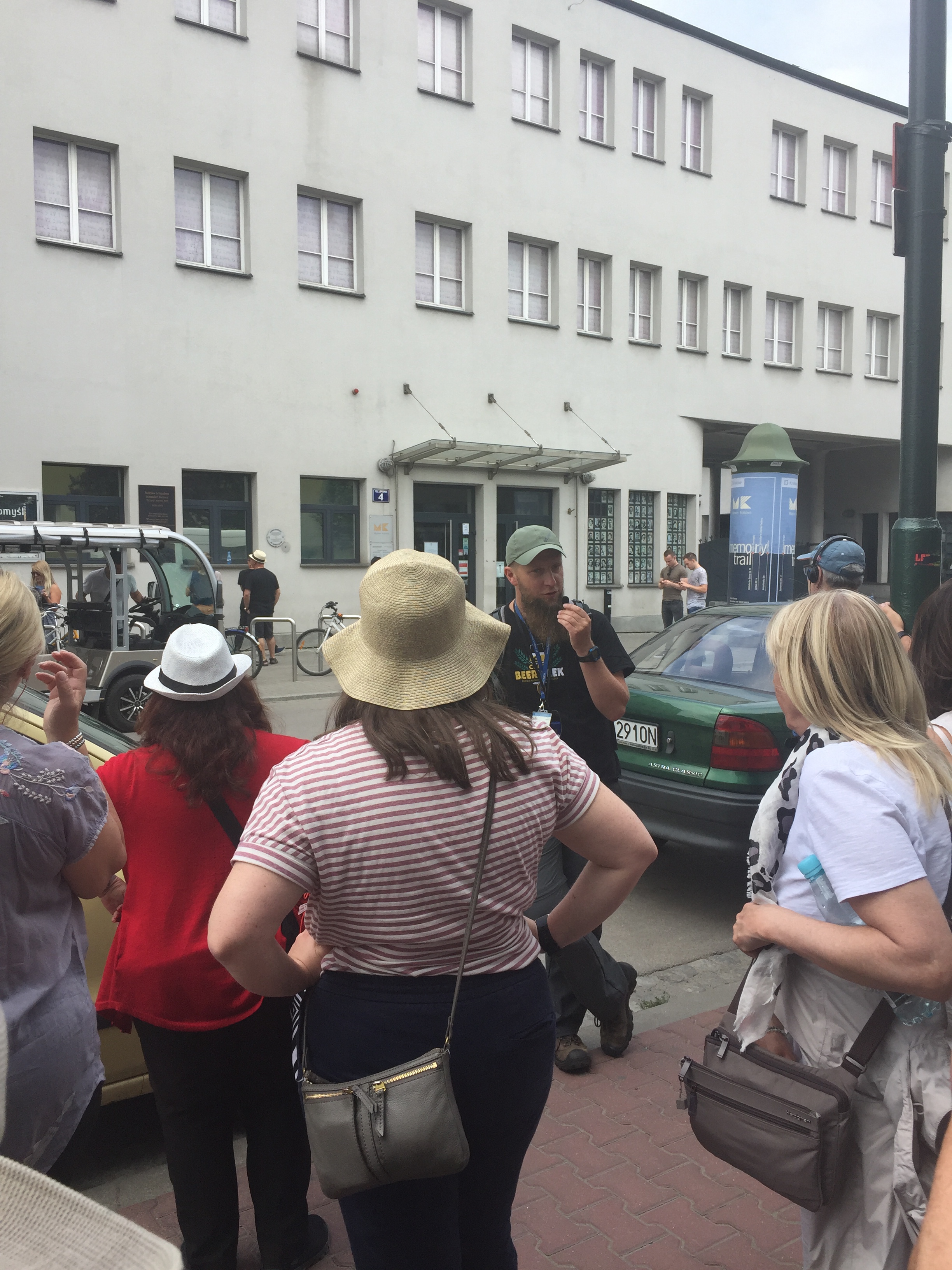
It’s only a short walk from where we are standing (the ghetto, itself, having been so small), and outside of what were once the ghetto confines. Today, the factory is in use by the Museum of Contemporary Art in Krakow (MOCAK), but the offices next door to them are unchanged, and so recognisable from those scenes in Spielberg’s film in which they are shown from the street.

Fil speaks about Oskar Schindler, whose offices are in the background
Photograph: Simon Holloway

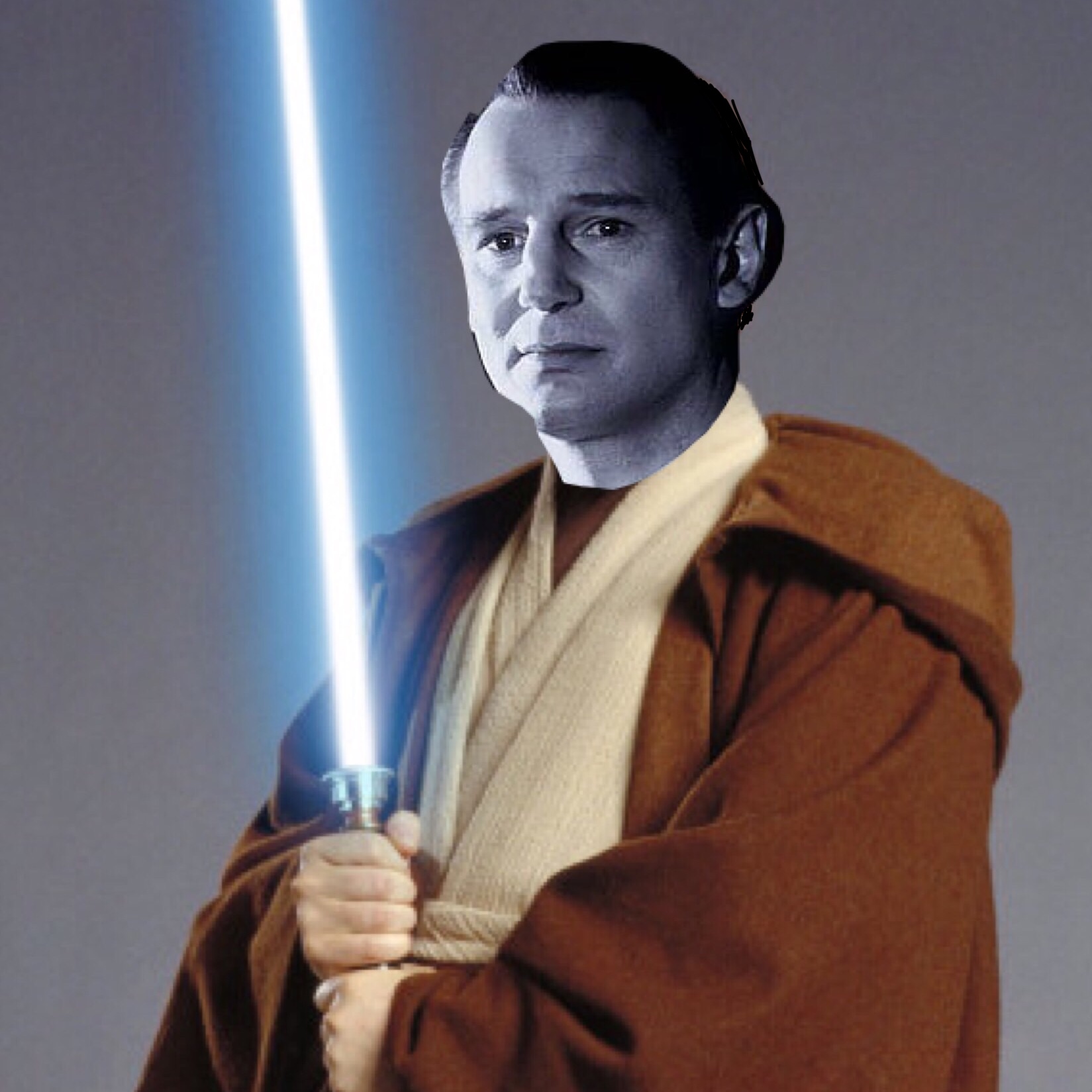
Schindler is a complex character. Aside from the fact that he was a card-carrying (or, at least, pin-wearing) member of the Nazi party, he was also a terrible womaniser, heavy-drinker and obsessive gambler. In the words of Holocaust survivor, Leopold Pfefferberg, who presented Schindler’s story to Australian novelist Thomas Keneally, Oskar Schindler was “the all-drinking, all-screwing, all-black marketeering Nazi. But to me he was Jesus Christ, Oskar Schindler.”

Buried today on the Mount of Olives in Jerusalem, Fil observes that Schindler can lay claim to being the only member of the Nazi party buried in Jerusalem, who wasn’t kidnapped by the Mossad first. And I cannot help mentioning it, but the fact that Schindler could so clearly have gone “the other way” (he in fact commenced his career in Czechoslovakia preparing the groundwork for the German invasion) is expressed by Fil most poignantly. He became Luke Skywalker, he tells us. Not Annakin Skywalker.

A rare photo of Oskar Schindler, c.1944
Image: Simon Holloway

As we drive to the Jewish Community Centre (JCC), I find myself lost in thought. It is hard to imagine these pretty streets as they must have looked in 1941. The filth and the terror, the violence and the fear: these are all so foreign to the Krakow of today. But just how foreign we were about to discover.

Our Hearts are Broken: A view from the bus of a memorial to the murdered Jews of Krakow
Photograph: Howard Wolfers

Jonathan Orenstein, the Director of the JCC and the vice-president and co-founder of their interfaith initiative greets us, presents us with an overview of his institution’s work, and is hit with a barrage of questions. He is charismatic, entertaining and – above all – inspiring. It is a most excellent way to bring our journey towards a close.

Jonathan Orenstein speaks to us about his work at JCC
Photograph: Simon Holloway

Jonathan contrasts Jewish life in Poland with Jewish life in Germany. In Germany, the reconstitution of Jewish communities is happening via immigration. In Poland, on the other hand, it is predominantly a home-grown phenomenon. In the very heartland of the Holocaust, increasing numbers of Polish-born citizens are discovering their Jewish roots.

Considering Jewish anybody whom the Nazis considered Jewish (although, in all other respects, we are assured that he does not define himself by persecution), Jonathan estimates the number of Polish Jewish people to be as high as 100,000. I wonder if Rabbi Michael Schudrich, whom we met in Warsaw, would be quite so optimistic?

Boasting a community of some 750 in Krakow (itself incredibly impressive), the work that the JCC does is most profound, and the story of its origins incredibly interesting.

We are told of how Prince Charles, having met some survivors of the Holocaust and of Communism, felt inspired to establish facilities to assist them in their old age. Together with World Jewish Relief (Britain’s largest Jewish relief organisation, and one that had organised kindertransports during the war), they established the Jewish Communal Centre not only to support survivors, but to support young Poles of Jewish descent.

Today, the JCC provides Shabbat dinners every week (sometimes for up to 200 people), and some 8-9,000 kosher meals every year. Jonathan sees Poles cut off from their Jewish identity as “secondary victims of the Holocaust”, and with a view to reconnecting them to the Jewish world he is also making a powerful statement as regards his own identity.

This is a message to the world, he tells us, and a message to those who would do us harm. But above all, it is a message to ourselves, for we define ourselves not by what people do to us but by how we then choose to respond. Today, the first native-born Polish rabbi is close to receiving semikha in London, and the JCC in Warsaw has a Polish-born director. I would say that they have figured out precisely how to respond.

On a more ambiguous note, Jonathan’s defence of antisemitic themes in Polish iconography is unsettling. His analogy may be apposite (that it is not too dissimilar to the treatment of Native Americans in popular North American culture), but I am unsure. He is certainly correct, insofar as claiming that the popularisation of glib stereotypes concerning Native Americans is hurtful and should be terminated, but do local Polish people really not know that an association between Jews and money is insulting? Are they really so ignorant, as he seems to suggest, as to think that it’s a positive association?

When Konrad asks Jonathan who determines whether or not these people coming to the JCC are Jewish, I feel that he gets defensive and doesn’t answer the question. Does the Orthodox rabbi (whom he is keen to tell us sits on the board) count these people in a minyan? Will he officiate at a wedding between one of these young men and a girl whose Jewishness is not under question? That Jonathan married a young Polish lady whose father’s family was Jewish might account for this unwillingness to go into further information, and I do wonder whether or not there are things he is not telling us.

In all, I feel somewhat reserved as we walk back to the bus. My sense of the group’s mood is that people have received his message very positively, and I believe that the JCC and the work they do is undeniably good. But as with the message presented by Poland’s Chief Rabbi, I am still not completely sold on the positive nature of Polish society.

Is it true? I know that I would like it to be true, but wanting something to be true, however desperately, doesn’t make it so. Myself, I feel a little like the love-sick bachelor who receives the intimation of romantic interest from the woman of his dreams. I cannot bring myself to believe in it unreservedly, for the more that I commit to it the more that it will break my heart if it should also come to nothing. Until I can speak to some regular Polish Jews – not rabbis, not community directors – who will tell me what life is like for them in this country, and how comfortable they feel being outwardly Jewish, I will continue to withhold my judgment.

As of the present moment, I haven’t seen any.

July 17: … to Darkness Again

This morning, on what was our earliest morning so far, we departed for Auschwitz. Being tourists our sole association with this name is Nazi terror, so it is something of a surprise to see how many people live within the town that shares its name.

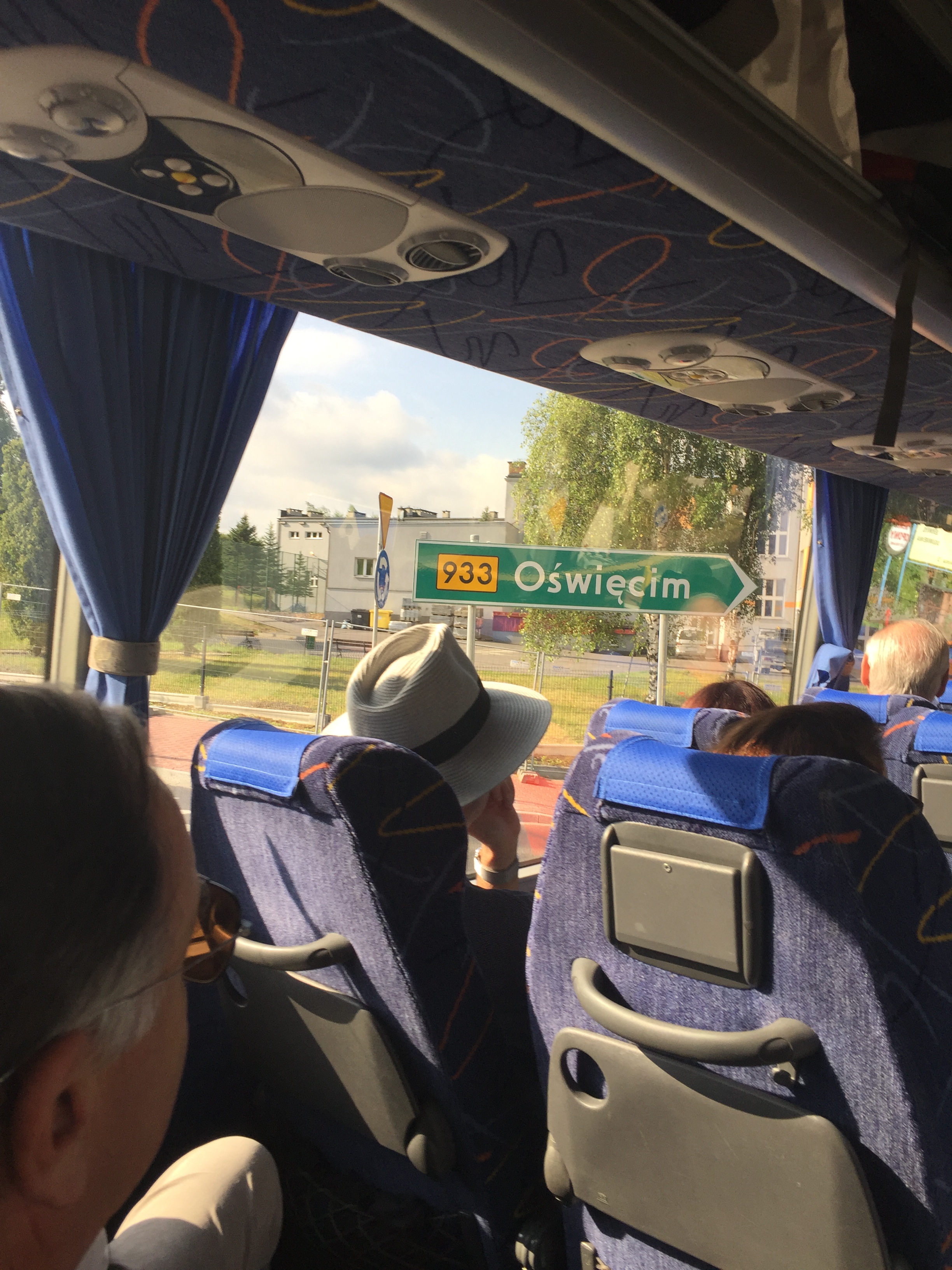
This Way to Auschwitz:
Photograph: Simon Holloway

In Polish, this town is called Oświęcim (pron. ozventschim), with the nearby village of Brzezinka (bzhezhinka) lending its name to Birkenau. We cannot ignore how pretty these villages are, nor the fact that the locals living there are forced to be forever associated with death. It’s a terrible shame, especially given the long history that these communities have.

Before the war, there were some 12,000 people living in Oświęcim, of whom approximately 7,000 were Jews. Situated on the border of Lesser Poland and Upper Silesia, theirs was a strong coal-mining region, and one that was greatly coveted by the invaders, who incorporated it into the Reich immediately following their invasion of this country.

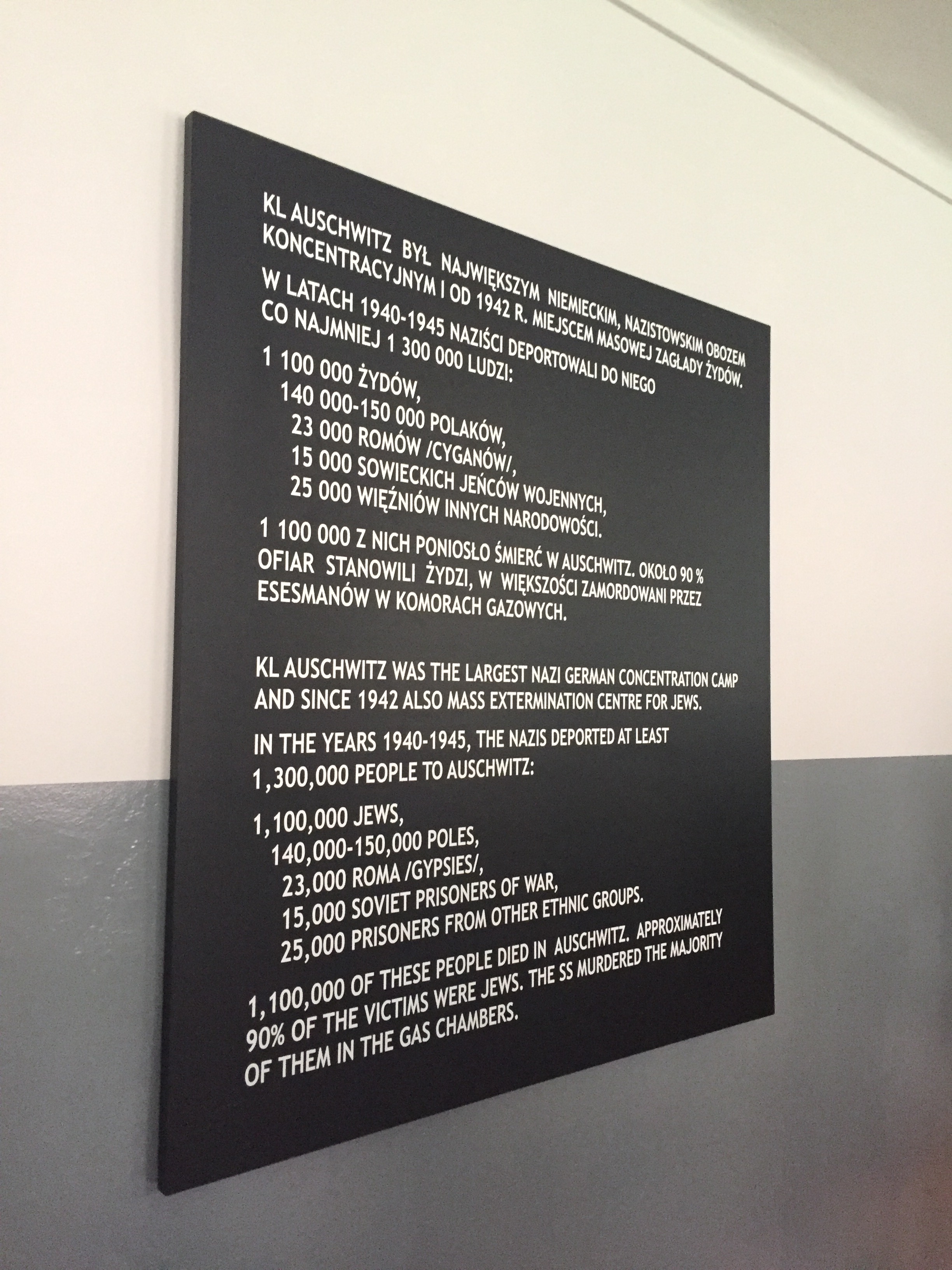
Auschwitz was officially open for prisoners on June 14th, 1940, when it received a transport of Polish political prisoners and intelligentsia from Tarnow, in Eastern Poland. Interesting to me was how the establishment of this camp provided something of a mirror image to the establishment of Majdanek, which was first opened for Soviet POWs and only subsequently local Poles.

This is of course a feature of timing: Majdanek was established after the invasion of the Soviet Union, while Auschwitz was set up as a function of the Polish occupation. Practically, however, it means that while Poles swelled the population of Majdanek, forcing it to shift into new territory and become a different type of camp to that which had been envisaged, that which expanded the purpose of Auschwitz and forced this camp to change was the influx of Soviet prisoners.

These POWs, whose only purpose in being brought to the camp were that they be exterminated, were the first people concerning whom the SS experimented when it came to the use of Zyklon B. These experiments took place in September of 1941, and were initially something of a disaster.

Uncertain of how much hydrogen cyanide is necessary to kill a group of people, the execution of these prisoners lasted a grisly two days in total, during which time they slowly asphyxiated. Once the proper quantities were ascertained, the technique was deemed enough of a success that Majdanek also began using Zyklon B in their gassing facilities, as we heard just two days ago.

The first shipment of Jews began arriving at the beginning of 1942, from which point on Birkenau would be their sole destination. Since Oświęcim is a major point on the Polish rail line, trains would all arrive in the village, at a specially-constructed “Jew ramp”, from which prisoners would walk 1km into the death camp. In the summer of 1944, with the arrival of almost half a million Hungarian Jews (some 75% of whom were murdered within a couple of hours of climbing off the train), a railway spur was constructed directly into Birkenau, to a “Jew ramp” within the camp itself.

Our tour today would commence with Auschwitz I, and it was to this camp that we made our meandering way.

Shortly after crossing a tributary of the Vistula, Fil pointed out to us the location of two synagogues (both of which, while repurposed, were still standing) and the old Jewish cemetery. Shortly after the cemetery, which is still intact, we looked out the right-hand window and marked the location of the private residence of Rudolf Höss, who served as camp commandant for the first three-and-a-half years of its operation, before returning again in May of 1944 to lend his expertise to the annihilation of Hungarian Jewry.

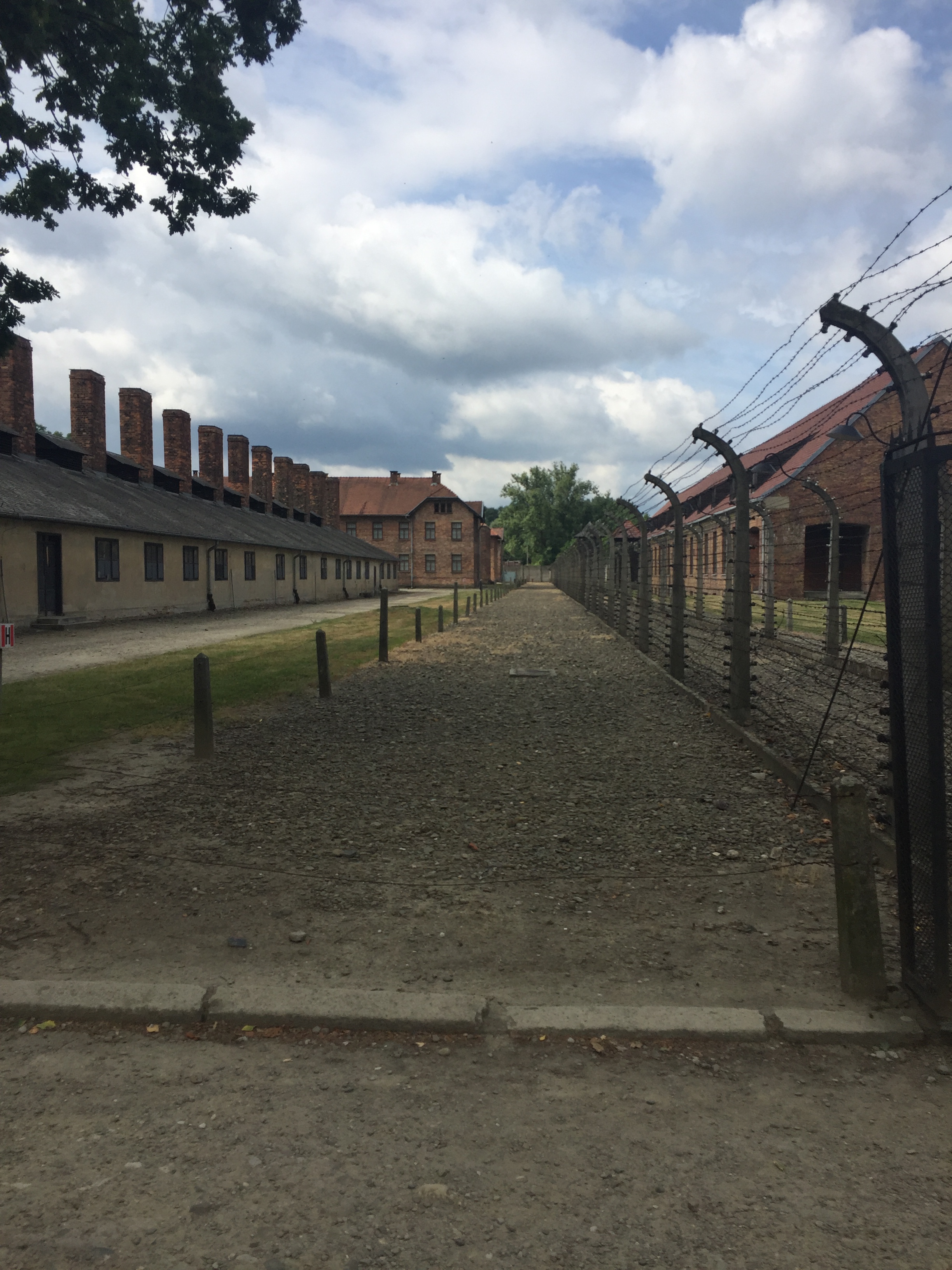
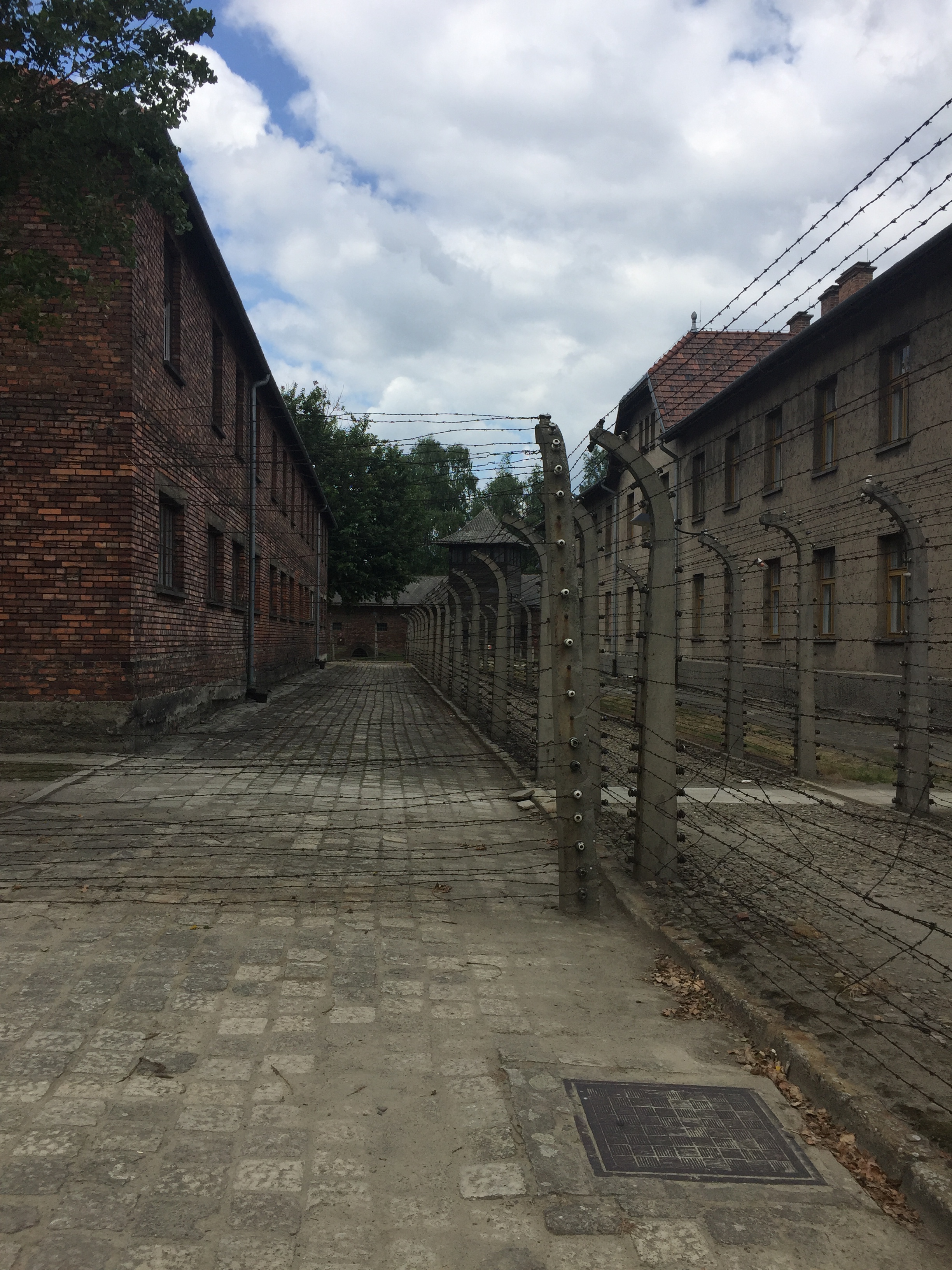
Immediately after his residence, where he lived with his wife and children, were the familiar red-brick dwellings and the slanted barbed-wire fences. We were in Auschwitz.

Having arrived within the camp, we make our way through the throngs of visitors to collect our “whisperers” and ear-pieces to go with them, the better to hear our respective guides. Auschwitz is a major tourist destination, and it is not unlike visiting Disneyland, with the long lines and the continual bustle of activity. I wonder how many of these people have heard of Treblinka? Camps that have even been erased from the popular imagination represent more effectively, to my mind, the totality of the Final Solution.

One of the downfall’s of Auschwitz tremendous popularity
Photograph: Simon Holloway

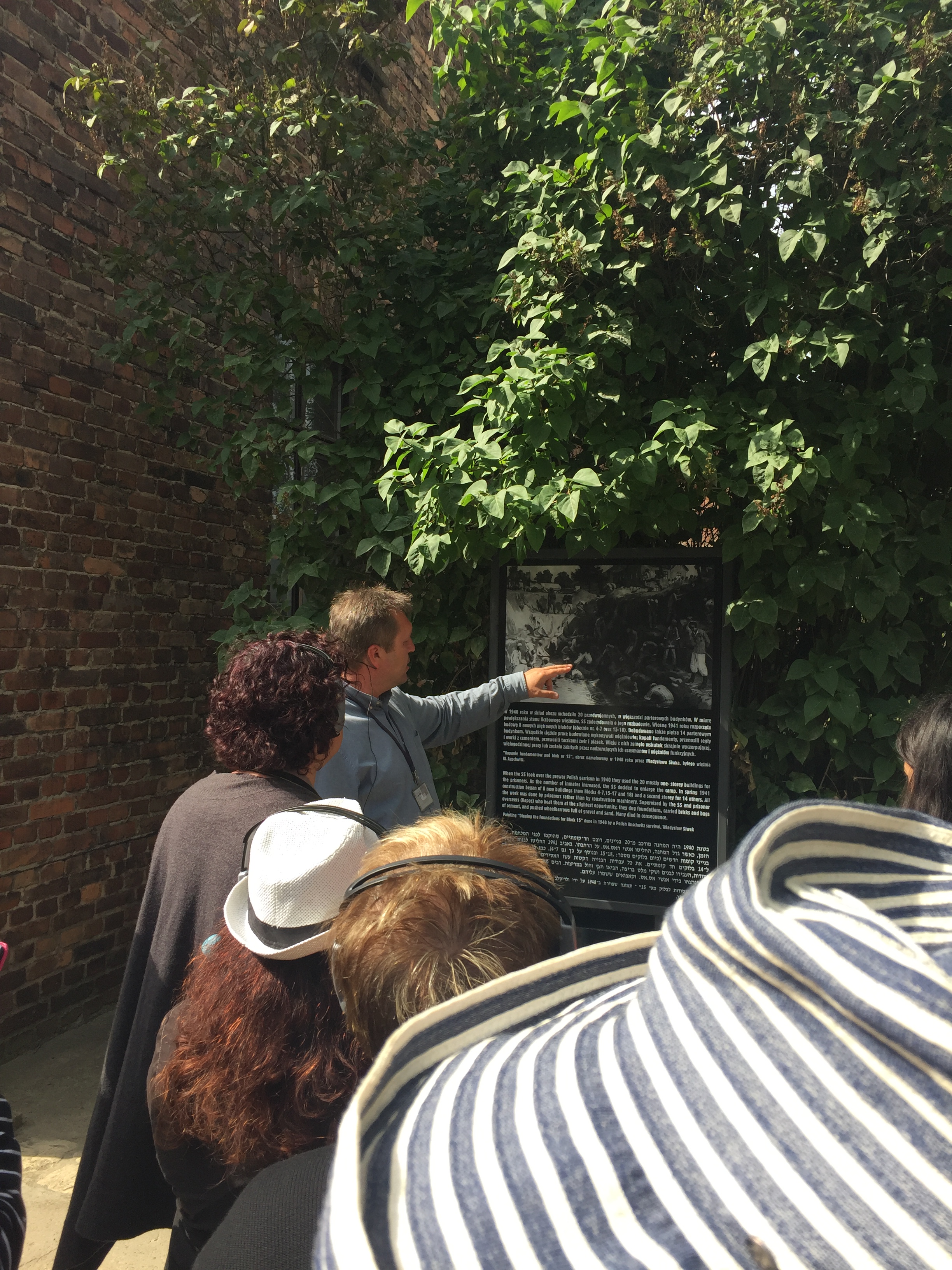
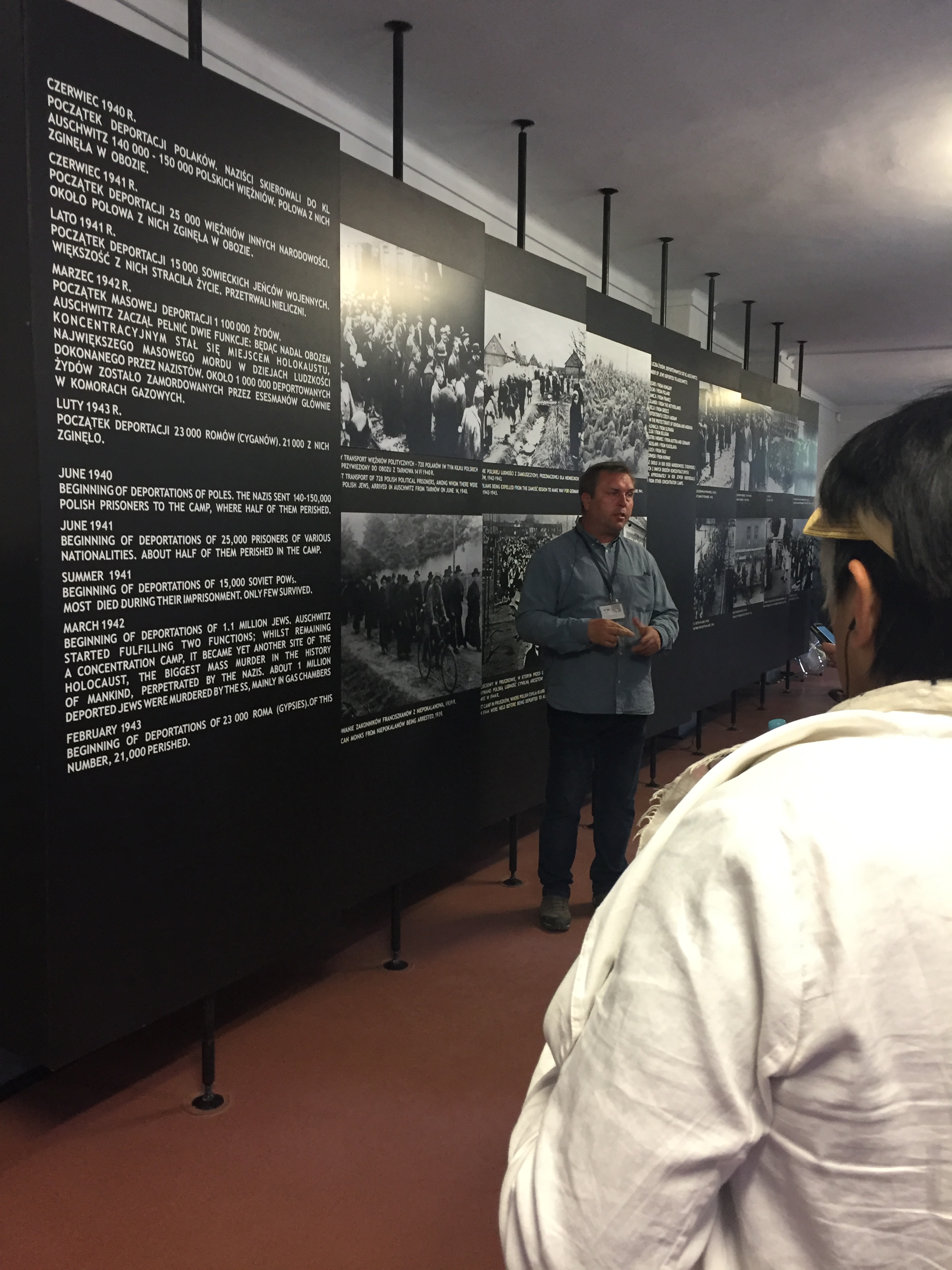
We break into two groups, and are given two guides. Some go with Miroslav, but I find myself with Mariusz. He’s fascinating.

Mariusz has been guiding at Auschwitz for some three years now, but his wife has been guiding here for no fewer than twenty-six. They live but a ten-minute walk away, in a house that was built by her family, but which was occupied by the SS during the war itself. He is very heavy on German responsibility for German crimes, but pulls no punches when he speaks of Polish collaboration (not in Auschwitz, of course, where Poles – as in Majdanek – were part of the prisoner population), and of the collaboration of various nation states.

One of the things that’s so confronting about Auschwitz (aside from the content discussed on site) is the sheer number of people, and the completely automated nature of the tours that they need to run in order to accommodate the crowds. I felt a little like a sheep, being ushered through spaces and out again with no ability to wander away and explore things of personal interest.

As we move mechanically from place to place, Mariusz rattles off statistics. 17,000 women, 4,000 of whom are murdered in the space of six months; 110,000 Polish farmers from Zamość, almost all of whom are killed with injections of phenol to the heart; 216,000 Jewish children, all but 6,000 of whom are gassed on arrival… The details are exhausting and the tours are information-heavy. This is a roving lecture, and with little time to process the content of the exhibits, potentially overwhelming. When Mariusz tells us all to keep to the right-hand side, I cannot help but think of the instructions given to arrivals who were selected for labour.

Mariusz explains the layout of Auschwitz I
Photograph: Simon Holloway
The Many-Chimneyed Kitchen of Auschwitz I
Photograph: Simon Holloway
Numbers
Photograph: Simon Holloway

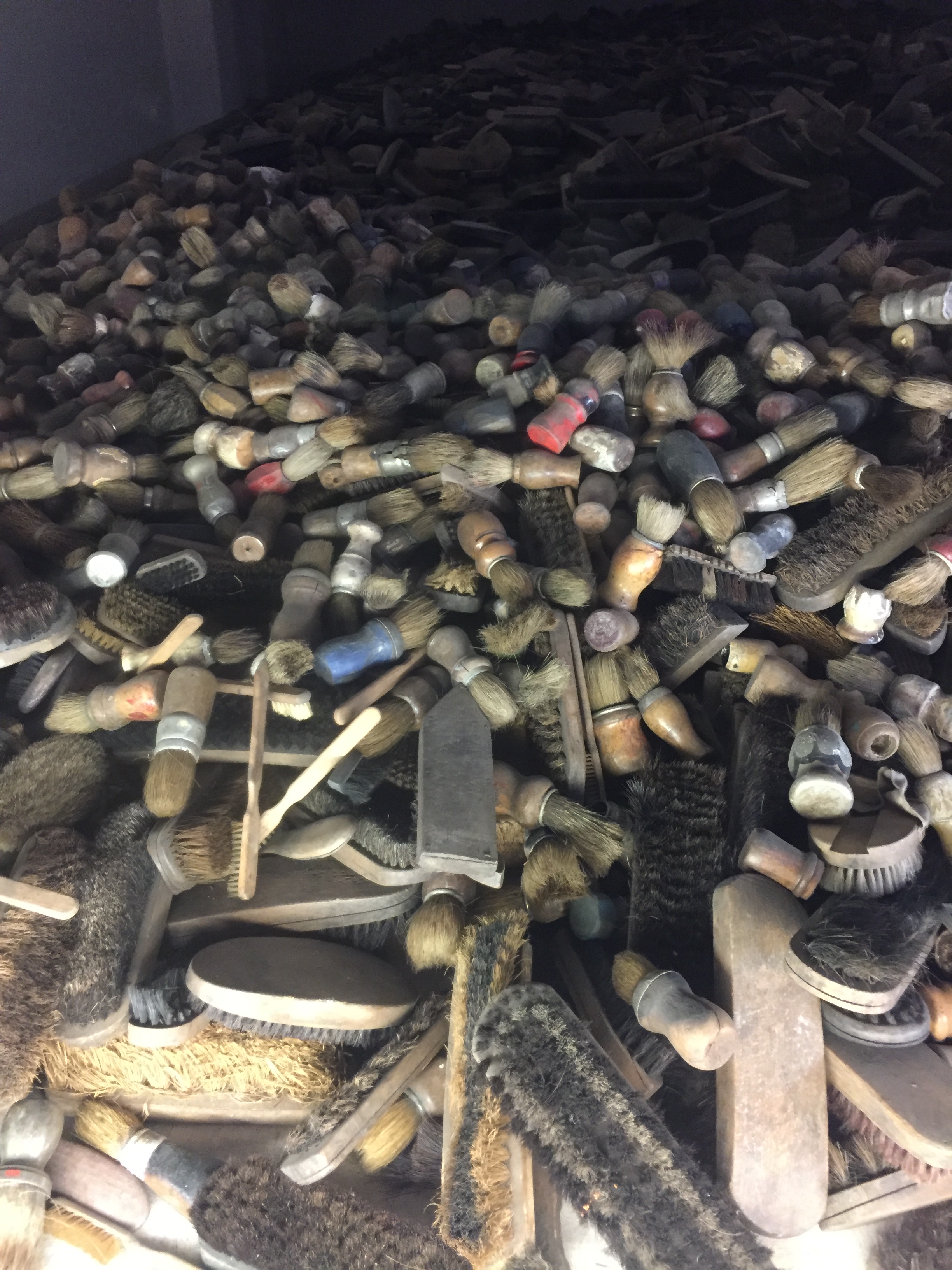
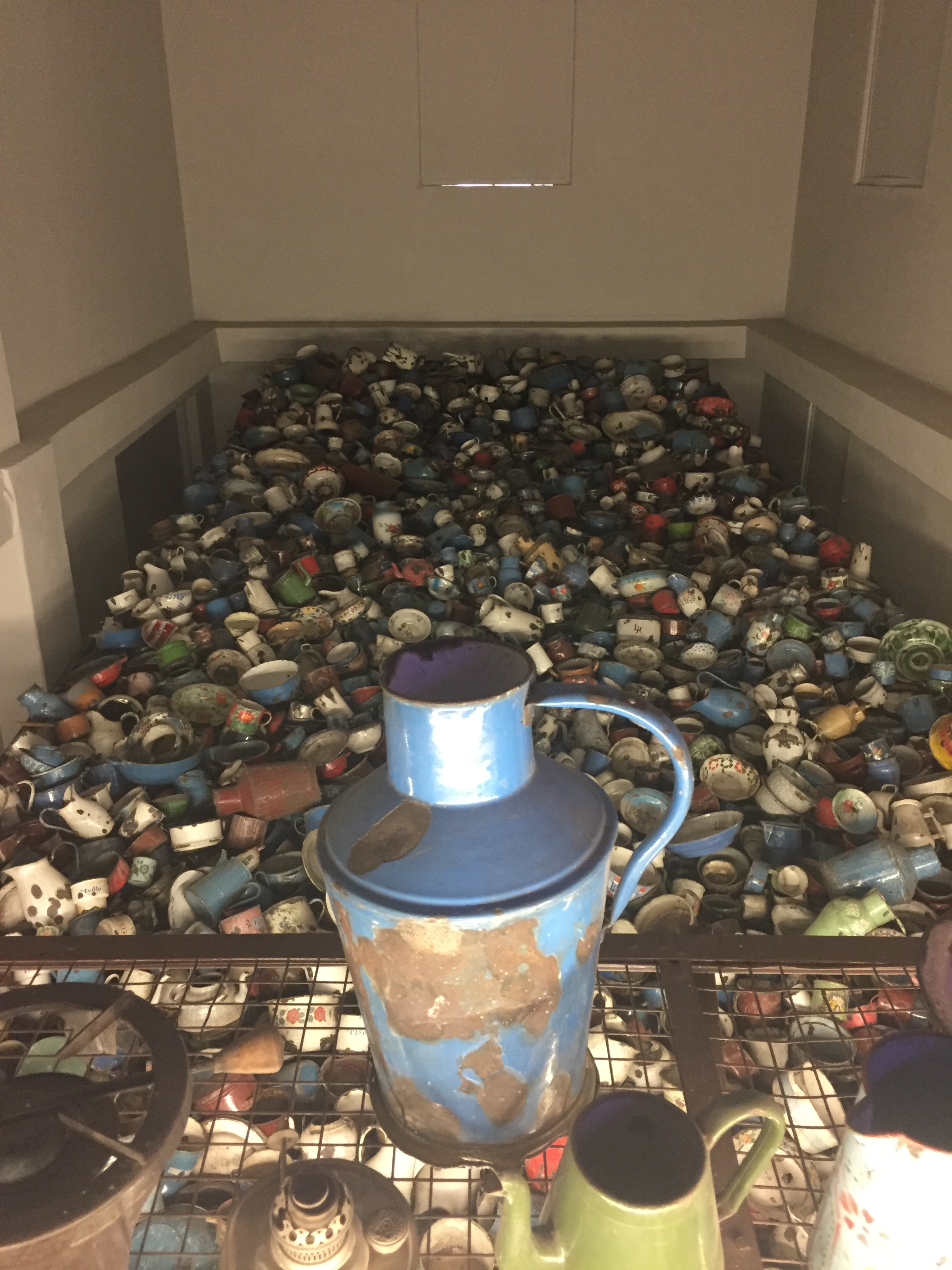
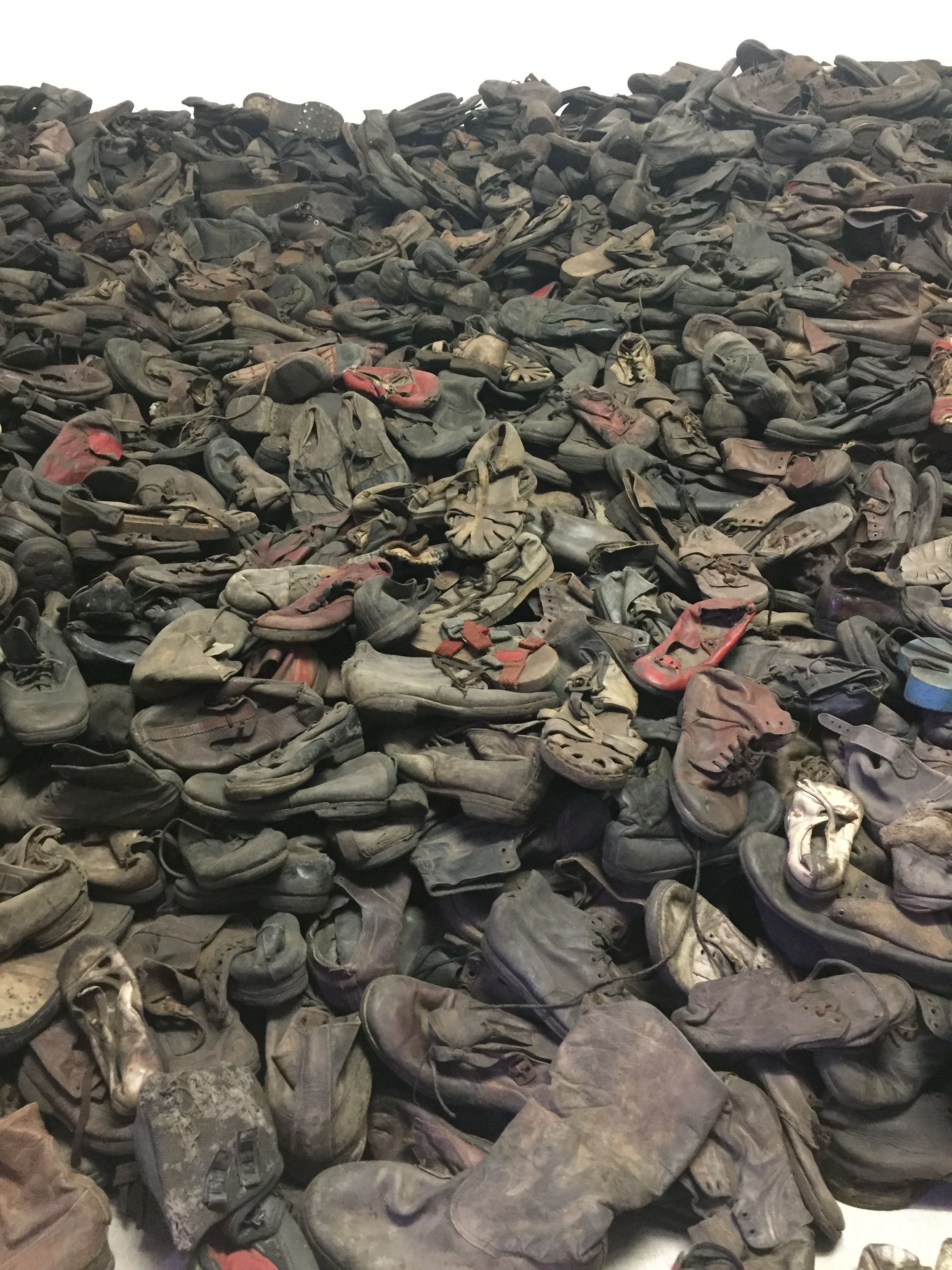
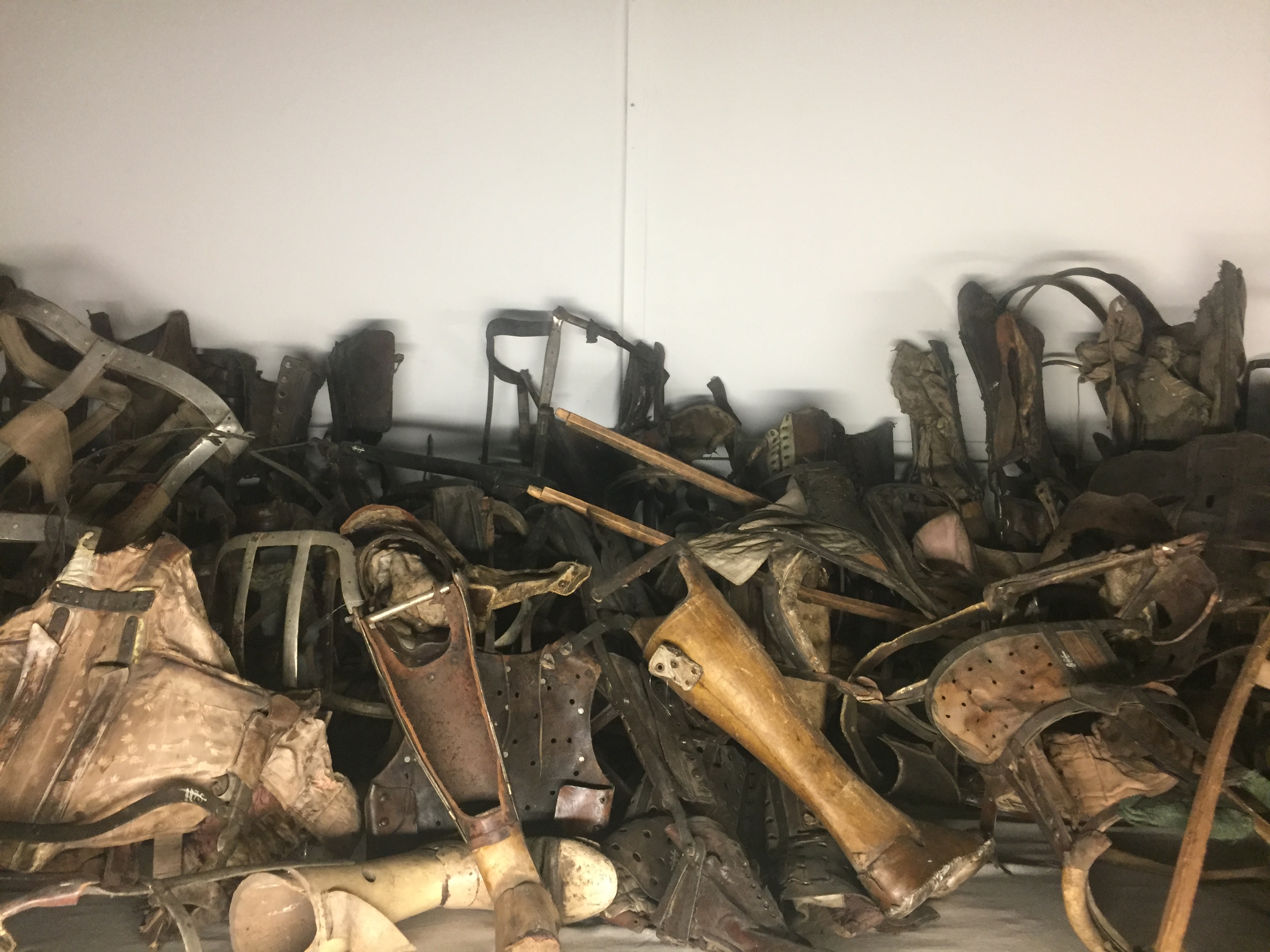
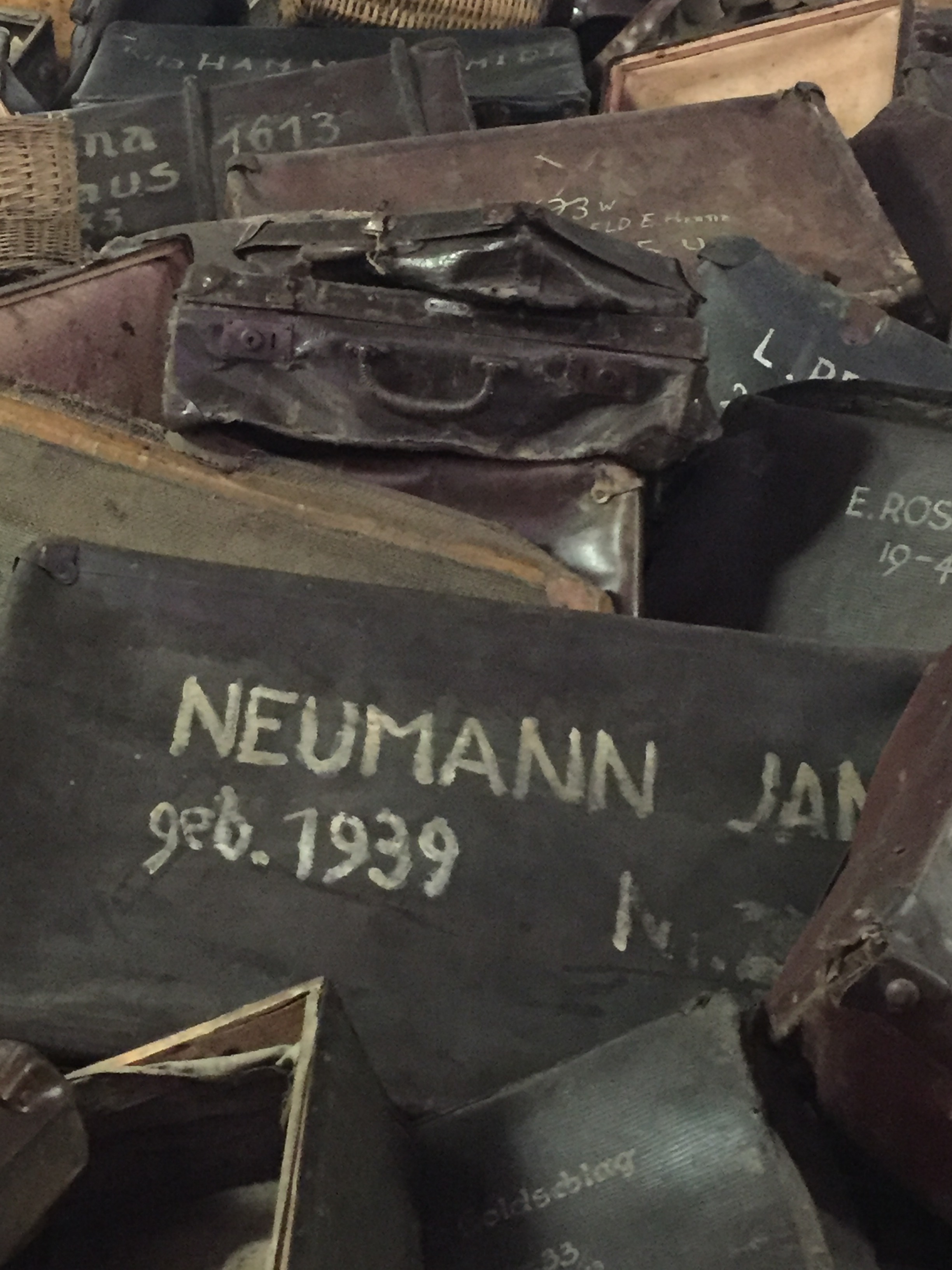
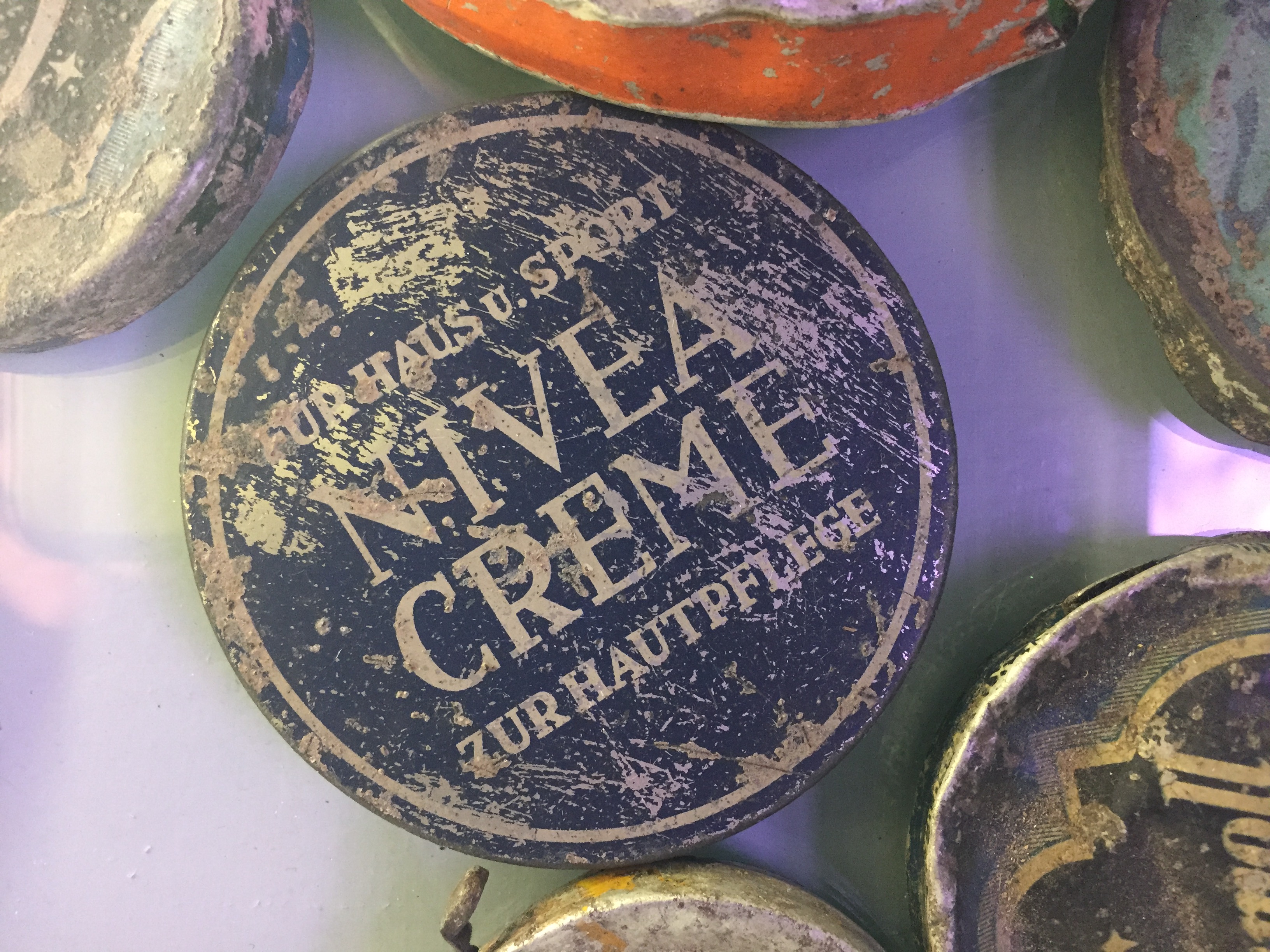
Notwithstanding the enormous number of fatalities (fully 320,000 of whom were Hungarian Jews), and notwithstanding the speed with which they were dispatched (some 1,440 corpses a day, sometimes), it is the little details that make things most confronting. It’s the room full of objects brought by arrivals and sorted by inmates, amongst which was a single container of Nivea cream. It’s a single pair of shoes, child-sized, at the front of an exhibit of footwear. It’s the suitcase marked with the owner’s date of birth. She could not have been older than five.

Mariusz speaks about the victims
Photograph: Simon Holloway
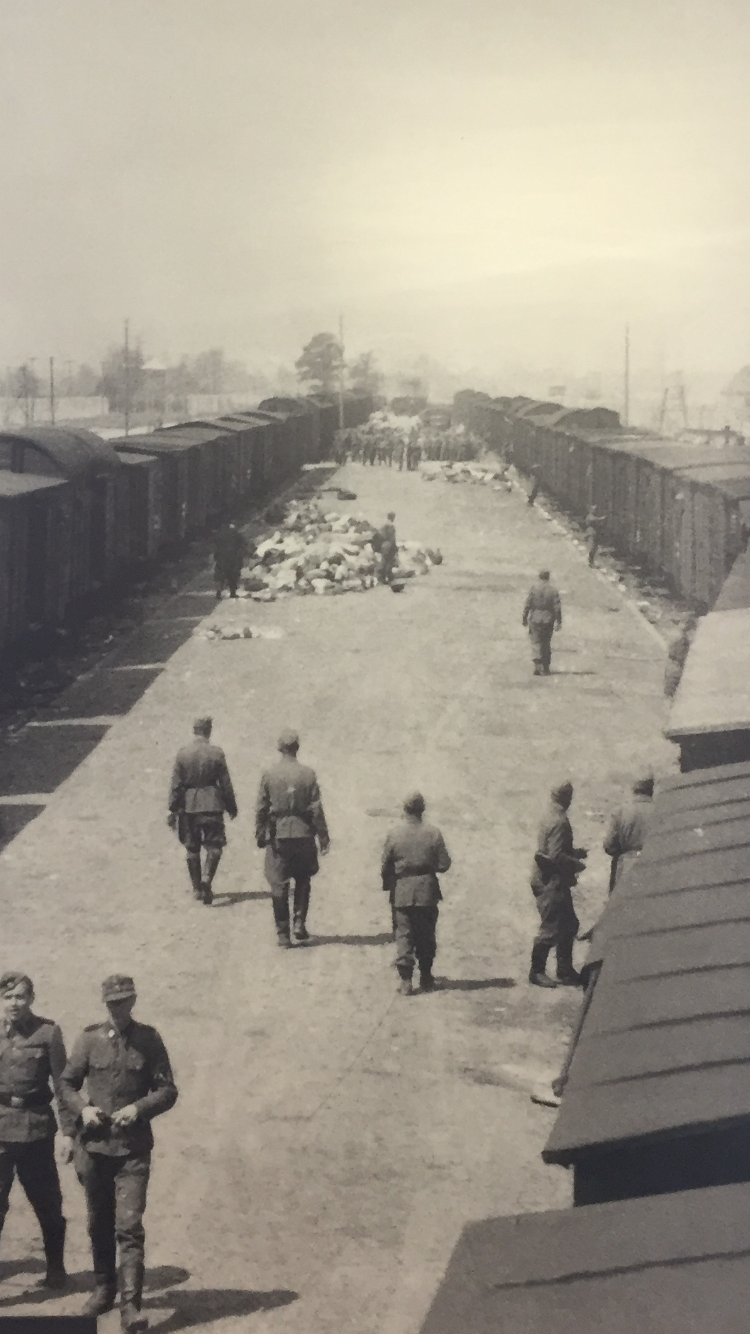
Two trains arrived from Budapest: the left has already been converted into a pile of ownerless belongings; the right is still full of Jews
Photograph: Simon Holloway
Toothbrushes and Hairbrushes
Photograph: Simon Holloway
Pots and Pans
Photograph: Simon Holloway
Children’s Shoes
Photograph: Simon Holloway
A Pile of Prosthetics
Photograph: Simon Holloway
In Amongst the Bags, a Date: Born in 1939
Photograph: Simon Holloway
Amongst the Tins: A Familiar Product
Photograph: Simon Holloway

Perhaps the most confronting exhibit is the one in which we are asked not to take any photographs. Close to two tonnes of human hair (some 1,950kg in total), belonging to an estimated total of 40,000 different women. Can there be a starker symbol than this for the complete debasement of a human being?

From here, I have the incredible privilege of accompanying Judy to the Hungarian pavilion, where we explored an exhibit titled “The Betrayal of the Citizen”. There, very tastefully displayed, we read of the persecution of Hungarian Jews in the 1920s, the mounting discrimination throughout the 1930s, the forced labour battalions in the early 1940s and the transports to Auschwitz after the occupation of Hungary in 1944.

I am entirely unsurprised, however, by a lack of reference to the genocide perpetrated by the Hungarians before the arrival of the Germans. In addition to merely discriminating against Hungarian Jews, the Hungarians were also allowing for the wholesale slaughter of Jews in newly-acquired Hungarian territory. Blaming the Germans seems to be a phenomenon not unique to this part of the continent.

After we reunite with the rest of our group, we join the general throng of visitors whose automated tours are now coming to a conclusion. We make our way through the metal turnstiles, where visitors can purchase lunch from the Auschwitz snack bar, or have a picnic on a pretty patch of turf. There is something altogether unreal about this place.

From Within
Photograph: Howard Wolfers
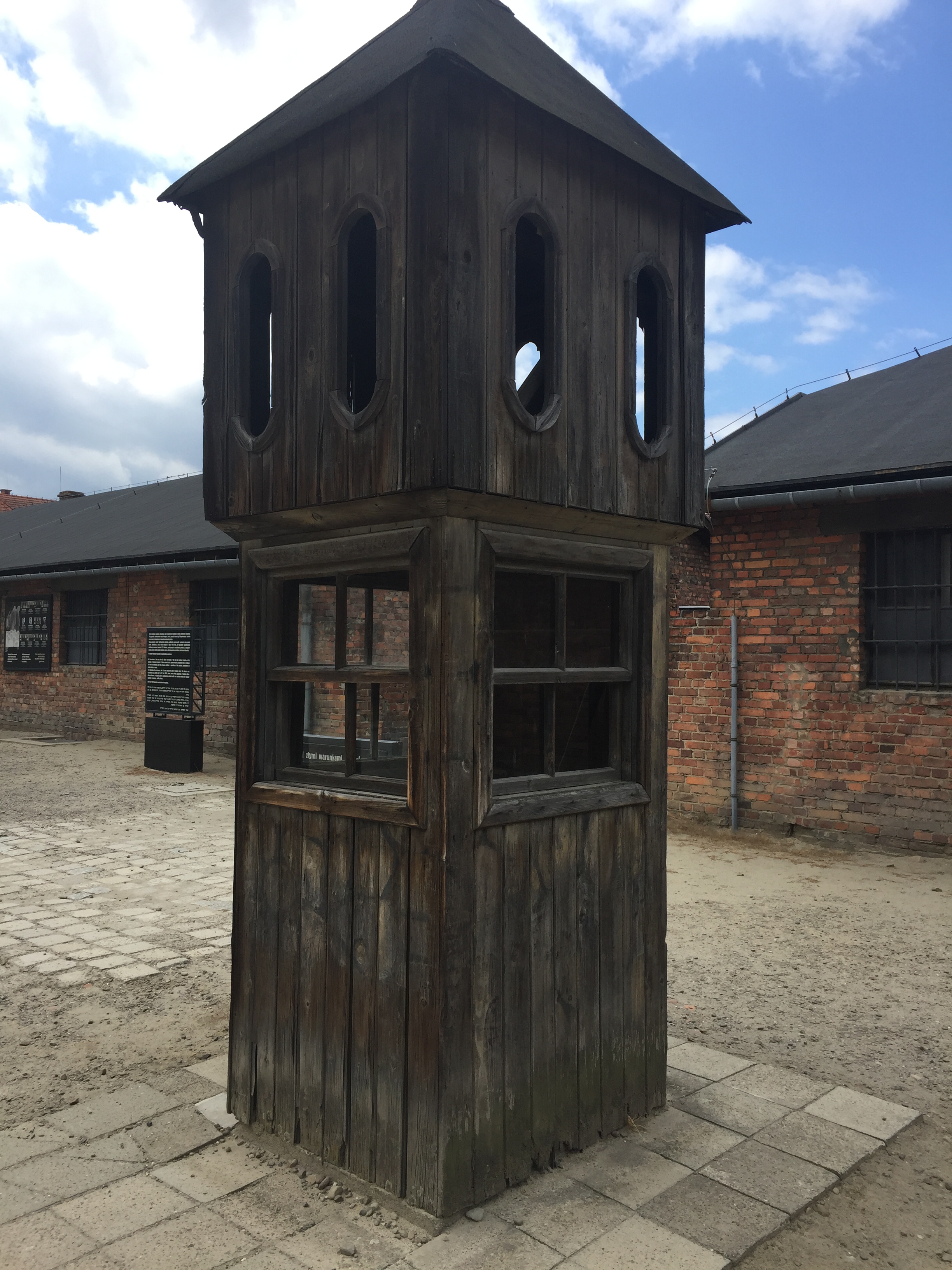
During inclement weather, the guard supervising the long, slow roll-call could stay dry
Photograph: Simon Holloway
Kafkaesque: This Camp is a Maze of Wiring
Photograph: Simon Holloway
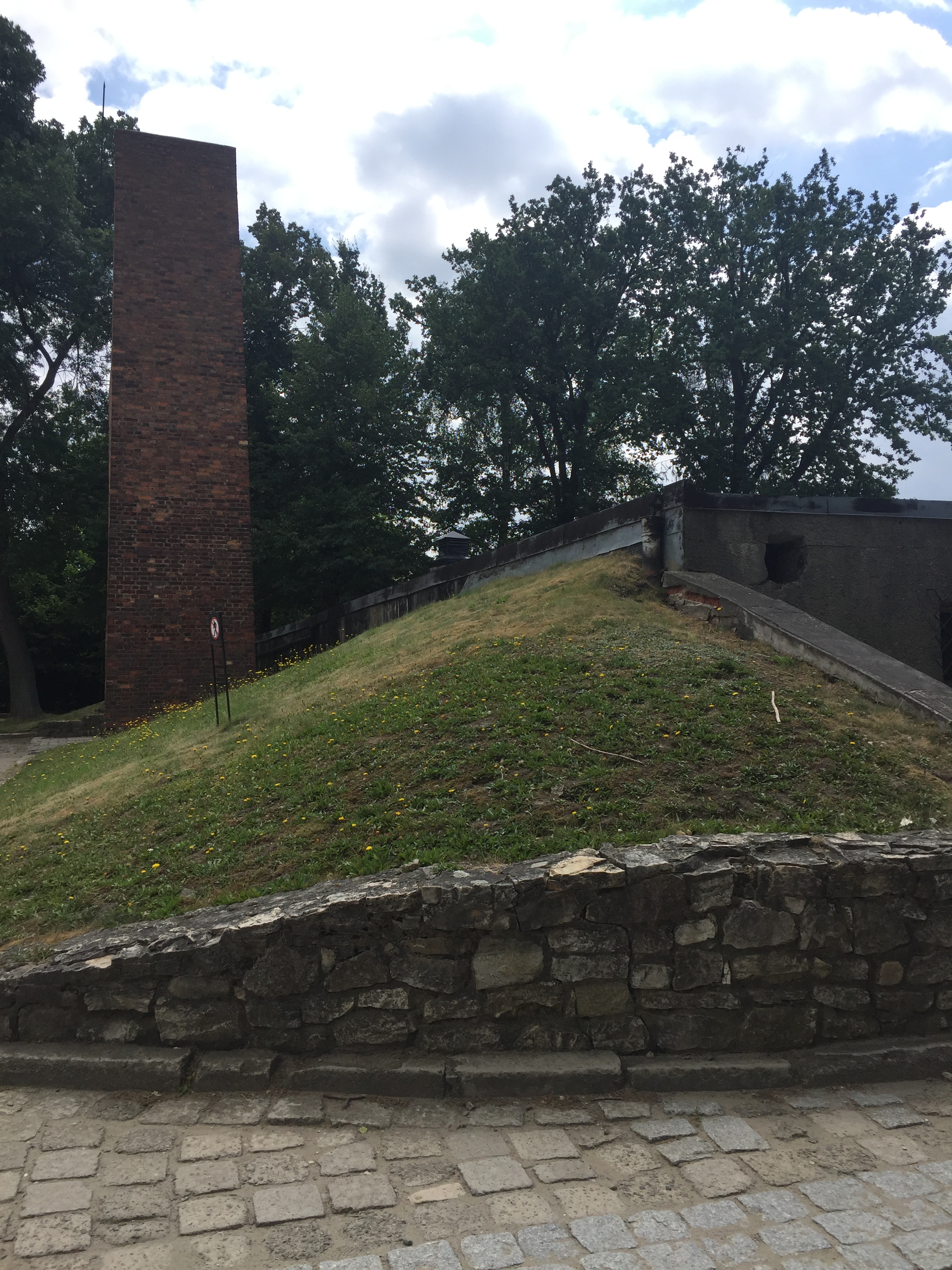
Outside the gas chamber and crematorium: not far from where tourists eat lunch
Photograph: Simon Holloway

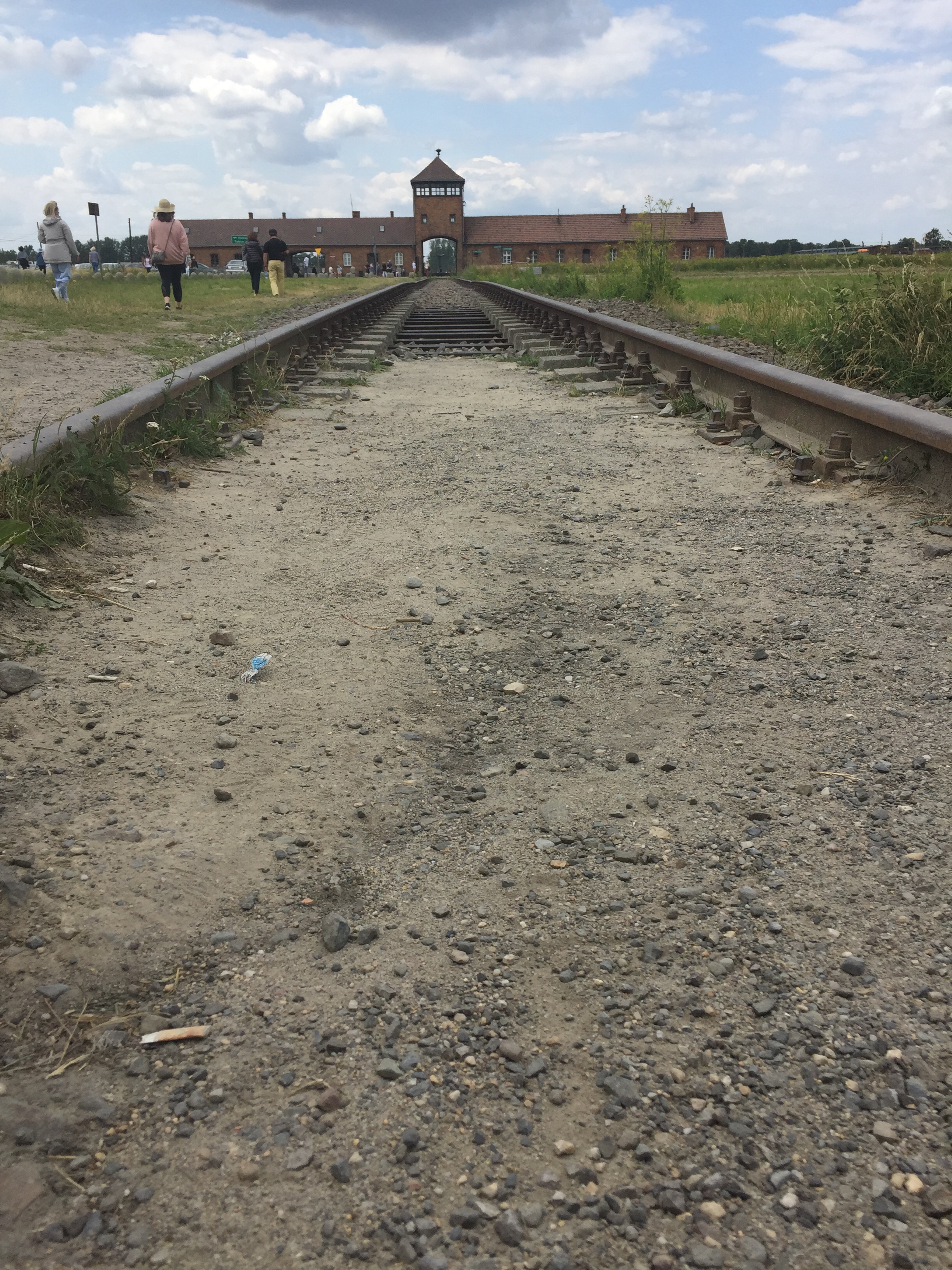
After we have eaten, we get back into the bus for a short drive to Birkenau. As we arrive, my first impression is that everything is smaller in real life. The gate, like the gate back at Auschwitz I, seems so… tiny. That impression is dispelled, however, the moment that I walk through it. Birkenau is enormous. Here, some 90,000 prisoners went about their daily drudgery surrounded by barbed wire that was pumped with 760 volts of electricity. Much of the facilities have been replaced with replicas, but the feeling of standing within this space is overwhelming.

The Long Road to Birkenau
Photograph: Simon Holloway
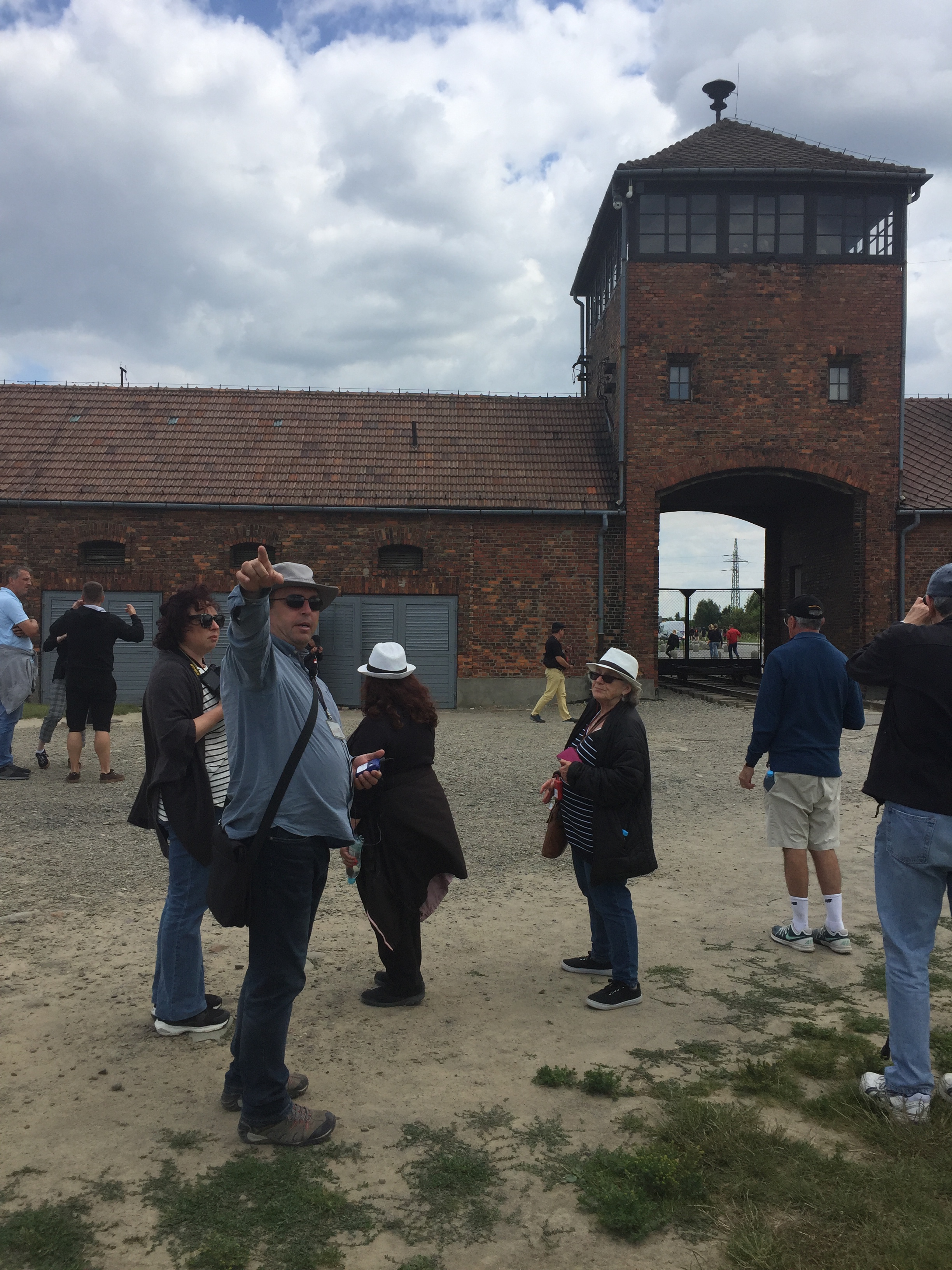
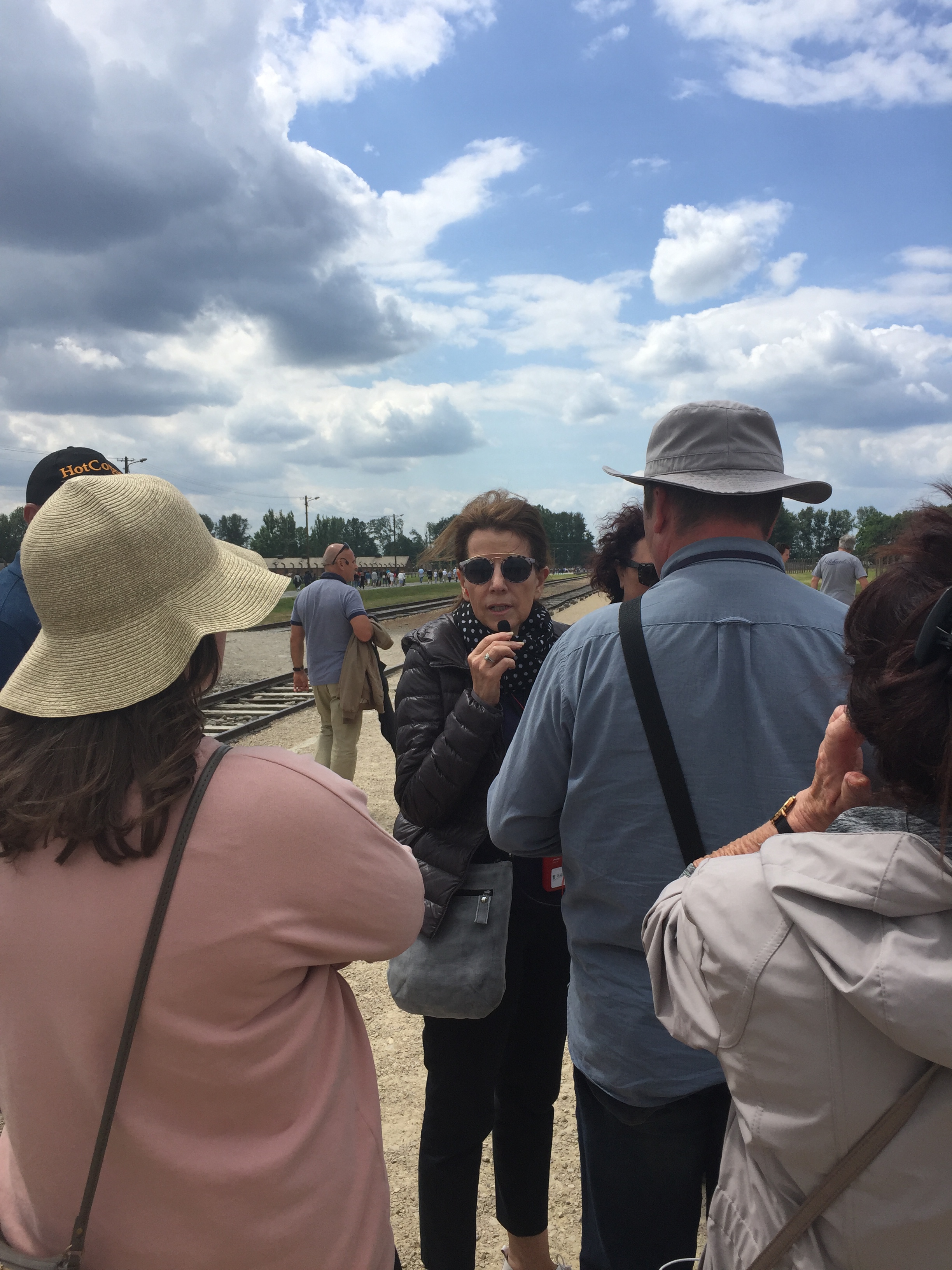
Mariusz Orientates Us to the Camp
Photograph: Simon Holloway

As with Majdanek, the grass is an illusion. Auschwitz today is spectacularly green, some parts it being blanketed with flowers. When this camp was operational, not a blade peeked through the soil, and the malnutrition of the prisoners was so severe that grass would have only been eaten.

These prisoners were not only starved, they were regularly demeaned. The walk from their barracks to the bathhouse was a long one, and they were to leave their clothes on their bed. If the walk to take a shower was humiliating, the walk back was even worse, for in the Polish winter it could reach temperatures of -15°, and wandering naked and wet across the frozen barracks was life-threatening.

A room filled with toilets, no partition between them, was particularly illuminating. Mariusz told us of the so-called “scheisskommando”, whose job was to clean out the latrines. Rather than being a filthy or a demeaning job, it was actually one of the best jobs in the camp. A roof over their heads meant that they were protected from the elements, while their proximity to the toilets meant that they could use them whenever they wished. Their being in a room with sinks meant that they had as much water as they wanted, and their being in a room that was unpleasant for guards to enter meant that they were the only workers on site who were not regularly beaten.

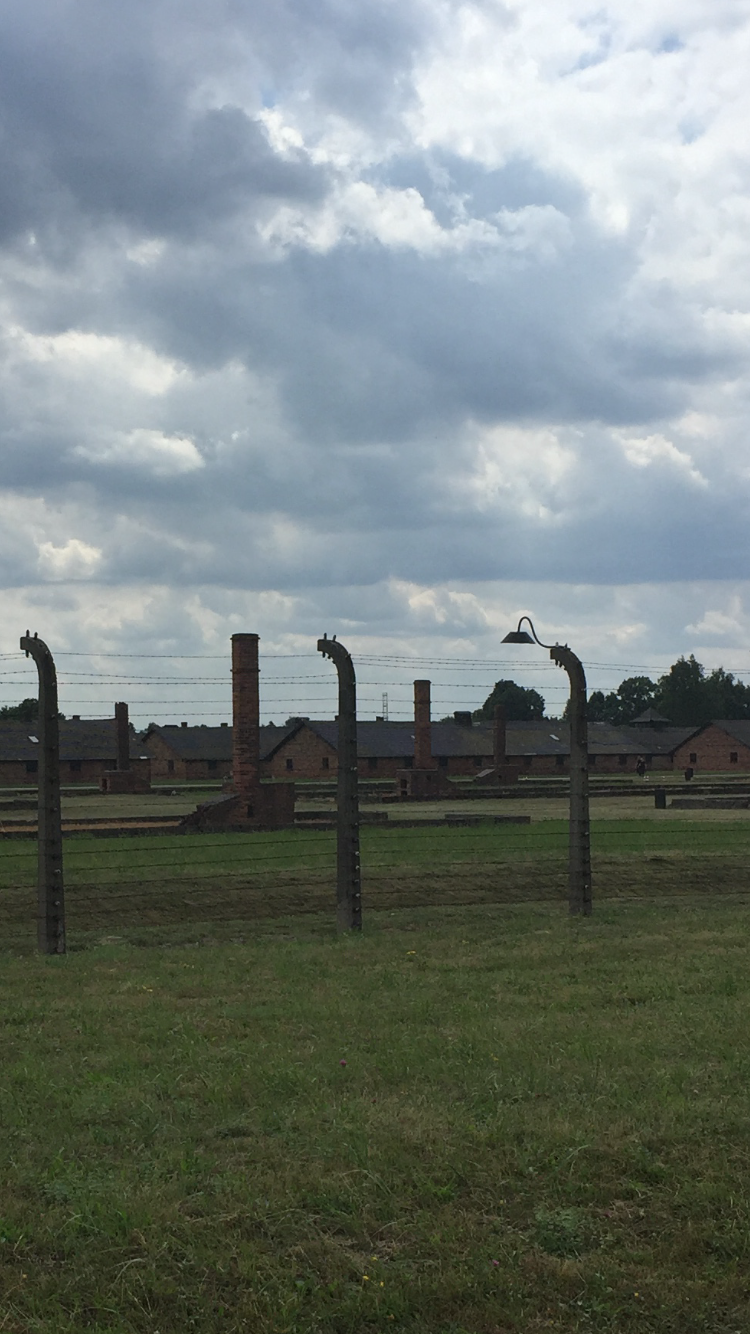
From the toilet block, we followed the track down the full length of the camp. Along the way, we saw what our guide referred to as “the forest of chimneys”. In 1945, many local Poles (whose homes had been dismantled to build the barracks) reclaimed what they believed was theirs. Barracks were stripped, and hungry, desperate Poles rebuilt their homes, leaving nothing but the stone chimneys that had formed the heart of every prisoner block. Like a macabre forest, this field of chimneys testifies to the sheer number of barracks that this sprawling camp once had, each one of which was intended for 400 prisoners.

A small glimpse of the wide forest of chimneys
Photograph: Simon Holloway

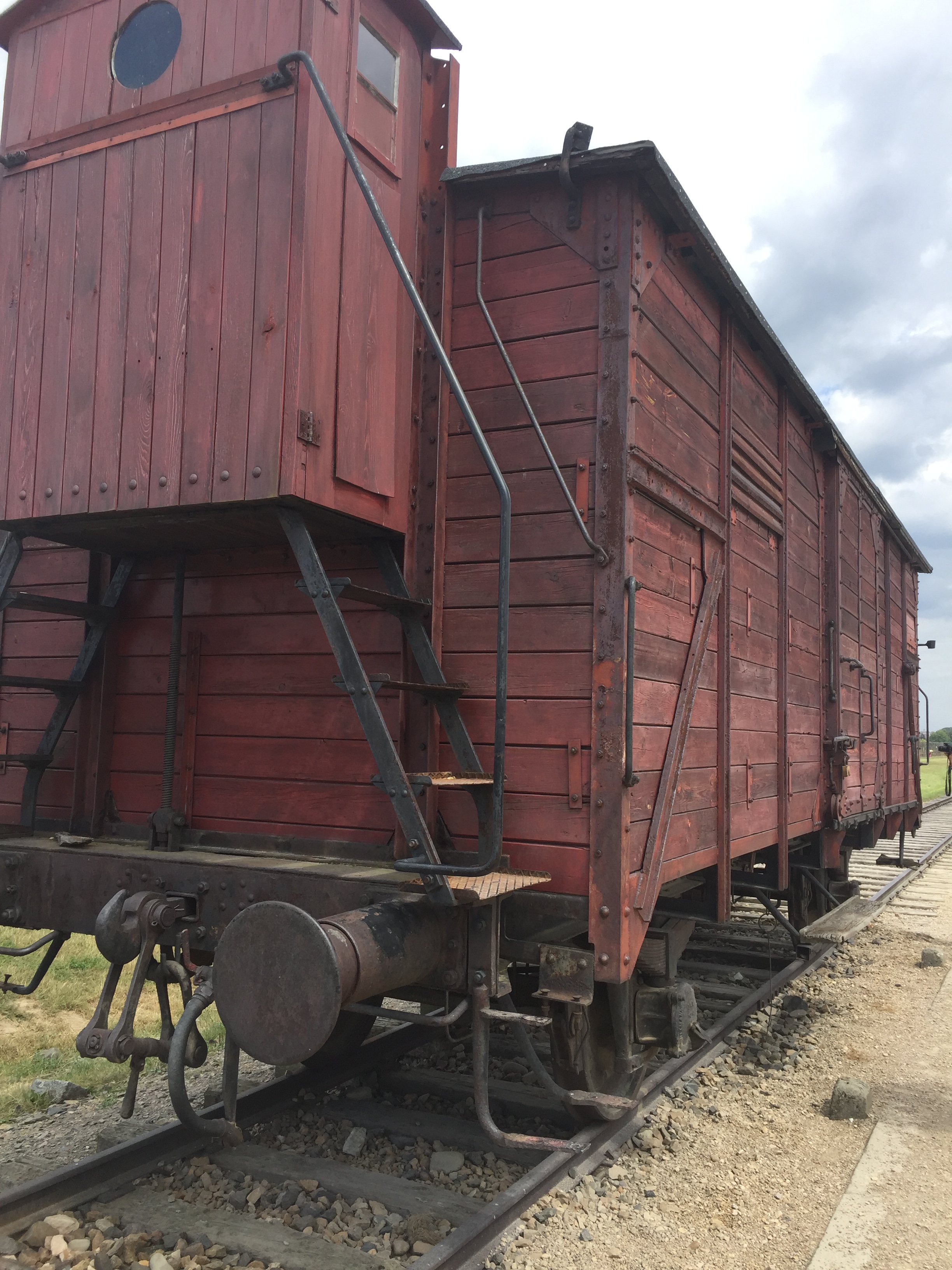
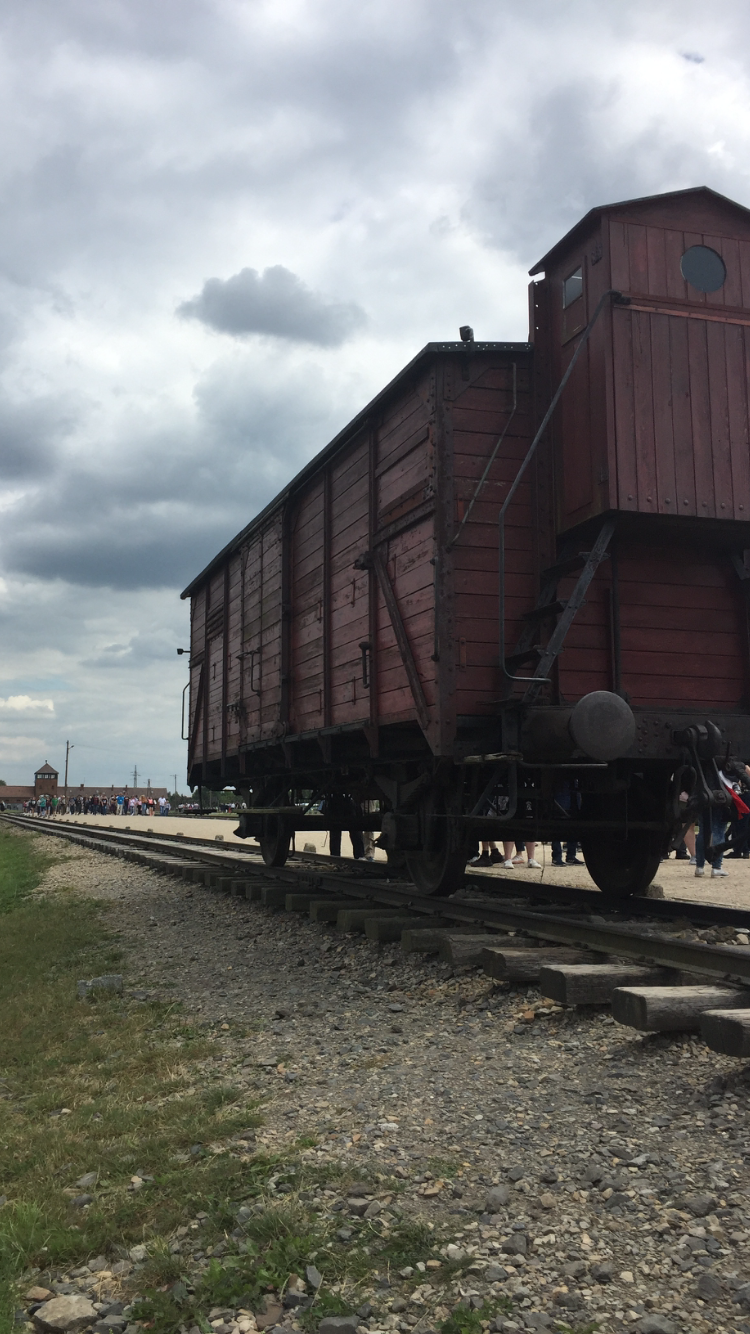
Half-way down the camp, we come to the box car that was donated by Frank Lowy. The doors are sealed, but inside it lies a single tallis in memory of his father. Rony tells us about the process undertaken to have this damaged carriage reconstructed in Germany and shipped to Auschwitz, and the ceremony at which it was officially inducted into the camp.

Rony speaks of Frank Lowy’s gift
Photograph: Simon Holloway
A Lone Boxcar on the Track
Photograph: Simon Holloway
A Place Beyond Comprehension
Photograph: Simon Holloway

We continue along the track and past the so-called “Gypsy family camp”, the occupants of which were all murdered on August 22nd, 1944. This is where Dr Josef Mengele served as a physician, and where he kept his own private laboratory.

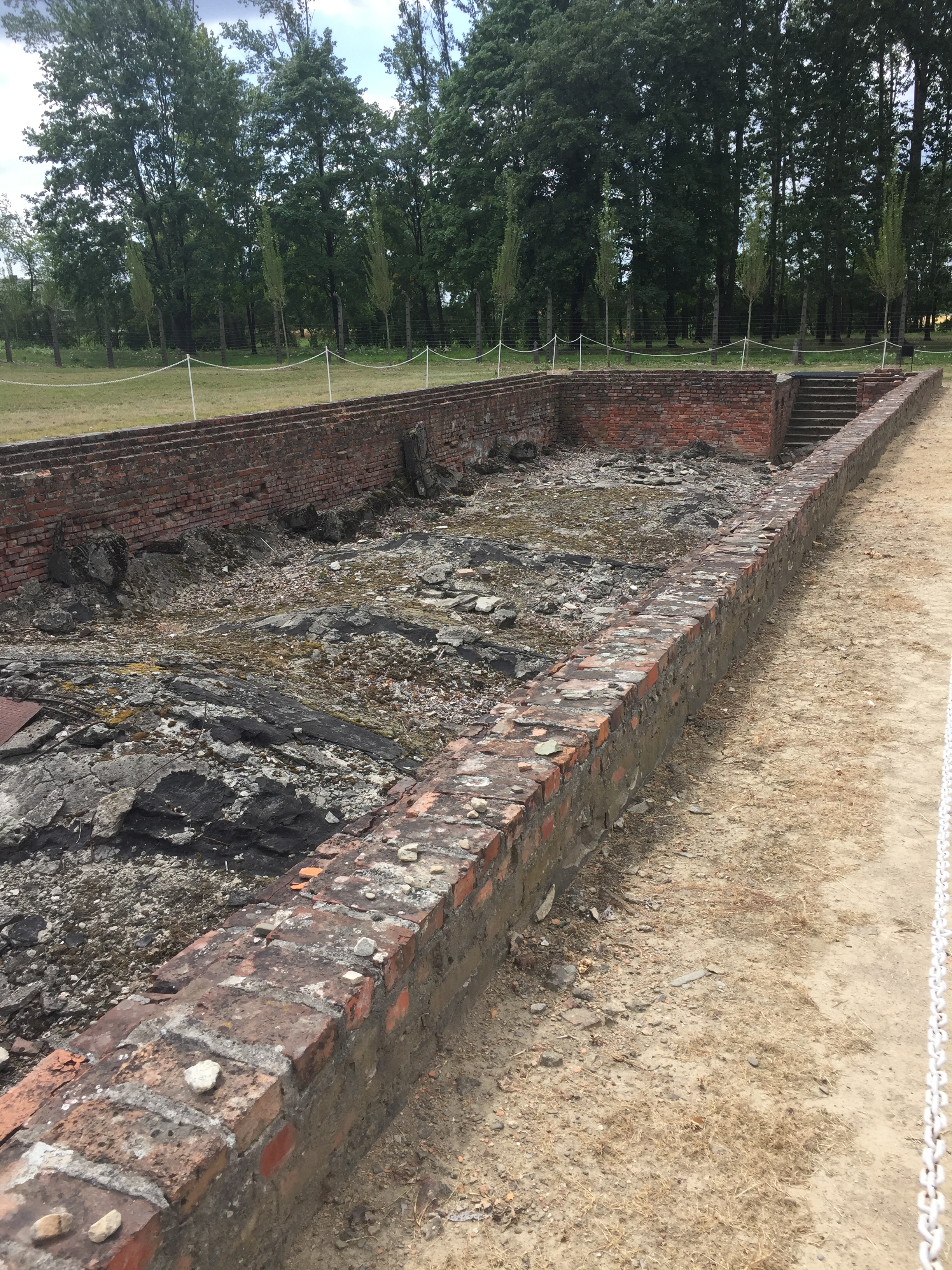
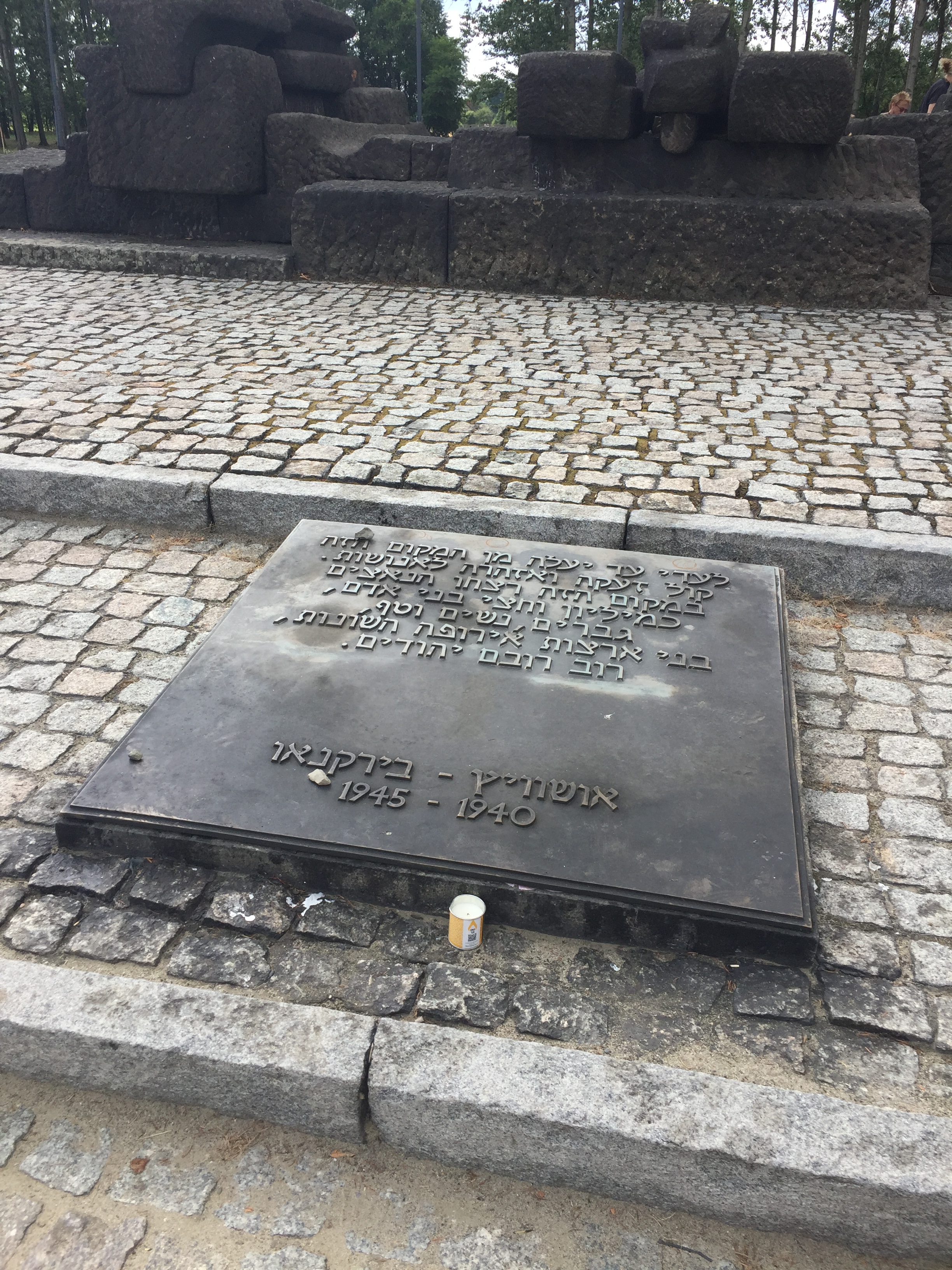
Behind it, we encounter a large memorial space with plaques written in twenty-three different languages: the twenty-two languages heard amongst prisoners, and English. On either side of the monument lie the ruins of the gas chambers and crematoria, which were demolished by the Germans before fleeing the camp, ten days before its liberation. Lots of tourists have gathered at this site, and some religious Jewish men are holding a tekes of sorts before the rubble. I am hearing tours given in a lot of different languages, to people who look to be from lots of different parts of the world.

The Ruins of the Crematorium
Photograph: Simon Holloway
“A cry of grief and warning to the world…”
Photograph: Simon Holloway
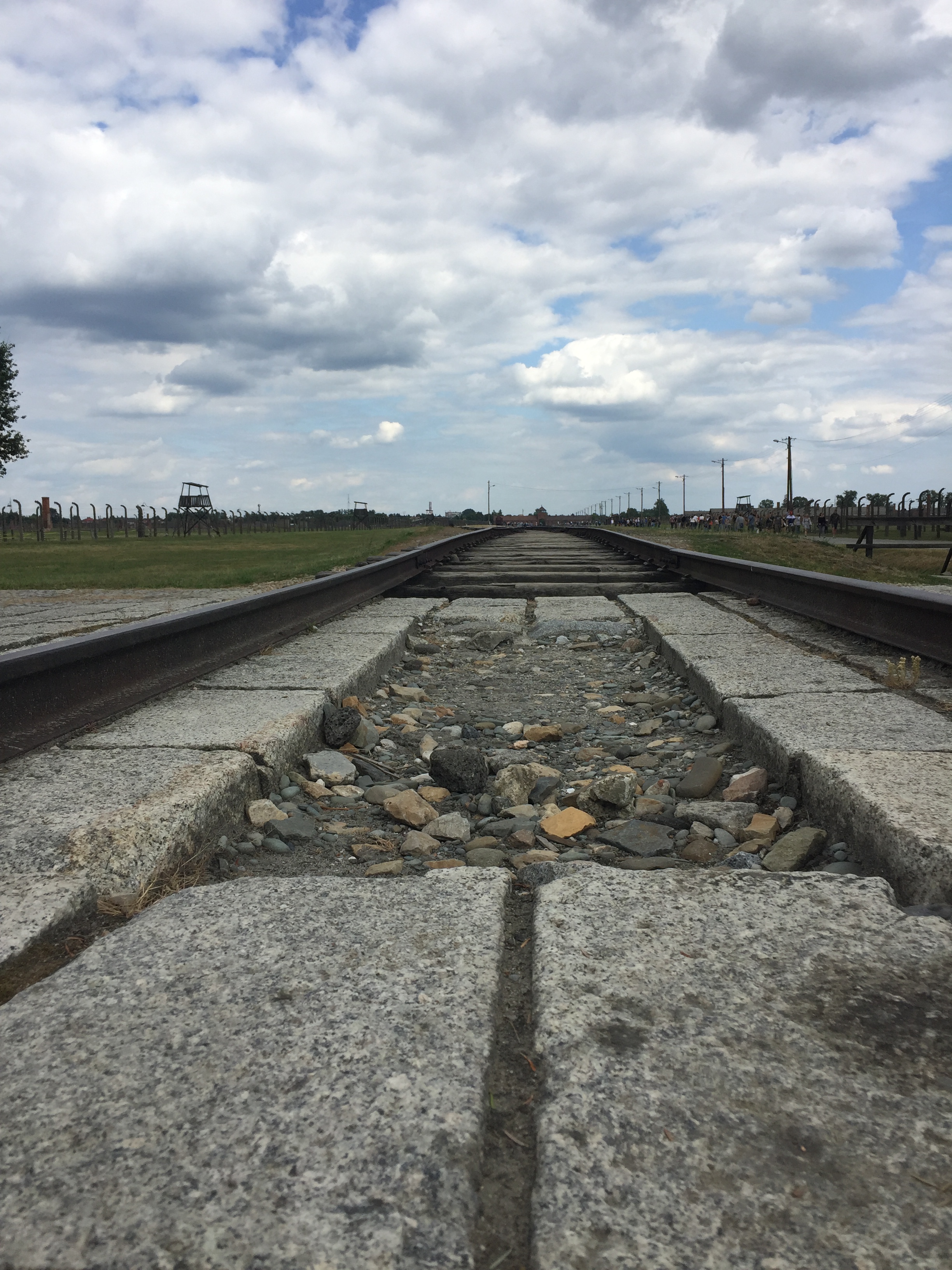
The End of the Line
Photograph: Simon Holloway

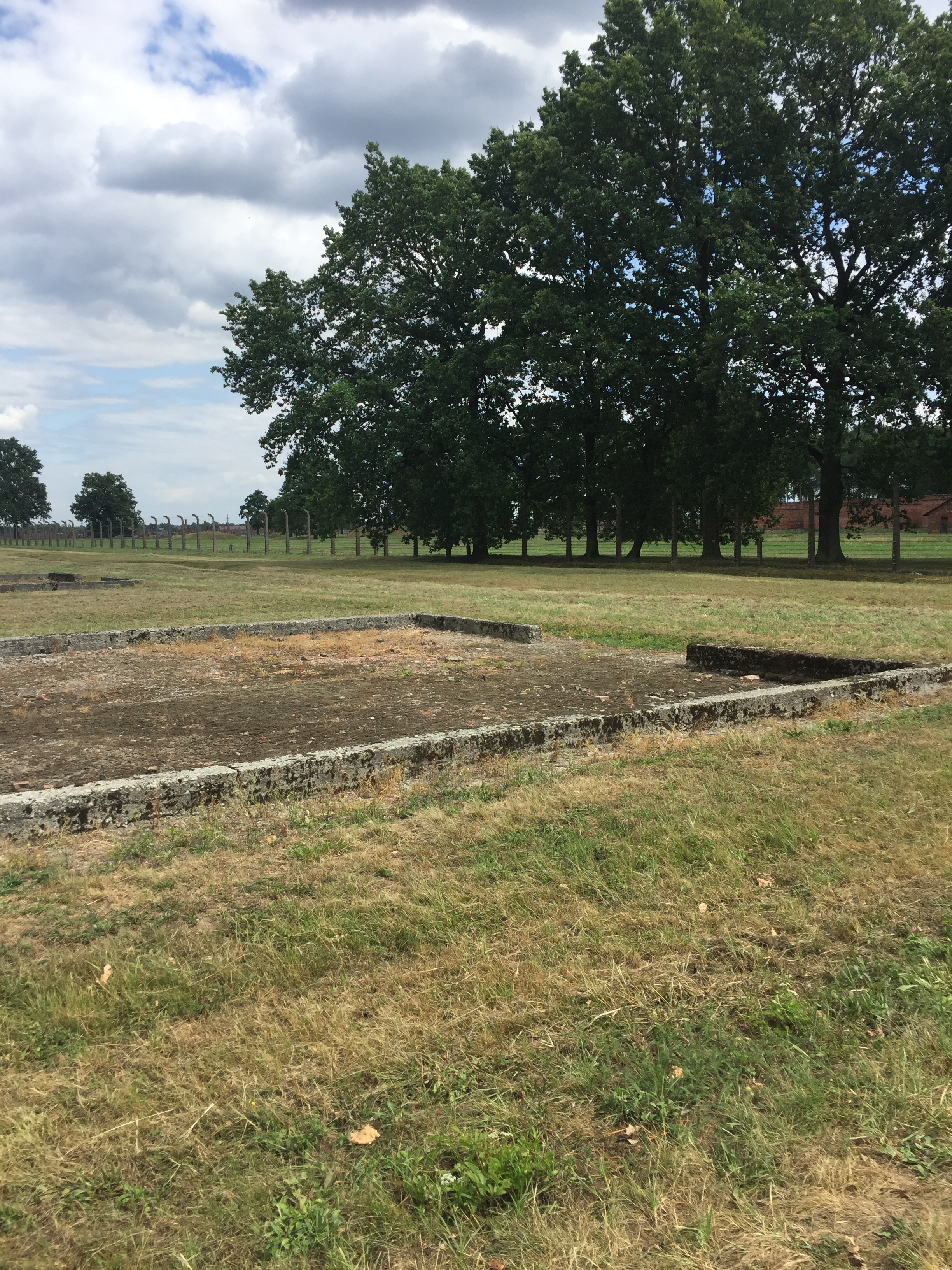
A few members of the group stay behind here, while the rest of us continue walking an additional 600m through a small wooded area near the perimeter. Here, we encounter the foundations of the barracks known as Kanada II. The name, inspired by the legendary wealth of Canada, was given to those rooms in which select prisoners went through and sorted the belongings of murdered Jews. When it rains, camp staff sometimes find a stray button or piece of cloth, and one wonders how much yet remains beneath the soggy soil.

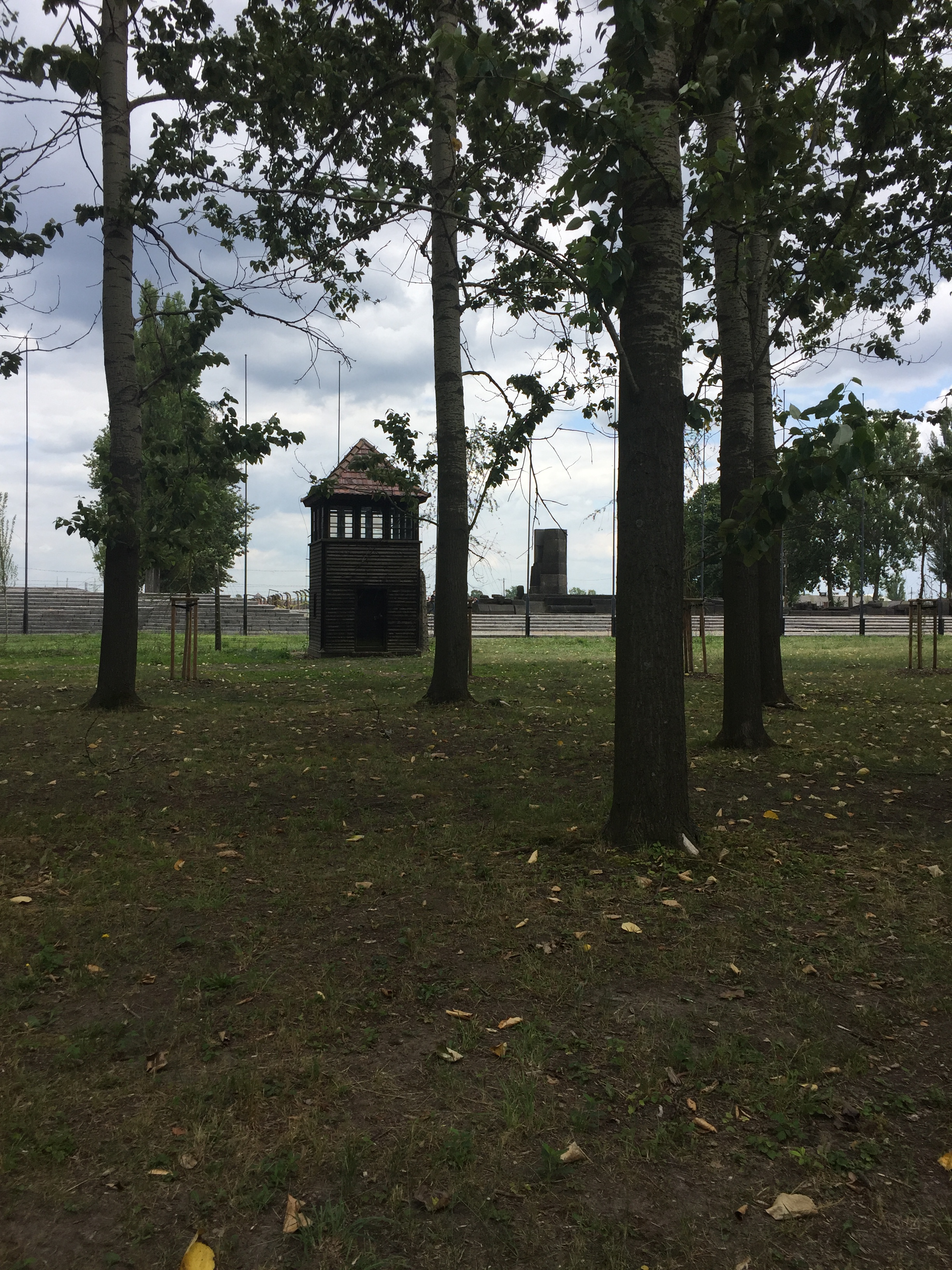
Through the trees, a glimpse of the memorial
Photograph: Simon Holloway
The Foundations of Kanada II
Photograph: Simon Holloway

Not far from here are another two gas chamber and crematorium complexes, known respectively as the little red and little white houses. Innocuous cottages, outside which prisoners needed to strip naked, they were used a great deal before the construction of the main gas chambers and crematoria that we had already seen, although the little white house experienced a brief resurgence in 1944 when the arrival of Hungarian Jews necessitated more facilities. This little white house, although it no longer stands, was behind the room that we entered next.

When prisoners arrived who were deemed fit for labour, it was to this room that they were led first. Here they would be registered, shaved and have their belongings taken, before being taken into the next room for showering. We walked through both rooms, as well as through the remains of the adjoining crematorium complex. As with the gas chambers and crematoria in Majdanek and in Auschwitz I, I elected not to take any photographs here either, and was relieved to walk back out into the sunshine again. It was all such a long time ago, I keep telling myself, but I know of course that it was not.

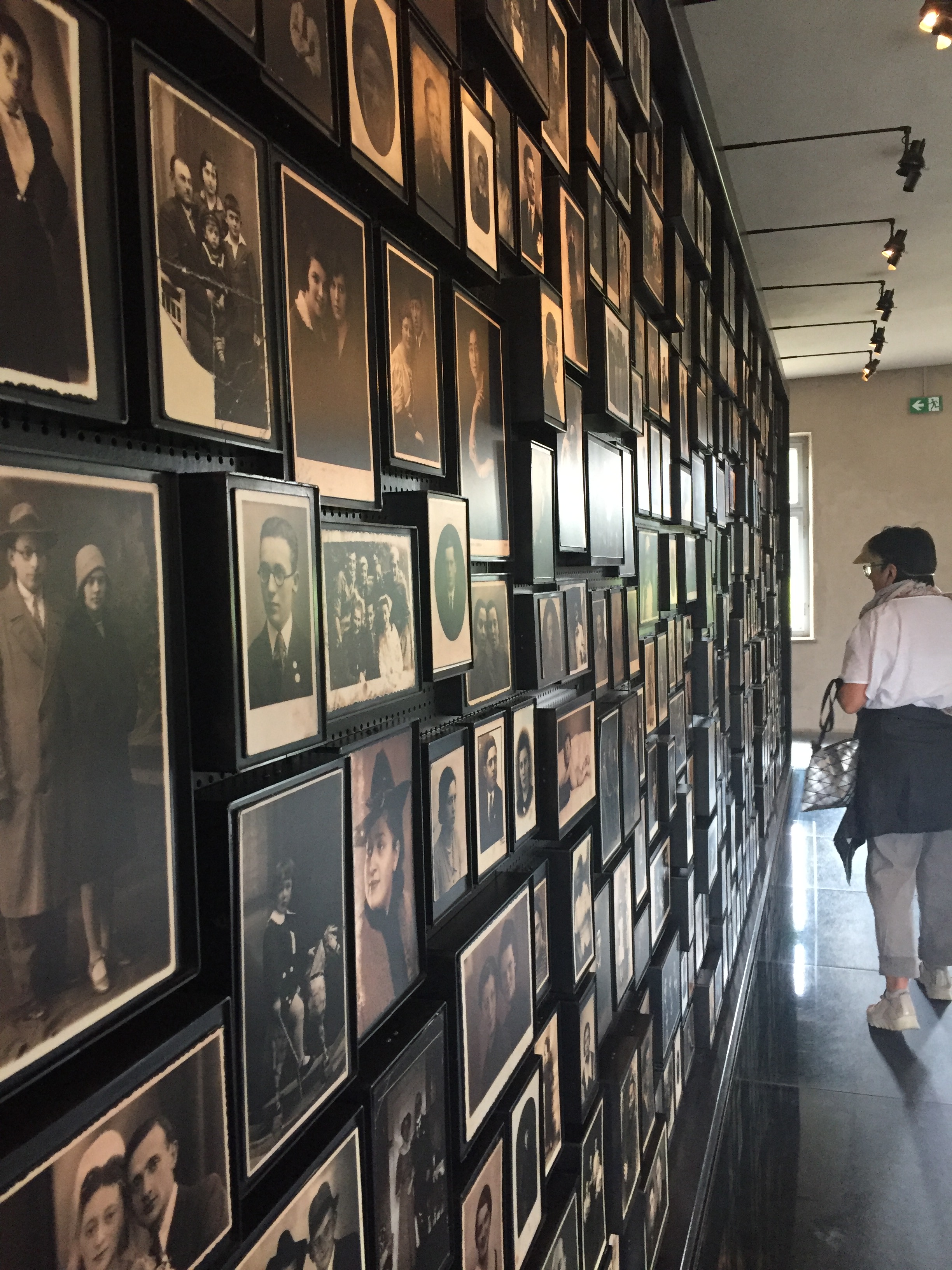
One of Several Walls of Faces: Photographs Found Amongst the Luggage
Photograph: Simon Holloway
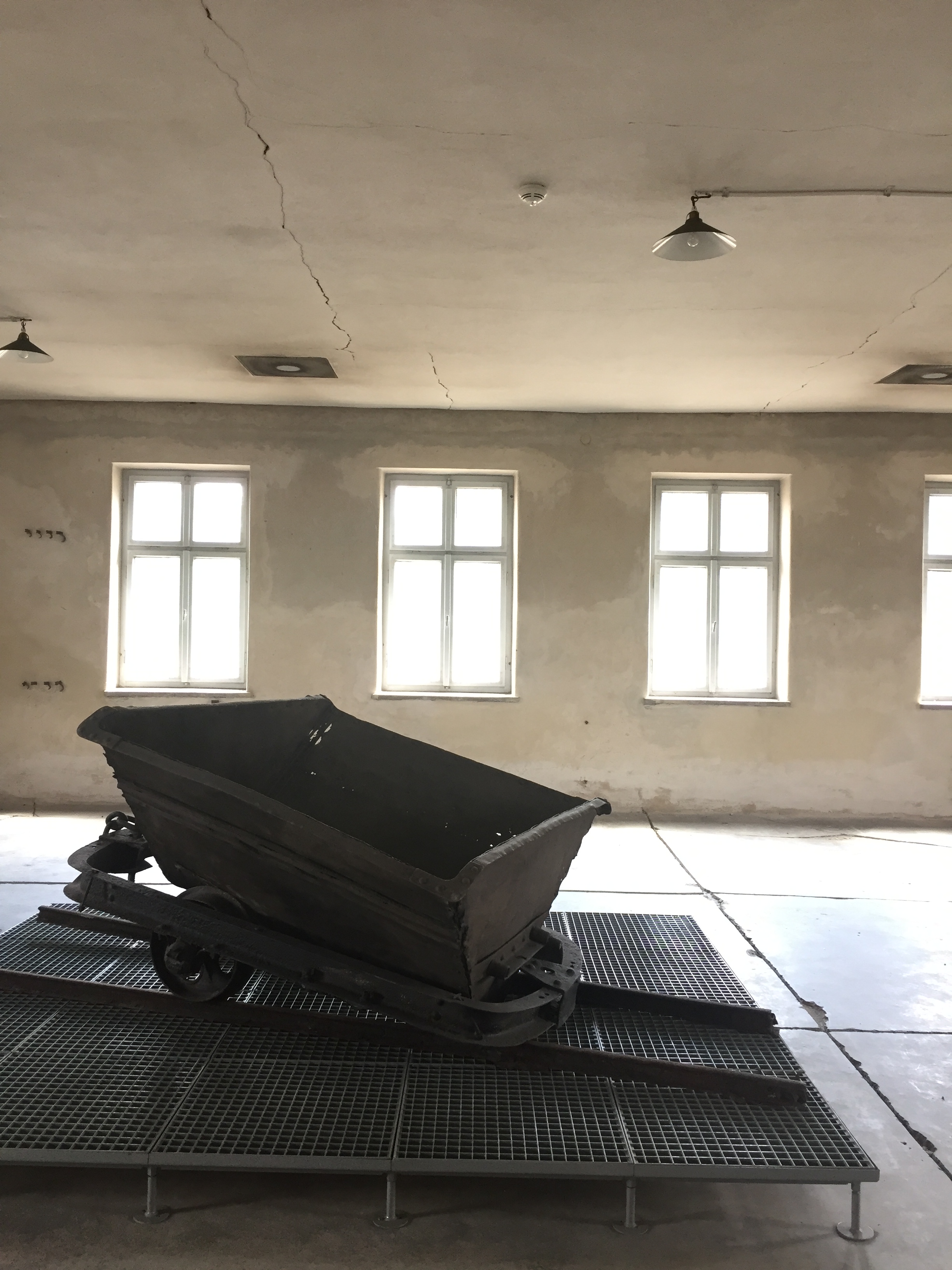
Wheelbarrows like this one were used for carrying cremated remains
Photograph: Simon Holloway

Before we conclude our tour, we return to the site of the large memorial and recite kaddish. I wonder how many other people have recited kaddish here over the years, and how many prisoners found time to say it in various parts of the camp. We speak of their liberation on January 27th, 1945, but in truth they were all but dead. When the Soviets arrived, only 7,500 people remained on site (not including the 600 bodies of executed prisoners, or the untold number whose ashes filled the Vistula), while those that had been fit enough to walk had been marched out of the camp some ten days earlier.

This final stage of the Nazi onslaught claimed the lives of some 250,000 Jews. The Soviets might have liberated Auschwitz, but the Holocaust was far from over.

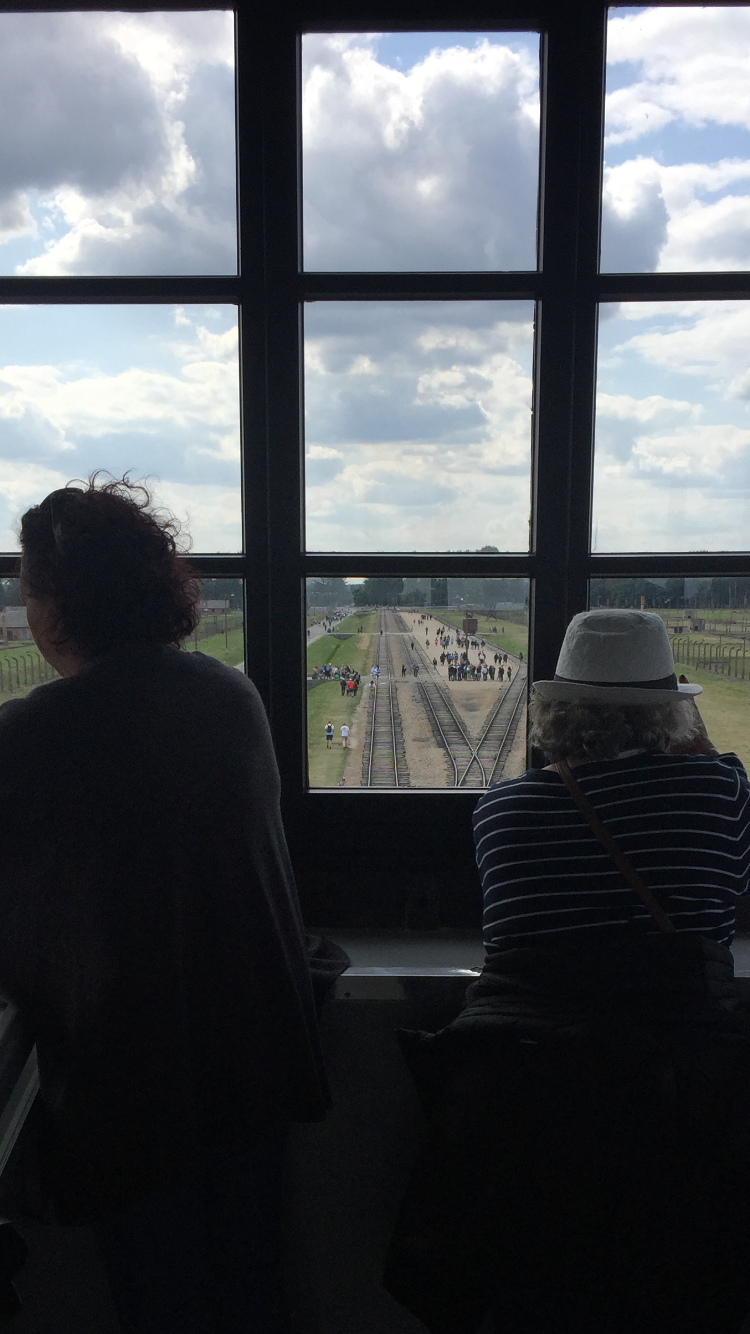
From Above the Gate: A View Over Birkenau
Photograph: Simon Holloway
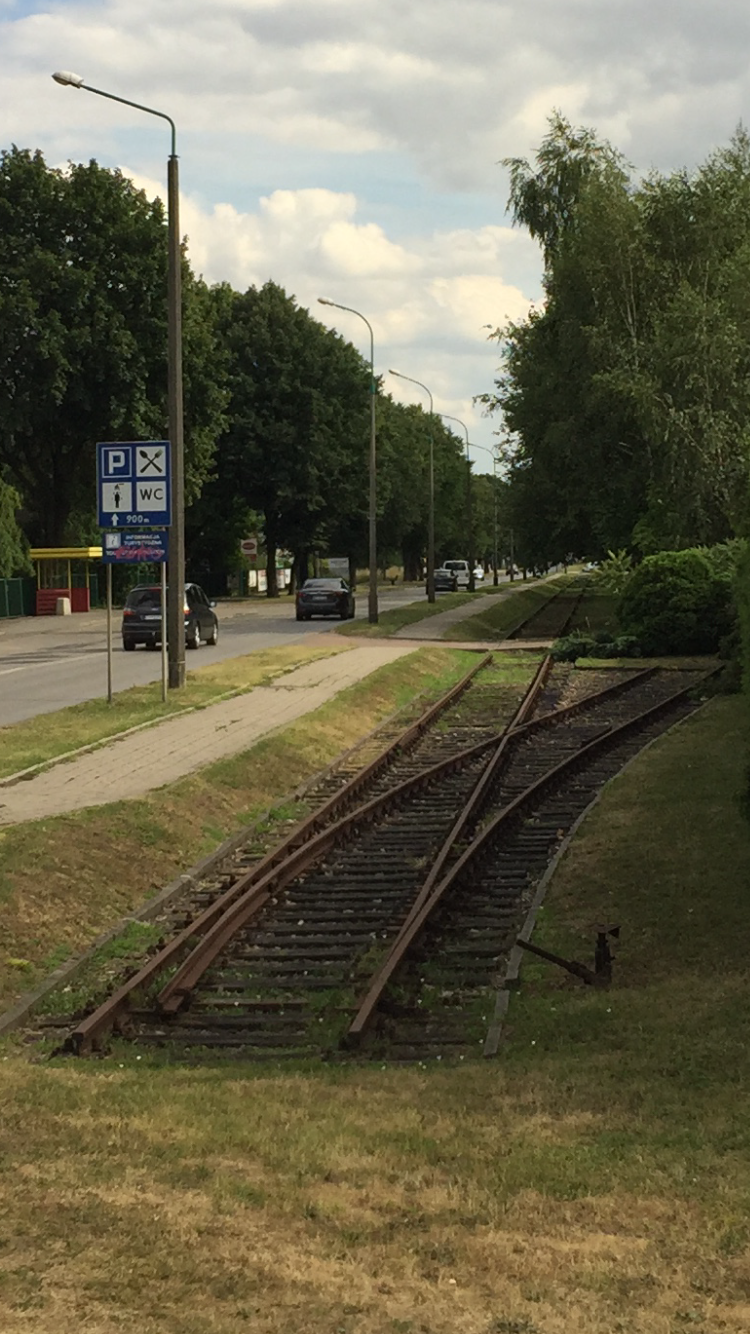
A Segment of Rail: A Memorial in Oświęcim
Photograph: Simon Holloway

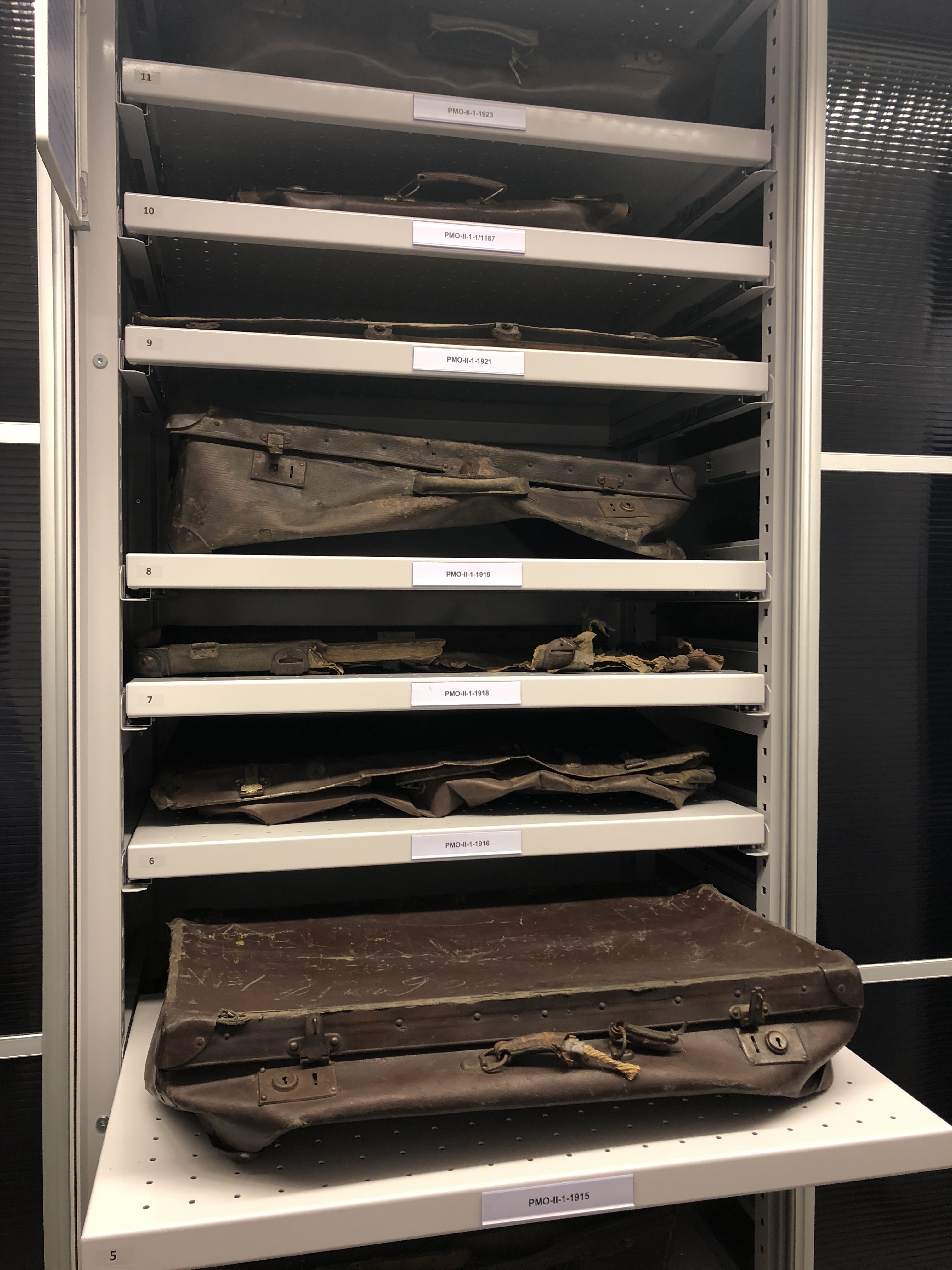
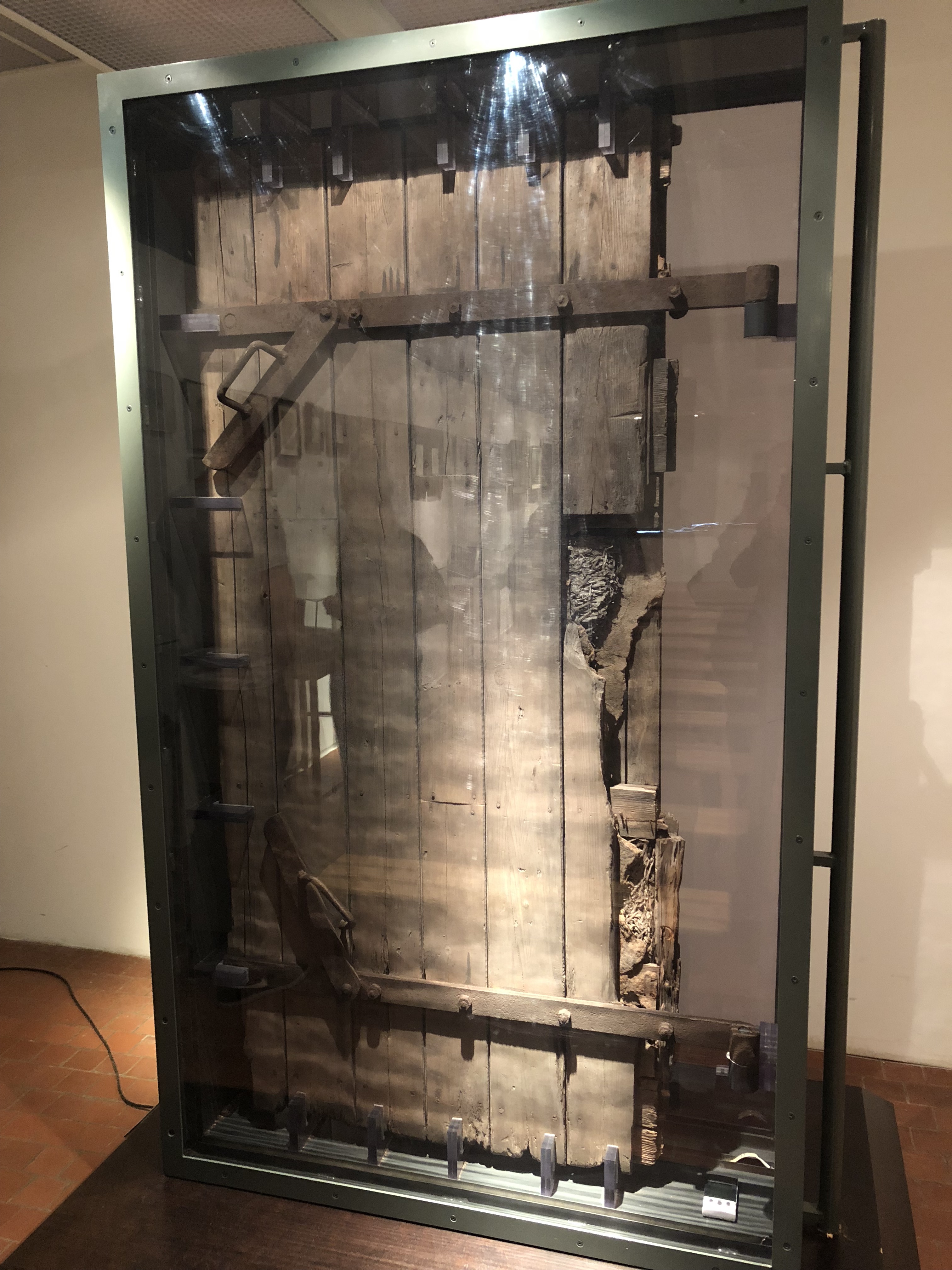
On the way home, Norman tells us all of an important meeting that he and Konrad had with some of the Auschwitz curators. Having returned several items that the Sydney Jewish Museum had been displaying, but which had been on loan from Auschwitz for a period of three years, discussions are now underway as regards some of the objects that we might be able to borrow over a five-year period. It’s exciting, the knowledge that we may shortly have access to new items for our permanent exhibition!

Luggage
Photograph: Norman Seligman
Gas Chamber Door
Photograph: Norman Seligman

As we arrive back in Krakow, Fil takes an opportunity to point out a beautiful little castle on the hill. Designed by an architect named Adolf Szyszko-Bohusz, it was built as a personal dwelling. With the outbreak of the war, it was stolen from him by the SS, who used it as the residence for Otto Wächter, the governor of the Krakow District.

After the war, the castle changed hands a number of times, before becoming the property of a local university. Today, by a curious twist of fate, it happens to house their Jewish Studies Department!

Tomorrow will be a full day of walking, as we explore parts of this beautiful city yet unseen by us. The architecture is gorgeous, and I am sure that we all look forward to wandering the streets, rather than the byways of a former camp. We are approaching the end of our tour, and will already be saying goodbye shortly to Shirley and Leo, who are off to celebrate a family wedding. We wish them mazal tov, and note that there is nothing more fitting to end a trip like this than with an affirmation of life:

Lechayim!

To Life
Photograph: Pearl Blasina

July 16: From Darkness, to Light…

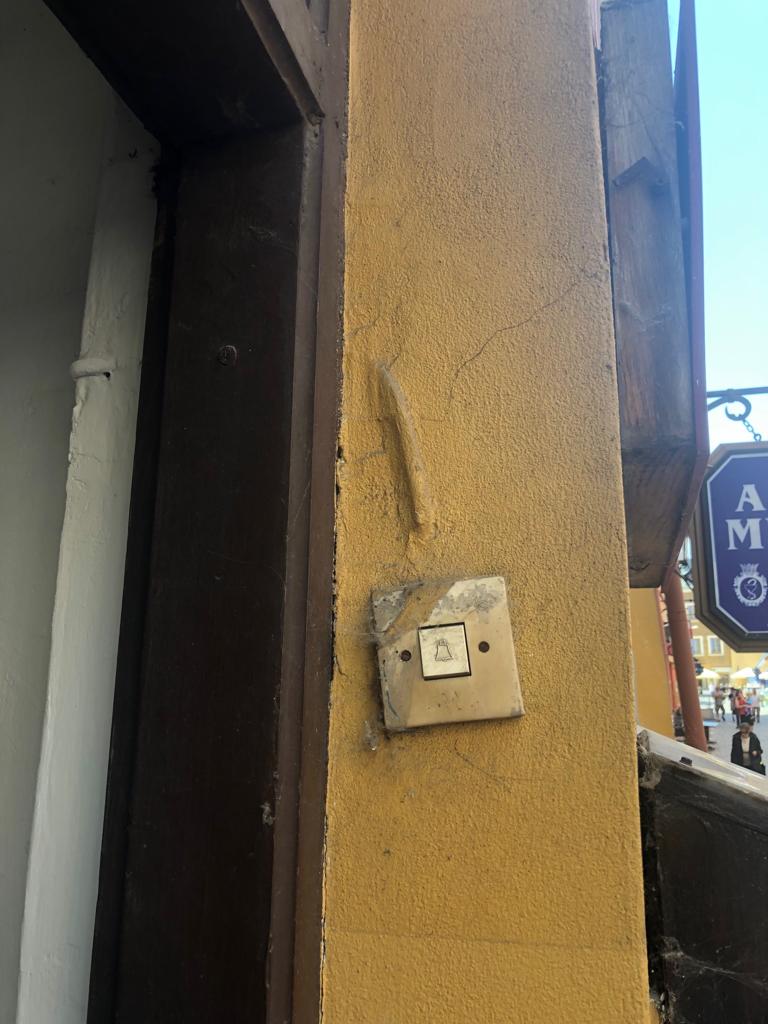
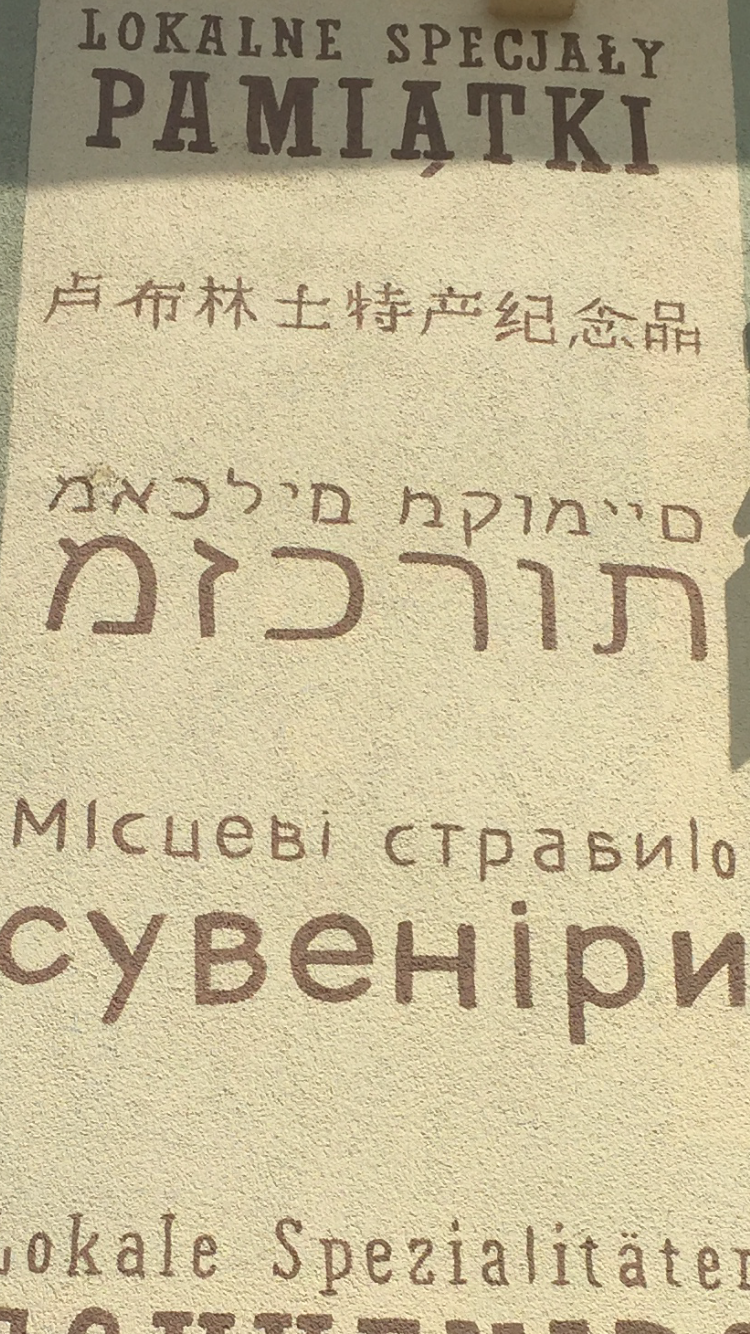
This morning we had a late start, and so some of us took the opportunity to take to Lublin’s streets and explore the hotel’s environs. One participant noted a mezuzah, its shape defined against the plaster of a local building, while others noted the presence of Jewish statuettes (holding money, obviously) in the window of a souvenir shop. Myself, I was more interested in that souvenir shop’s sign; couldn’t they have asked somebody how to write in Hebrew letters?

A Tell-Tale Sign of Former Occupants
Photograph: Heather Levy
“srinevuos ;seicaciled lacoL”
yawolloH nomiS :hpargotohP

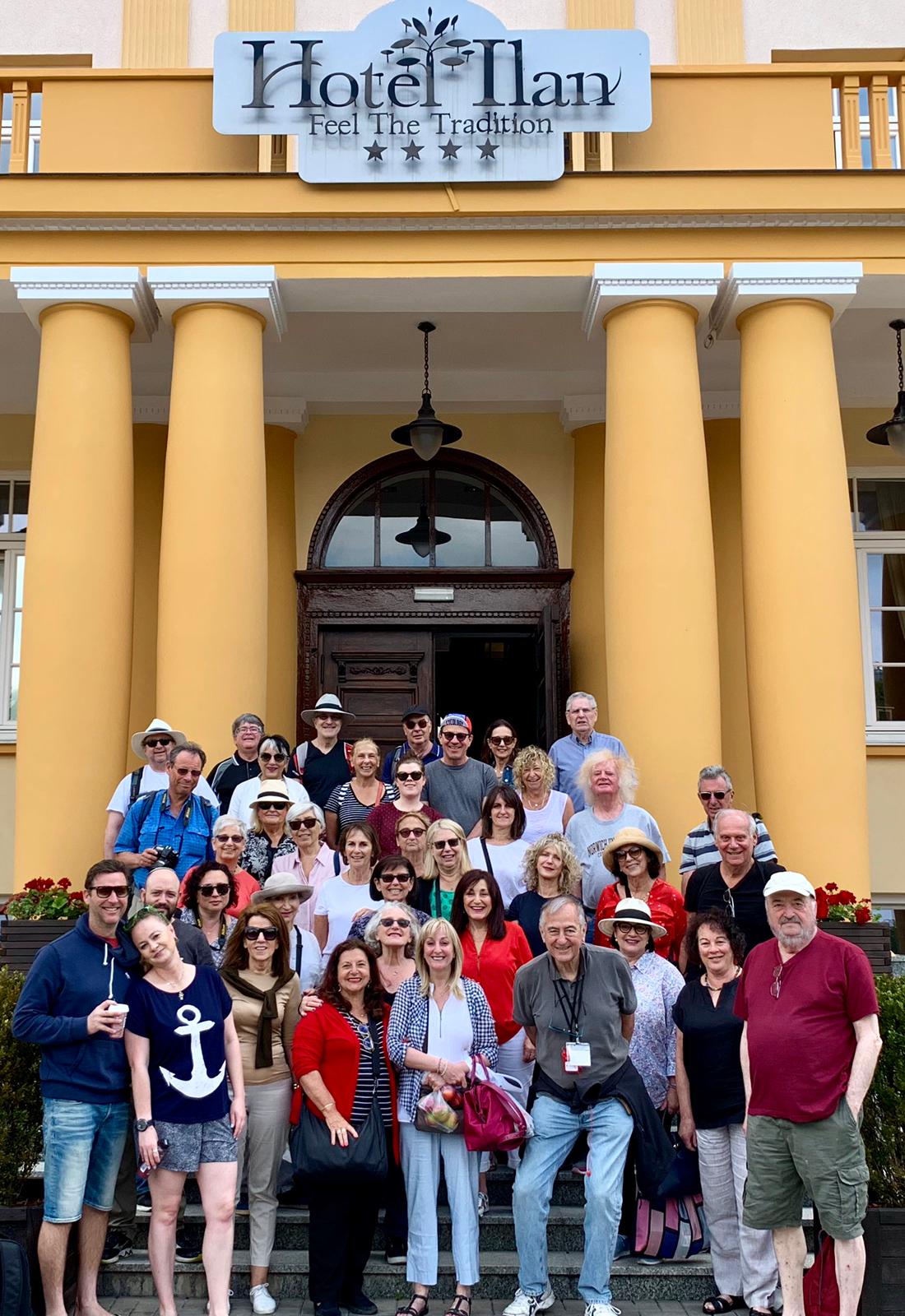
Coming back to the hotel, I was surprised to find it suddenly inundated with members of the Israeli military, all in uniform. Were it any other military in the world, I would feel most ill at ease, and I wonder if the Israeli military prompts a similar response in non-Jewish visitors to this city?

Our Group at Hotel Ilan
Photograph: Fil

It’s going to be a long day, but most of it will be spent on the bus, and we are once again given an opportunity to muse upon the scenery and all that the place names evoke in our imagination. It’s not long after we have taken to the road, as a matter of fact, that already signs begin proclaiming familiar sites of trauma.

Nisko: a town in Polish Subcarpathia, in which the Nazis had for a time thought of dumping the Reich’s Jews. Their failure to do so led inexorably to the development of a more final solution to “the Jewish question”.

Rzeszów: the largest city in south-eastern Poland, whose 12,000 Jews (1/3 of the total pre-war population) were murdered in 1942.

Zamość: the town to which Szlama Winer fled, having escaped from Chelmno, and from which he was subsequently deported to Belzec.

Piotrków Trybunalski: the site of the first ghetto, established at the end of 1939.

Kielce: the site of a pogrom shortly after the war ended.

The road stretches ever on.

We are making our way through the administrative centre of the General Government that the SS termed the Lublin District, in which roughly 7,000 Jews survived out of a pre-war total of approximately 280,000. Since our tour commenced, post-Berlin, in the Warsaw District, our general direction has been eastwards. From this point, we are also making our slow way south, as we head in the direction of the Krakow District, whose metropolitan centre (the city of Krakow) is going to be our home for the next few nights.

Along the way, we stop a few times – in Fil’s words, “to get coffee, and to get rid of coffee”. At the first of those stops we encounter a group of religious Israelis, coming from a settlement just north of Jerusalem. Speaking Hebrew with some of them allows me to feel the best I’ve felt in days.

After several hours on the road, during which time we chat to one another, hear more incredible stories of people’s family backgrounds and their personal relationships to this history, and sing happy birthday to Nurit, we arrive at our first (and only) stop: the village of Markowa.

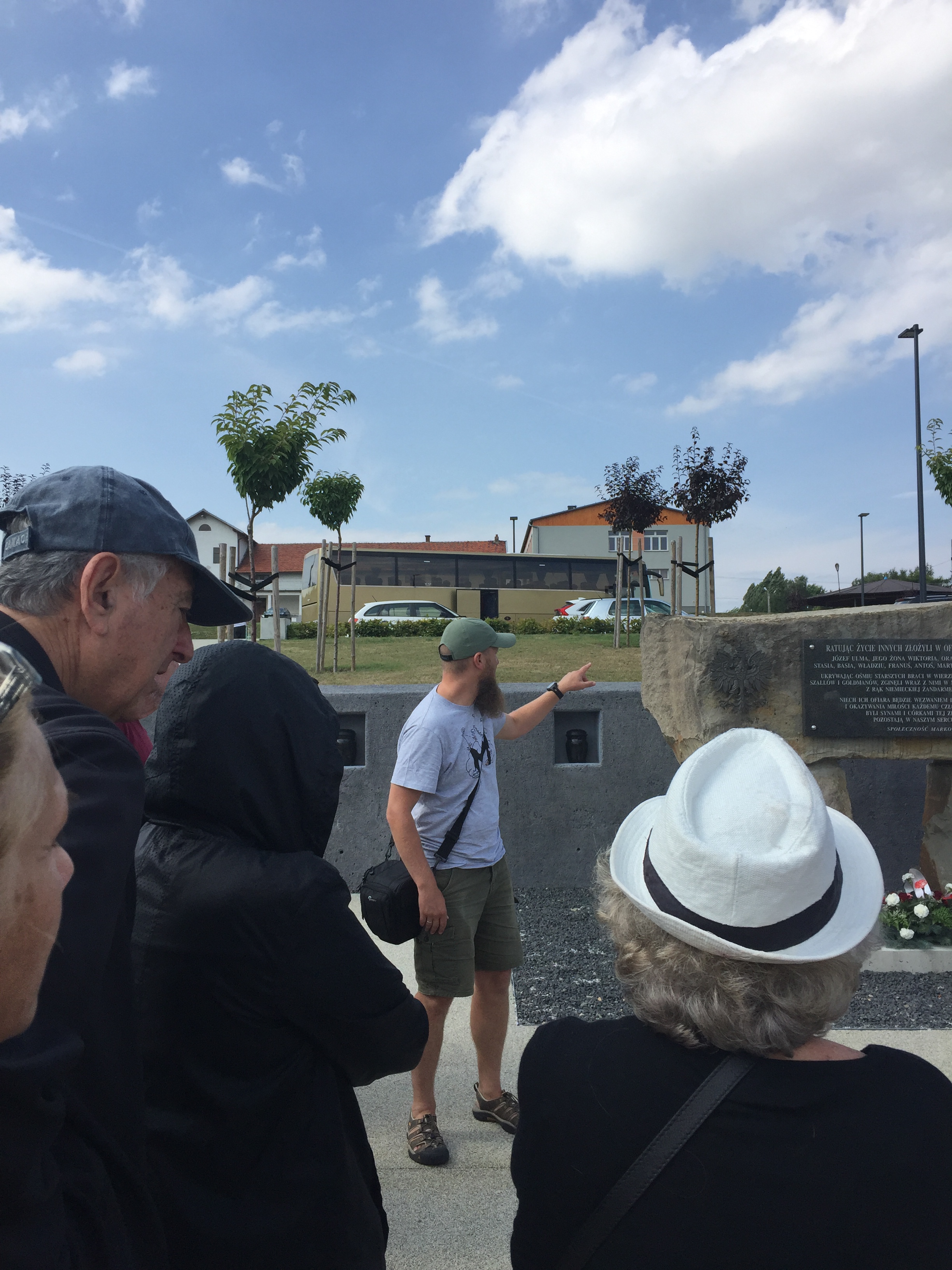
It was here, in 1944, that Józef and Wiktoria Ulma’s small house was surrounded. For some two years, they had succeeded in hiding two families of Jews: a total of eight people. For two years, they had ensured that these Jews were protected and were fed, despite the consequences that they knew for certain they and their six children would suffer if they were caught.

As to how they were caught, Fil muses that it might have had to do with money. The officer of the Polish Blue Police who had betrayed them (a man named Włodzimierz Leś, who was subsequently shot by the Polish Home Army) had apparently been entrusted with goods that had belonged to one of those Jewish families, and which he had no intention of returning. He alerted the German military police to their whereabouts, and in the early morning of March 24th, 1944, the village was swarming with activity. Wiktoria, who was heavily pregnant with her seventh child, may have even been showing signs of pre-labour at this time.

Local peasants were forced to watch as each of the eight Jews was dispatched with a shot to the head. Józef and Wiktoria’s children were also forced to watch the executions of their parents and, after a brief discussion as concerned what to do next, all eight of their children were murdered as well. The youngest, Marysia, was only two years old.

Such violence, while repulsive, needs to be told. It is to the honour of Markowa that they host so beautiful and so moving a museum to the heroism of the Ulmas, and to the heroism of so many tens of thousands of other people – mostly within occupied Poland, but to an enormous extent across the rest of the continent as well.

Fil explains the terrible history of the Ulmas and their act of resistance
Photograph: Simon Holloway
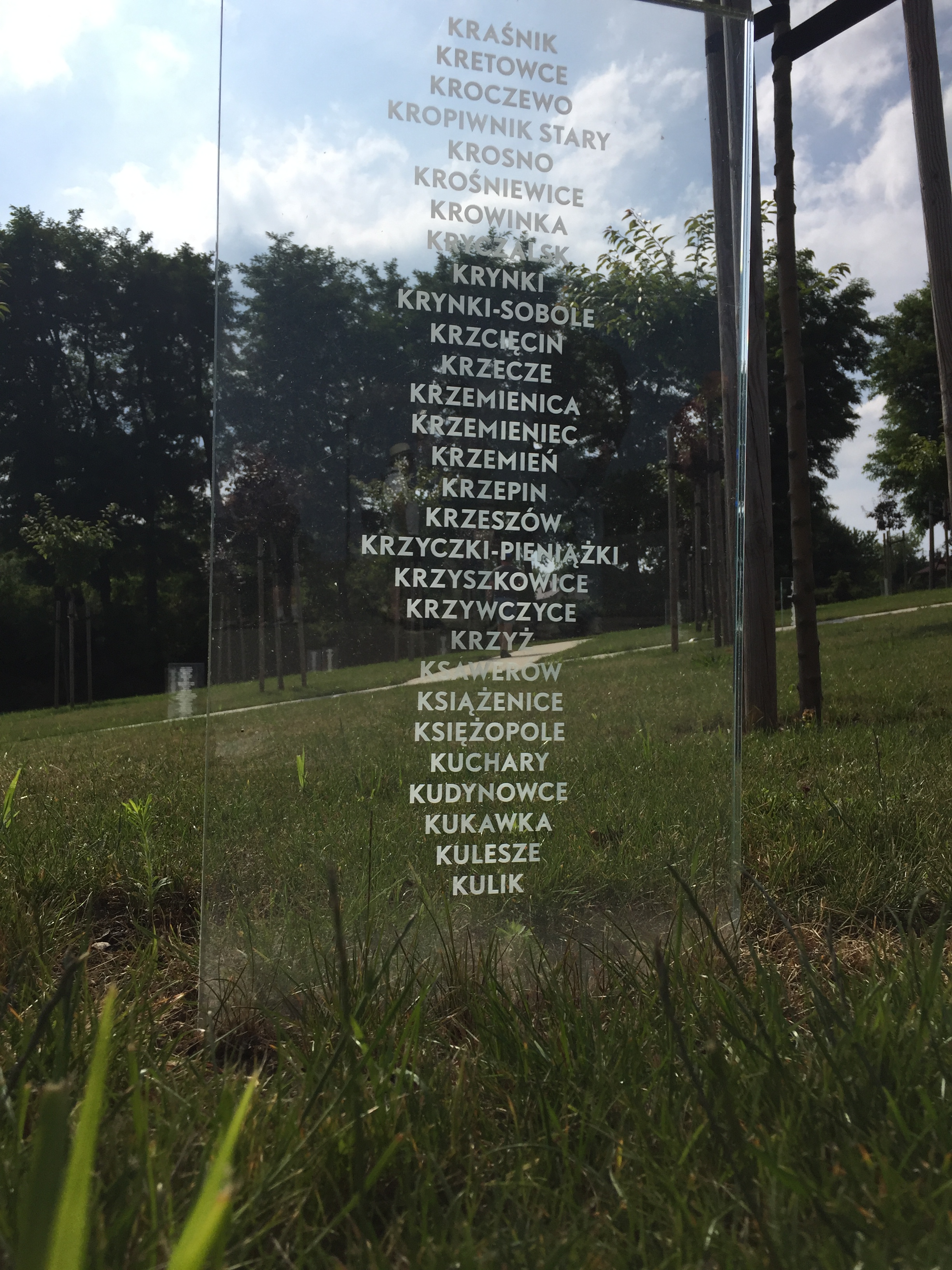
Some of the many names of Polish townships where Poles saved Jews
Photograph: Simon Holloway
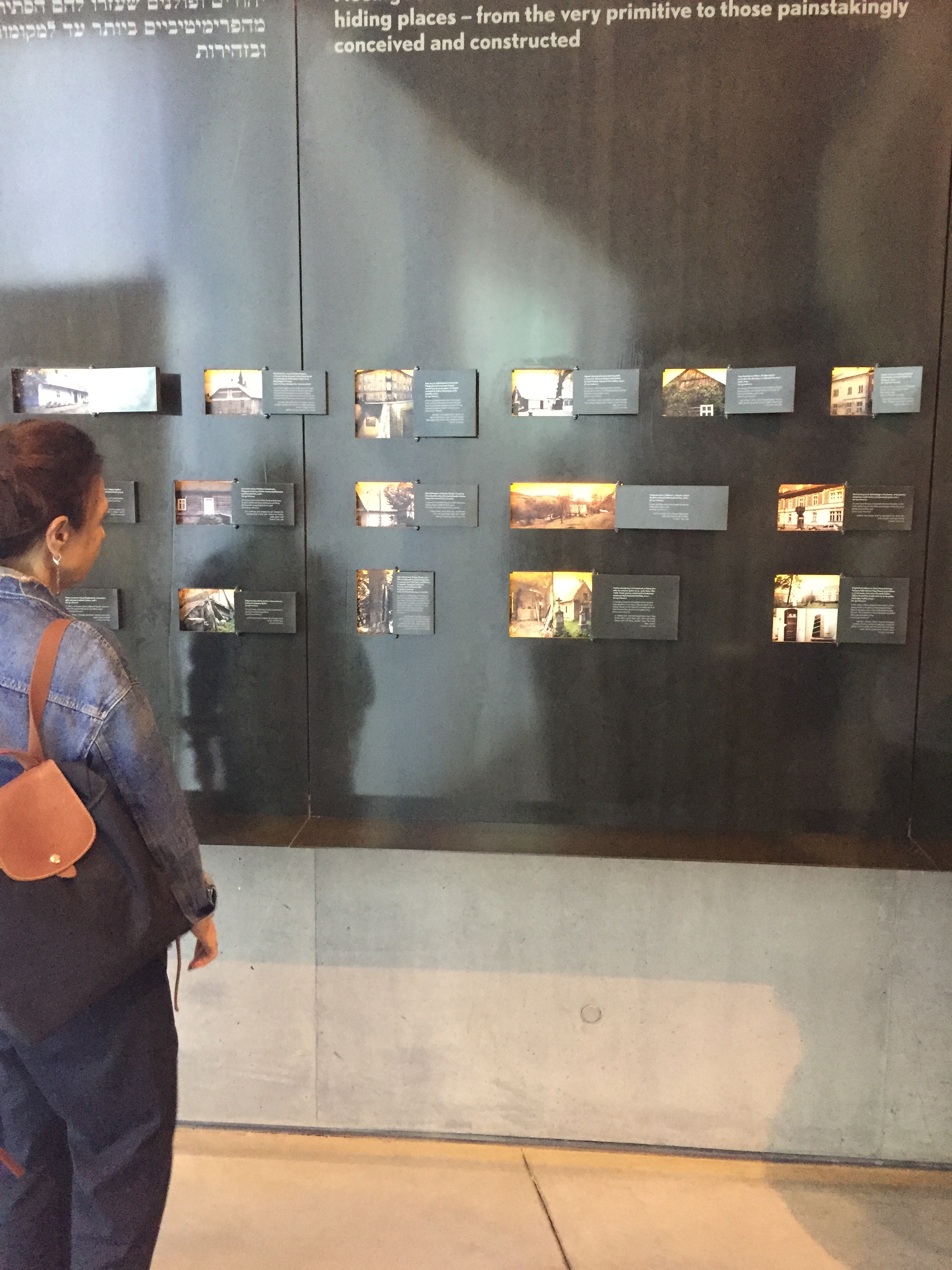
A board proclaims the types of ways in which Poles helped Jews to hide
Photograph: Simon Holloway
Limited only by their desperation…
Photograph: Simon Holloway
Józef Ulma’s Bible. The parable of the good Samaritan is underlined
Photograph: Simon Holloway
Józef and Wiktoria Ulma
Photograph: Simon Holloway
Mementos
Photograph: Howard Wolfers

This is the most beautiful part of the exhibit: information about the murdered Jews, arranged tastefully in photos, with descriptions beneath. Jewish children from Kańczuga, visiting the village. A 19th century Jewish inn. Jewish children with their teacher. A shop owner, named Szymon Syjia. Somebody needs to contact the board of trustees at Tykocin Synagogue and tell them that this is how you memorialise a murdered community: not with cheap and trivial information about the religion that they presumably practiced, but with information about them.

Given Life Anew
Photograph: Simon Holloway
Property of Israel Tohym: a set of tefillin, and Seder Nashim in the Mishna
Photograph: Simon Holloway

Sadly, other local townspeople had been hiding Jews at this time as well, and terrified of what would happen to them if they were caught, they sought to eradicate the problem. On the day after the Ulma family was brutally murdered, the bodies of some twenty other Jews were found within a nearby field. Such crimes are also mentioned within this museum space, but it was the opinion of Konrad that insufficient attention was given to them, and to the crimes of those Poles (like Włodzimierz Leś) who collaborated.

Perhaps the most glaring problem lay in the museum’s reference to the Polish Home Army and to the Polish government in exile. Had they simply not mentioned them, we could call this an error of omission, but the museum instead took the time to observe how they had helped in the saving of Jews. To the contrary, Konrad noted, the Home Army assisted in the murders of Jews, and the exiled government considered a solution to the Jewish question one of the utmost expediency.

They might have disliked the methods, in other words, while approving of the goal.

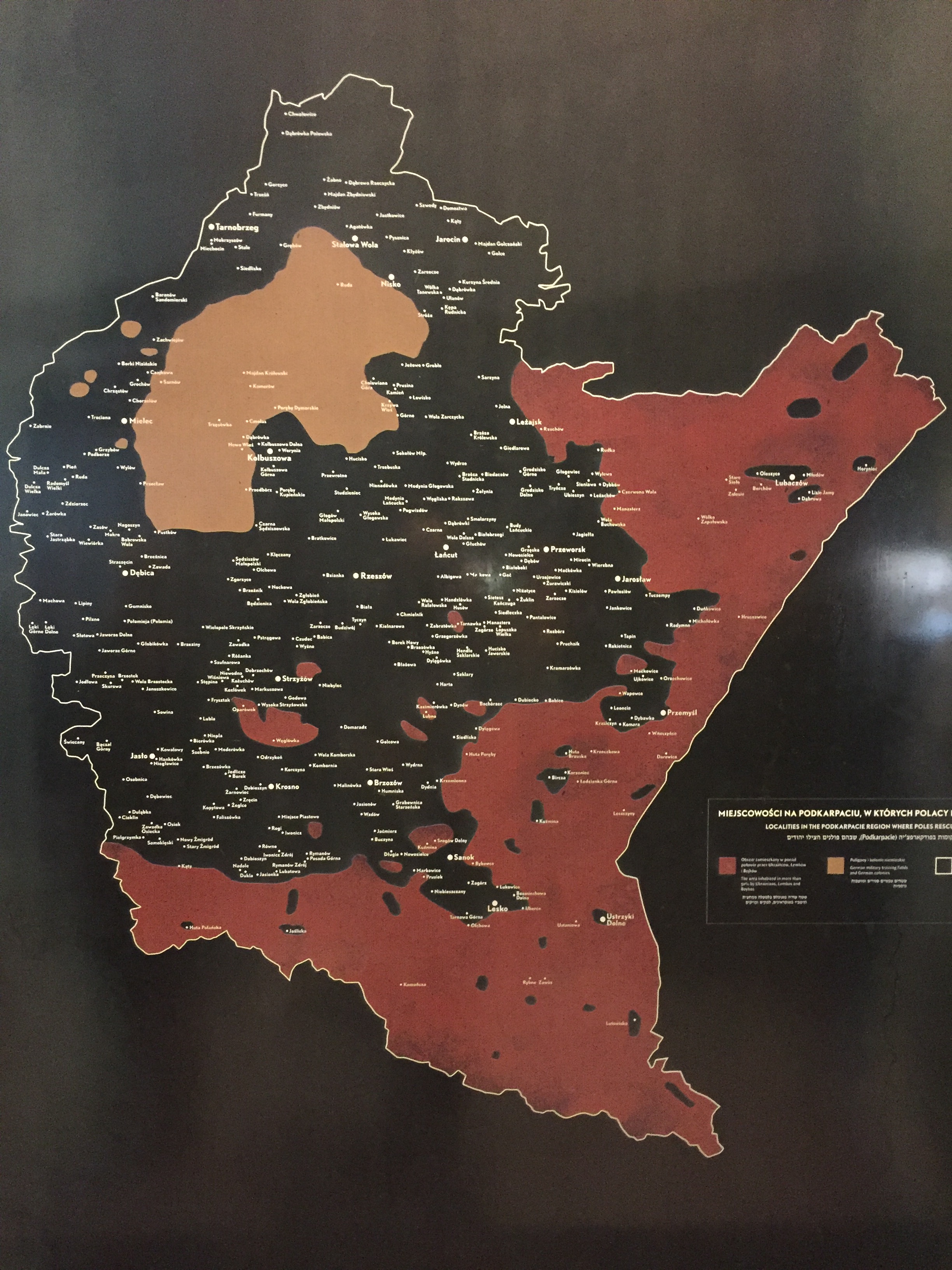
A map of Polish resistance. What would a map of Polish collaboration look like?
Photograph: Simon Holloway
I’m all for building bridges, but if you want me to buy this then I’ve got a bridge to sell you too
Photograph: Simon Holloway

From here, and with some Leonard Cohen to keep us company, we continued until we finally reached Krakow. After crossing the Vistula and remarking on the beautiful old façades, we arrived at our new home: Krakow’s Holiday Inn. We have all decided to get an early night, for tomorrow will see us boarding our bus at 7:15 for a full day in Auschwitz.

July 15: “The Epicentre of the Holocaust”

This morning, after packing our bags and piling into our bus, we set off in the direction of the Lublin district. Before the war, this part of south-east Poland housed close to 280,000 Jews, all but 7,000 of whom were murdered between 1939 and the end of the war.

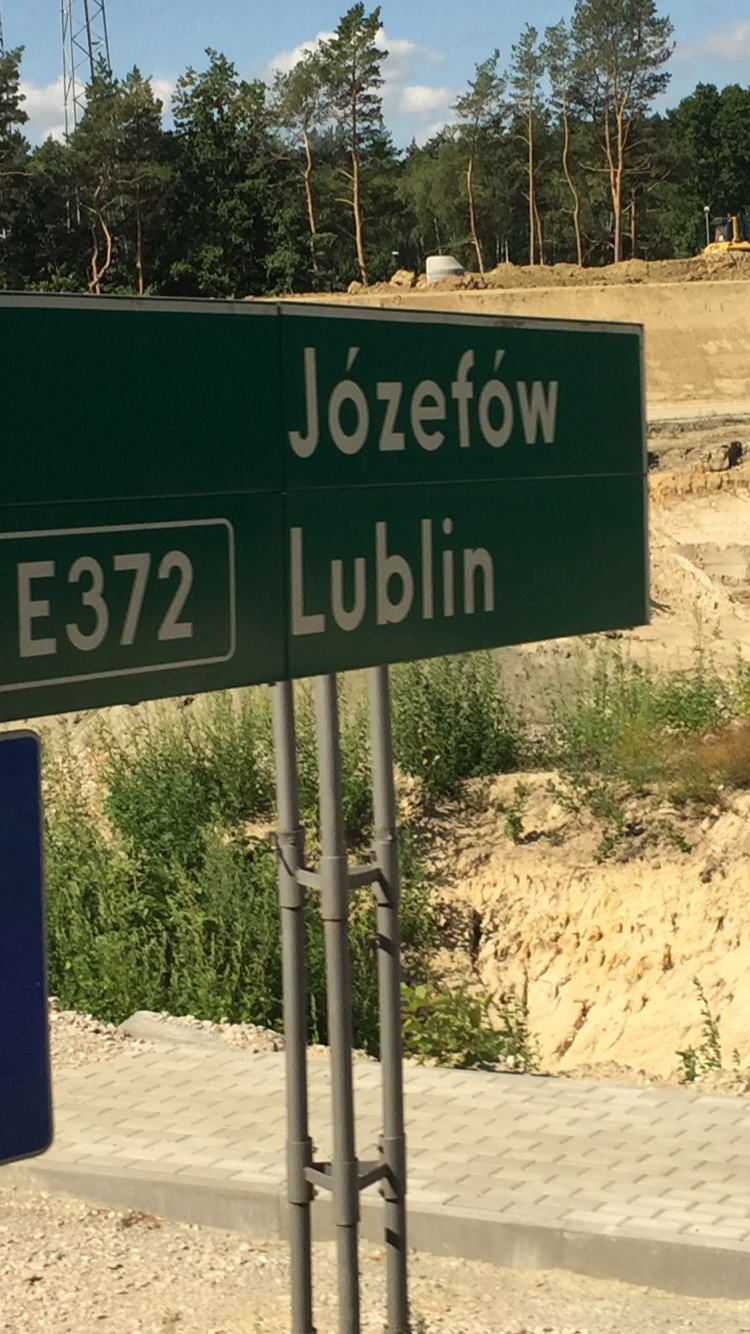
Along the highway, I catch a glimpse of a sign to Józefów: the site of the first massacre perpetrated by Reserve Police Battalion 101 in July of 1942. The roughly 1,500 Jews that they murdered at 2:00 in the morning were the first of some 83,000 Jews murdered by that one police battalion, staffed with volunteers from Hamburg. I ask Fil and he tells me that there’s a dozen towns called Józefów. The one that we have passed is not the one of which I was thinking.

Really, must every sign in this country be so triggering?

The View From the Bus
Photograph: Simon Holloway

Our first stop for the morning is the pretty little riverside town of Kuzmir (Kazimierz Dolny, in Polish), on the banks of the Vistula. We are told that this is not only the longest river in Poland, being over 1000km in length, but that it is the last truly wild river in the country as well. Major towns that abut the river include Krakow (where it originates), Warsaw and Gdansk (where it flows into the Baltic Sea).

Some parts of the Vistula are obscured by forest, and one could be forgiven for not even knowing that there is a river nearby. Nobody would make such a mistake in Kuzmir, where the river itself is a major tourist attraction. Antique Polish trading vessels are available to take tourists for a river cruise, and a beach on the far side looks inviting. In the town itself, which was named for the Polish prince, Casimir the Just, visitors have the option of being transported by an old-style horse and carriage, and are warned about the “Gypsies” and their light fingers.

Before the war, some 50% of the population (about 1000 people) were Jews, many of whom were hasidim of the local rebbe. Their community was an old one, with roots stretching back into the 16th century, but their synagogue was devastated during the war and the community themselves was eradicated. A local cemetery, from which gravestones were taken to form a path to Gestapo headquarters, became an execution site for Jews and Poles, the former of whom were then eradicated in Belzec.

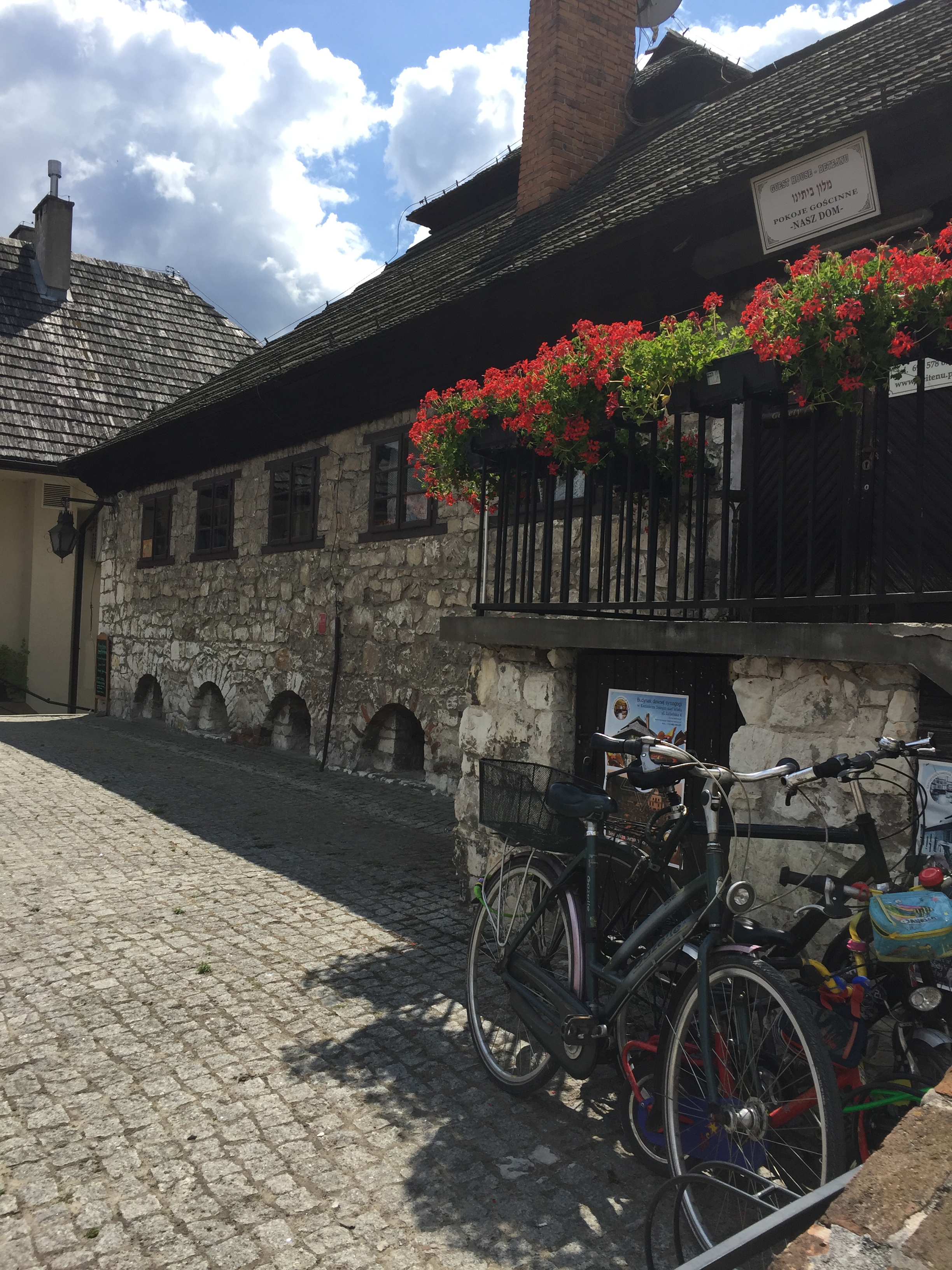
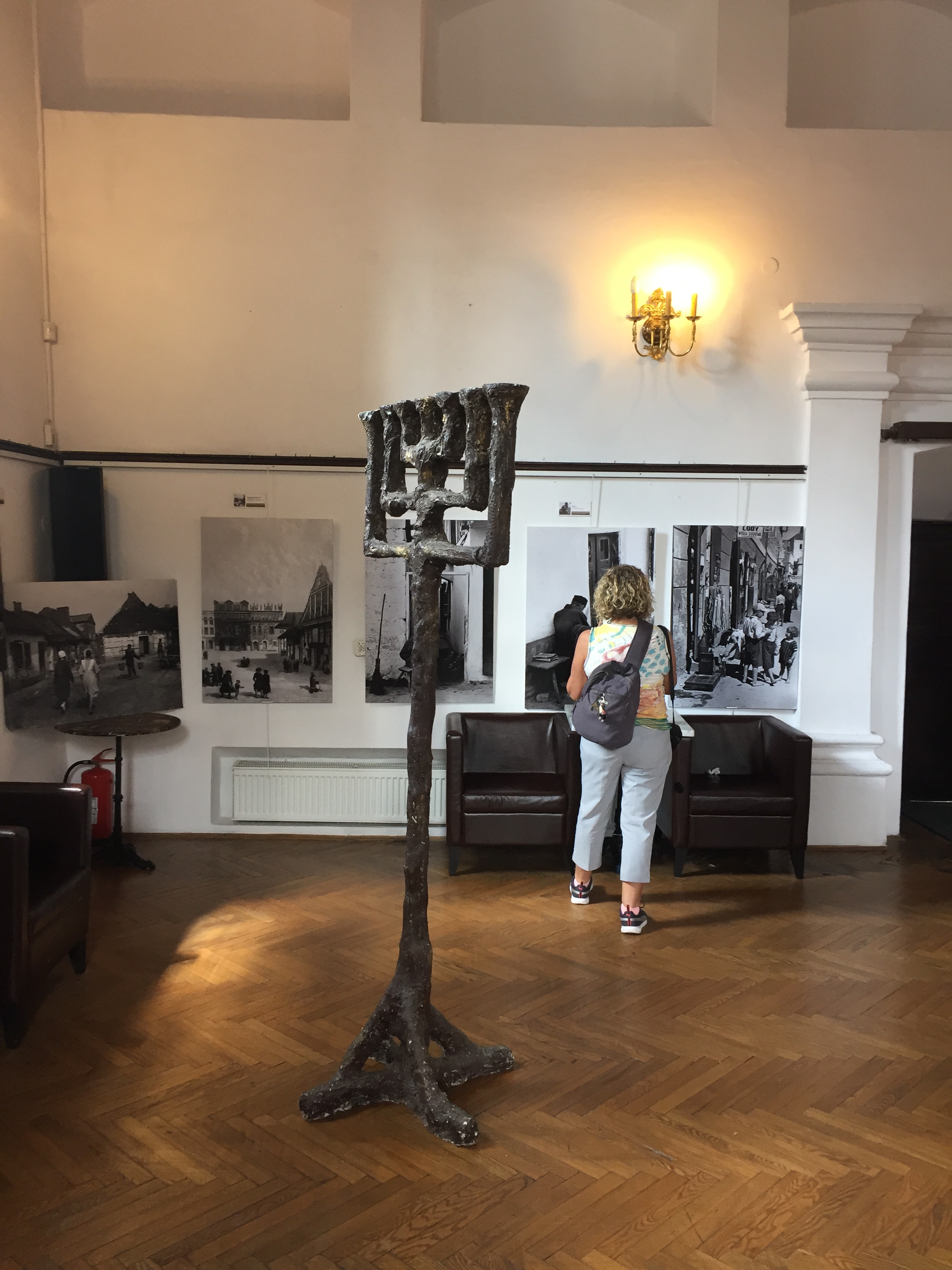
Some of us pay a visit to the local synagogue, which is today (in Fil’s words) “a two-star hotel”. Out the back and around the corner, visitors can enter and, for a 6 złoty fee, see photographs and information about the former inhabitants. Unlike what we saw yesterday in Tiktin, this is quite tastefully done, and I appreciate the manner in which they seek to educate visiting tourists as regards the difference between Hebrew and Yiddish script.

The outside of what had once been Kuzmir’s synagogue
Photograph: Simon Holloway
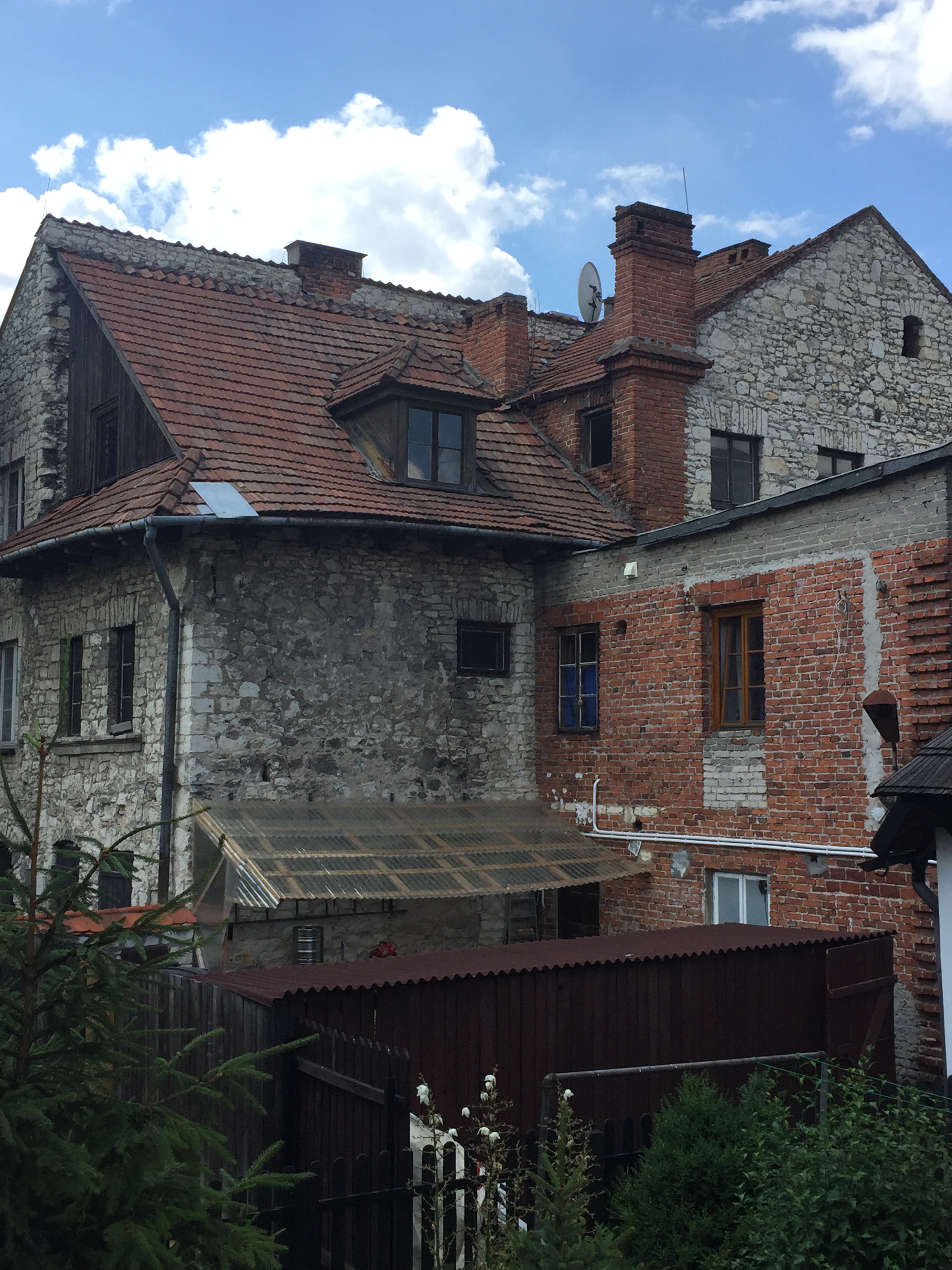
Pretty Buildings in the Synagogue’s Environs
Photograph: Simon Holloway
The Kuzmir Synagogue Exhibit
Photograph: Simon Holloway
The Wise Men of Kuzmir
Photograph: Kathy Miller

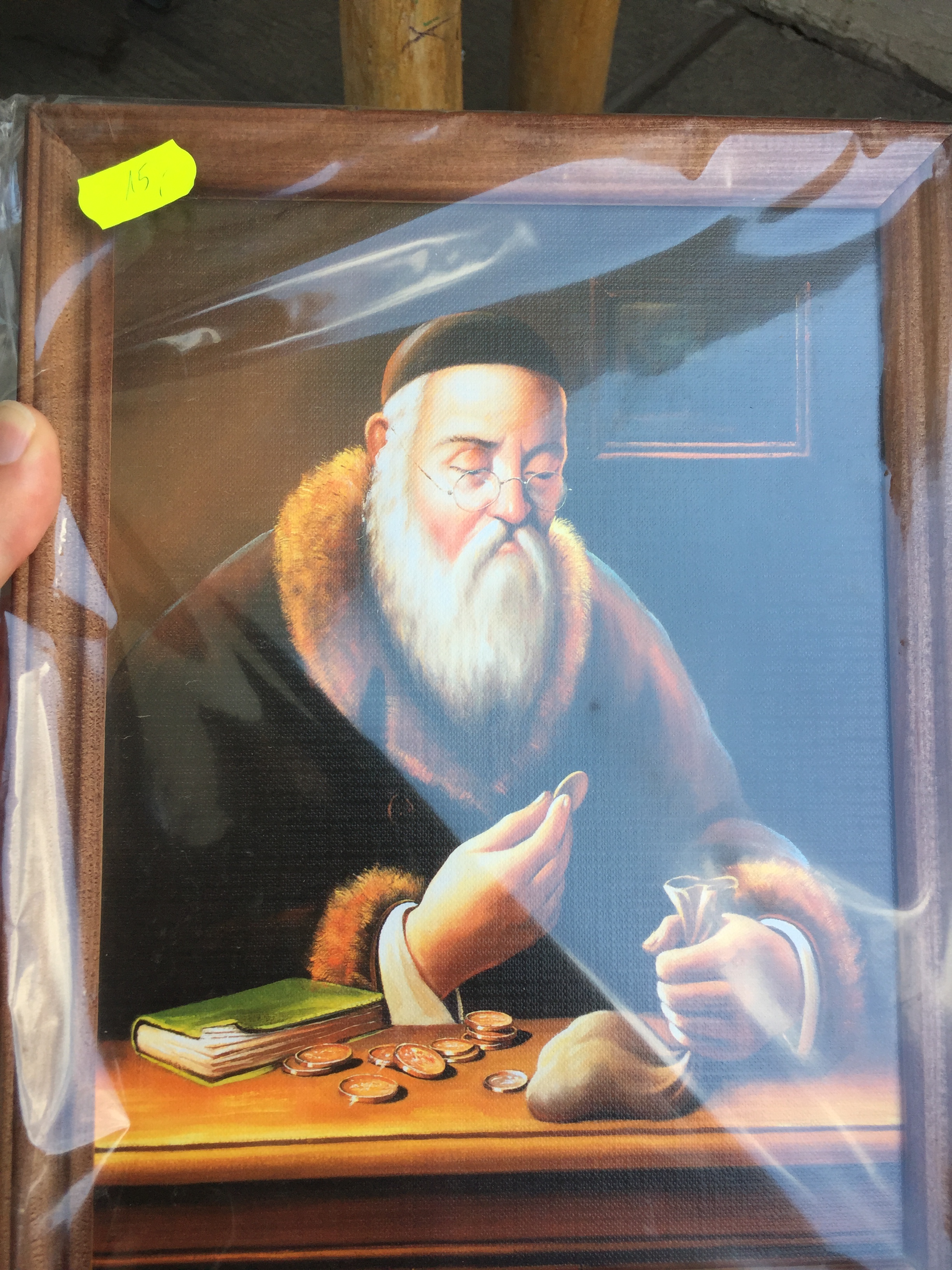
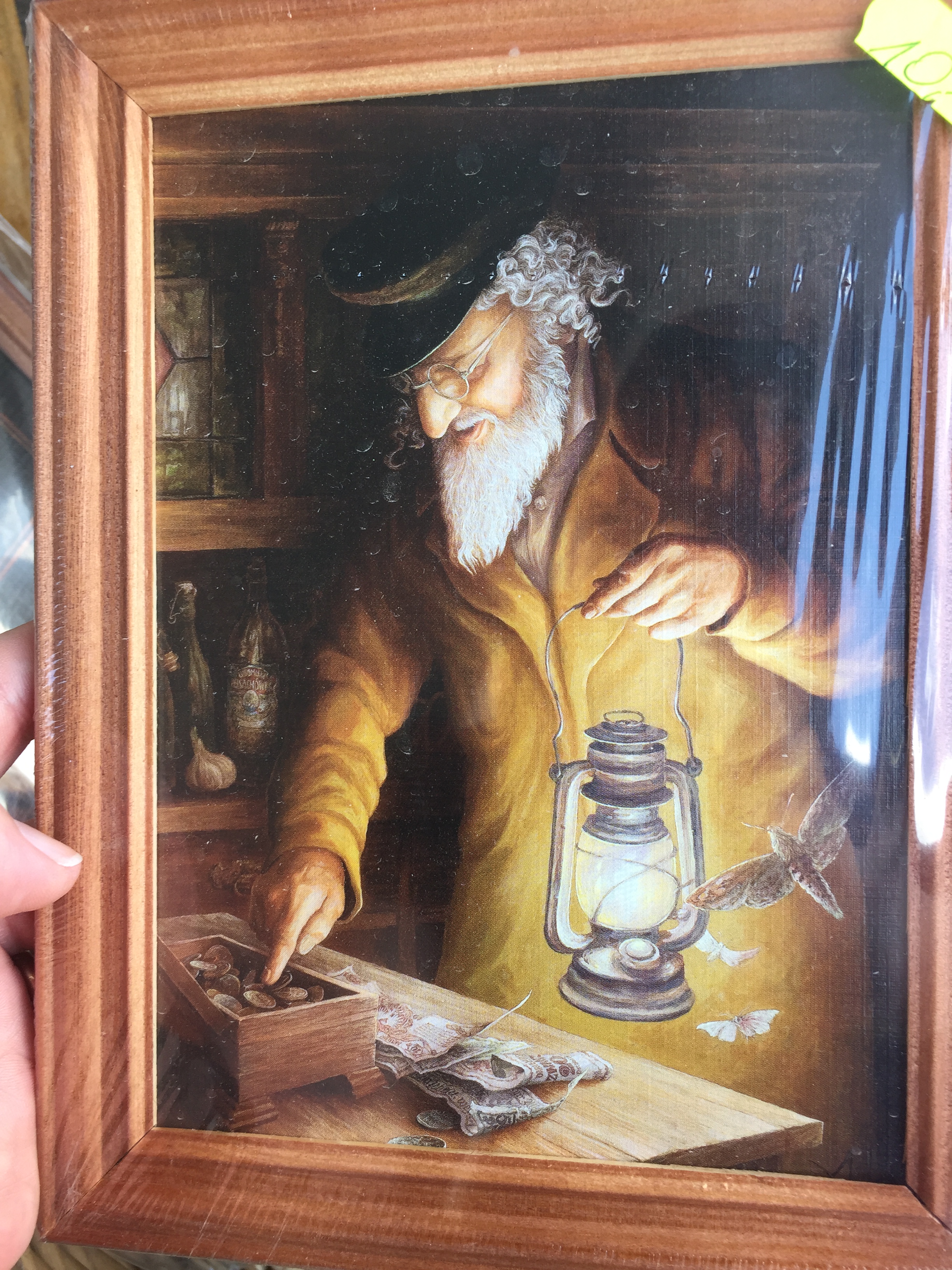
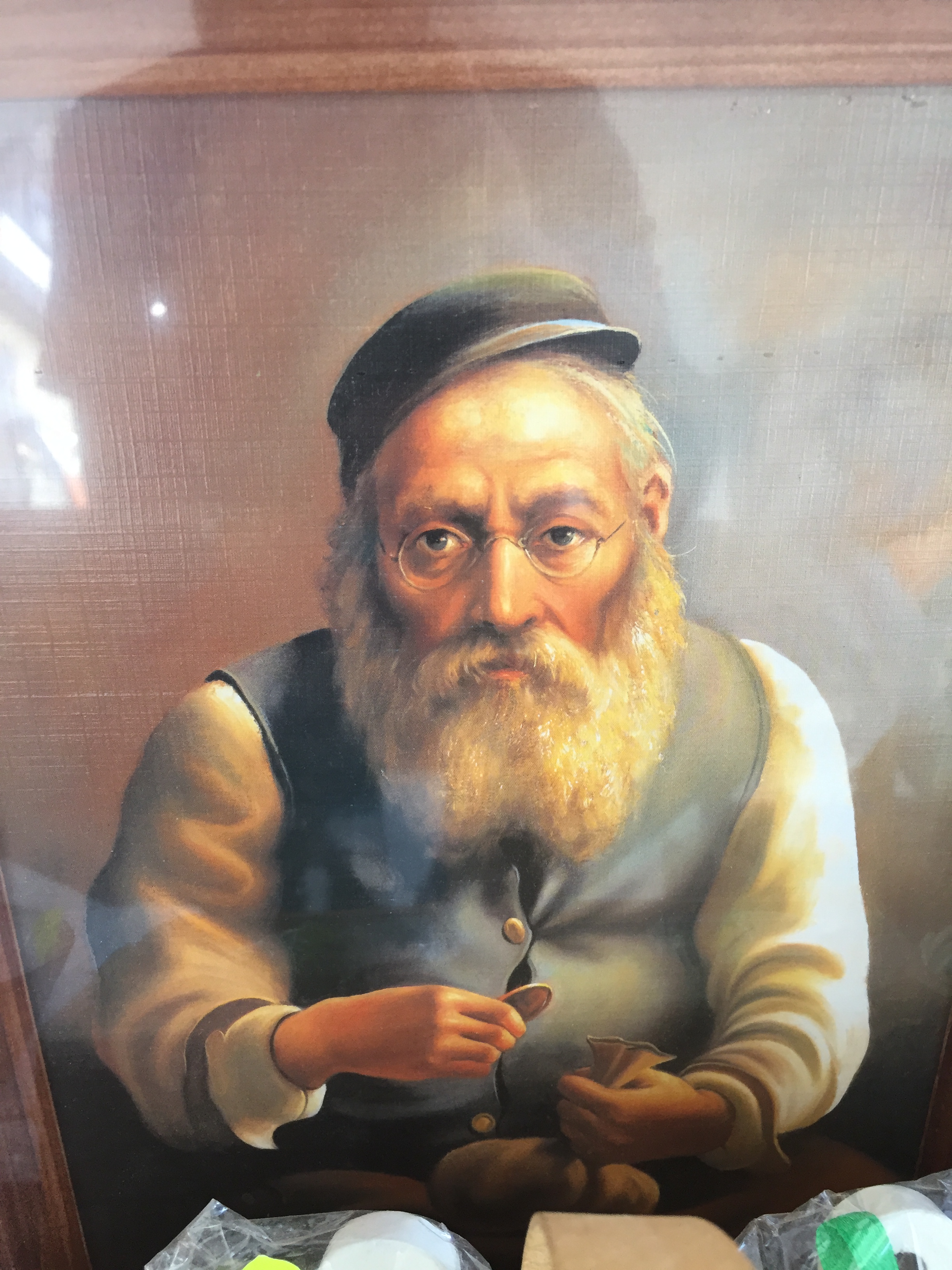
Outside the former synagogue, however, the situation is different. Here, in various shops, vendors sell miniature representations of Jews with money, each of whom is holding a coin of some description. Paintings of Jewish men are ubiquitous, and they are beautifully done, but again: not one of them lacks money. What is this obsession with Jews and money? As one participant pointed out, it is you who are making money out of us.

The Strange Obsession With Jews and Money
Photograph: Simon Holloway
The Jew Counts His Gold
Photograph: Simon Holloway
A Subtle Motif?
Photograph: Simon Holloway

Before leaving Kuzmir, we stop by the local cemetery, which had been so defiled by the Germans. There, we encounter the most remarkable sight. A Polish architect by the name of Tadeusz Augustynek had salvaged the tombstones and had fashioned from them what he terms “The Wailing Wall of Kazimierz Dolny”. With a jagged split through the middle, visitors are invited to approach the wall and walk between its two broken halves.

As we did so, the most remarkable transformation occurred. Since the forest on the other side of the wall was blocked from the sunlight by the jagged barrier of stones and by the dense foliage overhead, it took an instant for our eyes to adjust. As they did, one had the distinct impression of stepping backwards in time. Here, in this dark glade, the air seemed sweeter and the wind more still. A row of remaining tombstones, propped up by broken branches, lined the clearing in which we stood, and we took the time to read the few things they had to say about those who had died so long before this age of terror.

The Remains of Kuzmir’s Jewish Cemetery
Photograph: Simon Holloway
“An Old Woman, Who Walked a Straight Path” (Rokhl bas Mordkhai; died 1936)
Photograph: Simon Holloway
“There is a crack in everything: that’s how the light gets in” (Leonard Cohen)
Photograph: Shirley Leader
A Wall of Stones
Photograph: Simon Holloway
Rupture
Photograph: Howard Wolfers
A Lone Stone
Photograph: Simon Holloway
Bilah bas Yosef Moshe HaLevi, and a grave without a name
Photograph: Simon Holloway
A Path Up the Mountain
Photograph: Simon Holloway

It was with a heavy heart that we left this place of gentle contemplation to walk back between the crack and into the modern world again, where the bus was ready to take us to Majdanek.

Majdan Tatarski (the Tatar Square) has lent its name to this sprawling and repulsive camp, which the Nazis simply labelled KL Lublin. In operation from 1941-1944, it originally lay just outside of the town, but in the years since its “liberation” the town has encroached upon the 500 hectare camp, meaning that the present site of memorial is only a third of the size of the original structure.

As we drive towards this abomination, Fil and Konrad take turns in presenting us with an overview of its history. In the first few years of the camp’s operation, it swallowed no fewer than 78,000 people, some 60,000 of whom were Jews. Over the 3rd and 4th of November, 1943, being fearful that the Warsaw Ghetto uprising might presage more Jewish uprisings in the Nazi sphere of control, the perpetrators embarked on Aktion Erntefest (Operation Harvest Festival), murdering some 42,000 Jews in the space of 48 hours. Of those Jews, approximately 18,000 were in Majdanek and its environs.

It is not for nothing that Konrad describes Lublin as the epicentre of the Holocaust, but the stark reality of that expression is about to become even clearer.

The View From the Bus: Majdanek’s Abstract Gate Memorial
Photograph: Simon Holloway

Disembarking from the bus, we meet our two guides: Mark and Lucas. I join Lucas’ group as he takes us through the former camp and discourses on its evolving history. Established in October of 1941, Lucas tells us of how the camp’s original role had been to house some 2,200 Soviet POWs, who were made to lie on the bare earth in the freezing winter. Lublin’s SS made the decision to continue augmenting the prisoners, and as they did so the camp gained ever wider functions.

One of Majdanek’s ubiquitous guard towers
Photograph: Simon Holloway
Beneath a Perfect Sky
Photograph: Simon Holloway

In November of 1941, it received its first shipment of Jews. Although Majdanek was to take shipments of Jews from elsewhere in the General Government, as well as from outside Poland (the furthest they would travel would be from Drancy, near Paris), these first arrivals were all from Lublin itself. Unlike the Polish prisoners, for whom Majdanek would be a concentration camp, Majdanek’s purpose for its Jewish prisoners would be to enact the Final Solution.

Arriving at the camp by foot, the Jewish prisoners would be presented with a selection. In the space of a few seconds, SS doctors would determine (largely on the basis of superficial characteristics) whether or not an arrival was fit for work. Those who were deemed suitable, having already been separated by sex, were taken into a below-ground chamber for the purpose of having their heads and bodies shaved. The hair collected was to be used in the manufacture of various items, like socks, and in the lining of jackets. Some 730kg of human hair was sold to one particular factory alone.

Lucas, speaking of the Final Solution in Majdanek
Photograph: Simon Holloway

Having been shaved, the prisoners were showered. In the shower block, they were alternately doused in freezing and boiling water, the better to increase their disorientation, and then immersed in Lysol – the purpose of which was to eradicate germs, but which was practically useless in so filthy an environment as Majdanek. Naked and stinging from the chemicals, they came back up to the surface to await their clothing. Perhaps for amusement, perhaps for titillation, the guards kept women waiting an extended period of time, naked and shivering, in a space that they ironically referred to as the rose garden, given how deeply the women would blush.

As cruel as these guards were, we had the displeasure of learning of the cruelty of the female guards in particular, trained at Ravensbrück. Here in Majdanek, they were given their own barracks and complete jurisdiction over women and children. Today, their barracks is one of only two guard blocks that remains, the other having housed the archives of the camp Gestapo, whose job was to police on-site resistance. Regrettably, the Soviets used the camp as their own base of operations in 1945, and much damage to the other barracks was done.

Those Jews who failed the cursory examination and who were deemed unfit for labour were taken below ground, men and women together, and directly to a shower block. There, in one of three chambers, they were gassed, their bodies shaved by Jewish sonderkommando only afterwards.

We are disappointed by the fact that the gas chambers are currently under maintenance, the better to preserve them, and that we will not be able to enter. I find myself thinking a great deal about the nature of this disappointment. Why, exactly, am I let down? Truly, why do I feel the absurd need to enter so revolting a place? What do I hope to gain in understanding by seeing something so disgusting? There is much as regards these sites that caters to the spirit of voyeurism, but there are some things – like the last moments of victims – that should perhaps be left alone.

Lucas does discourse a little on these chambers, and perhaps in more detail than we would like. He tells us that they were three in number, but that the third is something of a mystery. The first has pipes, through which the carbon monoxide travelled. The second, for such was the nature of Majdanek’s evolution, has no pipes but instead sports blue staining on the walls: a sign of the effects of hydrogen cyanide – specifically, Zyklon B. But the third? The third has neither pipes nor stains, and is the kind of enigma that excites researchers and revisionists alike. Me, I’m happy to move on.

From this temporarily off-limits section of the camp, we proceeded to a rather confronting space. Here, in a stiflingly hot barracks, where the air was stale and still, we compared photographs of the camp in 1944 and 2015, and learned of the various subcamps that Majdanek supplied with labour, as well as the various towns and cities that fed this camp with Jews.

Virtually Unchanged
Photograph: Simon Holloway
Today, as it was in 1944
Photograph: Simon Holloway
Feeding the KL System
Photograph: Simon Holloway

I cannot help it. Looking at map of the Lublin district, brightly decorated with insignia marking camps, ghettos and Gestapo prisons, my eye is always drawn to the same place. Chelm: the city whose legendary ‘wise men’ provided me with so many hours of amusement as a young boy. I remember reading of the great importance in which they held themselves, and of laughing hysterically about the tremendous wisdom of which they – and only they – considered themselves possessed. On this map, they are roughly equidistant from Majdanek and from Sobibor, and not so far to the north of Belzec. Maybe that’s the punchline.

The Lublin District: The Centre of It All
Photograph: Simon Holloway

When the Soviets entered Majdanek on the 22nd of July, 1944, there were roughly 700,000 pairs of shoes. Many of these, it turned out, were from other death camps (an unawareness of that fact leading to a not untypical Soviet exaggeration of the death toll), and there is something truly repulsive about piles of shoes whose former owners are no more. We gaze upon the mounds of decaying footwear, but can only do so for so long.

Rows and Rows and Rows of Shoes
Photograph: Simon Holloway
Fading into Oblivion
Photograph: Howard Wolfers

Prior to the German invasion of Poland, Jews had made up roughly one third of Lublin’s population, although the local inhabitants would be hard pressed to say anything meaningful about them today. Despite having comprised over 40,000 individuals, residents today deal only with stereotypes, and when we press our guide on the constant association raised between Jews and money, he too seems not to understand the problem. It’s a depressing conversation, and we don’t pursue the point.

Broken Tombstones: All that Remain
Photograph: Simon Holloway

As for the Jews who resided in Majdanek (those dead and dying Jews, who are the only species of Jew our guides ever seem to understand), their sleeping quarters are terrifying indeed. Many of their bunks had been shipped off to Birkenau as the population was culled at the end of 1943, and so the bunks that we are looking at have been brought from Birkenau back to Majdanek. In this dilapidated space, over 500 (sometimes over 1,000, and sometimes even nearly 1,500) people slept in an awkward heap. The top bunks, despite being hotter, were better: you needed strength to climb up to the third level, which meant that they were considerably less crowded than the two beneath.

Where They Slept
Photograph: Simon Holloway
There Are No Words
Photograph: Simon Holloway

When the Red Army arrived, there was nobody left for them to save. The bulk of what had once been Majdanek’s Jewish population were already being used as fertiliser, and the last shipment of prisoners marched off to other camps occurred but hours before the Soviets walked through the gate. Between the damage that they caused to the barracks and that which was subsequently caused by hungry and desperate Poles, who pillaged the environs for building materials with which they might fix their houses, all was in disarray by the end of the war.

Today, since there is a desperate and important need to showcase these crimes and to remember them, the Polish government has presided over a major enterprise of rebuilding and conservation: all from original materials, and all to the original specifications. This project is important, and they are to be commended for the work that they do, but one cannot help but wonder as to the impact on regular Polish people, who look out the windows of their apartments upon this blight that is Majdanek.

It is of the Polish people that our guide spends approximately half of his tour. His description of these shaved and emaciated Poles, and of their desperate and heroic acts of resistance, are inspiring indeed. Perhaps most inspiring is his description of their works of sculpture, constructed on site in what were to be the very first examples of memorialisation within the camp system of Nazi-occupied Europe.

Lucas, on Polish Resistance
Photograph: Simon Holloway

The SS, who believed (in a perverted Nazi fashion) in the integrity of beauty, made sure that the camp be prettified in the ways that appealed to their deranged sense of order. They maintained a casino and a swimming pool for their staff, and they had their Polish inmates engage in acts of artistic creativity. One such creation is the sculpture of a turtle, which the guards placed before one of the factories in which the Polish slaves were toiling. Had they known that the purpose of the turtle was to inspire prisoners to work more slowly (a purpose, our guide tells us, that the prisoners unanimously understood), they clearly would not have done so.

Perhaps most inspiring is a column topped with three birds, wings spread and ready to take flight. Interpreting these birds to be representations of the Nazi eagle, their number symbolic of the Third Reich, the guards held a grand unveiling ceremony at which they saluted this column before placing it in a prominent position not far from the kitchen.

A Subtle Act of Resistance
Photograph: Simon Holloway

In actual fact, we are delighted to learn that while the birds held different (and inspiring) meanings to prisoners, the sculptors had also surreptitiously stolen ashes from the crematorium, which they had placed within a hollow space inside the column. It is a small act of defiance, but a pleasing one: when the guards saluted the sculpture, they unwittingly saluted the remains of those very people they had cruelly murdered.

It is the cruelty that one finds most distressing, and in that regard the worst is yet to come. In a group, we walk in silence down the long road that leads to a large and somewhat crass sculpture, which one participant found reminiscent of Albert Speer. Before ascending the steps to its summit, we first approach the site at which 18,000 Jews were murdered during Aktion Erntefest: shot into the ground while loudspeakers mounted on trucks blasted music. The harvest festival for Germans has long been a time of great rejoicing, but the sheer volume was designed to conceal from victims the sound of the machine guns.

Again, I find myself thinking of the Piaseczno Rebbe, Rabbi Kalonymus Kalmish Shapira, whose collected discourses in the Warsaw Ghetto provided my first encounter with hasidic Judaism. He too was murdered during Aktion Erntefest, but not here. In addition to Majdanek, the Harvest Festival claimed victims in Poniatowa and Trawniki, and it was in the latter of those camps that the Piaseczno Rebbe was erased.

The pits are still visible behind this memorial stone
Photograph: Simon Holloway

From here, we draw breath and enter the crematorium building, which is comprised of various rooms. In the first, SS doctors would take the time to remove any gold or silver fillings, as well as search body cavities for objects of value. A task usually performed by Jewish sonderkommando, the fact that it was uniformed members of the SS performing this revolting task is peculiar, and says much about the venality of those who so blithely blamed Jews for being obsessed with money.

The next room, with its cold stone walls, was an execution chamber. Here, Polish partisans met their deaths, as did Jews who had succeeded in hiding prior to Erntefest but whose whereabouts had since been discovered. Standing in this room made clear to me precisely why I did not need to enter the gas chamber after all. Being in a place of murder is neither edifying nor informative.

Finally, we walk into the third room, which sported the ovens. Here, we learned of the SS guard who so loved working in crematoria that he not only situated his office within this building, but who subsequently moved into it. His bathroom was the space immediately to the left as we walked through the door, and were gratified to learn of his execution in 1946.

Unfortunately, as is so often the case, less than 10% of those responsible had been brought to trial, and not all of them received sentencing. Most of the perpetrators were Austrians by birth, although about a third of them were Ukrainians, and the camp hosted an entire Lithuanian police battalion as well.

As for the memorial space that we approached at the end, like a large space station hovering over the far end of the camp: this was a Soviet construction. Here, in a bowl that locals have crudely nicknamed “the ashtray”, over 1300 cubic metres of ash mixed with fertiliser are on permanent display. We recited kaddish (although I was uneasy reciting kaddish in the presence of ash and feces), as birds took flight around us. This repulsive camp has truly become a haunt of crows.

Out of Place: An Alien Structure
Photograph: Simon Holloway
“Our Fate: Your Warning”
Photograph: Simon Holloway
The Sky Above Our Heads
Photograph: Howard Wolfers
A View of the Crematorium
Photograph: Simon Holloway
Majdanek: A Haunt of Crows
Photograph: Simon Holloway

How would Majdanek’s victims feel, knowing that their cremated remains are to forever lie unburied? This memorial strikes me as profoundly wrong. This is a Soviet monstrosity, but the victims were possessed of very different attitudes towards respect for the dead. Showcasing remains like this is something more easily done when they are not those of your own family.

I get the feeling from other participants that they too are most discomfited by what we have seen: not only the camp, but the heavy-handed nature of the camp’s memorialisation. A more satisfying way of remembering these victims might be to say something about them. Who were they, these 40,000 Jews? What sorts of professions did they have, and for what were they known?

Such thoughts consume me as we drive into Lublin. Here we are staying at Hotel Ilan (whose tagline, somewhat clumsily, is “Feel the Tradition”). Originally a yeshiva, established by Rabbi Meir Shapiro in 1930, its library was burned in a public square in 1939 and its community, save those few who survived, were amongst those we gazed upon in that large bowl, beneath the crows.

Downstairs, I encounter two hasidim. A man and his wife, I take them to be Satmar: her head scarf is flat against her head, which suggests that she has also shaved her hair off, his peyos are thick and curly, and his tzitzis are worn above his shirt and beneath his vest. I want to ask him who he is and what he is doing here in this godforsaken place, but I demur. This building is a tourist attraction. He isn’t. I decide to leave him and his wife alone, but am pleased that his presence helps remind locals of those whom they only know from photographs.

We have a debriefing session in the old synagogue, which still serves tourists as a place of worship, and I find it most interesting to hear feedback from the group. I feel that we are all united in our confusion: however much we learn, so much less do we understand. But then, did we really come here to understand? Or did we come here to explore the enigma that lies at the heart of that which is unambiguously and incontrovertibly irrational?

Rabbi Meir Shapiro, who established this yeshiva, would have had much to say on the subject. A scion of a hasidic family, the yeshiva that he established was designed to train a new generation of distinctly hasidic rabbonim. Their philosophy, akin to that of the Baal Shem Tov, centred on the notion of God’s majesty and supreme control, together with that of the seeming chaos that infuses the world that He created. Our task, Rabbi Shapiro would have said, is to bring the divine into our daily lives, such that we might rectify those shattered vessels and repair the very fabric of reality.

He may have had even more to say on this subject, of course, but his book, Imrei Daas, was burned.

Rabbi Meir Shapiro, 1887-1993
Photograph: Wikipedia

July 14: Of Jagged Stones and Jewish Kitsch

The morning begins bright and early as we file into the bus at 8:00am, well-rested from our day off. Our first stop is the umschlagplatz, which we had previously seen only from the bus window.

It is difficult, standing here in this neat, clean memorial to imagine the sweat and the filth of the umschlagplatz in use. Hearing from Fil and from Konrad about how the deportations proceeded invokes horror, and the blue skies above our heads make it feel longer ago than it was. A description, written in Polish, English, Yiddish and Hebrew informs visitors what happened here, and a quote from the book of Job makes clear the purpose of the memorial:

O earth, do not cover my blood;
let my outcry find no resting place.

– Job 16:18

Four Texts, Proclaiming German Crimes
Photograph: Simon Holloway
Around the Texts, Names. Some in Polish; Some in Yiddish.
Photograph: Simon Holloway
Konrad and Fil explain the procedure of deportation
Photograph: Simon Holloway

From here, we walk down the street and around the corner, past a series of memorials to ghetto writers and fighters, poets and heroes, to a monument at the site of Mila 18. The scene of the last stand between the resistance and the Germans takes the form of a hill, both at the top and bottom of which we see engraved stones, the one atop the hill having been draped in an Israeli flag.

We will be seeing a lot of Israeli flags today. These sites are common destinations for Israeli military groups.

We learn of a local tradition, started by a survivor of the uprising named Mark Edelman, that takes place every year, on April 17th. Polish people hand out daffodil pins, which can be seen on the breasts of many civilians in Warsaw, seeking to commemorate the outbreak of the uprising, and the tremendous of courage of all who participated in it.

Fil speaks to us about the history of the uprising and its commemoration
Photograph: Simon Holloway
Agnes speaks to us about the survival of Lena Goldstein
Photograph: Simon Holloway
At the Top of the Hill
Photograph: Simon Holloway
The Flag of the State of Israel
Photograph: Simon Holloway
The Words that Lie Beneath
Photograph: Simon Holloway
Base Monument: “That the Whole Earth is Their Grave”
Photograph: Simon Holloway

Boarding the bus again, we depart for a longer journey, following the same path taken by those Jews who left the umschlagplatz by rail; the same path that the ghetto fighters had sought to avoid.

Approximately 120km out of Warsaw lies our destination. There, not far from a pretty little town called Małkinia, is the Polish village of Treblinka. Małkinia was known to many Jews in Poland at the time; Treblinka, of course, was not.

The View From the Bus
Photograph: Simon Holloway

The isolation of Treblinka from cities, its proximity to the railway of Małkinia and its centralised position relative to other centres of Jewish living made it an ideal destination for an extermination camp. The fact that there was already a labour camp nearby (that which we now term Treblinka I) made it all the more advantageous.

Here, after alighting from the bus, we looked at a scale model of Treblinka, based upon the testimonies of its survivors and of those who had worked within the camp as guards. There were some twenty members of the SS stationed at Treblinka, as well as approximately 120 Ukrainian guards, trained at Trawniki.

Fil points out the particular parts of the camp to us
Photograph: Simon Holloway
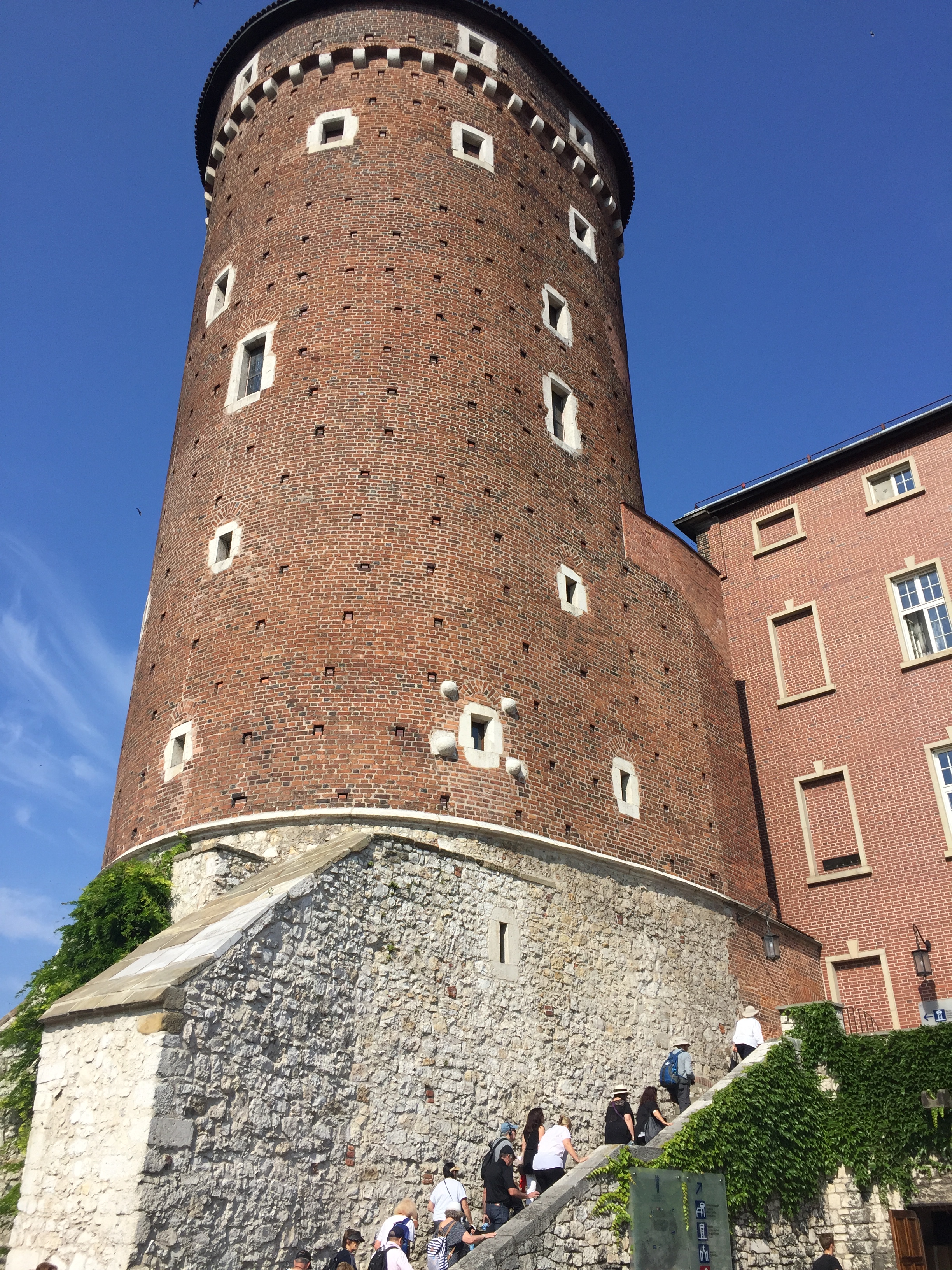
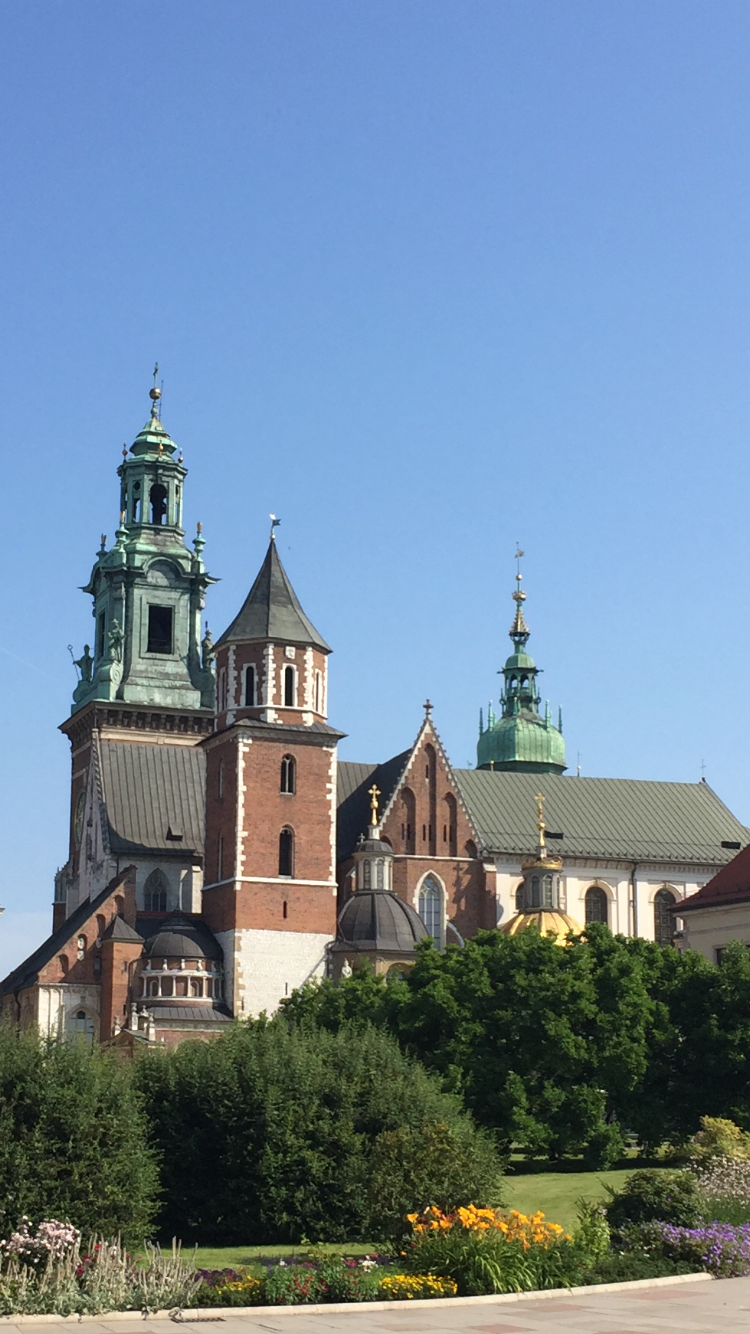
A small site, being only 20 hectares in size (approximately 400x400m), Treblinka claimed the lives of some 800-900,000 Jews in the space of a single year. As we heard from Konrad and from Fil, this was largely thanks to the work of Treblinka’s second commandant: Franz Stangl.

Stangl, who was brought in to replace the incompetent Irmfried Eberl, significantly restructured Treblinka, allowing it to become ever more efficiently a factory of death. He increased the number of gas chambers to ten, streamlined the process by which victims would only alight the trains one carriage at a time, and redesigned the station platform so as to diminish resistance.

He added a painted clock, the façade of a ticket office, a sign directing arrivals to a fictitious restroom and a schedule of imaginary trains. Thinking that they had arrived at a regular station, the victims would not be given any premonition as to the fate that awaited them until their heads were being shaved in a special room, the only exit to which (“the tunnel”) led directly to their deaths.

An announcement calling on Jews to register for deportation
Photograph: Simon Holloway
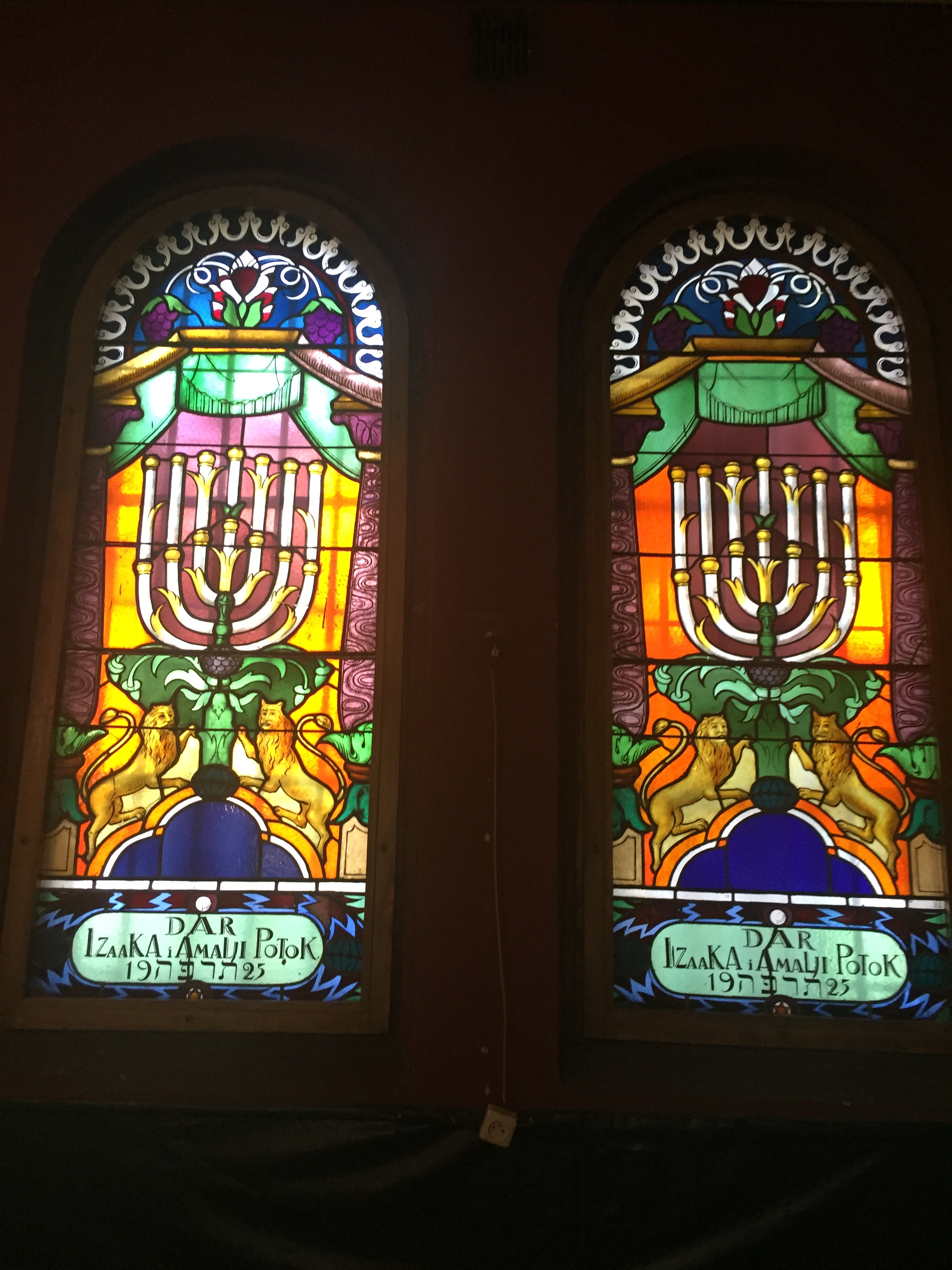
A page from Yehiel Gorny’s The Destruction of Jewish Warsaw (Oyneg Shabbes Archives)
Photograph: Simon Holloway
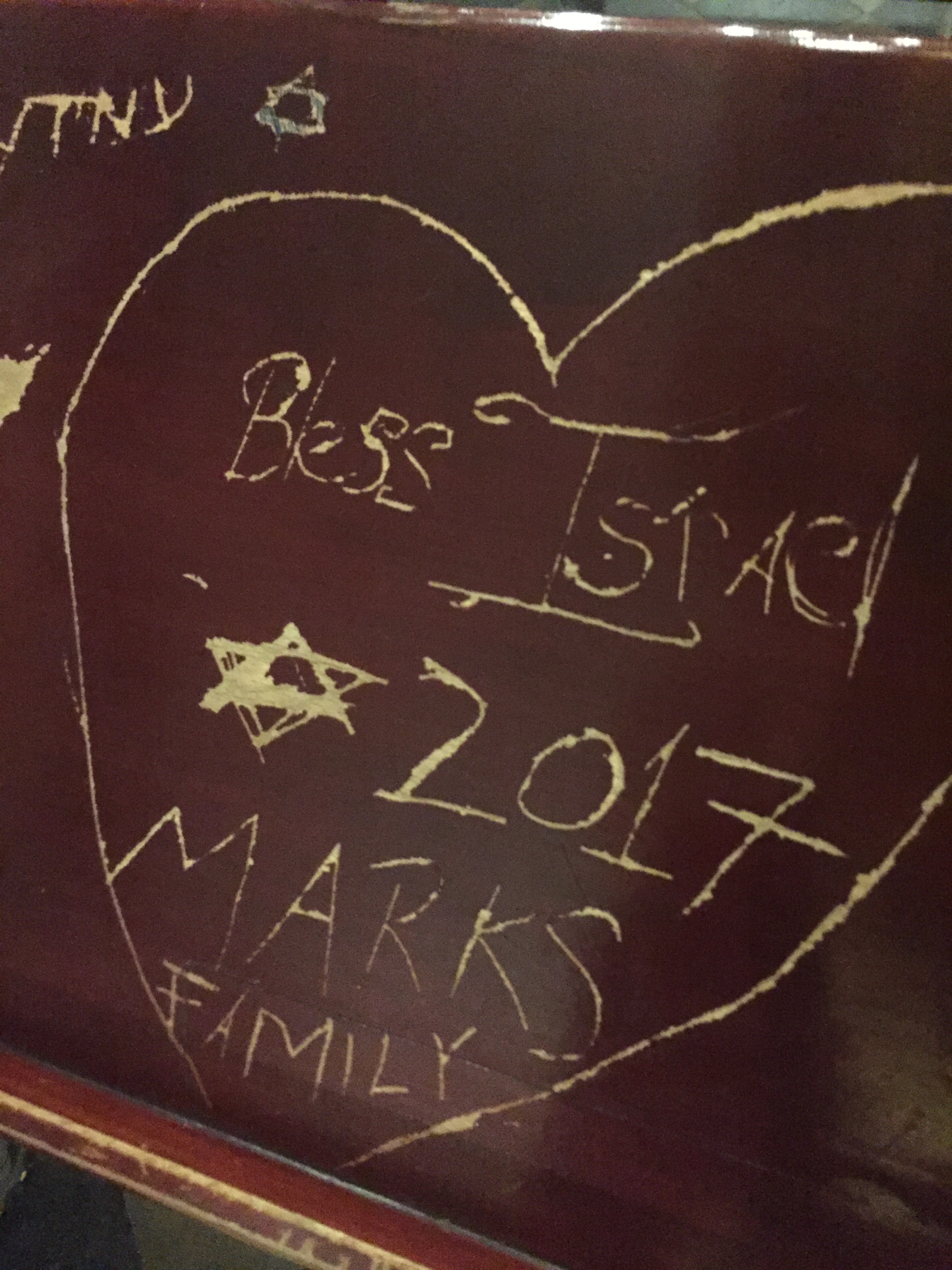
The Towns that Fed Treblinka
Photograph: Simon Holloway
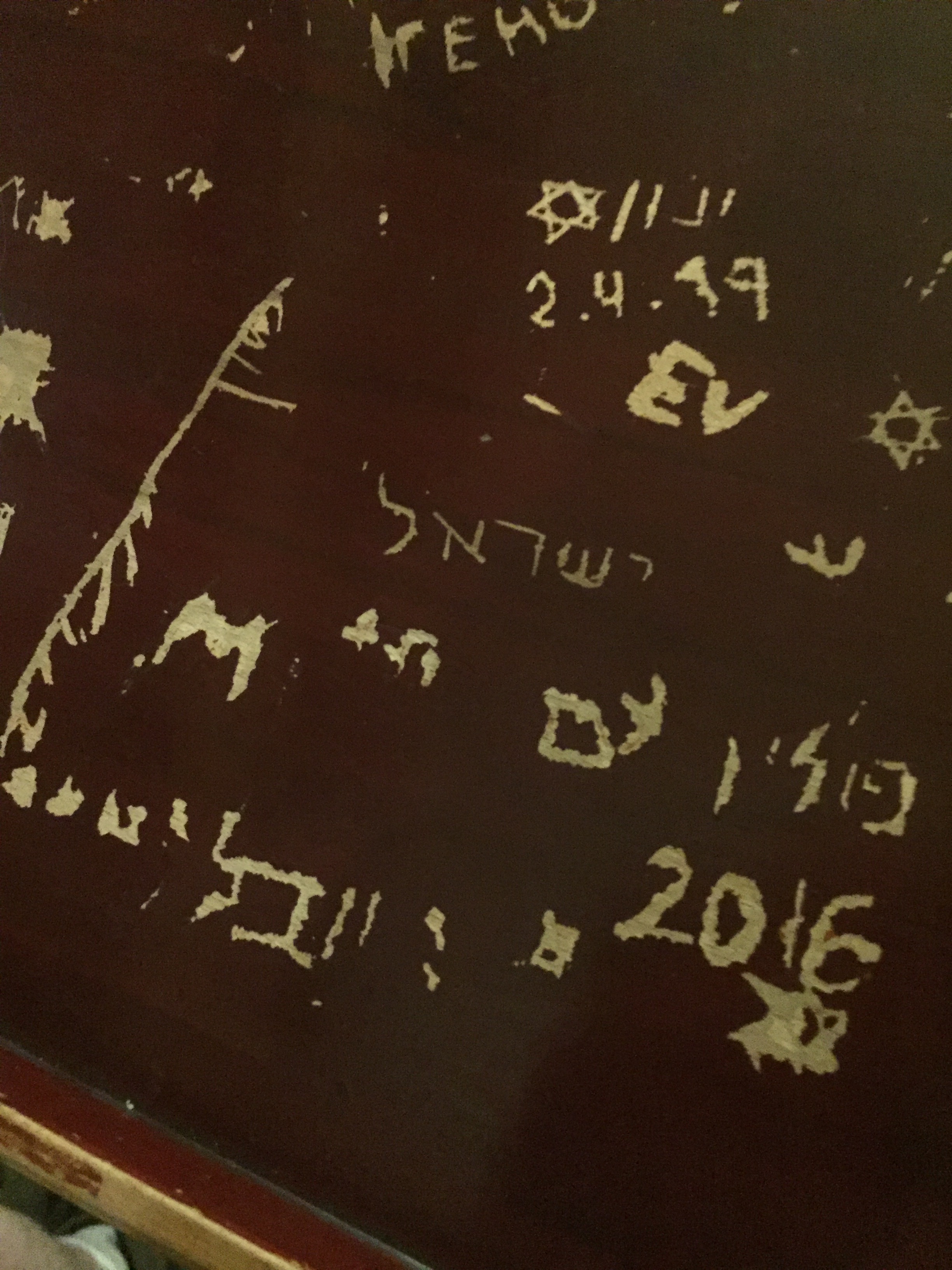
It is difficult to take this all in. There is no horror movie that can compare with this. It is truly terrifying, and we take the time to pause and observe the broken tombstones from the nearby site of Kosów Lacki, which the Germans had used in construction.

“A modest and important woman”
Photograph: Simon Holloway
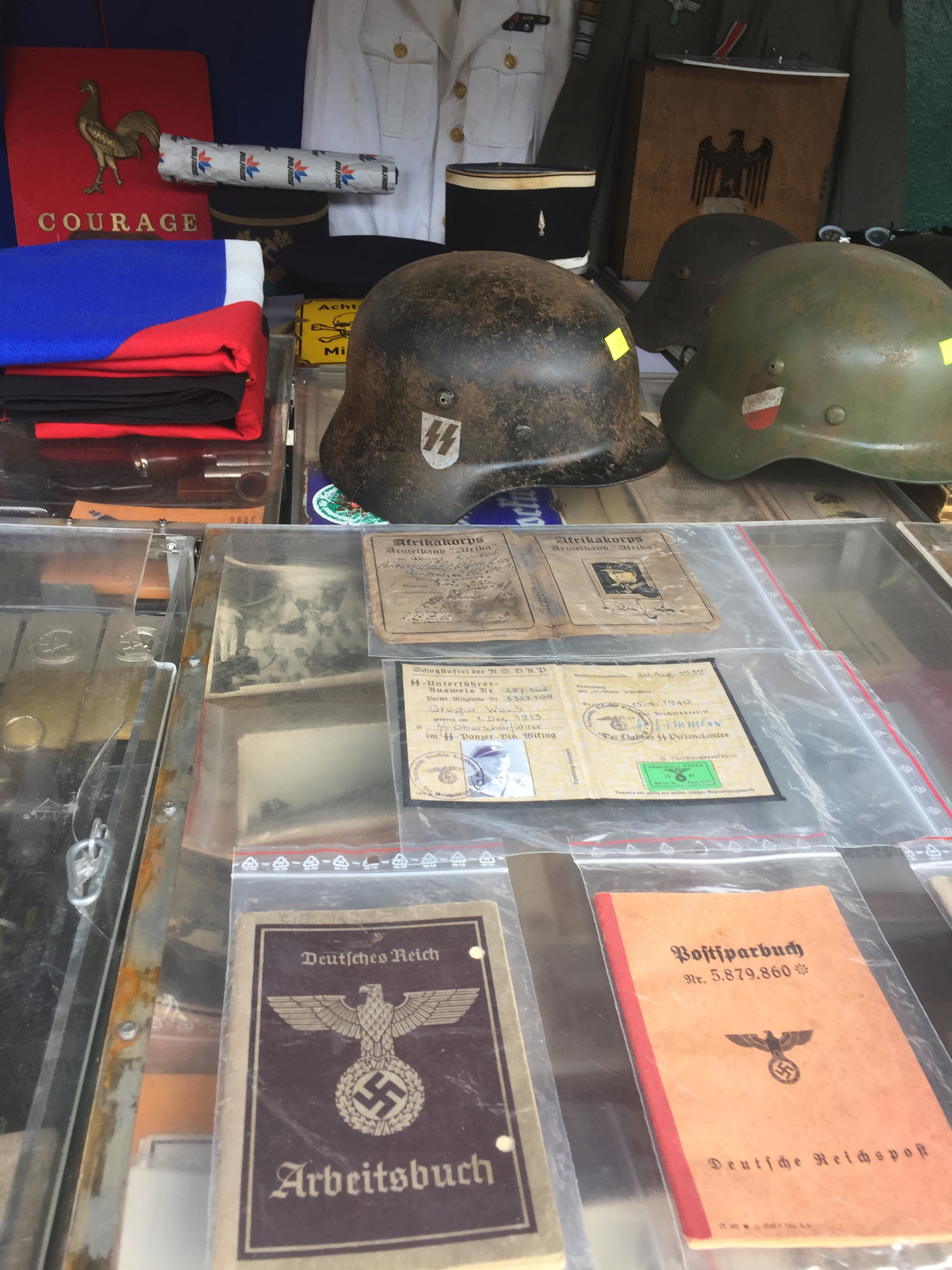
Fil speaks also of the cruelty perpetrated against Poles in Treblinka I
Photograph: Simon Holloway
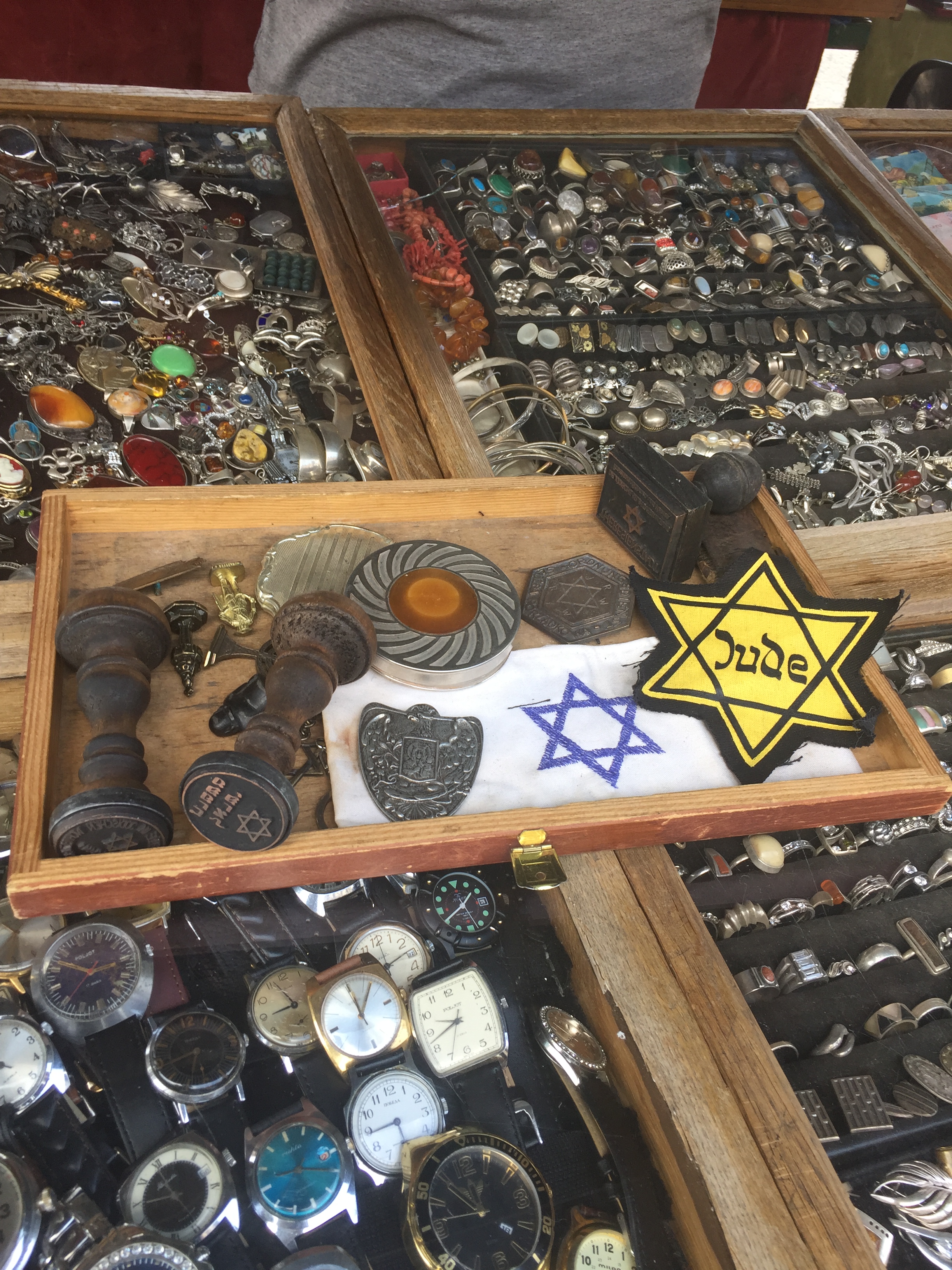
This information still ringing in our ears, we walk back out into the sunshine and into the forest. Here, we encounter a memorial in the form of a long railway track, and a succession of carefully placed obelisks. The wooded area to our left is cordoned off with a white tape, on which is written names of some of Treblinka’s victims, and the very skies open up above our heads and weep upon us.
The choice to include names is an important one, even though it cannot ever hope to be exhaustive. At the very least, having some names, however few, serves to remind us that the murder of 900,000 people is not a thing that happened: it is 900,000 different things that happened. But how can one possibly internalise something of such enormity?

Tracks to Nowhere
Photograph: Simon Holloway
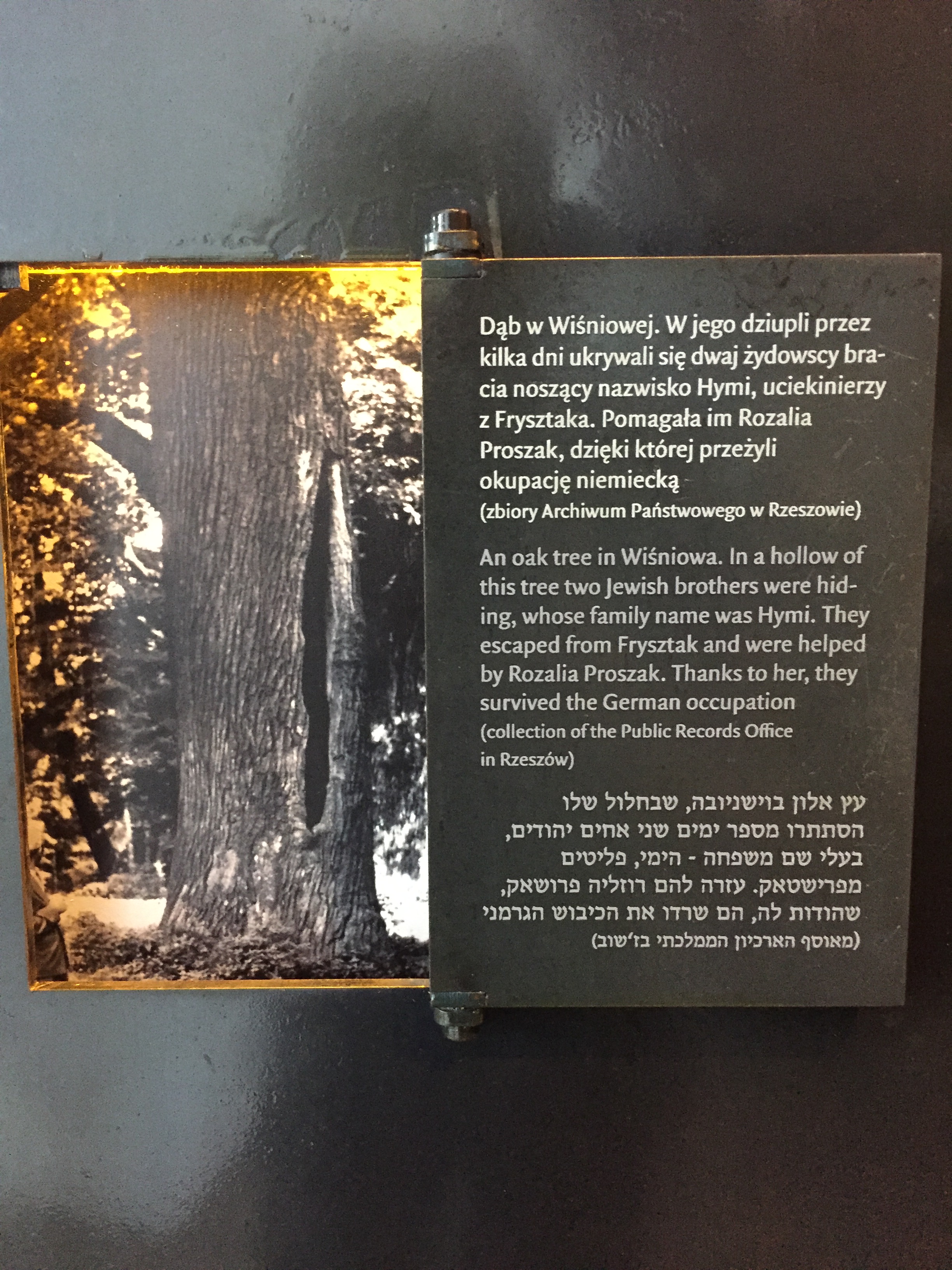
The Path to the Memorial
Photograph: Simon Holloway
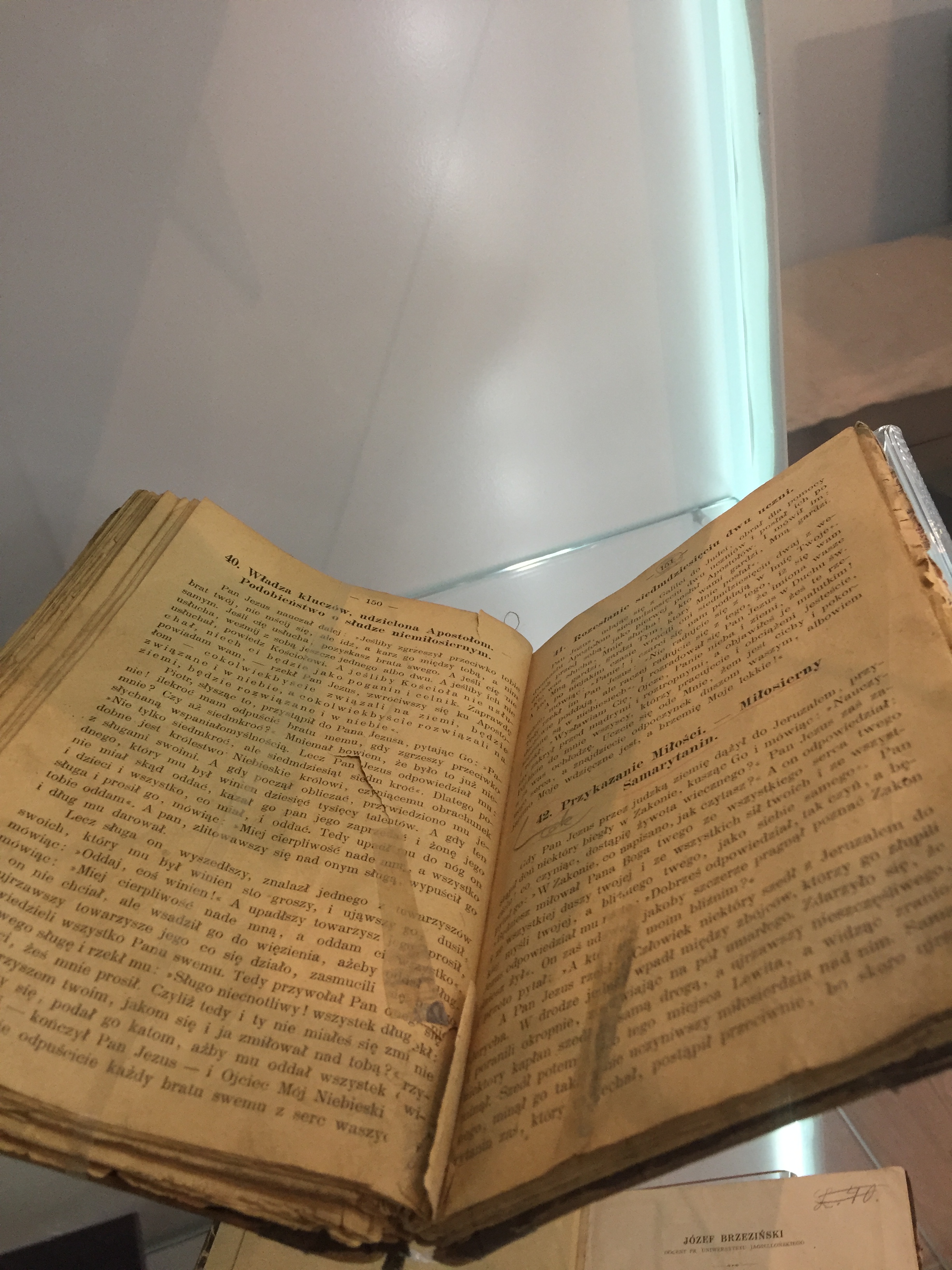
Panels in Polish, French, Yiddish, Russian, Hebrew and English
Photograph: Simon Holloway
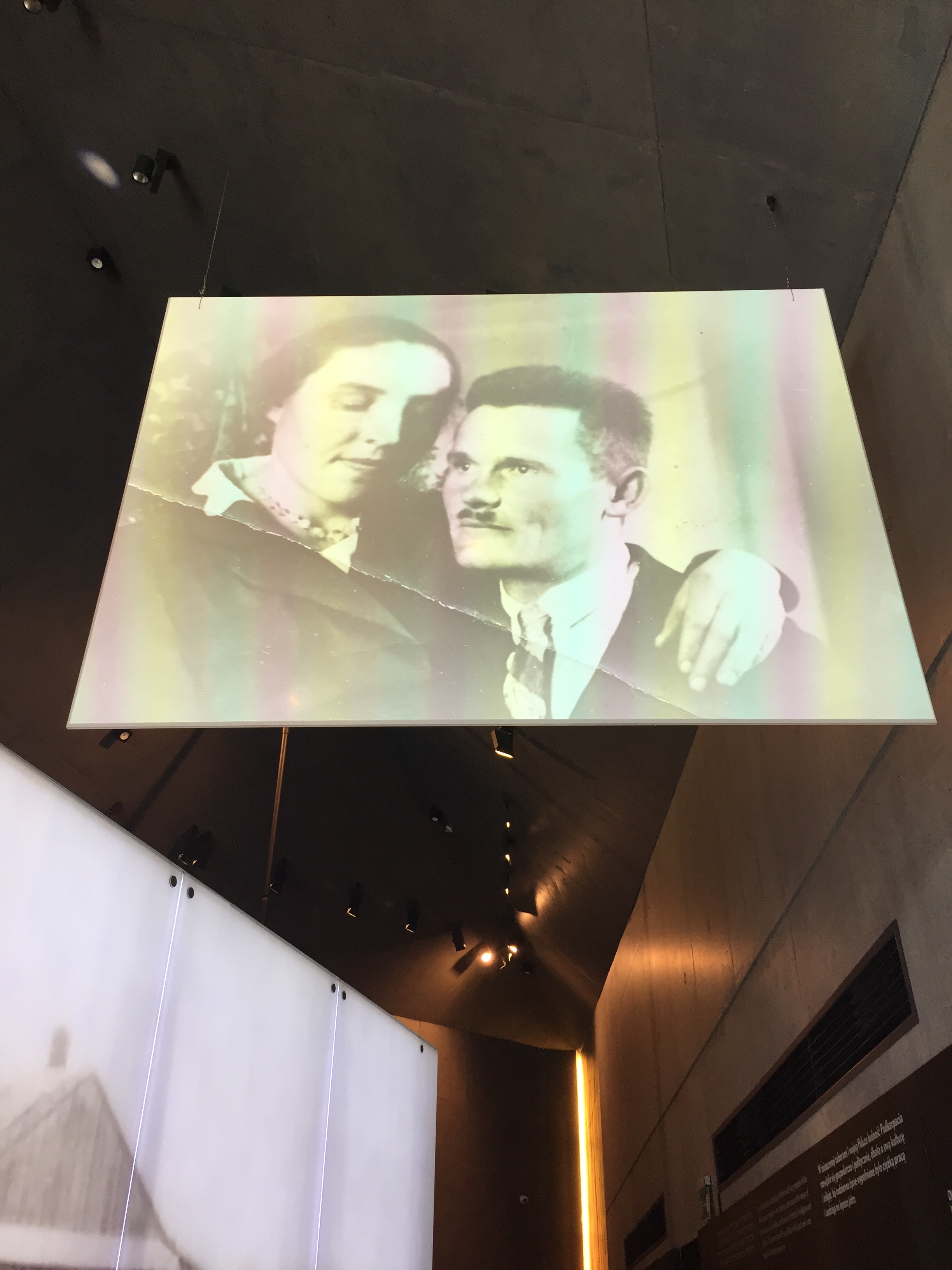
The Yiddish Panel
Photograph: Simon Holloway
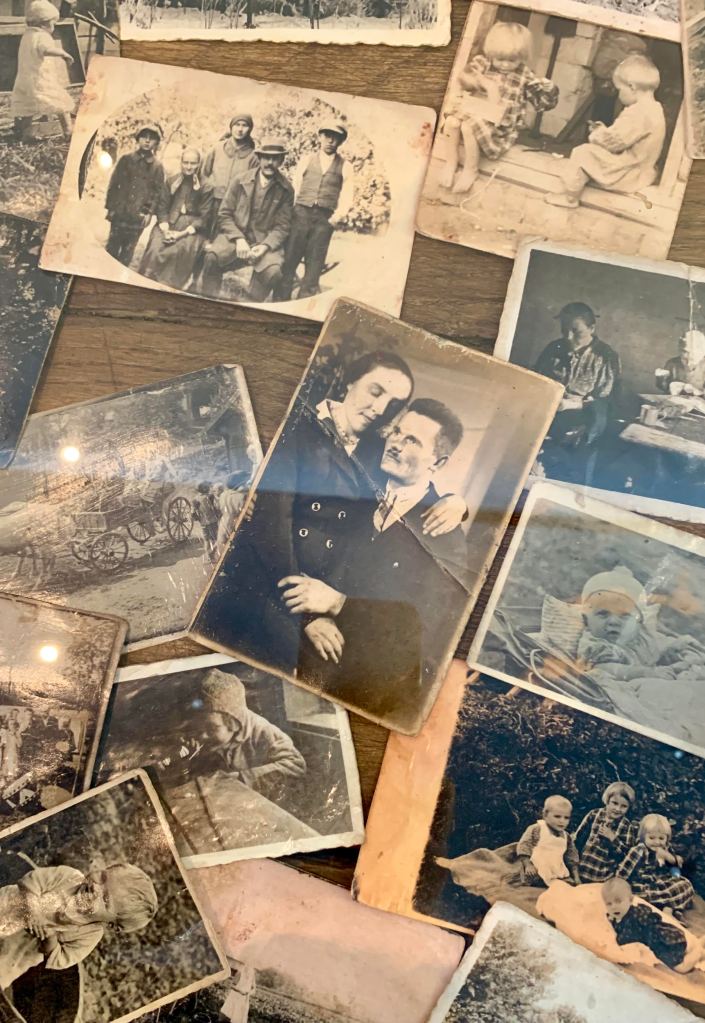
The Entrance to the Memorial

Beyond the stone entrance lies the Treblinka memorial itself. A curious feature of this memorial is that, with only one exception (the very important exception of Janusz Korczak), it doesn’t feature the names of people. It features the names of communities instead. That’s important, for it triggers contemplation of the individuals who lived within these communities, while at the same time drawing attention to the fact that what was lost was somehow larger than the sum of its parts.
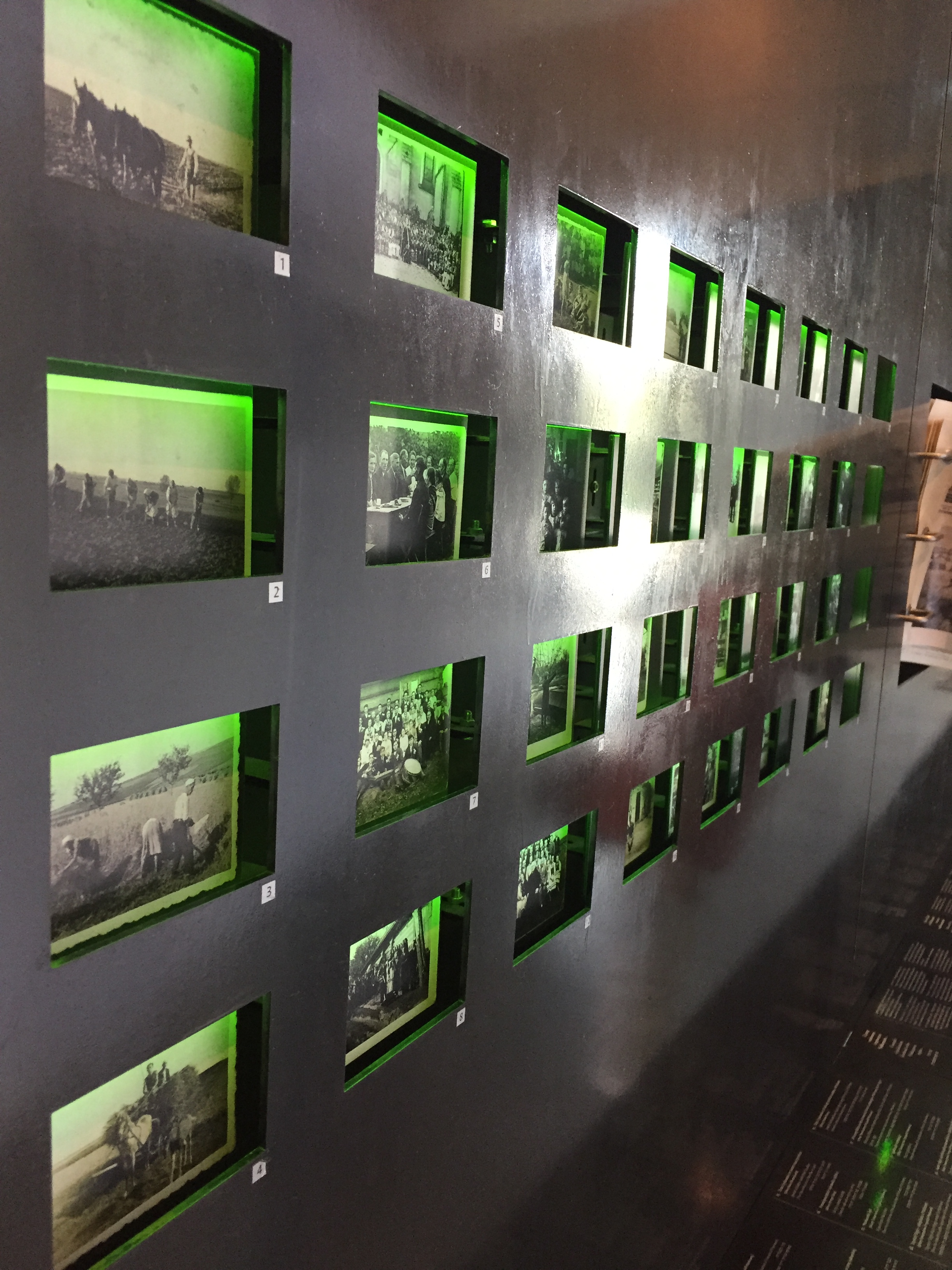
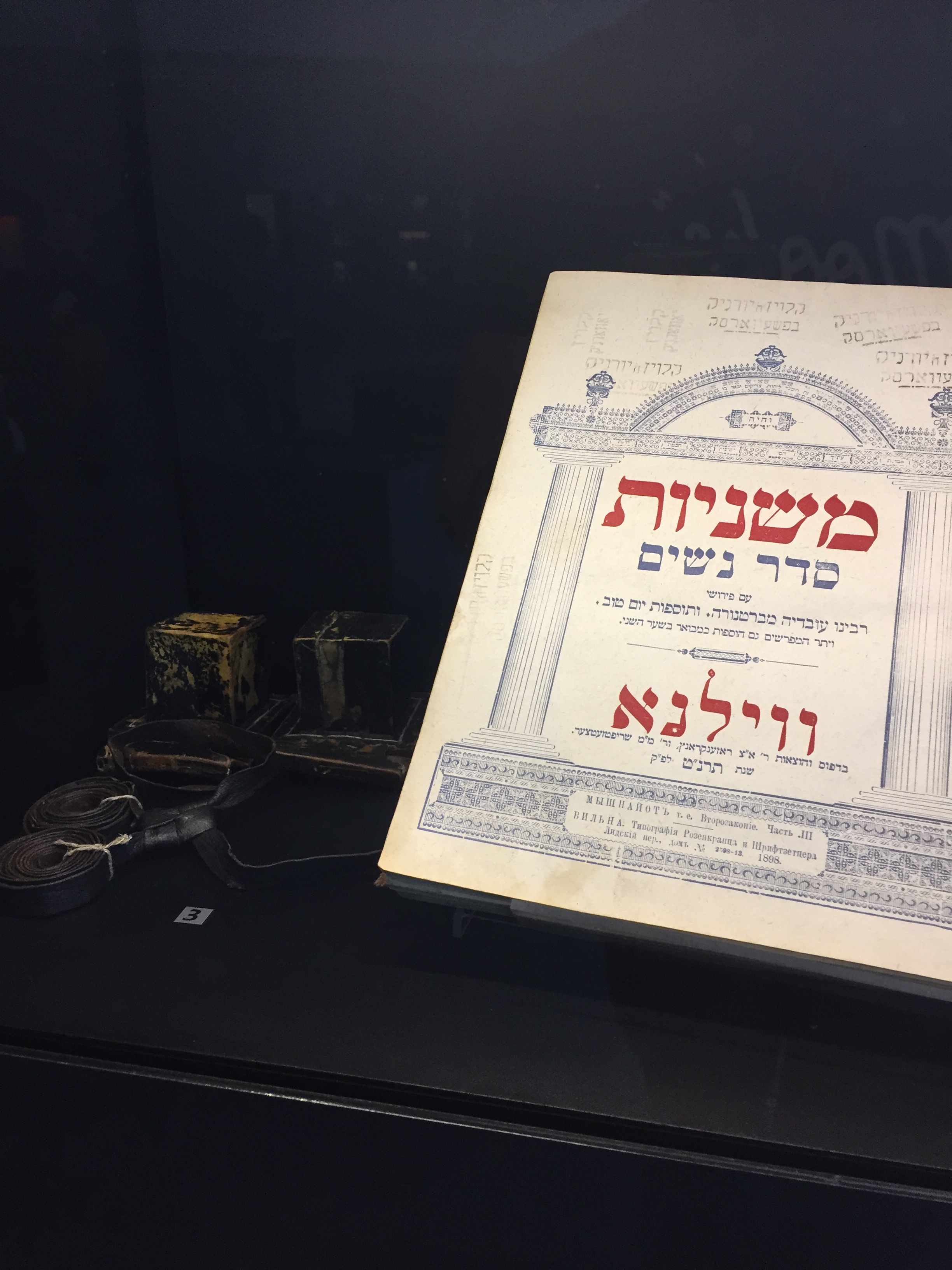
We take the time, separately and in groups, to wander through these jagged stones, before coming together and reciting kaddish at a curious memorial space: a long, low and gnarled space, rectangular and black, that signifies the seething pits in which the exhumed corpses were cremated. Fearful of the publicisation of their crimes, now that failure on the battlefield was more certain, the SS thought that they might simply erase them. The task of making them public again is one of which the post-Soviet authorities have acquitted themselves magnificently.

The Forest
Photograph: Simon Holloway
Like a Furnace
Photograph: Simon Holloway
A Sense of Scale
Photograph: Simon Holloway
Countries of Victims
Photograph: Simon Holloway
A Jagged City
Photograph: Simon Holloway
Reminded of the Piaseczno Rebbe, murdered during Operation Harvest Festival (Aktion Erntefest), 1943
Photograph: Simon Holloway
Janusz Korczak: The Only Individual Honoured at Treblinka
Photograph: Simon Holloway
An Olive Tree: A Sign of Life Among the Broken Shards
Photograph: Simon Holloway
A Distressing Design
Photograph: Simon Holloway
Kaddish
Photograph: Simon Holloway
Never Again
Photograph: Simon Holloway
From the Museum Visitors Book
Photograph: Simon Holloway

We make our way back to the bus and begin the drive to Tiktin (Tykocin in Polish). As we pass farmsteads and fields, I cannot help but think of how intensely populated with Jews these shtetlach once were. These empty fields remind us of the absence of their former inhabitants, but this emptiness is nothing so stark as what we were to see next.

The View From the Bus
Photograph: Simon Holloway

Here in Tiktin we encounter not an absence of Judaism but its poor imitation. To the sound of tinny Klezmer music, patrons can dine at a restaurant (“Villa Regent”), whose name is written in Yiddish, which sports a model of a hasid on a bench outside, is replete with magen davids, menorahs, information about the murdered community and all manner of ritual objects that one can only presume had Jewish owners, once upon a not-so-distant time.

The story is told of two hasidim who met in the town of Tiktin…
Photograph: Simon Holloway

Outside the synagogue, a hatted, bearded man sits chiselling in silence, crafting small and tasteful replicas of religiously conservative Jews. A photograph near him advertises an association with a high school in Ramat Gan, and I presume him to be Israeli. With interest, I ask him (in Hebrew) if he is from Ramat Gan. He casts a nervous look at a nearby guide, whose name is Boroslav and who leaps in to save him.

Turns out that our craftsman is a local Pole, who found himself out of work when the factory in which he was working closed down. In Tiktin, there is always employment in the tourism industry, and Jewish kitsch is profitable indeed.

“Der Tiktiner Kitsch-Makher”, by Sholom Aleykhem?
Photograph: Simon Holloway

It is easy to be critical of the manner in which the local community has capitalised on those people who no longer exist, but my sorrow at seeing myself and my community so commercialised temporarily dissipates the moment that I walk into the shul. It’s beautiful.

Established in the 17th century, this was a fortress synagogue. Run by the Tiktiner beys din, Jews who had committed crimes that merited incarceration were imprisoned in one of the shul’s towers. Today, visitors can only enter the main synagogue space, which had been converted by the Germans into a storage house for artificial manure, and which remained a storage house after the war, when the surviving few had gathered their remaining things and left.

In 1965, the synagogue caught fire, and those books and artefacts that survived the conflagration were thrown by Tiktin’s delightful community into the local river. Perhaps they’d not yet realised how lucrative a Jewish history is?

Today, they fastidiously maintain the synagogue’s façade and its gorgeous interior, much of which has been reconstructed, and they even house a small museum in what had once been the shul’s beys midrash.

Before we move into the beys midrash, we take the time to mark the beautiful inscriptions on the walls: sections from Tehillim, passages from the davening, liturgical piyutim. But it’s the little things that remind you once again that there are no Jews living in Tiktin and that this Claytons synagogue is something of a charade. The siddur, added to the front of the room to complete the illusion, boasts a Sefardi nusach, despite the liturgy on the walls being (as one would expect) Ashkenazi. Like I say, it’s the little things.

Fil speaks to us about the history of the shul
Photograph: Simon Holloway
Imprisoned by Time
Photograph: Howard Wolfers
Convenient: The Morning Davening
Photograph: Simon Holloway
“I Have Placed the Lord Before Me Always”
Photograph: Simon Holloway
“Master of the World: I am Yours and My Dreams are Yours”
Photograph: Simon Holloway
A Shul in Which Nobody Ever Prays
Photograph: Simon Holloway

It is the museum, however, that most gives us pause. There is information at the front of the synagogue about how the Nazis were planning the construction of a museum in Prague to memorialise the vanished Jewish race. This museum was a myth; there were never any such plans. But inasmuch as there ever could be a museum of the vanished Jewish race, I feel like I am standing in it.

My Culture: On Display
Photograph: Simon Holloway
Quaint: A Curiosity
Photograph: Simon Holloway

These objects are so… mundane. It has like somebody walked into my home, or into the home of one of my friends, and turned it into an exhibit for curious strangers. Is this what Jewish museums would look like if the Nazis had won? But of course: the Nazis did win, and this is precisely what Tiktin’s Jewish museum looks like as a result. In many ways, I preferred the empty fields.

We leave this painted synagogue in sadness, and I think this might be the first time that I have ever very deliberately not kissed a mezuzah. Truly, I doubt that there is anything at all within the little plastic box situated on the doorpost, and I wonder if the Russian and Polish tourists to this site know how plastic this whole enterprise is.

The story of Tiktin’s Jews is a very sad one, but it’s one that we spend the rest of our afternoon exploring. Located in the eastern part of Poland, about 10-15km from Bialystok, Tiktin came under the occupation of the Soviet Union in 1939. Its Jewish population was slightly in excess of 2,000 people, comprising about 40% of the total population, and was famous for the manufacture of talleisim/tallitot.

At the end of June in 1941, when the Wehrmacht invaded, the population was forced to wear badges that would help identify them as Jewish, and were ghettoised. Local Poles were encouraged to rob their Jewish neighbours with impunity, and many of them did so. It must have come as some surprise in August of that same year when the SS announced that people who had robbed Jews must now reimburse them.

Whatever expectation people had for an amelioration of their plight was short-lived, for the end came on the 25th of August when they were ordered to gather in the square and commence the 5km march into the woods of Łopuchów. Turns out that the reimbursed goods were to be the property of the SS now, and their former owners were to be dispatched. There, in the forest, at a site chosen by local foresters, and within a pit dug by forced labourers on the previous day, every one of those Jews was lain down and shot.

On the 26th of August, those who were too young to have made the walk, too old or too sick to have made the walk, or who had avoided having to make the walk by hiding within their houses, were rousted out by the SS, loaded into trucks and transported to the pit directly. Two days. That was all it took to render Tiktin’s Jewish community nothing more than an object of idle curiosity for a future generation, and a source of revenue to enterprising Poles.

It was to the site of this pit that we now went, in a densely-wooded forest, where the birds chirped above our heads and small insects buzzed at our feet. In the silence and the stillness, we paid our respects to the mounds of overgrown foliage that mark the site where slightly more than 2,000 Jews were made to lie on top of one another before taking a bullet.

This way to the mass grave…
Photograph: Simon Holloway
Silent.
Photograph: Simon Holloway
The Eyes that Have Gazed Upon these Woods
Photograph: Simon Holloway
Bearers of Secrets
Photograph: Howard Wolfers
Reeling
Photograph: Simon Holloway
There are no words
Photograph: Simon Holloway
Contemplating the Incomprehensible
Photograph: Simon Holloway
Konrad, on the “Holocaust by Bullets”
Photograph: Simon Holloway
Łopuchów: A Site of Israeli Military Pilgrimage
Photograph: Simon Holloway
El Melekh Rachamim
Photograph: Simon Holloway
A memorial to the donor’s father, mother, three sisters and two brothers
Photograph: Simon Holloway
“Witnesses in Uniform”
Photograph: Simon Holloway
Rony speaks of her father’s brother, Leopold Markowicz, murdered in the Ukraine
Photograph: Simon Holloway
Yizkor
Photograph: Simon Holloway

We all react to seeing atrocities of this nature in different ways, and it’s in different ways that we each make meaning from this history. Our experience, travelling through this part of the world and encountering the tragedy of the Jewish people and their annihilation from these towns and cities, is at times a traumatising one. And yet, the mood over dinner at Dom Polski would belie the idea that we are caught up in our grief.

While we each feel a sense of loss, I think that many also feel a sense of transcendence: an understanding that these events, as repulsive and as consuming as they are, may have forever changed the nature of Jewishness and Judaism, but that they have not terminated them. However we identify, and however peripherally we may be related to those people whose suffering we are seeking to understand, we are too strong to be diminished by this.

As Agnes declared, in the forest of Łopuchów, so loud that the sound still reverberates in my ears: the people of Israel lives on.

Am Yisrael Chai
Photograph: Simon Holloway

July 13: A Shabbes in Warsaw

After four days in Berlin, a day travelling through the countryside of Poland and a (very!) full day in Warsaw, we are all most delighted to have a day to ourselves. It is good after all that we have been through and seen together that we take stock of all that we’ve experienced and prepare ourselves, mentally and emotionally, for all that lies ahead.

Some take the opportunity to go to shul in the morning, and many sign on to do a walking tour of Warsaw’s Old Town in the afternoon. That evening, some people go out for dinner at Zapiecik. It has been wonderful spending so much time together, and we look forward to one another’s company in the coming week as we begin to explore this history in more depth!

Photograph: Kati Skalicky
Photograph: Howard Wolfers
Photograph: Stella Dvuchbabny

July 12: A Tale of Two Cities, or: “Yes, But…”

On Friday we were privileged to visit two different Polish cities, and marvel at just how different to one another they were.

In the first city that we went to, Jews had been found at every level of pre-war society. Their freedom of religion had been guaranteed them for centuries by the first charter of tolerance granted to Jews anywhere on the continent. When the Germans arrived, an enormous number of civilians (a number impossible to estimate) risked their lives and lost them to save their Jewish friends, colleagues and acquaintances from deportation. Astonishingly, many risked and lost their lives to save Jews that they did not even know.

In the other city that we went to, hatred of Jews was a cultural tradition that ran deep and fierce. In this second city, antisemitism had once existed at every level of society, and violence – while regrettable – was unexceptional. When the Germans came, the speed with which people turned against their former friends, colleagues and acquaintances was marked with sorrow and with terror by their increasingly isolated victims. Despite the terrible suffering of the Polish people during World War II, many Poles in this second city collaborated eagerly in the murder and the robbing of Jews.

The mind boggles that two such cities can even exist so close to one another. Indeed, if there is anything that they possess in common, it can only be the fact that they both share the name of Warsaw, and that they exist today only in the differing memories of their respective inhabitants.

Our first guide today resided in the city of heroes. She told us of Irena Sendler and of Jan Karski, and lamented the fact that the terrible suffering of the Polish people had caused them (at times) to behave less than favourably with those Jews whom they pitied. And she was not wrong: Irena Sendler and Jan Karski truly were heroes, as were an inestimable number of other Poles, some of whom she mentioned.

Yes, we murmured, but what about the Polish collaborators? There were many such people. One recent estimate puts the number of Jews to have been murdered by their fellow Poles at a staggering 200,000. Antisemitism was a tradition in this country, and was found at every level of Polish society. Let us not forget the limitations on Jews in university admission, the forced segregation of students in schools, and the Madagascar Plan for Jewish resettlement: a plan that we associate with the Nazis, but which was first formulated by the Polish pre-war government.

Is there a middle ground? A way of speaking of endemic and genocidal hatred without forgetting the heartbreaking and breathtaking compassion? A way of paying tribute to the beautiful people who sought to save the lives of Jews without glossing over the wicked and the cruel and the deplorably ill-informed? There is, it seems, but it would not be until the afternoon’s excursion to Polin Museum that we would encounter it.

In the meantime, we started the morning’s tour of this dual city with a trip to the Monument to the Ghetto Heroes, in what used to be known as Warsaw’s Nothern District. This was a commercial area with a high concentration of Yiddish-speaking, working-class Jews. The specific part of the district to which we were going was the site of the initial clash with German forces on April 19, 1943.

Irena Sendler, a Polish nurse, saved some 2500 Jewish children
Photograph: Simon Holloway

The monument, which was designed by Nathan Rappaport, is constructed of black volcanic stone, originally ordered from Sweden by Albert Speer for the purpose of statues celebrating German victory. On the western side, the monument depicts the steely faces of heroic men and women, straining forth from the stone to wage war against their oppressors, homemade incendiary devices in their strong hands. On the eastern side, however, it shows a silent procession of elderly and infant Jews, some with sifrei torah, German helmets in the background. To where are those Jews going? To some kind of promised land? Or to the umschlagplatz?

We gather near the base of the monument…
Photographer: Simon Holloway
The Western Side
Photograph: Howard Wolfers
Heroic: A Close-Up of the Western Face
Photograph: Howard Wolfers
A Grim Procession: The Eastern Side of the Monument
Photograph: Simon Holloway
Between a Monument and a Museum, We Pause
Photograph taken by our guide, Yolande

On our way back to the bus, we stopped to admire two more monuments: one a tribute to Karski, who reported to the Polish government in exile on the genocide of Poland’s Jews, and the other a monument to Jewish resistance designed by Rappaport’s supervisor, Leon Suzin. Suzin’s monument confused us as regards its imagery: a palm leaf, which appeared to grow from a scroll on which the Hebrew letter beys/beit was written. The Torah begins with this letter and it was with this letter, says the Zohar, that the world was created.

He Sits in Silence: Karski From a Distance
Photograph: Howard Wolfers
We Pay Our Respects
Photograph: Simon Holloway
Memorial to the Polish Resistance
Photograph: Simon Holloway

We board the bus and, after a very short drive, pause briefly outside a small memorial to the umschlagplatz. It was from here that approximately 300,000 Jews were shipped to Treblinka between the end of July, 1942, and the end of September that same year. After the Great Deportation (as it was known), the ghetto was left with only about 35,000 official residents, not including those in hiding.

A View From the Bus: Warsaw Ghetto’s Umshlagplatz
Photograph: Simon Holloway

From here, we make our way to Warsaw’s Jewish Cemetery (Cmentarz Żydowski). Previously a part of the Warsaw Ghetto, it was in this cemetery that the Germans allowed the Jews to bury their dead, fearful that preventing their doing so would exacerbate the spread of typhus.

The conditions in the Ghetto were deplorable, and for many reasons. Warsaw had a high concentration of Jewish refugees (some 175,000 who were brought in from outlying areas), and they had only been allowed to bring a small number of items with them, which were quickly sold. Their odds of survival were so slim that once the ghetto was sealed in late 1940, some 100,000 people died in the space of only twelve months.

The cemetery is old and overrun with foliage. The soil between the cracked and leaning gravestones is pulpy with decaying leaves, and whatever pathways had once existed have long since been lost. As we clambered and shuffled between these monuments to mediaeval men and women, we were able to make out some of the writing. A pious man. A woman who loved virtue. A hasidic rebbe. A simple Jew.

Amongst the many famous people buried here is Dr L.L. Zamenhof, inventor of Esperanto. It might not be the most appropriate setting, but I cannot resist sharing the old joke, concerning the world’s first International Convention of Esperanto Speakers. Delegates from a dozen European countries get together to speak in Esperanto, hear lectures in Esperanto and sing songs in Esperanto. As the conference finishes, every one of them turns to his neighbour and remarks: “Oy – how nice to be speaking Yiddish again!”

The Original Gate
Photograph: Simon Holloway
A Map to Graves of Tzaddikim
Photograph: Simon Holloway
Lost? Go Straight for the Monument to the Maharal Tzintz; Go Right for the Slonimer Tomb
Photograph: Simon Holloway
Conquered by Time
Photograph: Simon Holloway
The Path We All Must Walk
Photograph: Howard Wolfers
Lost in Private Thought
Photograph: Simon Holloway
A Miniature Door, to Prevent the Departure of Dybbuks
Photograph: Simon Holloway
Reb Mordkhai ben Shimshon HaLevi, grandson of Rav Lipmann (“Tosfos Yomtov”). Died 1896.
Photograph: Simon Holloway
Reb Shlomo Alter, brother of the first Gerrer Rebbe (“Sfas Emes”). Died 1935.
Photograph: Howard Wolfers
The Old and the New
Photograph: Simon Holloway
The Family Tomb of Rav Shlomo Zalman Lipschitz, author of Chemdas Shlomo
Photograph: Simon Holloway
Binyan Shlomo: The Family Tomb
Photograph: Simon Holloway
Candles, Rocks and Yiddish Letters: The Grave of the Chemdas Shlomo
Photograph: Simon Holloway
A Silent Progression
Photograph: Simon Holloway
United by the Dream of a Common Tongue: The Grave of Dr Zamenhof
Photograph: Simon Holloway
A Tragic Figure: The Grave of Adam Czerniakow, Head of the Jewish Council
Photograph: Simon Holloway
A Gesture to the Very Real
Photograph: Simon Holloway

We pause at a roped off clearing, which houses the bodies of some 100,000 ghetto Jews, dead from hunger and disease. Konrad speaks to us about the nature of mass burials in the ghetto, and of the sorts of people who were most likely to perish. Warsaw, he tells us, had the highest number of survivors of the Holocaust: some 25,000 altogether. They were, for the most part, secular and assimilated Jews. Beneath our feet lie the remains of Warsaw’s Orthodox Jewish community. Differentiated from the rest of the local population, and believing themselves distinct from Poles, they had very little possibility of survival. Warsaw’s Bundists – those who opposed both Zionism and religiosity, and who imagined the future of their Yiddish-speaking culture flourishing on Polish soil – are now also mingled with it.

Konrad, on the Nature of Mass Burial
Photograph: Simon Holloway
That Which We Cannot Understand: The Grave of 100,000 Jews
Photograph: Simon Holloway

We pause at a memorial to Henryk Goldszmit (“Janusz Korczak”), whose act of heroism continues to arouse strong emotions today. Despite being offered a hiding place on the Aryan side of the ghetto, Korczak chose to walk the Jewish children who were in his care to the umschlagplatz, and board the train to Treblinka with them. A lover of children to the last moment, his act inspired others within the ghetto. Abraham Lewin, for example, who worked as an educator in the ghetto, and whose essay on education was found within the Oyneg Shabbes archive, subsequently did the same.

Janusz Korczak, the Comforter of Children
Photograph: Simon Holloway
Taking Time to Acknowledge Sacrifice
Photograph: Simon Holloway
An Inspiration Even Today
Photograph: Howard Wolfers

Near this memorial lies another, dedicated to the one million Jewish children murdered by the Germans and their collaborators, and especially to the children of the Warsaw Ghetto. There are two poems on the wall, one of which is to “The Little Smuggler” (Mały szmugler), by Henryka Lazowert, who was murdered in 1942 at the age of 33. The other (by Jack Eisner) is untitled. As Rony tells us, children were the heroes of the ghetto, their little bodies allowing them egress through passages in the wall, and their acts of escape and subterfuge providing food for their desperate families. Pearl speaks about her father, Kuba, who was one such child.

Blond-haired and blue-eyed, and armed with fake Polish identification, Kuba risked his life on several occasions, sneaking out of the Krakow Ghetto to procure food from his family’s boarded-up shop. Had he been caught by the Germans, he might have been mistaken for a German-looking Polish boy, and given to a German family for “Aryanisation”. It would not have been long before somebody would have realised his true ethnic origins, and it does not bear considering what would have happened next.

Grandma Masha
had twenty grandchildren
Grandma Hana
had eleven
only I survived
– Jack Eisner

The Children’s Memorial
Photograph: Simon Holloway
Reading “The Little Smuggler”, by Henryka Lazowert (1941)
Photograph: Simon Holloway
Rony speaks of children as the heroes of the ghetto
Photograph: Simon Holloway
Pearl speaks of her father, Kuba Enoch
Photograph: Simon Holloway

Some of us wash our hands near the cemetery walls before exiting and getting back into the bus. It is only a short drive from here to the synagogue, which the Germans used as stables and for storage, but which has reverted to the use of the Jewish community. Warsaw’s original Orthodox synagogue, it seats about 350 people, and has a small but active congregation today. Unfortunately, we are unable to go inside, but we do pause to admire its architecture, and the architecture of the nearby All Saints Church.

We do not go to the church, but it too was once within the ghetto, and serviced those Christians whose parents or whose grandparents had been Jews. They faced a double occlusion, these poor people. Treated with mistrust by the Jews amongst whom they had been thrust, and treated as Jews by the German administrators of the ghetto, they turned to one another and to their faith for solace. They too lie beneath the ground in Warsaw’s Jewish cemetery. There is no division in death.

Warsaw’s Orthodox Synagogue: Closed to the Public
Photograph: Simon Holloway
“You Shall Not Murder”
Photograph: Simon Holloway

It has been a long morning, but before we break for lunch we pay a visit to the Jewish Historical Institute. Along the way, we stop briefly at one of three remaining segments of the Warsaw Ghetto wall, and the only segment not a part of an adjoining building. Standing in isolation from its surrounds, it mutely testifies to the fortress that had once existed in the heart of this city, and like so many memorials in Warsaw, to the people who are no more.

One of Three Remaining Segments of the Warsaw Ghetto Wall
Photograph: Howard Wolfers
Our guide, Yolande, demonstrates the wall’s structure
Photograph: Howard Wolfers
Echoes of the Past
Photograph: Howard Wolfers
The Boundary of the Ghetto
Photograph: Howard Wolfers

The highlight for many of us was to follow, as we walked across a park and into the Jewish Historical Institute, which had been established in 1936 as the intellectual wing to a modern, Polish Judaism, of which the nearby Reform Synagogue (demolished by the Nazis after the uprising) was to serve as the spiritual. During the years in which the ghetto was operational, this institute was the headquarters of the Jewish Self-Help agency (the Aleynhilf), and it was here that the historian, Emanuel Ringelblum, was so active.

Entering the Jewish Historical Institute
Photograph: Simon Holloway
Getting Our Bearings: A Map of Poland on the Institute’s Wall
Photograph: Howard Wolfers

Ringleblum was a proponent of a new historiography, and one that sought to elevate the experiences of “simple people”. Rather than focusing on the lives of kings and princes, rabbis and scholars, these new historians aimed to describe the lives of women and of children, of merchants and of peasants. Who were the Jewish people, and what will future generations know of them?

In the ghetto, these questions assumed paramount importance. As our guide, Bartak, explained to us, the information being recorded within the ghetto was being recorded by German sources. German film crews were coming to the ghetto to make propaganda, filming staged scenes that aimed to highlight the lack of Jewish moral sensibilities, and to showcase how a parasite behaves once it is removed from its host. The question of who gets to write the history of the Jewish people inspired Ringelblum to form a secret society – at first, made up of historians, demographers and scholars of various stripes, and later accepting contributions from anybody who was prepared to share their experiences.

This archive was codenamed Oyneg Shabbes (the Joy of Shabbat), for the penalty for collecting documentation on German crimes was death. It features essays by economists, by educators and by medical practitioners, as well as personal ruminations (not to mention poetry, short fiction and illustrations) from people wishing to record their sentiments for posterity. Originally planned as a means of servicing the authors themselves, after the war, it rapidly came to be seen as an archive for a future generation. They, of course, did not expect to live.

Of the untold number of people who contributed to this archive (we only know the names of some thirty-five), the number of survivors was three. As it was only one of those three who knew where the archive was buried, the story of its recovery is no less remarkable than the story of its contents.

“… We Buried in the Ground”
Photograph: Simon Holloway
Our guide, Bartak, discourses on the history of the archive
Photograph: Simon Holloway
A Captivated Audience
Photograph: Simon Holloway

Like pilgrims to a mediaeval cathedral, we all crowd around the relic: a metal canister in which some of the documents were discovered. There was a second such canister, and three metal boxes, bound with rope, into which some water had already seeped. Had these items not been discovered when they were, it is likely that they would have been lost forever. Truly, one cannot imagine how it must have felt to Hersh Wasser, his wife Bluma, or to Rokhl Auerbach (the three surviving members of the archive) to have recovered these documents and to have delivered them to the world.

Buried Beneath Warsaw
Photograph: Simon Holloway
The Secrets This Canister Had to Tell
Photograph: Simon Holloway
Can This Truly Be the Real Thing? Coming Face to Face With History
Photograph: Simon Holloway
Exploring the Biographies of the Archivists
Photograph: Simon Holloway

Sections from the buried testimony line the walls, one of which has given this exhibit its name: “What we were unable to cry and shriek out to the world we buried in the ground” (Dawid Graber, aged 19). Another contributor, Izrael Lichtensztajn, writes, “I want my little daughter to be remembered”. Nachum Grzywacz, 18 years of age, concludes his brief testimony with the chilling words: “I don’t know what’s going to happen to me. Remember, my name is Nachum Grzywacz.”

Most poignant, to my mind, are the words of Gustawa Jarecka, who was likely murdered in January of 1943. Titled, “The Last Stage of Deportation is Death”, she writes candidly and furiously of the fear between roundups, and of the numbing immobility experienced during them. “We carry a noose around our necks,” she writes, “and when it relaxes a little we let out a scream.”

Today, all 35,000 pages from the archive have been scanned and are available from the Central Jewish Library of the Jewish Historical Institute. They are also being published in a large collection of which some thirty-eight volumes have already been released. An English translation of these Polish, Yiddish and Hebrew documents is already underway, but for those who are interested, the poetry of the archive, scanned and with English translation, is available here, and the full catalogue of the archive contents is available in PDF, here.

From the institute, we make our way back to where we started: to the building facing the square in which the Monument to the Ghetto Heroes is displayed. The Polin Museum, it was built in 2013, having been inspired by the opening of the United States Holocaust Memorial Museum (USHMM) in 1993, and was first opened to the public in 2014. In the years since then, it has had roughly three million visitors (the approximate number of Jews who lived in Poland before the war), and was voted best museum in Europe three years ago.

Polin’s Director
Photograph: Howard Wolfers
A Comfortable Spot to Sit and Rest
Photograph: Simon Holloway
Konrad always finds a moment to express a point of view
Photograph: Simon Holloway

It is an impressive building. Architecturally, it may be reminiscent of the parting of the sea in the book of Exodus (its placement such that when one views the procession of Jews on the eastern side of Rappaport’s monument, they look like they are walking towards salvation), and with its colouring like that of Jerusalem stone, perhaps of the topography of the land of Israel.

Bridges, we are told, are a symbolic feature of the architecture, the designer’s aim being to build bridges between different communities, but the large and open space in the foyer is to remind us of that which was destroyed. Turning around, our guide informs us that the greenery behind the museum is to symbolise hope, and to remind us that the Holocaust did not terminate Jewish life in Poland. It is not my place to say this, but I think he is wrong.

I have a bias that I am not ashamed to admit. If Warsaw only sports three functioning synagogues (one of which is Chabad, and which caters to tourists), then I don’t buy this business about the restoration of Jewish life. A city that has no eruv, and whose pre-eminent Jewish museum offers a “kosher-friendly” menu (by which they simply mean: no pork), can hardly boast a thriving Jewish community. Perhaps I am being unfair, being forced to compare Warsaw to what it had been before the war, but I am getting tired of people telling me that things are different to how they so clearly look.

We are in two groups now, of course, and I am following the second of them. Our guide is Mariusz Jastrow, and his knowledge of Polish Jewish history is broad indeed. Most impressive, however, is just how comprehensive this museum is. Despite a relative paucity of objects, it bears witness to a thousand-year history of Polish-Jewish society that is at times inspiring, at others troubling, at times infuriating and at others simply sad.

Exploring the Popular Myth of Poland’s Jewish Origins
Photograph: Simon Holloway
Mariusz speaking to the group of Jewish settlement in Poland
Photograph: Simon Holloway
Polin’s most impressive display: a reconstructed wooden synagogue, destroyed in WWI
Photograph: Simon Holloway
“It is forbidden to speak during the Torah reading”
Photograph: Simon Holloway
“Do Not Fear Sudden Terror, or the Shoah of the Wicked When it Comes…”
Photograph: Simon Holloway
Poland’s vacant throne, now occupied by the Norman King
Photograph: Howard Wolfers
Responses to Modernity: A Maskilic Library
The group sits at a train station, symbolising the modern world
Photograph: Simon Holloway
An authentic space: we are standing beneath where this very street once stood
Photograph: Simon Holloway

Most impressive to me is just how interactive this museum is (although the technology can at times be a distraction). There is a printery, where visitors can impress a page with a mediaeval printer’s insignia. Nearby is David HaDarshan’s “dream yeshiva”, where visitors can sit at lecterns and engage with interactive manuscripts of the Talmud, the Zohar and of a rabbinic bible: a Tanakh replete with mediaeval rabbinic commentaries arranged around the page.

There is something terribly impressive about coming to Polin from the Jewish Historical Institute. This is exactly the type of history of which Ringelblum was a fierce proponent. A history of the people, at every level of their society, is so much richer and more profound than hagiographies of the pious and overviews of the institutions that they ran. Polin, of course, has both.

Perhaps most refreshing is the fact that we are finally given an opportunity to explore Polish antisemitism, and its inverse correlation to Polish education. As education declines, so rises all manner of ridiculous and absurd beliefs about their Jewish population, which would be funny were they not so incredibly tragic. The belief that Jews kidnap Christians for ritual bloodletting purposes is an ugly myth, and one that terrifyingly experiences a resurgence after the war itself. Personally, I was somewhat surprised at just how many towns had pogroms in the wake of the second world war, and how many pogroms were inspired by this nonsense.

“The Jewish Question”
Photograph: Simon Holloway

I would need to go back to Polin to experience it properly. One might not say this often, but there is just too much information. Well before we had reached the end, I was exhausted and overwhelmed, and I think we all needed a break.

We were driven from Polin back to our hotel, where we had an opportunity to shower and get changed. That evening, over dinner at Kosher Delight, we sang happy birthday to Jenny, after which Evalyne surprised us all by bursting into the most beautiful rendition of Bei Mir Bist Du Sheyn – first in Yiddish, then in French, and then in English. We all sing along, and then go our separate ways back to the hotel: some by bus, and some along the darkening Polish street.

Shabbat Dinner
Photograph: Fil
“Bei Mir Bist Du Sheyn”
Photograph: Howard Wolfers

We have much to meditate upon this evening. It has been a long day, and the words of Poland’s Chief Rabbi, whom we had the great pleasure of meeting at the restaurant, are giving many pause for thought. Born in New York, he spoke to us of his Polish ancestry and of the work that he does in Warsaw. He, too, stresses the revitalisation of Poland’s Jewish life, and downplays the rise in antisemitism that has been witnessed in recent years.

But, of course, Konrad is much more critical. At a time when museums are losing funding and their directors being retired, when tour guides are pushing ever harder some kind of equivalency between the persecution of Poles and the persecution of Jews, when acts of historical Polish antisemitism are being stifled and acts of modern Polish antisemitism go unpunished, downplaying a rise in antisemitism can itself be dangerous.

We were joined throughout much of the day by Konrad’s colleague, Katherine, who has even stronger views on this subject. But as Konrad delights in reminding us: we are not to speak of that.

Resplendent in the Moonlight: Janusz Korczak at Night
Photograph: Howard Wolfers

July 11: En Route

Our final morning in Berlin, we board the bus at 11:00. After dealing with a somewhat overzealous driver, who disapproves of the number of our bags, we arrive shortly at the enormous, sprawling, multi-level Bahnhof.

Having boarded and found our seats, the train meanders for some time through the German countryside in the direction of Frankfurt on the Oder. Our carriage doesn’t seem to have a working air-conditioning system, but we withhold from complaining too noisily, our minds filled with thoughts of how others, long before us, might have made a similar journey.

Not long after we have crossed the river, my phone vibrates. Optus Free Message welcomes me to Poland, but the litany of station names attests already to the fact that we have left Germany. Słunice, Kinowice, Rzepin, Boczów… Some of these names seem vaguely familiar.

And then we see it. Zbąszyń: a small town, barely an hour from the German border, to which the National Socialists dumped all of their Polish-born Jews in October of 1938. Some of those Jews were wheeled on hospital beds; others were still in their nightshirts. Truly, it was an act of cruelty and of violence that can only really be seen as a rehearsal for Kristallnacht.

Tall birch trees line the sides of the track. One wonders: how many sought to take to the forest? Did people hide here? What did they eat? Every time we pass freight cars, stalled in the heat at the side of the tracks, my mind takes me back to 1941.

The towns that we are passing, of course, are the towns of what was once termed Reichsgau Wartheland: one of the administrative districts of the newly-expanded Reich. One of the three counties that made up the Warthegau was that of Posen – Poznań in Polish. It was here that Arthur Greiser, the Governor of the Wartheland, held office.

Poznań: once a county (regiungsbezirk) of the Warthegau
Photograph: Simon Holloway

Desirous to rule over a territory freed of those people that his party considered subhuman, Greiser enlisted the help of SS-Obersturmführer Herbert Lange, who (to the tune of a promotion) found a convenient location for the first Nazi death camp in the sleepy village of Chełmno (Kulmhof). Chełmno was in the Konin district. The nearest train station, and the one to which arriving Jews and “Gypsies” were sent, was in Koło.

Konin: A Modern City
Photograph: Simon Holloway
Koło: Still the Middle of Nowhere
Photograph: Simon Holloway

Sadly, it is impossible to travel this beautiful country without being reminded of the terror that its people endured such a short time ago. Like the stormfront to which the Nazis were so fond of comparing themselves, it crouches over every horizon and threatens to plunge the very scenery into darkness. And to think: it’s such a beautiful day.

Pulling into the station at Warsaw Central, we navigate a perilous drop between the narrow exit and the platform, then make our way up to the street where we board the bus that takes us to our hotel. Along the way, Fil points out Stalin’s gift to the city: the Palace of Culture and Science. We are told that locals have nicknamed it “Stalin’s Cheesecake”, its being so blocky and intrusive an addition to the local skyline, but that it does have the very best view in all of Warsaw. That makes sense, Fil tells us: it provides the only vantage point from which you are not forced to look upon the Palace of Culture and Science.

Our hotel, the Polonia Palace, is somewhat unique inasmuch as it was a hotel before the war, and was not bombed during the war. It is a beautiful and expansive hotel, and we leave our bags there while we all go and get dinner at a local restaurant.

We have made it to Poland! Several days in Warsaw, Lublin and Krakow await us, and there is so much to see, so much to find out and so much to try to understand.

Stalin’s Cheesecake
Photograph: Howard Wolfers

July 9: Empty Spaces in the City

It is hard to believe that this is only our second full day together as we board the bus at 8:30 in the morning. Our first stop, not far from the hotel, and a very short walk from the Oranienstraße Synagogue, is the Hackescher Markt.

In the words of David Selig, it is something of a cross between Newtown and Paddington: somehow up-market and bohemian, all at once. The art is both arresting and ubiquitous, and there is colourful graffiti everywhere.

Down a short and brightly decorated alley, we come to Otto Weidt’s workshop for the blind. A non-Jewish German with only 20% vision, Weidt ran a sheltered workshop in which people with visual impairment could find regular employment. His first workshop operated from 1936 until 1939, but the second workshop (which ran from 1939 until it was closed down by the Gestapo in 1943) is now a museum.

The view from the workshop window
Photograph: Simon Holloway

Our guides were two young Israeli men: Avraham and Amos. In two separate groups, they spoke to us of how Weidt managed to convince the local Gestapo that he had converted “lazy Jews” into good workers and, with bribes and chicanery, protect his Jews from deportation.

This is all the more incredible against the backdrop of the T4 Program, through which tens of thousands of people with disablities were being murdered on an industrial scale.

Amos speaks to us of true heroism
Photograph: Simon Holloway

In 1942, the Gestapo arrested all of Weidt’s Jewish workers and detained them in a pre-deportation camp within the city. Weidt travelled to the camp and presented the guard with an ultimatum: either he has his Jews released, or he tells the Wehrmacht why he has been unable to make his weekly quota of brushes.

This was the last time he was able to buy back his Jews.

In 1943, Weidt managed to hide a family of four in the back of his workshop, where the horse hair was boiled and the air was thick and humid. This was a part of the workshop that the gestapo rarely entered, the stench and heat being so overpowering, and would little suspect the small aperture at the back of a cabinet that led to a hidden room.

A small room. Now empty.
Photograph: Simon Holloway

For nine months, four people hid in that room before being betrayed by none other than Rolf Isaaksohn, the husband of the infamous Stella Goldschlag. Gestapo informants, they sought to stave off deportation by delivering fellow Jews into the hands of the SS, and when Rolf asked Weidt for a place that he might hide, he presented Weidt’s answer to the Gestapo, who raided the workshop for the final time.

The story of Weidt’s subsequent endeavours to save the lives of Jews (both successful and unsuccessful) was both inspiring and profound, and tempered only by the lack of support he received from his family. His descendants today have little interest in his legacy.

Our group, outside the workshop
Photograph: our guide, Amos

From Weidt’s workshop, we walked through the Scheunenviertel (an old proletarian Jewish quarter) to what was once Berlin’s largest Jewish cemetery. Sacked and demolished by the Gestapo in 1943, there are now only a handful of tombstones still in existence, which testify to the 200 years, from 1627-1827, that this cemetery had been active.

Holocaust Memorial at entrance to cemetery
Photograph: Howard Wolfers

The most famous person to have been buried in this cemetery was the Jewish scholar, philosopher and biblical translator, Moses Mendelssohn. A man of mixed but enduring legacy, we heard from Konrad about his contributions to the haskalah and the disdain in which certain sectors of the Orthodox community came to hold him. Whether or not he was a proto-reformer, his ideas had a profound impact upon subsequent Jewish thought, and the movement of which he was a part continues to reverberate today.

Konrad speaks to us of Mendelssohn’s legacy
Photograph: Simon Holloway

In addition to a lot of refreshing greenery, the cemetery also sports several very prominent CCTV cameras, and is under constant video surveillance, like everything else in this city that pertains to the history of the Jews.

From the cemetery, we walked to the Block of Women: Berlin’s memorial to the Rosenstraße protest.

This was a protest that occurred in early 1943, when Josef Goebbels (the Gauleiter of Berlin) arrested some 1,800 forced labourers as part of what came to be known as the Fabrikaktion. Many of those men had non-Jewish wives, who took to Rosenstraße, where the men had been imprisoned, and demanded their husbands back.

What started as a small crowd gradually grew in number until several hundred were protesting day and night and Goebbels, concerned for international opinion, relented. Every Jewish man with a non-Jewish wife was begrudgingly released, and the remaining Jewish men were sent off to Auschwitz to the sound of no protest whatsoever.

Between the lines
Photograph: Howard Wolfers

The demonstrations that had saved the lives of those men in mixed marriages have, of course, a difficult legacy. Were they protesting the mistreatment of Jews in Nazi Germany, as some have romantically supposed, or were they merely asking for the return of what was theirs? One way or another, this was not only the largest public protest of Nazi antisemitism on the streets of Germany, it was also the last.

This part of our morning over, we again board the buses for a different type of memorialisation: the Berlin Jewish Museum.

After receiving a brief introduction to the museum, we break into three groups to explore Daniel Libeskind’s celebrated subterranean monument to the Holocaust.

Jagged lines beneath a bleak sky
Photograph: Howard Wolfers
Lines and Angles
Photograph: Howard Wolfers

Structured as a series of intersecting lines, in corridors that play with perception and comprehension, the monument strikes the newly-arrived visitor as a sort of maze. Flashing lights and rotating mirrors increase the sense of discombobulation, while frequent intersections force us to continually choose and re-choose a path.

Does one continue in a straight line, where the walls are emblazoned with the names of German towns? Does one choose the path of exile, with the names of European and international cities written in their place? Or does one fork off on the axis of destruction, where the names are frighteningly familiar to all students of the Nazi genocide?

… Lublin Majdanek Treblinka …
Photograph: Simon Holloway

Curiously, the path that leads to annihilation also bisects with the paths leading to continuity and to exile, presaging the threat of destruction that faced those who were hiding and those who were fleeing at every step they took.

Each of the three paths culminated in a memorial space that was remarkable in so many ways. The path leading to the Holocaust concluded in the Holocaust Tower: a room lit only by natural light that flowed through a thin aperture, with no heating and with nothing to disrupt the smooth and textureless surface of the walls. A triangular cavity, stretching upwards to the roof, this was a dark space and a cold one. An alienating space.

The Holocaust Tower. A void.
Photograph: Howard Wolfers

The path leading to flight culminated in the Garden of Exiles. No photograph can do justice to this incredible space, in which 49 featureless slabs are arranged in a perfect geometrical square, but in which the ground tilts slightly on both axes, forcing one to stumble over its rocky and uneven surface. As Libeskind remarked, this is the only space in his memorial that is geometrically regular, but it is also the only space that our feet treat as uncertain.

From within the Garden of Exiles
Photograph: Howard Wolfers

Finally, and perhaps most controversially, is the culmination of the axis of constancy. A room, its floor littered with metal disks, each of which is cut crudely in the form of crying and shouting faces, it invites us to walk upon them – or to watch and to listen while others do. What does it mean? What is Libeskind saying? As with every aspect of this incredible memorial, we felt that it permits of so many interpretations.

“The Memory Void”
Photograph: Simon Holloway
Standing Still
Photograph: Sandra Barrkman

In some ways this was our shortest day so far, but in others it feels perhaps the longest. There are so many empty spaces within this city, and it is fitting that there are so many voids within its most celebrated memorial.

In the afternoon, before going out for dinner as a group, we enjoyed a boat cruise of Berlin’s waterway. Observing the other people on the boat, and considering the sights on either side of the canal, we really got a sense of just how many different ways there are to experience this city. The site of Germany’s persecution of its Jews is but one of a number of intersecting histories that cut across the tapestry that is Berlin.

Design a site like this with WordPress.com
Get started