With great anticipation, participants began gathering in the hotel lobby at 2:00. After some brief introductions, we all began to file onto the bus.
Our driver, Kamal, is a third-generation Turk. His community comprises the largest ethnic minority in the country, and this city (we are told) has more doner kebabs than any other city on the planet.
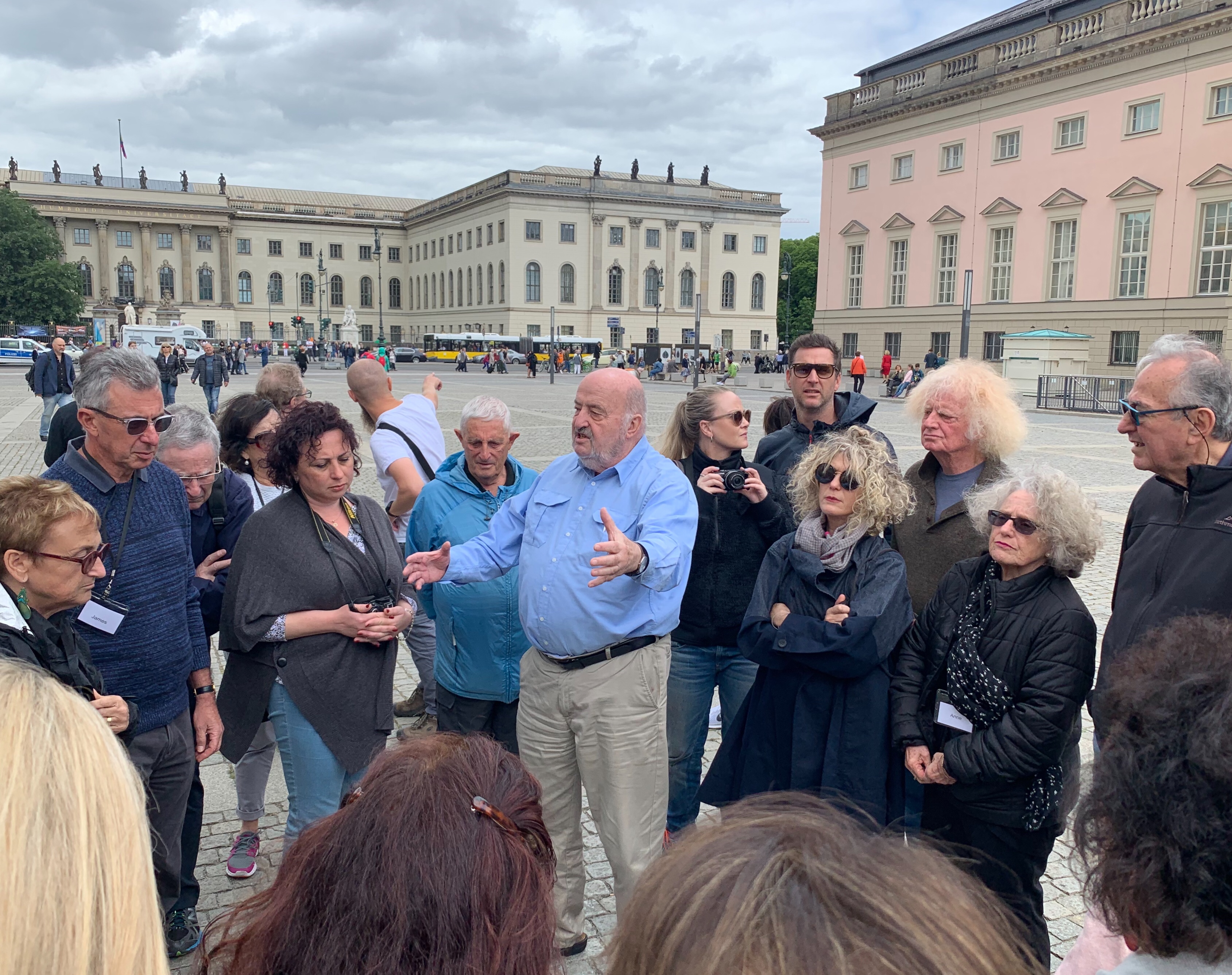
Our guide for most of the trip will be Fil, but today we have the pleasure of Prof. Konrad Kwiet.
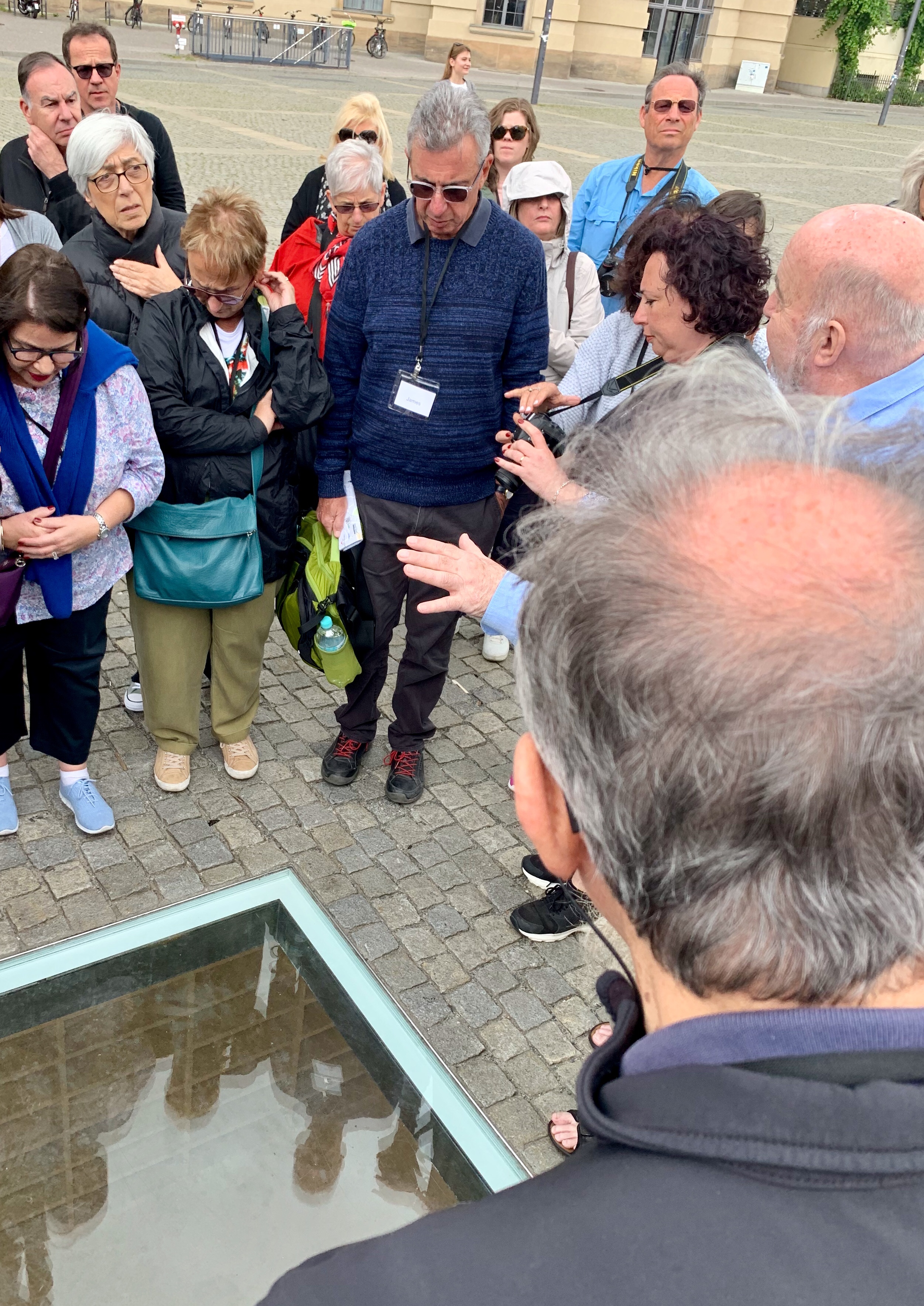
Our first port of call is a city square called Bebelplatz, not far from Humboldt University. It was in this square, in May of 1933, that a major book burning took place, and we take the time to admire a very creative monument: an underground room, visible through a glass ceiling set into the stone floor of the square, in which can be seen empty bookshelves.
(Photograph: Howard Wolfers)
(Photograph: Howard Wolfers)
The National Socialists, ever the enemies of free thinking, had condemned to the flames (as a symbolic gesture) books written by enemies of the Reich, as well as texts that promoted ideas (or even tolerated ideas) inimical to National Socialism. Books by Jews, by Communists and by known dissidents were burned together with works of research into human sexuality in a public expression of triumph over an old and decaying order.
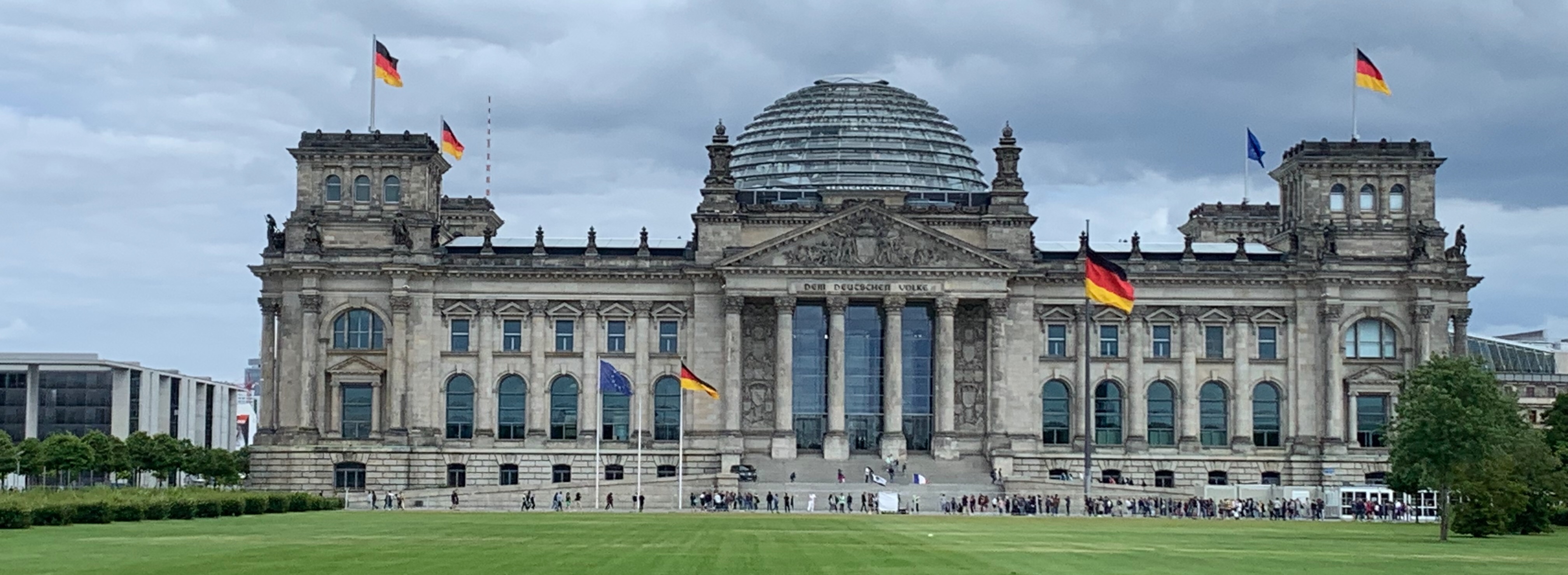
Boarding the bus again, we drive past the enormous and sprawling Russian embassy (the largest in the world), and see the Brandenburg Gate in the near distance. Although we do not stop there, we are given a glimpse of the Reichstag and the political residence (nicknamed “the laundromat”, due to its similarity to a large washing machine).
(Photograph: Howard Wolfers)
Berlin is spectacularly green, and a drive through the Tiergarten is incredibly refreshing. These trees had all been destroyed during the war, but the entire area has been reforested over the past forty years.
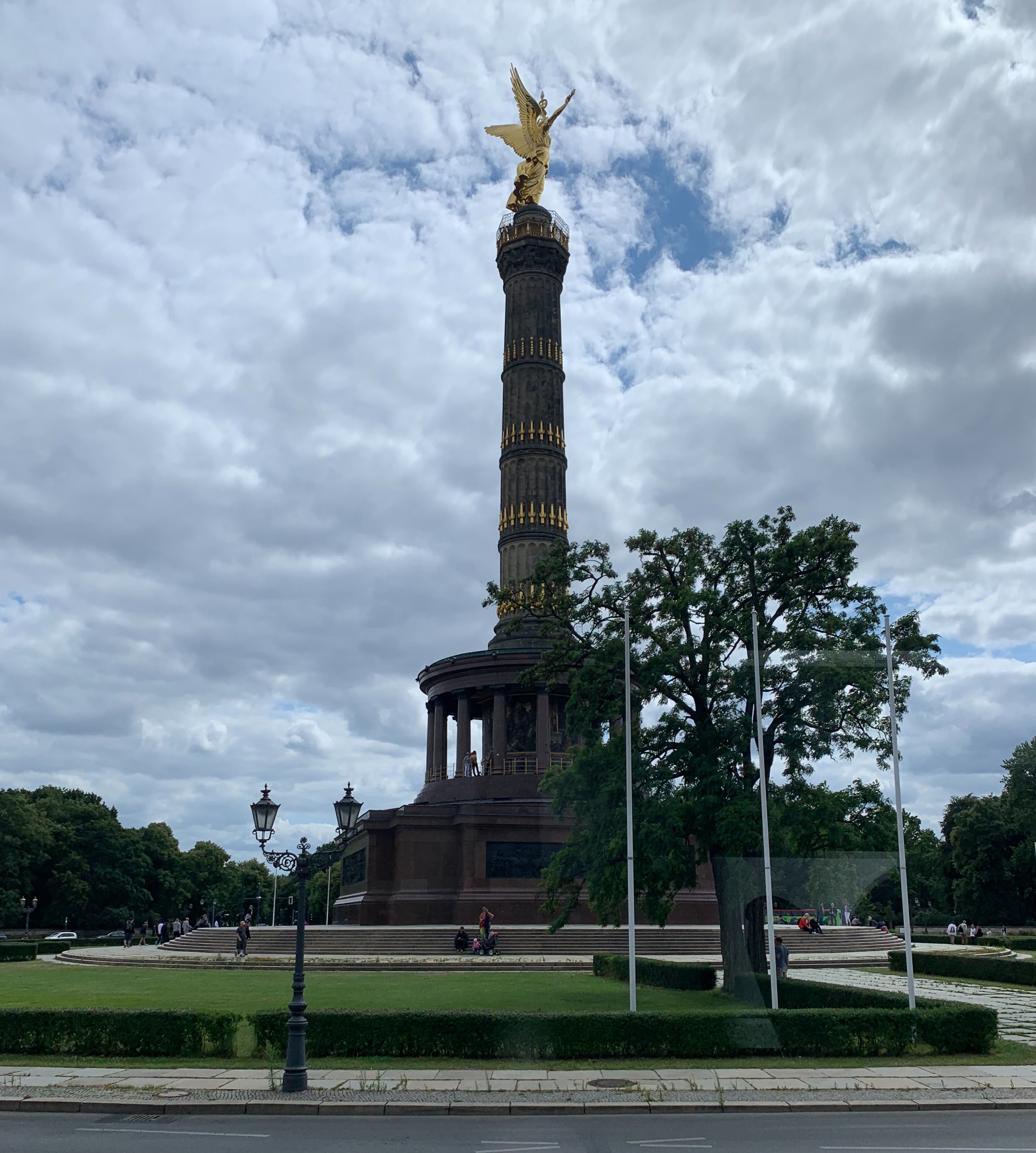
Not far from the Presidential Palace is a monument to German unification: the spectacular Victory Column. Topped with a golden statue to the Roman goddess of victory, it is an impressive sight, as are its general environs. Of the contributions of Hitler’s chief architect and minister of armament production, Albert Speer, all that remains in this area are the public toilets.
(Photograph: Howard Wolfers)
We continue driving, past a Bauhaus-themed architectural hub and a market where one can buy many items of Nazi memorabilia. Our guide, Konrad, informs us that most of them are fakes. We pass Berlin’s second largest university, as well as the impressive Charlottenburg Castle, and come to a stop at the Tempelhof Airfield.
Designed by Albert Speer, this neo-classical structure is truly awe-inspiring. One cannot help but feel that the man achieved his aims: fascinated always with the “ruin value” of an edifice, he hoped that his vision of Berlin would one day testify, even in a dilapidated state, to the glory of the Third Reich. While Berlin was to find itself in ruins a thousand years before he had imagined that it would, those structures of his that live on continue to overwhelm tourists with their grandeur.
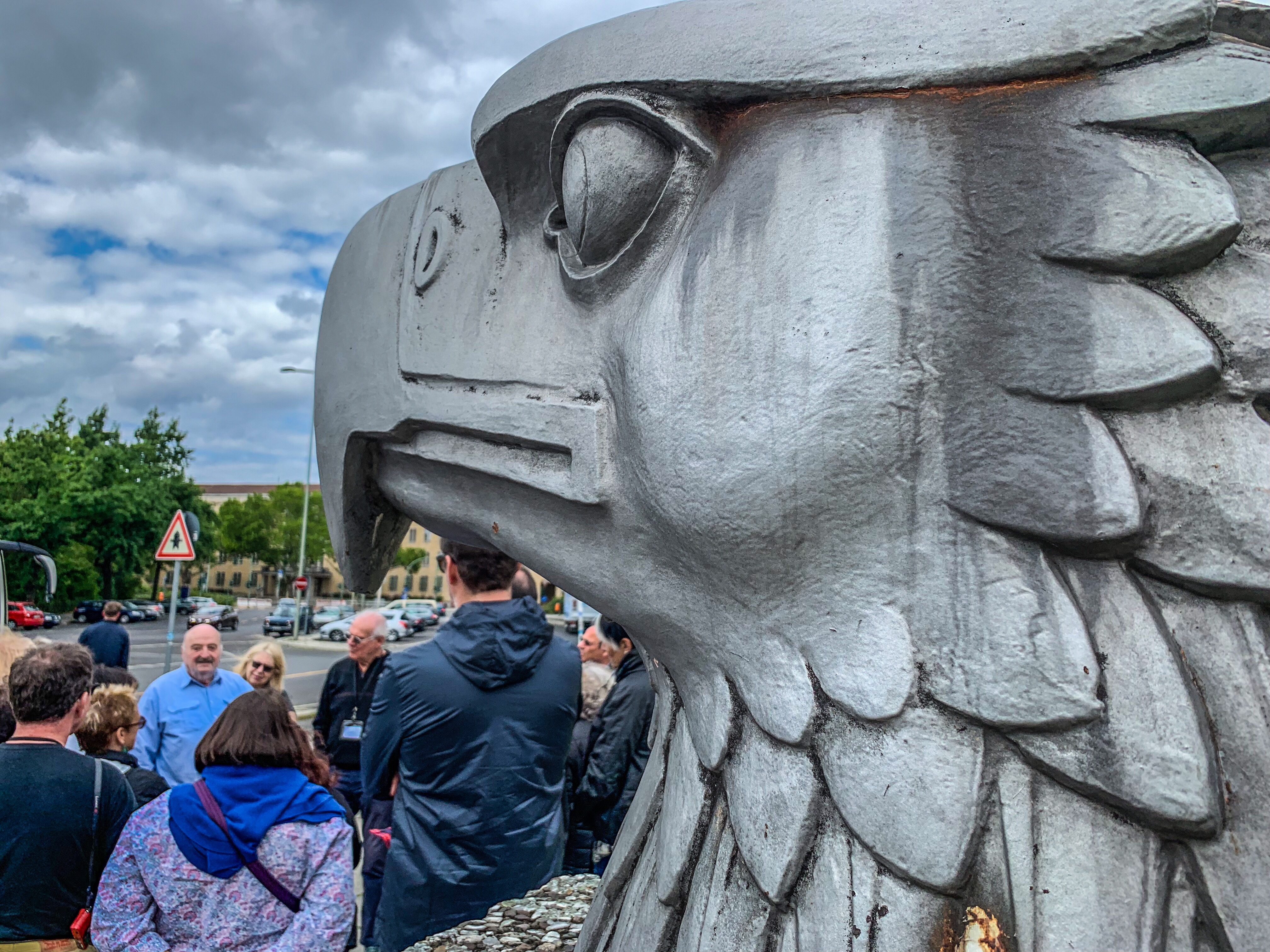
(Photograph: Howard Wolfers)
Climbing back into the bus, we continue our tour of Berlin through a poorer sector, more noticeably populated with recent migrants. Entering the Turkish area, we note the dramatic increase in graffiti, which continues as we move through the even poorer Arab area, where tensions have recently been exacerbated by the arrival of Syrian refugees.
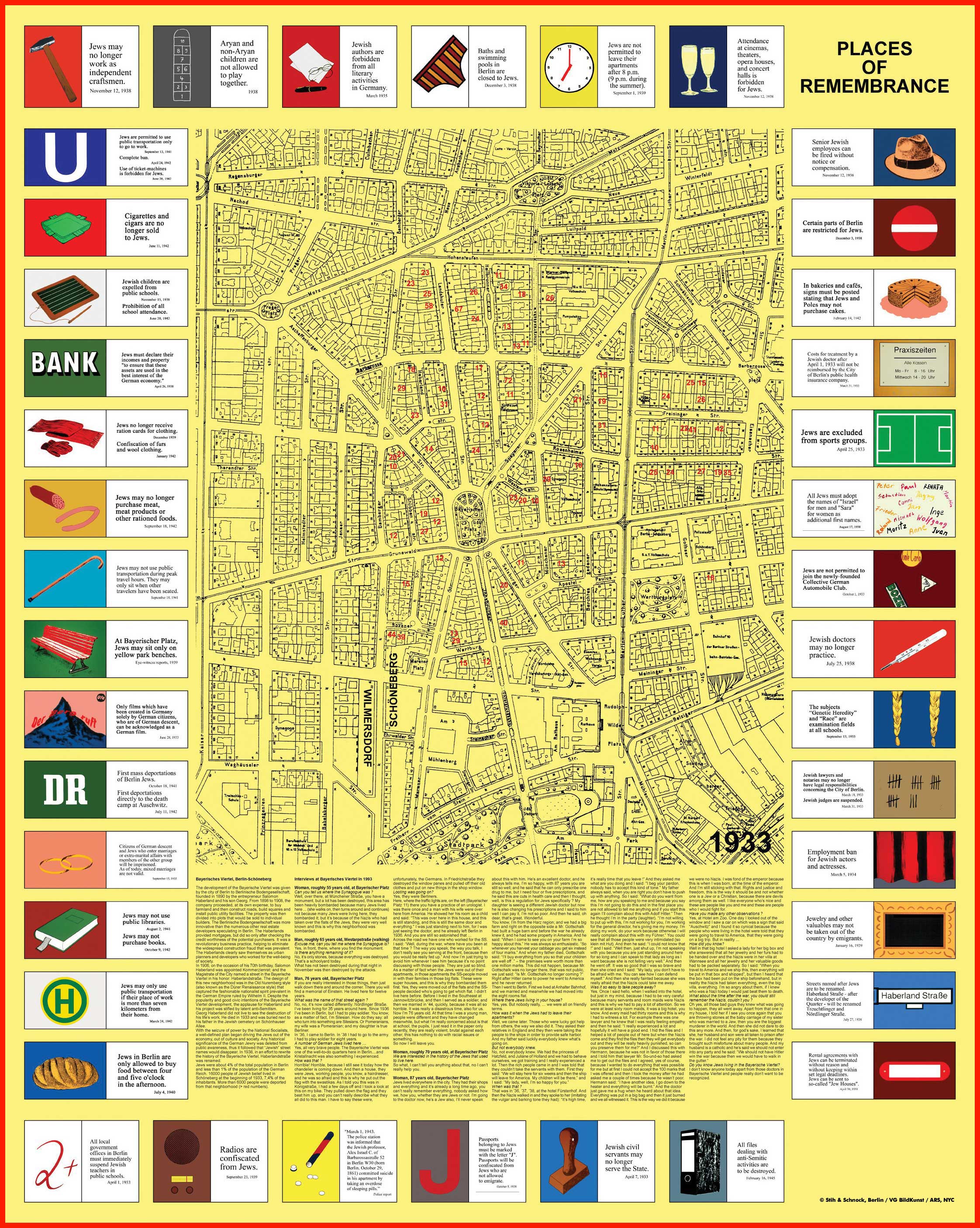
We continue through this area until we reach an old Jewish district, and alight at a park: the Bayerische Platz. Around the park, signs advertise anti-Jewish decrees, together with their dates of enactment, and stolpersteine can be seen on the footpath, announcing the names of former Jewish residents, together with the dates of their deportations and the locations of their murder.
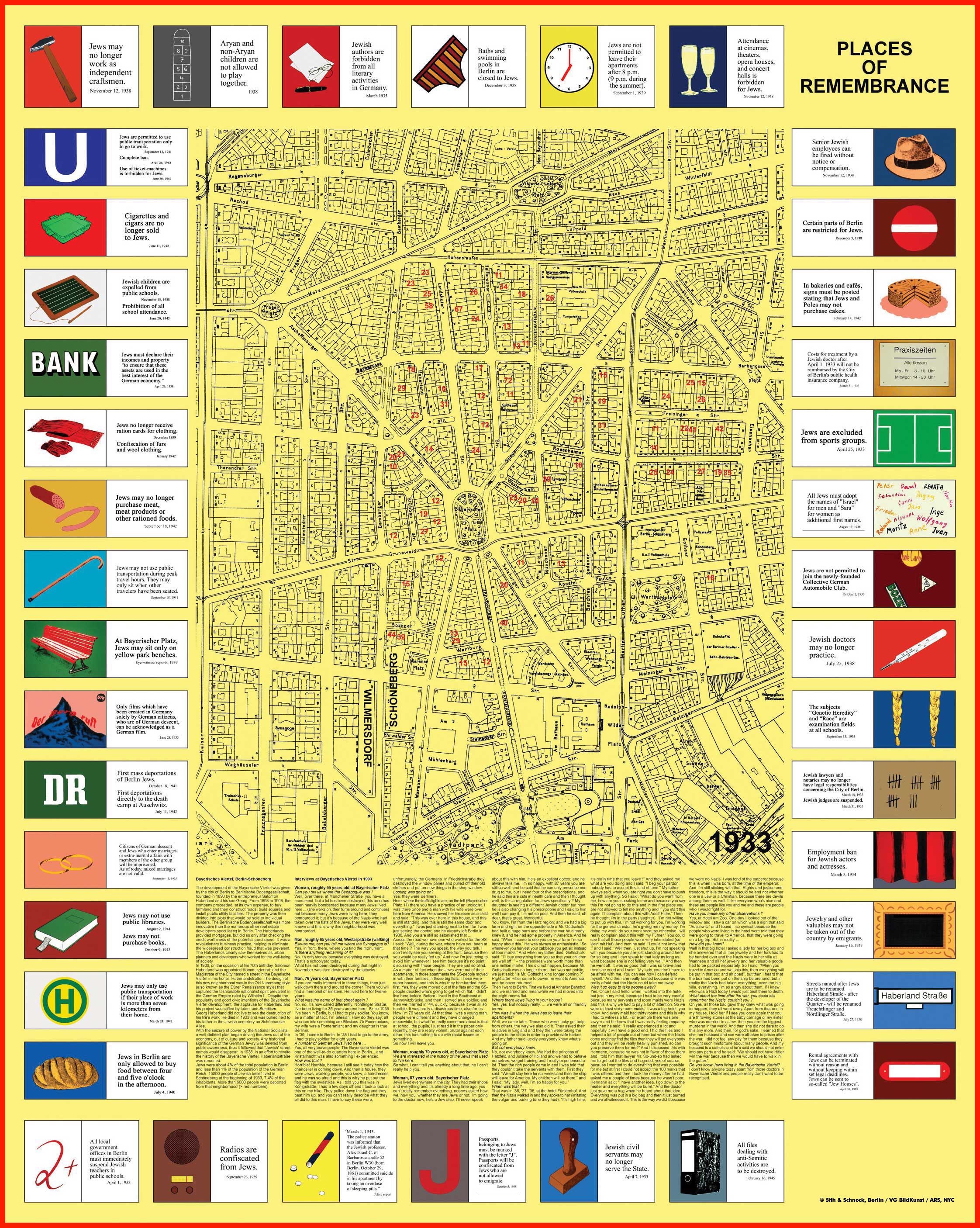
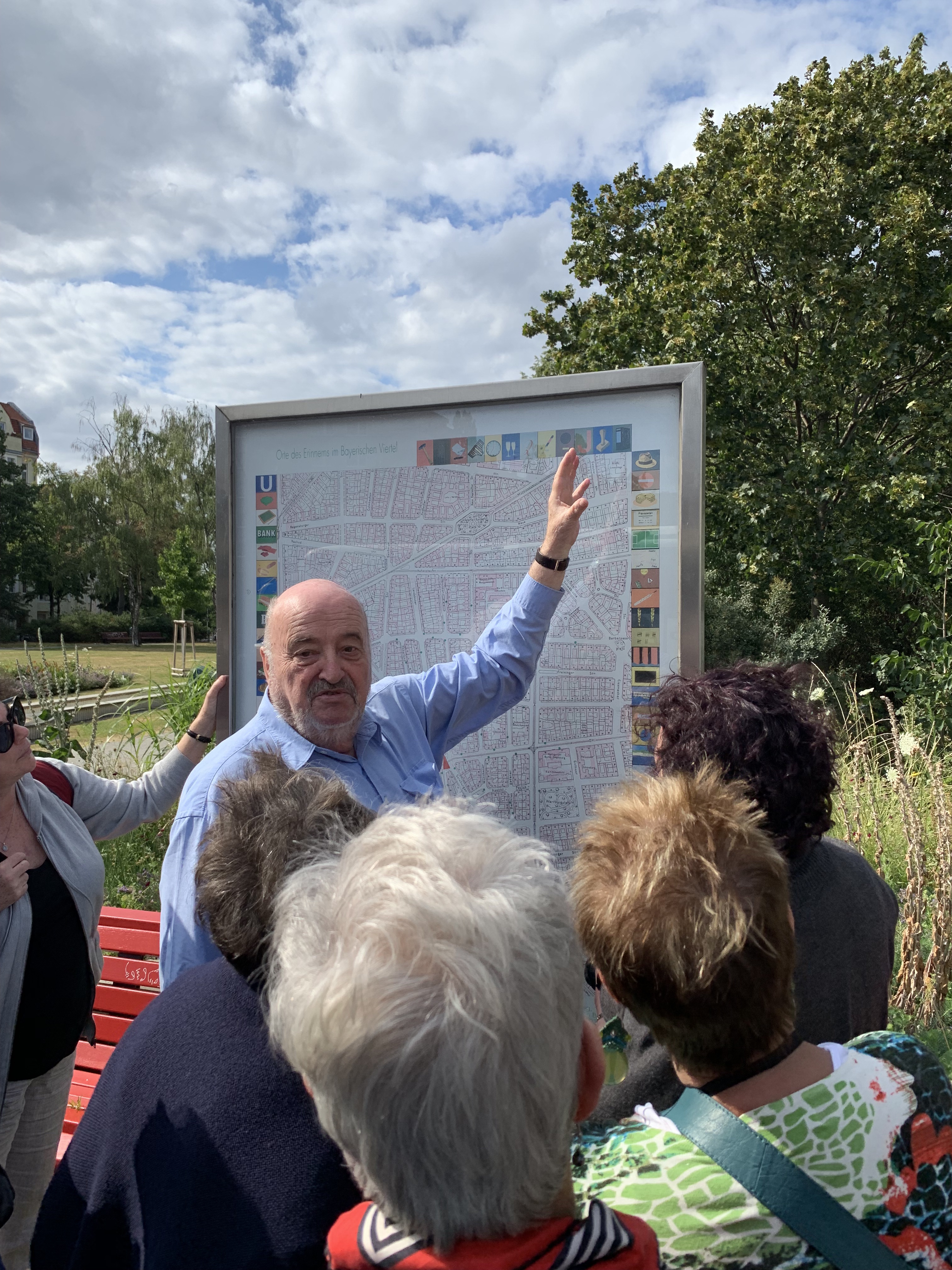
(Photograph: Howard Wolfers)
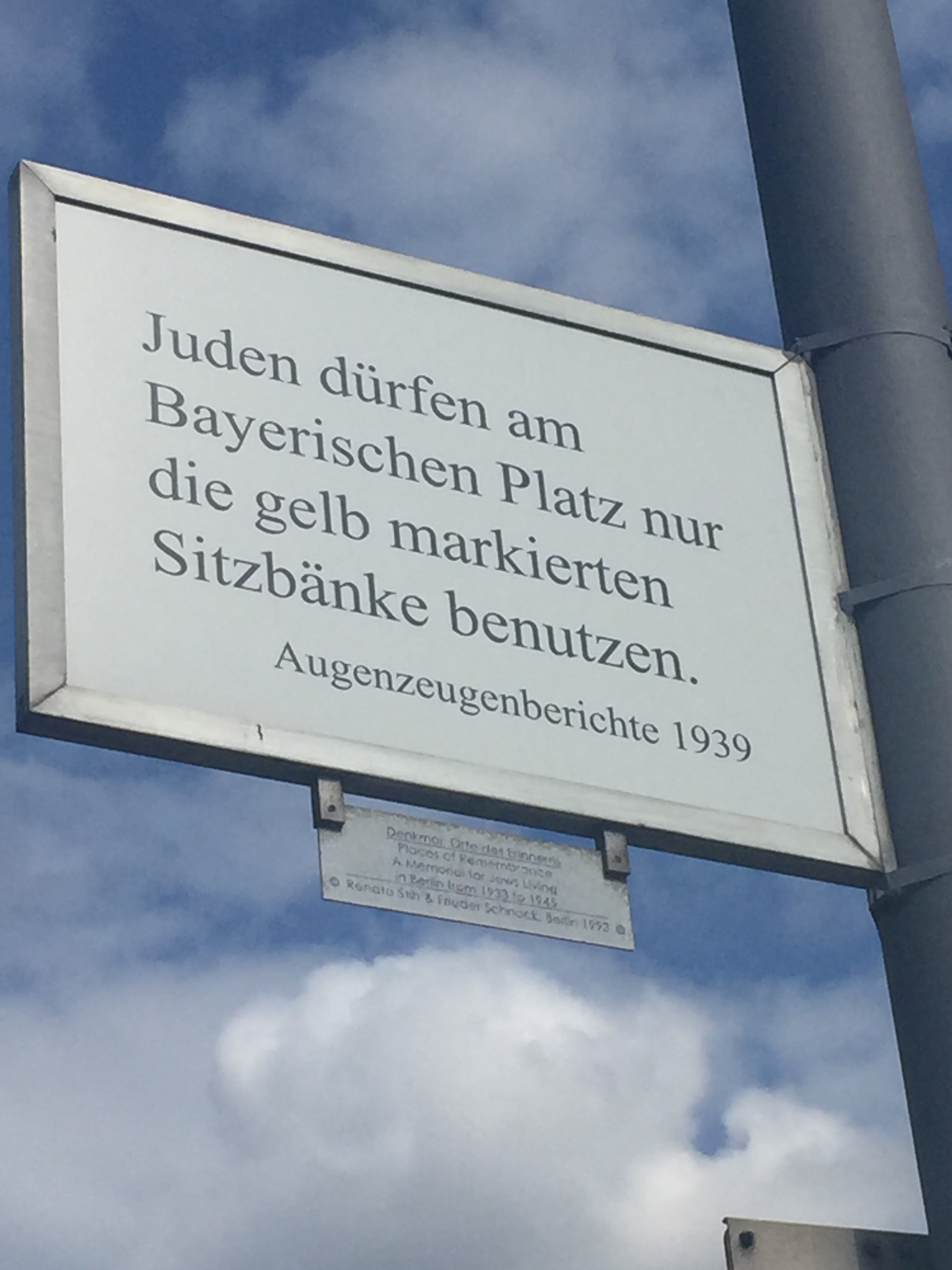
Photograph: Simon Holloway
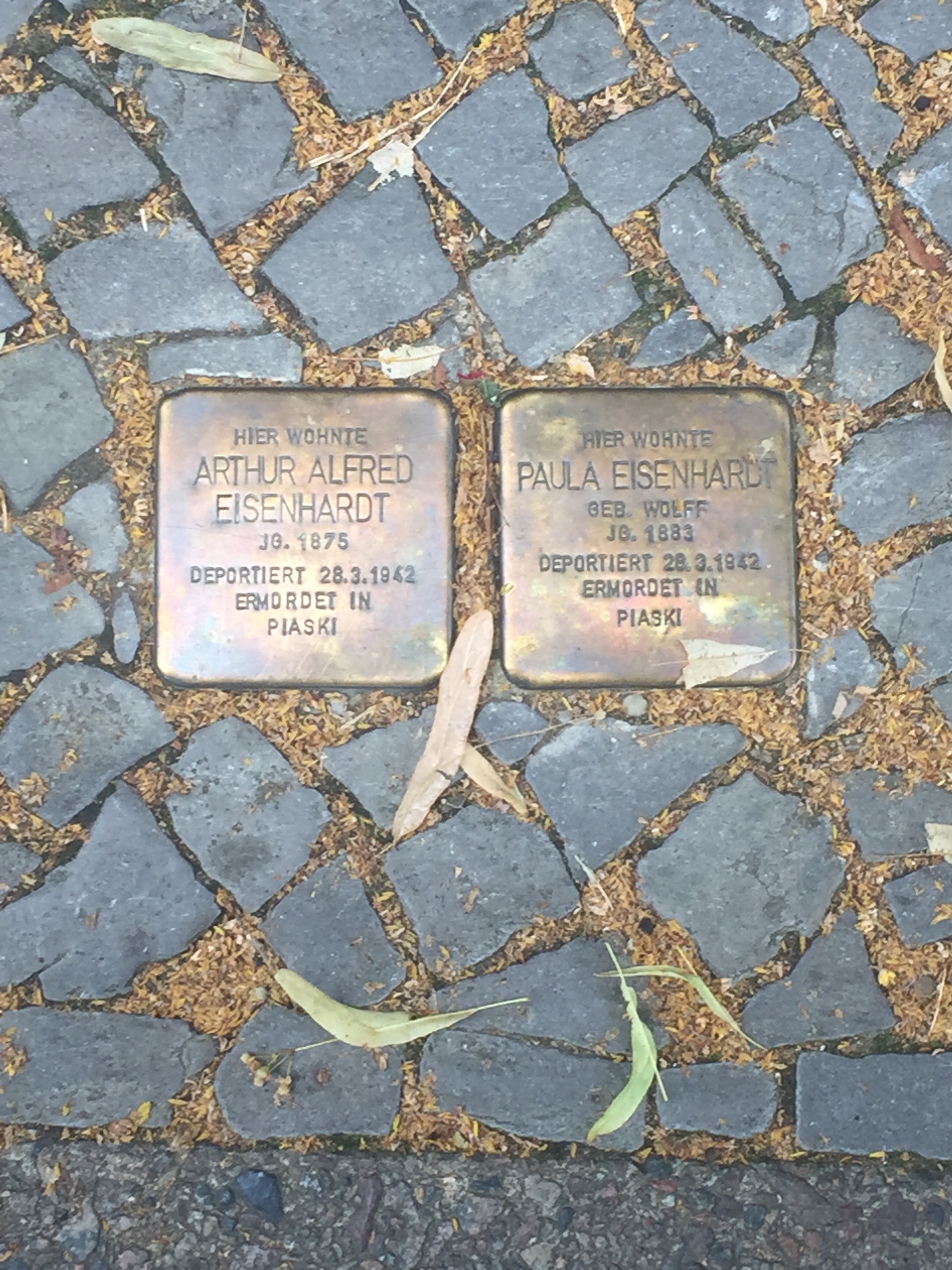
Photograph: Simon Holloway
We board the bus again for a short trip back to the hotel. Not far from our destination, we pass Berlin’s memorial to the murdered Jews of Europe, to which we will be returning on Wednesday.
It has been an informative afternoon, but one that has set the stage for what promises to also be an emotionally taxing but intellectually rewarding fortnight.


 Berlin and Poland Tour 2019
Thanks for your work on the blog Simon and also to Howard for the great photos -much appreciated!
LikeLiked by 1 person
Thank you, Simon and Howard! Great overview of our first day of the tour.
LikeLiked by 1 person
Wow Simon. Thank you so
much for your detailed
& thoughtful writings. I have been thinking of all of you over the past few days and how you are weathering the horrors or what you see and learn
& thinking about our own trip two years ago. Say hi to David and Katrina for me. Ruth.
LikeLiked by 1 person