Our final morning in Berlin, we board the bus at 11:00. After dealing with a somewhat overzealous driver, who disapproves of the number of our bags, we arrive shortly at the enormous, sprawling, multi-level Bahnhof.
Having boarded and found our seats, the train meanders for some time through the German countryside in the direction of Frankfurt on the Oder. Our carriage doesn’t seem to have a working air-conditioning system, but we withhold from complaining too noisily, our minds filled with thoughts of how others, long before us, might have made a similar journey.
Not long after we have crossed the river, my phone vibrates. Optus Free Message welcomes me to Poland, but the litany of station names attests already to the fact that we have left Germany. Słunice, Kinowice, Rzepin, Boczów… Some of these names seem vaguely familiar.
And then we see it. Zbąszyń: a small town, barely an hour from the German border, to which the National Socialists dumped all of their Polish-born Jews in October of 1938. Some of those Jews were wheeled on hospital beds; others were still in their nightshirts. Truly, it was an act of cruelty and of violence that can only really be seen as a rehearsal for Kristallnacht.
Tall birch trees line the sides of the track. One wonders: how many sought to take to the forest? Did people hide here? What did they eat? Every time we pass freight cars, stalled in the heat at the side of the tracks, my mind takes me back to 1941.
The towns that we are passing, of course, are the towns of what was once termed Reichsgau Wartheland: one of the administrative districts of the newly-expanded Reich. One of the three counties that made up the Warthegau was that of Posen – Poznań in Polish. It was here that Arthur Greiser, the Governor of the Wartheland, held office.
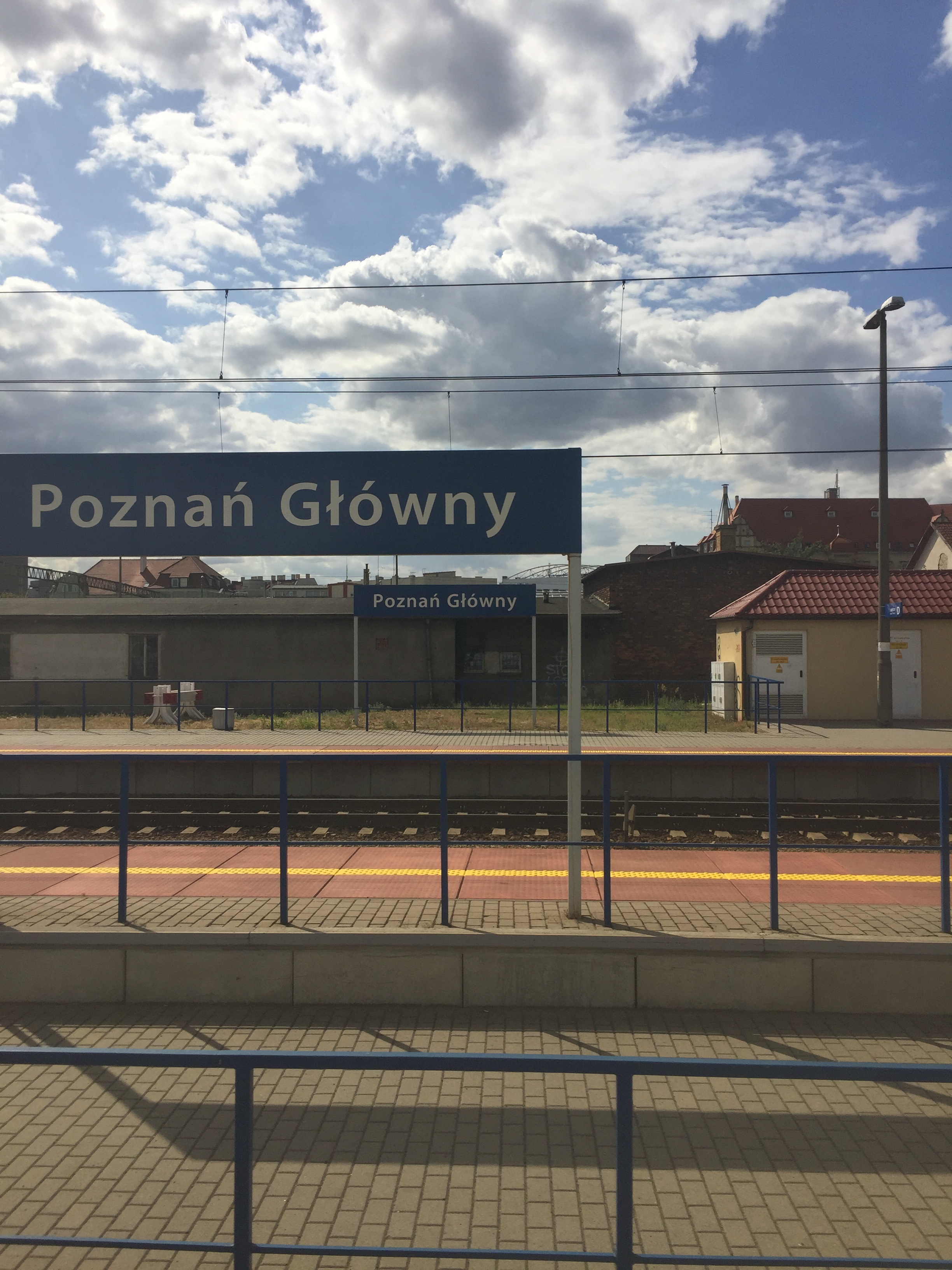
Photograph: Simon Holloway
Desirous to rule over a territory freed of those people that his party considered subhuman, Greiser enlisted the help of SS-Obersturmführer Herbert Lange, who (to the tune of a promotion) found a convenient location for the first Nazi death camp in the sleepy village of Chełmno (Kulmhof). Chełmno was in the Konin district. The nearest train station, and the one to which arriving Jews and “Gypsies” were sent, was in Koło.
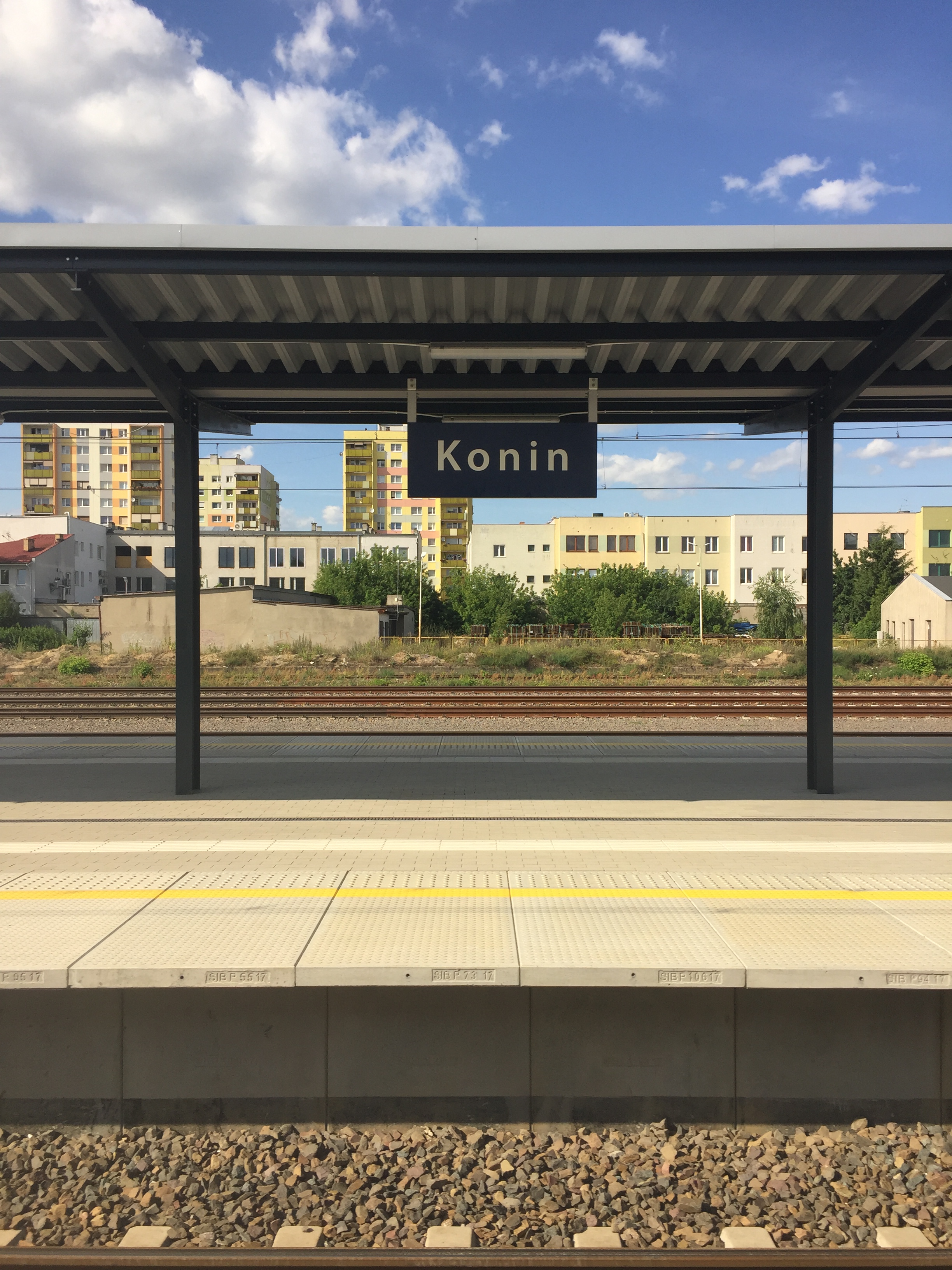
Photograph: Simon Holloway
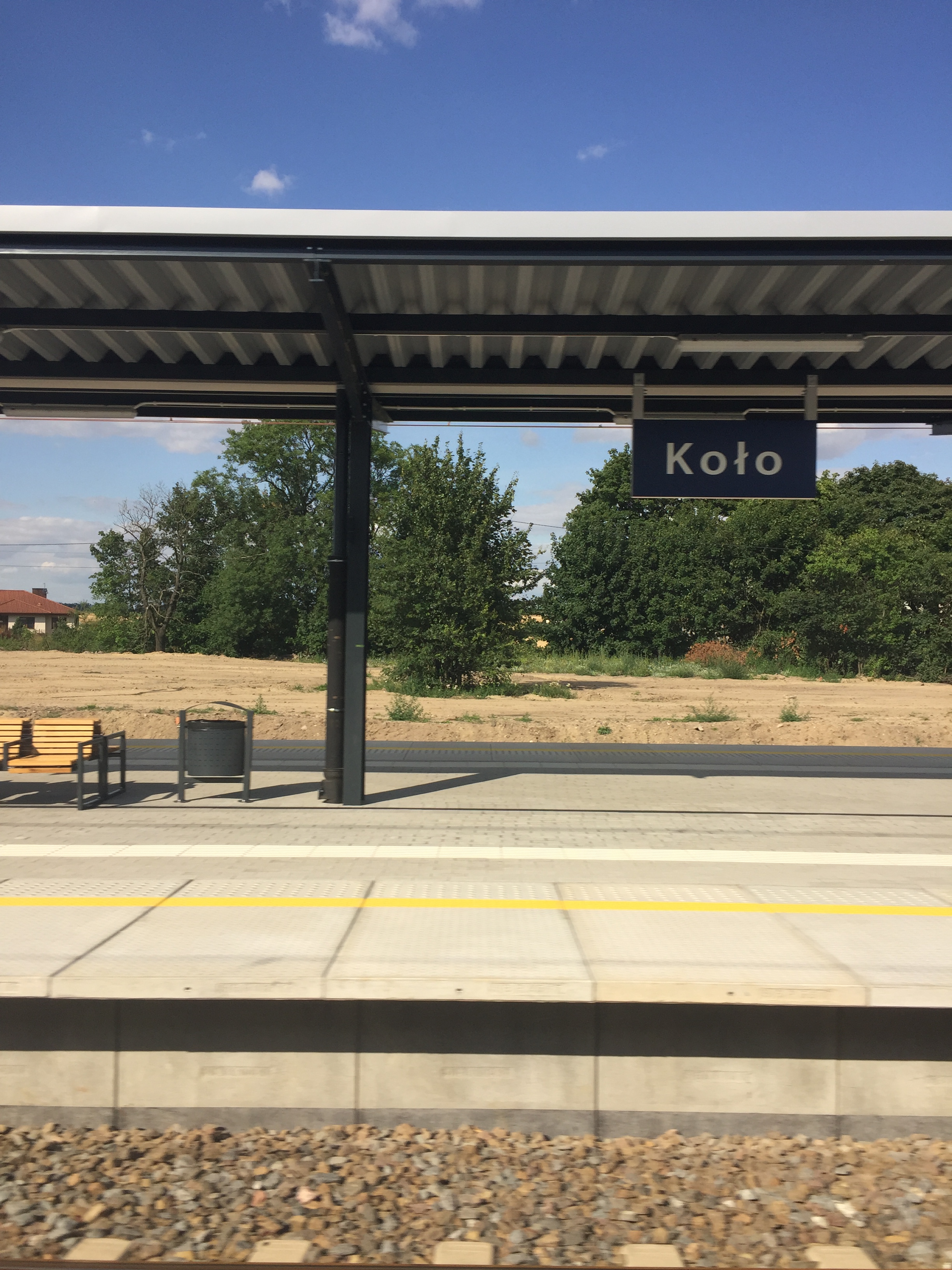
Photograph: Simon Holloway
Sadly, it is impossible to travel this beautiful country without being reminded of the terror that its people endured such a short time ago. Like the stormfront to which the Nazis were so fond of comparing themselves, it crouches over every horizon and threatens to plunge the very scenery into darkness. And to think: it’s such a beautiful day.
Pulling into the station at Warsaw Central, we navigate a perilous drop between the narrow exit and the platform, then make our way up to the street where we board the bus that takes us to our hotel. Along the way, Fil points out Stalin’s gift to the city: the Palace of Culture and Science. We are told that locals have nicknamed it “Stalin’s Cheesecake”, its being so blocky and intrusive an addition to the local skyline, but that it does have the very best view in all of Warsaw. That makes sense, Fil tells us: it provides the only vantage point from which you are not forced to look upon the Palace of Culture and Science.
Our hotel, the Polonia Palace, is somewhat unique inasmuch as it was a hotel before the war, and was not bombed during the war. It is a beautiful and expansive hotel, and we leave our bags there while we all go and get dinner at a local restaurant.
We have made it to Poland! Several days in Warsaw, Lublin and Krakow await us, and there is so much to see, so much to find out and so much to try to understand.
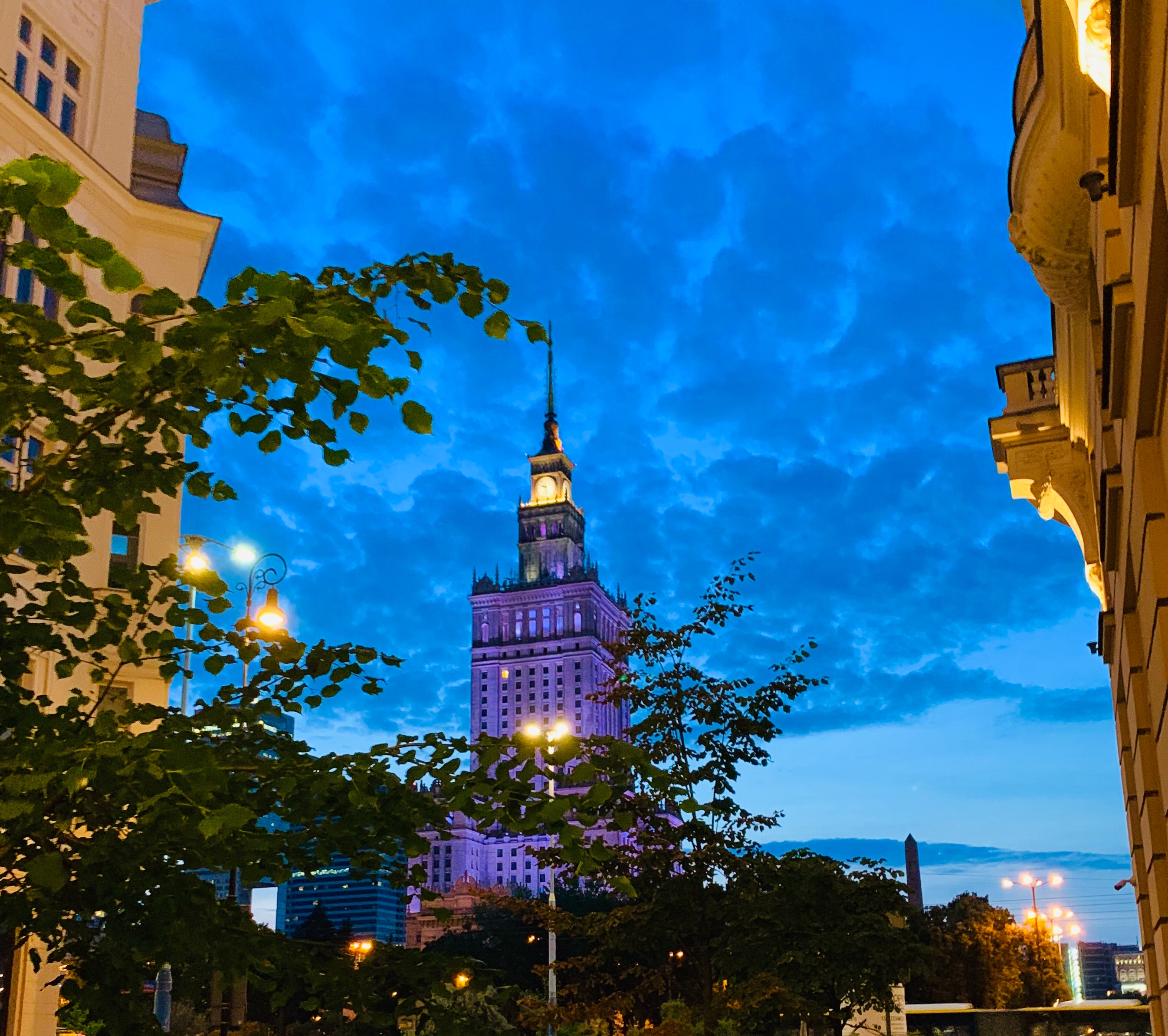
Photograph: Howard Wolfers

 Berlin and Poland Tour 2019
Simon, you made this trip twice as interesting with your fantastic day by day blog. For that, I just would like to say a big THANK YOU on behalf of my family in Australia and in Israel who are following us with your comprehensive travel blog.
LikeLiked by 1 person