This morning, on what was our earliest morning so far, we departed for Auschwitz. Being tourists our sole association with this name is Nazi terror, so it is something of a surprise to see how many people live within the town that shares its name.
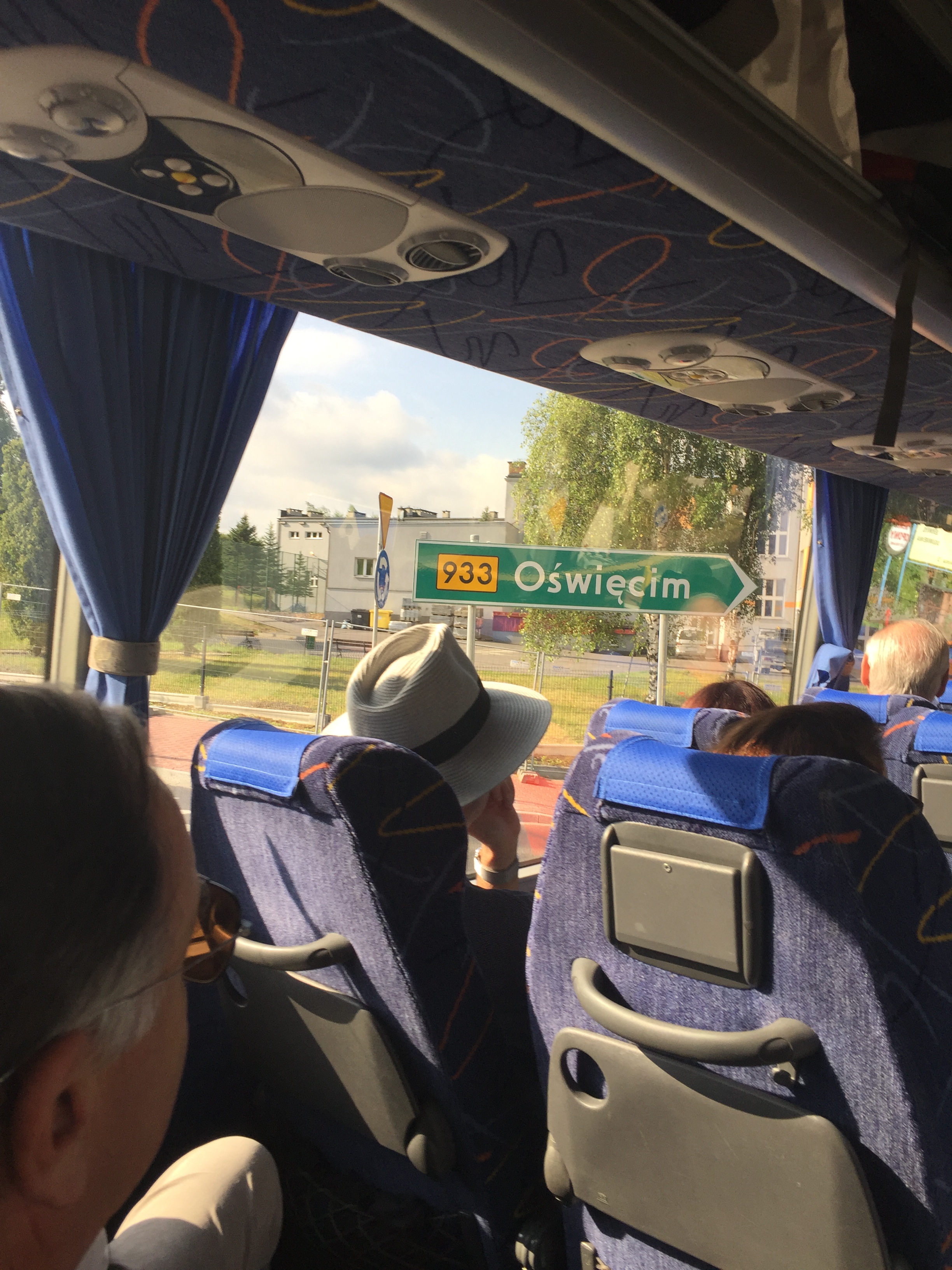
Photograph: Simon Holloway
In Polish, this town is called Oświęcim (pron. ozventschim), with the nearby village of Brzezinka (bzhezhinka) lending its name to Birkenau. We cannot ignore how pretty these villages are, nor the fact that the locals living there are forced to be forever associated with death. It’s a terrible shame, especially given the long history that these communities have.
Before the war, there were some 12,000 people living in Oświęcim, of whom approximately 7,000 were Jews. Situated on the border of Lesser Poland and Upper Silesia, theirs was a strong coal-mining region, and one that was greatly coveted by the invaders, who incorporated it into the Reich immediately following their invasion of this country.
Auschwitz was officially open for prisoners on June 14th, 1940, when it received a transport of Polish political prisoners and intelligentsia from Tarnow, in Eastern Poland. Interesting to me was how the establishment of this camp provided something of a mirror image to the establishment of Majdanek, which was first opened for Soviet POWs and only subsequently local Poles.
This is of course a feature of timing: Majdanek was established after the invasion of the Soviet Union, while Auschwitz was set up as a function of the Polish occupation. Practically, however, it means that while Poles swelled the population of Majdanek, forcing it to shift into new territory and become a different type of camp to that which had been envisaged, that which expanded the purpose of Auschwitz and forced this camp to change was the influx of Soviet prisoners.
These POWs, whose only purpose in being brought to the camp were that they be exterminated, were the first people concerning whom the SS experimented when it came to the use of Zyklon B. These experiments took place in September of 1941, and were initially something of a disaster.
Uncertain of how much hydrogen cyanide is necessary to kill a group of people, the execution of these prisoners lasted a grisly two days in total, during which time they slowly asphyxiated. Once the proper quantities were ascertained, the technique was deemed enough of a success that Majdanek also began using Zyklon B in their gassing facilities, as we heard just two days ago.
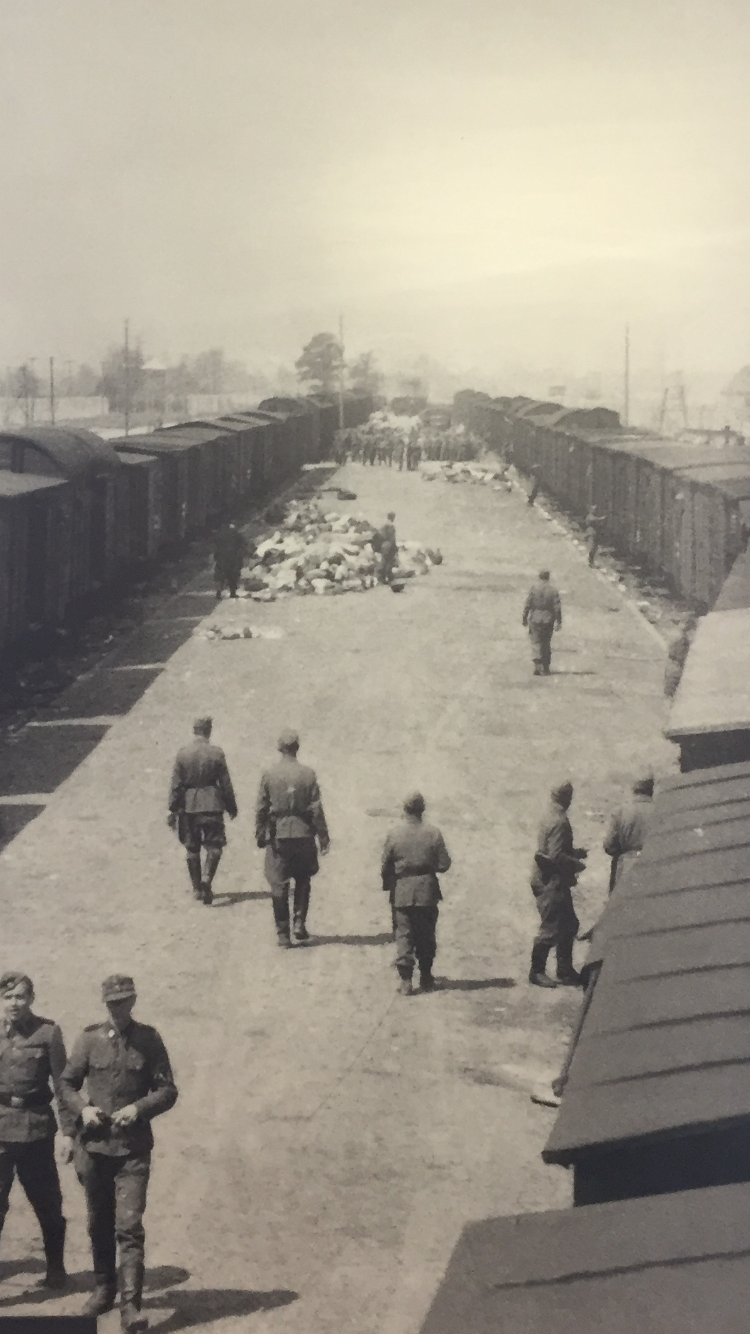
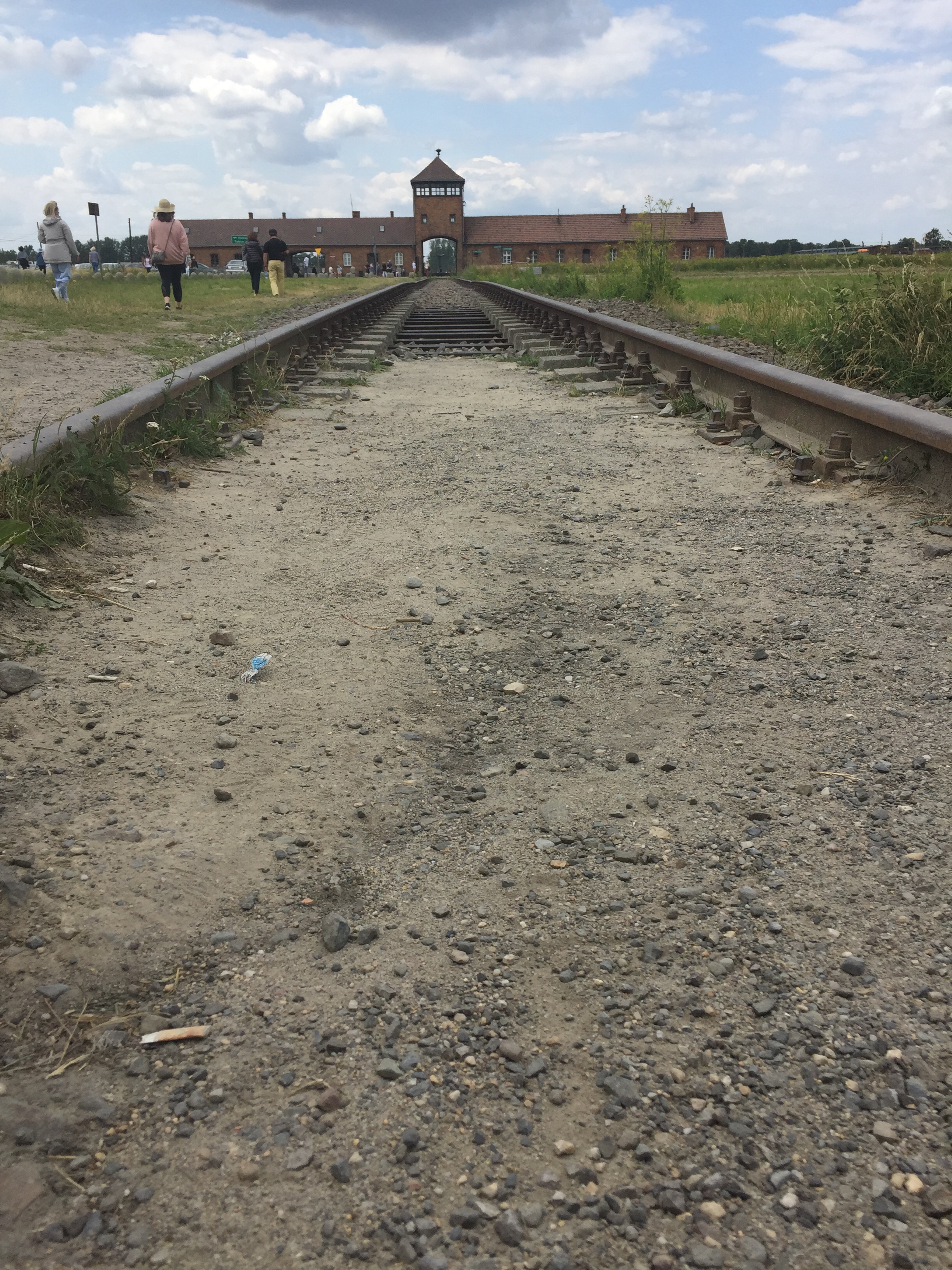
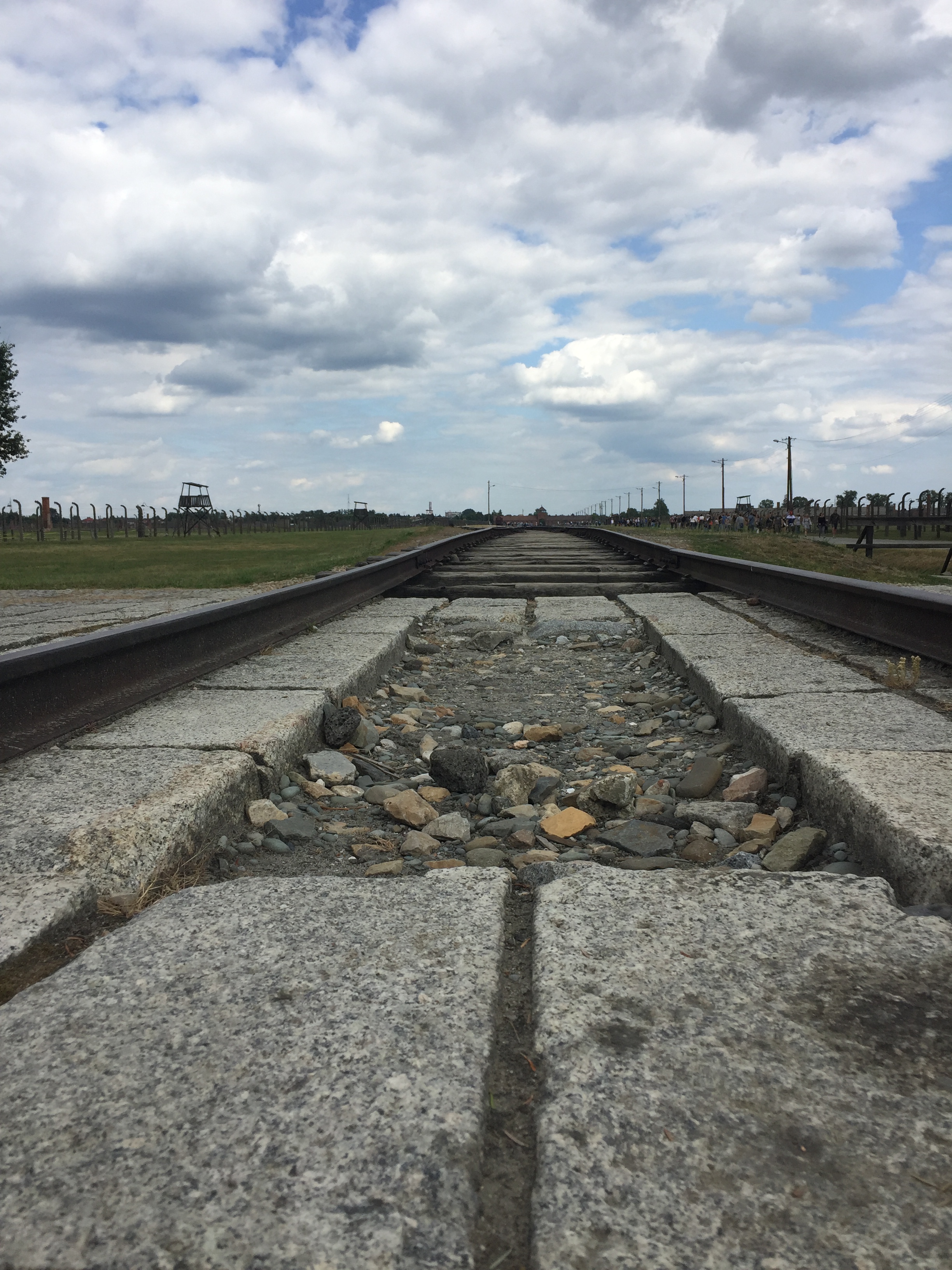
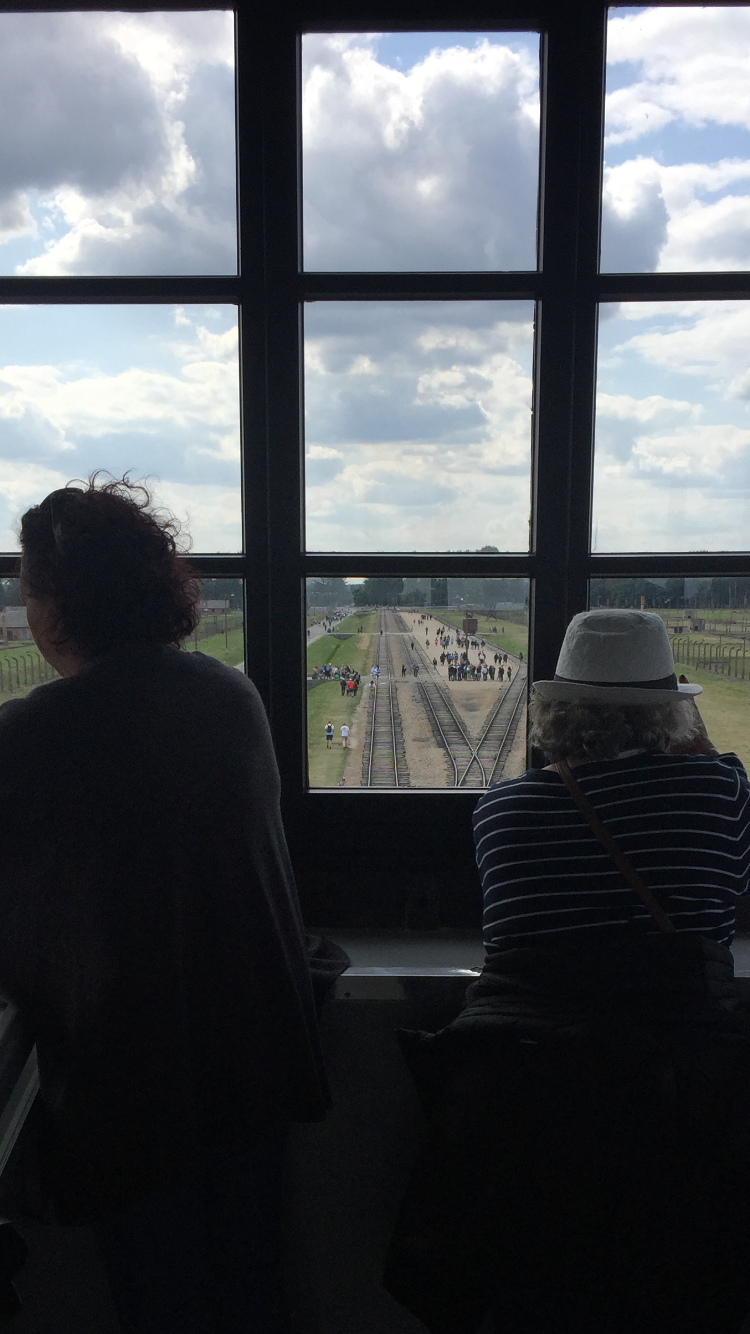
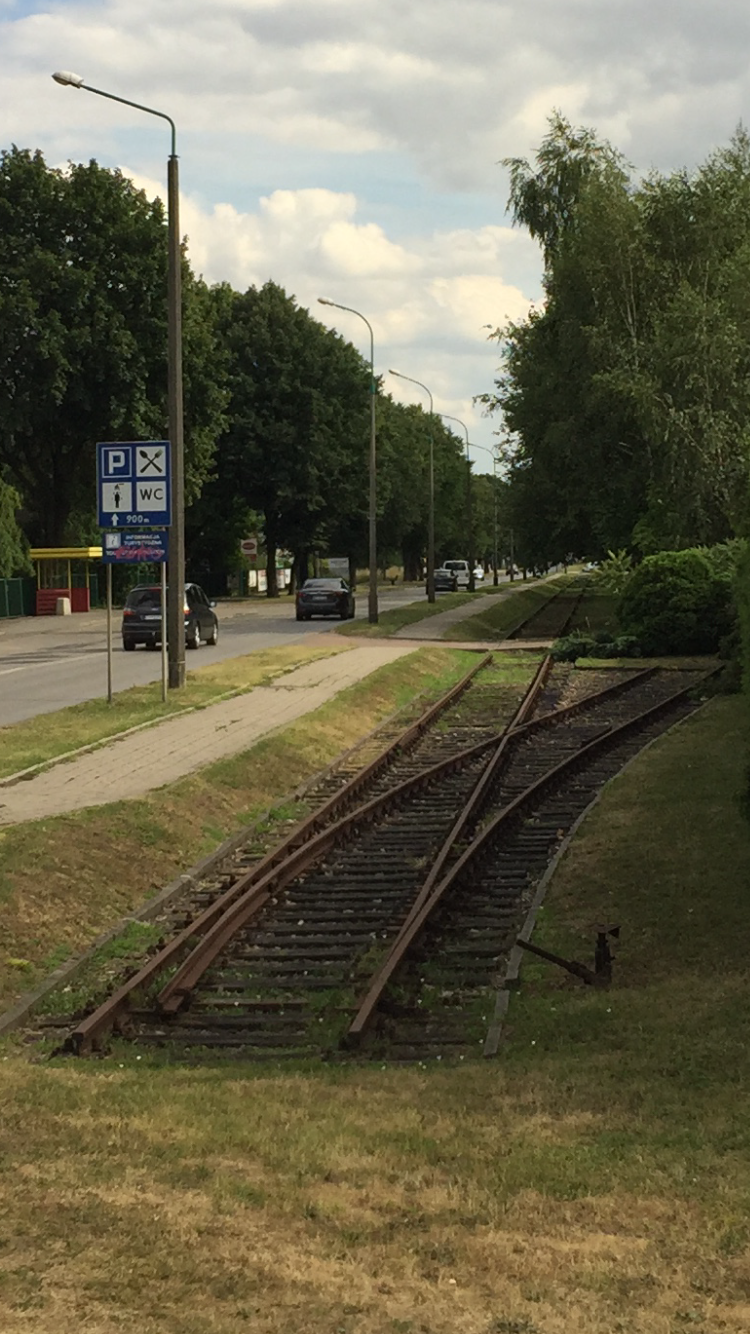
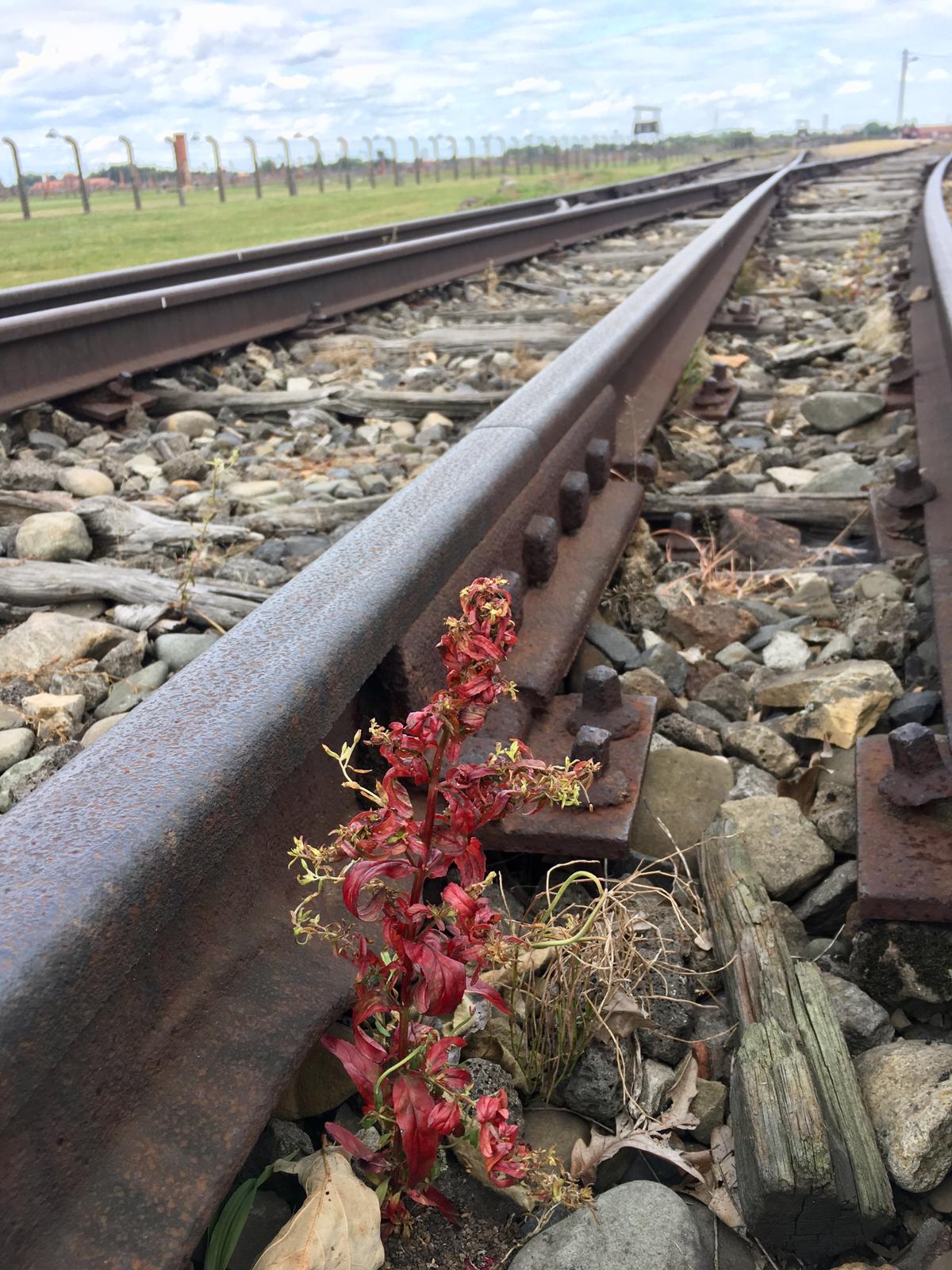
The first shipment of Jews began arriving at the beginning of 1942, from which point on Birkenau would be their sole destination. Since Oświęcim is a major point on the Polish rail line, trains would all arrive in the village, at a specially-constructed “Jew ramp”, from which prisoners would walk 1km into the death camp. In the summer of 1944, with the arrival of almost half a million Hungarian Jews (some 75% of whom were murdered within a couple of hours of climbing off the train), a railway spur was constructed directly into Birkenau, to a “Jew ramp” within the camp itself.
Our tour today would commence with Auschwitz I, and it was to this camp that we made our meandering way.
Shortly after crossing a tributary of the Vistula, Fil pointed out to us the location of two synagogues (both of which, while repurposed, were still standing) and the old Jewish cemetery. Shortly after the cemetery, which is still intact, we looked out the right-hand window and marked the location of the private residence of Rudolf Höss, who served as camp commandant for the first three-and-a-half years of its operation, before returning again in May of 1944 to lend his expertise to the annihilation of Hungarian Jewry.
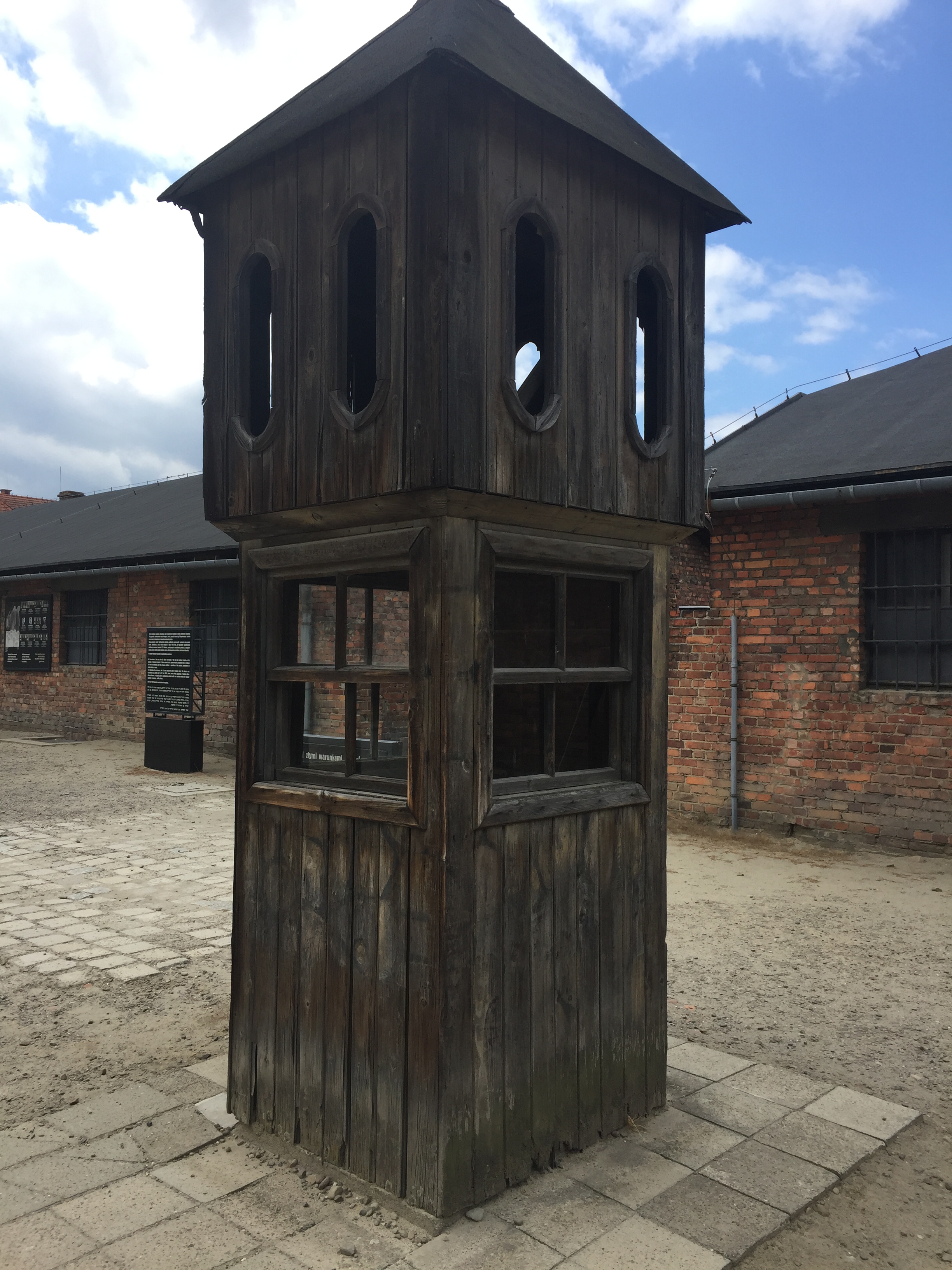
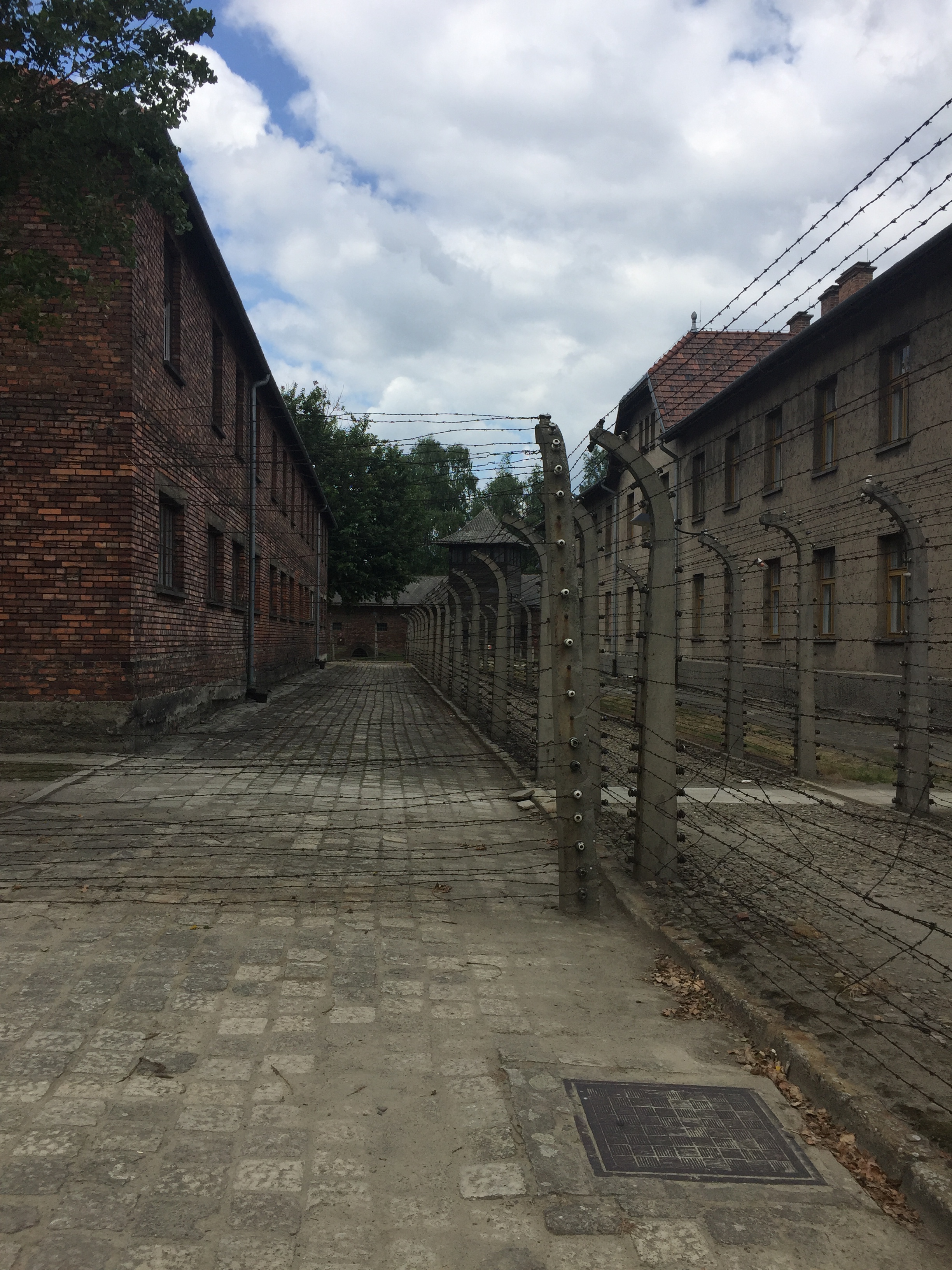
Immediately after his residence, where he lived with his wife and children, were the familiar red-brick dwellings and the slanted barbed-wire fences. We were in Auschwitz.
Having arrived within the camp, we make our way through the throngs of visitors to collect our “whisperers” and ear-pieces to go with them, the better to hear our respective guides. Auschwitz is a major tourist destination, and it is not unlike visiting Disneyland, with the long lines and the continual bustle of activity. I wonder how many of these people have heard of Treblinka? Camps that have even been erased from the popular imagination represent more effectively, to my mind, the totality of the Final Solution.
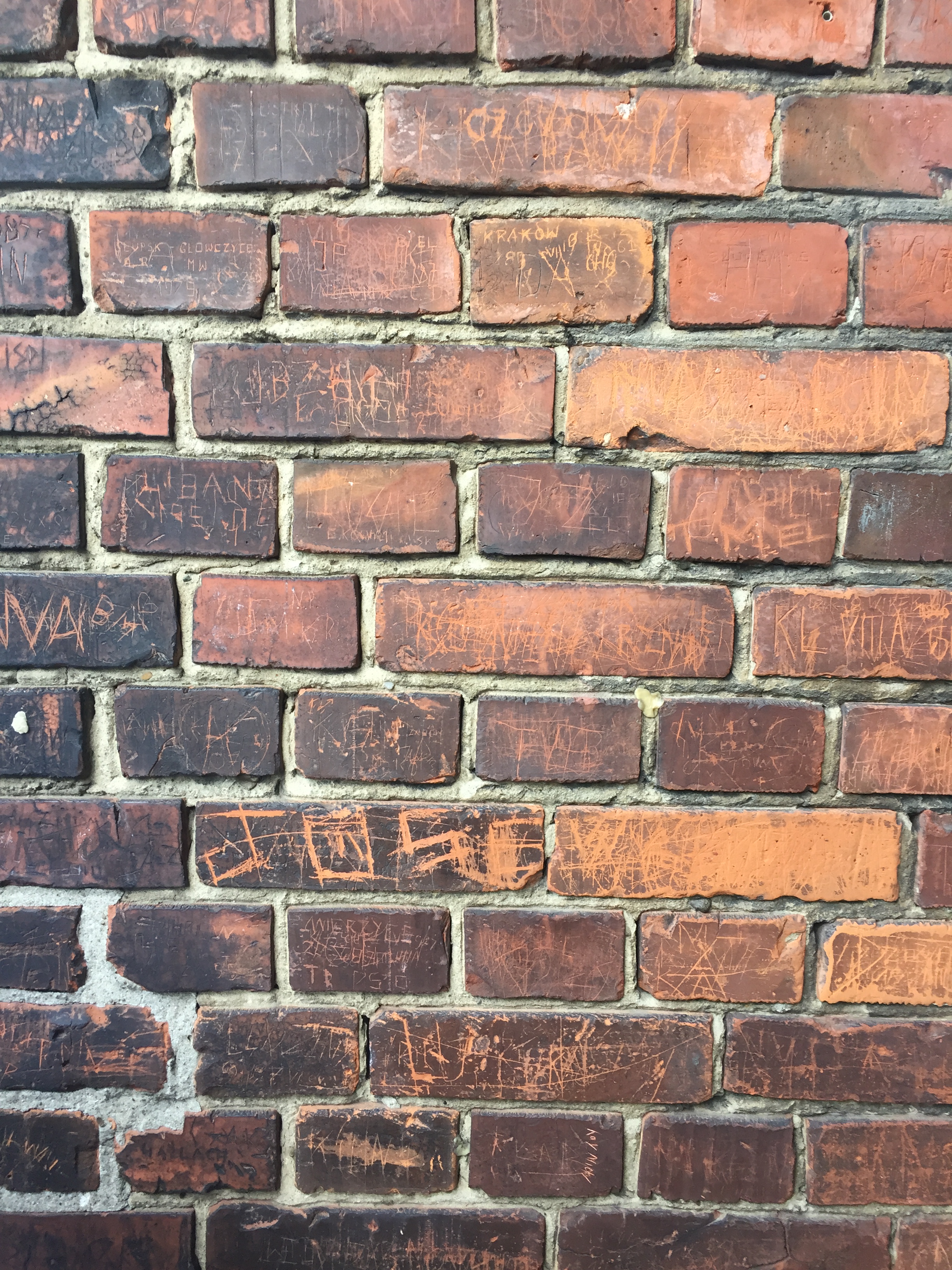
Photograph: Simon Holloway
We break into two groups, and are given two guides. Some go with Miroslav, but I find myself with Mariusz. He’s fascinating.
Mariusz has been guiding at Auschwitz for some three years now, but his wife has been guiding here for no fewer than twenty-six. They live but a ten-minute walk away, in a house that was built by her family, but which was occupied by the SS during the war itself. He is very heavy on German responsibility for German crimes, but pulls no punches when he speaks of Polish collaboration (not in Auschwitz, of course, where Poles – as in Majdanek – were part of the prisoner population), and of the collaboration of various nation states.
One of the things that’s so confronting about Auschwitz (aside from the content discussed on site) is the sheer number of people, and the completely automated nature of the tours that they need to run in order to accommodate the crowds. I felt a little like a sheep, being ushered through spaces and out again with no ability to wander away and explore things of personal interest.
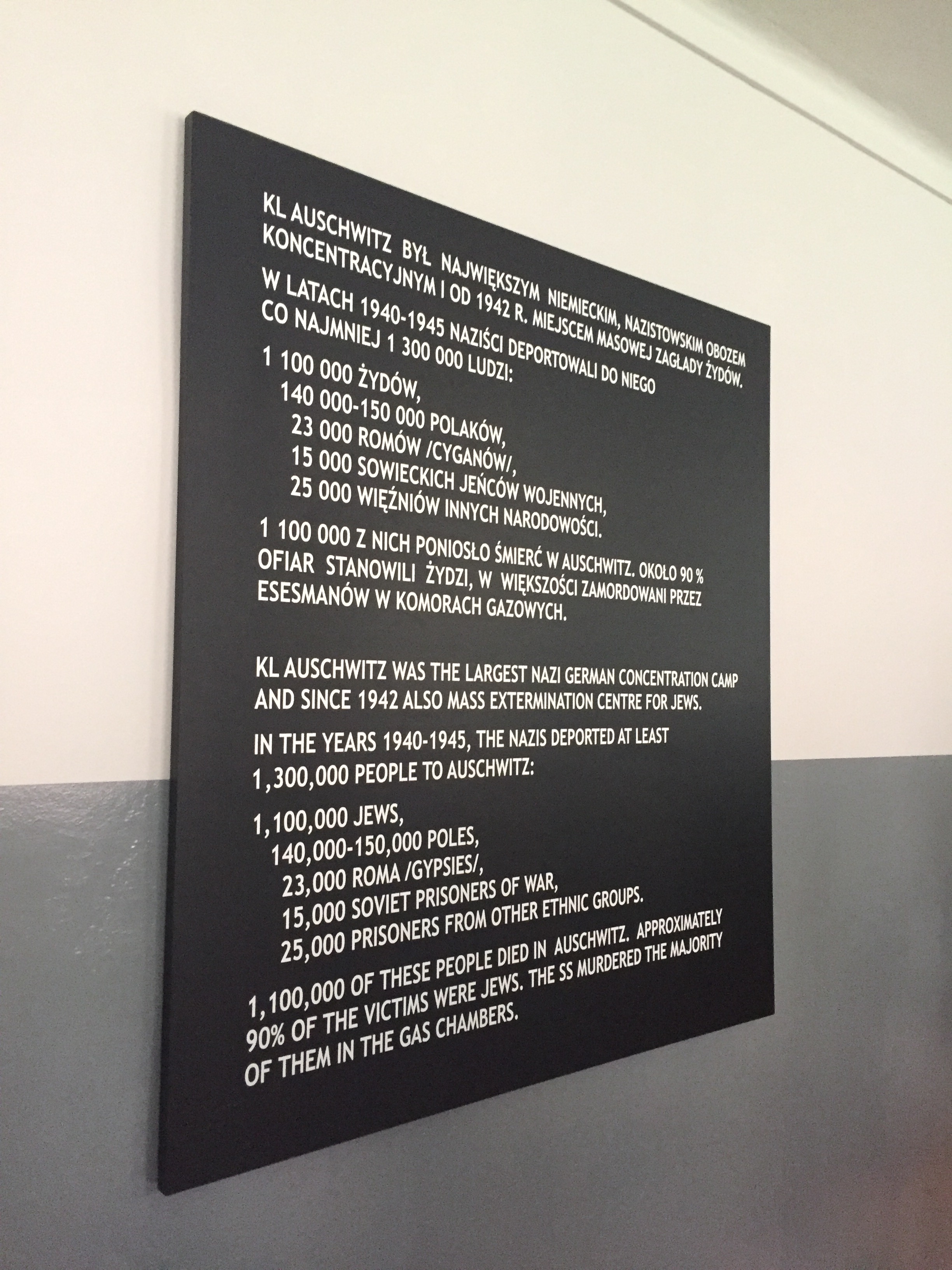
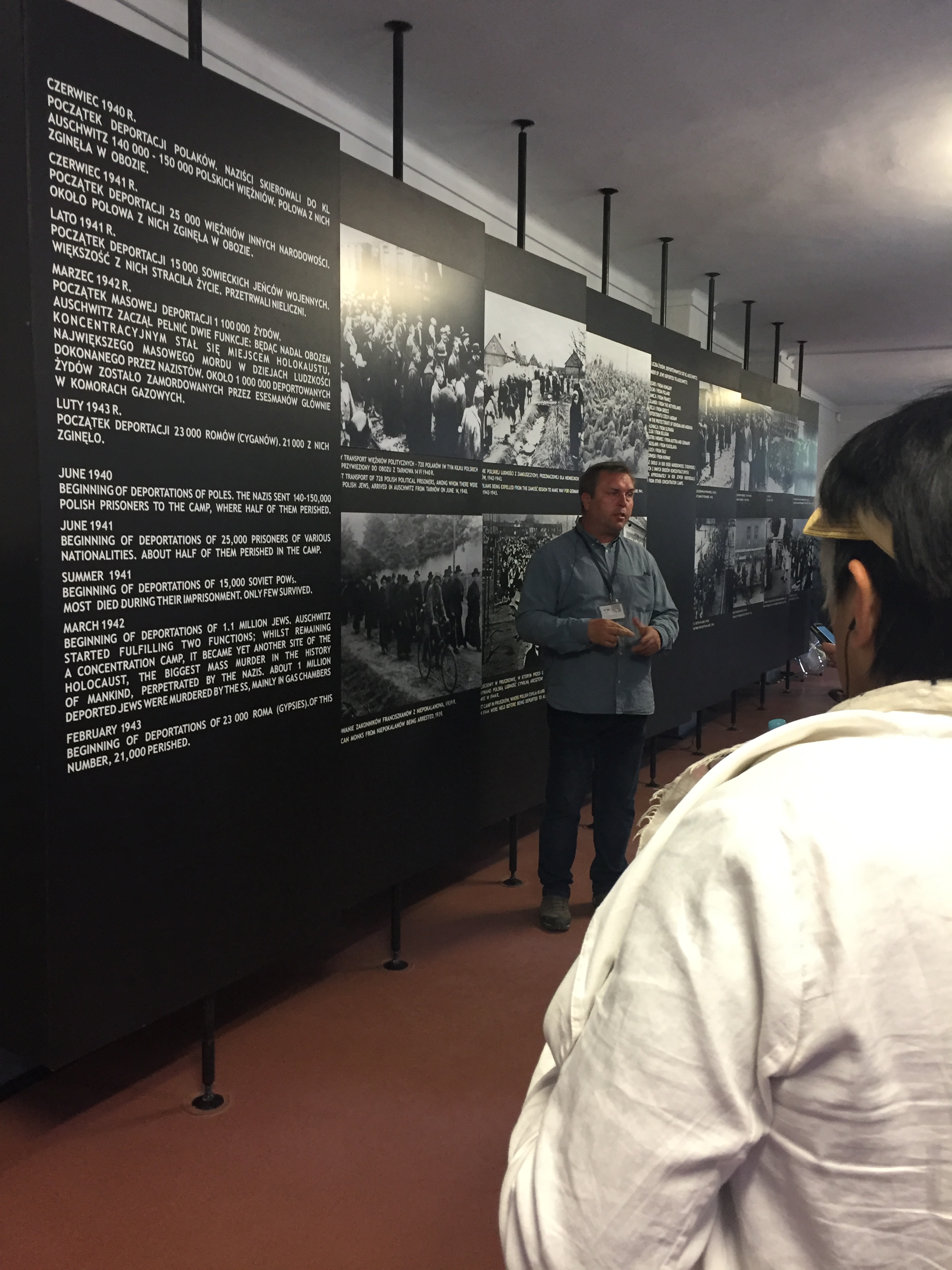
As we move mechanically from place to place, Mariusz rattles off statistics. 17,000 women, 4,000 of whom are murdered in the space of six months; 110,000 Polish farmers from Zamość, almost all of whom are killed with injections of phenol to the heart; 216,000 Jewish children, all but 6,000 of whom are gassed on arrival… The details are exhausting and the tours are information-heavy. This is a roving lecture, and with little time to process the content of the exhibits, potentially overwhelming. When Mariusz tells us all to keep to the right-hand side, I cannot help but think of the instructions given to arrivals who were selected for labour.
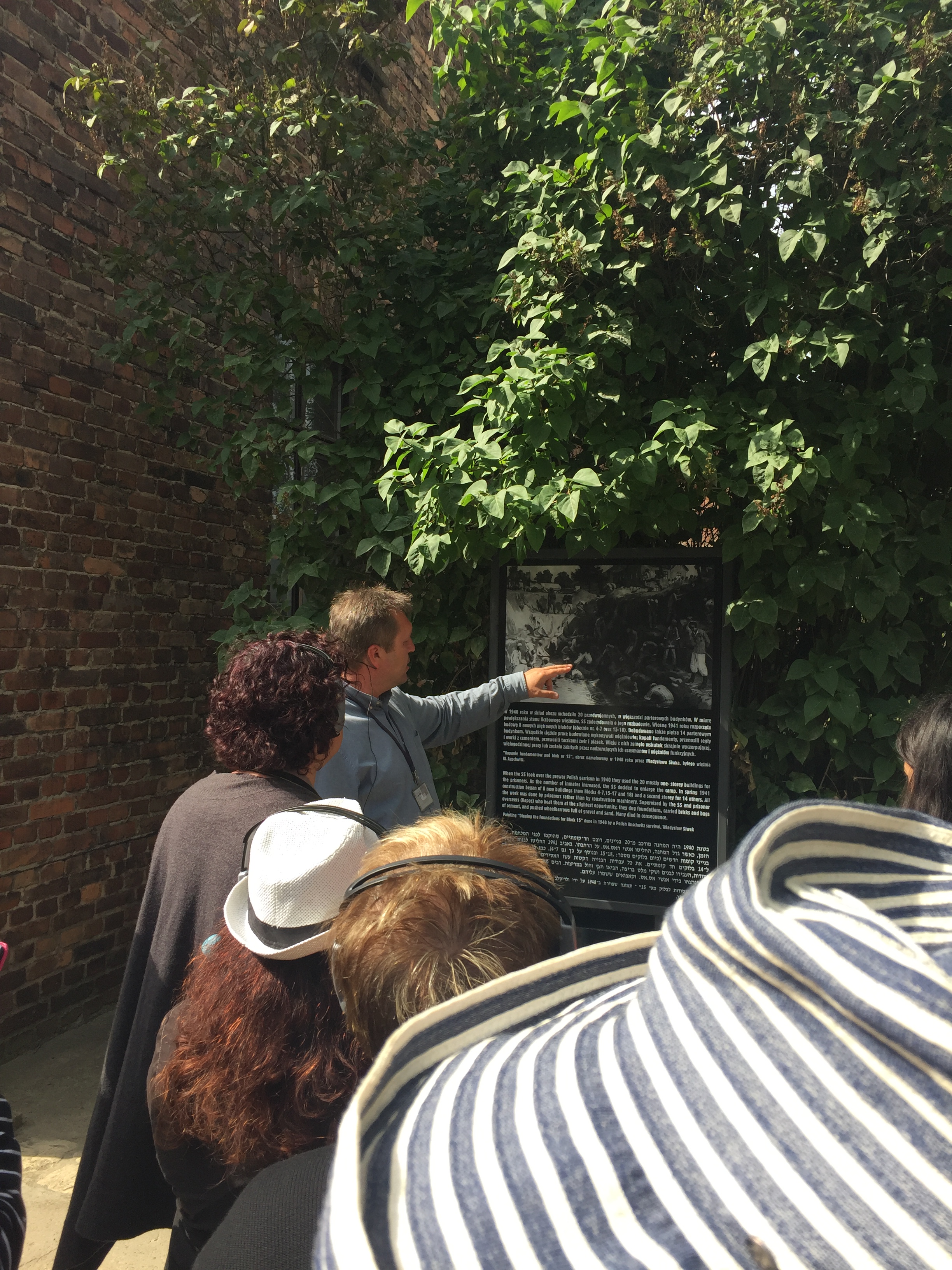
Photograph: Simon Holloway
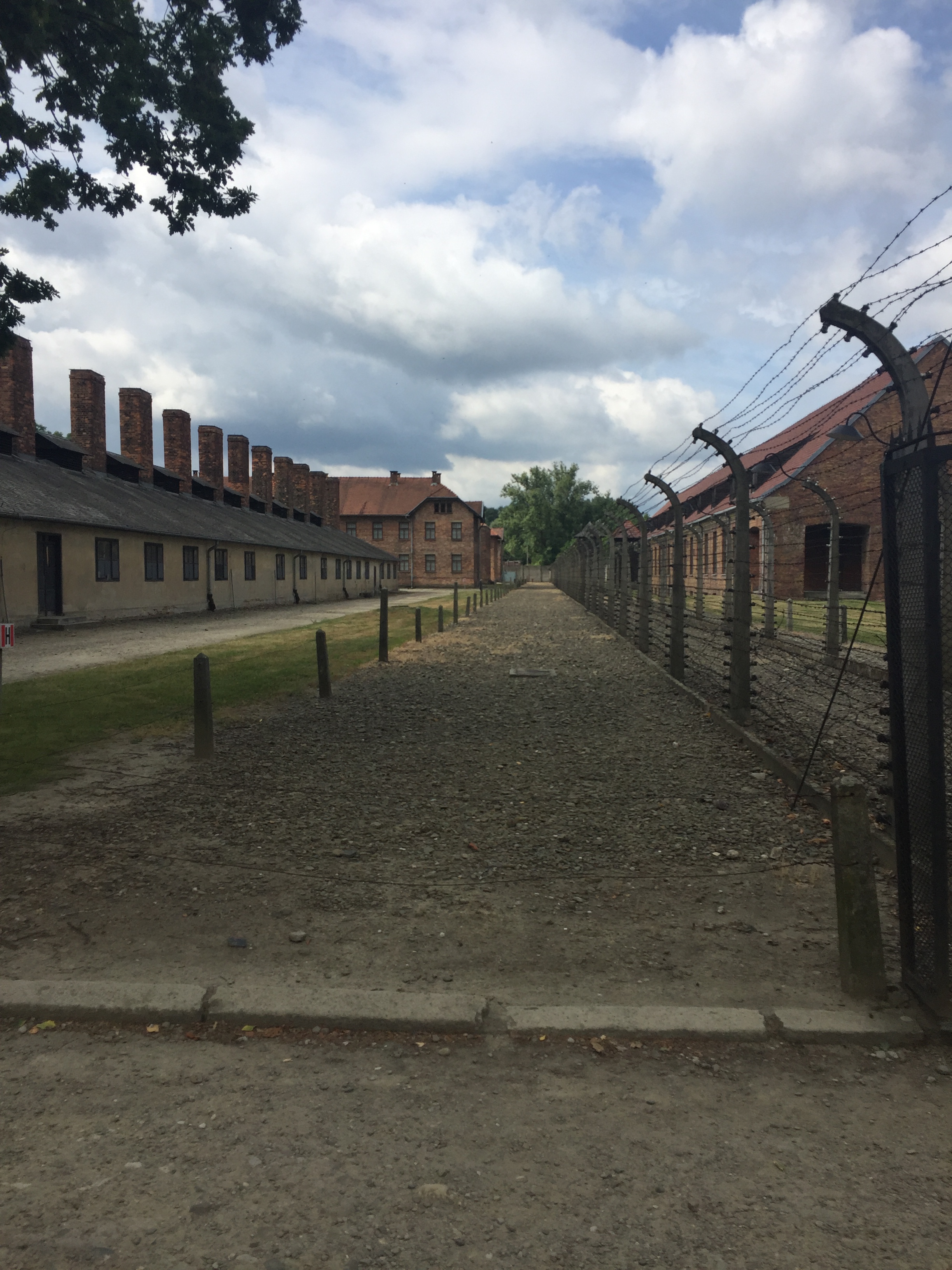
Photograph: Simon Holloway
Photograph: Simon Holloway
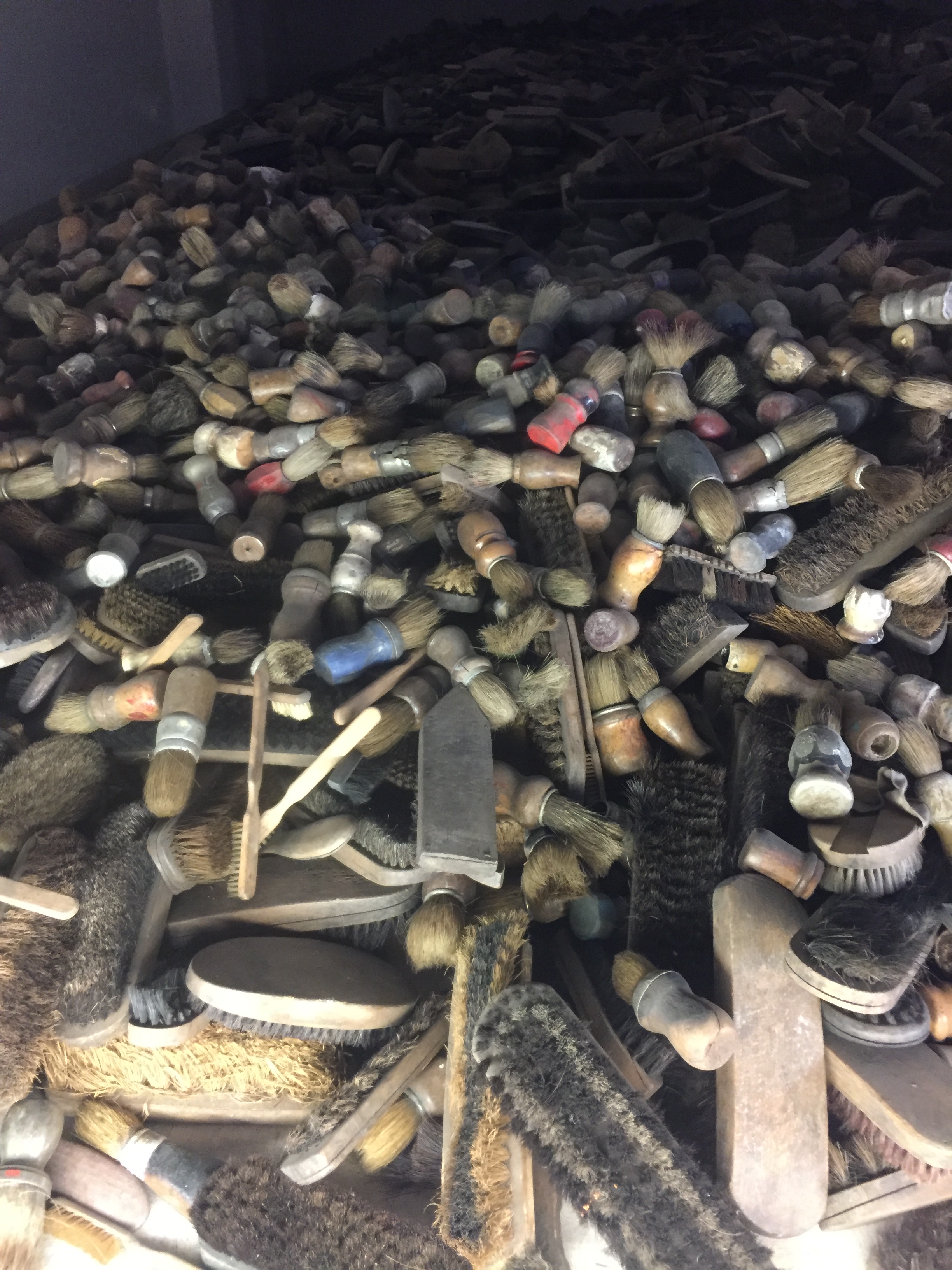
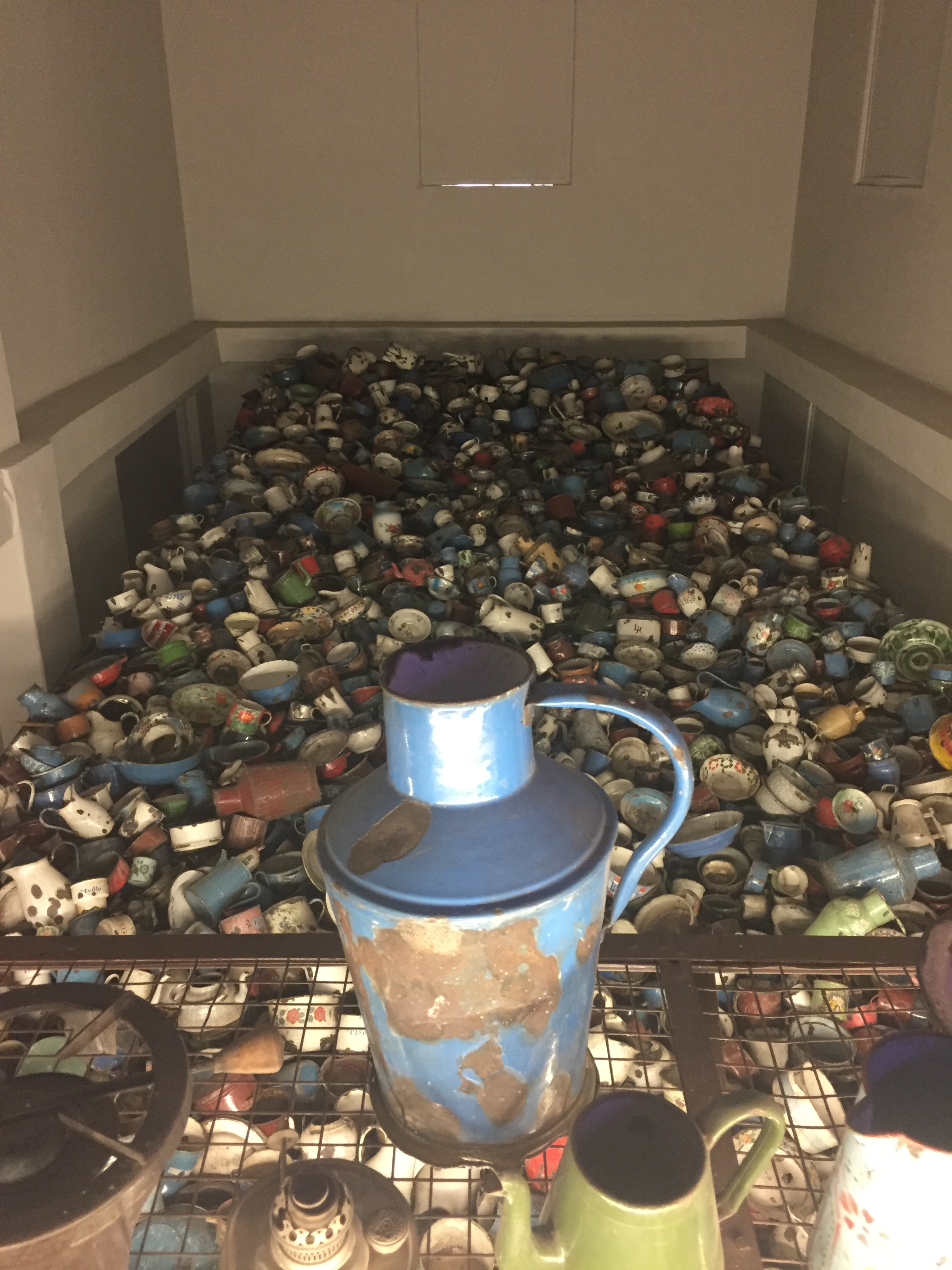
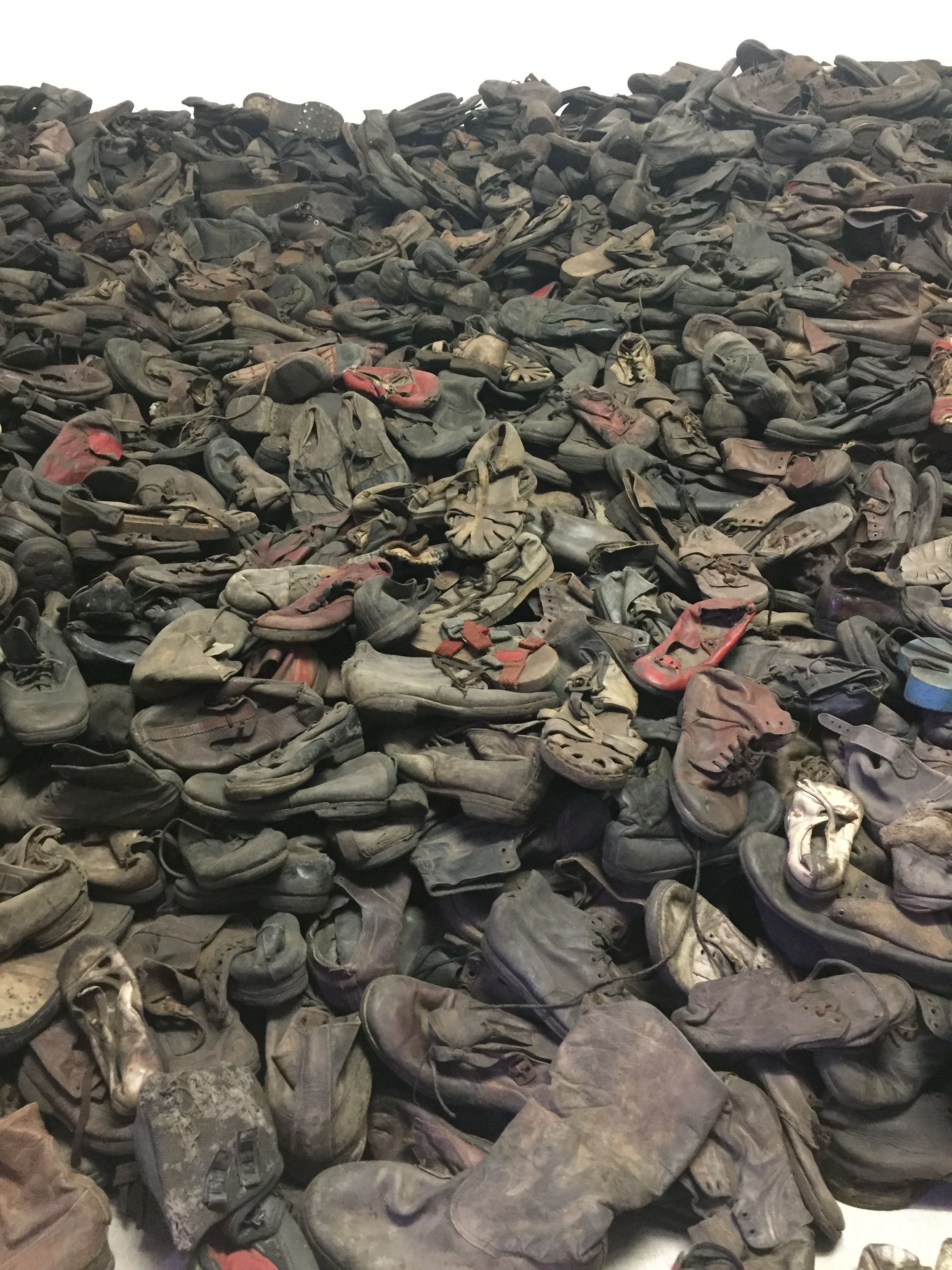
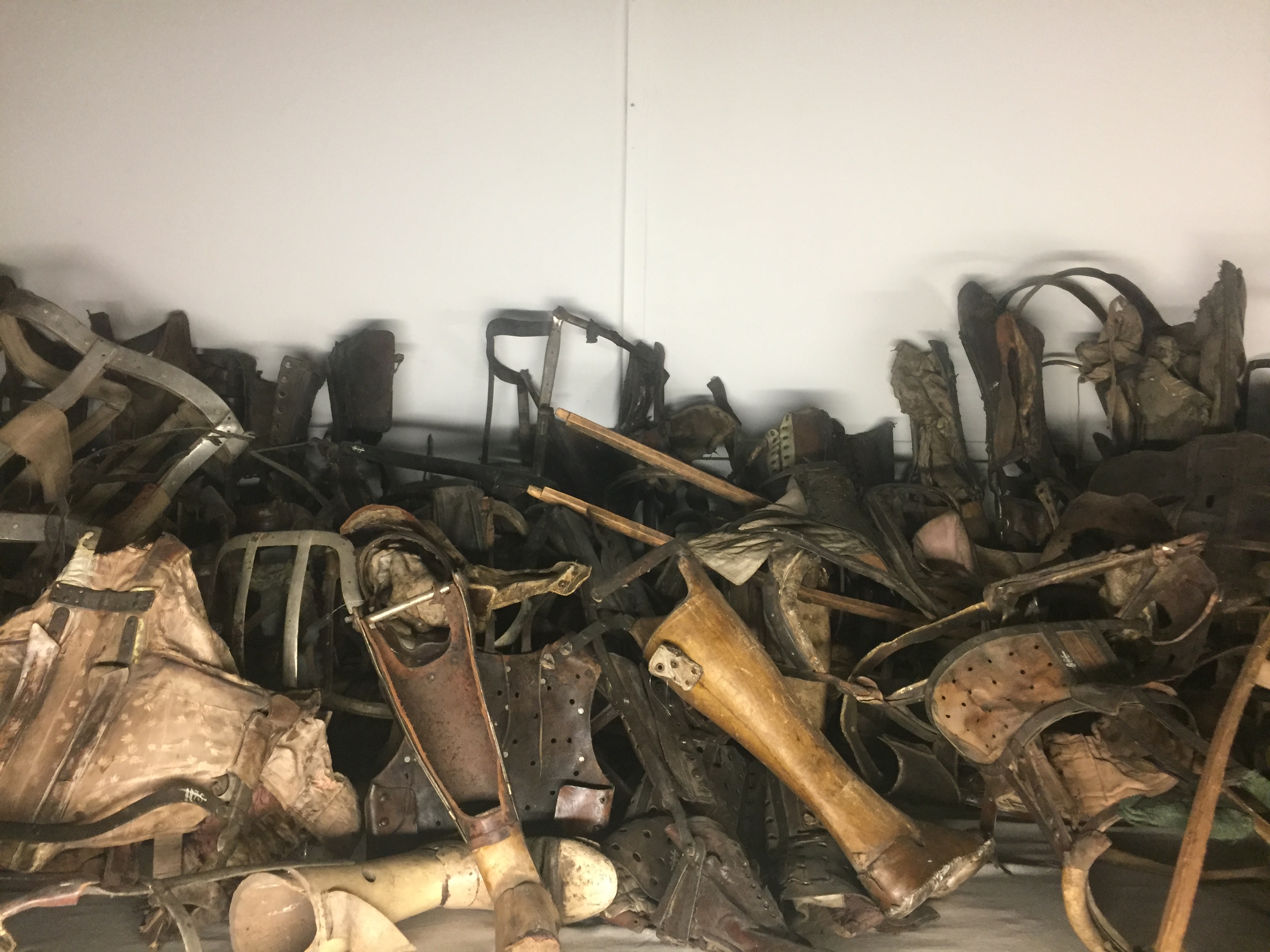
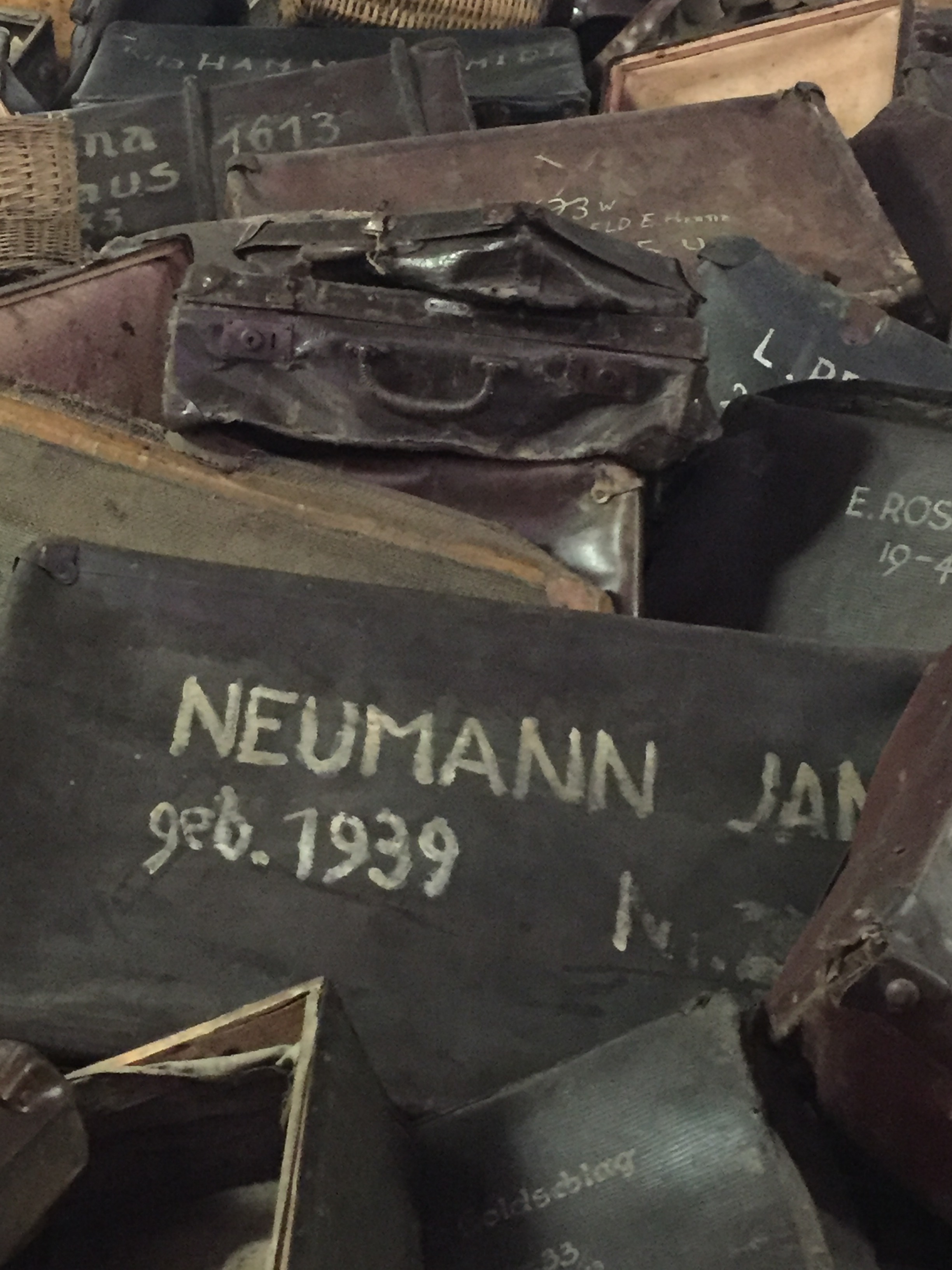
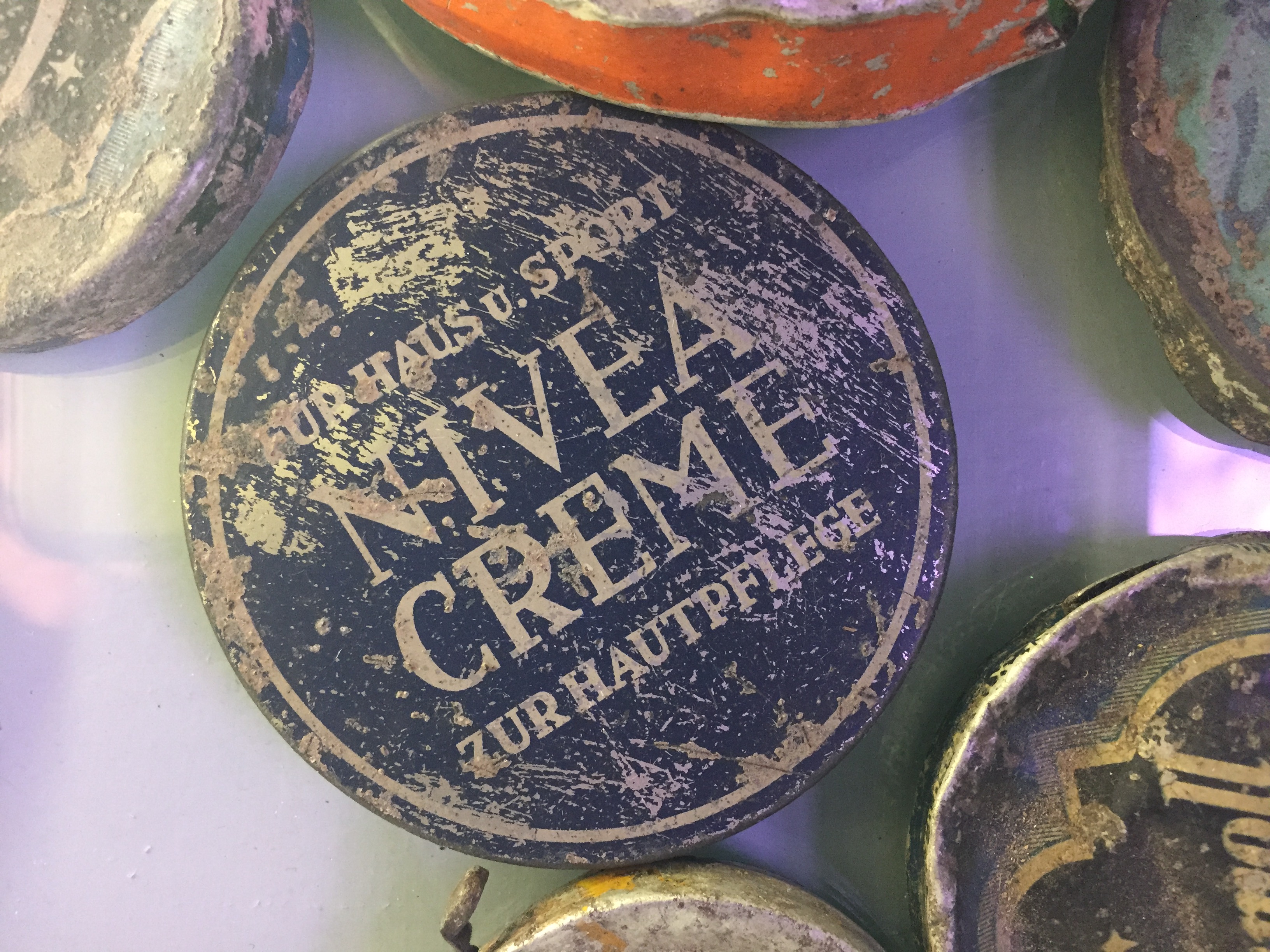
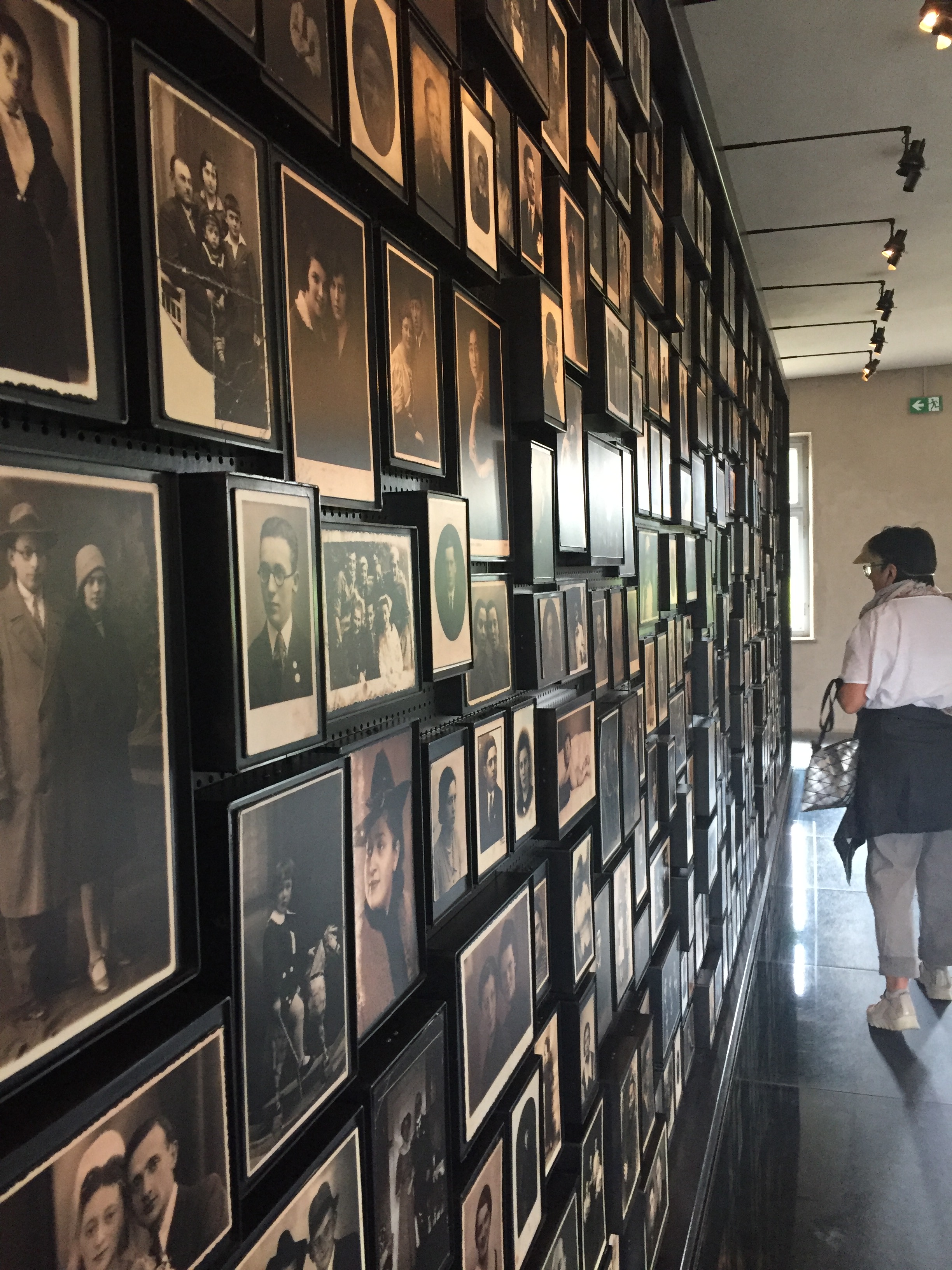
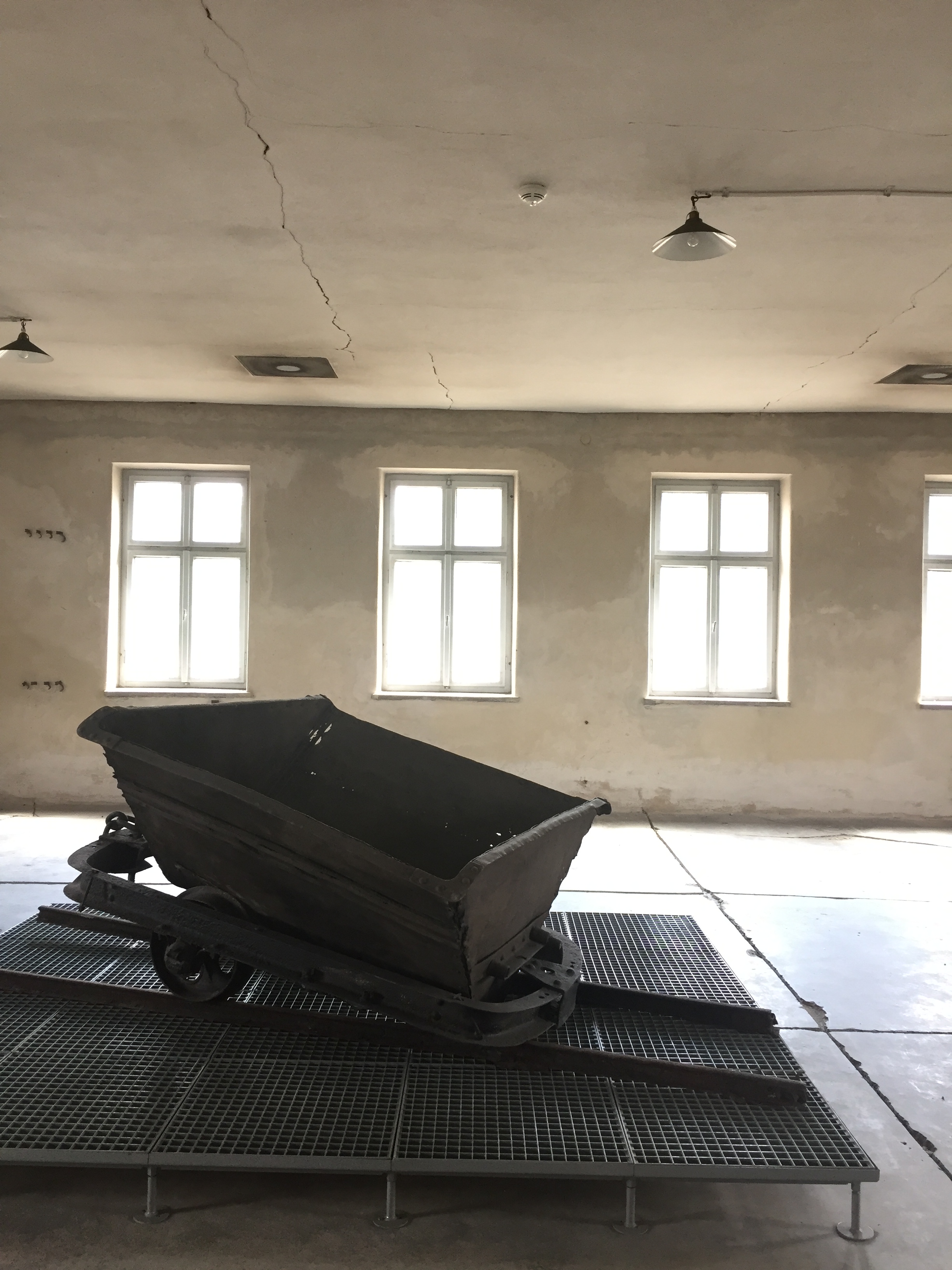
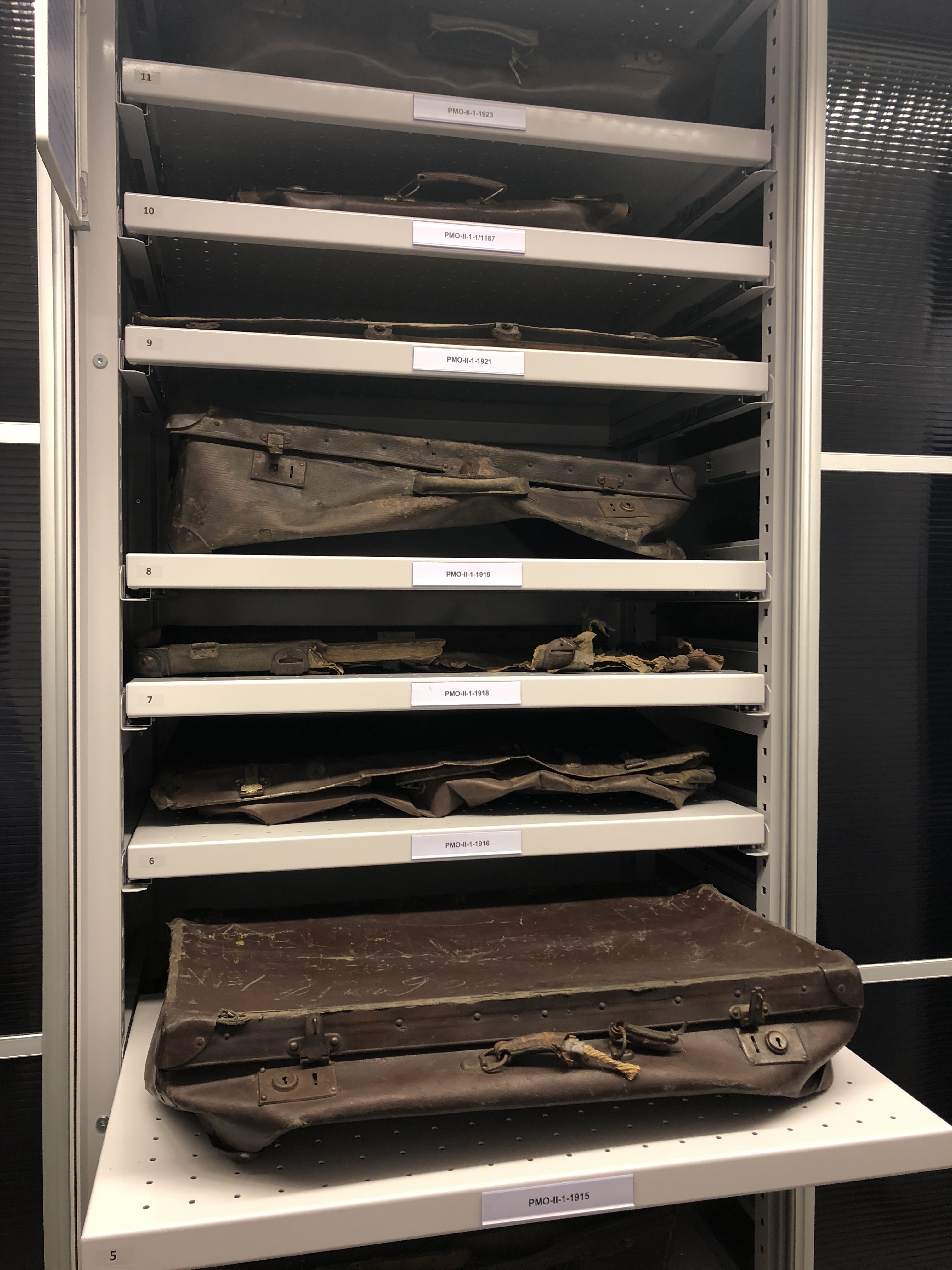
Notwithstanding the enormous number of fatalities (fully 320,000 of whom were Hungarian Jews), and notwithstanding the speed with which they were dispatched (some 1,440 corpses a day, sometimes), it is the little details that make things most confronting. It’s the room full of objects brought by arrivals and sorted by inmates, amongst which was a single container of Nivea cream. It’s a single pair of shoes, child-sized, at the front of an exhibit of footwear. It’s the suitcase marked with the owner’s date of birth. She could not have been older than five.
Photograph: Simon Holloway
Photograph: Simon Holloway
Photograph: Simon Holloway
Photograph: Simon Holloway
Photograph: Simon Holloway
Photograph: Simon Holloway
Photograph: Simon Holloway
Photograph: Simon Holloway
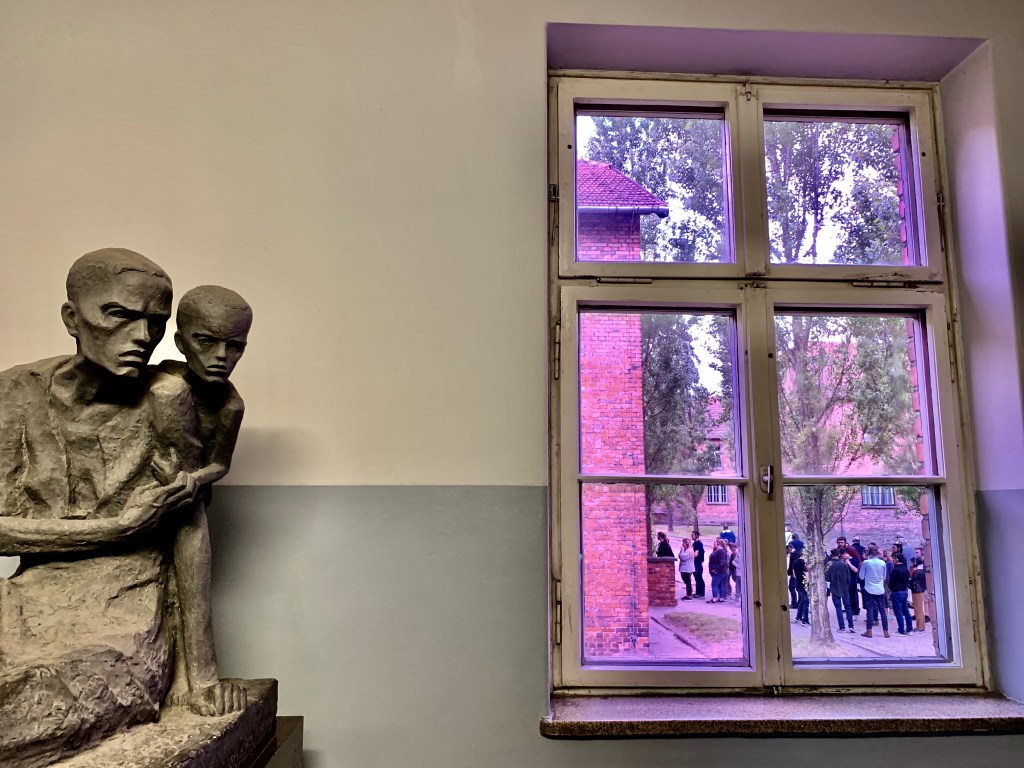
Perhaps the most confronting exhibit is the one in which we are asked not to take any photographs. Close to two tonnes of human hair (some 1,950kg in total), belonging to an estimated total of 40,000 different women. Can there be a starker symbol than this for the complete debasement of a human being?
From here, I have the incredible privilege of accompanying Judy to the Hungarian pavilion, where we explored an exhibit titled “The Betrayal of the Citizen”. There, very tastefully displayed, we read of the persecution of Hungarian Jews in the 1920s, the mounting discrimination throughout the 1930s, the forced labour battalions in the early 1940s and the transports to Auschwitz after the occupation of Hungary in 1944.
I am entirely unsurprised, however, by a lack of reference to the genocide perpetrated by the Hungarians before the arrival of the Germans. In addition to merely discriminating against Hungarian Jews, the Hungarians were also allowing for the wholesale slaughter of Jews in newly-acquired Hungarian territory. Blaming the Germans seems to be a phenomenon not unique to this part of the continent.
After we reunite with the rest of our group, we join the general throng of visitors whose automated tours are now coming to a conclusion. We make our way through the metal turnstiles, where visitors can purchase lunch from the Auschwitz snack bar, or have a picnic on a pretty patch of turf. There is something altogether unreal about this place.
Photograph: Howard Wolfers
Photograph: Simon Holloway
Photograph: Simon Holloway
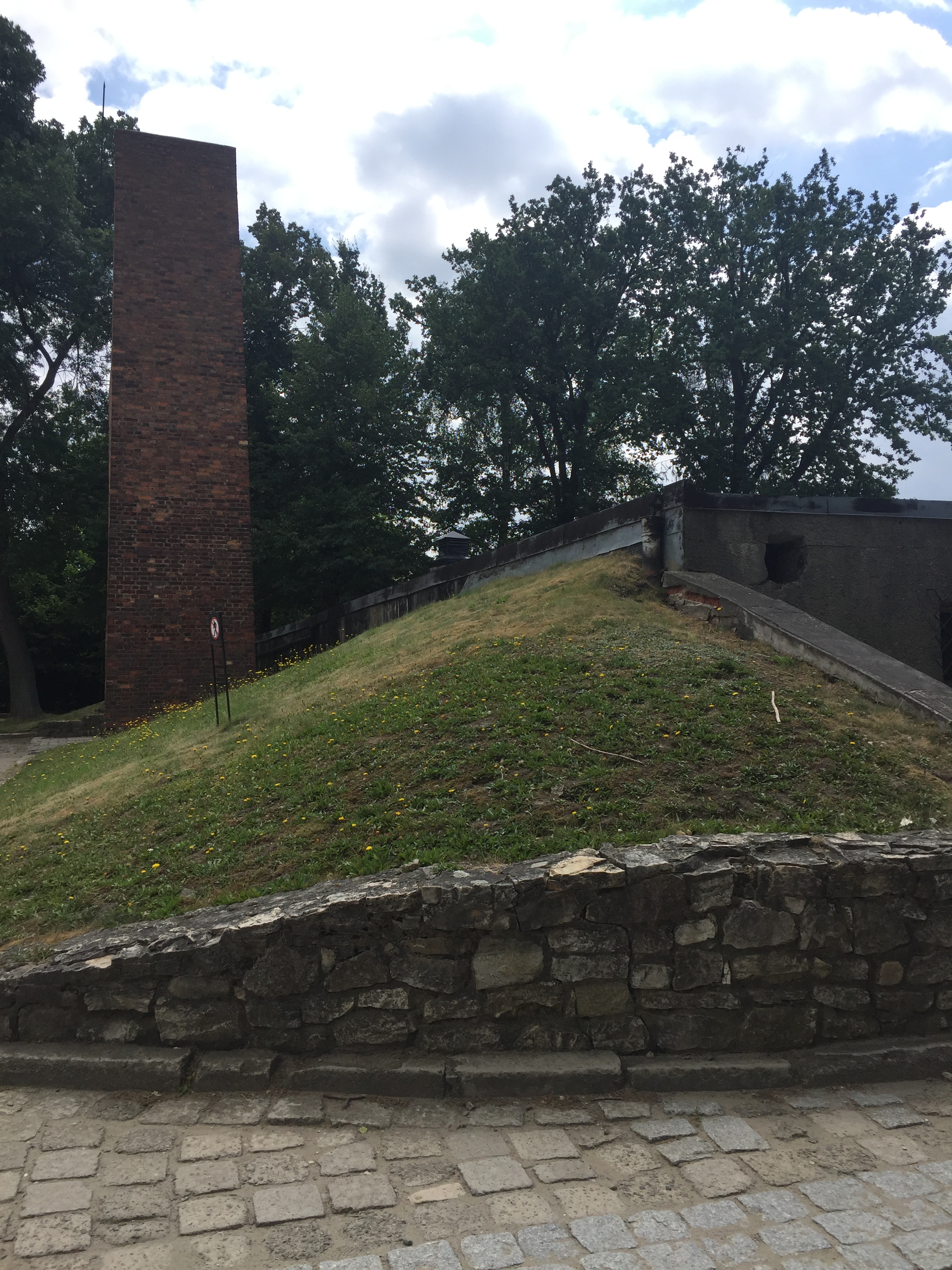
Photograph: Simon Holloway
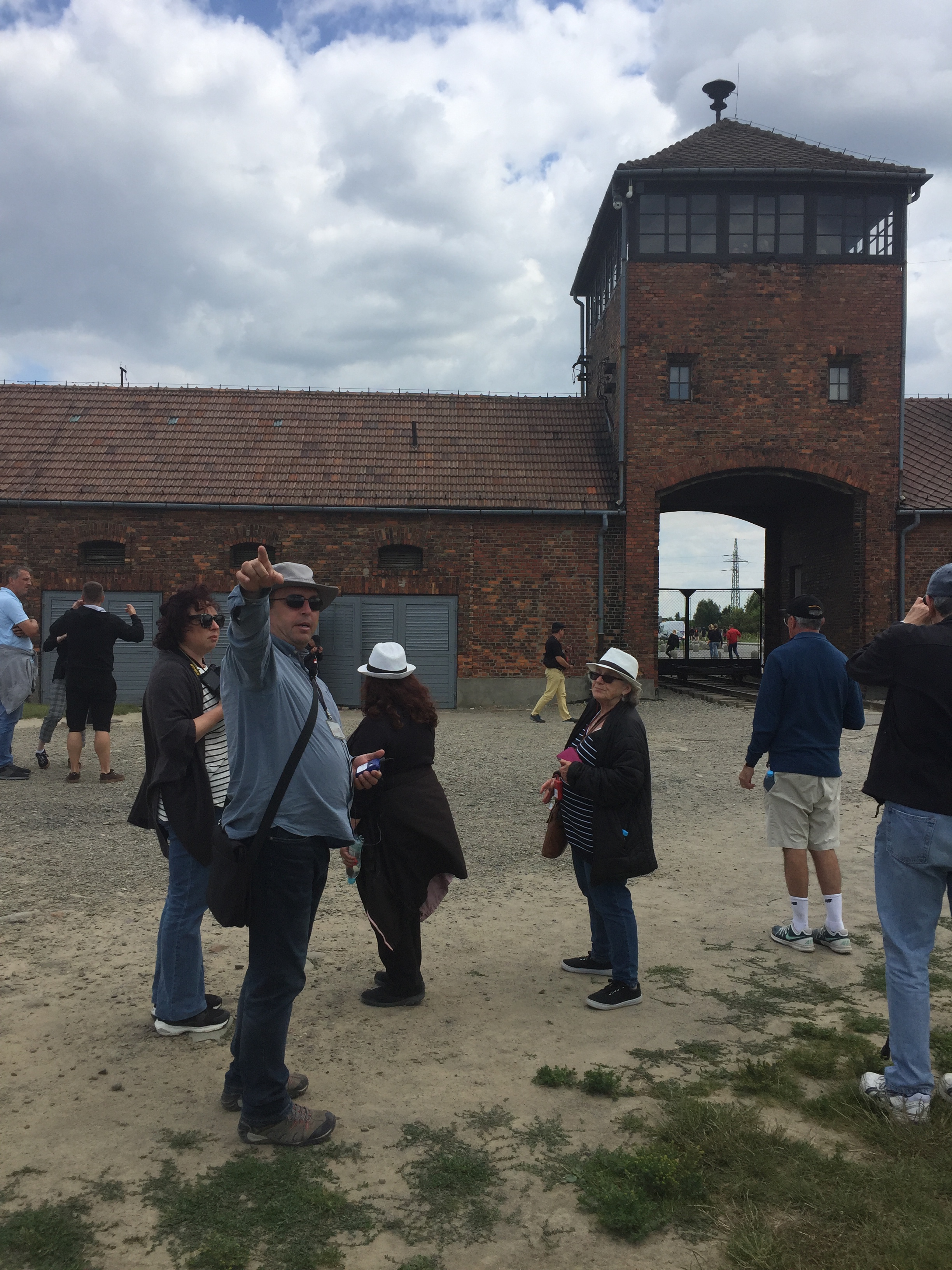
After we have eaten, we get back into the bus for a short drive to Birkenau. As we arrive, my first impression is that everything is smaller in real life. The gate, like the gate back at Auschwitz I, seems so… tiny. That impression is dispelled, however, the moment that I walk through it. Birkenau is enormous. Here, some 90,000 prisoners went about their daily drudgery surrounded by barbed wire that was pumped with 760 volts of electricity. Much of the facilities have been replaced with replicas, but the feeling of standing within this space is overwhelming.
Photograph: Simon Holloway
Photograph: Simon Holloway
As with Majdanek, the grass is an illusion. Auschwitz today is spectacularly green, some parts it being blanketed with flowers. When this camp was operational, not a blade peeked through the soil, and the malnutrition of the prisoners was so severe that grass would have only been eaten.
These prisoners were not only starved, they were regularly demeaned. The walk from their barracks to the bathhouse was a long one, and they were to leave their clothes on their bed. If the walk to take a shower was humiliating, the walk back was even worse, for in the Polish winter it could reach temperatures of -15°, and wandering naked and wet across the frozen barracks was life-threatening.
A room filled with toilets, no partition between them, was particularly illuminating. Mariusz told us of the so-called “scheisskommando”, whose job was to clean out the latrines. Rather than being a filthy or a demeaning job, it was actually one of the best jobs in the camp. A roof over their heads meant that they were protected from the elements, while their proximity to the toilets meant that they could use them whenever they wished. Their being in a room with sinks meant that they had as much water as they wanted, and their being in a room that was unpleasant for guards to enter meant that they were the only workers on site who were not regularly beaten.
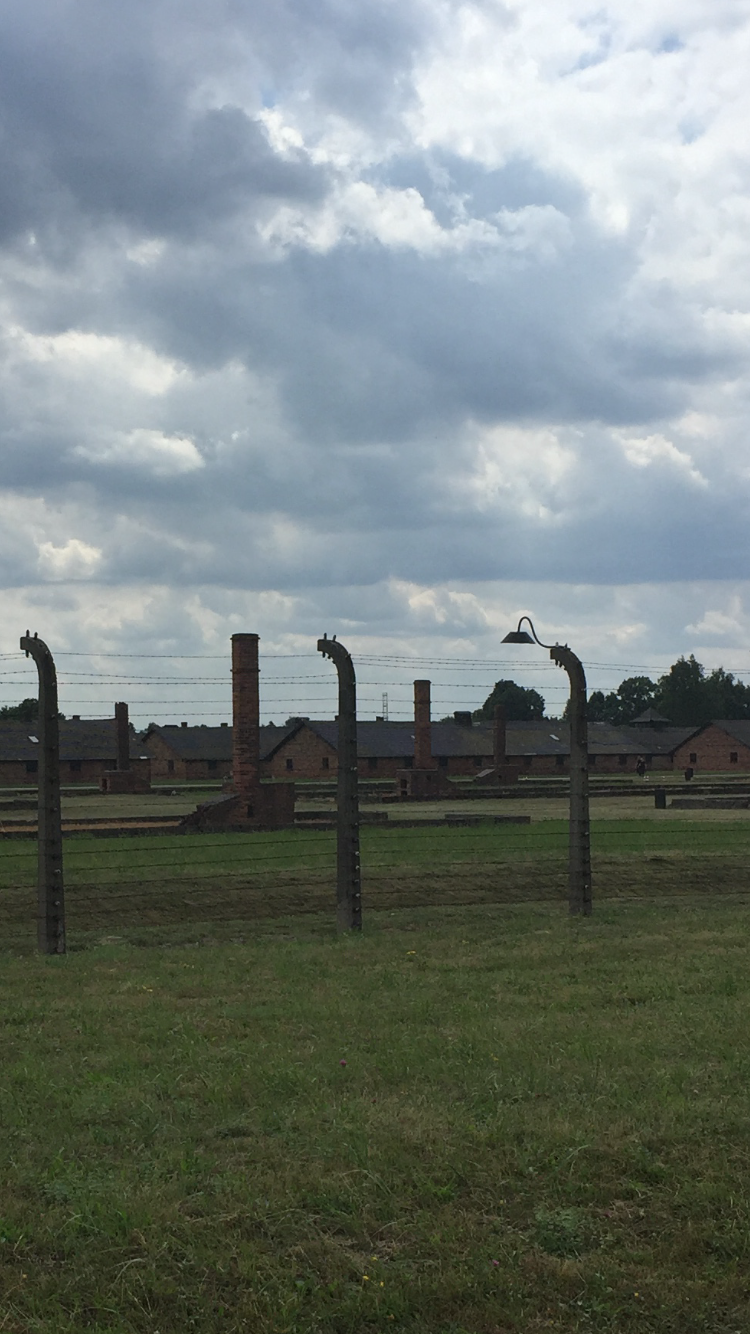
From the toilet block, we followed the track down the full length of the camp. Along the way, we saw what our guide referred to as “the forest of chimneys”. In 1945, many local Poles (whose homes had been dismantled to build the barracks) reclaimed what they believed was theirs. Barracks were stripped, and hungry, desperate Poles rebuilt their homes, leaving nothing but the stone chimneys that had formed the heart of every prisoner block. Like a macabre forest, this field of chimneys testifies to the sheer number of barracks that this sprawling camp once had, each one of which was intended for 400 prisoners.
Photograph: Simon Holloway
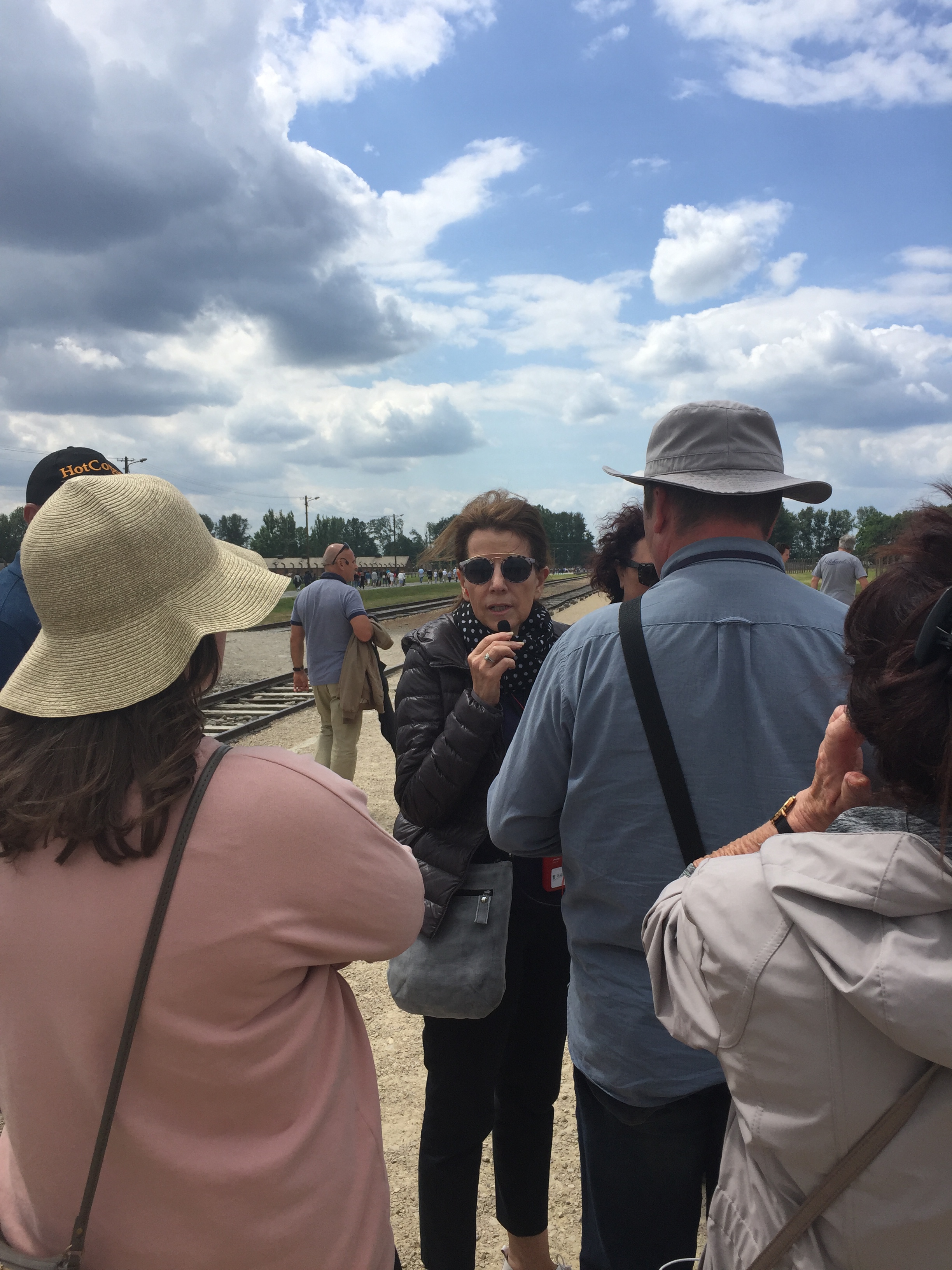
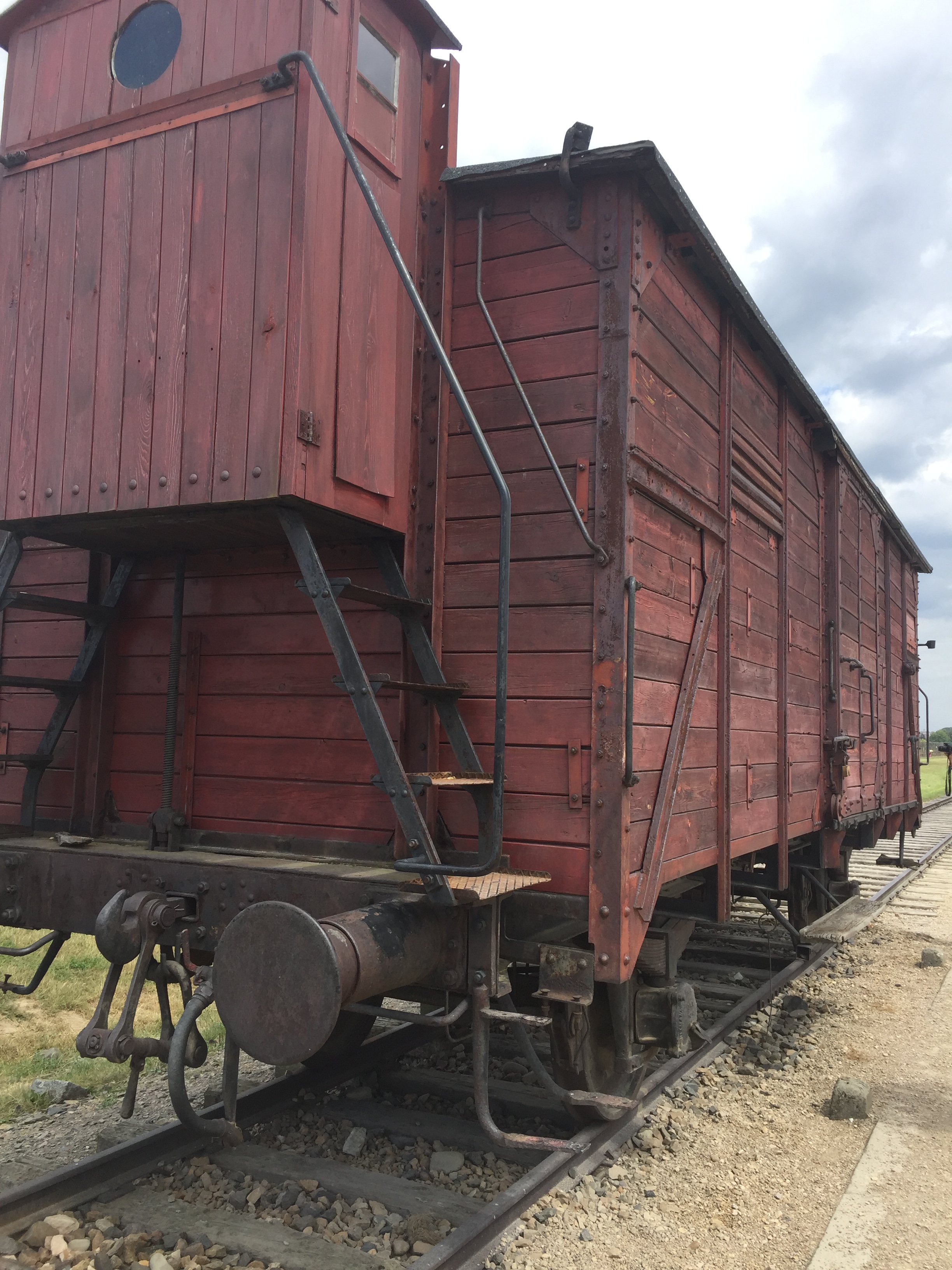
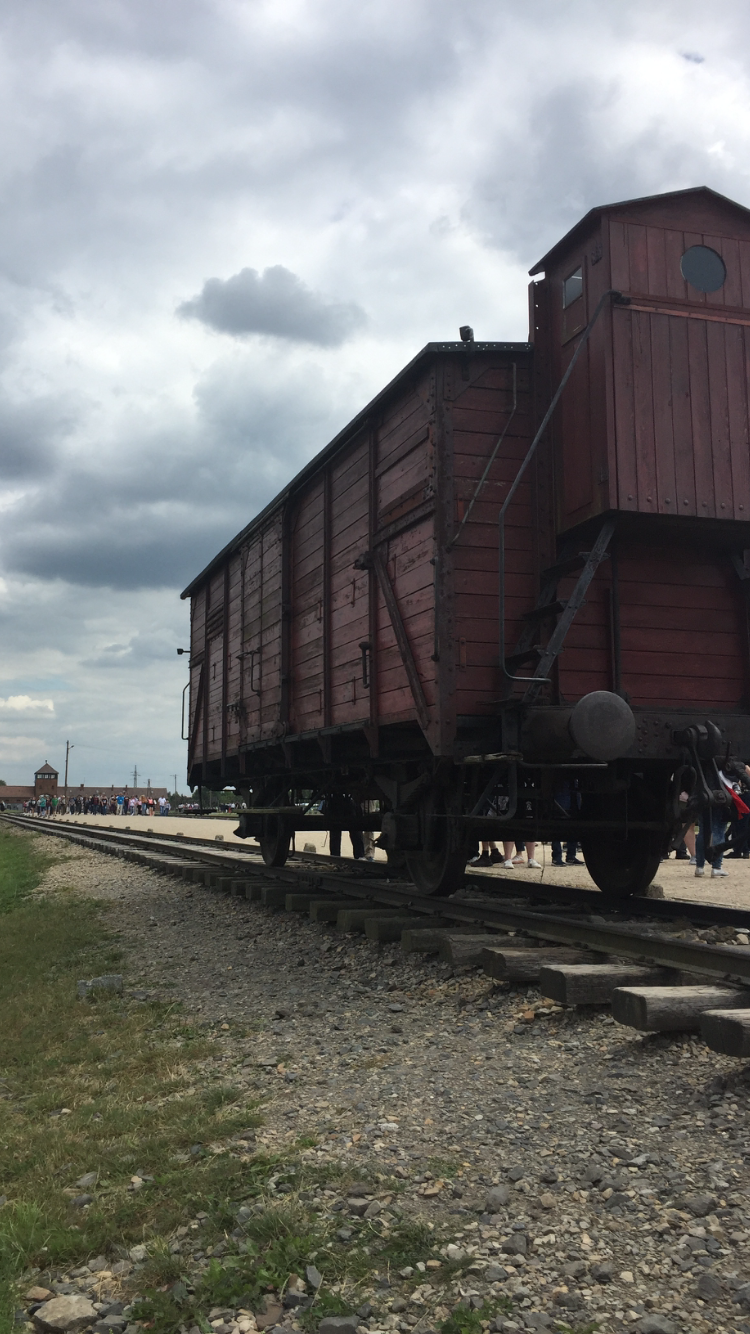
Half-way down the camp, we come to the box car that was donated by Frank Lowy. The doors are sealed, but inside it lies a single tallis in memory of his father. Rony tells us about the process undertaken to have this damaged carriage reconstructed in Germany and shipped to Auschwitz, and the ceremony at which it was officially inducted into the camp.
Photograph: Simon Holloway
Photograph: Simon Holloway
Photograph: Simon Holloway
We continue along the track and past the so-called “Gypsy family camp”, the occupants of which were all murdered on August 22nd, 1944. This is where Dr Josef Mengele served as a physician, and where he kept his own private laboratory.
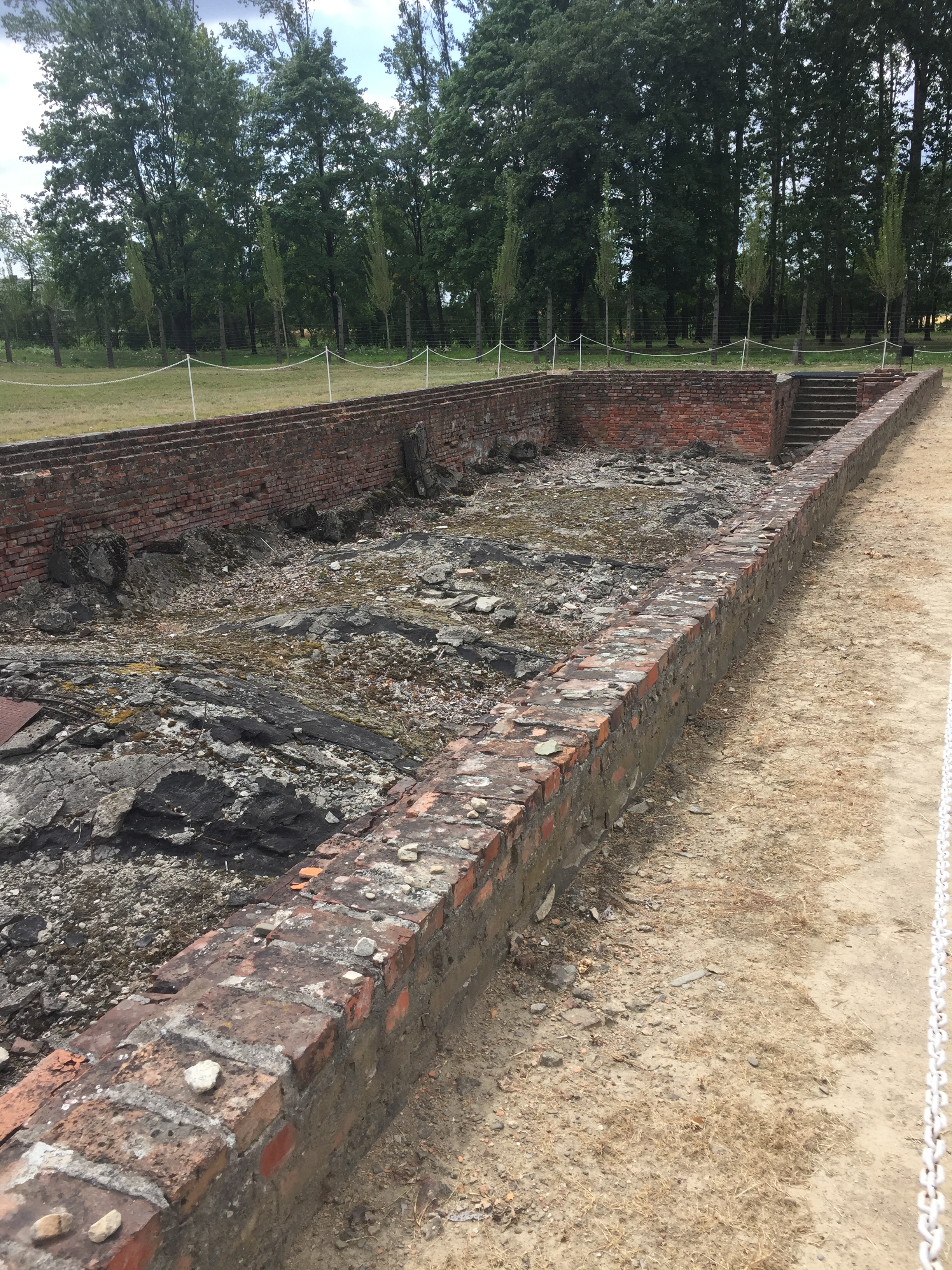
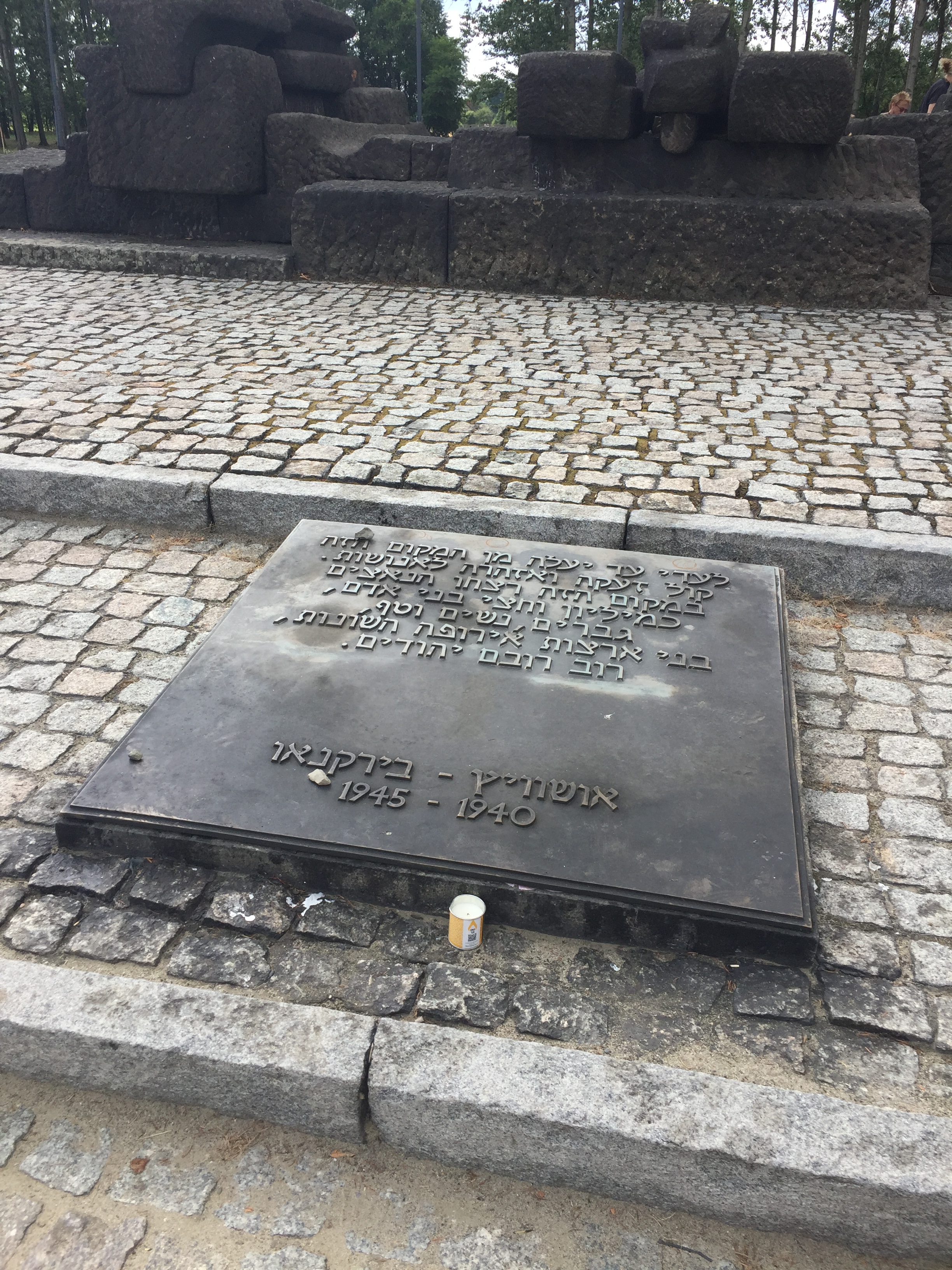
Behind it, we encounter a large memorial space with plaques written in twenty-three different languages: the twenty-two languages heard amongst prisoners, and English. On either side of the monument lie the ruins of the gas chambers and crematoria, which were demolished by the Germans before fleeing the camp, ten days before its liberation. Lots of tourists have gathered at this site, and some religious Jewish men are holding a tekes of sorts before the rubble. I am hearing tours given in a lot of different languages, to people who look to be from lots of different parts of the world.
Photograph: Simon Holloway
Photograph: Simon Holloway
Photograph: Simon Holloway
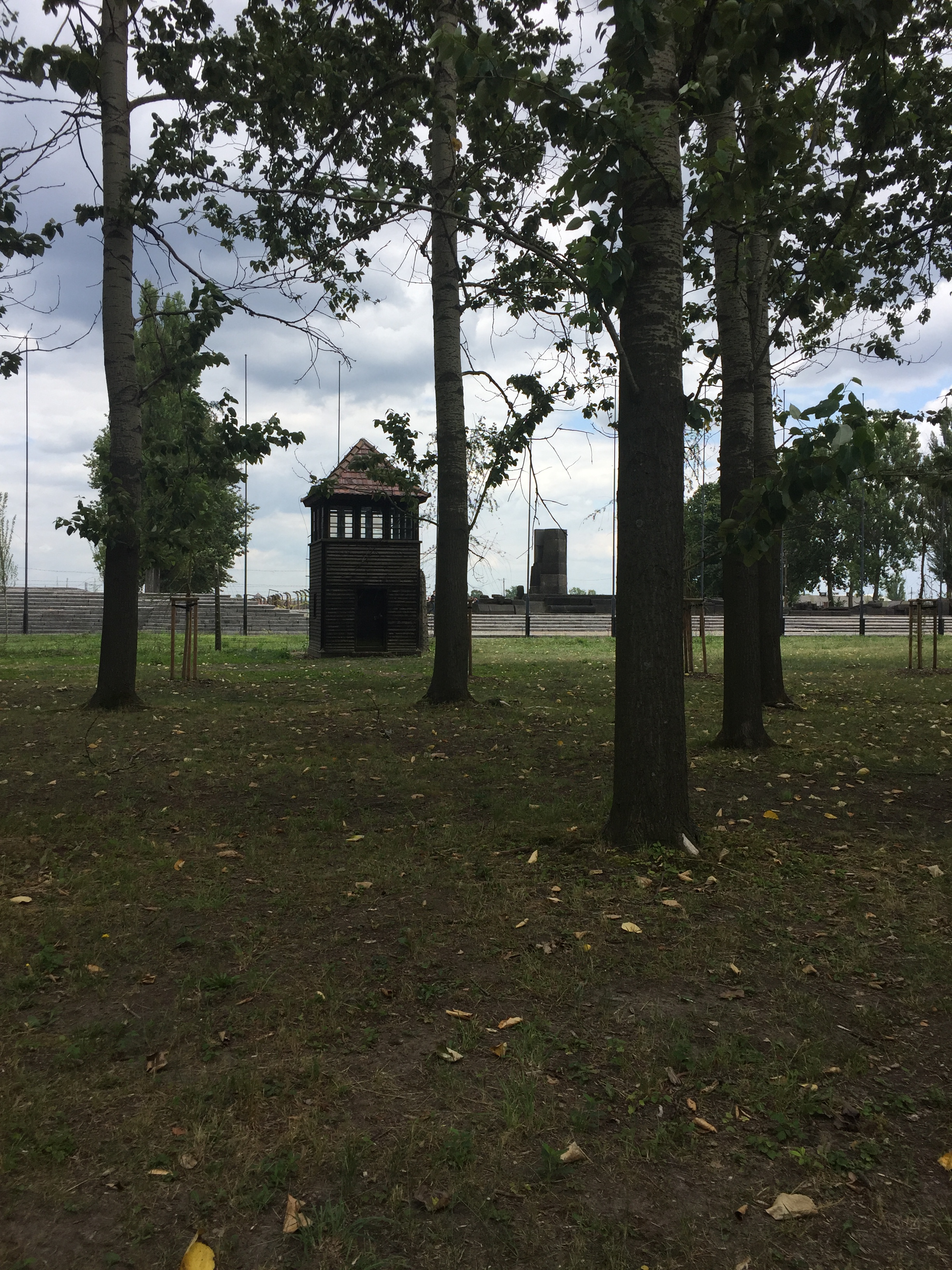
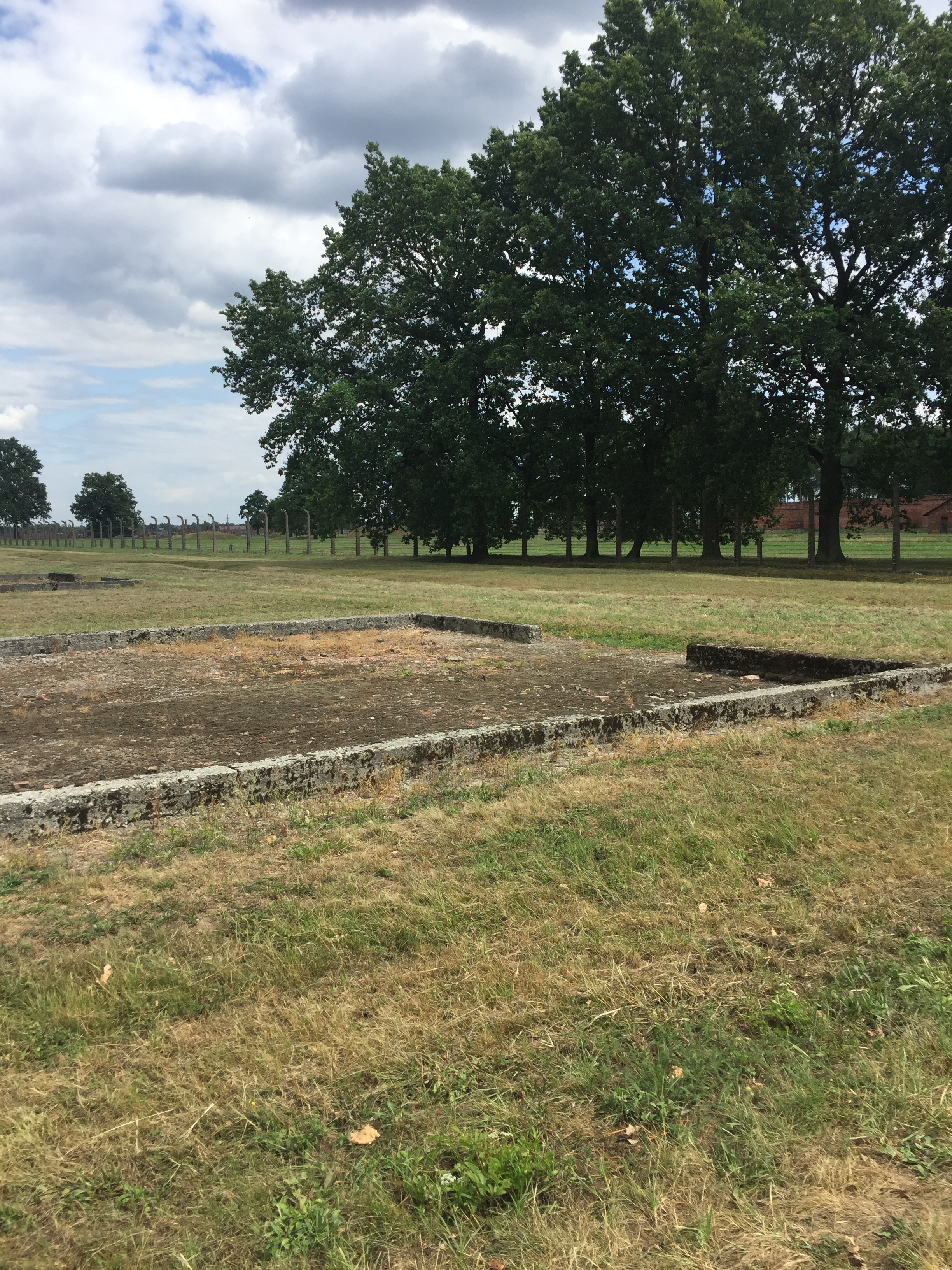
A few members of the group stay behind here, while the rest of us continue walking an additional 600m through a small wooded area near the perimeter. Here, we encounter the foundations of the barracks known as Kanada II. The name, inspired by the legendary wealth of Canada, was given to those rooms in which select prisoners went through and sorted the belongings of murdered Jews. When it rains, camp staff sometimes find a stray button or piece of cloth, and one wonders how much yet remains beneath the soggy soil.
Photograph: Simon Holloway
Photograph: Simon Holloway
Not far from here are another two gas chamber and crematorium complexes, known respectively as the little red and little white houses. Innocuous cottages, outside which prisoners needed to strip naked, they were used a great deal before the construction of the main gas chambers and crematoria that we had already seen, although the little white house experienced a brief resurgence in 1944 when the arrival of Hungarian Jews necessitated more facilities. This little white house, although it no longer stands, was behind the room that we entered next.
When prisoners arrived who were deemed fit for labour, it was to this room that they were led first. Here they would be registered, shaved and have their belongings taken, before being taken into the next room for showering. We walked through both rooms, as well as through the remains of the adjoining crematorium complex. As with the gas chambers and crematoria in Majdanek and in Auschwitz I, I elected not to take any photographs here either, and was relieved to walk back out into the sunshine again. It was all such a long time ago, I keep telling myself, but I know of course that it was not.
Photograph: Simon Holloway
Photograph: Simon Holloway
Before we conclude our tour, we return to the site of the large memorial and recite kaddish. I wonder how many other people have recited kaddish here over the years, and how many prisoners found time to say it in various parts of the camp. We speak of their liberation on January 27th, 1945, but in truth they were all but dead. When the Soviets arrived, only 7,500 people remained on site (not including the 600 bodies of executed prisoners, or the untold number whose ashes filled the Vistula), while those that had been fit enough to walk had been marched out of the camp some ten days earlier.
This final stage of the Nazi onslaught claimed the lives of some 250,000 Jews. The Soviets might have liberated Auschwitz, but the Holocaust was far from over.
Photograph: Simon Holloway
Photograph: Simon Holloway
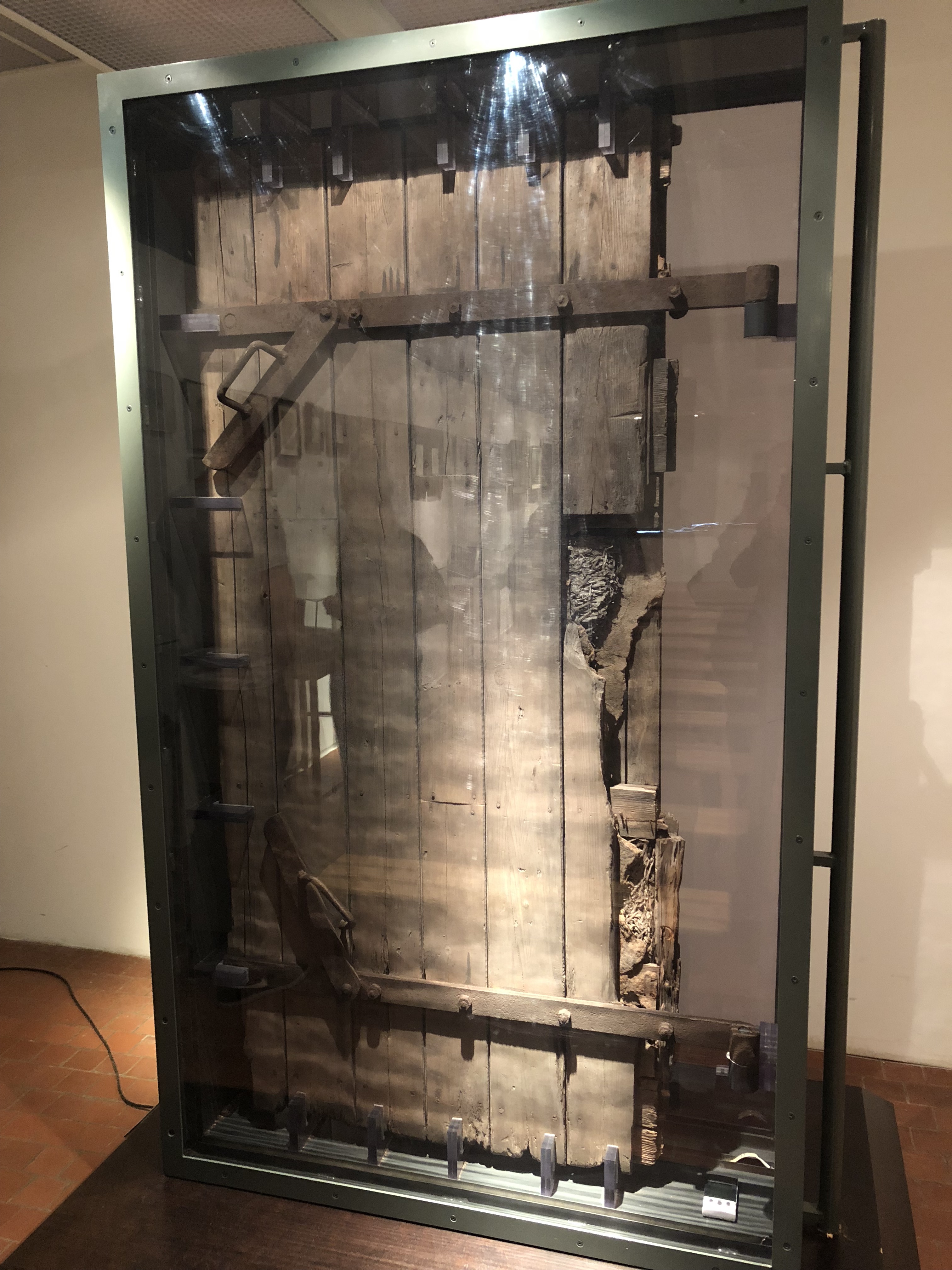
On the way home, Norman tells us all of an important meeting that he and Konrad had with some of the Auschwitz curators. Having returned several items that the Sydney Jewish Museum had been displaying, but which had been on loan from Auschwitz for a period of three years, discussions are now underway as regards some of the objects that we might be able to borrow over a five-year period. It’s exciting, the knowledge that we may shortly have access to new items for our permanent exhibition!
Photograph: Norman Seligman
Photograph: Norman Seligman
As we arrive back in Krakow, Fil takes an opportunity to point out a beautiful little castle on the hill. Designed by an architect named Adolf Szyszko-Bohusz, it was built as a personal dwelling. With the outbreak of the war, it was stolen from him by the SS, who used it as the residence for Otto Wächter, the governor of the Krakow District.
After the war, the castle changed hands a number of times, before becoming the property of a local university. Today, by a curious twist of fate, it happens to house their Jewish Studies Department!
Tomorrow will be a full day of walking, as we explore parts of this beautiful city yet unseen by us. The architecture is gorgeous, and I am sure that we all look forward to wandering the streets, rather than the byways of a former camp. We are approaching the end of our tour, and will already be saying goodbye shortly to Shirley and Leo, who are off to celebrate a family wedding. We wish them mazal tov, and note that there is nothing more fitting to end a trip like this than with an affirmation of life:
Lechayim!
Photograph: Pearl Blasina

 Berlin and Poland Tour 2019
Thank you Simon for your wise words and penetrating commentary on what you and the group have been experiencing. You have given us all a window to see and feel a little of what you see. The photos, yours, Howard’s and everyone else’s have been marvellous. Thank you!!
LikeLike