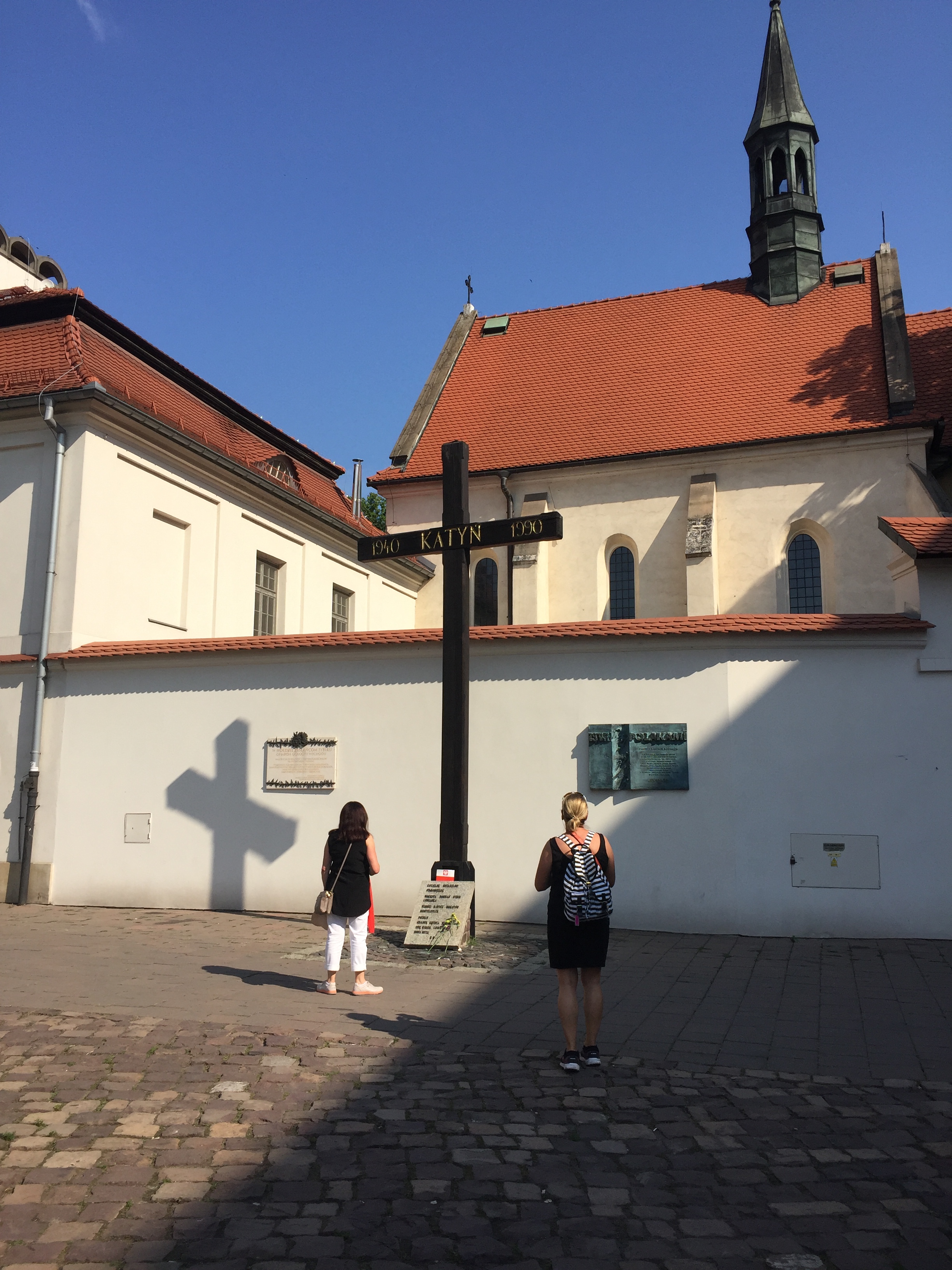
Since the beginning of the 14th century, Krakow, it turns out, was surrounded by a high wall, into which were set no fewer than forty-seven towers and just inside of which was a moat. Since the wall became a slum and the moat filled with sewage, the former has been removed (it still exists in at least one place, where it partly forms the wall of a convent) and the latter has become a beautiful public park.
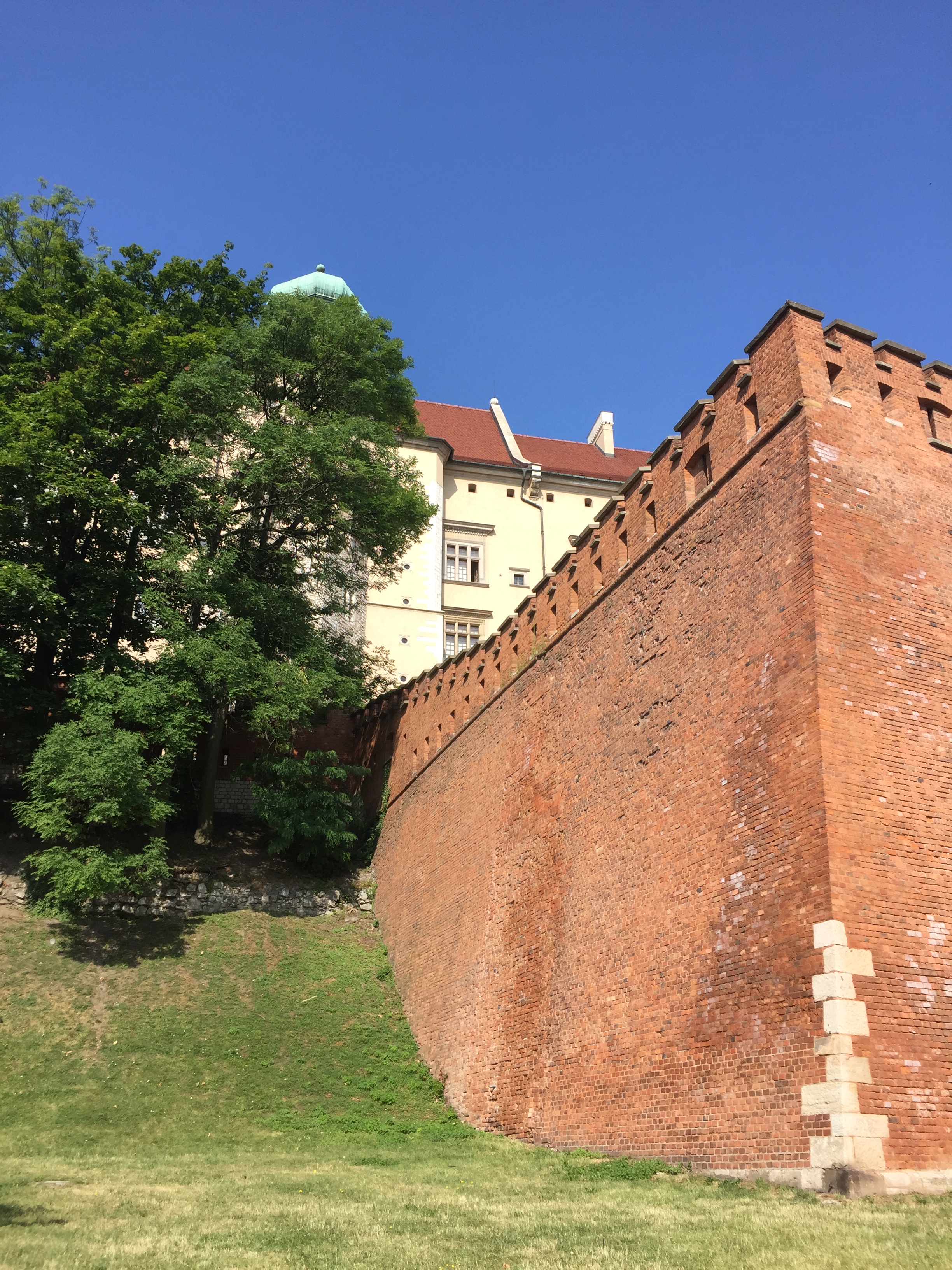
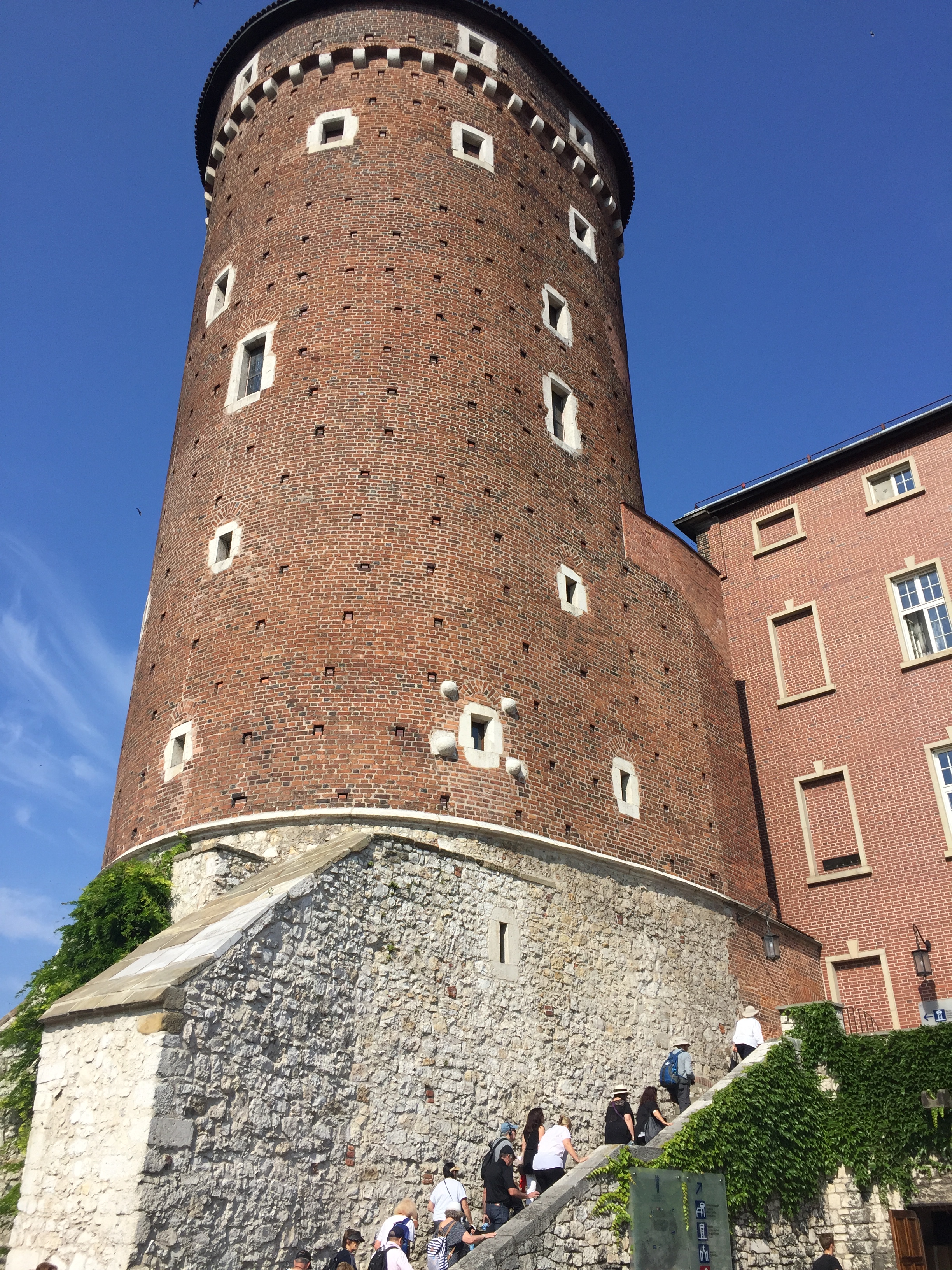
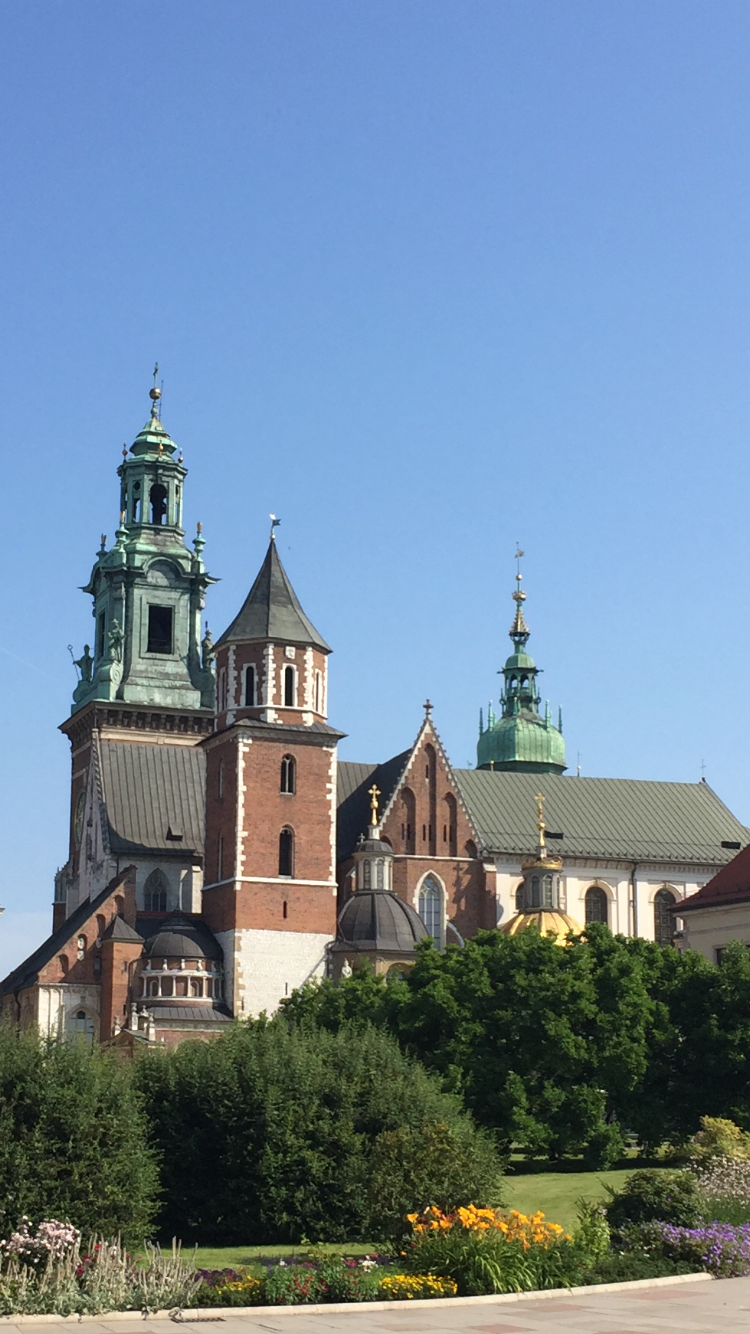
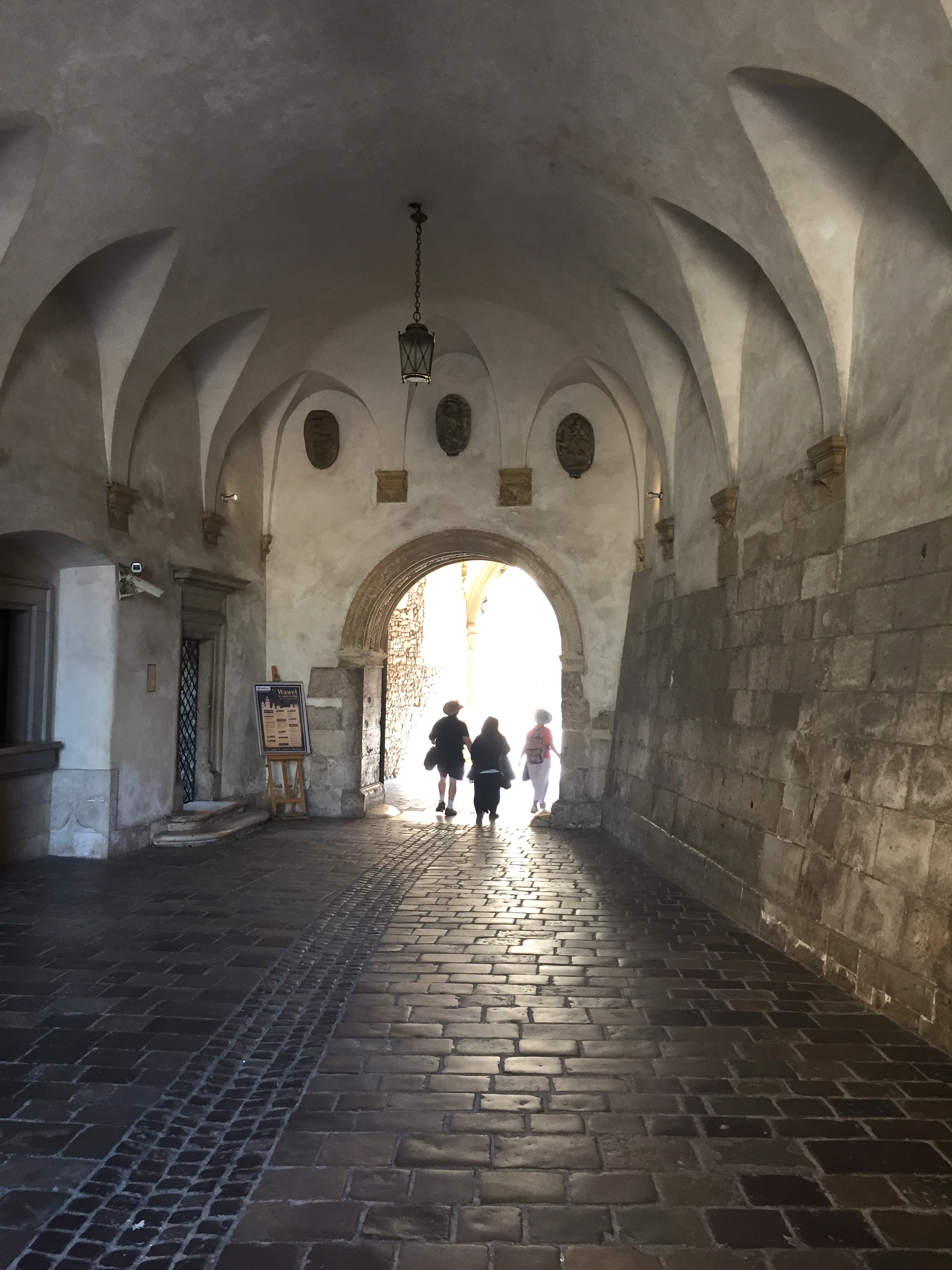
We started our morning with a walk through this park, from which we made our way in the direction of the Wawel: the spectacular castle on the hill, surrounded by its own walls, with its pastiche of architectural styles and its magnificent opulence.
Photograph: Simon Holloway
Photograph: Simon Holloway
Photograph: Simon Holloway
Photograph: Simon Holloway
Photograph: Simon Holloway
Until the 18th century, when Poland’s king moved to Warsaw, the monarchy had always resided in this castle, which was occupied in turn by Swedes, by Austrians and by Nazi Germans. For a brief period in the middle of the 20th century, it was the personal residence of Dr Hans Frank: Hitler’s personal lawyer, and the supreme ruler of the General Government.
Fancying himself something of a king, Frank resided in luxury here, taking visits from dignitaries in lavish halls. One can only imagine the contempt in which he held the city that sprawled beneath him like a festering slum, or the fear and revulsion in which he was held by its perishing inhabitants. Today, over three hundred objects that were stolen during his brief reign are still missing, their whereabouts unknown.
For a large castle, it is interesting just how small so many of the rooms are. Frank’s personal residence (and the residence of his wife and children) was on the first level, but we spent most of our time on the second. Our guide, who was exceedingly knowledgeable, spoke to us about some of the features that we might not have noted or, having noted, taken for granted – such as the existence of toilets (a rare feature of a mediaeval castle), or the fact that the castle’s cellar had its own well.
The art here is stunning: works by Botticelli and by Rubens line the walls, although we are told that they are technically by the workshop of Rubens. Rubens, being something of a businessman, had his own apprentices do most of the painting, to which he would only contribute enough to be able to affix his name to it and sell it for a fee.
Much of the art here was especially commissioned, but there’s a great deal that was also donated. Astonishingly, there are some 1600 artworks within the castle, including a large number of priceless tapestries, and one can only imagine the speculated overall value. In 1994, for example, over eighty renaissance paintings were donated in what was the last large artistic bequest. Since for so much of this castle’s history, poverty was endemic to this part of Europe, there is something disconcerting about the sums invested in prettifying the dwellings of the ludicrously rich.
Indeed, even at a time when Poland was reestablishing itself after Communism, an enormous amount of money was being invested into the restoration of the damaged art and architecture of the Wawel. It is truly a national treasure, and one can picture the frustration of the curators at how much of it remains in the hands of thieves and their descendants.
We walk into the Throne Room, in which 30 of an original 194 heads gaze down at us from the ceiling, and are told that this was Frank’s private office. It is a large and expansive room, previously used for royal weddings, and his choice of this room for his personal workspace says a great deal about the esteem in which he held himself.
We wander from here through more tapestry-lined enclosures, some of which have leather wallpaper in a style first imported from Cordoba. One room sports a painting of Polish nobility, prominently hung, in which the walled city of Krakow is visible in the distance. Somewhere close by that city, but not represented in the painting, is the enclosed island of Kazimierz, with its Jewish quarter.
The painting was produced in the second half of the 17th century, so it is interesting to imagine the strange confluence of histories. While this very representation of Krakow was being sketched, in a part of its environs not painted, Jews were receiving refugees from the Ukraine, fleeing the uprising of Bogdan Khmelnytsky and his band of Cossacks, and many were embracing a belief in the messianic status of Shabbetai Tzvi. This was a tumultous time for the Jews of Europe, although I suppose that few times weren’t.
We walked from here to the so-called Eagle Room, which served as Wawel’s royal court of justice. Here, Himmler met with Frank on a number of occasions, and while the ambitious general continued to invite the Führer, Hitler never favoured “Krakauenberg” with his presence.
The biggest room of all was the senatorial hall, and it was here that we finished our tour. This room, which had once hosted weddings, concerts and meetings of the Polish Sejm, was used by the nazis as a private cinema, within which they enjoyed propaganda films of their own construction.
Standing in this room, our guide described for us the circuitous route taken by the tapestries within the castle, which had been sold in the 17th century to nobility in Gdansk, purchased back, whisked off to Canada in the 20th century, fought over, hidden in part, stolen by some or sold to others, only to finally make their way back to the Wawel, where they are now viewable for an entrance fee. All bar around eighteen of them, that is.
One remains in Warsaw, having been “gifted” by Brezhnev, another in the Rijksmuseum (a “gift”, likewise, from the Russians), and there are several whose whereabouts remain unknown. They are priceless, so it is hard to imagine their turning up any time soon, and one wonders whether their location is truly a mystery, or a diplomatically guarded secret.
Something of a theme with these tapestries (although, regrettably, tourists are not allowed to take photographs) is the biblical story of Noah’s ark. This final room presents his family’s departure from the ark and, in Latin, a description of his giving a burnt offering (holocaust) up to God. This tapestry provided a few of us with an opportunity to discuss the controversial use of this word for the genocide of Europe’s Jews, the legacy of which is far more present on the streets of Krakow than is anything commemorated in this museum.
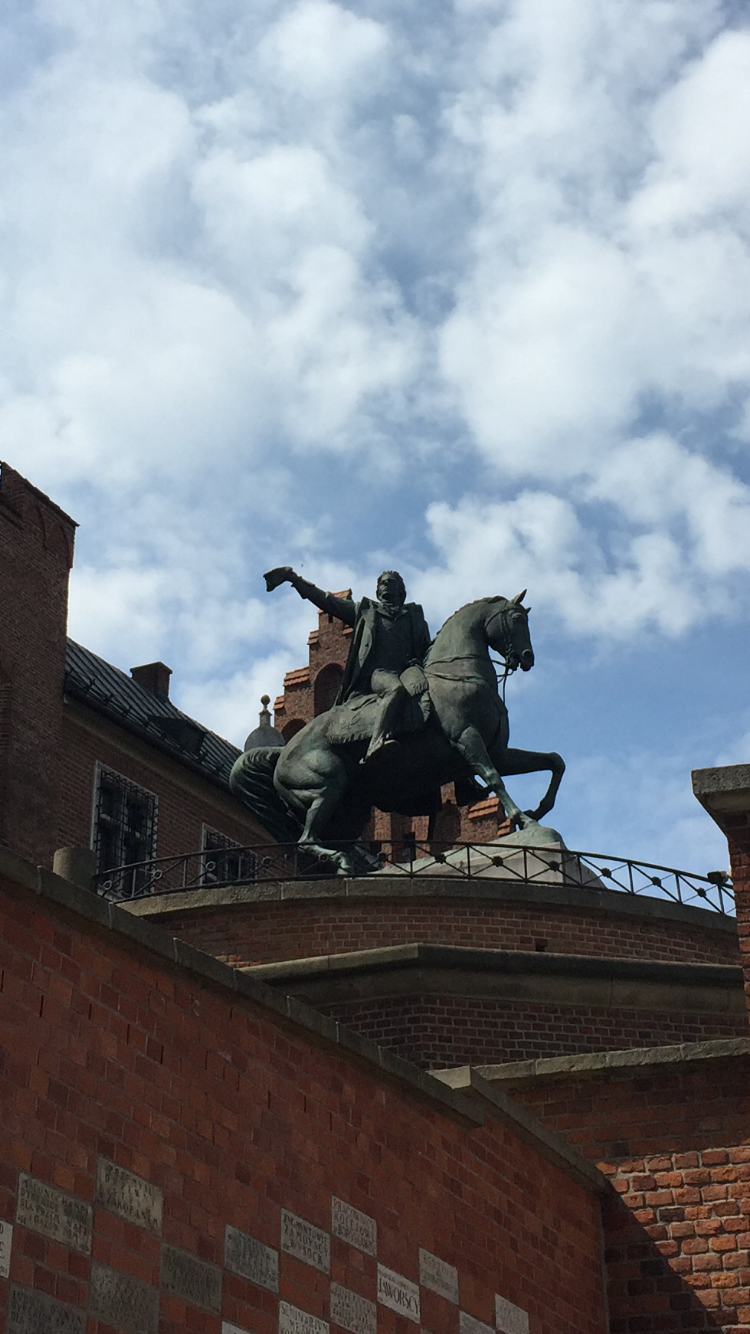
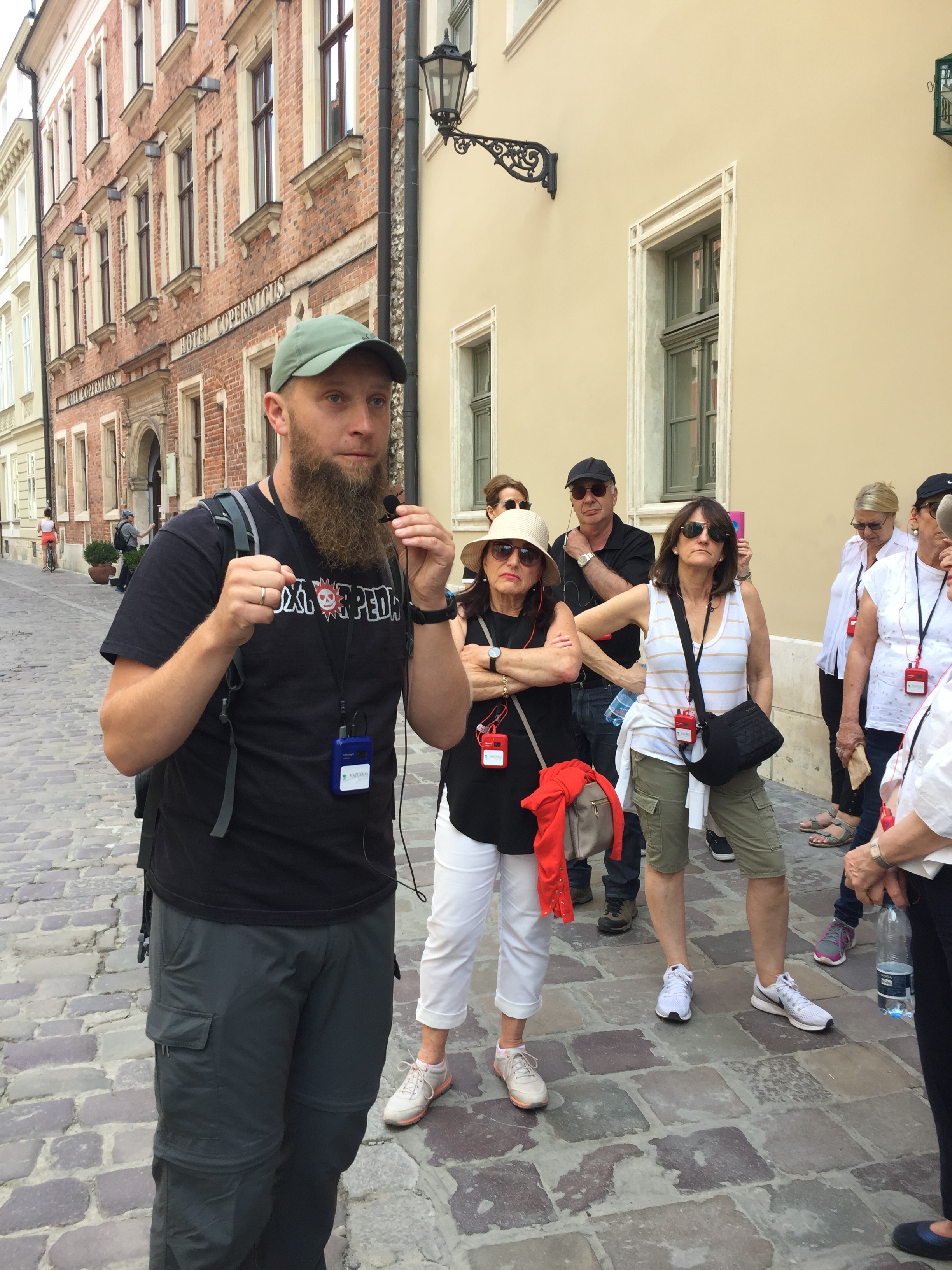
So far as legacies are concerned, we had an opportunity while walking to Krakow’s main square to consider the impact of two other men on Polish society: Tadeusz Kościuszko and Karol Józef Wojtyła (also known as Pope John Paul II).
Photograph: Simon Holloway
Kościuszko is a national hero in a number of countries: in Poland, Lithuania and Belarus because he fought against the Russians, and in the United States because he fought in the Revolutionary War. As to how his name graced Australia’s tallest mountain, the story is a little more prosaic. The first person to have ever climbed Mt Kosciuszko was a Polish explorer and geologist named Paweł Strzelecki, who had the distinguished honour of getting to name it after his hero.
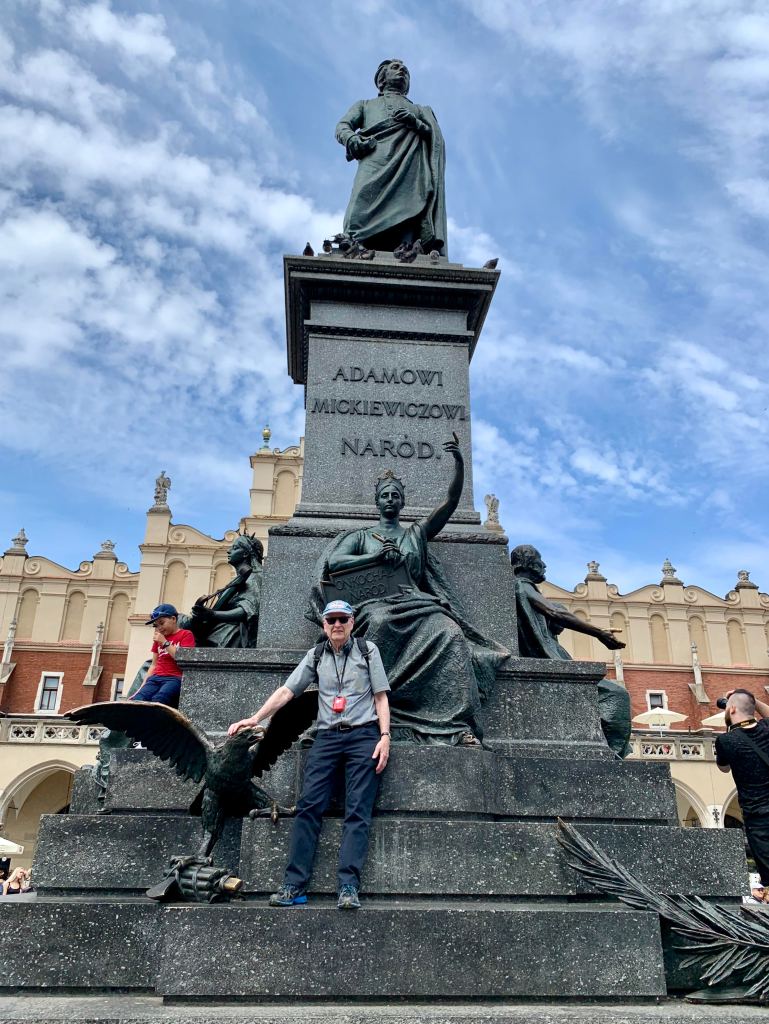
Pope John Paul II, while beloved of many Catholics around the world, is especially admired in the city of his birth, and is justly celebrated for having helped to bring an end to Communism in Poland. The second-longest serving Pope (the third-longest, if you count – as Catholics do – St Peter), many feel that he helped to put Krakow on the map. Known for his role in fostering warm and positive relationships with Jews around the world, Pope John Paul II was also the first Pope to visit the synagogue in Rome, and is a big reason (we were told back in Warsaw) for the amicable co-existence of Jews and Poles today.
Photograph: Simon Holloway
Photograph: Howard Wolfers
Gil jokes about the time that he saw the Pope visiting the Western Wall in 2000. “There’s Pope John Paul II,” Gil tells us, “together with Netanyahu and two other Israelis. And guess which one is wearing the yarmulke.”
This has been a magnificent tour, and it is so fitting that we should conclude it with an opportunity to more broadly appreciate Polish society. You cannot understand the Holocaust, we’re always insisting, without appreciating the broader history of which it is a part, but you are doing that history a disservice if you allow it to end in 1945. To really situate the genocide in its rightful historical context (at least, that part of the genocide that occurred in Poland), you need to appreciate both Polish and Jewish history in the years following the Second World War, and it is to the synthesis of those histories that we devoted our final afternoon.
From Krakow’s square (at 200m², it is the largest mediaeval square in Europe), we made our independent ways back to the hotel, and reconvened at 1:30 in the afternoon. By bus, we weaved through Krakow’s streets until we found ourselves back at where we had finished up yesterday, just around the corner from the JCC. Walking in the opposite direction this time, we soon came to the Galicia Museum, which was to be our final museum visit for this tour, and one of the most memorable.
Along the way to this museum, I took some photos of graffiti. I have only been in this city for a few days, but I am pleased that I now understand what some of these symbols mean. The letters J.G. and KZM stand for Jude Gang (the “Jewish team”) of Kazimierz: a football club, whose rivals, Wisla (“Vistula”), have a white star emblem. Rivalry between supporters of these teams has at times been violent, but graffiti denigrating one or the other is the most ubiquitous expression of support.
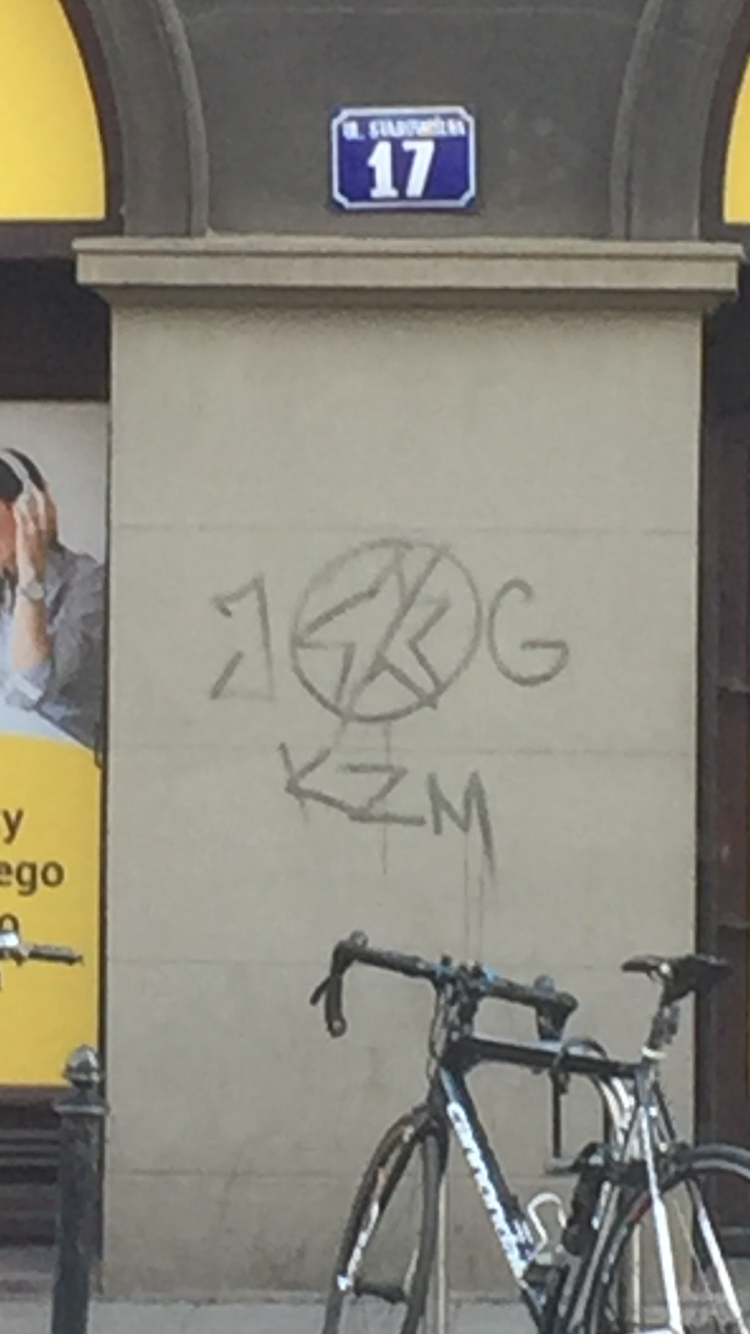
Photograph: Simon Holloway
This of course helps me understand the commonly-seen response of Wisla supporters – some of which I had seen from the bus on the way into Krakow, but been unable to photograph: a six-pointed star (representative of “the Jewish team”), with a line through it.
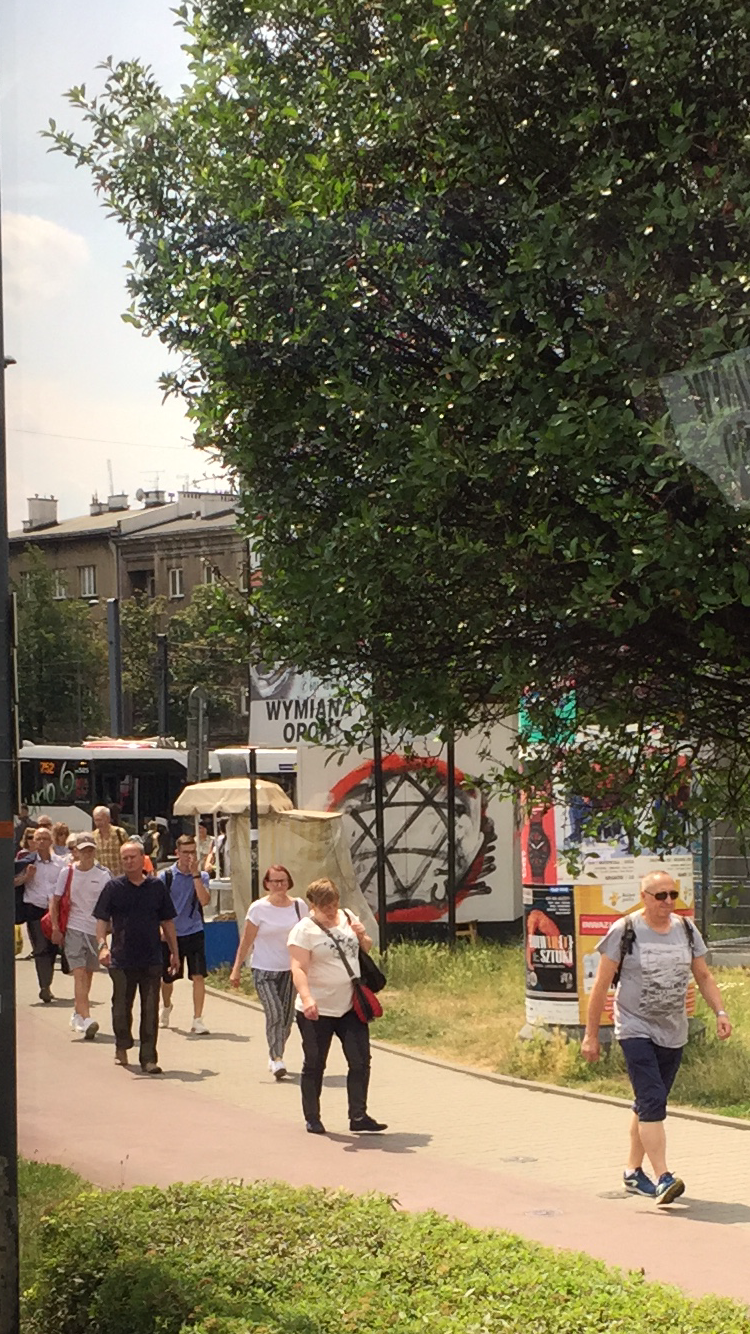
Photograph: Simon Holloway
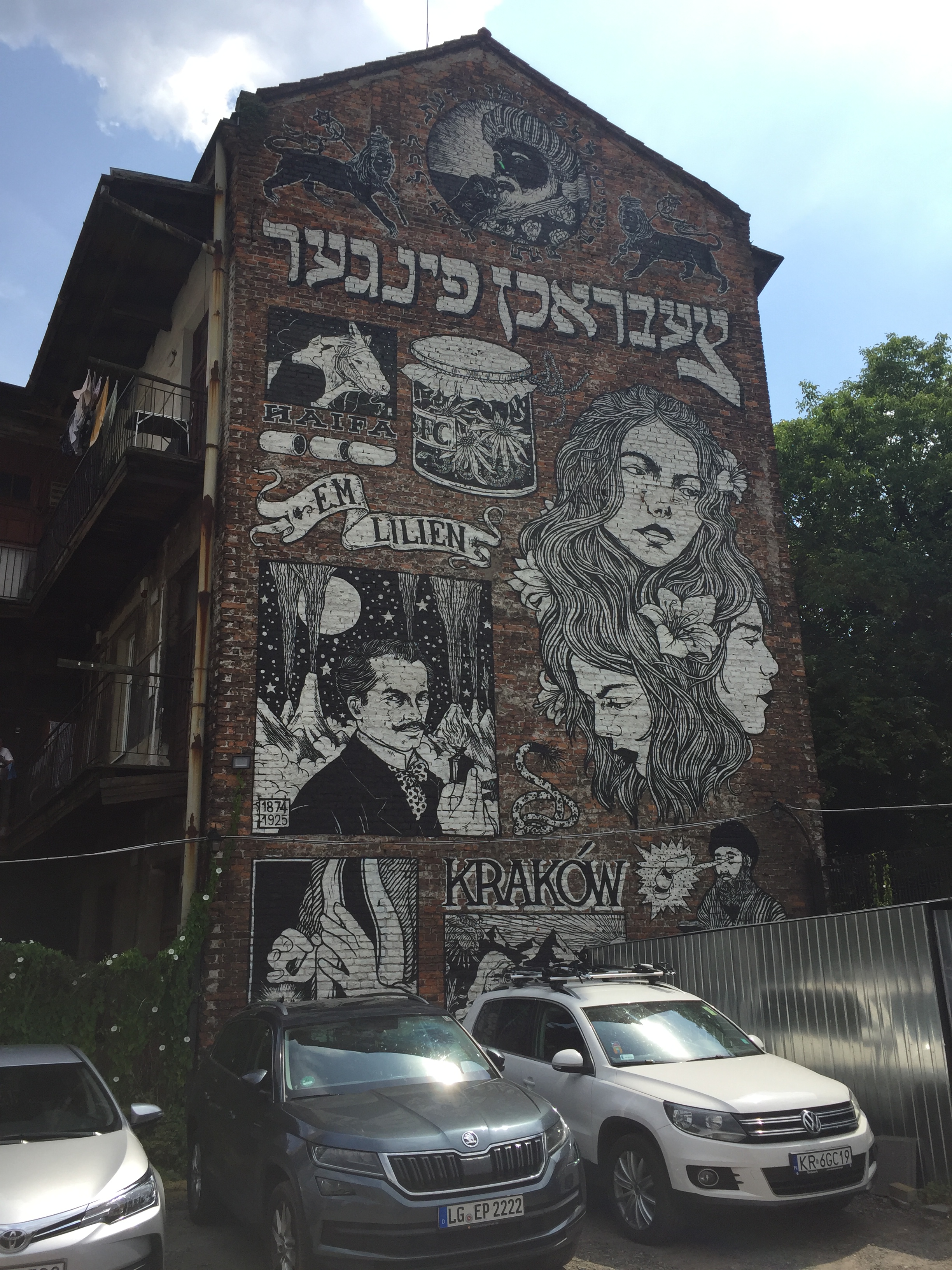
Photograph: Simon Holloway
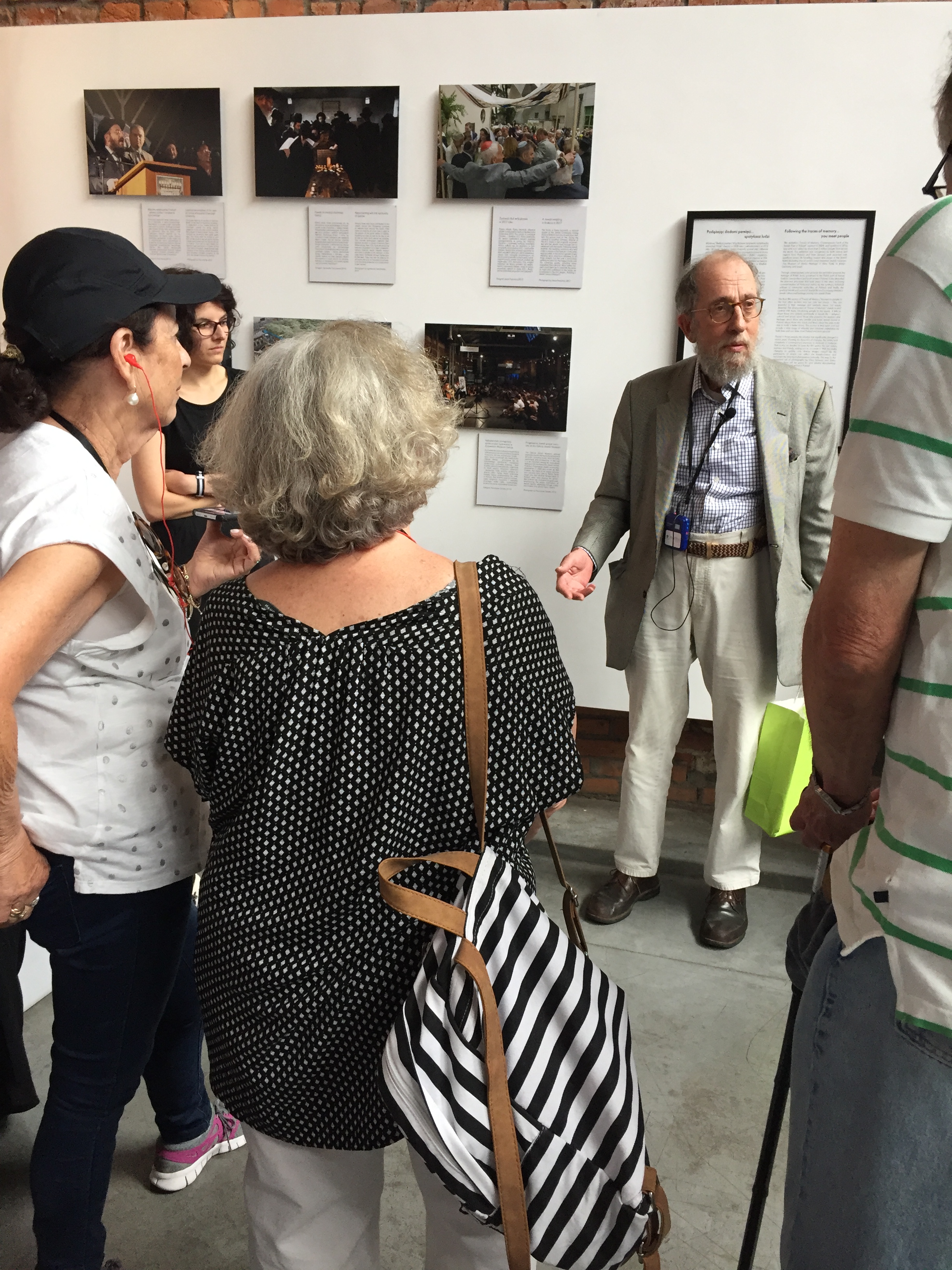
At the Galicia Museum, we were introduced to Professor Jonathan Webber, a social anthropologist whose photographic exhibit, “Traces of Memory”, receives some 50,000 visitors a year. Run exclusively by non-Jewish Poles, his mission is to highlight the Jewish experience in Poland, and to raise questions as regards how one might begin to make sense of it today.
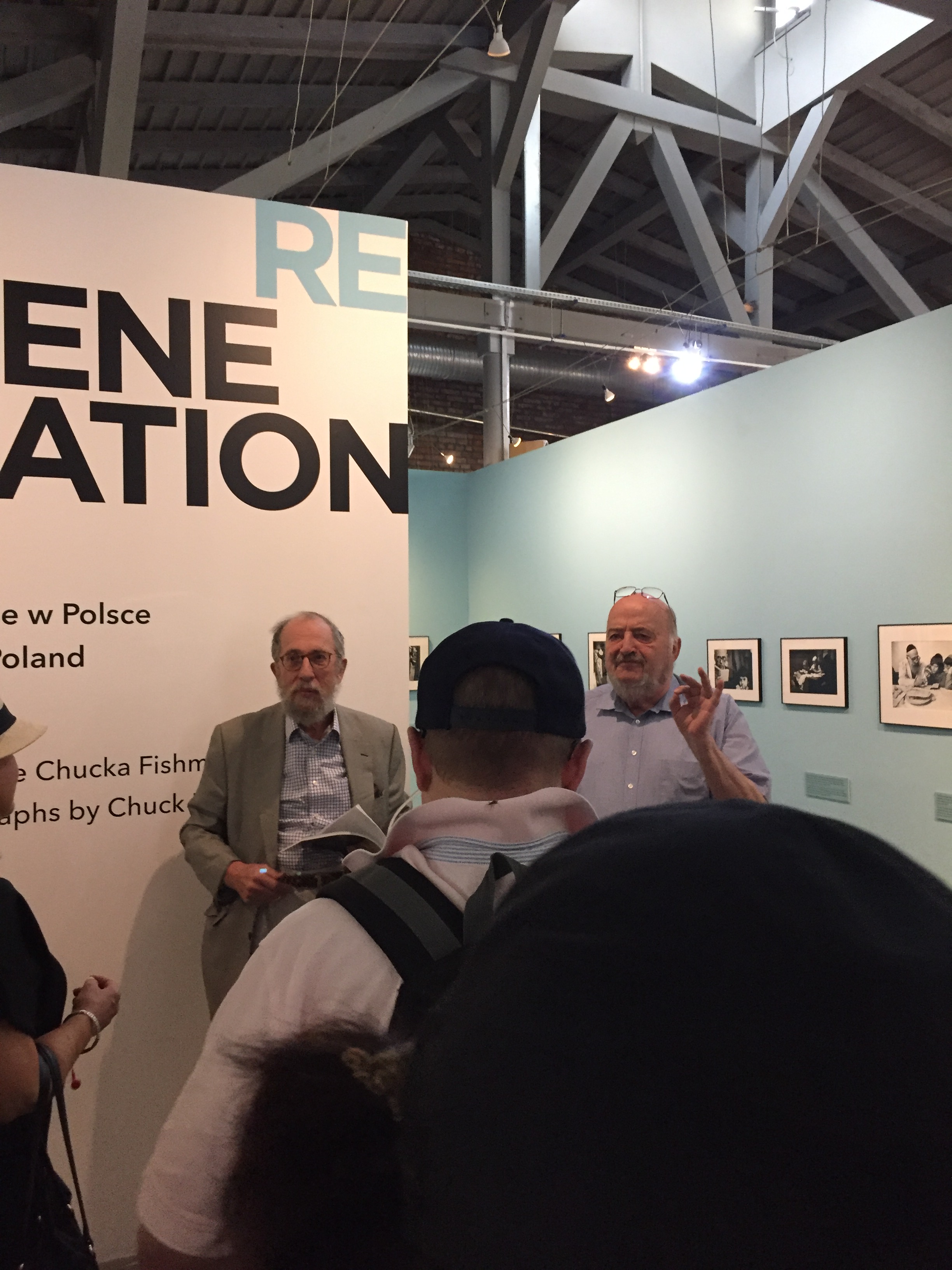
Photograph: Simon Holloway
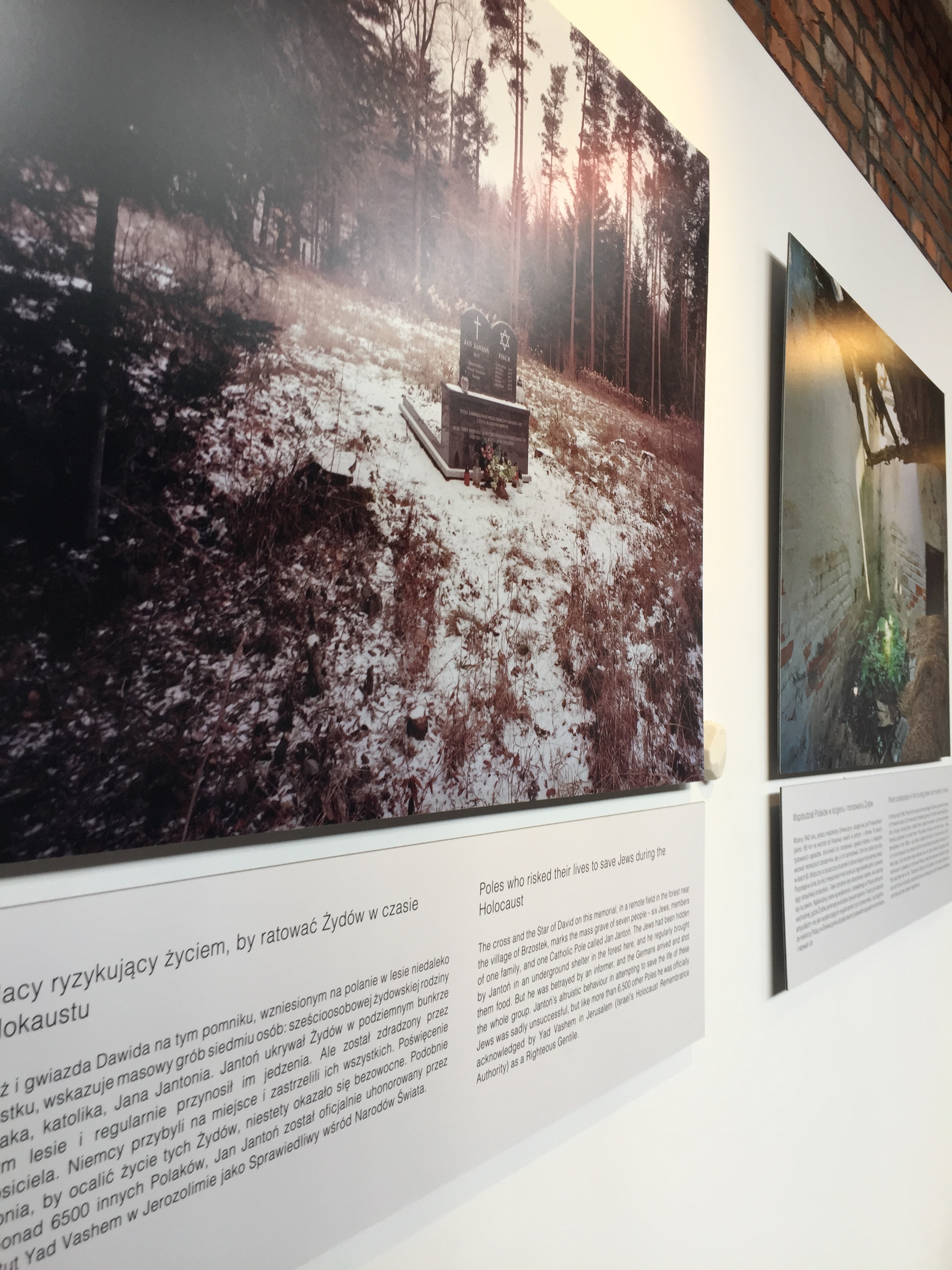
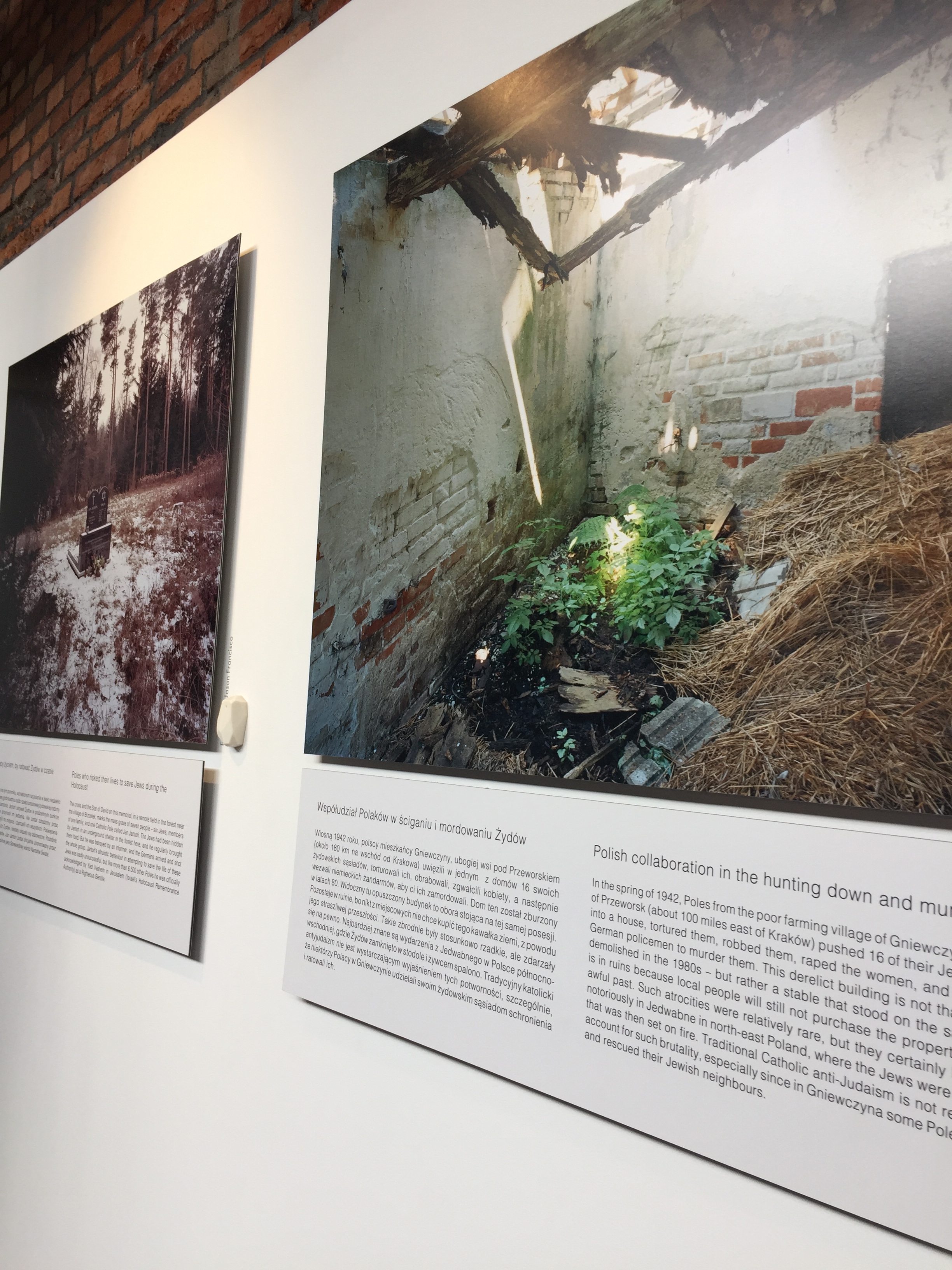
A “museum of ideas”, these photographs are not designed to provide information but to challenge and provoke discussion. As such, they focus on contradictions and on paradoxes: the juxtaposition, for example, of a joint grave where a Jew lies buried next to the Pole who was murdered for having sought to save his life, together the photograph of a barn in which Poles had robbed and raped Jews before handing them over to the Germans to be murdered.
There are no easily navigable ways through this history, which so defies stereotypes and glib summaries. This exhibit, rather than offering any answers or explanations, is merely something of a tour through the various realities that exist in Poland today. To that end, it is comprised of five parts.
This first part, and the beginning of the exhibit, is the ruin. Jewish life in Poland has been destroyed: our synagogues are in ruins, our cemeteries are in a state of upheaval and abandonment, our literature has been burned, our people murdered and the past… forgotten. That this is where the exhibit begins is certainly unconventional.
The second part, and in the spirit of contradictions, shows us that that Jewish life has not been destroyed. Glimpses are available of that which had existed before the war: the wooded grove in the middle of an otherwise treeless field, where the local Polish farmers seek to remember the former synagogue; a restored cemetery in Brzostek, where the local community has found ways to connect to their town’s Jewish past; a new grave, in the old style, for Maurycy Gottlieb.
The third part of the exhibit takes us back to the Holocaust with a look at the various landscapes of destruction. The artificial landscapes of the camp and the box car are the only ones left unexplored in this exhibit, which focuses on landscapes in which Jews had formerly lived. The city, the village, the forest, the field. We see familiar sites at unfamiliar seasons; snow blankets the very landscapes that we have been exploring in what had once been termed the Warsaw and Lublin districts.
From here, we move to the fourth station, in which we think upon how these sites are remembered today. We have memorials, and we have graffiti on memorials. We have restoration, and we have vandalism. After every act of aggression, a new gesture of solidarity. One gets the impression that the good people are winning.
Finally and, in many respects, most importantly: a focus on people expressing their Jewishness publicly. Here we see a photograph of Jonathan Ornstein’s wedding, and are reminded of the excellent work that he does at the JCC. This is the only section of the exhibit in which we see photos of people, and it provides us an opportunity to discuss more broadly the place of Jews in Polish society today.
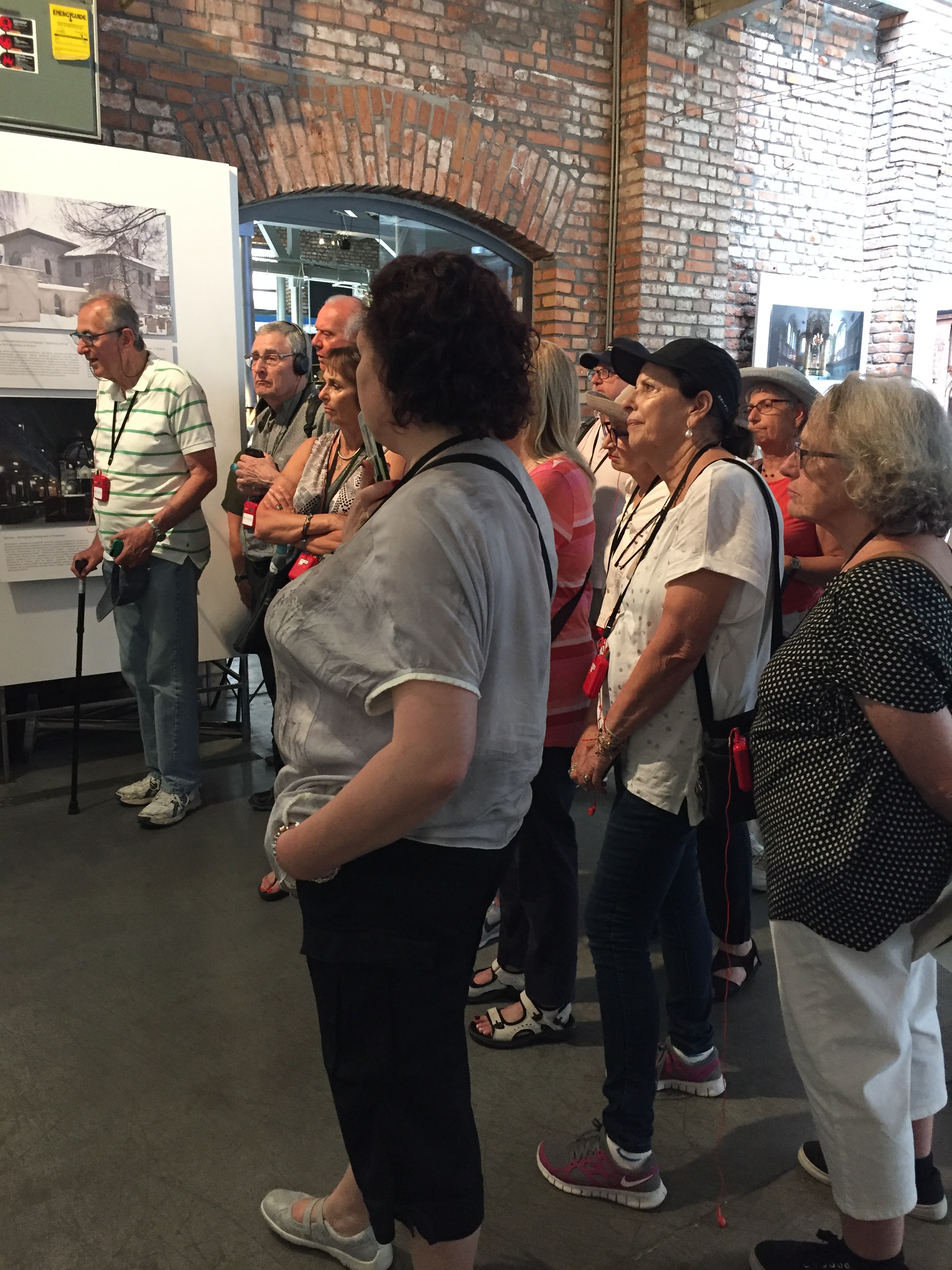
Our guide is Larissa, and she is outstanding. She tells us that, according to a recent national survey, there are some 8,000 people in Poland who identify as Jews, but notes that the true number is impossible to estimate. There is, in addition, a very large number of Polish non-Jewish people (like herself) who are very interested in the history of Jews in Poland, and the Galicia Museum runs special workshops and conferences for school teachers who wish to learn more.
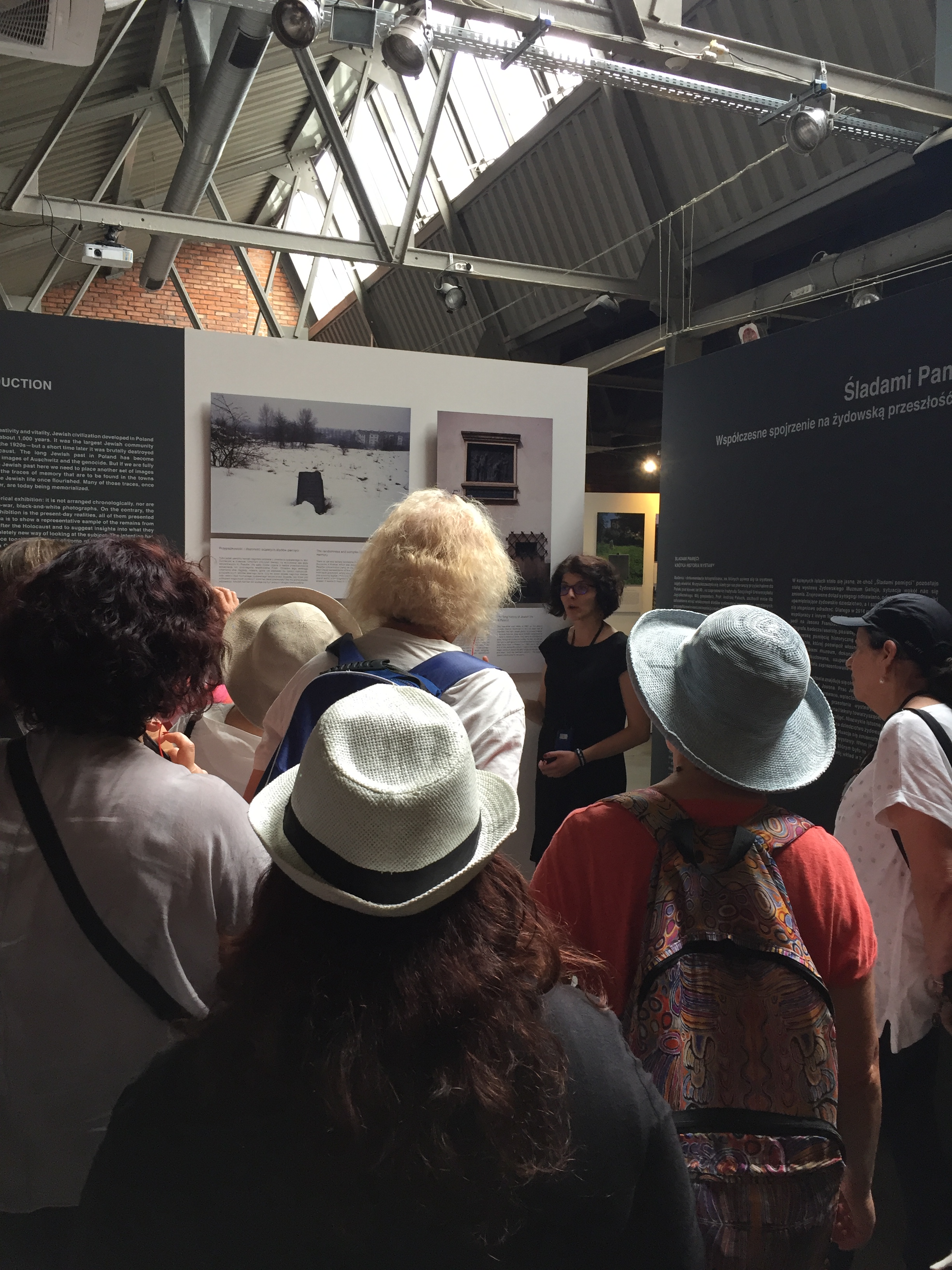
Photograph: Simon Holloway
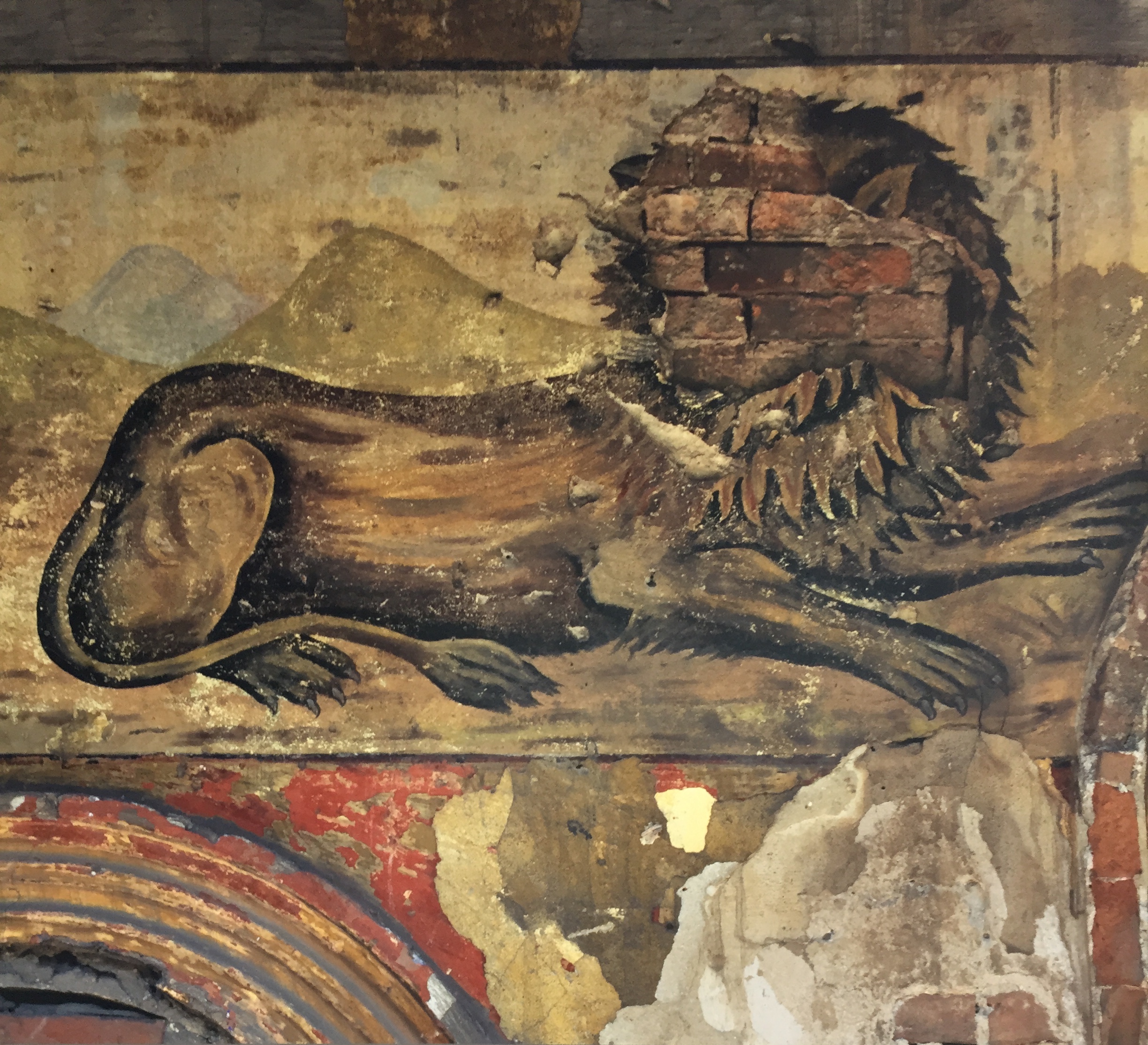
Photograph from exhibit
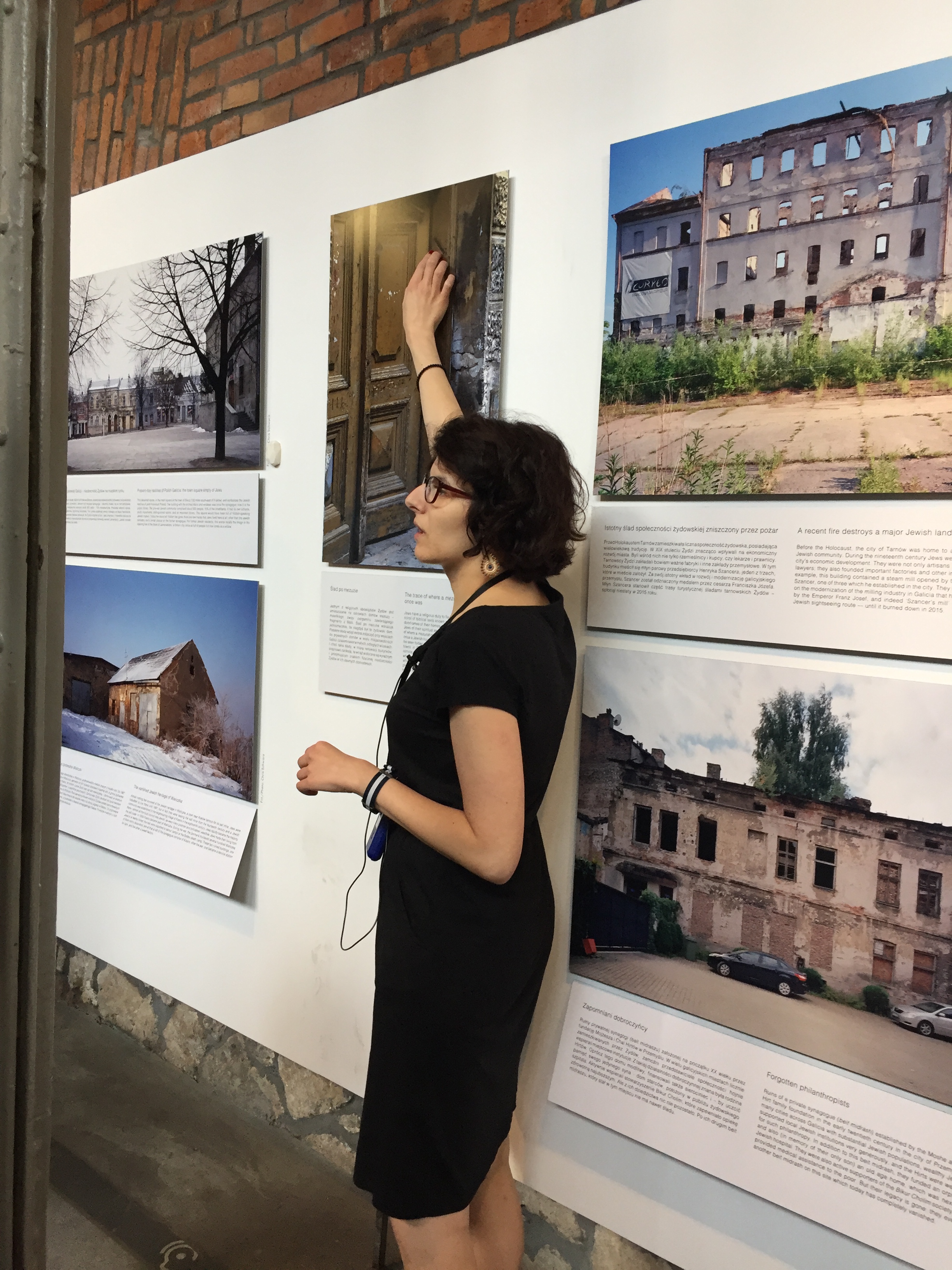
Photograph: Simon Holloway
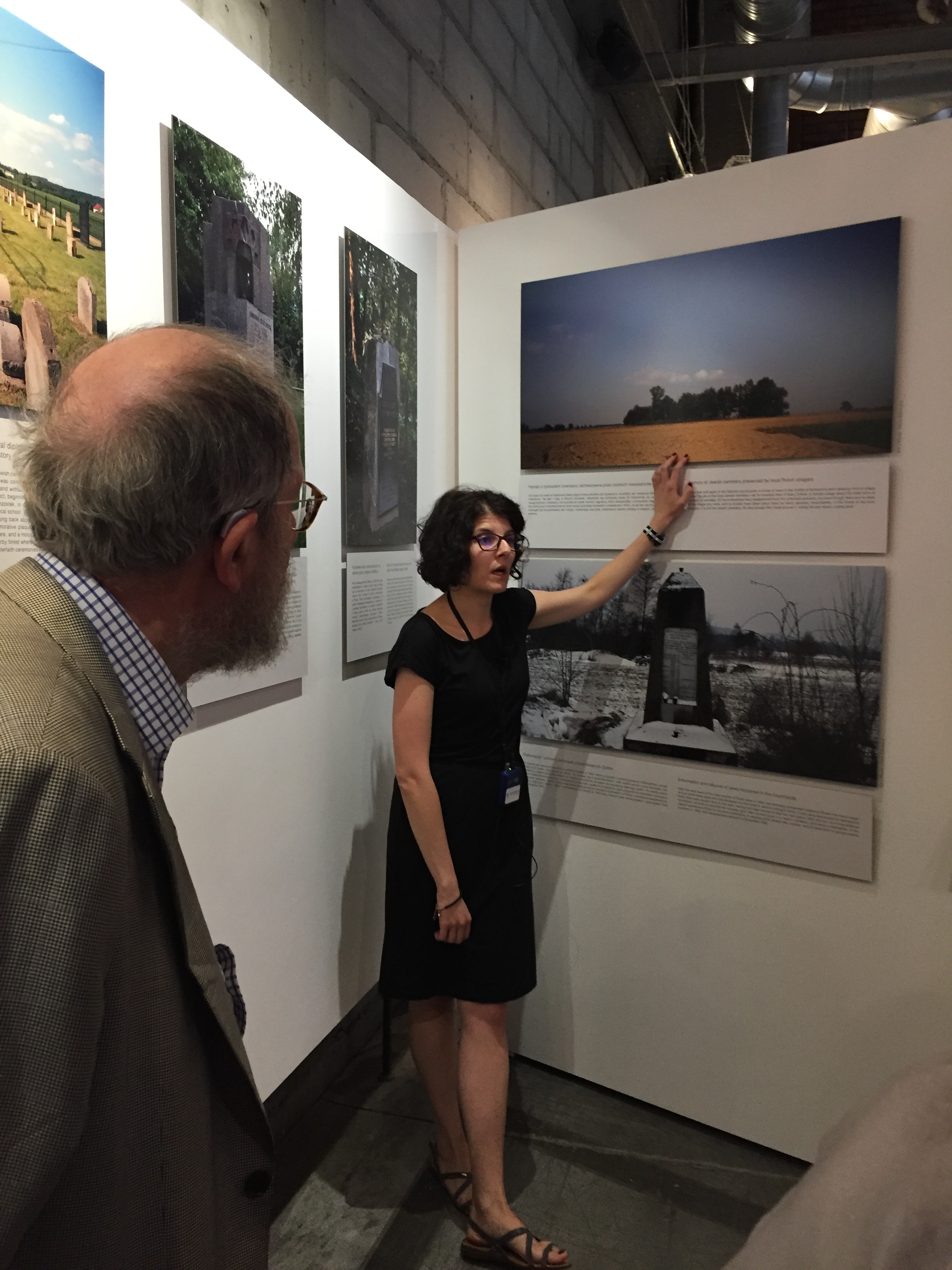
Photograph: Simon Holloway
Photograph: Simon Holloway
Photograph: Simon Holloway
Photograph: Simon Holloway
As Larissa guides us through these stations, she speaks openly and candidly with us. She resents the use of the phrase, “Righteous among the Nations”, for Poles who risked their lives to save Jews were not “righteous”, just as Poles who handed Jews over to the Germans weren’t “collaborators”. The latter were “perpetrators”, plain and simple, while the first were merely “human”. I appreciate very much her sentiment, which says much as regards her own emotional investment in the subject, but the extent to which I disagree is staggering.
Yes, Polish people who handed Jews over to the Nazis were perpetrators (although, to my mind, the ‘collaborator’ is a species of perpetrator anyway), but that Poles who risked their lives to save Jews were merely human? To this, I cannot consent.
The most human response to tragedies of this nature is to do absolutely nothing. However despicable that fact might be, it remains a fact all the same, and too frequently repeated throughout history to possibly be denied. That somebody might risk their own lives and the lives of their families in order to save other people is an act of heroism that I still cannot wrap my mind around. Were the Ulmas, whose memorial we visited on the drive down from Lublin, merely behaving like regular human beings? I do not think so.
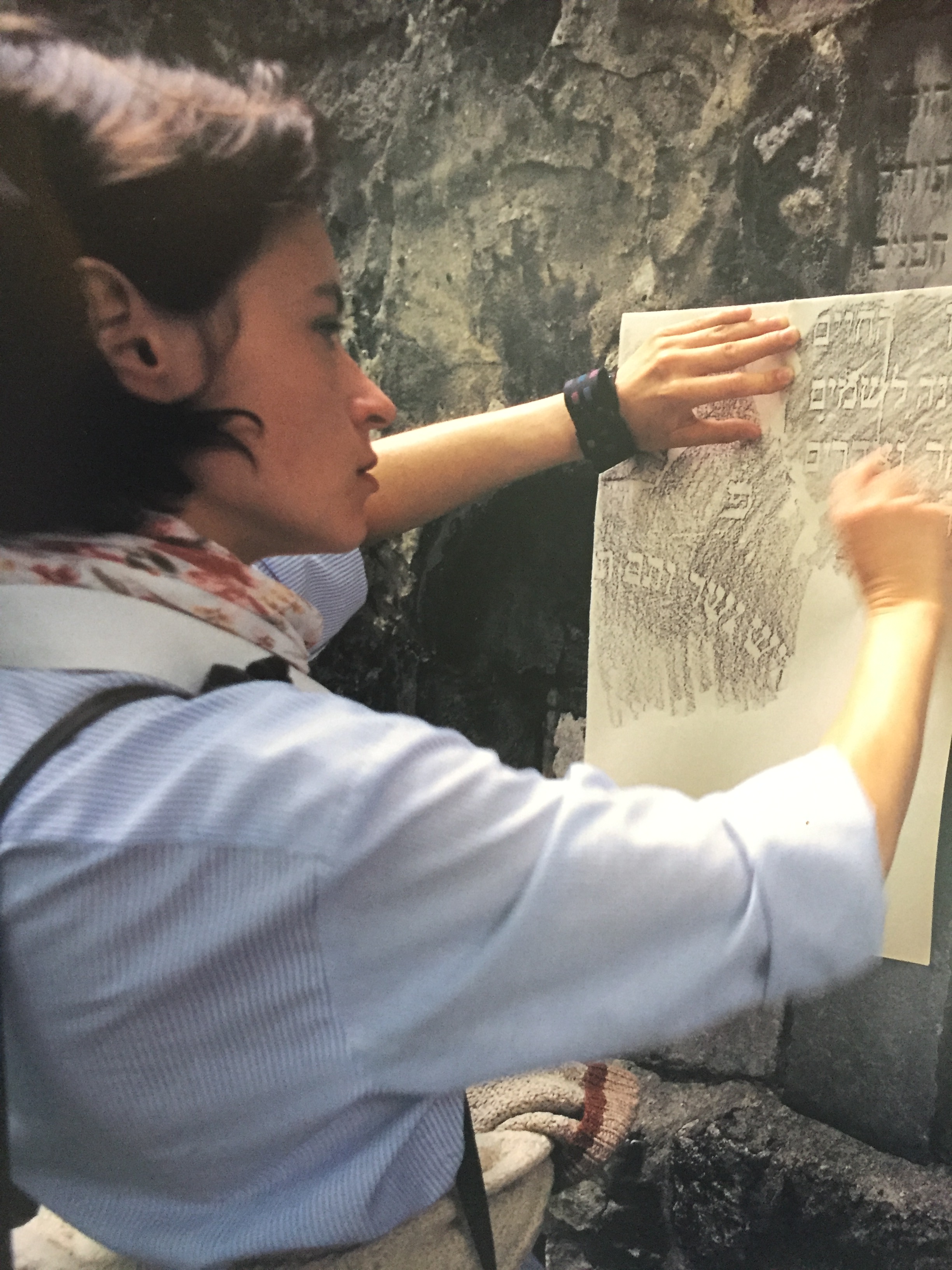
Where I do agree, and powerfully, is with this museum’s emphasis on diplomacy. Professor Webber takes us through the means by which he encouraged the local residents of Brzostek to take ownership over their formerly Jewish cemetery. He printed out brochures, written in Polish, about the history of the cemetery and he went from door to door and made sure that everybody got one. He had installed a gate to the cemetery with a Hebrew inscription from the Book of Job, and he had the cemetery cleaned out and restored, and not at the expense of the local population.
The result? Some sixty-five tombstones that people had in their possession (whether stolen, whether they had been encouraged to steal them, whether discovered or whether gifted to them) were all returned to the grounds of the cemetery by local Polish farmers, and the last time that the professor visited the site he tearfully discovered the inclusion of an additional three.
Today, when Polish students from Brzostek visit the Galicia Museum, they are thrilled to see a photograph of their Jewish cemetery on the wall. Their Jewish cemetery: because that’s the way that people should feel about their town’s heritage, whether they themselves belong to the Jewish community or not.
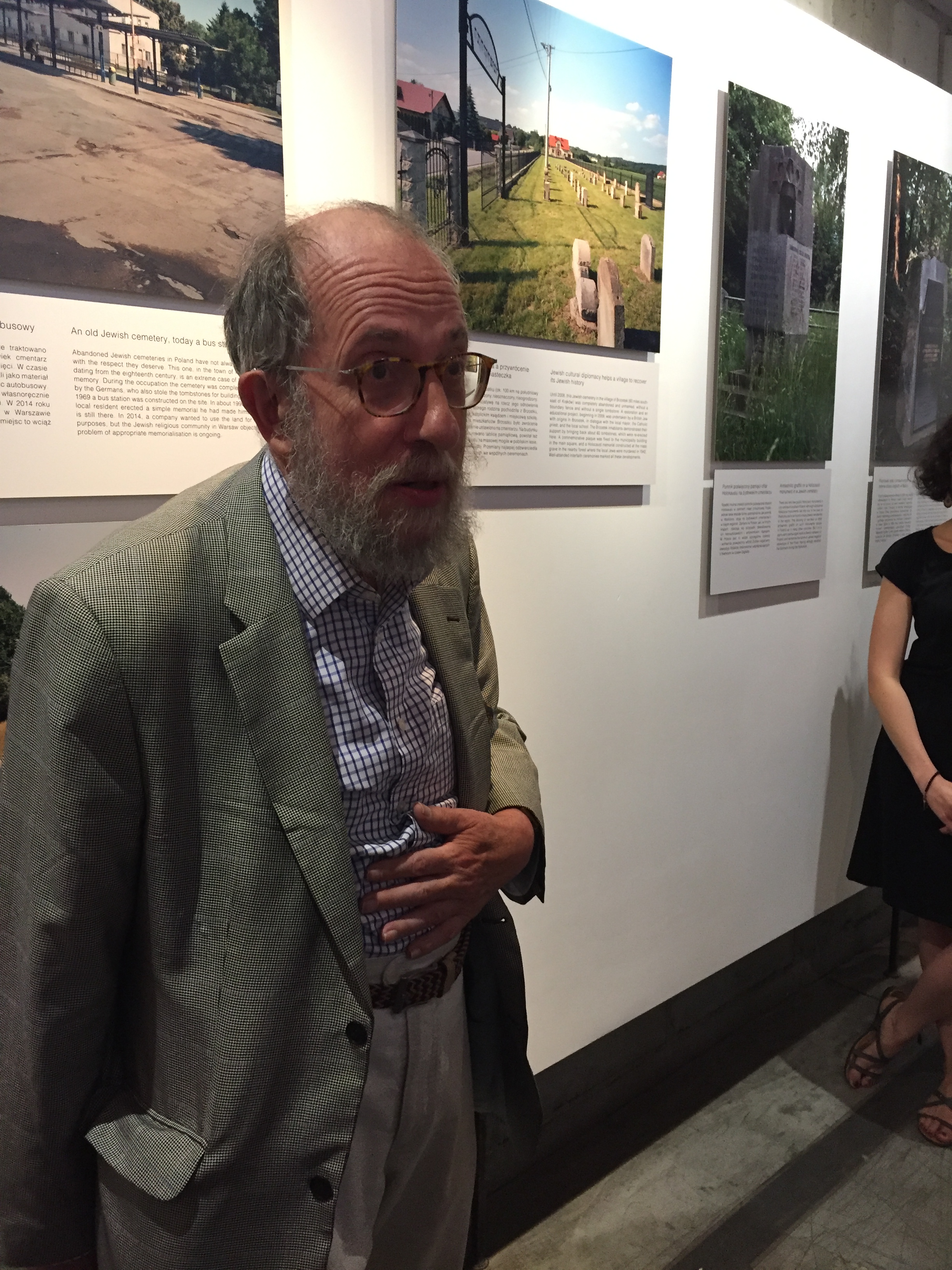
Photograph: Simon Holloway
Perhaps our most emotional moment is when Rony encourages Professor Webber to speak about his role in restoring the synagogue of Oświęcim, which is today a Jewish museum. Quite amazingly, he had heard that this building (which in the 1970s was a carpet warehouse) might be a synagogue, but in Communist Poland such issues were not discussed. When he approached the Polish labourers who were carrying the carpets, he instead told them that he had heard this building had once been an Armenia Church, and they told him that indeed it was.
“How do you know?”, he asked them, to which they replied that there is Armenian writing.
For the cost of $5 (which in those days bought three bottles of vodka), Professor Webber had these men remove the carpets that were against a wall while he waited outside. Going back in, he saw what they had supposed to be Armenian writing: the Hebrew phrase, שויתי יי לנגדי תמיד (“I have set God before me always”, Psalms 16:8).
Quite amazingly, when the synagogue was restored and refurbished (at the expense of a New York-based Jewish institution), the crown prince of Jordan came to the official opening ceremony to express his solidarity and to offer up a prayer. Such careful diplomacy, while taxing and slow, is clearly the most important way of going about restorative work of this nature, and one shudders to think of the heavy-handed way that some Jewish institutions have sought to enforce the process of memorialisation.
Photograph: Simon Holloway
At this point, I cannot help but think how much the synagogue at Tykocin might be improved if their local residents were more gently encouraged to take pride in their town’s Jewish history (rather than merely using it as a source of revenue), and how many other former synagogues and cemeteries might become healthy places of pilgrimage as a result.
I am very thankful for the opportunity to have met Professor Webber and to have heard from Larissa, whose passion and enthusiasm for the subject was contagious. I think that I am beginning to appreciate the powerful way in which many Polish people earnestly want to connect to their country’s Jewish history, and am excited for the prospect of a renewed Jewish life in this part of Europe.
All told, this has been a spectacular way to bring our tour to its conclusion, for while each one of us came here to explore the past, we are all of us now thinking about the future.
Photograph from exhibit
On Friday evening, and just before heading out for our last dinner together, we had a reflections session at which everybody shared their thoughts and their feelings about the tour. It was so lovely to hear from everybody, and so interesting to see those points of commonality in each person’s experience.
So many participants noted what I think we are all feeling: that with increased exposure to this information there is so much less that we understand, and the more questions that are answered the more new questions that are generated. This trip has been at times emotional and at others liberating; at some points traumatic, but at others cathartic. I look forward very much to being in touch with all of you once we get back to Sydney, and am so pleased that people got as much out of this tour as they did.
If I might be permitted a brief post-script, this Sunday will be the 17th of Tammuz. This is the day on which Jews traditionally remember the commencement of Nebuchadnezzar’s siege of the city of Jerusalem. This siege, we are told, lasted a total of three weeks. For three weeks, the occupants of the city fought for their lives, knowing that defeat was inevitable. During those three weeks of each year, we remember their struggle and we seek to empathise with their distress.
The culmination of these three weeks is the 9th day of the month of Av. A full-day fast, from sundown on the 8th to sundown on the 9th, it is an opportunity to do that which we usually avoid: to wallow in inexpressible grief. To explore it by experiencing it, and to mourn for the destruction of the temple – both at the hands of the Babylonians, and some six hundred years later at the hands of the Romans.
Traditional rabbinic thought has it that all of the catastrophes of Jewish history have been a product of the exile that was initiated by this seminal act of destruction. Today, living in the wake of what (in Yiddish) is sometimes termed “the third destruction” (דער דריטע חורבן), we appreciate that with which those earliest generations dealt.
Desirous to ensure that their children would keep alive a knowledge of all that had been lost, they instituted days of fasting and remembrance. As time passes, so the connection to the earlier pre-destruction Judaism becomes less and less tangible, and all that remains is the forced grief that we seek to arouse in ourselves on specific dates, year after year after year.
For us, the wounds created by the Holocaust are still fresh and at the slightest prodding, still do bleed. We live today in that generation in which we need to find ways of maintaining a connection, for our children and for future generations, to the Europe that is no more. As we approach the three weeks leading to the 9th of Av, I wish everybody a meaningful time of grief, and a meaningful catharsis. I say this both to those of our participants who identify with Judaism and to those of our participants who do not.
As was pointed out on Friday evening, no one people holds a monopoly on suffering, nor does one need to belong to a persecuted minority to understand and to share in their pain. I appreciate the tremendous honesty of our participants in sharing with us that anguish, and look forward to sharing with you also in the healing.
Here’s to maintaining a connection with the past and with one another: survivors of the 2019 Sydney Jewish Museum tour of Berlin and Poland.
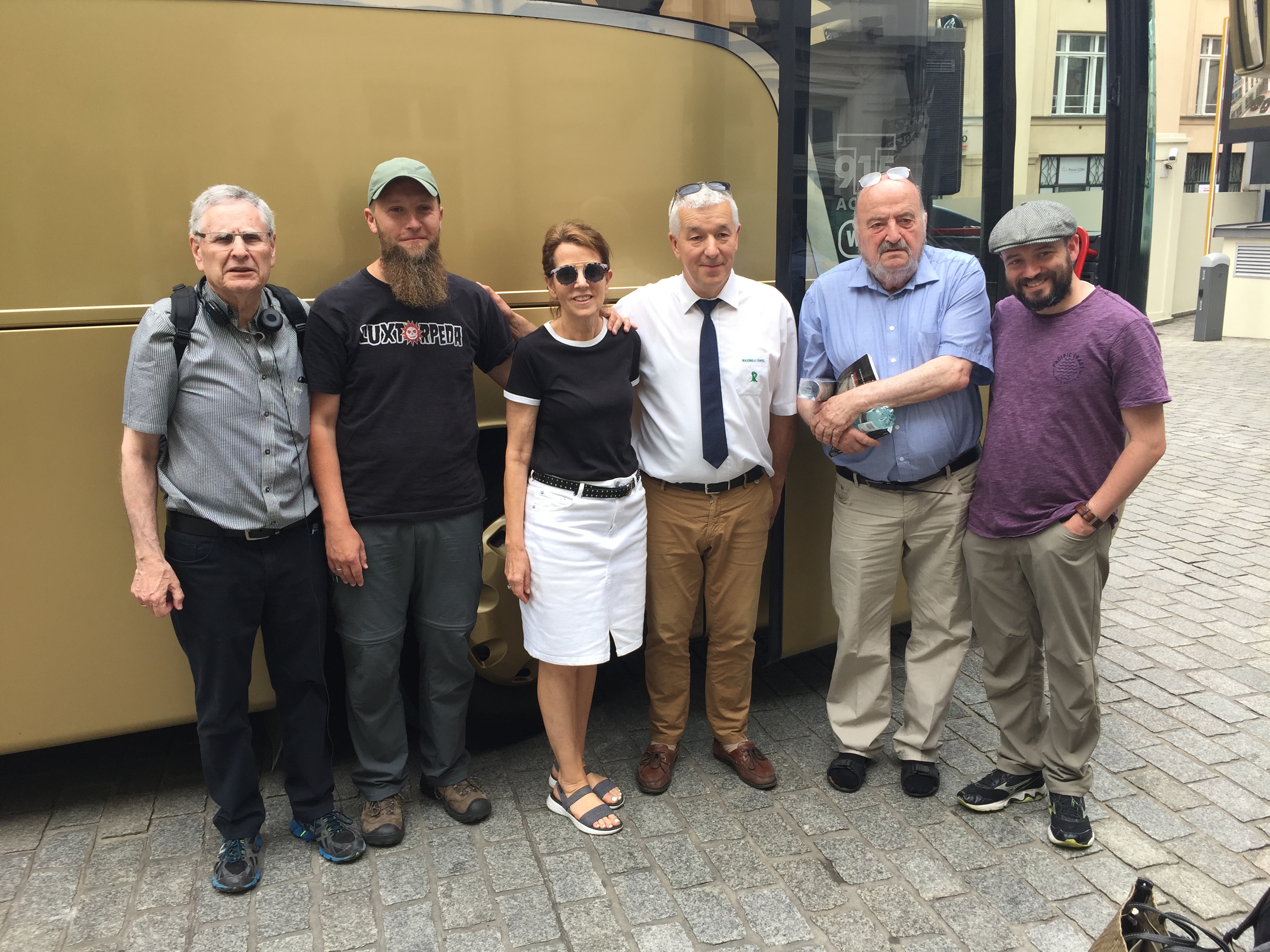
Norman, Filip, Rony, Czes, Konrad and Simon


 Berlin and Poland Tour 2019
Simon, what an erudite and uplifting conclusion to your wonderful blog…I’ve learnt a lot and it has and will continue to enrich the memories of our visit. Many thanks, and enjoy Italy with your family
LikeLike
Wow. So well written throughout. Thank you Simon for doing a trip I don’t think I ever want to do.
LikeLike